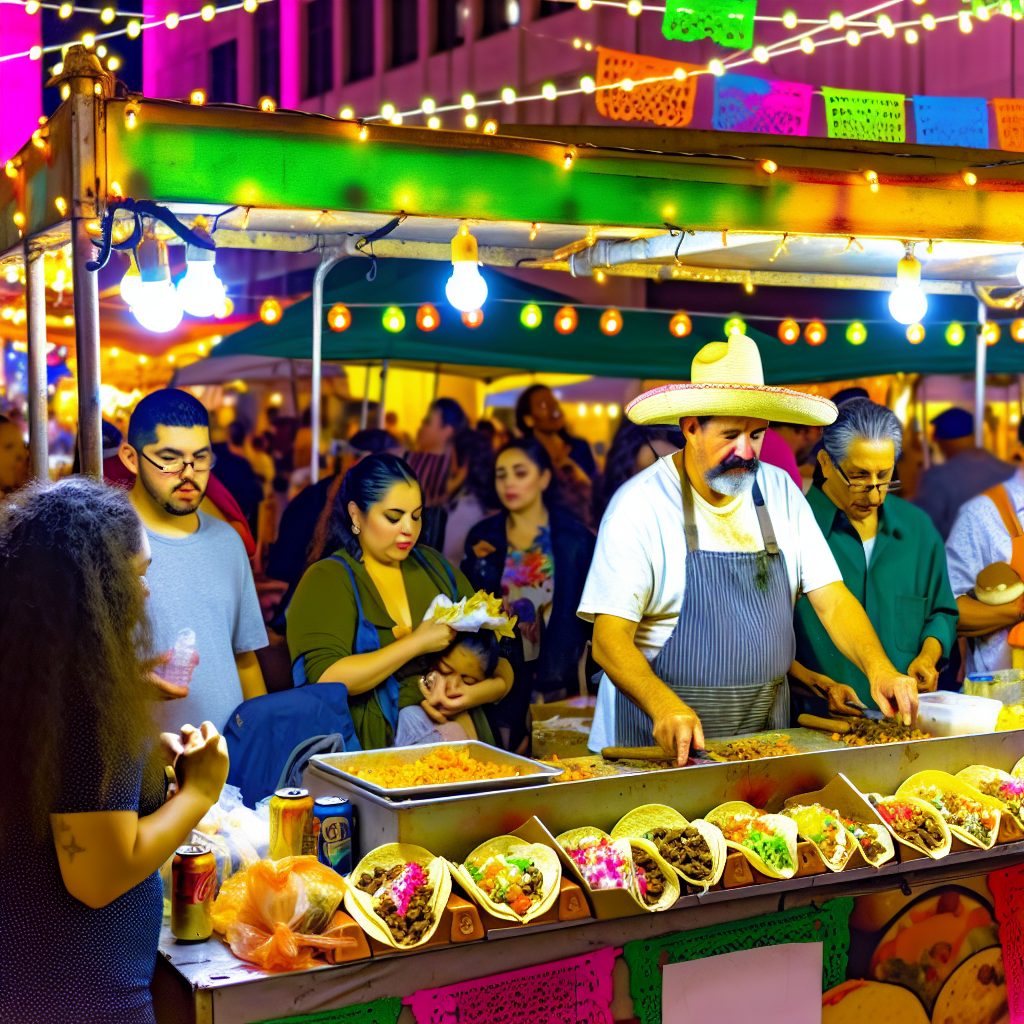
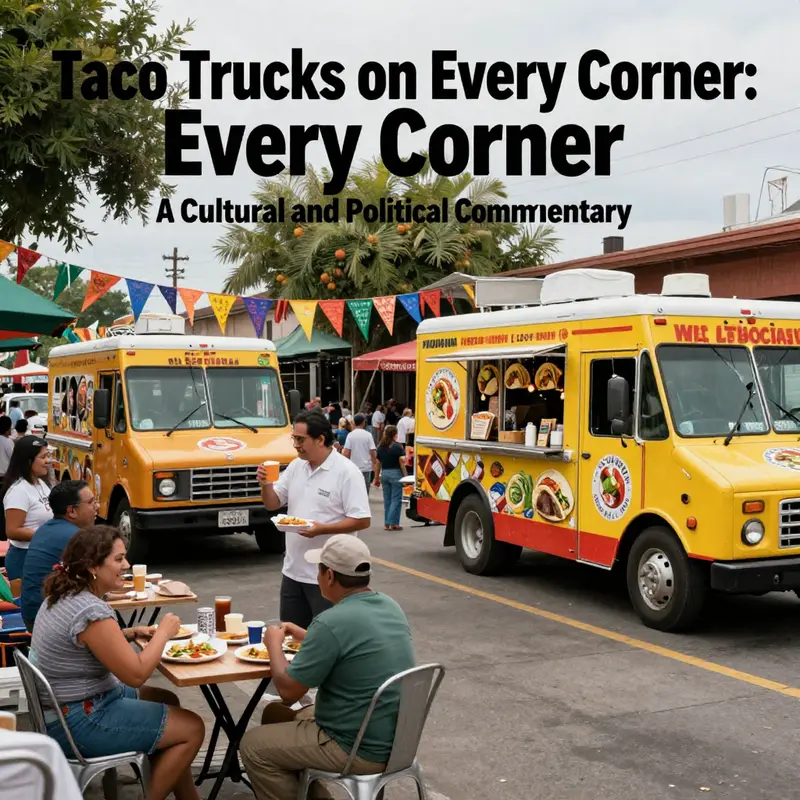
Meet the idea that resonates with food lovers and taco enthusiasts alike: ‘A taco truck on every corner’ isn’t just a fun image, but a poignant commentary on culture and politics. This article journeys through the meme’s layers, diving into its cultural significance, political undertones, sociological implications, economic effects, and the visual humor that captures our hearts and minds. Get ready to munch on insights and laugh while we navigate through the complex landscape of this exhilarating meme that rallies around taco trucks and what they represent in our communities.
Every Corner a Kitchen, Every Street a Stage: The Cultural Significance of the Taco Truck Meme
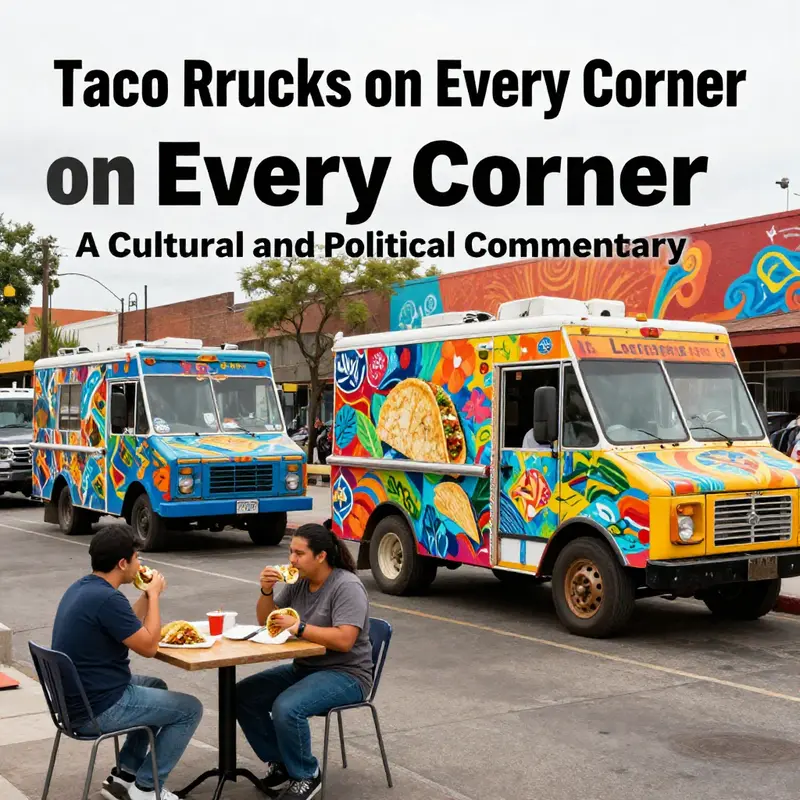
Across urban skies and sprawling boulevards, the taco truck meme emerges not as a simple joke but as a living map of cultural collision and coexistence. The image of a world where taco carts line every street is less about appetite alone and more about a narrative of visibility, resilience, and community. It foregrounds the taco truck as a portable site of memory and labor, a mobile kitchen that stitches together generations, languages, and neighborhoods through the shared experience of eating. The humor travels quickly, but the underlying texture is thick with history: recipes handed down in crowded kitchens, hours spent fitting a business into a city’s rhythm, and the intimate conversations that happen in queues where strangers become neighbors. In this sense, the meme operates like a cultural weather report, signaling shifts in how urban space is authored and who gets to write it. It invites a broader reckoning with how everyday labor, especially that of immigrant communities, transforms public space into a welcoming forum rather than a pocket of exclusion. The ubiquity imagined by the meme becomes a lens to examine not only food but also belonging, dignity, and the right to navigate and shape one’s city through shared meals and shared memory.
Where the meme lands most powerfully is in the resonance it finds within communities that have long carried and contributed to Latino culinary and cultural life. Its origin lies in a familiar scene: a street corner where the air carries the scent of spices and the sound of sizzling grills, where a corner shop becomes a casual meeting place, and where a cart can turn an ordinary lunch into a little ritual. The meme literalizes a truth about urban life—that culture arrives not from monuments alone but from the daily, portable acts of feeding one another. The visual language is deliberately simple: the bright silhouettes of trucks, the clean lines of signage, the bright colors that echo banners and markets. This design clarity matters because it makes the idea easy to share across generations and geographies, allowing a grandmother in a border town and a college student in a coastal city to recognize a familiar form with a single glance. The effect is to normalize Latinx presence as a given feature of the city’s fabric, not a peripheral note in the soundtrack of urban life.
The political economy of the meme becomes evident when it moves beyond appetite and into arguments about policy, belonging, and power. In 2016, a moment in political discourse that framed Latino culture as an invasive force catalyzed a backlash and a creative response. The resulting meme did not merely mock a political opponent; it reframed a national debate around immigration, labor, and the essential role that immigrant communities play in everyday life. By imagining taco trucks proliferating across the landscape, the meme asserts a counterstory: mobility, entrepreneurship, and cultural exchange are not threats but strengths, capable of enriching urban services, cuisines, and social ties. Humor becomes a tool of critique, a way to puncture fear with familiarity and warmth. It foregrounds a critique of xenophobic rhetoric while elevating the dignity of the workers who sustain street economies, often unseen in grand policy debates. In this light, the meme operates as a form of satirical resistance, a practice that refuses to let exclusion stand unchallenged and uses wit to insist on a place at the table for diverse culinary traditions.
Design and aesthetics reinforce the meme’s cultural punch. The visual economy—minimalist truck silhouettes, legible typography, and a restrained color palette—functions like a well-told joke: quick to grasp, hard to forget. This brevity mirrors how Latinx communities have often communicated through compact, meaningful signals—food, music, and ritual shared across languages. The meme’s power lies in its repeatability. People can drop a taco truck into a map, insert a skyline, or overlay a simple sun to mark a moment in time. Each remix is a small act of cultural reclamation, a way to claim urban space as a site of shared nourishment and communal joy. At the same time, this aesthetic choice makes the idea legible to outsiders who might otherwise misunderstand the vibrancy and diversity of street economies. It invites viewers to experience a street scene that is inviting rather than alien, familiar yet expansive, a reminder that culture is not a static artifact but a living practice that travels and evolves with the city’s people.
Beyond symbolism, the meme encodes a real economic narrative. Taco trucks symbolize immigrant entrepreneurship—low overhead, high adaptability, and the capacity to respond quickly to changing consumer needs. The concept of a taco truck on every corner signals not abundance alone but reliability: a promise that the city’s food landscape can be diverse, accessible, and consistent in a climate that often advantages larger, centralized businesses. This is a story of networks—the kinship ties that sustain family recipes, the mentorship that spreads know-how across generations, and the regulars who map social routines onto a set of carts that become familiar landmarks. The imagined ubiquity speaks to a practical ideal: neighborhoods that can rely on intimate, intimate-scale commerce as a backbone of daily life. It frames street food as a civic asset, a portable institution that builds trust, invites conversation, and strengthens the social fabric as it travels from one block to the next, sustaining the rhythms of daily work, study, and play.
The meme’s cultural reach extends into media ecosystems and everyday life. On social platforms, it circulates as a flexible allegory for inclusion, a shorthand that invites both long-time residents and newcomers to see themselves reflected in a shared urban story. Representation matters because the taco truck becomes a nexus of identity, memory, and possibility. People encounter it as a narrative of welcome rather than stereotype, a reminder that the city’s kitchen is a public space where differences can mingle and multiply into something flavorful and durable. The humor commissions a more nuanced conversation about who belongs on the street and who feeds whom, and it reframes the act of queuing for a bite as a civic ritual of mutual recognition. When the meme travels into merchandise, murals, and educational discussions about food justice and immigrant histories, it loses none of its vitality; it expands into pedagogy, reminding communities that nourishment and dignity are inseparable.
The lifecycle of the meme—from online joke to public symbol—reveals a broader cultural practice: the ability of food to translate complex social realities into accessible, shareable moments. This translation helps keep conversations about race, belonging, and national identity concrete, tactile, and ongoing. The taco truck, once a practical convenience, becomes a portable museum of everyday democracy, a reminder that city life is constructed through countless small acts of care, hospitality, and commerce. In this frame, the phrase is not a slogan but a living artifact that captures a moment when urban spaces opened up to the vibrancy of immigrant life and allowed that life to reshape the skyline and the social contract. It invites readers to consider how much the city owes to the labor behind the steam and the smiles and how small, recurring acts of generosity—sharing a bite, greeting a neighbor, trading stories over salsa—hold communities together. For those who want to explore practical implications of mobility and design in this world, see Top taco truck models for entrepreneurs. This link offers a closer look at how choice in equipment, layout, and workflow can support sustainable, scalable street food enterprises that mirror the meme’s spirit of accessibility and resilience.
External resource: SFGATE article
Driving Satire on Every Corner: How Taco Truck Memes Channel Political Critique and Urban Culture
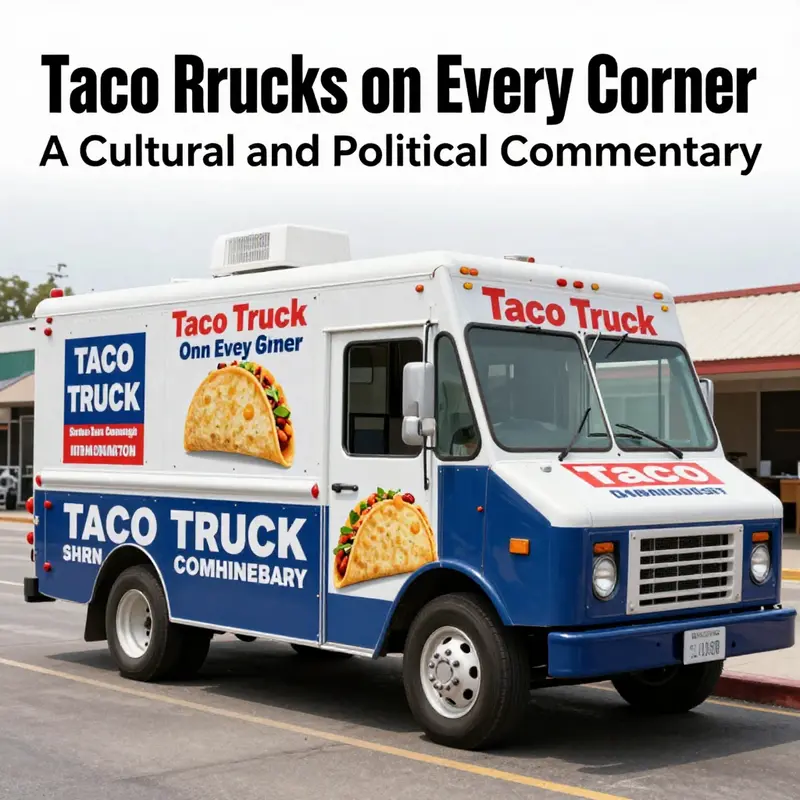
Across the internet, a single image—rows of taco trucks parked like a colorfully lit street grid—has become more than a joke. It functions as a playful, sometimes biting, meditation on how cities evolve under the pressure of migration, cuisine, and urban policy. The meme title itself—Taco Trucks on Every Corner—began as an exaggerated forecast of abundance, a cartoonish forecast of how everyday life could be reshaped by street food’s omnipresence. Its humor rides on the familiar comfort of a beloved food and the surprising eeriness of imagining an entire metropolis built from the sizzle and aroma of taco stands. Yet beneath the laughter lies a more pointed reflection: what counts as urban belonging, and who gets to decide what a city’s flavor should be? The meme’s spread across platforms like Pinterest and Know Your Meme turned this question into a shared cultural shorthand, a rapid shorthand for a wider conversation about visibility, space, and identity in American urban life.
The origin story of the meme in the political moment of 2016 centers on immigration rhetoric and border politics. The image circulated as a satirical lens on the kinds of conversations politicians were having about Mexico, immigration, and national sovereignty. In many versions, the taco truck becomes a symbol of everyday inclusion and economic potential that policy discourse sometimes jeopardizes or misreads. One widely cited moment features a Bay Area resident who framed the disruption of immigration policy as ironically the very thing that could unleash a citywide taco texture—suggesting that stringent rules might slow rather than accelerate urban flavor, jobs, and cross-cultural exchange. The humor here operates on multiple levels: it gleams with whimsy while grounding itself in real concerns about how policy can shape the city’s cultural economy. The joke is, in essence, a counterfactual argument that questions whether political fear and cultural hostility can ever outpace the stubborn, stubbornly ordinary vitality of street food culture.
The visual rhetoric of the meme is its own kind of social contract. It leans into hyperbole in a way that invites shared recognition rather than scorched earth attack. When a skyline is imagined with row after row of taco trucks, the image does not merely entertain; it appears to legitimate a form of urban visibility that has often lived in marginal corners of the city. Tacos, as a culinary shorthand, carry with them a long history of community, street commerce, and familial recipes passed across generations. By placing these trucks at every corner, the meme visualizes a democratic texture of public space—one in which food becomes a common language for residents who might speak many languages at home but share a street corner under the same sun. This is not just a joke about abundance; it is a critique of scarcity framed in delicious, sensory terms. The imagery invites viewers to read the city as a palate, a place where policy and appetite intersect, sometimes in fruitful, sometimes in fraught, ways.
Platform dynamics amplify the message. Memes travel quickly, mutating with each share, remix, and caption. Pinterest boards and meme hubs become archives of counter-narratives about who belongs, who works, and who feeds the city’s arteries. In this sense, the taco-truck meme becomes a form of popular discourse that channels anger, longing, and humor into a compact, endlessly reproducible form. It is easy to underestimate the social power of such memes, yet their resonance lies in their ability to distill a complex policy conversation into a visual story that anyone can access. The image treats street food as a public good, an emblem of urban resilience, and a reminder that immigrant labor underwrites the everyday pleasures many city dwellers rely on. It also, intentionally or not, calls attention to the economic networks that enable street vendors to thrive—the permits, the supply chains, the micro-entrepreneurship that thrives at the intersection of culture and commerce.
What makes the meme stick is not only its humor but its invitation to see the city differently. When a world map is replaced with a grid of taco stands, the audience is nudged toward a more inclusive urban imagination. The joke about political rhetoric becomes a shared critique of how fear can distort public life. It valorizes the vendors who navigate city regulations, long hours, and the unpredictable rhythms of weather and crowds. It also invites viewers to reflect on the very idea of abundance in urban spaces: is abundance measured by towers of condos, or by the density of corners where people can gather, taste, and tell stories? In this sense, the meme performs a two-way dialogue between policy critique and everyday joy. It refuses to separate the political from the culinary, insisting that the two co-create the city’s texture.
The Bay Area anecdote, in particular, highlights how regional identity and national politics can collide in humorous form. The West Coast’s dense, diverse urban life has long depended on immigrant labor and the informal economy surrounding street food. When the meme suggests that a border policy could somehow determine the presence of taco trucks on every corner, it does so with a wink and a knowing nod to lived realities: markets take new shapes when people cross borders, bring recipes, and open doors to neighbors who might speak different languages but share the same craving for a good tortilla. In this light, the meme is not simply a parody of a political figure; it is a lament and a celebration wrapped into a single frame. It complains about misinformation and xenophobia while praising the cultural competence that immigrant communities bring to urban life. The humor is a shield and a symbol, a way to cope with fear without surrendering the humanity that keeps cities lively and democratic.
The broader resonance of this meme also reveals crucial lessons about representation and political discourse. It demonstrates how humor can be a durable vehicle for critique without collapsing into cynicism. The image stays close to tangible urban realities—a skyline, a street, a crowd, a grill—while extending an invitation to imagine a city where cultural exchange is the default setting rather than a fragile exception. It is a reminder that food is a form of diplomacy, a daily act of hospitality that can soften hard lines with shared taste and communal memory. The meme’s staying power lies in its porous, adaptable message: it can critique a political stance, celebrate a culinary culture, and imagine a city that thrives on shared tables and open streets all at once.
For readers who want to explore the practical side of the street-food phenomenon that the meme gestures toward, a deeper dive into the craft and logistics behind taco trucks can offer a grounded counterpoint to the image-heavy satire. See the piece about taco trucks and culinary success for more on how these mobile kitchens translate appetite into enterprise and culture into commerce. taco-trucks-unleashed-top-5-models-for-culinary-success
Beyond the laugh, the meme becomes a social barometer. It distills a moment when urban life was watching a political conversation unfold about borders, labor, and belonging, and responded not with silence but with appetite. It is a public art form, adaptable and accessible, that lets people tell stories about who they are and how they want their neighborhoods to feel. In doing so, it opens a space for a more nuanced conversation about what cities should look like when they celebrate cultural diversity instead of fearing it. The idea of a taco truck on every corner is not merely a fantasy of flavor; it is a symbolic challenge to the narrative that politicizes culture into division. Instead, the meme invites readers to imagine a city where street-food vendors are recognized as indispensable contributors to urban life, an everyday democracy flavored with cilantro, lime, and shared memory.
External perspectives on the meme illuminate its complexity. The original discussion around the phenomenon, including its political dimensions and its reception in different communities, helps reveal how humor travels across regions and networks. For a broader context on the meme’s origins and cultural impact, see the contemporaneous reporting that documented its rise and the debates it sparked in online spaces. https://www.sfgate.com/bayarea/article/Bay-Area-man-behind-TacoTrucksOnEveryCorner-meme-11243785.php
A Symbol on Every Block: How the Taco Truck Meme Maps Identity, Space, and Power in American Cities
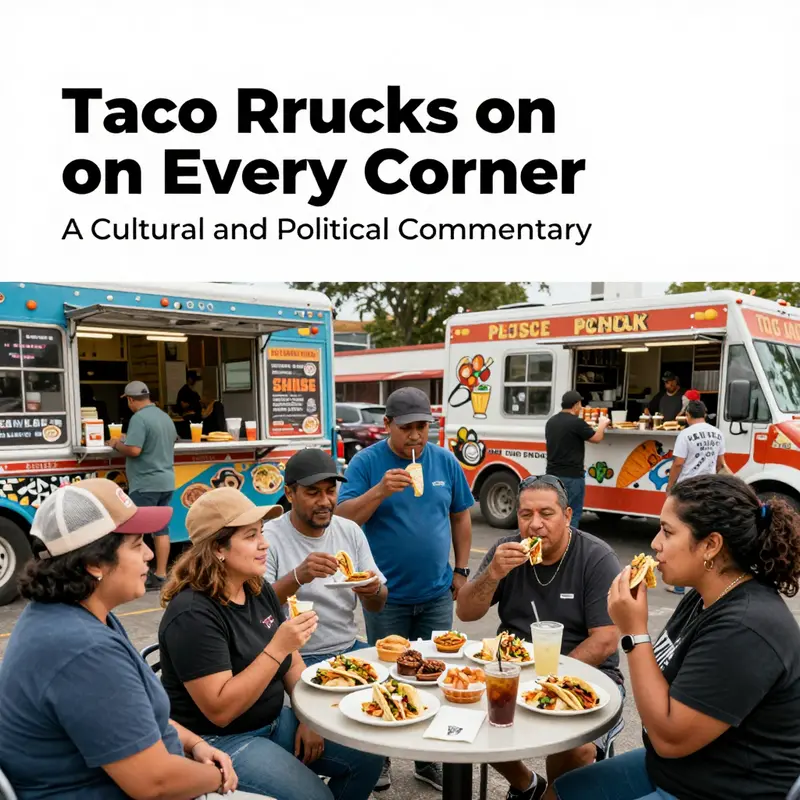
The meme about a taco truck on every corner began as a sharp jab at the way immigration, cuisine, and urban space seem to blend into one another in contemporary America. What started as a provocative joke—often attributed to the rhetoric surrounding increased Mexican immigration—has since evolved into a layered cultural icon. It travels across feeds and forums not merely to provoke laughs, but to stage debates about belonging, visibility, and the changing texture of public life. In this sense, the image of a truck that can appear on any streetcorner is less a culinary forecast than a sociological mirror, revealing how people imagine the city, who they think belongs there, and what kinds of change they fear or welcome. The meme’s staying power rests on its capacity to oscillate between humor and indictment, to be both a celebration of immigrant entrepreneurship and a critique of perceived cultural overreach, depending on who is drawing the frame and what is at stake in the moment of viewing.
Origin stories matter here, because they show how a seemingly small joke can crystallize a broader set of urban anxieties. The idea finds its spark in a political moment when debates about immigration, border policy, and national identity were especially salient. Yet its resonance goes well beyond any single political campaign. As the image travels through social media, it becomes a form of cultural weather, an indicator of how neighborhoods are transforming and how residents interpret those transformations. The meme’s appeal lies in its stark simplicity: a single object—a taco truck—speaks for a cluster of meanings about community, commerce, and space. The truck embodies a cuisine that is deeply tied to memory, family, and ritual for manyMexican American communities, and that emotional resonance lends gravity to the humor.
From a sociological standpoint, the meme functions as a symbolic boundary marker. The taco truck, in its most recognizable form, marks a boundary between what is seen as familiar and what is newly visible in the cityscape. It signals where cultural borderlands exist and how those borderlands are navigated in daily life. It is a portable, ambulant market of belonging, a walking advertisement for a shared cuisine that many people consider central to the city’s flavor and history. When the image proliferates, it helps people rehearse questions about who has a claim to public space and who is allowed to transform it through entrepreneurship, cuisine, and communal ritual. This is not merely about access to food; it is about the right to shape a shared urban future, and about who gets to tell the story of the city’s evolution.
The meme also foregrounds the racialized narratives that saturate discussions of food, mobility, and commerce. Food is never neutral, and in these discussions it becomes a vehicle for coded language about race, immigration, and neighborhood change. The prospect of a taco truck on every corner is read by some as a sign of vibrant cultural exchange and immigrant enterprise, while others perceive it as a threat to a nostalgic, supposedly stable urban order. The European and North American urban theorist David Harvey argued that urban space is not neutral terrain; it is contested, shaped by power and uneven development. Within this frame, the proliferation of taco trucks can be read as a sign of immigrant entrepreneurship and the resilience of small-scale, mobile economies. Yet it can also trigger defensive reactions rooted in fears of demographic shifts, gentrification, and the erosion of what some residents consider the authentic character of place. The meme makes these tensions legible because it compresses them into an instantly recognizable image. It is a modern parable: the city becomes a stage where cultural preservation, economic opportunity, and political rhetoric intersect, all through the humble literacy of a street-food cart.
The digital culture surrounding the meme adds another layer of meaning. Irony and performative outrage are essential features of online discourse, and this meme thrives on that irony. In some contexts, it is a celebration of culinary diversity and immigrant vitality, a visual wink at the ways streets become laboratories for new flavors and small-business risk-taking. In others, it operates as a fear-tinged warning about what demographic change might look like if left unchecked. The same image thus becomes a flexible tool for different political projects. This duality—where humor can be used to resist xenophobia even as it can be weaponized by opponents of immigration—signals the broader ethical terrain of contested memes in the age of social media. The image’s power lies in its ability to be remixed, reinterpreted, and recentered depending on who is posting it and for what purpose. It reflects how digital culture performs identity and politics as much as it conveys them.
The story of the meme also speaks to urban transformation in a more tangible sense. Taco trucks, as a form of mobile entrepreneurship, have become visible markers of economic adaptability and cultural exchange in many cities. They reveal how immigrant labor translates into urban landscapes, and how the city negotiates the presence of diverse foodways within a shared public realm. The trope of ubiquity—of trucks on every corner—encourages a reimagining of street-level commerce as a legitimate, even essential, layer of city life. Some observers see it as evidence of a resilient, bottom-up economy that provides flexible livelihoods and a readily accessible culinary tapestry for residents and visitors alike. Others worry about crowded streets, competition, and the potential for cultural commodification. The meme, in effect, refracts these concerns through a single, striking image, enabling a collective imagining of how cities could or should evolve as cultural mixtures deepen over time.
In charting what the meme reveals about public imagination, it is useful to consider how it integrates with real-world policy and planning conversations. If a city’s public space is a canvas for ongoing negotiation about who counts, how space is used, and what kinds of cultural expressions are allowed to flourish, then the taco truck image becomes a shorthand for those debates. Public seating, parking, permitting for street vending, and safety concerns all intersect with what people perceive as a livable, inclusive urban order. The meme does not offer concrete policy prescriptions, but it does crystallize the stakes of the debate. It invites observers to examine how communities balance culinary diversity with concerns about crowding, competition, and cultural representation. In this light, the image is less a forecast than a prompt for a broader discussion about how cities can accommodate diversity while preserving spaces that feel welcoming to long-time residents and newcomers alike.
This chapter does not pretend to resolve those tensions. Instead, it traces how a single visual idea travels from a political quip to a sociocultural instrument that encodes memory, ambition, fear, and possibility. The ongoing resonance of the taco truck meme shows how digital culture translates complex urban experiences into accessible, shareable symbols. It also offers a lens for scholars and readers to analyze how memes operate within struggles over immigration, identity, and the meaning of urban belonging. The meme is not simply about food; it is about who we think belongs on a street, who designs the city, and what kinds of flavors we allow to define our collective future. For readers interested in a deeper dive into the political and identity work embedded in food memes, see the discussion in The Atlantic on how food-related memes reflect immigration and belonging in contemporary society: https://www.theatlantic.com/ideas/archive/2023/08/taco-truck-meme-immigration-identity/570123/
To connect the sociological thread with a practical lens on street-food entrepreneurship, consider the narrative of how such trucks navigate urban spaces as mobile micro-businesses. The dynamic is not simply about selling tacos; it is about moving through a city with intention, negotiating permits, and leveraging cultural labor to create economic value in places that may lack traditional brick-and-mortar options. These realities support the argument that the taco truck, far from being a mere novelty, represents a flexible, resilient form of labor that adapts to shifting neighborhoods and consumer tastes. The colonization of the street by these urban itineraries can be read as a form of democratized economic opportunity, even as it prompts questions about space, sovereignty, and cultural expression in a rapidly changing metropolis. For readers seeking a closer look at the practical side of street-food entrepreneurship and its evolving models, see the discussion in the internal resource that surveys top models and culinary considerations for taco-truck operation: taco trucks unleashed: top-5 models for culinary success.
Economic Implications of ‘A Taco Truck on Every Corner’ Memes
The meme of a taco truck on every corner began as a cheeky visual exaggeration. It turned a neighborhood staple into a world-scale signifier, a caricature of how food, culture, and commerce mingle in urban life. Yet beneath the humor lies a language about possibility. The image promises that when barriers—whether logistical, regulatory, or ideological—dissolve, markets open and opportunity multiplies. In this sense the meme functions as a simplified economic parable: it shifts attention from abstract policy debates to tangible, familiar experiences—walking out the door and choosing from a mosaic of affordable, accessible meals. What seems like a lighthearted fantasy actually taps into a long-running conversation about how small-scale entrepreneurship, immigrant labor, and open exchange shape cities, prices, and jobs. The core economic implication tied to this meme is not a policy proposal but a shared belief: freer exchange spurs employment and squeezes costs downward for everyday consumers. The origin of the calculation is instructive even when it is told in a tongue-in-cheek way. Supposing each taco truck employs three people and the nation witnesses a proliferation to millions of such ventures, the resulting job creation becomes a talking point that resonates beyond food. The figure—often cited as millions of new jobs under a hypothetical expansion—translates a complex network of labor, supply chains, and consumer demand into a single, memorable statistic. It frames the street corner as a site of economic energy, where immigration and entrepreneurship collide to create livelihoods and, by extension, a more dynamic local economy. The appeal here is tangible: if costs stay low and access to affordable meals expands, households can reallocate scarce income toward other goods and services. The logic appeals to working families who have long faced price pressures and thin margins. The taco-truck meme, in effect, offers a hopeful counter-narrative to stories that emphasize scarcity and disruption. It implies that openness to new entrants, and to a steady flow of goods, can widen the base of affordable choices and foster a robust informal economy that absorbs shock and sustains livelihoods in inventive ways. But the economic map that the meme sketches is incomplete. It treats the price of a meal as a primary barometer of social welfare, overlooking the costs that can accompany liberalized exchange. Tariffs, border frictions, and regulatory uncertainty alter the price of inputs—from tortillas to spices to fuel—and, critically, they influence the viability of small operators who rely on predictable rules and consistent supply chains. The meme’s fantasy logic collides with the realities of policy, where enforcement, compliance costs, and macroeconomic risk can erode the stability that makes street-level entrepreneurship scalable. The political economy embedded in this meme is layered. It reflects a longing for a world where borders are more permeable to both goods and people, and where the state remains a reliable guarantor of contracts and safety. Yet it also reveals a tension: when policy is perceived as unpredictable or punitive, the trust that underpins business decisions frays. The contrast between a cartoonish abundance of taco trucks and the messy texture of real-world markets becomes a barometer of institutional confidence. In this sense, the meme is not merely about food or urban flavor; it is about the social contract that sustains commerce. If policymakers threaten significant tariff hikes or abrupt policy reversals, investor sentiment can swing in the short term—hype and fear driving volatility, followed by cautious recalibration as markets seek stability. Analysts warn that inflation, mounting debt, and geopolitical fragility can blunt the traditional pattern of quick recoveries after tariff news. The risk is not only higher prices for consumers but a retreat of trust in the rule of law that undergirds long-term investment. The meme’s broader relevance, then, lies in its symbolic invitation to weigh the benefits of open exchange against the costs of policy volatility. When a society signals that it can sustain open, rules-based trade, it creates a favorable climate for entrepreneurship to flourish. Small operators can plan, finance, and scale with some assurance that supply lines will hold, that workers will find steady hours, and that neighborhoods will retain diverse, affordable options. In this sense, the “taco truck on every corner” fantasy highlights what economists term the allocative efficiency of open markets: resources tend to flow toward where they are valued, and the consumer’s choice set expands when barriers drop. Yet the flip side—that radical openness without institutions that support fair labor, safety, and environmental standards can breed new forms of distortion—lands the meme back in the realm of public debate. The same system that enables a thriving, neighborhood-oriented food economy can become fragile if the state’s credibility erodes or if tariff rhetoric unsettles suppliers and financiers alike. A 2026 analysis from a foreign-policy perspective emphasizes how repeated threats to impose sweeping tariffs could provoke long-run instability, shaking confidence in the very framework that sustains market activity. The article argues that the resilience of the U.S. dollar and the global trust in American institutions rest on predictable, enforceable laws rather than on rhetorical gambits. In other words, the joke about endless taco trucks reveals a deeper truth: the fantasy works best when the underlying political and legal environment remains stable and inclusive. When policy becomes a weapon rather than a framework, the humor dissolves into unease about rising costs, disrupted supply chains, and lost opportunities for small operators who depend on predictable rules. The meme, thus, serves as a cultural shorthand for a trade-off that communities navigate daily. It embodies the promise of entrepreneurship that immigrant narratives have long carried into urban life, while also reminding us that open economies require transparent governance, reliable dispute resolution, and a shared commitment to public goods. The question that remains for readers and policymakers alike is not whether a world with more taco trucks would be economically beneficial in principle, but whether such a world can be sustained in practice. If the core infrastructure—courts, border policies, labor standards, and financial systems—can maintain trust, then the metaphor of abundance is plausible. If not, the very idea of abundance becomes a liability, fueling inflationary pressures and eroding the social compact that allows small ventures to thrive. The tension between fantasy and policy becomes a litmus test for how a society negotiates risk, value, and belonging. For readers seeking a practical lens, the discussion about nearshoring and supply chain resilience mentioned in related material offers a sober counterpoint to the exuberant meme. It reminds us that the ingredients of cheap, reliable street food rely on an intricate network of suppliers, logistics, and labor that must function smoothly under predictable rules. In this way, the meme helps to surface questions about how economies organize themselves to deliver everyday comforts at affordable prices, while also inviting scrutiny of how political rhetoric shapes expectations and choices. As conversations about open markets continue across cities and campuses, the meme remains a cultural artifact that condenses a century of trade theory, immigration history, and urban politics into a single, resonant image. It invites us to ask whether policy can honor the spirit of openness without sacrificing the protections that sustain fair competition and safe workplaces. And it invites us to imagine, even if only as a thought experiment, what a city might look like if the corner became a canvas for cooperative, sustainable, and inclusive commerce. In that imagined future, a tireless stream of taco trucks would be more than colorful silliness; it would be a benchmark for what a community can achieve when trust, governance, and entrepreneurial energy align. Internal link note: for a broader discussion of how these dynamics translate into practical culinary and logistical realities, see the conversation around taco-truck models in this exploration Taco Trucks Unleashed: Top 5 Models for Culinary Success. External resource for further context on the policy dimension of this debate can be found in the analysis of tariff rhetoric and global trust: Trump Tariffs and the Fragility of Global Trust.
Visual Humor and Exaggeration in ‘A Taco Truck on Every Corner’ Memes
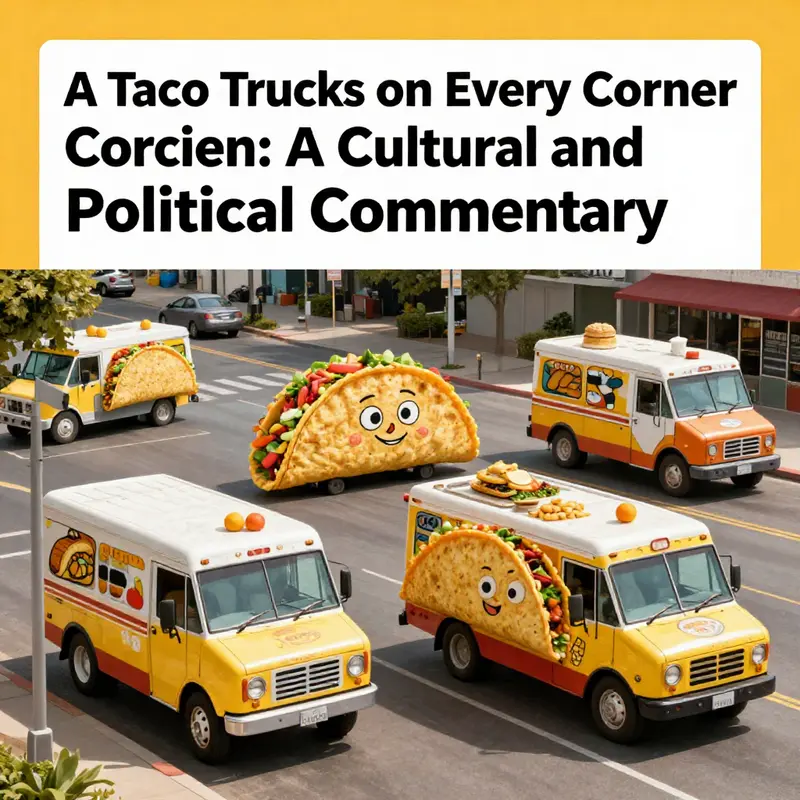
When memes take aim at politics, they often choose images that look almost absurd on purpose. The phrase ‘a taco truck on every corner’ works not just as a joke about food trucks, but as a visual carnival that distorts the ordinary into a street-level panorama of urban life. This is where visual humor does its most effective work: it grabs attention with brightness, movement, and scale, then layers in social critique until the image itself becomes a commentary on culture, policy, and the rhythms of city living. The meme’s visual logic rests on exaggeration—streets flooded with color, grills, steam, and chrome competing for skyline space—so the viewer recognizes the joke before the political punchline lands. It is a form of satire that uses a familiar symbol to question what policymakers imagine when they think about border, immigration, and national identity. In that sense, the humor is not merely about tacos; it is about a public conversation that feels larger than a single dish or a single street corner.
The meme’s ascent into mainstream online culture began in a moment when immigration rhetoric and border policy were hotly debated on both sides of the aisle. The imagery of countless taco trucks sweeping through a city mirrors concerns about labor, migration, and how urban cuisines become part of a shared urban imagination. What makes the visual stretch so effective is the juxtaposition of something intimate and everyday with a high-stakes political debate. Food, after all, is not just sustenance; it is memory, community, and a map of who belongs in a city. When a city street is imagined as a sea of taco trucks, the joke shifts from a punchline about abundance to a meditation on inclusivity and the porous boundaries that run through neighborhoods. The trucks—bright, mobile, and simultaneously humble and ornate—become stand-ins for cultural flows. They symbolize not only culinary mobility but a form of social movement that challenges the idea of fixed borders. In this frame, exaggeration becomes a humane invitation to imagine public space as something more inclusive, more flavorful, and less punitive.
The meme’s political energy intensified during the 2016 U.S. presidential cycle, when the idea of a border wall and stringent immigration policies dominated online discourse. Critics observed that the imagery of overflowing taco trucks could serve as a counterweight to hardline rhetoric, turning what could be seen as a fear-based narrative into something playful yet pointed. The humor works by deflating a fearsome political stance through absurd abundance. If policy proposals promise control and containment, the meme answers with a proliferation of a beloved street-food culture—a form of soft resistance that refuses to erase the cultural contributions of immigrant communities by turning them into caricature. The exaggeration is not simply silly; it is a deliberate rhetorical strategy. By stretching a single food truck into a ubiquitous urban phenomenon, the meme reframes policy questions about immigration into questions about belonging, daily life, and the shared pleasures of city living. It invites viewers to see ordinary street life as a durable, evolving ecosystem rather than a static, threatened landscape.
A notable moment in the meme’s dissemination came from a parody account associated with Jill Biden, which jokingly tweeted that her husband was up all night drafting a bill guaranteeing taco trucks on every corner. The absurdity of that imagined policy—an official document that formalizes a playful urban reality—revealed how humor can reframe political ambition. Rather than simply ridicule, the exchange demonstrates how meme culture can bend political conversation toward imagination, experimentation, and collective memory. The image of ubiquitous, colorful trucks becomes a shared canvas where communities rehearse claims about culture, labor, and everyday survival in metropolitan spaces. Platforms like Pinterest and Know Your Meme amplified this phenomenon, turning single images into a loop of GIFs, edits, and remixes. Each iteration adds a layer of social commentary, from nostalgia for a past neighborhood to a critique of policy that may seem distant from the realities of street vendors who feed tens of thousands each day. The meme’s persistence signals a broader truth about internet culture: exaggeration is a lingua franca that makes dense political discourse legible to a wide audience by pairing it with visual delight.
Importantly, the humor thrives on the incongruity between a mundane fast-casual staple and the seriousness of political rhetoric. The visual juxtaposition—the cityscape reordered by the presence of countless trucks, sizzling grills, and neon—invites viewers to pause and consider the daily infrastructure that underwrites immigrant food economies. The meme becomes, in effect, a map of social networks: where trucks park, how workers move, the routes by which ingredients travel, and how communities gather around street food as a form of shared expression. The exaggeration is a stylized form of cultural commentary, acknowledging that these trucks are more than food stands; they are nodes in a network of labor histories, family businesses, and culinary experimentation. In this sense, the humor is both affectionate and critical: it celebrates the vibrancy of urban street life while reminding audiences that policy decisions touch real people, real livelihoods, and real cultural practices.
The enduring resonance of the meme lies in its capacity to distill ambiguity into a single, highly legible image. It invites viewers to interpret, to laugh, and to think about what a city is supposed to look like and whom it should nourish. The trope of a taco truck on every corner becomes a refrain for a more inclusive urban imagination—one that refuses to compress culture into fear or scarcity. In the best iterations, the humor does not erase discomfort; it channels it into a playful, imaginative, and collectively owned critique. The result is not just a joke about abundance; it is a reminder that public spaces thrive on diversity, mobility, and the daily acts of sharing food and language across communities. As such, the meme is a phenomenon that travels beyond a single joke. It evolves into a cultural shorthand for discussing immigration, labor, and urban identity—an invitation to reframe policy through the lens of everyday joy and communal resilience.
For readers who want a sense of how the street-food ecosystem depicted in such memes translates into real-world practice, a broader look at culinary mobility and street-food innovations can ground the conversation. See this related discussion on how mobility and design choices in street-food operations shape culinary experiences and safety on the road, a topic that echoes the meme’s attention to the urban grid and the people who light it up with flavor. Taco Trucks Unleashed: Top 5 Models for Culinary Success
External resource: A NPR overview of the meme’s origins and political edge offers essential context for understanding how exaggerated imagery functions as social commentary in digital culture. https://www.npr.org/2016/09/02/492385267/a-taco-truck-on-every-corner-a-meme-born-from-political-satire
Final thoughts
The meme of ‘A taco truck on every corner’ serves as a delicious metaphor for the intertwined nature of culture, politics, and community. It invites taco lovers, local workers, event planners, and corporate teams alike to celebrate not just a culinary delight, but a cultural icon rich in significance. As we reflect on the layers behind this meme, we appreciate the humor that can bridge divides and bring communities together. Let’s cherish our taco trucks not just as food vendors, but as representatives of cultural identity, political resistance, and social unity.