
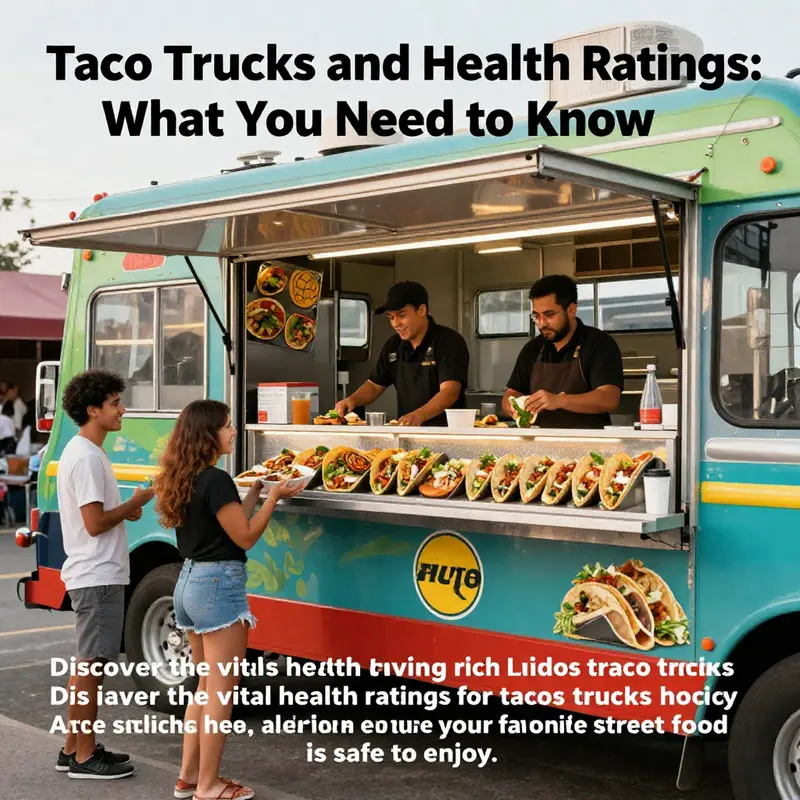
When you think of indulging in your favorite taco from a lively taco truck, the last thing on your mind might be health ratings. However, these essential evaluations play a critical role in ensuring that the food you savor is both delicious and safe. Taco trucks, beloved by cuisine lovers and culinary adventurers alike, are governed by regulations that enforce hygiene and safety standards. This leads us into a deep dive into health ratings for taco trucks. Our exploration will cover the systematic overview of regulations, the specifics of health department grading, practical ways to access these ratings, and why they matter for your peace of mind. Let’s unwrap the layers of this flavorful subject!
Health Ratings on Wheels: How Public Inspections Shape Taco Trucks and the Street-Front Menu
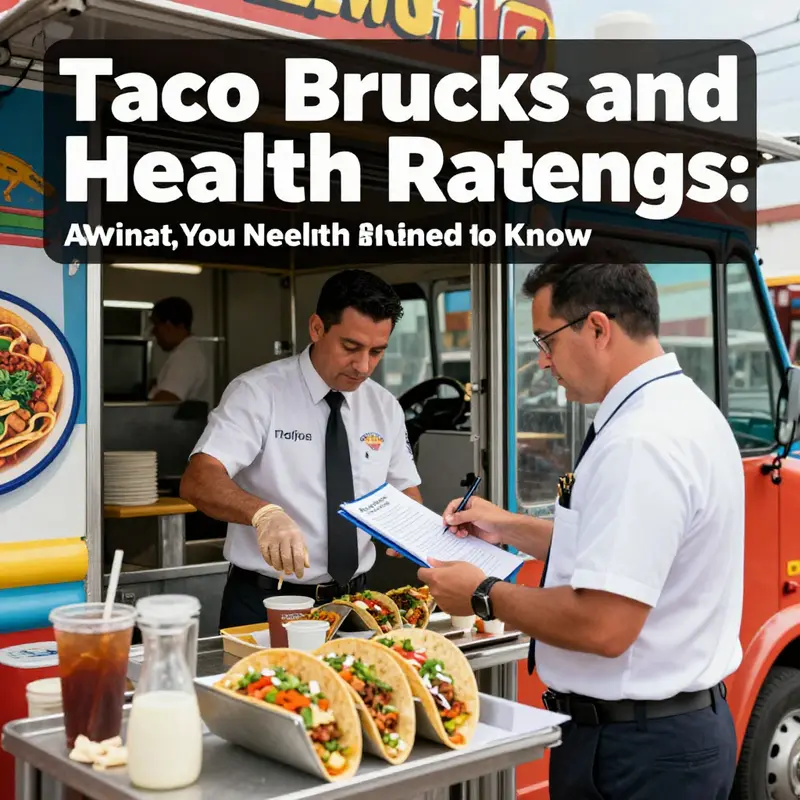
Taco trucks operate where city life unfolds—parking lots, curbside corners, and neighborhoods that rarely show up on a single street map. They are mobile kitchens that fold the energy of a festival into a daily routine, and their appeal often lies in speed, freshness, and a sense of local identity. But beneath the sizzling corn tortillas and the aroma of simmering meat lies a steady, unglamorous fact of urban food: health ratings. In many jurisdictions, these ratings are not hidden in a file drawer or whispered among enthusiasts; they are published, searchable, and meant to guide the choices of curious customers who want their street meals prepared with care. The public health system treats taco trucks as restaurants in motion, subject to the same discipline as brick-and-m mortar venues, just delivered with wheels and a different rhythm of service. This is not a theoretical concern, but a real practice that shapes how trucks plan menus, how often they stop for maintenance, and how customers decide where to order on any given evening.
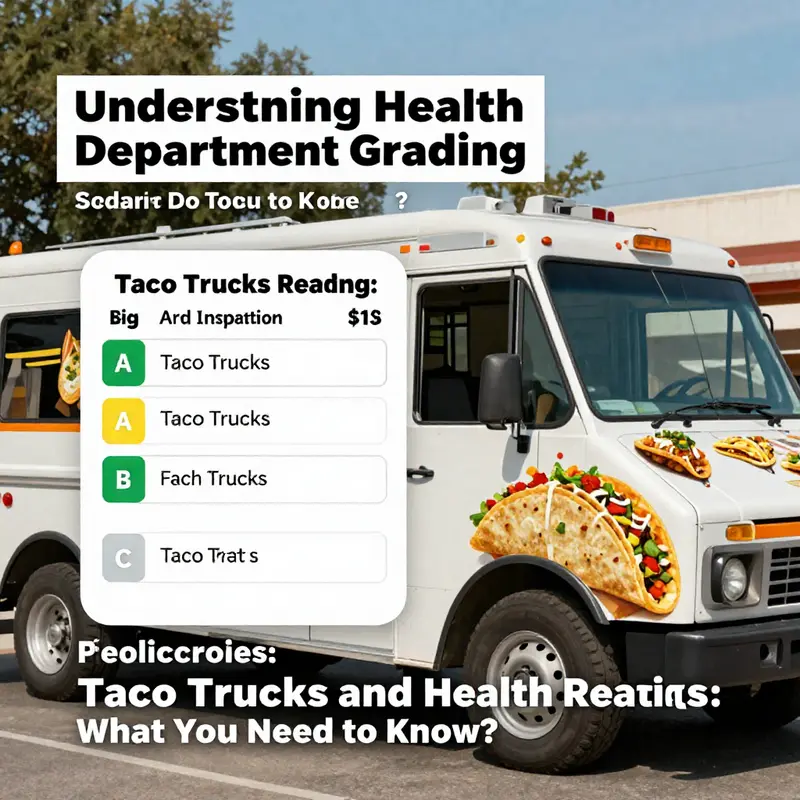
In cities like Los Angeles and Austin, health departments run regular inspections of mobile food vendors, and they assign a public health grade based on sanitation, food handling, and compliance with safety regulations. In Los Angeles, the Department of Public Health uses a letter-grade system—A, B, or C—that is posted publicly where customers can see it, sometimes even on a visible placard at the vendor’s window. The purpose is straightforward: provide a quick, interpretable signal about safety standards, with A signaling the highest level of compliance and C signaling areas in need of improvement. The record is not merely ceremonial; it has practical consequences for a truck’s daily traffic, its ability to attract repeat customers, and its capacity to build trust within a busy urban food ecosystem. A historical snapshot from Pico-Union, where the Tacos Tamix truck received a B grade in May 2016, illustrates how these ratings travel with a truck and become part of its reputation. The grade is not a stamp of perfection, but a public record of current practices that customers can respect—or question—before they bite.
The mechanics of obtaining and maintaining a good health grade hinge on a set of observable, repeatable standards. Inspectors look at sanitation conditions inside and around the truck: the cleanliness of cooking surfaces, the organization of the prep area, the effectiveness of food storage and cold-holding equipment, the presence and condition of handwashing stations, and the elimination of cross-contamination risks. They examine temperature controls for hot and cold foods, verify that foods are prepared at appropriate temperatures, and assess how ingredients are handled from storage to service. They also evaluate pest control measures, waste management, and cleaning schedules, along with how well operators document their processes. Each of these elements contributes to a comprehensive picture of how a vendor manages risk on a moving platform, where variables such as traffic, outdoor temperatures, and inconsistent power sources can complicate even routine tasks.
What makes health ratings particularly meaningful for taco trucks is the way the information is surfaced and updated. Many cities maintain searchable databases on their health department websites, where customers, vendors, and community advocates can verify scores, violation histories, and current statuses for licensed mobile food vendors. The transparency is not about fault-finding; it is about enabling informed choices and encouraging ongoing compliance. When a customer checks a database and sees an A rating, a sense of confidence is reinforced; a B or C signal prompts curiosity, questions about what went wrong, and perhaps a plan to observe the operation for themselves on a future visit. The effect is a feedback loop: trucks that rely on street-level visibility respond to ratings by tightening procedures, improving training, and investing in equipment maintenance to avoid repeat deficiencies. The result is a more reliable standard of safety across a fleet of mobile kitchens, each with its own story and neighborhood loyalties.
Austin, with its own distinctive culinary culture, offers a vivid illustration of how health ratings intersect with mobility and community identity. The City of Austin’s Health Department website serves as the authoritative portal for inspection reports, violation histories, and current health grades for licensed mobile vendors, including taco trucks. The official platform is not merely a bureaucratic archive; it is a dynamic resource that keeps pace with a city whose food scene thrives on mobility and experimentation. The city’s approach recognizes that taco trucks are not static operations but itinerant participants in daily life, often shifting between neighborhoods to meet demand, to experiment with flavors, or to participate in events that draw crowds from across the metro area. In this context, the health rating becomes a baseline measure of consistency, rather than a one-off verdict, signaling whether a truck maintains the hygiene standards that customers expect when they place an order for fresh salsa, carefully cooled fillings, and clean utensils.
The strategic value of these ratings for operators goes beyond compliance. For a family-run or community-rooted truck, a strong health grade can translate into higher customer trust, repeat business, and better access to permits or event opportunities that contemplate safety records as part of the selection criteria. Operators often respond to ratings with disciplined routines: daily pre-shift checklists to ensure that cooking temperatures are logged and monitored, routine sanitization cycles for cutting boards and surfaces, and precise inventory protocols that minimize the risk of holding time for perishable ingredients beyond safe limits. Staff training becomes not a cosmetic add-on but a central investment, because one imperfect shift can produce a visible consequence on the next inspection. The added mobility of taco trucks means that a credible record in one district can help a truck cross into another neighborhood with greater confidence, reinforcing the value of consistent practices regardless of location.
Yet the system is not without nuance. Health ratings are snapshots of specific moments in time, and they can be influenced by factors that deserve careful interpretation. A rating speaks to how well a truck manages routine, ongoing risk factors—sanitation, temperature control, and safe handling—at the time of inspection. It does not guarantee the absence of any incident in the days between checks, nor does it capture every possible hazard that could arise from imperfect sourcing, supply chain disruptions, or unpredictable weather. This is why health departments often emphasize that ratings are a tool for safety, not a final judgment on a restaurant’s overall quality. They are part of a broader ecosystem that includes vendor training, public health outreach, and community monitoring. For customers, the takeaway is not to assume perfection but to use the rating as a reliable signal of fundamentals, while staying alert to other cues in the service experience—cleanliness of the serving window, the professionalism of the staff, and the consistency of the menu’s execution.
In practice, the interaction between mobility and regulation creates a living marketplace of accountability. A truck can move with the tempo of a city’s demands, but it cannot outrun the standards that keep food safe. The inspector’s gaze, focused on details such as clean food contact surfaces, proper labeling, and the absence of cross-contamination pathways, becomes a compass guiding daily operations. A high rating encourages a truck to maintain programmatic discipline—temperature logs updated in real time, sanitizers replenished on schedule, and staff trained to respond quickly to issues as they arise. A lower rating prompts targeted improvements: a closer look at handwashing facility access, better separation of raw and ready-to-eat ingredients, or tighter pest control measures, all of which can be addressed with evolving procedures and equipment upgrades. In this sense, the health rating functions as a public performance metric tied to the practical realities of cooking on wheels, where space is limited, temperatures can swing, and the clock never stops.
The conversation about ratings also intersects with public education. Not all customers interpret letters with the same depth, and not all are aware of the inspection schedules or the scope of what is inspected. This is where food safety culture, both for operators and customers, matters. Operators who actively engage with health data—sharing their own corrective actions after a violation, explaining how they address temperature monitoring, and inviting neighbors to observe their sanitation practices—build a narrative of transparency that complements the public score. Customers who understand the basics of safe food handling—such as accepting that a truck may post a B but have a plan to address a noted issue—are more likely to support trucks that demonstrate a commitment to improvement. The balance between trust in the rating and informed skepticism invites a more nuanced street-food ecosystem, where success rests not on a perfect record but on consistent, credible, and responsive practice.
Amid this evolving landscape, one can observe a broader trend toward data-driven safety that aligns with modern consumer expectations. Technological enhancements—digital temperature probes, digital logbooks, and real-time alert systems—are becoming more common in mobile kitchens. When a truck automatically records and transmits temperatures, or flags a deviation to the operator and health department, the system shortens the distance between a potential risk and a corrective action. Operators who embrace these tools often find themselves with smoother audits, because the data tells a story of ongoing vigilance rather than a single moment of compliance. The culture of safety expands from the back of the truck to the surrounding community: patrons can ask about storage temperatures, inspectors can reference precise log records, and the broader city ecosystem benefits from reduced foodborne illness risk and improved confidence in the street-food scene.
For readers who want a practical pathway to understanding health ratings in their own city, the core takeaway is simple: look up the latest inspection results on the local health department’s site, note the grade and any recent violations, and observe how the truck operates in daily practice. In Austin, and in many other jurisdictions, the official portal is the most trustworthy starting point for verifying a truck’s health status. If you want to explore a resource that highlights contemporary safety advancements in food trucks, you can read about ongoing improvements in the field through the linked discussion on safety advancements in food trucks. Safety advancements in food trucks.
The street-food landscape is a shared enterprise between operators who run the moving kitchens and the public that chooses when and where to eat. Health ratings are the public language of that enterprise, translating complex, behind-the-scenes practices into a simple signal that travelers can interpret. They remind us that good food on wheels is possible only when sanitation, training, and accountability ride along with the menu—and that, in a cityscape where a taco truck can appear in a new neighborhood overnight, keeping pace with safety standards is what keeps the flavor alive and trusted. As communities continue to embrace the mobility and diversity of street food, these ratings will remain a touchstone—a public reminder that good food should always come with a clear commitment to safety.
External resource: For official records and current health inspection details, the City of Austin Health Department provides direct access to inspection reports and current health grades for mobile vendors at https://austintexas.gov/health.
Under the Lamp of Public Health: Do Taco Trucks Wear a Visible Health Rating?
Under the Lamp of Public Health, the story of taco trucks and health ratings unfolds as a practical, lived experience rather than a bureaucratic footnote. It begins with a simple premise: in many places, the people who prepare and serve food in mobile units are subject to the same health standards as those in fixed locations. Inspectors step aboard or into the service area, check the cleanliness of surfaces, the organization of the workspace, and the way food is handled from prep to plate. They review whether raw and ready-to-eat foods are stored separately, whether utensils are kept clean and sanitized, and whether temperatures are monitored to keep potentially hazardous foods safe. They also assess personal hygiene practices—gloves, handwashing, and the overall demeanor of staff in terms of cleanliness and safety. When the inspection is complete, the truck is assigned a rating that is made public for the benefit of consumers who may never have the chance to peek behind the serving window.
In major urban centers—cities with a dense mix of daytime markets and nighttime strolls—the health department’s grading approach has become a familiar feature of the street-food landscape. A widely discussed example, though not named here to keep the focus on practices rather than brands, is a letter-grade system used by a large California metropolis. The grades A, B, and C correlate with various levels of compliance, and the posted grade is a signal to customers about the truck’s overall adherence to health codes. A grade of A typically indicates that sanitation and food handling meet or surpass the standard expectations; a B suggests that while most requirements are met, some improvements could be made; and a C points to more significant concerns that could expose customers to higher risk. This framework, while standardized in spirit, is adapted to local regulations and inspection checklists, which means the exact criteria can vary from city to city. Yet the core idea remains constant: public health stars the show, and the public gets to see the score.
The public posting of scores serves several purposes. First, it keeps operators accountable. A visible grade creates a tangible incentive to maintain high sanitation standards because customers notice and read the grade before choosing where to eat. Second, it informs consumer choice in a fast-moving market where mobile vendors regularly change locations. A truck that operates in a new neighborhood today can appear in a different corridor tomorrow, and the public-facing rating helps residents decide whether to sample its offerings. Third, it fosters trust. Customers who see high grades feel reassured that the truck’s practices align with established safety norms, while those who notice a lower grade may opt for a different option and, in some cases, prompt a retailer to improve.
The concept of a grade is complemented by the availability of inspection histories and notes. In many systems, the public can access a rolling record of past inspections, with dates, the specific items cited as deficient, and the corrective actions taken to address them. This longitudinal view is valuable because it reveals patterns. A truck that repeatedly shows up with corrosive cleaning issues or temperature handling violations might prompt a revisit by health officials or a direct conversation with the operator. Conversely, a truck that has repeatedly demonstrated improvement shows a commitment to ongoing safety, a message as important as any single letter grade.
From a consumer’s perspective, translating a letter grade into real-world judgments involves a blend of vigilance and context. An A is a strong endorsement, but it does not guarantee perfection in every visit. A B, while not ideal, is not an invitation to dismiss a truck out of hand. It becomes a cue to observe more closely during the interaction: are foods being kept at safe temperatures? Is the prep area clean and organized? Is the handwashing station clearly accessible and consistently used? Consumers who adopt this habit of looking beyond the letter can gain a robust sense of a truck’s safety culture—its routines, its discipline, and its readiness to respond to concerns.
For operators, health ratings translate into continuous improvement opportunities. A public grade is not merely a badge; it is feedback in a structured form. It signals where to invest resources, whether that means upgrading refrigeration units, refining cleaning schedules, or reinforcing training for staff. It also shapes relationships with regulators and customers. When a truck meets high standards, the public endorsement can be a powerful differentiator in a crowded market. At the same time, a lower grade can catalyze targeted improvements, turning a temporary setback into a long-term commitment to safety. In this sense, scoring becomes a practical instrument for balancing speed, efficiency, and safety on wheels.
The broad pattern of health ratings for taco trucks thus intertwines transparency with accountability, practical safety checks with consumer empowerment, and the mobility of street food with the stability of public health oversight. The system recognizes that mobile vendors operate in a dynamic environment that demands both rigorous standards and flexible enforcement. It also acknowledges that food safety is not a static achievement but an ongoing practice—one that benefits from public visibility, operator diligence, and continuous learning.
To readers seeking the direct texture of how this works in real life, the simplest route is to review official postings. Health departments typically offer a searchable database of mobile food facilities, where you can pull up the latest score for a truck by name or location, examine the history of prior inspections, and see notes on any violations and follow-up actions. The bite-sized data can be surprisingly informative, helping you triangulate the safety story behind the dish you’re about to enjoy. While the exact formatting and scoring logic may vary across jurisdictions, the underlying promise remains the same: a public, accountable system that helps keep street food safe while supporting the vibrant economy of taco trucks that contribute to urban flavor and community life.
For readers who want to explore beyond the specifics of scoring and into the future of safety practice, there is a parallel conversation about how technology and process improvements are shaping inspections. Advances in equipment, sanitation workflows, and data transparency are reinforcing the core goal: safe food service wherever the truck happens to set up for the day. If you’re curious about practical implications for safety technology in food trucks, you can explore resources that discuss broader safety advancements in food trucks. For more detail on official, jurisdictional inspection results, see the Los Angeles County Department of Public Health’s Mobile Food Facility Inspection Results portal.
Chasing Cleanliness on Wheels: Accessing Health Ratings for Taco Trucks and What They Really Mean
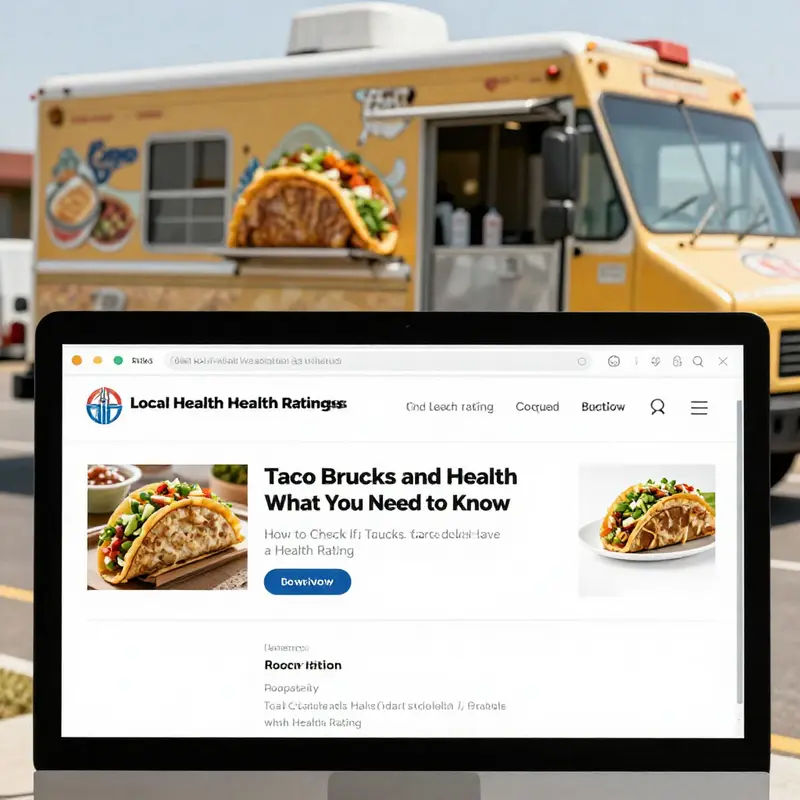
Taco trucks are subject to the same health inspections as brick-and-mortar restaurants, and their records are usually public. Inspectors review food storage, temperatures, cleaning, handwashing, and pest control, then assign a grade or score. In many cities a letter grade (A, B, or C) or a numeric score is posted near the serving window or on a public portal. To verify a specific truck, start at your local health department’s website or portal and search by vendor name or permit number to view the inspection history and current rating. Some cities provide mobile-friendly databases that show recent inspections and any violations, sometimes with corrective actions. You can also use official apps linked to your health department for quick lookups by GPS. Remember that a single inspection is a snapshot; ongoing improvements and repeated violations over time offer a fuller picture of a truck’s safety practices. Access to these records builds trust and invites accountability across the mobile food scene.
Stamped with Safety: How Health Ratings Shape Trust and Choices in the Taco Truck Landscape
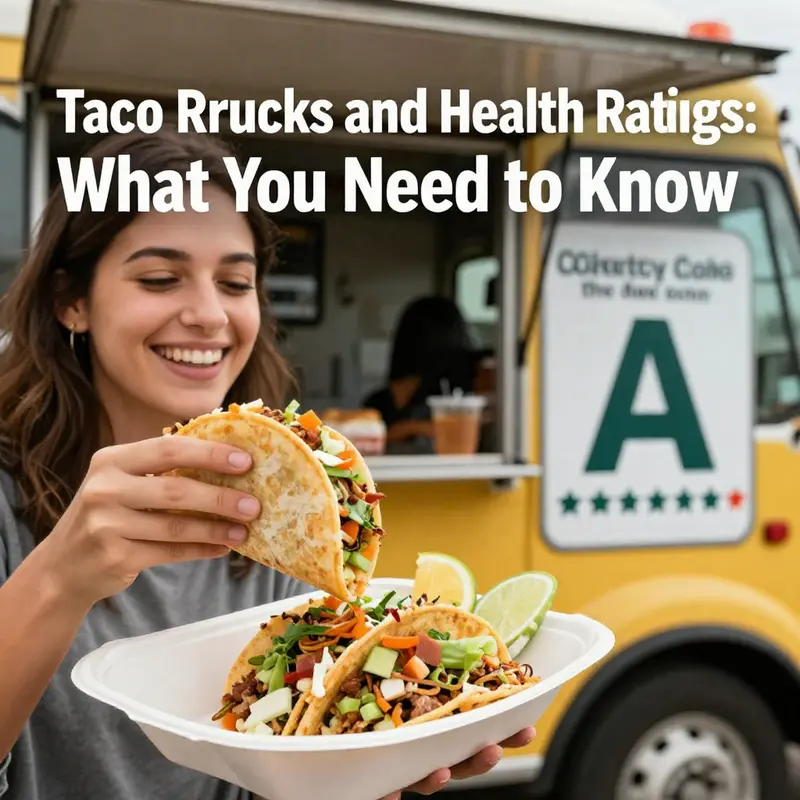
Taco trucks are more than a convenient bite to eat; they are a corridor of street-level commerce, culture, and community. In cities where curbside dining thrives, hundreds of mobile kitchens operate on the edge of regulation, governed not by brick-and-mortar kitchens but by the rules that exist on a digital and physical ledger. A health rating is the public face of that ledger. Across many jurisdictions, inspectors visit, observe, take temperatures, review sanitation logs, and then translate those observations into a rating that anyone can see before stepping up to the window. When people ask, do taco trucks have a health rating? the answer is not just yes; it is a reminder that safety standards travel with every salsa-dusted tortilla. The rating is public, consistent, and designed to help diners make a prudent choice in real time. The rating becomes less a badge of pride for the operator and more a shared guarantee—if the score is high, the crowd can trust that what lands on their plate has passed a standard that protects their health as well as their appetite.
These ratings typically hinge on a framework of procedures that look at how food is stored, handled, and served. Sanitation conditions in the kitchen space matter, but so do the routines of food handling, handwashing, glove use, cross-contamination controls, and the management of hot and cold foods. Local health departments often use a letter or star system; in Los Angeles, the department of public health posts an A, B, or C grade after an inspection, and that grade is publicly posted so anyone can verify it. The Pico-Union case of Tacos Tamix, cited in city records, illustrates the point: a B grade indicates compliance with many essential safety measures, yet also signals room for improvement. Ratings are not a final verdict; they are a snapshot of current practice. Critics may point to occasional variability between inspections, but the goal remains constant: a transparent snapshot that helps protect consumers and pushes vendors toward better hygiene and safer food handling.
Transparency through standardized ratings helps convert risk into readable information. Diners can translate a letter grade into a mental map of what is happening behind the window. A high grade—an A or a 5-star rating—carries a signal of reliability. Patrons who see such marks tend to feel more confident about how their food is prepared, who handles it, and how it is kept on ice or hot held through service. Conversely, a mediocre or poor score triggers more careful consideration: potential lines lengthen, or customers decide to skip that truck in the moment and move on to a higher-rated option. This dynamic is more than consumer psychology; it shapes actual behavior patterns. Communities that publish scores build a baseline of accountability, and operators learn quickly that good hygiene aligns with consistent customer trust. Observing what the rating communicates—clean surfaces, orderly storage, and careful cooking temperatures—helps people decide where to eat and why some carts win repeat business while others struggle to stay afloat.
From a public health perspective, the rating system functions as a scalable, real-time risk management tool. Health departments conduct spot inspections or scheduled audits and record dozens of data points—temperatures, food storage, cleanliness, pest control, and the presence of appropriate permitting and certification. Those findings are compiled into a public score that travels with the truck, sometimes in the form of a visible placard on the cart and sometimes through an online database. The result is a culture of accountability that punishes complacency and rewards diligence. This system also invites continuous improvement; even a truck with an A rating understands that the bar shifts as new guidance emerges and as bacteria learn new tricks. For shoppers, the most important feature is accessibility: a straightforward, searchable database that makes it easy to compare trucks in a neighborhood and plan a route around the best options for that day.
Consider the real-world implications in cities where ratings are actively monitored. In Los Angeles, quick checks of the health department’s public postings reveal a spectrum of scores across the mobile dining landscape. The example of a B grade for a Pico-Union taco truck serves as a cautionary tale and a teaching moment. It demonstrates how ratings reflect concrete practices—like meat temperature control, clean equipment, and proper food handling sequences—and how they also reflect less tangible elements, such as orderly lines and documented cleaning routines. These details, though they may seem granular, inform a consumer’s sense of safety every time they take a bite. For readers curious about how safety protocols translate into everyday service, the article on safety advancements in food trucks offers a closer look at the latest measures operators adopt to uplift performance on the street. Safety advancements in food trucks.
Public health data do more than inform diners; they shape vendor strategies. When inspectors consistently report strong results, operators have a business incentive to maintain practices that support good scores—cleaning routines, cold-holding, proper handwashing, and equipment sanitation. The reliability of ratings helps a street food economy flourish by reducing perceived risk and encouraging repeat visits. In turn, high scores can boost foot traffic, elevate a truck’s standing among neighbors, and create positive word-of-mouth franchises of safety and quality. Some operators even go beyond the minimum requirements, investing in better packaging and display that preserve temperature and presentation, which reinforces the sense of care customers feel as they open a hot, well-packaged taco. In this regard, a careful observer may see health ratings as part of a broader customer-experience framework, not merely as a compliance exercise. The careful alignment of practice, packaging, and public transparency can turn street food into a trusted dining option rather than a risky impulse purchase.
Moreover, the ratings act as a lever to lift the entire street food ecosystem toward higher safety standards. Research and practice suggest that a majority of vendors already adhere to the World Health Organization’s Five Keys to Safer Food, and there is a sense that public reporting accelerates that alignment. The data point that 57.3 percent of food trucks demonstrate good adherence to Five Keys signals that many vendors are already on the right track, even if not uniformly across every domain. Yet the public airing of scores creates a continuous incentive to improve. A truck that audits itself and shares its practices—such as temperature logs, separate cutting boards for raw and ready-to-eat foods, and meticulous cleaning schedules—makes it easier for customers to choose safety. The real value lies not just in the number, but in the clarity with which that number communicates the owner’s commitment to safe handling, clean equipment, and a culture of responsibility from prep to plate.
This dynamic also intersects with how customers perceive value in a crowded market. When a cart earns a high rating, it becomes a signal that the operation cares about the entire experience—timely service, neat packaging, and consistent quality. The packaging aspect is worth emphasizing: even with a great score, customers may be more satisfied when the food is presented in secure, durable containers that preserve temperature and preserve the integrity of salsas and fillings during transit. Thoughtful packaging is not a cosmetic touch; it is part of the safety chain, reducing the risk of spills, contamination, and temperature abuse on the road. In cities with dense street-food ecosystems, ratings can help shoppers navigate a maze of options quickly, aligning appetite, budget, and safety preferences in a single decision. That coordination is a practical benefit of public health accountability, turning information into action at the moment of choice.
Ultimately, readers who want to translate ratings into real-world decisions can adopt a simple approach: check the health department’s database before selecting a cart, compare how nearby trucks score on specific measures, and note any patterns of improvement over time. The city’s health portal often hosts a searchable, up-to-date log of inspections that lets consumers see when a truck was last evaluated and what corrections were mandated. This transparency is a cornerstone of the street-food economy’s legitimacy, supporting both safety and culinary exploration. If you are a vendor seeking to elevate your standing, consider not only meeting the letter of safety rules but also communicating your practices clearly to customers through visible hygiene routines, tidy prep spaces, and reliable packaging. The combination of high health ratings, visible cleanliness, and packaging that preserves quality creates a compelling value proposition for today’s urban diners. External resource: Health Star Rating Labels: A systematic review and future research. https://www.ncbi.nlm.nih.gov/pmc/articles/PMC9124860/
Final thoughts
Understanding the health ratings for taco trucks enhances your overall dining experience, providing confidence that the delicious tacos you crave are produced with care and adherence to safety standards. With health departments playing a vital role in regulating and ensuring sanitary conditions, you can enjoy your street food adventures without worry. The next time you find yourself in line at your favorite taco truck, remember the importance of these ratings—they reflect a commitment to both taste and safety. Dig in, enjoy, and seize the flavorful delights at your fingertips!