
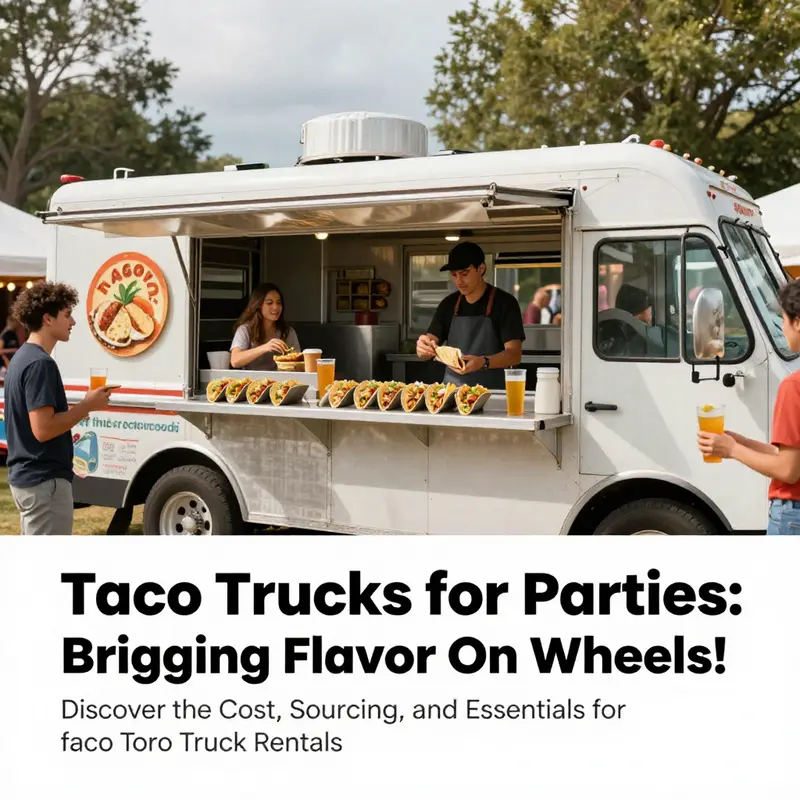
If you’re dreaming of a festive gathering filled with mouth-watering tacos, hosting a taco truck party might just be the perfect solution! In this culinary adventure, we’ll explore the ins and outs of taco truck costs—from brand new beauties to well-loved used units—make sense of the factors that influence their pricing, delve into the best sourcing practices, and highlight essential regulatory compliance to consider. Whether you’re an office worker on a break, a taco enthusiast planning your next bash, or a corporate HR team seeking to spice up your next event, this guide will equip you with everything you need to know. Let’s taco ’bout it!
Carrying the Feast: The Real Cost of a Party Taco Truck
A party that doubles as a culinary experience benefits from the spectacle and efficiency of a taco truck rolling in with a fully functional galley. But price is never a single number. It unfolds across size, configuration, and the decision to buy, lease, or rent. For a party, the cost conversation begins with whether you want a bare, mobile kitchen or a fully equipped mobile venue that can handle high volumes, multiple menu items, and branding that matches the event’s vibe. In practice, the price spectrum reflects a blend of engineering choices, local market conditions, and the level of customization you insist upon. The result is a practical map rather than a single destination, a map that helps planners decide whether they should buy, rent, or perhaps start with a modular approach that grows with the calendar of events.
When you narrow the lens to new taco trucks designed for party use, the typical price band is a revelation. A basic, fully equipped mobile trailer can fall between roughly twelve thousand and thirty-five thousand dollars. That range covers the essentials: a sturdy, insulated trailer with a galley kitchen to keep heat and moisture under control, cooking appliances that meet the demands of a varied menu, refrigeration to keep perishables cold, and the water and waste systems that ensure sanitary operation. It also includes practical needs such as electrical hookup and, if you plan to run off-grid, a generator. Brand styling, interior layout, and the materials chosen for food-contact surfaces also push or pull on the budget. In short, the more you want in terms of durability, speed, and presentation, the higher the bill.
Beyond the basics, the market shows a tier where higher-end finishes and premium equipment begin to push costs above fifty thousand dollars. Here you might find larger capacity configurations, advanced ovens, or full HVAC systems to maintain a comfortable working environment for the crew and a comfortable dining temperature for guests. For events that hinge on a distinctive look, or that require a larger staff and more elaborate service lines, the investment rises quickly. Yet even within this upper tier, many manufacturers offer modular designs. You start with core cooking functions and then add features later, spreading the upfront cost and giving you the option to upgrade as the party circuit expands. It is a pragmatic approach for organizers who hold out hope for a growing catering life rather than a one-off extravaganza.
The components listed above are not just line items but levers that pull the price in different directions. A griddle, a grill, a fryer, or a combo oven each carries its own price tag, and the choice among those options often determines the path you take. Refrigeration units, especially those that deliver reliable cold storage for a wide range of ingredients, add another layer of cost. Then there are the water and waste systems, critical for continuous operation during a busy event—nothing stops service faster than a mismanaged drain or a leaky hose. Electrical systems are another focal point, since many organizers require reliable power in outdoor settings, sometimes with portable generators as a backup. And if you want the truck to reflect your brand—from color to logo to interior finishes—that branding space itself becomes a cost factor, albeit one that pays off in guest recall and event signaling.
A practical decision many planners face is whether to pursue outright ownership or to pursue financing or leasing options. Financing can spread the cost over time, aligning payments with the life of the equipment and the revenue it helps generate. Leasing can offer a lower monthly outlay, a built-in maintenance plan, and the flexibility to upgrade as newer configurations enter the market. For a party, leasing or renting can be particularly appealing, especially when the event is a once-off or you anticipate only a handful of appearances in the near term. Rental rates for a mobile taco setup typically range from five hundred to one thousand five hundred dollars per day, varying by location, the amount of equipment included, and the level of staffing or service annexes the package requires. The choice between ownership and access becomes a question of whether your calendar justifies continuing use or whether the truck should be treated as a temporary platform for a single memorable celebration.
Sourcing and quality are inseparable from cost. If you are exploring a vehicle manufactured in large, integrated hubs in Eastern China, for example, you may encounter substantial price competition driven by production scale. Suppliers often emphasize standardized components, efficient assembly lines, and the potential to adjust configurations quickly. The economies of scale, however, should not overshadow the importance of compliance and safety. Prospective buyers must verify that the equipment meets established standards, such as ISO 9001 for quality management and appropriate certifications for kitchen equipment, including safety and sanitation benchmarks. Third-party inspection reports further help guarantee that the unit you are purchasing can withstand the demands of a busy kitchen and outdoor service. When evaluating suppliers, it is wise to look beyond price alone and consider the supplier’s track record, after-sales support, and the possibility of customization with reliable lead times. Eastern clusters often present a compelling option for those who want rapid production turned toward competitive pricing, but the ultimate decision rests on the supplier’s ability to deliver a product that is safe, durable, and easy to service after a party.
For planners facing a single event, the arithmetic often points toward rental or short-term leasing as the most cost-efficient route. Yet if you anticipate multiple gatherings in a year or a growing menu that calls for broader capabilities, investing in a modular model can be a smarter long-term move. A modular design enables you to initialize a compact cooking setup and gradually add components such as a dedicated steam table, additional gas lines, or enhanced ventilation. This approach preserves cash flow while maintaining a path to higher service levels as demand grows. The decision tree becomes a function of calendar density, space at the venue, and the specific culinary ambitions you want to support on party day.
From a narrative perspective, the path to a party taco truck also benefits from a broader context. Consumers today expect consistency in taste, speed, and presentation, even when the service is mobile. A well-designed truck can deliver a cinematic experience—flashing lights, a compact stage for the cooking crew, and a clean, inviting workspace that emphasizes safety and cleanliness. The price you pay for these gains is not a mere number; it is the promise of reliability on a crowded festival or an intimate backyard celebration. You are paying for operational efficiency, for gear that lasts, for a service that can scale, and for a kitchen that can be stood up quickly in a park, parking lot, or private driveway.
To connect with the practical side of market choices, many buyers turn to industry coverage that outlines the spectrum of configurations and the relative merits of each. For readers seeking guidance on model variations and practical pathways to launch, the field often highlights concise comparisons that emphasize what matters most for a given event. See how different configurations stack up in a detailed overview of models that align with culinary ambitions and event budgets. And for those who want a broader sense of the ecosystem that feeds party taco operations, you can explore the broader conversation around models and practical pathways through the linked article. Top taco truck models for culinary success.
Finally, if you are weighing the economics of a one-time event against a longer-term investment, the external market resource landscape provides a reality check. A reputable external guide can illustrate the range of options, from entry-level setups that are affordable for a single gathering to premium configurations that become the centerpiece of a recurring business. Consider the ongoing costs beyond the initial purchase—maintenance, insurance, fuel, and ongoing licensing—and balance them against the revenue potential from successful parties and repeat events. Such a holistic view helps avoid sticker-shock and supports a decision that aligns with how often you expect to use the truck and how much you value the branding and guest experience it enables. For further price context, an external resource is available that aggregates current market offerings and pricing comparisons for new taco trucks.
In sum, the cost of a party-ready taco truck sits at the crossroads of ambition and practicality. A basic, fully equipped setup offers a reliable platform within reach for many hosts, while a higher-end configuration promises extended capabilities and a striking presence. A modular approach allows you to start small and expand, preserving cash and upgrading as demand grows. Renting remains a compelling option for infrequent use or for testing whether a mobile kitchen fits the event calendar. Across all paths, the emphasis should remain on safety, compliance, and the ability to deliver a consistently delicious experience that makes guests linger, smile, and remember the feast. The right choice for your party is the one that aligns with your schedule, your menu, and your appetite for a mobile dining show that travels with your celebration.
External resource: https://www.tacotruck.com/new-taco-trucks
Counting the Sizzle: The Real Costs of Buying a Used Taco Truck for Your Party
When you’re planning a party, a taco truck can be the centerpiece that turns an ordinary event into a memorable culinary experience. The appeal is clear: fresh-tasting ingredients, a festive vibe, and the seamless theater of a sizzling grill that guests can watch. But behind the aroma and the swagger of a mobile kitchen lies a practical question that can shape your entire budget: how much does a used taco truck really cost for a party, and what are you buying for that price? The short answer is that the price range is wide, and the difference between a good buy and a costly misstep often comes down to condition, configuration, and the source of the unit. For many event planners, a used trailer or trailer-like mobile kitchen in the mid-range of the market offers the most attractive blend of immediacy and value. Those looking to minimize upfront cash outlay may find units listed around the low end, while those seeking higher-end equipment or larger layouts might observe prices toward the upper end. Yet price alone rarely tells the whole story, especially in a market where age, wear, and prior use can shimmer behind a polished exterior. The decision becomes a matter of tradeoffs between capital expense and ongoing reliability, compliance, and operating efficiency, all of which ripple into every party moment, from setup time to service quality.
From the standpoint of a party budget, the familiar rule of thumb is to treat a used taco truck as a substantial, but potentially reversible, investment. On typical listings, used units for a party tend to fall in a broad band, reflecting a spectrum of configurations and conditions. A practical range that often surfaces in the market sits roughly between fifteen thousand and thirty-five thousand dollars. Within that band, you’ll encounter a spectrum of possibilities: a compact, pre-owned mobile setup with essential kitchen components that can be deployed quickly, or a larger, more robust unit that features multiple cooking stations, cold storage, and more extensive water and electrical capabilities. It’s common to see some listings dip below fifteen thousand, particularly when the unit shows signs of age or when certain components require refurbishment. Conversely, units priced above thirty-five thousand usually involve upgraded equipment, newer interiors, enhanced ventilation, or larger footprints designed for higher-volume service. The price not only reflects the unit’s physical size, but also the current state of the equipment—griddles, fryers, refrigeration, sinks, and the electrical backbone that powers a full kitchen line. The variance is not random; it’s a mirror of the realities of used equipment, where a few good bargains sit beside other offerings with more to prove than price alone can reveal.
What you’re buying at these price points goes beyond metal and paint. A used taco truck typically includes a package of kitchen infrastructure that can dramatically shorten your event’s setup time. Many units come with integrated grills or fryers, refrigeration appropriate for keeping ingredients fresh, sinks for sanitation, and electrical systems designed to handle the rigors of continuous food preparation. Some configurations may also feature built-in ventilation to handle smoke and steam, a critical factor for both safety and comfort in any party setting. If you’re planning a one-off or a limited series of events, a unit closer to the lower end of the range might continue to serve well with minimal upgrades. If you’re envisioning frequent gatherings or a more ambitious culinary program, a higher-end used unit can deliver a more seamless flow, less downtime between cooking and service, and a broader menu range—though it will require a larger upfront investment.
The choice, however, is not purely about the price tag. Condition and equipment level matter as much as the sticker price. A well-maintained used trailer with recent servicing, verified electrical and gas components, and a clean health-code footprint can feel like a near-new setup in daily operation. In contrast, a cheaper listing that hasn’t been actively serviced may demand a refresh that eats into what initially looked like a bargain. When you’re shopping for a party, you need to think about the practicalities that drive a smooth experience: the reliability of the cooking equipment, the capacity and layout for your menu, the water and waste systems, and the ease with which you can keep up with food safety standards during a lively event. A hidden rust patch, a leaky sink, corroded connections, or outdated electrical panels can transform a festive moment into a maintenance headache and a source of last-minute delays.
For planners who are considering international sourcing as a route to driving down price, there are additional layers of complexity—and opportunity. In markets with integrated manufacturing ecosystems, such as major industrial districts, you may encounter offers that present attractive price points due to lower labor and material costs. Turnkey solutions sometimes appear, promising built-in ventilation, dual-power capabilities, and interiors that align with recognized sanitary standards. Lead times can be relatively short once payment is complete, and the option to customize menus or layouts can be appealing when you’re coordinating an event theme or brand experience. But international sourcing introduces considerations that are not as prominent in local purchases: the risk of misaligned expectations on equipment quality, potential gaps in after-sales support, and the need to verify compliance with local health codes and safety regulations before the event. A party plan, after all, hinges on reliability as much as flavor.
If you want to anchor your decision in a practical path, it helps to define what kind of party you’re hosting and how intensively you intend to use the truck. A single weekend party with a modest guest list may justify a smaller, more economical unit that meets your most essential needs. A festival, corporate event, or recurring tasting series might justify a larger footprint and a more robust equipment set—one that minimizes downtime and maximizes service speed. Either way, the core process is the same: assess the unit’s condition, confirm the presence and status of critical components, and demand documentation that supports health and safety compliance. You’ll want to ask for maintenance histories, recent refurbishments, and proof of any inspections or certifications that reassure you the kitchen is ready to operate. It’s not just about ensuring the grill can heat and the fridge keeps cool; it’s about confirming the entire system can function harmoniously under the strain of an event-day schedule.
For those who want a quick way to orient themselves within the broader landscape of event-ready models, a concise reference exists that lays out the spectrum of options and the practical considerations behind them. For a concise look at models suited for events, you can explore the guide on Top food truck models for entrepreneurs at ordertacoselpelontacotruck.com/blog/top-food-truck-models-for-entrepreneurs. This resource can help you conceptualize how different layouts and equipment configurations translate into real-world performance at a party. It’s not a substitute for a hands-on inspection, but it provides a framework for evaluating whether a given used unit can deliver the service level you envision on event day. When you translate those insights into a buying decision, you’ll enter the negotiation with clearer expectations about what you’re paying for and what you’ll need to invest after the purchase to keep the kitchen compliant and reliable.
In the end, the cost of a used taco truck for a party is a balance between capital outlay and long-term value. A lower upfront price can translate into higher maintenance and retrofit costs, while a higher upfront price can reduce the need for immediate upgrades and yield smoother operations. The best approach is to view the purchase as part of a larger event strategy: how you’ll deploy the truck, how often you’ll reuse it, and what regulatory hurdles you’ll navigate to serve guests with confidence. If you plan carefully, a used taco truck can become not just a one-off investment for a single party but a flexible platform for a growing culinary venture or a reliable centerpiece for a memorable event series.
Pricing the Street Feast: A Practical Tour of Taco Truck Costs for a Party
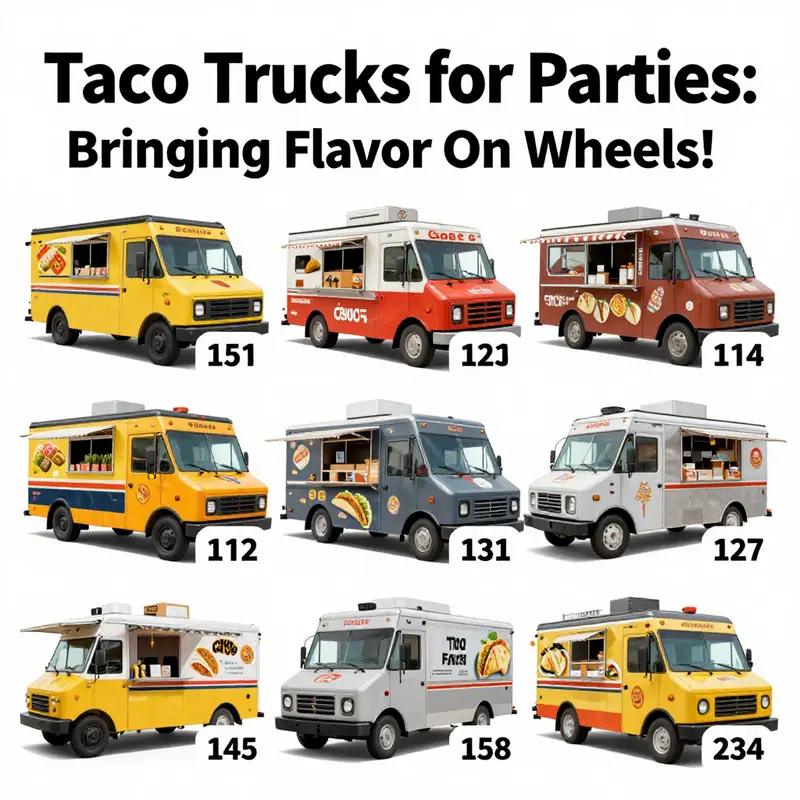
This chapter explains the practical costs of hiring or purchasing a taco truck for a party. It covers purchase options (new vs. used), transport and setup, permits, utilities, and ongoing operating costs. It also explains how location, menu, and vendor reputation influence the final price and offers guidance for obtaining transparent line-item quotes to keep budgeting realistic.
Buying a Party-Ready Taco Truck: Sourcing, Safety, and the Real Price of a Turnkey Mobile Kitchen
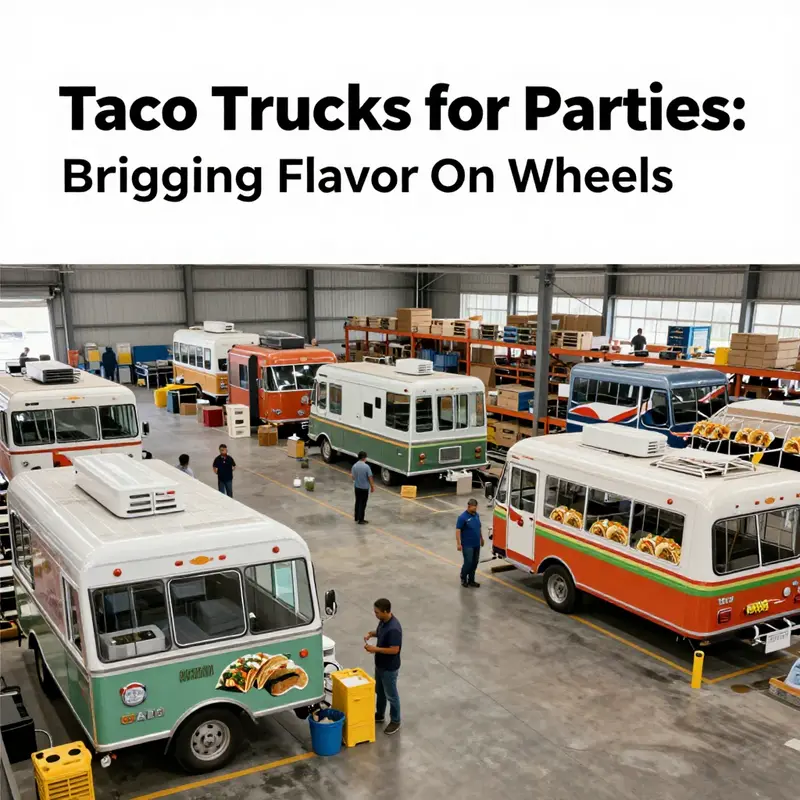
When you start planning a festive gathering with tacos in mind, the question of price quickly becomes only part of the story. A party-ready taco truck isn’t just a rolling kitchen; it’s a compact business partner that must perform, endure, and respond to the unpredictable rhythm of events. The sticker price—whether you’re eyeing a brand-new unit or a used marvel from a distant hub—tells you something, but it doesn’t tell you everything you need to know to avoid cost creep, delays, or logistical headaches. The market has a wide range. New trucks from standard configurations can fall roughly between the low thousands and the mid five-figure range, depending on the configuration, materials, and the level of customization. Used units, especially those that have journeyed from overseas refurbishers, often sit lower on the price scale, sometimes well under the five-figure mark, but with trade-offs in age, warranty, and remaining service life. Those numbers, while helpful as a starting point, only begin to map the real landscape you will navigate when you choose a partner and a plan for your event calendar. The smarter move is to step back from the single-figure focus and consider the broader value a supplier brings to a party you want to remember for all the right reasons. A reliable supplier isn’t just a seller of a vehicle; they’re a provider of a reliable, compliant, and well-supported solution tailored to event needs. In practice, this means looking past what you pay for the shell and examining what you gain in safety, efficiency, and peace of mind on the night of the party and in the weeks that follow.
A practical stance starts with recognizing that the market dynamics you see—new versus used, domestic versus overseas—are shaped by regional ecosystems. In particular, industrial clusters across eastern China have built sophisticated supply chains around stainless steel fabrication, modular kitchen systems, and trailer engineering. These hubs can deliver turnkey food trucks that come with much of the essential ecology already in place: ventilation, gas lines, sinks, electrical panels, and pre-installed utilities that reduce on-site setup time. For party hosts, that translates into less time wrestling with hookups and more time enjoying guests and food. When you talk with potential suppliers, you’re not just shopping for a chassis; you’re evaluating the ecosystem behind the vehicle—whether it will sustain a weekend of events, comply with local health rules, and adapt to the variety of dishes your menu will feature. The price tag, in this sense, becomes a reflection of the completeness of the package rather than a single figure.
To navigate this landscape without losing sight of practical constraints, frame your evaluation around three pillars: technical capability, regulatory compliance, and ongoing support. Technical capability means the supplier can tailor a unit to your cooking ambitions and daily operation. Some parties will require rapid-fire grilling and a high-volume workflow; others may emphasize a broader menu with slow-cimmeral preparations and delicate taco fillings. The truck you choose should align with your cooking tempo, space, and generator capacity, as well as your preferred layout for staff movement, food safety, and guest interaction. The best partners can offer configurations that integrate venting systems compatible with your menu, gas lines sized for safe and consistent operation, efficient sinks for handwashing and dish duties, and electrical panels designed to keep refrigeration reliable during long events. Such turnkey considerations shorten setup time and reduce the risk of last-minute changes on the day of the party.
Compliance with safety and health regulations is the other essential pillar. The food truck you invest in will operate in environments that reward predictability and discipline. Look for suppliers whose equipment carries recognized safety marks or certifications—UL, CE, or equivalent—as appropriate for your jurisdiction. Beyond the marks, demand transparency on materials and construction. Corrosion-resistant components and 304-grade stainless steel surfaces are not mere luxuries; they are practical safeguards against wear, contamination risks, and frequent cleaning. Third-party inspection reports and documentation that trace the sourcing and fabrication methods can offer a level of confidence that a used unit might otherwise lack. In addition, a credible supplier should provide clear, documented maintenance schedules, warranty terms, and a pathway for routine servicing. When you’re hosting events across seasons, you want to know that a grease trap, ventilation hood, and fire-safety measures perform with minimal fuss, rather than leaving you scrambling for fix-it solutions while guests wait.
The third pillar—after-sales support—often determines whether a good investment becomes a dependable workhorse. A party schedule is rarely a straight line; it often includes last-minute changes, interim upgrades, and occasional component failures that demand quick responses. A supplier with a robust support backbone will offer preventive maintenance recommendations, a straightforward process for obtaining replacement parts, and a responsive service team capable of rapid triage and on-call troubleshooting. The reputational signal here matters as much as the technical one. You should seek partners with a track record of reliable communications, predictable delivery times, and transparent documentation on the materials and construction of the truck. A durable, well-supported unit is easier to deploy for pop-up events, catering partnerships, or private celebrations, and it helps you protect your investment over time.
This is where regional dynamics can shape your decision. The ecosystems in Henan and Shandong, and the broader eastern China manufacturing landscape, have tuned a flow from fabrication to assembly that makes it feasible to source turnkey trucks that are ready to roll with only minimal on-site preparation. The advantage is not only cost efficiency but the potential for consistent, high-quality builds where crews understand how to integrate ventilation, gas lines, sinks, and electrical panels into a compact footprint. The result is a more predictable night, with fewer surprises as the party clock ticks toward service time. It also means you can negotiate terms that reflect a more complete offering: a product, a service plan, and a long-haul partnership rather than a one-off purchase. For hosts weighing options, this shifts the calculus from “how much is the truck?” to “how much value do I gain from a complete, compliant, and supported solution that fits my event calendar?”
To help you balance appetite and budget, consider a practical reference point from the world of models and configurations available to entrepreneurs. For a concise catalog that compares layouts and capacities without getting lost in marketing language, you can explore a resource such as the article on top-food-truck-models-for-entrepreneurs. It provides a spectrum of layouts and how they map to price and performance, which can be a useful adjunct to raw price data when you’re planning a party schedule. See top-food-truck-models-for-entrepreneurs.
In the end, the question of how much a taco truck costs for a party rests on two intertwined threads: the price tag and the value package behind it. A low-cost unit might save money upfront but could require more frequent repairs, limited customization, and weaker after-sales support. A higher-priced option from a supplier with a proven compliance record, robust technical capabilities, and a dependable service network is more likely to yield consistent performance, faster setup, and less downtime during busy weekends. The goal is a turnkey solution that aligns with your menu, your team’s workflow, and the cadence of your events. When you choose such a partner, you are not merely buying a vehicle; you are securing a platform that turns a gathering into a lasting memory. For a deeper dive into evaluating and selecting trustworthy taco truck suppliers—particularly from China—consult the credible research and guidelines referenced in the Smart Sourcing study cited in the broader piece of work (as a detailed external resource). External reference: https://www.foodtrucksupply.com/smart-sourcing-used-food-trucks-guide-for-global-buyers
null
null
Final thoughts
Ready to spice up your next gathering with a taco truck? From understanding the range of costs—both new and used—to knowing what to look for when sourcing and the importance of meeting regulatory standards, hosting a taco truck party can be both enjoyable and hassle-free. Jumping into this experience not only caters to your guests’ taste buds but also turns any event into a culinary celebration that people will remember. Now that you’re informed, get out there and taco ’bout how to make your party a hit!