
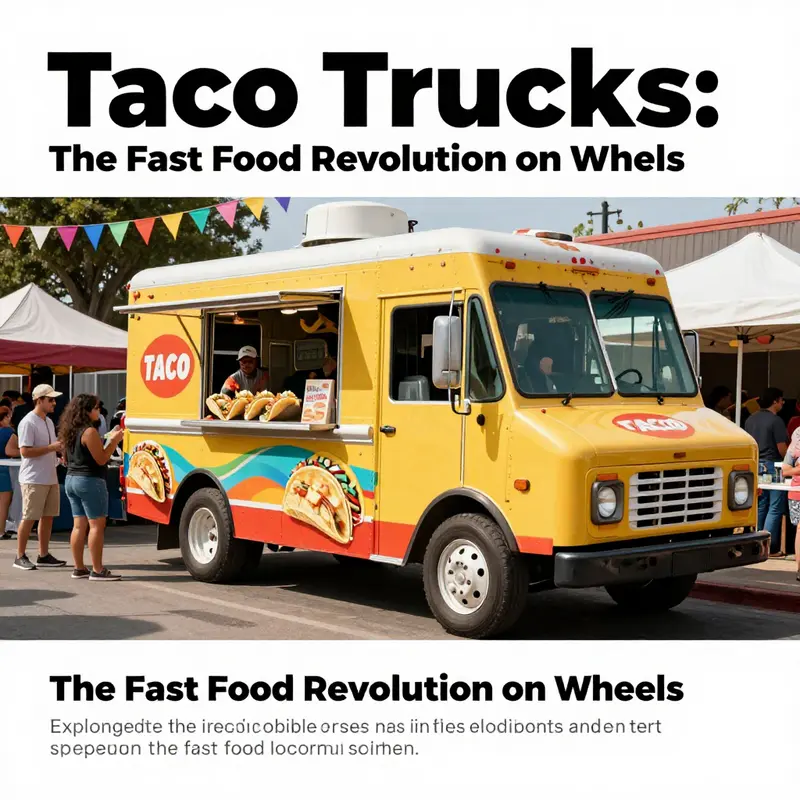
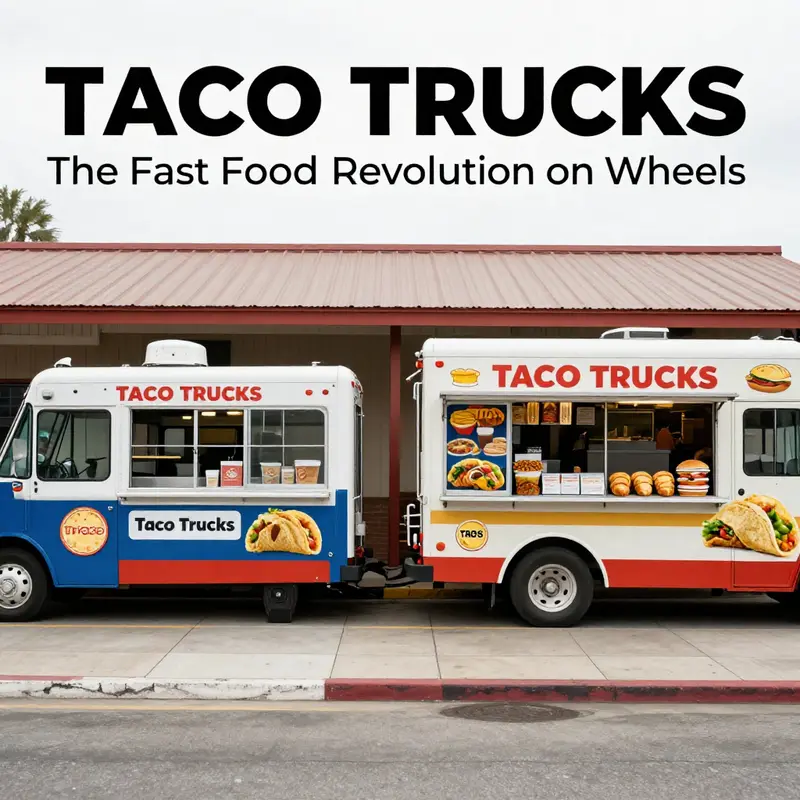
Taco trucks have become essential to our urban landscapes, serving delicious and affordable meals on the go. But are they truly fast food? This exploration dives into the characteristics that link taco trucks to the world of quick dining, from their rapid service to their cultural significance. Each chapter will illuminate a different aspect of taco trucks as fast food, from culinary trends and economic impacts to societal perceptions and comparative analyses with traditional fast food eateries. Get ready to whet your appetite as we journey through the flavorful world of taco trucks!
Wheels of Speed, Plates of Flavor: Redefining Fast Food Through Taco Trucks
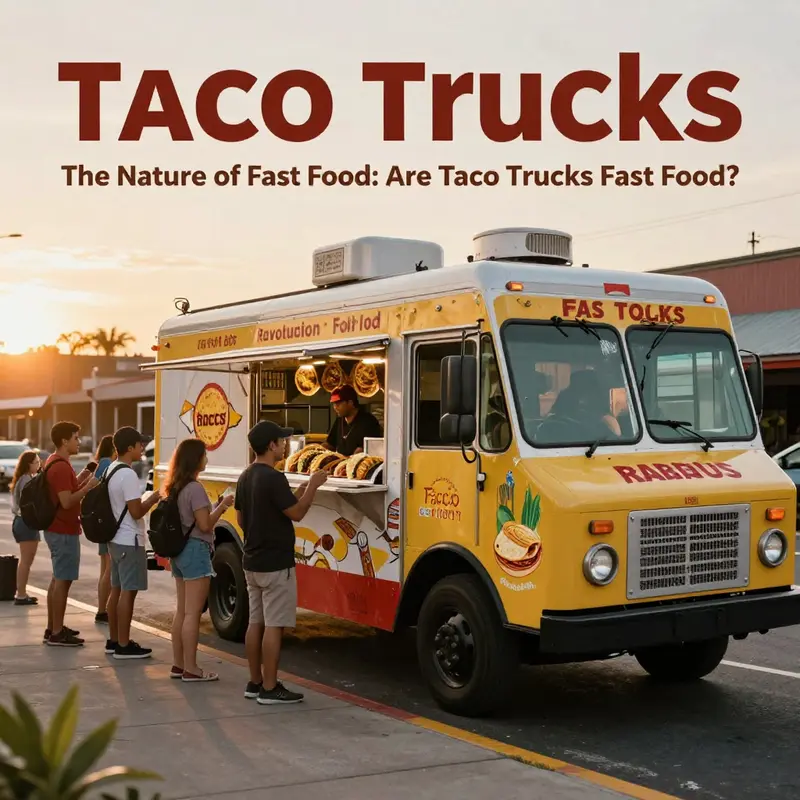
Fast food is often described in terms of speed, economy, and ubiquity. Yet the rise of taco trucks reframes what fast food can look like when mobility becomes part of the service model. These mobile kitchens operate at the intersection of quick service and cultural specificity, turning street corners into temporary dining rooms that arrive where people are, when they need a bite, and without the ceremonial rigmarole of sit-down meals. In this sense, taco trucks are more than mobile eateries; they are kinetic manifestations of a fast-food ecosystem that moves in tune with urban rhythms. The core elements of fast food—speed, convenience, affordable pricing, and a streamlined approach to preparation—show up in a form that is both familiar and uniquely adaptive when placed on wheels. The result is not a deviation from fast food so much as a reimagining of its architecture, where speed is not merely a function of a drive-through window but of a route taken across a city map, a menu carefully calibrated for rapid assembly, and a service style that emphasizes proximity and spontaneity as much as it does efficiency.
Speed is the first, most obvious attribute. A taco truck’s promise hinges on the minimal wait between order and plate. The cook’s station is compact, the menu intentionally focused, and the mise en place is organized to minimize delays. In a traditional brick-and-mortar setting, speed can be constrained by room layout, customer flow, and kitchen zoning. A mobile setup sidesteps many of those constraints by bringing the kitchen closer to the customer’s path. The line often forms in a funnel of anticipation, but the actual act of cooking remains a brief, predictable choreography: tortilla heat, a handful of fillings, a quick fold, a finish with salsa or lime, and service that feels instantaneous. The efficiency comes from a combination of practice and design—the arrangement of burners and prep surfaces to reduce cross-traffic, the prechopped ingredients that riders of the lunch rush can trust, and the ritual of assembly that keeps orders moving with minimal interruption.
Equally central is affordability. Fast food owes much of its appeal to price points that align with daily budgets. Taco trucks succeed here by maintaining tight cost control without sacrificing the sense of value. The menus tend to emphasize several staples—soft tortillas, a few protein options, a crisp garnish, a handful of sauces—rather than a sprawling array of choices. This limited scope is not a constraint but a strategic choice. It allows for bulk buying, predictable yield, and consistency across different locations and days. For customers, the payoff is visible: a satisfying, reliably priced meal that can be enjoyed quickly during a lunch break or a late-evening dash between errands. The perception of value extends beyond dollars; it includes time saved, the absence of reservation hoops, and the freedom to decide on a whim in a way that a sit-down restaurant often cannot accommodate.
Mobility adds another layer of fast-food logic to the taco truck model. The city is a moving target, and the truck becomes a flexible unit capable of meeting shifting demand. Offices empty, campuses burst into life, and events draw long queues; a taco truck can reposition to wherever foot traffic is thickest. This mobility has cultural consequences as well. It disperses the culinary spotlight beyond fixed storefronts, allowing neighborhoods that might not sustain a brick-and-mortar operation to support a quick-service option for a few hours at a time. In this sense, street-level quick cuisine becomes a conduit for culinary accessibility, enabling neighborhoods to experience a broader spectrum of flavors without the commitment of a full-scale restaurant build-out. Rather than a stray corner of the food landscape, taco trucks become active nodes in an urban dining culture that prizes immediacy, adaptability, and shared experiences around a simple, handheld meal.
Yet the conversation around whether taco trucks fit neatly into the label of fast food invites nuance. On one hand, their time-to-plate and price-to-value ratios align closely with traditional fast-food expectations. They cater to busy schedules, emphasize standardization of preparation, and provide a predictable, repeatable experience for a broad audience. On the other hand, many taco trucks foreground fresh ingredients, craft-inspired fillings, and an emphasis on regional or traditional techniques that evoke a more artisanal feel. This tension—the blend of speed with culinary authenticity—does not undermine their fast-food identity; it enriches it, adding layers of culinary discourse to the simple act of feeding people quickly. The broader fast-food ecosystem accommodates both commodity-style quick service and more refined, chef-driven street food, and taco trucks occupy a space where those poles blur rather than separate. They remind us that speed and quality can coexist, and that rapid service can be paired with meaningful flavor and thoughtful sourcing.
Regulatory frameworks and public policy play a formative, sometimes friction-filled, role in shaping how taco trucks function within the fast-food landscape. Across cities, the legal scaffolding around vehicle-based commerce—parking, zoning, health inspections, and route permissions—determines not only where a truck can stand but how long it can stay and what it must carry in terms of health and safety standards. The public record reflects this reality: cities regulate taco trucks much as they regulate other mobile vendors, balancing the appetite for accessible food with concerns about traffic, neighborhood impact, and food safety. A notable reference point is the evolving policy environment that treats taco trucks as significant players in local food markets, subject to rules designed to ensure safe, orderly operation while recognizing their value to urban dining. These rules shape the daily calculus of operators, who must decide where to park, when to operate, and how to maintain a consistent standard of service in diverse neighborhoods. The legal context reinforces the view that taco trucks are integral components of the fast-food sector, not casual exceptions on the culinary map.
For would-be operators or observers curious about the practical dimensions of running mobile food, the supply chain and capital considerations are telling. The economics of a taco truck enterprise hinge on a combination of capital investment, ongoing maintenance, and a lean staffing model. Some prospective owners explore DOT-certified mobile trailers and kitchen units as viable entry points, reflecting a market that recognizes the legitimacy and scale of mobile food production. Price ranges for certified setups can illustrate the practical viability of entering the space, signaling that a mobile kitchen is not an impractical dream but a reachable business option within the fast-food economy. These financial realities support the broader narrative: taco trucks are not a fringe phenomenon but a functional, scalable avenue for fast, affordable, and accessible cuisine that adapts to urban life.
The narrative of taco trucks as fast food is also a testament to the importance of planning and adaptability in culinary entrepreneurship. A truck’s route, its menu discipline, and its attention to safety and sanitation converge to produce a reliable product in a highly variable environment. The on-the-ground realities of weather, traffic, and crowd dynamics teach operators to optimize every element of the service—from the layout of the cooking area to the precise timing of each order’s assembly. In this light, speed is not merely a function of a trained cook flipping tortillas but a product of systematized routine, disciplined operations, and the ability to read a street map of demand in real time.
Embedded in this discussion is a practical reference for readers who want to explore the operational side without losing sight of the culinary experience. For a practical look at how mobile kitchens optimize speed and menu, consider this overview: Taco Trucks Unleashed: Top 5 Models for Culinary Success. This resource underscores how choosing the right vehicle, equipment layout, and workflow can align a truck more closely with fast-food efficiency while preserving the possibility for flavorful, fresh takes on traditional fillings. It is a reminder that the fast-food label rests not solely on what is served, but on how quickly and consistently it is delivered.
Ultimately, the question Are taco trucks fast food? emerges not as a yes-or-no verdict but as a nuanced understanding of how mobility, speed, affordability, and cultural texture combine to shape a distinctive form of quick service. The urban street is their arena, and the city’s diverse foot traffic provides a dynamic audience whose expectations evolve with time and place. When people pass a line of cooks, hear the sizzle, smell the coriander, and reach for a handmade, hand-wrapped taco with a price that fits a lunch or snack budget, they engage with a tradition of fast, accessible food that has found new life on wheels. The result is a hybrid of convenience and craft—a modern fast-food experience that does not erase the past but adapts it for the pace and mobility of contemporary city life. In this sense, taco trucks reaffirm the central claim of fast food while inviting us to rethink what speed, value, and culinary experience can look like when the dining room travels with the customer. The road becomes the restaurant, and the order at the counter becomes a moment in a shared, itinerant urban ritual.
External resource: https://latimes.com/california/story/2024-09-01/taco-truck-parking-laws-l-a
Rolling Tastes on Wheels: Taco Trucks as Catalysts of Fast-Food Culture
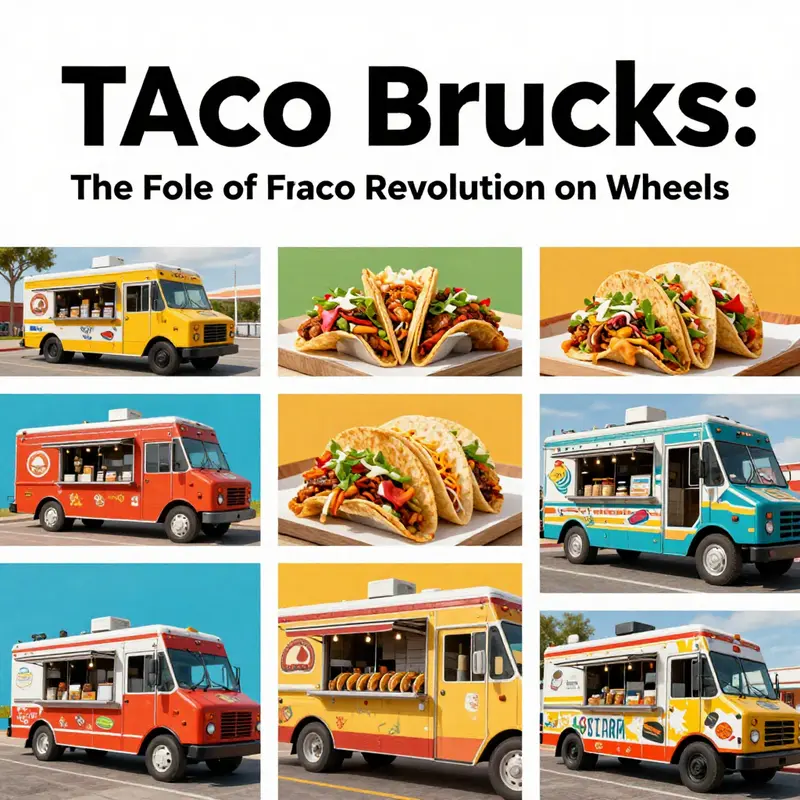
Taco trucks sit at a curious crossroads where tradition meets velocity, where the scent of cumin and citrus travels with the breeze as a cart rolls past a line of office workers or evening pedestrians. They are more than a place to grab a quick bite; they are mobile kitchens that translate a cultural palate into the language of speed and accessibility. In the most straightforward terms, fast food prizes two things: speed and affordability. Taco trucks deliver both, sometimes with an extra layer of regional memory and personal storytelling carried in the steam and smoke that rise from their griddles. They make a strong case that fast food is not simply about rapid service but about delivering familiar flavors with consistency, reliability, and a sense of place, even when that place is an alley, a park curb, or a busy street corner that a city’s heartbeat seems to skim past on its daily circuit.
What makes taco trucks compelling within the fast-food landscape is not just the speed of service but the way mobility enlarges the possibilities for taste. The kitchen is compact, but it is also adaptable. A single truck can pivot from a lunch crowd to a late-night queue by shifting hours, tweaking the menu in response to what neighbors crave, or changing location to chase a different rhythm of foot traffic. In that mobility lies a form of culinary responsiveness that fixed storefronts often struggle to match. The essence of the truck is not simply the tacos it serves but the flexibility it embodies: a raw, kinetic example of quick-service food that respects tradition while embracing change. This blend—speed with cultural continuity—has become a defining feature of contemporary fast-food culture.
Across cities, the taco truck phenomenon reads like a map of immigrant storytelling reimagined for modern urban life. The Mexican-American culinary diaspora that nourishes these meals is older than the modern street economy and younger in its ability to adapt. The trucks bring elements of family recipes, regional variations, and seasonal influences into a format that can reach an expanding audience without the burden of fixed overhead. The result is a kind of culinary democratization: meals that once required a sit-down space or a dedicated shopfront can instead appear at a park, at a festival, or in a transit-adjacent corridor where a paycheck and a craving coincide. This democratization occurs alongside a broader shift in fast food where authenticity and speed can share the same plate. The truck’s power is that it allows a labor force—often driven by family enterprise or small teams—to scale up with agility rather than through expensive real estate.
The legal and regulatory landscape surrounding taco trucks has mattered as much to their growth as the menus they carry. In cities like Los Angeles, the enforcement of local ordinances and the underlying principles of state vehicle and health regulations created a long back-and-forth that tested the balance between municipal control and entrepreneurial freedom. Courts have repeatedly reaffirmed the idea that certain local restrictions do not automatically prevail when the vehicle code and health standards are satisfied, and that operators should be allowed to operate within a framework that does not punish innovation with prohibitive barriers. This legal clarity has real, practical consequences: it lowers the perceived risk for operators to expand into new neighborhoods, test new concepts, and hire more staff without incurring prohibitive fixed costs. The result is not simply more tacos sold but a more robust local economy where culinary experimentation can live alongside established street favorites.
Elsewhere, in cities with strong cultural identities and evolving urban textures, the truck has become a familiar fixture in the city’s evolving gastronomic map. In some communities, families who started with weekend stands—tiny, informal affairs that gathered neighbors for a Saturday feast—found that mobility enabled them to serve larger crowds and create more lasting social ties. The ability to move with the city’s tempo—serving the lunch rush, catching a public park’s afternoon crowd, or meeting the late-night crowd in entertainment districts—transforms the meal into a shared moment rather than a mere transaction. It is not only about feeding people; it is about feeding a sense of belonging, a neighborhood memory that fluidly travels with the truck’s axle and engine. In this sense, the taco truck helps redefine what fast food can feel like: a convenient choice that is also a cultural exchange.
Of course, the ecosystem surrounding taco trucks has broadened beyond saturated street corners and curbside windows. The concept of the mobile kitchen has expanded to include dessert and sweet trucks, which pair high-margin treats with the same mobility that makes tacos accessible. The same design principles—compact equipment, adaptable layouts, efficient refrigeration and cooking—support a wider array of offerings. The result is a diversified micro-economy that can respond rapidly to consumer tastes and seasonal opportunities. These developments hint at a broader trend in fast food: the move toward specialized, lean units that can serve a range of culinary identities without requiring a full restaurant’s scale. In other words, the fast-food landscape is becoming more modular, more boundary-blurring, and more responsive to where people choose to eat and when.
Within this shifting landscape, the question of identity remains powerful. Taco trucks are not merely vehicles; they are cultural artifacts that reflect the evolving identities of the communities they serve. They map where immigrant communities have settled, how neighborhoods have changed, and how urban spaces are negotiated for the sake of shared meals. The food on these trucks—simple tortillas, carefully seasoned fillings, the bright, almost portable flavors of chiles, herbs, and citrus—carries memory and experimentation in equal measure. It is a kind of culinary storytelling on a portable stage, one that travels with the city’s daily routines. The modern fast-food consumer, increasingly attuned to provenance and flavor specificity, finds in the taco truck a familiar comfort that can still surprise—an edible bridge between tradition and contemporary appetite.
This dynamic is not without tension. The mobility that enables rapid scaling and flexible location also raises questions about health, safety, and the pace of urban life. Operators must maintain consistent quality while adopting new equipment, and they must navigate a maze of permits, inspections, and scheduling constraints. Yet these challenges often drive innovation rather than deter it. The same pressure that pushes a truck to deliver meals quickly pushes it to innovate—improving the efficiency of service, refining the consistency of flavor, and layering in small, quality-focused touches that set one cart apart from another. In this way, the fast-food ecosystem that taco trucks inhabit becomes a laboratory for practical culinary engineering—a place where craft and commerce converge on wheels.
To understand how this movement has matured, it helps to consider a broader pattern in which the truck acts as a microcosm of the fast-food industry itself: a system that prizes adaptability, consumer feedback, and the ability to turn insights into meals with minimal waited time. The model invites experimentation with menus that respond to local tastes, with service points that minimize friction for customers, and with branding that communicates a sense of place even as the cart moves across town. The interlude of a meal becomes a shared experience rather than a mere stop along a journey. In the end, the taco truck embodies a modern fast-food ethos: speed without sacrificing cultural resonance, mobility without sacrificing community ties, and scale achieved not through vast footprints but through nimble logistics and an enduring commitment to flavorful, everyday meals.
The conversation around fast food and its cultural footprint continues to evolve. An understanding of taco trucks as fast-food institutions invites deeper reflection on how cities shape food economies and how people shape city life in return. The trucks’ presence in parks, near transit hubs, and along festival routes turns urban spaces into open-air dining rooms that are constantly being renegotiated. This collaboration between city infrastructure and street-level entrepreneurship creates a flexible, human-centered form of fast food that keeps pace with a society that values both speed and story. It is a reminder that the quickest meals can also be the most meaningful, when speed is balanced by memory, place, and the shared experience of eating together on the move.
For readers who want to explore a practical, industry-level sense of how moving kitchens adapt and prosper, there is a broad spectrum of insights that map the evolution from weekend stalls to permanent cultural fixtures. A recent overview captures this trajectory by tracing how operators reframe their concepts to fit evolving urban rhythms, how legal clarity opens doors to broader service areas, and how cuisine becomes a living, evolving dialogue with the neighborhoods it serves. The discussion highlights that fast food, far from being a monolith, is a mosaic of local adaptations, regulatory environments, and entrepreneurial choices, all anchored by the simple demand for quick, tasty meals that feel like home even when they are served from a truck rolling through a city street. This is the heart of the modern fast-food revolution: a movement that respects tradition while leaning into the ingenuity required to meet a demand that moves as fast as the wheels carrying it.
To explore a broader analysis of the legal and cultural dynamics driving this movement, you can consult an external perspective that examines how food-law contests shape urban food culture here: https://doi.org/10.2139/ssrn.1694747. Within the internal sphere, readers may also find value in a practical discussion of moving-kitchen design and menu optimization that highlights how compact equipment and modular layouts enable rapid adaptation—an overview that is detailed in the online piece on taco-truck models and culinary success. The fusion of mobility, tradition, and speed continues to redefine what fast food can be, inviting diners to rethink not just what they eat, but where and how it arrives when hunger calls and time is short.
Economic Impact of Taco Trucks as Fast Food Outlets
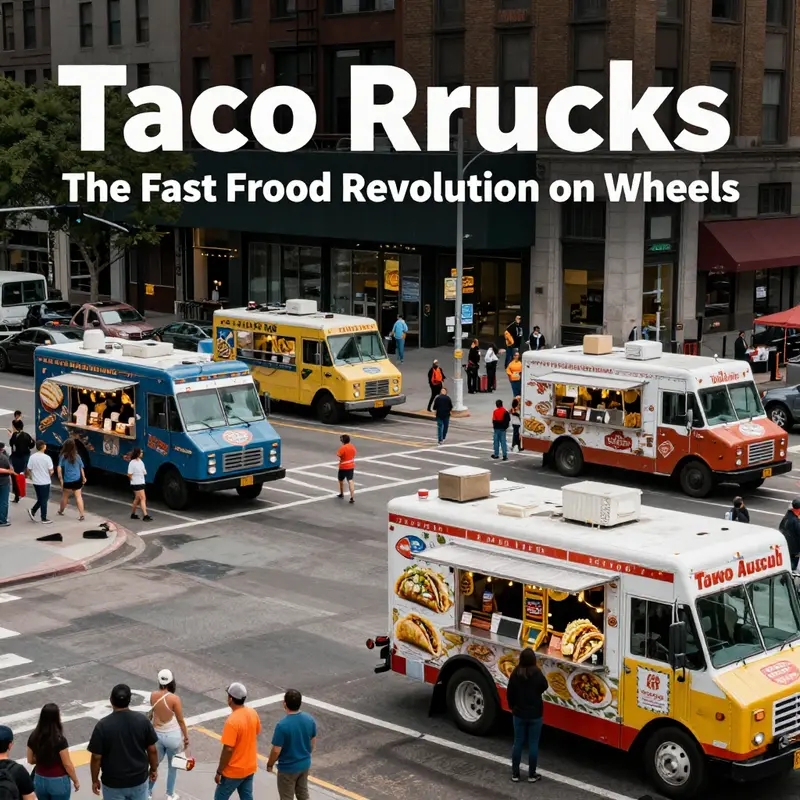
Taco trucks occupy a unique niche in the fast-food landscape: they are mobile, rapid, and comparatively affordable, delivering a dining option that blends convenience with cultural flavor. This chapter examines the economic ripple effects produced by these mobile outlets, moving beyond taste and speed to consider how their presence shapes employment, startup dynamics, local spending, and neighborhood vitality. The core premise is simple: when food is portable and.quick, it becomes a driver of opportunity in places where traditional dining options may be sparse or unevenly distributed. The economic story of taco trucks is not just about the meals they serve; it is about the ways in which a flexible, low-barrier model can mobilize labor, unlock entrepreneurial energy, and draw foot traffic into urban cores and underserved corridors where residents, workers, and students seek fast, reliable nourishment without sacrificing variety or cultural expression. In that sense, they are not only fast food; they are engines of local commerce that operate on wheels, with the potential to shift how communities think about dining, work, and place.”
Taco trucks, as a form of mobile fast food, create jobs and spur nearby economic activity by combining low entry costs with the ability to reach overlapping streams of demand across time and space. The employment logic is straightforward: if a typical taco truck employs a small crew—driver, cook, and cashier—then broad adoption of the model can translate into a substantial labor force. Consider the hypothetical where a country’s urban-economy landscape accommodates 3.2 million taco trucks. If each truck supports three jobs, that would yield about 9.6 million positions at any given moment across the system. While the specific numbers deserve careful calibration in practice, the underlying insight remains persuasive: even modest increments in mobile, low-overhead food vendors can meaningfully expand employment. This aligns with broader labor-market observations that small, service-oriented businesses can absorb workers who might be left out of more formal or capital-intensive restaurant formats. The logic is reinforced by the fact that the U.S. labor force, as of mid-2016, consisted of roughly 159.4 million people, with about 144.6 million employed. When mobile food vending scales, it offers a complementary channel to absorb labor and diversify income sources in urban communities that often face hiring frictions.
Employment generation is not the only economic lever at work. Startup costs for taco trucks tend to be lower than those associated with brick-and-mortar restaurants, which means more people can translate ambition into action with less upfront capital. A key implication of lower barriers to entry is that entrepreneurship becomes accessible to a broader cross-section of society, including groups that may face obstacles in traditional food-service ventures. In practical terms, the model enables individuals to begin with a compact footprint and gradually expand as demand and revenue permit. This incremental growth path reduces risk for first-time operators and can foster local networks of suppliers, collaborators, and part-time workers who contribute to nearby neighborhoods without the capital-heavy commitments of a stationary restaurant. The accessibility embedded in the taco-truck model supports a form of economic inclusion that aligns with broader debates about opportunity, mobility, and durable community wealth. The narrative is not merely about selling tacos; it is about empowering people to build livelihoods in ways that fit their constraints while still delivering speed, consistency, and value to customers who crave reliable, inexpensive meals.
In addition to direct employment and startup affordability, taco trucks influence local economies through accessibility and geographic reach. These mobile units tend to situate themselves in underserved urban corridors, along transit lines, near campuses, and at busy employment centers where workers need a quick, affordable meal during a shift change or a lunch break. By placing themselves in high-traffic zones, taco trucks help synchronize the rhythms of work and everyday life—turning a simple lunch into a touchpoint that supports other local businesses. The result is a positive spillover effect: foot traffic from hungry customers can spill into nearby shops, small-service providers, and even public transportation hubs, creating a microeconomy of sidewalks and storefronts that stays active beyond conventional dining hours. The cumulative impact over time is a subtle but meaningful uplift in local commerce and neighborhood vitality, a reminder that fast food, when delivered through mobile channels, can contribute to broader economic ecosystems rather than simply satisfying appetite in isolation.
Market trends further illuminate the enduring appeal and economic resilience of mobile food outlets. The rise of standardized mobile food units—ranging from electric-powered trucks to vintage carts—signals a growing appetite for flexible, scalable food entrepreneurship. These units lower the capital threshold for new entrants, enabling more people to experiment with location-based dining models, test menus, and responsive pricing strategies. A practical indicator of accessibility is the availability of entry-level mobile trailers and kiosks listed at relatively modest prices, with many options starting around seven thousand dollars. While individual costs vary by equipment, permits, and customization, the broader picture is clear: technology-enabled mobility is democratizing access to the food-service sector and expanding the geography of entrepreneurship. Such dynamism encourages experimentation, competition, and adaptation, which, in turn, pressures incumbents to improve quality, speed, and consistency. The democratization of food service—driven by mobile, low-capital, flexible operations—creates a more diverse marketplace where customers benefit from greater choice and price competition.
For operators and policymakers, the economic narrative of taco trucks invites a nuanced view of how urban food systems function. The mobility and versatility of these outlets enable a form of street-level commerce that complements brick-and-mortar establishments rather than displacing them outright. In dense urban areas, taco trucks can fill gaps in service during peak times or in neighborhoods where fixed restaurants face seasonality or footfall fluctuations. They can also extend the geographic footprint of food offerings by moving to events, campuses, office corridors, and transit nodes, amplifying exposure to potential customers who might not otherwise encounter a given cuisine. From a policy standpoint, this creates opportunities to rethink licensing, storefront waivers, and health-compliance frameworks in ways that recognize the value of mobile service while maintaining safety and quality. The result is not a simple binary between mobile and stationary dining; instead, a more integrated ecosystem emerges, one in which mobility expands access and stimulates nearby commercial activity without eroding established businesses.
The economic logic of taco trucks also intersects with the broader trend toward flexible, city-wide food infrastructure. As communities seek more resilient and inclusive food systems, mobile units offer a practical modality for startup pilots, seasonal overflow, and pop-up collaborations with local vendors. The ability to test different neighborhoods, menu variants, and pricing strategies without a major capital outlay makes the model attractive to aspiring entrepreneurs from diverse backgrounds. In turn, this flexibility can accelerate learning curves, drive improvements in operational efficiency, and encourage a culture of continuous adaptation that benefits customers through shorter wait times, fresher ingredients, and more varied offerings. The result is a virtuous cycle: lower barriers to entry attract talent and ideas, which lead to better products and services, which in turn attract more customers and create more opportunities for economic participation. The cumulative effect strengthens local economies by embedding labor, consumption, and investment within neighborhoods that might otherwise experience slower growth.
This chapter would be incomplete without recognizing the interactive dimensions of entrepreneurship and consumer demand. The taco-truck model thrives where speed, price, and cultural resonance intersect. When these three elements align, customers receive a dependable, affordable meal that respects diverse tastes while offering consistency and speed. The ability of operators to reposition or reconfigure their offerings rapidly in response to demand patterns—such as shifting locations to capture commuter flows or campus schedules—amplifies the economic footprint by extending sales opportunities and maximizing utilization of equipment and staff. This adaptability translates into more stable cash flow and a greater likelihood of long-term survival in a competitive food-service landscape. Operators who leverage this flexibility can reinvest in their businesses, hire more staff, and experiment with menu innovations that respond to evolving preferences, thus contributing to a healthier, more dynamic local economy overall.
For practitioners and observers seeking practical reference points in evaluating model choices, there is value in examining resource syntheses that compare different mobile formats and their implications for labor, capital, and location strategy. A widely cited, practitioner-focused resource outlines top food truck models for entrepreneurs, offering guidance on scale, location, and operational design. This kind of synthesis helps prospective operators weigh trade-offs between mobility, capacity, and cost, and it underscores that the essential strength of taco trucks lies in their capacity to combine speed with adaptability in a way that few traditional outlets can match. Moreover, it highlights the importance of aligning business model decisions with local demand, regulatory environments, and community needs so that mobile food ventures contribute positively to neighborhood life rather than merely chasing quick profits.
From a broader research and policy perspective, the economic story of taco trucks sits at the intersection of employment dynamics, urban development, and consumer access. The labor market context matters because it frames how mobile food ventures contribute to job creation and income generation, particularly in underserved areas where traditional employment opportunities may be scarce. The U.S. Bureau of Labor Statistics has analyzed labor-market trends that illuminate how small, mobile businesses influence employment dynamics, offering a contextual backdrop for understanding how taco trucks fit into the evolving landscape of work. For readers seeking a deeper dive into these labor-market insights, the following external reference provides a foundational perspective on trends that shape mobile and small-business employment across sectors: BLS article.
If you are exploring how to balance mobility with community impact, consider reviewing a practical overview of model choices that helps prospective operators imagine different configurations and scales. A useful starting point is the resource on top food truck models for entrepreneurs, which distills considerations around location strategy, kitchen layout, and service pace into accessible guidance. This kind of comparative lens supports a deliberate approach to launching a taco-truck venture that is not only efficient and affordable but also attuned to the specific needs and rhythms of the communities it serves. By foregrounding adaptability, affordability, and local relevance, mobile taco ventures can become a stable element of urban food ecosystems, delivering dependable service while contributing meaningfully to employment and economic activity.”
Fuel on Wheels: How Taco Trucks Redefine Fast Food Identity in the Modern City

Taco trucks occupy a curious place in the urban culinary landscape. They are commonly categorized as fast food because they deliver quick, affordable meals with minimal friction, the hallmarks of a system designed for speed. Yet to reduce these mobile kitchens to a single label would overlook how they reshape what fast food can signify in a city. They fuse immediacy with memory, speed with storytelling, and commerce with community. In doing so, they challenge a long-standing stereotype of fast food as impersonal, standardized, and bland. Instead, taco trucks present a living argument that fast food can be a point of cultural contact, a space where regional identities and local economies converge in the same breath. The speed of service is real—orders are prepared in front of hungry passersby, the cooking sounds mingle with street chatter, and the turnover is brisk. The mechanism of fast food—volume, accessibility, consistency within a dynamic system—remains intact. But the experience expands beyond the predictable menu boards of chain outlets. The taco truck is a moving stage where culinary authenticity, street-level entrepreneurship, and urban ritual intersect, sometimes within the same block, sometimes across neighborhoods that otherwise rarely share a dining scene.
Cultural significance emerges when we listen to the story behind the flame and the tortillas. Unlike conventional fast-food chains with standardized menus and uniform branding, taco trucks often carry the personal histories of their operators. They become canvases for regional Mexican culinary traditions that have migrated and evolved in diaspora, carrying with them stories of family recipes, grandmother’s techniques, and the migration routes that brought certain ingredients to the same street corner night after night. This authenticity forges a connection with local patrons that feels less like a transaction and more like a shared cultural moment. It’s a kind of edible storytelling, where the menu is a living archive rather than a fixed brochure. The result is not simply a quick meal but an encounter that honors memory, place, and craft in a single inhale of steam and smoke. In that sense, fast food becomes more than brief nourishment; it becomes a bridge between generations and geographies, a portability of culture that can travel as fast as a vehicle can roll.
Community integration is the other axis along which taco trucks redefine the category. In cities such as Austin, weekend vendors began as family-run, informal setups that multiplied through word of mouth, family networks, and the appetite of a city that prizes spontaneity and outdoor social life. What begins as a practical solution for a family with a busy schedule can, over time, become an anchor for a neighborhood’s social fabric. These trucks deliver more than meals; they deliver social hubs. They become places where neighbors meet, where local musicians test new rhythms, where young entrepreneurs learn the rhythms of running a small business, and where residents discover neighborhood flavors that reflect their immediate urban environment. The tacit social contract that forms around a truck—order, wait, exchange a story, then share a bite—transforms fast food from a solitary consumer act into a communal ritual. The cost of a quick meal cannot be divorced from the social value it creates, and in that sense the taco truck plays a role beyond sustenance: it catalyzes local identity formation and mutual trust among diverse city dwellers.
Urban planning and public space management have also felt the influence of these mobile kitchens. As explored in contemporary scholarship on urban street life, the presence of taco trucks invites policymakers to rethink how public space is allocated, how safety and sanitation are balanced with entrepreneurial freedom, and how streets can function as both transit routes and vibrant dining corridors. The street becomes a platform for cultural exchange, a negotiating table where residents, vendors, and officials discuss where a truck can park, how long it can stay, and what sorts of infrastructure—water, power, waste management—support sustainable operation. This dynamic reframes the conversation about fast food as well as about the urban economy. It’s not merely about fast service; it’s about the smart deployment of small, flexible businesses that can activate underutilized spaces, create seasonal employment, and diversify the city’s gastronomic palette without requiring the scale of a traditional restaurant. In this context, the taco truck becomes a micro-ecosystem. A single vehicle circulates through a network of arterial streets, night markets, and neighborhood corners, contributing to a living map of food access and cultural distribution.
Branding and identity form another layer of what makes taco trucks meaningful in a modern city. In the branding ecology of street food, vibrancy and personality are designed into every element—color, logo, signage, and the rhythm of the service window. Yet here, branding must balance two imperatives: the authenticity of regional flavors and the energy of a transient, on-the-move business model. A truck’s visual identity often communicates heritage and welcome at once, signaling to passersby that this is a space where tradition meets improvisation, where a favorite ingredient can be traced back to a grandmother’s kitchen and reimagined on a metal griddle. This design language, unencumbered by corporate uniformity, invites a broad audience to engage with street food as a democratic form of culinary expression. The result is a dynamic form of branding that does not seek to erase difference but rather to celebrate it, enabling people from different backgrounds to join a shared urban experience centered on fire, aroma, and rhythm. In the absence of a national brand halo, the truck’s own story—its neighborhood, its family, its seasonal specials—becomes the most compelling form of marketing. Yet this storytelling does not preclude the strategic logic of fast food: a brisk line, predictable pricing, a reliable product, and consistent quality. The fusion of these logics yields a mode of fast food that feels both intimate and efficient.
The question of how far to push the fast-food label becomes a matter of perspective. If fast food is defined by speed, affordability, and accessibility, taco trucks fit with exceptional clarity. If it is defined by sameness, scale, and corporate branding, they challenge that definition by offering plurality and locality. The result is not a binary answer but a spectrum in which many taco trucks occupy a convergent space: they are quick and affordable, yet they are also culturally vivid and domestically embedded. This blurring of boundaries matters because it reshapes urban expectations about food, work, and community. It invites residents to rethink what constitutes a traditional dining experience and who gets to claim ownership of the city’s culinary identity. The act of choosing where to eat—whether in a strip mall, at a street corner, or in a parklet—becomes a moment of cultural decision making. Where we eat reflects who we are and what we value in a city, and taco trucks make that decision feel less hierarchical and more participatory.
As a living model of fast food’s potential for inclusivity, the taco truck invites a deeper engagement with the concept of accessibility. It demonstrates how mobility, improvisation, and local flavor can co-create fast food that is responsive to community needs and urban scale. For some patrons, a truck represents a reliable, affordable option in a busy day; for others, it is a neighborhood fixture that seats a social memory. The same vehicle can serve a student rushing between classes, a worker on a late shift, and a family seeking a familiar taste that reminds them of home. The encounter is not simply about the bite; it is about the urban form—the street, the corner, the moment when a customer and a cook share a brief exchange that elevates a routine act into a meaningful exchange. This is where the fast-food identity becomes a social technology, a mechanism by which cities distribute opportunity, culture, and pleasure through the simplest possible medium: food prepared quickly and shared in public space.
For readers who want to explore the culinary and entrepreneurial strategies behind taco trucks without losing sight of their cultural resonance, a cross-disciplinary view helps. The best accounts emphasize both the craft of cooking and the politics of place. They discuss how a vendor navigates regulations, safety standards, and licensing while maintaining a personal, family-driven approach to business. They examine how cities recognize taco trucks as engines of local economic development, capable of reviving underutilized properties and introducing neighborhoods to new flavors and ways of thinking about food access. And they remind us that the urban kitchen on wheels is not a temporary novelty but a durable feature of how cities evolve. The result is a more nuanced picture of fast food that honors speed and efficiency while centering place, memory, and social connection.
Within this evolving narrative, an illustrative path can be taken to explore how a single vehicle can embody both speed and depth. The model benefits from a blend of practicality and artistry: practical, because it delivers meals quickly to a broad audience; artistic, because it communicates a cultural story through sound, scent, and color. The balance is delicate, but when achieved, it produces a popular, resilient form of urban cuisine. As you walk along a city street at dusk, you might notice a line forming before a truck that offers a few simple options. The choices are humble, yet the moment feels expansive. People exchange smiles, a neighbor introduces a friend to a beloved recipe, and the truck’s cook adds a little chili to a dish in response to a customer’s request. In those tiny exchanges, fast food becomes a social technology that stitches neighborhoods together. It is not merely fuel for the day but fuel for a shared sense of place and belonging.
To deepen the sense of this chapter’s argument, consider the practical lines between speed and sustainability. Taco trucks often optimize their operations for efficiency, but the conversation is broader than speed alone. It includes how ingredients are sourced, how waste is managed, and how the business adapts to changing urban climates. The mobile format offers resilience in the face of shifting customer flows—an essential trait in a crowded city economy. It also compels policymakers and residents to think creatively about street life, public safety, and the preservation of cultural diversity in the food landscape. In that sense, the taco truck stands at a crossroads: it is a fast-food vehicle that carries a deeply slow reverence for place and tradition. The paradox is not only exciting; it is instructive for anyone who wants to understand how contemporary cities learn to feed themselves without losing their soul.
For readers seeking a practical takeaway while remaining mindful of the broader cultural context, the idea of honoring both speed and story can guide future conversations about urban food policy and community-building. The mere presence of taco trucks changes the texture of city life. It invites residents to see the street as a shared dining room, a public stage where the act of feeding one another becomes a slow, deliberate act of cultural exchange. It invites vendors to cultivate not just customers but a community around the rhythm of a busy, open-air kitchen. And it invites planners to imagine streets that support mobility, safety, and social interaction in equal measure. When these elements align, fast food can become an instrument of urban vitality rather than a symptom of homogenization. In this sense, the question of whether taco trucks are fast food is not a simple yes or no. It is a reminder that fast food is a category shaped by speed, yes, but also by place, memory, and human connection. Taco trucks demonstrate how this category can accommodate complexity and become a catalyst for a more dynamic, inclusive city.
To learn more about the broader potential of street-food regimes and the way they transform urban life, see a related discussion on how Mexican street food is reshaping the American city.
See related discussion on taco trucks and culinary success
External resource: How Mexican Street Food Is Transforming the American City. https://www.bbc.com/news/world-us-canada-58374912
null
null
Final thoughts
The taco truck phenomenon showcases the evolution of fast food and the cultural tapestry it weaves across urban landscapes. By serving high-quality, delicious meals quickly and affordably, taco trucks have certainly carved their niche in the fast food realm. As we’ve explored their significant role in culinary trends, economic contributions, societal perceptions, and comparisons with traditional restaurants, it’s clear that they epitomize the essence of fast food culture. Let’s continue to celebrate these mobile culinary artists and the fantastic flavors they bring to our streets.

