
Imagine cruising down the street in your very own taco truck, filled with fragrant spices and sizzling carne asada, ready to serve delicious bites to your community. Sounds fantastic, right? But wait! Before you fire up that grill on wheels, it’s vital to understand the legal landscape. Owning a taco truck isn’t merely about transportation; it’s a full-fledged culinary operation that demands adherence to numerous regulations. In the chapters that follow, we’ll dissect the ins and outs of legal ownership, diving into regulations, necessary licenses, health standards, zoning laws, and much more, paving the way for taco enthusiasts, business-minded locals, event planners, and corporate teams to navigate the flavorful journey ahead.
Navigating the Legal Maze: Why a Taco Truck for Transportation Is More Than Just a Vehicle
When you first imagine owning a taco truck for transportation, the idea may seem straightforward – a simple vehicle on wheels that moves food from one place to another. However, the reality is much more complex. A taco truck is not just a mode of transport even when its primary function is to shuttle food supplies or pre-prepared items. It is built with specialized components that transform it into a mobile commercial kitchen, a moving food service unit that must meet a rigorous set of health, safety, and legal regulations.
The complexity of the situation starts with a fundamental understanding: when a vehicle is customized to handle or process food, it automatically falls under the umbrella of a food service establishment. This means that from the moment a cooking appliance, refrigeration unit, warming system, or even a serving window is installed, it triggers legal obligations that are not applicable to a standard transportation vehicle. The transformation is not merely cosmetic; it is a functional change that classifies the vehicle as a mobile food facility.
Local and state authorities are very clear in their definitions. A taco truck, even if used only to transport pre-made ingredients or even if it is relegated to moving food items without immediate sale, is required to adhere to a host of regulatory requirements. The law does not allow anyone to circumvent food preparation and sales regulations simply because the vehicle is perceived as a transport tool. The moment equipment is included that indicates any point-of-sale or food-handling functionality, the vehicle is under the same scrutiny as any stationary restaurant.
One critical aspect of the legal framework is the requirement for proper licensing and permits. Researchers and legal guides, such as the comprehensive resource provided in the Ultimate Guide To Owning A Food Truck From Concept To Serving Your First Customer, explain that a mobile food service operation must secure a series of vital permissions before it can legally operate. These include a general business license as the backbone of any commercial venture. More specifically, those intending to operate a mobile kitchen or using a taco truck for any food-related service must obtain a food service permit which ensures that the vehicle meets health and sanitation standards set by local health departments.
Additionally, the registration of the vehicle as a mobile food facility, rather than a regular transport vehicle, is mandated in many jurisdictions. This registration process involves certifying that the vehicle’s design, equipment, and operating procedures abide by the local zoning laws and food safety codes. For instance, if the truck is modified with equipment such as a stove, grill, or refrigeration system, it must then also pass vehicle safety inspections that ensure it meets both transport and commercial operation standards. It cannot simply be registered under typical vehicle registration protocols, especially if it has been revamped in a way that facilitates a commercial food operation.
It is also important to note that the concept of using a taco truck solely for transportation is, for most practical purposes, a rare scenario. Most modern taco trucks are a blend of a transportation tool and a fully compliant mobile restaurant. The moment these vehicles are outfitted with any form of kitchen technology, they are immediately subject to the strict regulatory environment that governs food trucks. For example, even if you plan to transport food from a centralized kitchen to a local food festival, the truck itself must be maintained as if it were serving food directly on the roadside. This means that continuous maintenance of sanitation protocols, temperature control of food items, and employee certification requirements are all part of the package.
Another layer of regulation involves compliance with zoning and health department rules. Cities and counties often have intricate zoning laws that decide where and when a food truck can operate. The challenge for anyone who owns a taco truck, regardless of its primary use, is that once the vehicle is equipped to handle food, it can no longer be treated as a generic food transporter. The legal framework does not allow a split personality – the truck may be used in a limited fashion for transfer, but the moment it is repurposed to function as a mobile vendor, licensing and permits come into play. This zoning requirement ensures that food trucks operate in environments that meet strict hygiene and crowd control standards.
Furthermore, food safety regulations require that any mobile unit, even if primarily used for transportation of food, must employ protocols related to cleaning, temperature management, and food handling practices. The equipment on the truck must be regularly inspected to verify that it is properly sanitized, with adequate refrigeration or heating systems to maintain the safety of food products during transit. For instance, a greater focus is placed on preventing cross-contamination and ensuring that all temperature-sensitive items are handled properly. The truck’s design and internal layout are also part of the inspection process as authorities look to minimize any potential risks to public health.
Financial and operational considerations further complicate matters. The investment in a taco truck is not simply the purchase of a vehicle; it is an investment in a business that is subject to continuous oversight. Owners must be prepared to invest not only in the custom equipment that transforms a truck into a mobile kitchen but also in the ongoing maintenance required to stay compliant with evolving regulations. In many cases, even if the truck is used primarily as a transport vehicle, the equipment installed for future food service potential must be designed, installed, and maintained with full compliance in mind.
From a legal perspective, an important principle to understand is that regulatory bodies operate under the premise of public health and consumer safety. This means that any deviation, even with a minor functional enhancement, could lead to classification under a different regulatory category. When a taco truck is involved, this typically means that a vehicle that might have been lawful as an unmodified transport vehicle suddenly becomes accountable to a checklist of health and safety laws that apply to restaurants and food service operations. Attempting to bypass these laws by claiming the vehicle is solely for transportation can lead to severe repercussions, including fines, the revocation of licenses, or even the forced shutdown of the business.
There is also the matter of insurance and personal liability. Vehicles used as mobile kitchens are required to carry specific types of insurance that differ from standard transportation vehicles. This includes coverage for property damage as well as liability insurance that specifically addresses food-related illnesses should any occur. The comprehensive nature of these legal requirements ensures that taco truck owners have a clear responsibility towards public health, and that any lapse in meeting these responsibilities is quickly detected during routine inspections.
Owners who wish to explore a model in which a taco truck is used solely for transportation responsibilities must first assess whether the vehicle will ever be outfitted with features that make it a food truck in the eyes of the law. In many cases, even if the intent is to transport food without preparing it within the truck, logistical needs might require some form of basic refrigeration or heating element to secure the integrity of the food products during transit. Once these features are introduced, the vehicle cannot claim exemption from the regulations that govern mobile food facilities.
The situation is not without its exceptions. Some jurisdictions might have provisions or exemptions for vehicles that are used exclusively for non-food preparation transportation. However, these exceptions are rare and tightly regulated, typically requiring clear documentation and a demonstrable separation between transportation and food service activities. Such rules are often detailed and require the vehicle to have no permanent fixtures that could be interpreted as catering or cooking installations. For example, if a truck is modified for cold storage and the operator can prove that it is used solely for delivering ingredients from a centralized warehouse to a market, it may qualify for an exemption. Yet, any change to this configuration – even temporary – could void that status and subject the vehicle to full food service regulations.
The sheer amount of regulatory scrutiny means that a taco truck owner must remain vigilant. Before making any modifications or before even purchasing the vehicle, owners are strongly advised to consult their local health departments, zoning boards, and business licensing offices. These consultations not only clarify the legal framework but can also help identify opportunities where a truck might be used in alternative ways without triggering the full spectrum of food service regulations. Moreover, many local governments offer detailed guidelines and frequently asked questions that can help prospective owners navigate the maze of regulatory requirements.
An additional challenge is that the rules and standards vary significantly from one locality to another. What might be acceptable in one city could be entirely non-compliant in another. In some metropolitan areas where street food is a celebrated cultural element, regulations might be more relaxed, but they still enforce basic safety and health standards. Conversely, in smaller municipalities with stricter health codes, even the smallest deviation from the norm may lead to severe consequences. This variance makes it essential for owners to customize their strategy based on local law rather than relying on a one-size-fits-all approach.
It is also crucial to view the licensing requirements from a business perspective. Every permit and certificate represents a component of the overall business operation. Maintaining a valid business license, food service approvals, and mobile facility registrations are not just bureaucratic steps, they are integral parts of creating a legitimate, successful operation. The systematic approach to securing these documents underlines the importance of responsibly managing a food service business. For entrepreneurial taco truck operators, understanding these legalities is as important as mastering the art of flavor and service. Indeed, any misstep in the early stages can have costly ramifications down the road, affecting not only the financial viability of the venture but also its reputation with the public.
Moreover, compliance with these regulations often means that owners must put systems in place to monitor operations continuously. This might involve regular training for staff to meet certifications such as food safety training, periodic internal audits of the vehicle’s equipment, and even the use of technology to log temperatures, cleaning schedules, and maintenance routines. In this context, every component of the taco truck becomes a cog in the well-oiled machine that is the regulatory compliance process. The transformation from a simple vehicle into a fully compliant mobile kitchen is not an overnight process; it demands long-term planning, attention to detail, and a willingness to adapt to evolving legal requirements.
In practical terms, any prospective owner who considers a taco truck for transportation purposes must begin by recognizing that the vehicle is inherently designed to be a mobile food service unit. Even if the original intent is to use it only for moving goods, the built-in features are enough to trigger a comprehensive series of legal requirements. Prospective owners would do well to engage with local experts who are familiar with truck modifications and local legal interpretations of these modifications. In doing so, they can ensure that the investment – both in time and capital – is safeguarded against the risks of non-compliance.
Taking a step back, the overarching lesson is clear: owning a taco truck, even one used primarily for transportation, is not solely about wheels and engines but also about meeting an array of stringent legal obligations. Neglecting any aspect of these responsibilities can quickly turn an entrepreneurial venture into a legal quagmire. It is this intricate interplay between design, usage, and regulation that defines the operational landscape for food trucks. Those who wish to use such vehicles must remain fully informed, always keeping in mind that the extra equipment, no matter how minimal its immediate function, carries with it the weight of legal responsibility.
For those who find the legal landscape daunting, numerous resources are available to help guide the process. One such resource explains in detail how vehicle modifications intersect with food service regulations. By understanding the step-by-step process – from obtaining a business license to ensuring that every piece of equipment complies with health standards – owners can mitigate risks and streamline operations. In fact, detailed guides that cover the various models and approaches to operating a taco truck can prove invaluable. For an in-depth look at models and strategies for maintaining compliance while optimizing operations, consider exploring the insights presented in this informative guide on food trucks.
Finally, the ever-changing regulatory landscape requires a proactive stance. Laws and regulations are updated periodically to reflect new health concerns, technological improvements, or shifts in industry practices. As such, maintaining a taco truck as a transportation vessel with food service capabilities is not a one-and-done process; it is an evolving challenge demanding constant vigilance. Owners who can successfully navigate this maze not only protect their business interests but also contribute positively to the safety and quality of street food culture.
For more comprehensive information on these regulations and the steps required to stay compliant, refer to the detailed external resource provided by the Ultimate Guide to Owning a Food Truck From Concept To Serving Your First Customer available here.
Navigating the Legal Landscape of Operating a Taco Truck: Transportation, Food Safety, and Business Compliance
Owning a taco truck is much more than possessing a unique vehicle; it is entering an intricate world of legal requirements that blend transportation regulations with food service mandates. Many prospective owners assume that a taco truck might simply be treated as a means of transporting goods or food items, but the reality is far more complex. Every aspect of the vehicle’s operation, from basic registration to food safety protocols, is interwoven with regulations that ensure public health and safety while supporting fair business practices.
At the heart of this discussion is the understanding that a taco truck is not merely a mobile unit; it serves as a commercial kitchen on wheels, a venue for live food preparation, and a point of sale that interacts directly with the public. Because of its dual role as both a vehicle and a food service establishment, the taco truck is subject to an array of laws that can vary from state to state, city to city, and sometimes even neighborhood to neighborhood. As a result, owners are expected to navigate various legal frameworks that address everything from business licensing to environmental standards and zoning laws.
The journey begins with the vital step of business licensing and registration. Entrepreneurs must first register their business with the appropriate local and state authorities, a process that involves determining the proper business structure—whether it be a sole proprietorship, a limited liability company (LLC), or another form of legal entity. Once this structure is chosen, the owner must secure an Employer Identification Number (EIN) from the Internal Revenue Service, which is fundamental in initiating taxation matters and building a legal business profile. Special attention must also be given to registering with the state’s Secretary of State or a similar regulatory body. This foundational step is crucial because, without proper registration, further licensing and permits become not only more complicated but also subject to legal challenges that can jeopardize the entire operation.
Beyond basic business registration, a taco truck business must align with health department mandates. Operating a mobile food service involves direct interaction with prepared food, which means that strict health and safety codes come into play. Health departments require that all food handling procedures follow specific guidelines to prevent contamination, ensure proper sanitation, and maintain refrigeration and heating standards that guarantee freshness and safety. These departments will often perform scheduled and unscheduled inspections to verify that the taco truck complies with local regulations. In many instances, obtaining a Food Service Establishment Permit becomes mandatory. Additionally, any personnel working onboard must have food handler’s permits and receive training that covers proper hygiene practices and food preparation techniques.
The regulatory obligations extend further into the realm of vehicle operation. While it is tempting to view the taco truck solely as a mode of transportation, owners must prepare for its classification as a commercial vehicle. This classification dictates that the truck must adhere to federal and state safety standards, including regular vehicle inspections that cover functioning brakes, lights, tires, and overall structural integrity. In a busy urban environment, these inspections are critical in minimizing any risks associated with mobile operations, given the constant interaction with traffic and pedestrians. Environmental regulations also demand compliance with emission standards that help reduce the vehicle’s impact on public health and the environment at large. For those who invest in modernizations or retrofitting to meet these standards, the additional financial and administrative burdens reinforce the reality that owning a taco truck is a commitment that extends far beyond the initial purchase.
Although a taco truck might seem like a straightforward enterprise at first glance, the diversification of its purposes further complicates its operational landscape. It is not enough to simply transit pre-prepared food from a central kitchen to a designated point—the truck itself must match the stringent requirements of a sanctioned food vendor. Many regions have specific zoning laws that restrict where a taco truck may legally operate. These zoning laws are designed to control street vending in busy areas where high traffic volumes or proximity to certain sensitive locations, like schools and hospitals, could pose challenges. For instance, an owner may require dedicated permits to operate within designated areas during specific times or at special events. Such restrictions often necessitate negotiations with local councils or municipal bodies, and failure to adhere to these regulations can result in fines, permit suspensions, or even forced closure of the operation.
Insurance is another critical facet of operating a taco truck as a commercial vehicle. Standard auto insurance policies typically do not extend coverage to include the unique aspects of a mobile food business. Owners must invest in comprehensive commercial insurance policies that are specifically designed to cover both the vehicle and the food service operation. These policies provide essential coverage such as general liability, property damage, and, if the business hires employees, workers’ compensation. The importance of obtaining the correct insurance cannot be overstated; without it, a single accident or health violation could expose the owner to significant financial liability, jeopardizing both the business and personal assets.
The necessity of a sales tax permit also plays a role in the compliance framework for taco trucks. Since food sales are subject to taxation in many jurisdictions, ensuring that the business has a valid sales tax permit is essential. Owner obligations include regularly collecting, reporting, and remitting sales tax to the appropriate revenue authorities. Maintaining meticulous financial records becomes just as crucial as adhering to food safety standards, and even slight discrepancies or oversights can invite audits or legal scrutiny. By ensuring that all financial operations are transparent and properly documented, the business not only stays in compliance but also builds trust with both regulators and customers.
In the realm of operations, the concept of a mobile vending license raises its own set of considerations. A mobile food vendor permit specifically grants the taco truck the legal right to operate in various public spaces and at events. The criteria for obtaining such a license often include an application process, an associated fee, and, in some cases, a requirement to demonstrate adherence to specific standards of service and sanitation. This additional layer of permitting reflects the dual nature of the taco truck as both a vehicle and a storefront, further intertwining the regulatory responsibilities into one cohesive web. The process is not merely bureaucratic; it also ensures that all street food complying with public health standards is safe for consumption.
Given this complex legal tapestry, it is advisable for any aspiring taco truck owner to seek professional guidance early in the process. Consulting with legal and business professionals who specialize in mobile food service can simplify the process of navigating zoning issues, licensing, and regulatory compliance. There are numerous resources available, including detailed guides that help break down the regulatory process into manageable steps. For instance, a detailed blog post on successful food truck models, such as the one provided in the article on top food truck models for entrepreneurs, can serve as an invaluable resource for those looking to learn from industry best practices. This internal resource provides additional insight into successfully managing and maintaining a viable food truck business in today’s competitive market.
While the legal landscape may seem overwhelming initially, it is important to view these regulations not as roadblocks but as measures designed to ensure a safe, high-quality experience for consumers. By meeting all legal requirements diligently, taco truck owners help maintain high standards of public health and operational safety. Each trusted inspection standard and permit acts as a safeguard that secures the food truck’s status as a legitimate, safe, and vibrant part of the local community. In many ways, adhering to these regulations is an investment into the durability and long-term success of the business. Consumers are more likely to trust a vendor that is transparently following all legal processes, and this trust directly translates into greater business potential and repeat patronage.
It is also worth noting that these rules and regulations are not static; local and federal bodies continuously review and update policies to keep pace with changes in public health practices, environmental concerns, and technological advancements in mobile food service. This dynamic regulatory environment requires that taco truck owners remain informed and responsive to any changes that could affect their licenses and permits. Proactive business management involves regular reviews of local government websites, participation in industry associations, and even attendance at local business forums where the future of mobile food vending is discussed. This proactive attitude not only ensures compliance but also positions the business to adapt quickly to any changes or new opportunities that might arise.
In summary, the legal requirements for operating a taco truck that doubles as a commercial food service vehicle cover a vast array of disciplines—from business registration and vehicle safety to health permits and zoning regulations. Each step, whether it involves obtaining a food handler’s permit or ensuring the truck meets environmental standards, reinforces the truck’s role as a vital component of the local culinary scene. The responsibility of compliance is significant, but it acts as a deterrent against lax food safety practices and unsafe operational conditions that could otherwise harm both customers and the entrepreneur. For detailed, ongoing guidance on meeting these requirements, it is beneficial to refer to comprehensive regulatory resources such as that provided by the U.S. Small Business Administration Licensing and Permits Overview.
By fully embracing the obligation to meet all legal standards, taco truck operators contribute to a culture of excellence in mobile food vending. They set the stage not only for their own success but also for an industry-wide reputation of safety, quality, and reliability. Equipped with the right information, proper legal guidance, and a commitment to periodic re-assessment of their business practices, these entrepreneurs can navigate the intricate legal landscape with confidence. In a market that is as competitive as it is fast evolving, being well-prepared and consistently compliant is not simply advisable—it is essential for long-term viability and success.
Navigating the Legal Landscape: Health, Safety, and Operational Standards for Taco Truck Mobility
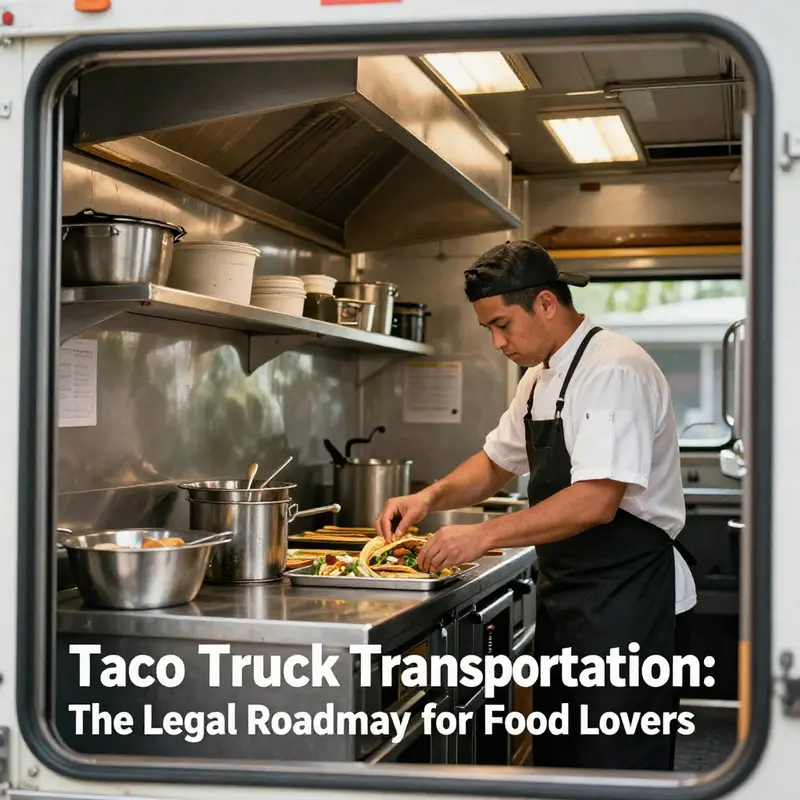
Owning a taco truck is far more than acquiring a mode of transportation. Rather, it means engaging in an integrated business model where culinary artistry meets stringent regulatory requirements. Whether you plan to sell food directly or merely transport pre-prepared meals, the vehicle is built for more than its wheels. It serves as a mobile kitchen, a storefront on wheels, and a small workplace all at once. For this reason, the legal framework and health and safety standards that govern taco trucks encompass aspects of food handling, vehicle safety, and occupational regulations.
A critical cornerstone of taco truck operations is food safety compliance. A taco truck is not simply a mobile vehicle that moves from one location to another; it is a high-stakes environment where food safety can directly affect public health. Every element must adhere to health department guidelines that ensure food is handled correctly from the moment it is prepared until it reaches the customer. All surfaces, cooking equipment, and storage areas require regular cleaning and disinfection to prevent contamination. Operators must be vigilant about maintaining proper sanitation practices, ensuring that every utensil and countertop meets prescribed hygienic standards.
In this environment, keeping food at safe temperatures is imperative. Foods intended to be served hot should not drop below the required minimum, while cold ingredients must remain chilled to inhibit bacterial growth. Such temperature control is not only essential for taste and presentation but is crucial in meeting the expectations of federal and local health regulations. The U.S. Food and Drug Administration provides detailed guidelines through its Food Code, urging operators to follow strict protocols that include frequent temperature checks and meticulous record-keeping. This type of vigilance helps prevent foodborne illnesses and builds trust with patrons who are increasingly aware of food safety practices.
Moreover, the risk of cross-contamination is a persistent challenge in a confined space such as a taco truck. This risk must be managed by having dedicated equipment for handling different types of food. For instance, separate cutting boards and utensils should be used when preparing raw meats, vegetables, and other ingredients. The prevention of pathogen transfer is not only a best practice—it is a legal mandate that food service operations must adhere to in order to maintain a viable business license. Staff members are typically required to undergo certification courses that cover these practices in depth. Through such training, they learn the critical importance of hygiene, proper handwashing techniques, and the correct use of protective gear, such as gloves and hairnets.
Vehicle safety is another integral part of running a taco truck. Although the primary function of the truck is to serve delectable food, the vehicle itself is subject to the same rigorous safety standards as any commercial automobile. Everything from engine maintenance to compliance with road weight restrictions plays a role in ensuring that the truck remains both reliable and safe while on the move. Regular maintenance checks are not merely suggestions; they are mandated inspections designed to catch potential issues before they evolve into dangerous problems on the road. A malfunctioning brake system or an improperly functioning indicator can compromise not only the safety of the driver but also that of pedestrians and other vehicles.
Another area that cannot be overlooked is compliance with local zoning and municipal rules. Even if the taco truck is used solely for transporting food between a central kitchen and distribution points, it must secure the appropriate permits. Zoning permits are crucial when operating within certain districts or during public events. They ensure that the truck does not violate local ordinances, which could lead to steep fines or even temporary shutdowns. In addition, a taco truck must carry a valid business license that covers food operations at various locations, reflecting its dual role as both a transportation vehicle and a mobile food service provider.
Occupational safety further expands the regulatory burden associated with taco truck operations. The truck’s interior is a workplace where employees might be exposed to hazards that run the gamut from heat stress to the ergonomic challenges of working in a compact space. Recognizing these risks, regulatory bodies such as the Occupational Safety and Health Administration (OSHA) establish guidelines to protect workers on the job. For example, workers must be provided with protective gear, scheduled to have regular breaks, and trained to understand emergency procedures in the event of accidents.
Heat stress is a particular concern in the context of mobile food operations. The very design and function of a taco truck often expose employees to high temperatures, whether from running cooking equipment, prolonged sunlight exposure on the exterior, or an enclosed working space with minimal ventilation. Adequate hydration, the use of heat-reducing materials in the truck, and proper rest times are strategies that help mitigate the danger of heat exhaustion or dehydration. Stress symptoms must be quickly recognized and managed in order to prevent serious health problems among employees.
Even the act of transporting the vehicle from one location to another involves a strict adherence to safety protocols. Drivers must be licensed and trained appropriately to handle a commercial vehicle, ensuring they understand the nuances of safely navigating a large, heavily modified truck. This includes being aware of additional blind spots, longer stopping distances, and the potential instability caused by a high center of gravity. Obtaining a commercial driver’s license is a necessary step and one that involves rigorous testing to ensure the TRUCK DRIVER has met all required safety standards.
Furthermore, taco truck operators must adhere to federal guidelines laid out by bodies such as the U.S. Department of Transportation and the Federal Motor Carrier Safety Administration. These regulations, although sometimes more lenient for small businesses that do not engage in extensive interstate transportation, always require a baseline of compliance. Every aspect of the truck’s operation—even if exempt from certain interstate regulations—must be carefully monitored to ensure everything from proper lighting to signaling is in place and functioning as expected.
One must also take into account the dual nature of the taco truck as both a mobile service provider and a workplace. The integration of food safety, transportation safety, and employee protection requires a holistic approach to operations. For many entrepreneurs in this space, the journey begins with a thorough examination of local health department guidelines, followed by consultations with business licensing offices and vehicle safety inspectors. Typically, these preliminary steps involve a detailed study of local zoning ordinances and a careful review of safety mandates provided by federal agencies. In doing so, the taco truck business becomes a model of compliance, innovation, and dedication to public welfare.
The regulatory requirements often necessitate significant investments in both time and resources. Operators are advised to consult not only regulatory publications but also peer-reviewed articles and industry case studies that can offer deeper insights into effective practices. For instance, reading about advancements in food truck safety, such as those discussed in detailed industry blogs, can provide practical tips that bridge the gap between statutory requirements and real-world enforcement. You might, for instance, explore the benefits of rigorous safety protocols and advanced equipment maintenance by visiting resources like this article on safety advancements in food trucks advancements in food truck safety. Such insights help prospective operators understand that meeting regulatory demands is a continuous, ever-evolving process.
As technology and consumer expectations evolve, so too do the standards by which taco trucks are judged in terms of health, safety, and operational efficiency. Modern taco trucks are increasingly integrating new technological solutions that address many of the challenges inherent in mobile food service. For example, temperature monitoring systems keep a constant check on food storage conditions, alerting operators when a shift in temperature may compromise food safety. Similarly, advanced driver-assistance systems can help mitigate the risk of accidents, ensuring that the focus remains on both food quality and the safety of everyone on the road. These technological integrations not only support regulatory compliance but also help build customer trust and loyalty in an industry where reputation is built on consistency and quality.
The regulatory landscape is shaped by a combination of federal, state, and local mandates, each adding layers of complexity to the operation of a taco truck. The interplay between these different levels of regulation requires operators to be proactive and well-informed. A taco truck that travels through multiple jurisdictions must be particularly mindful of differing interpretations of health and safety regulations. Such challenges are compounded when local governments implement stricter standards based on regional public health concerns or community preferences. In some cases, regional variations in regulation can directly affect operational decisions, such as the types of equipment installed or the scheduling of routine safety inspections. Ensuring compliance under these circumstances involves continuous engagement with local authorities and a commitment to regular training and vehicle maintenance.
In essence, the process of legally owning and operating a taco truck for transportation purposes cannot be separated from the broader context of running a safe and reputable mobile food business. Every step of the operation—from menu planning and ingredient sourcing to vehicle maintenance and staff training—must reflect a commitment to meeting legal and regulatory requirements. Whether you are an experienced entrepreneur or a newcomer inspired by the allure of mobile culinary ventures, navigating this intricate framework demands diligence, careful planning, and an ongoing willingness to adapt to new guidelines.
The path to success in this industry lies in treating regulatory compliance not as a mere checklist but as an integral part of operational excellence. When operators invest in robust training programs and state-of-the-art equipment, they not only meet legal obligations but also create a safer, more reliable service for their customers and employees alike. This holistic approach requires a delicate balance of stringent internal oversight and external regulatory adherence. Ultimately, it is this balance that transforms a simple taco truck into a trusted mobile establishment serving communities with efficiency and culinary flair.
For those seeking further detailed guidance on health, safety, and operational standards, industry practitioners often recommend consulting official resources. One valuable external resource is the comprehensive guide provided by the U.S. Department of Labor on occupational health and safety Health and Safety Resources. This guide offers insights into best practices and legal mandates that can be pivotal in maintaining a compliant and successful business operation over the long term.
In summary, operating a taco truck involves a multifaceted commitment to legal, health, and safety regulations. The vehicle serves as a mobile kitchen, a means of food transportation, and a workplace. Each of these roles requires adherence to separate but interrelated sets of guidelines that protect consumers, employees, and the public at large. The journey through this regulatory maze is complex but essential, as it ultimately defines the operational integrity and long-term success of any taco truck business. Far from a simple transport matter, owning a taco truck is a deep dive into a world where culinary passion meets uncompromising safety and legal accountability.
Beyond the Road: Unraveling Zoning Laws and Permit Requirements for Your Taco Truck Transportation Venture
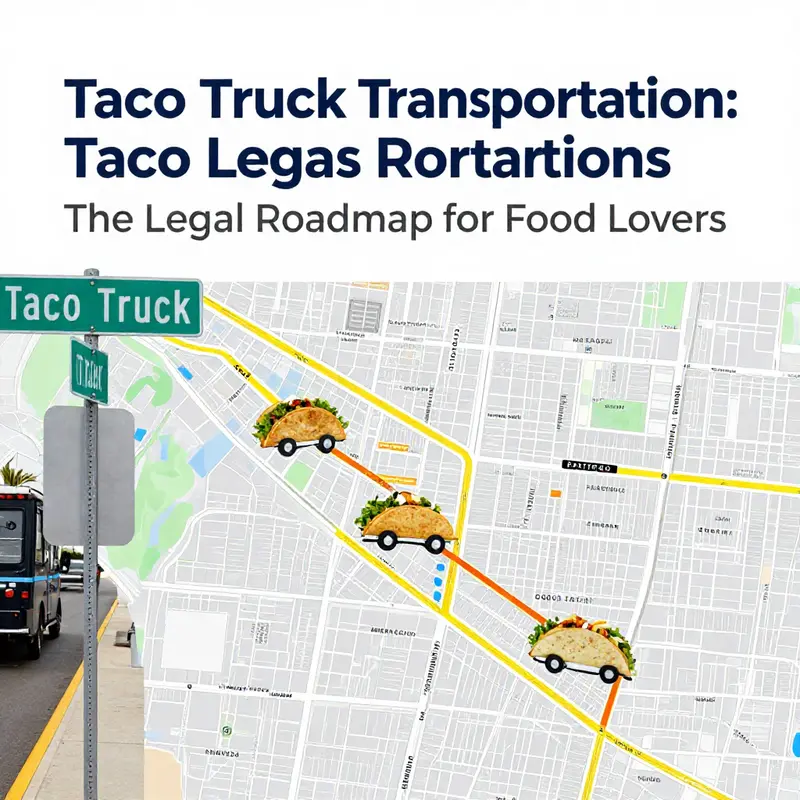
When considering the idea of owning a taco truck solely for transportation, it is critical to understand that these vehicles represent much more than simple modes of moving goods from one point to another. A taco truck is a fully functioning mobile kitchen that doubles as a point of sale for culinary experiences. The nature of this operation places it firmly under a complex web of zoning laws, permits, and regulatory mandates that ensure public safety, sanitation, and equitable use of public spaces.
The legal framework that governs taco trucks is detailed and multifaceted. Local governments enforce zoning laws to maintain the balance between residential tranquility and commercial activity. For instance, taco trucks are often restricted from operating near schools or densely populated residential areas. Municipalities design these rules to protect community welfare while ensuring that mobile food vendors do not disrupt the fabric of neighborhood life. Understanding these limitations is essential if you intend to use your truck primarily for transportation even if it rarely operates as a full-time mobile restaurant. The moment a taco truck is deemed to have a commercial function, even if only for transporting ingredients or pre-prepared foods, it must adhere to the strict standards imposed upon any operating food service business.
The transformation of a vehicle into a mobile kitchen brings with it a host of critical legal requirements. A taco truck must carry a business license and secure a mobile food vendor permit, among other authorizations. Local health departments impose rigorous sanitation and food safety standards, and meeting these standards often requires regular inspections. Furthermore, operators might need specific zoning permits that allow them to park and sell food in public spaces. These regulations and permit conditions ensure that even if the truck is used primarily for transportation, it still abides by the prerequisites for a functioning food service establishment. In this context, the very purpose of the truck—be it culinary or logistical—is closely tied to an underlying regulatory environment that providers of mobile food services must navigate.
This regulatory landscape touches on several important concerns. First, the idea that a taco truck can be owned solely for its transportation utility ignores the inherent purpose for which the truck was designed. When a truck is remodeled or built to serve as a mobile commercial kitchen, it enters a legal domain that is governed by food safety and health codes. This means that its operation, regardless of whether it functions as a provider of freshly made tacos or merely transports supplies, is subject to oversight. Additionally, there are requirements related to the appropriate outfitting of the vehicle. For example, adequate refrigeration systems, proper heating elements, and rigorous cleaning procedures must be in place, particularly when the truck is used to transport pre-cooked or partially processed foods. Failure to meet these standards can result in significant legal penalties, including fines or the revocation of operating permits.
Local zoning laws impose another layer of complexity on the taco truck business model. Municipalities craft these laws with the intent of directing commercial activity to specific zones, thereby minimizing conflicts between business operations and residential life. In large urban areas, such as Los Angeles or New York City, the competition for space is intense. Zoning regulations may limit where trucks can park and the duration for which they can occupy a prime location. In some cases, these laws extend to restrictions on the number of concurrent vehicles allowed to operate in a given zone. As a taco truck operator, you might be faced with the challenge of securing a sidewalk or curb space permit, which is a competitive and often scarce resource in high-demand urban centers. These permits are not handed out generously, and navigating the bureaucratic processes to obtain one requires persistence and an intimate knowledge of local regulatory procedures.
Beyond the fundamental permits, taco truck operators are expected to interact with a wide array of regulatory bodies. An essential permit is the mobile food vendor permit, which legitimizes a taco truck’s ability to operate in designated areas. Complementing this is the necessity to obtain a general business license and, in some jurisdictions, a temporary use permit if the truck is to operate outside its usual designated zones or during special events. Health department approvals often add an extra layer of inspection, as the local government must verify that your truck meets all sanitation and health code standards. This interconnected regulatory framework ensures that food trucks are held to standards that protect public health while facilitating a smooth operation of a business that is inherently mobile and transient.
One of the less obvious challenges in navigating zoning laws and permit requirements is the impact they can have on the mobility and profitability of your taco truck. For example, restrictions on how long a truck may operate in a single location can interrupt the flow of business, especially in areas that benefit from a steady stream of customers. Moreover, limitations on operating hours and the need to constantly shift between locations require careful planning and detailed knowledge of local regulations. The operational agility and strategic planning required in this environment cannot be understated. A truck owner may have to invest time and resources in understanding periodic changes to local ordinances or updates to health standards, which may vary dramatically between cities or even neighborhoods within a city. This means that taking a proactive approach to maintaining good relationships with local authorities and community stakeholders is not just beneficial—it is essential.
In practice, the intersection of transportation and food service presents a unique scenario. Many aspiring taco truck owners come to realize that simply owning a truck does not grant them the freedom to use it solely as a means of transport. If the truck carries any elements of food preparation, display, or direct sale, it is caught under the umbrella of mobile food operations. As a result, treating the taco truck as nothing more than a vehicle for transporting goods is a misconception. The legal and operational frameworks require compliance with comprehensive regulations ensuring the safe handling of food, adherence to zoning restrictions, and fit-out requirements that transform a mere vehicle into a sanctioned mobile commercial space.
Consider, for example, an operator who wishes to use a taco truck only for moving pre-made food items between a central kitchen and periodic event locations. Even this modest business model triggers the requirement for health department inspection and the need for licensing that covers both the transport and subsequent sale of foods. The truck is still required to maintain proper temperature controls and sanitation standards during transit. This operational detail highlights that regardless of the intended primary use—whether it is transportation or onsite food service—the truck is integrated into an intricate legal system designed to oversee public health and safety.
As the legal landscape surrounding mobile food vendors evolves, operators must remain vigilant about new regulations and zoning revisions that may affect their business strategies. City councils periodically review and adjust zoning laws to respond to the evolving patterns of urban development and citizen concerns. The dynamic nature of these laws means that a taco truck owner must continuously monitor the regulatory environment, perhaps subscribing to local planning commission updates or engaging with professional groups that specialize in food truck advocacy. In doing so, owners can anticipate changes and innovate operational models that comply with updated standards while still meeting the needs of their business.
For many, the appeal of the taco truck business lies in the freedom it appears to offer—a mobile platform that can hit multiple high-traffic locations, responding nimbly to market demand. However, as one delves into the regulatory requirements, the reality becomes clear: the mobility of a taco truck is circumscribed by the very rules designed to balance commercial vibrancy with public well-being. An operator must view the truck as both a vehicle and a mobile establishment, subject to a myriad of legal obligations that protect consumers and ensure that public spaces are used appropriately. The careful planning needed to navigate these requirements can be significant, and potential owners must be prepared for the complex planning process that lies ahead.
The intricate relationships between zoning, permits, and food safety regulations underscore the importance of thorough preparation before launching a taco truck venture. Every decision—from the initial purchase of a retrofitted food truck to the final submission of permit applications—carries legal implications that could affect the operational viability of the business. One misstep, such as parking in an unapproved area or neglecting a routine inspection, can draw unwanted scrutiny from regulatory bodies and risk severe penalties. Indeed, the continuous dialogue between regulators and operators fosters an environment of accountability that benefits the public while raising the bar for quality and reliability in the mobile food industry.
If the idea of owning a taco truck for the sake of transportation appeals to you as a straightforward business model, it is essential to recognize that the regulatory overlay transforms it into a far more complex venture. The significance of permits and zoning rules transcends mere bureaucratic formality—they represent a carefully considered system designed to ensure that mobile food vending is safe, responsible, and beneficial to the communities served. A full understanding of these requirements is crucial, and aspiring operators should consider seeking expert advice or consulting detailed resources that break down these regulatory challenges. For instance, you might find comprehensive guidance on established food truck models particularly useful as you begin to assess the viability and scope of your operations.
Ultimately, the regulatory challenges associated with operating a taco truck extend far beyond the simple act of transportation. They represent a commitment to community standards and public health that acknowledges the broader implications of mobile food vending. By understanding these zoning laws and permit requirements, you can better appreciate why a taco truck is not just a vehicle—it is a carefully regulated business enterprise that requires the same level of planning, compliance, and dedication as any brick-and-mortar establishment. For those who are committed to mastering these complexities, the rewards of operating a well-run, legally compliant taco truck go far beyond profit margins. They include being part of a vibrant culinary culture that serves as a crossroads for communities and a beacon for innovative food service models.
To further explore the regulatory nuances and operational requirements for mobile food businesses, one valuable resource is the official website of the U.S. Small Business Administration. Visiting https://www.sba.gov can provide additional insights into licensing, zoning compliance, and best practices for running a mobile food enterprise. This external resource, combined with a proactive engagement with local government agencies, equips taco truck operators with the tools they need to successfully navigate the challenging yet rewarding arena of mobile culinary ventures.
By embracing the layered complexity of zoning laws and permit protocols, you cast aside the oversimplification that owning a taco truck for transportation is solely a matter of simple vehicle possession. Instead, you recognize that such an endeavor must harmoniously integrate the principles of business, public health, and urban planning. In doing so, you not only fulfill legal requirements but also contribute to a higher standard of community-oriented entrepreneurship. As you prepare to launch your taco truck venture, remember that every permit application, every zoning regulation, and every health inspection plays a vital role in shaping a business that is both sustainable and transformative. Indeed, the true journey of operating a taco truck transcends physical movement—it is a journey through an intricate regulatory landscape where every step counts.
From Licenses to Logistics: Navigating the Complex Legal and Operational Terrain of Taco Truck Transportation
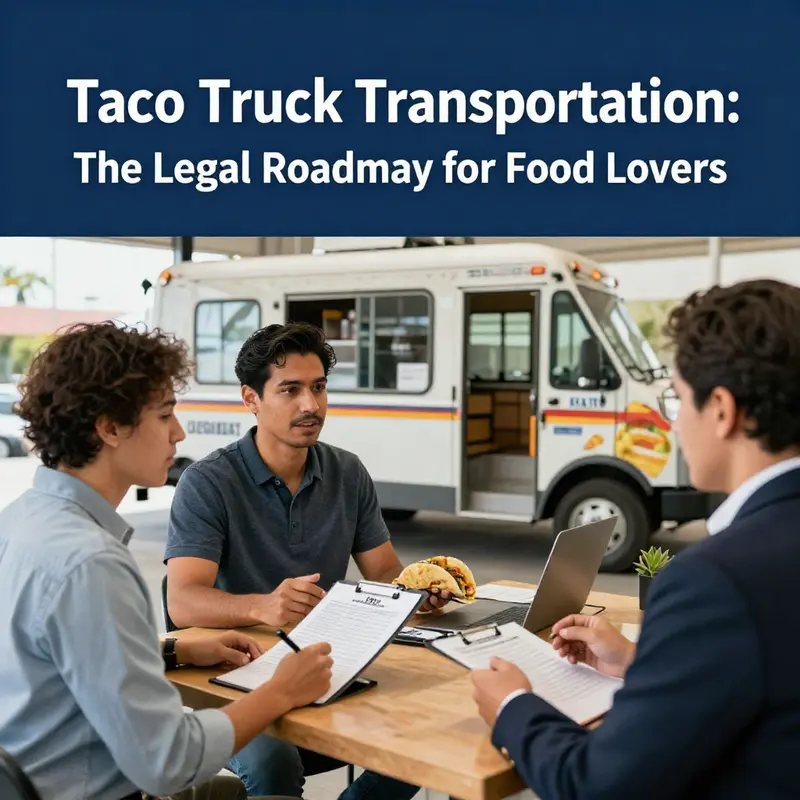
Imagine a bustling city street where the aroma of freshly prepared tacos intertwines with the hum of urban life. The idea of owning a taco truck solely for transportation might seem straightforward at first glance, but behind the vibrant image of a mobile kitchen lies a labyrinth of legal requirements and operational demands that go far beyond simply moving from point A to point B. This chapter delves into the multifaceted challenges faced by entrepreneurs who aspire to turn their food truck into a mobile engine of culinary commerce, highlighting that the taco truck is far more than a mere vehicle—it is an embodiment of a mobile business that must meet rigorous legal, licensing, safety, and operational criteria.
At its core, a taco truck fulfilling a transportation role is designed to be a conduit for a food service operation rather than just a means of moving goods. Regulatory structures at the federal, state, and local levels treat these vehicles as commercial establishments on wheels. This means that every component—from the refrigeration systems and sanitation standards to the structure of the truck—must conform to a series of health and safety codes. Health department regulations play a pivotal role, and even if the truck is used only to ferry pre-prepared food from a central kitchen to a vendor location, it must still adhere to strict guidelines that cover everything from cleaning schedules and equipment maintenance to staff hygiene.
Licensing emerges as one of the most critical aspects of operating such a mobile enterprise. Prospective taco truck owners are required to obtain a myriad of permits that validate both the business and its ability to safely handle food. A general business license is typically the first step in legitimizing the operation, but this alone does not suffice. Almost every municipality mandates a health department permit which is contingent upon the truck meeting set standards for food preparation and safety, including having certified food handlers on board. These permits are not mere formalities; they are concrete measures designed to safeguard public health and ensure that the food offered is safe for consumption. The licensing process is rigorous, demanding detailed inspections and comprehensive documentation that reflect the truck’s readiness to operate within sanitary guidelines.
The complexity of business licensing does not end with health permits. Many regions also require a mobile food vending permit, which often involves navigating local zoning regulations. These zoning laws dictate where a food truck can park, how long it can remain stationed in one location, and even the types of events where its presence is permissible. Some cities have embraced food trucks as an essential part of urban culture, yet others impose strict limits in attempts to protect traditional brick-and-mortar restaurants or maintain public order. For instance, in some municipalities, food truck operators must coordinate with local authorities to secure designated vending zones, while in areas with high immigrant populations, the regulatory framework can be both supportive and punitive, depending on broader socio-political factors. Each jurisdiction’s nuanced approach reveals that owning a taco truck for transportation purposes is inherently linked with fulfilling multiple, overlapping regulatory requirements.
A vital, often underemphasized aspect of the process involves the operational logistics tied to the physical vehicle itself. The taco truck is a specialized vehicle that doubles as a mobile food service station, and as such, it may be subject to inspections similar to those for commercial vehicles. Ensuring that the refrigeration, heating, and cooking equipment meets state-specific standards is essential not only for compliance but also for sustaining the quality and safety of the food. In practical terms, this means that owners must be vigilant about any modifications made during procurement or after purchase, as these changes can affect the truck’s compliance status. When the truck is purchased used, the due diligence process becomes even more critical. Careful evaluation of the truck’s construction materials, such as ensuring the use of corrosion-resistant metals, can significantly mitigate long-term maintenance concerns and help maintain adherence to the stringent sanitation codes demanded by regulatory bodies.
Beyond the intricacies of health and zoning regulations lies the equally important realm of procurement strategy. Owners who opt to purchase a used taco truck must engage in meticulous supplier evaluation. Relying solely on initial pricing or availability can lead to unforeseen pitfalls. The supplier must provide verifiable details about the vehicle’s technical specifications, including documentation regarding previous compliance checks, the condition of kitchen appliances, and any past refurbishments. A well-documented vehicle history not only provides peace of mind but also plays a decisive role in subsequent inspections by local health departments. The integration of operational reliability with regulatory compliance is central to the long-term success of the enterprise. In this light, establishing a robust relationship with reputable suppliers and being thoroughly informed about local regulatory requirements becomes a non-negotiable aspect of the journey.
Amid these challenges, the balance between operational efficiency and legal compliance can feel precarious. For many, the allure of mobility and culinary creativity may obscure the detailed administrative work behind the scenes. However, it is precisely this administrative diligence that guarantees the safety of both the consumers and the staff, and ensures the seamless functioning of the business. Engaging with local authorities and regulatory bodies early on in the planning stages can help clarify ambiguities and reduce the possibility of later complications such as fines, shutdowns, or even reputational damage. In cities with long-standing traditions of mobile food services, regular workshops and seminars impart vital knowledge on evolving regulations, offering operators the chance to stay abreast of changes and integrate new guidelines into their operational blueprint.
Consider the scenario where an entrepreneur acquires a taco truck with the primary goal of using it as a mobile kitchen rather than merely a transport solution. The transformation from a conventional vehicle into a culinary hub requires a thorough understanding of local business practices and regulatory demands. It is not uncommon for the process to involve multiple visits to municipal offices, temporary closures for inspection, and detailed reviews of the modifications made to the truck’s interior and exterior. Each step in this conversion process requires a dedicated focus on certification, ensuring that the equipment used is both safe and compliant with local health standards. The complexity of these steps underscores why the notion of owning a taco truck merely for transportation—without embracing its role as a licensed food operation—is not legally tenable.
There is also an ongoing evolution in the regulatory landscape driven by advancements in food safety technology and changing consumer expectations. Traffic, urban development, and environmental considerations have led to the introduction of new rules that impact everything from the type of fuel the truck can use to the energy efficiency of its cooking apparatus. As cities move toward more sustainable practices, operators may be required to integrate green technologies into their business models. This could mean retrofitting old trucks with environmentally friendly refrigeration systems or installing custom solar panels that help power the onboard kitchen. Such modifications, while offering improved sustainability and energy efficiency, often necessitate additional permits and continuous monitoring. The shifting focus towards sustainability is indicative of a broader trend where legal requirements evolve in tandem with technological innovations, further complicating the process for taco truck owners.
The necessity for a comprehensive, step-by-step approach to licensing, procurement, and operations underscores a central theme: owning a taco truck for transportation is not about sidestepping the rigorous demands of running a mobile business, but about embracing them. Each permit, each regulatory inspection, and each modification to the truck is a building block in a framework designed to ensure that every taco served is safe, every customer is protected, and every operator adheres to established norms. It is a multi-dimensional balance that requires resilience, attention to detail, and a proactive stance toward regulatory compliance.
Entrepreneurs new to the mobile food industry might find themselves overwhelmed by the sheer volume of compliance requirements. However, experience has demonstrated that thorough research and careful planning can transform these challenges into strategic advantages. For instance, aligning with a robust network of suppliers who are well-versed in meeting legal standards can lead to smoother operations and fewer unexpected interruptions. Furthermore, engaging with local business associations or seeking guidance from legal professionals experienced in food service operations can provide invaluable insights and facilitate the navigation of bureaucratic processes. One effective strategy is to explore detailed guides and authoritative resources on the subject, such as the comprehensive article available in the Ultimate Guide to Owning a Food Truck From Concept To Serving Your First Customer, where potential pitfalls and best practices are examined meticulously.
In addition to licensing and procurement intricacies, the real-world experience of operating a taco truck reveals additional layers of complexity tied to day-to-day management. Daily operational challenges—from managing inventory and staffing to ensuring that every technical aspect of the truck functions flawlessly—demand that entrepreneurs maintain a proactive stance. Regular maintenance checks, adherence to culinary safety protocols, and continuous training sessions for staff are all part of a larger effort to secure public trust and operational stability. Even minor lapses in the meticulous attention to detail can have far-reaching consequences in terms of legal liabilities and customer satisfaction. As such, the operational journey is characterized not just by compliance, but also by the ongoing pursuit of excellence in every facet of the business.
For many operators, the journey of transforming their taco truck into a fully licensed and operational mobile food service is not simply about compliance—it is an ongoing learning process that fosters business growth and innovation. Whether it involves adapting to new regulatory mandates or incorporating the latest technological improvements to enhance food safety, each step taken reinforces the commitment to public health and consumer confidence. The narrative of owning a taco truck extends beyond the initial purchase and licensing phases; it evolves into a continuous process of adaptation, learning, and integration that ultimately defines the success of the venture. Such a dynamic balance between legal responsibility and culinary creativity is what sets apart those who manage to thrive in the competitive world of mobile food services.
Entrepreneurs who succeed in navigating this complex landscape emerge with a uniquely comprehensive understanding of every facet that contributes to their business’s longevity and success. They learn that the spirit of the taco truck is embedded in its ability to move, evolve, and engage with the urban fabric responsibly. By meticulously fulfilling the regulatory requirements and investing in robust operational strategies, owners not only safeguard their venture against potential legal pitfalls but also position themselves to exploit emerging trends in food service mobilization. The taco truck, in its essence, becomes a symbol of adaptability, reflecting broader trends in urban mobility and the ever-changing interface of food, culture, and legality. In today’s regulatory climate, there is little room for compromise; any deviation from prescribed standards can result in significant setbacks, ranging from operational delays to the permanent closure of the business.
As the industry continues to grow, opportunities also arise for taco truck operators to innovate further by leveraging technology and contemporary business practices. The integration of digital ordering platforms, real-time tracking systems, and advanced food safety monitoring tools represents the next frontier in mobile food service operations. Such innovations not only enhance customer experience but also bolster compliance efforts by providing verifiable records of temperature control, equipment performance, and sanitation practices. In this context, the careful balance of maintaining regulatory compliance while embracing technology becomes a cornerstone of success. For those operators keen on tapping into these advancements, aligning with industry-leading practices and engaging with platforms that offer detailed insights on innovative operational techniques can be a game changer. A notable example is the curated insights available in this blog post on the top taco truck models for culinary success, which examines how operational enhancements complement rigorous licensing requirements.
In conclusion, the challenge of legally owning and operating a taco truck for transportation goes far beyond acquiring a vehicle and serving food. It is an intricate dance of obtaining comprehensive licenses, adhering to strict health and safety mandates, and managing a highly specialized piece of mobile real estate with precision and care. The interconnection of legal obligations, technical requirements, and operational practices forms a resilient foundation that ensures every taco truck not only complies with the law but also contributes to the public’s culinary pleasure. It is through embracing this complexity that entrepreneurs can transition from the notion of merely owning a taco truck for transportation to mastering a dynamic mobile business model that thrives under the dual imperatives of safety and innovation.
Final thoughts
Owning a taco truck is an adventure filled with delicious opportunities, but it comes with its fair share of responsibilities. The legalities of operating a taco truck underscore that this mobile kitchen is much more than a simple vehicle; it’s a vibrant part of the culinary community. Remember, knowledge is your best ingredient! From understanding the regulations that govern your operations to ensuring compliance with health and safety standards, each step matters. Armed with the insights and guidelines from this guide, you’re now prepared to navigate the flavorful world of taco trucks. Embrace the process, connect with your local community, and bring your taco dreams to life!

