
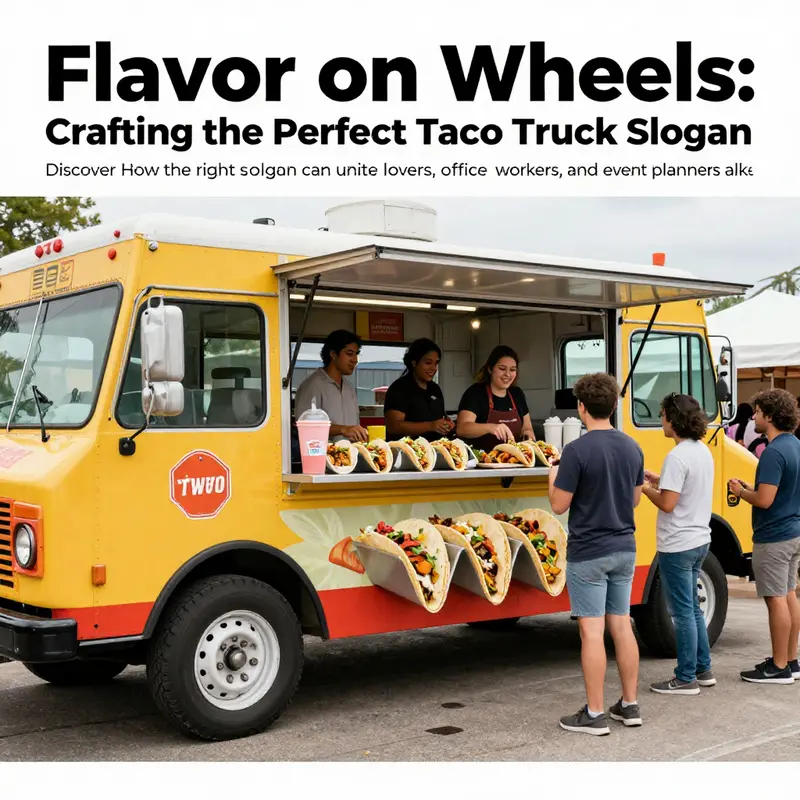
In today’s vibrant food truck scene, a compelling slogan serves as the heartbeat of a taco truck, resonating with diverse target audiences such as cuisine lovers, local office workers, and event planners. The goal is more than just a catchy phrase; it’s about conveying the truck’s unique culinary experience, flavor offerings, and the spirit of its vibrant community. From exploring the importance of a well-developed slogan to unleashing creative strategies and diving into cultural market considerations, this article delves into the essential elements that create a memorable taco truck tagline. Each chapter aims to illuminate how the perfect slogan can energize your taco truck’s brand from the ground up.
Sizzle in a Line: How a Taco Truck’s Slogan Speaks Flavor, Speed, and Culture
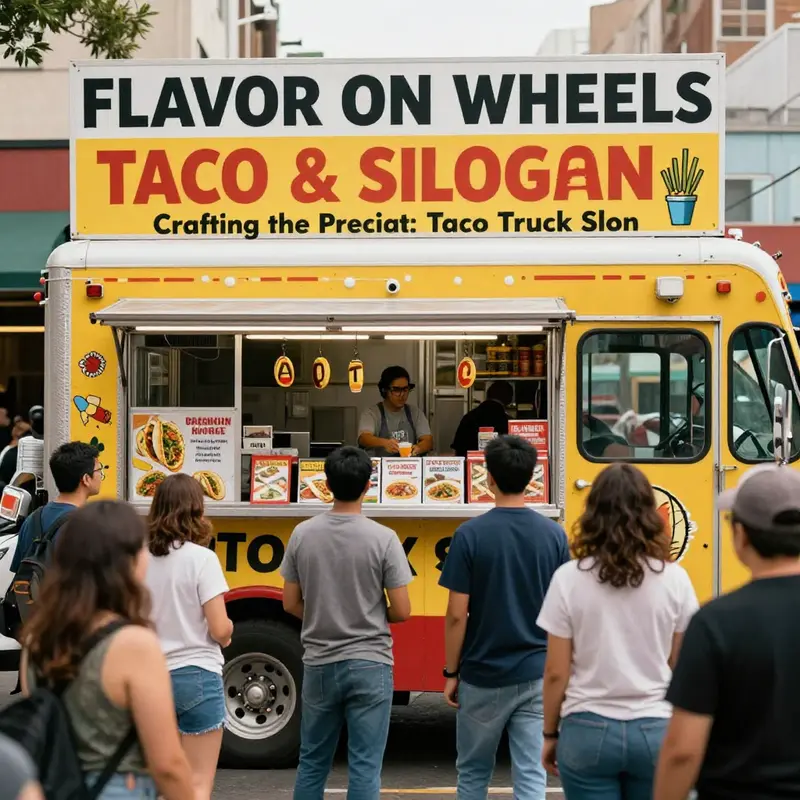
A slogan is more than a few catchy words. It is a compact signal that travels ahead of a taco truck, riding on the scent of spices and the rhythm of wheels rolling toward a crowded street corner. In the decision economy of the curbside world, customers spend fractions of a second deciding where to eat. A slogan cuts through noise, offering a promise that can be trusted without a long conversation. It captures the essence of what the truck serves, how it serves it, and why it matters to the people who pass by. A strong slogan acts like a tasting note in a glass; it hints at texture, temperature, and the memory of a bite long after the plate is emptied. In this context, the slogan becomes a living part of the brand, a verbal anchor that customers will mentally snap to when they glimpse the colorful wrap, hear the sizzle from the grill, or see a line forming under the awning. The best slogans do not merely describe a product; they invite a moment of shared experience, a micro-community formed around flavor and movement.
The true value of a slogan lies in its clarity and brevity. Consider how swiftly a customer processes visual cues and how quickly they map those cues to expectations. The slogan is the verbal extension of that mapping, echoing the visuals and the sensory cues that make a taco truck memorable. When a truck promises freshness and speed, the slogan reinforces that promise with cadence and charm. If the visual identity leans toward bright reds, sunny yellows, and mouthwatering imagery, the slogan should harmonize with that color psychology, using short, punchy phrases that travel well in a crowded market or a late-night crowd where people read between bites. A slogan like rolling in flavor, fresh tacos, bold taste can crystallize the idea of movement, consistency, and intensity without forcing the listener to search for meaning. It works because it sketches a picture in a single breath and hints at a philosophy of cooking that values speed without sacrificing integrity.
In crafting such a line, the audience you aim to attract matters as much as the ingredients you grill. Families looking for a friendly, dependable option respond to warmth and trust. Late-dining crowds crave something concise, energetic, and a bit playful. Food enthusiasts chase nuance, but they also want assurance that what they taste will align with what they expect from a cart that travels to the heart of town every night. A slogan that speaks to this spectrum balances accessibility with a hint of novelty. It signals that the truck is not merely selling food but extending a particular culinary mood—one that blends tradition with the immediacy of street life. And because slogans are often the first line of the brand narrative customers encounter, they must thread together the truck’s values, its approach to sourcing, and its style of cooking into one coherent voice that feels authentic rather than manufactured.
A distinctive slogan can also function as a differentiator in a crowded market. The taco truck scene is saturated with options that share similarities—handheld convenience, bold flavors, and vibrant branding. The differentiator, then, becomes the subtle but powerful assertion embedded in the slogan: why this truck, why now, why this flavor profile, and how does it feel to eat here? The answer is rarely in a single attribute but in a bundled promise. The slogan can foreground specific selling propositions without sounding like a sales pitch. It can imply a method—grilled over open flame, slow-cured with backyard-roasting vibes, or a commitment to sustainable, locally sourced ingredients—without needing a long exposition. When customers sense a coherent story in a slogan, they begin to trust that the truck will deliver consistency in taste, service, and atmosphere, whether they are grabbing a quick bite on a commute or treating friends to a flavorful detour after a late night out.
Culturally informed branding is essential for a slogan that resonates. Local flavor is not merely a list of ingredients; it is a shared memory and a sensation that emerges when familiar cues meet new recipes. A slogan that nods to regional tastes or bilingual dynamics can deepen community connection. For example, weaving in bilingual elements or references to beloved local favorites can create an instant sense of belonging, signaling that the truck respects and celebrates the neighborhood it serves. Yet there is a balance to strike: cultural authenticity should feel natural and inclusive rather than forced or gimmicky. The most durable slogans honor the culture they inhabit by embracing rhythm, cadence, and humor that feel earned rather than manufactured. When a line lands with a local chorus or a regular customer who speaks both languages, it becomes a shared joke or a familiar refrain that the community repeats in social spaces and on street corners alike.
The musicality of a slogan matters as much as its message. Sound patterns—alliteration, assonance, consonance—make phrases easier to remember and share. A slogan with a memorable rhythm sticks in memory long after a bite, and that memory grows wings through social chatter, selfies with the truck, and posts that celebrate a late-night find. A well-constructed line can even invite repetition: it becomes a nickname for the truck, a chant during a line, or a quick toast when friends gather around the cart. The cadence should be compact enough to read on a sign, spoken aloud with ease, and adaptable to a range of uses—from banner tags to social captions to a chorus in a jingle that might someday accompany a video.
Developing a slogan is a collaborative, iterative craft that benefits from disciplined testing. Begin with a small set of candidate lines that reflect the truck’s core story: the source of ingredients, the cooking method, the speed of service, and the emotional payoff of the meal. Then observe how different audiences react in real life scenarios and on digital platforms. Do families soften at a line that hints at warmth and reliability? Do night-shift workers respond to urgency and energy? Do food lovers appreciate a line that signals boldness and originality without sacrificing clarity? The test is not only about which line wins in a poll; it is about which line most consistently aligns with actions taken every day in the kitchen and at the window. If a slogan routinely appears in photographs of sizzling meat, melted cheese, and a bustling service window, and if customers repeat it in conversations or messages, that is strong evidence that the slogan has become a trusted shorthand for the truck’s identity.
The role of storytelling in a slogan should not be underestimated. A slogan is not a mini-epic, but it can whisper a narrative thread that customers can follow. It hints at a backstory—the journey from a bustling kitchen to the curb, the dedication to craft, the joy of sharing a meal with strangers who become neighbors. When customers catch that thread, the slogan ceases to be a one-off slogan and starts to function as a tactile touchstone. It becomes the phrase they associate with the moment they decide to join the line, the memory they revisit when they crave that specific balance of heat, acidity, and smoke, and the voice through which the truck communicates across banners, menus, and social posts. In this sense, the slogan is a seed for a larger brand ecosystem that can evolve with the truck without losing its core meaning.
The practical path to a slogan that endures is deceptively simple in its aims: clarity, brevity, and resonance. Clarity ensures that someone encountering the truck for the first time understands the promise within a breath. Brevity keeps the line legible at a glance from a distance or on a phone screen while walking through a festival or along a busy street. Resonance provides the emotional and cultural alignment that makes the promise meaningful enough to share. The best slogans are not loud by volume but effective by precision; they tell the truth about the cooking, the service, and the atmosphere, and they invite the audience to be part of that experience. As a result, the slogan becomes a quiet advocate for the night when the street lights glow and the grill sizzles, a small but powerful invitation to take a bite and stay awhile.
In practical terms, the slogan should harmonize with the broader branding system. It should be easy to place on signage, on staff uniforms, and in digital captions. It should work with the truck’s logo and color palette and be flexible enough to scale to different marketing formats. The slogan should also maintain integrity when translated into other languages, if the truck serves diverse neighborhoods or events where multilingual audiences gather. The goal is consistency across signs, menus, social posts, and customer conversations, so that a single line can travel through many scenes and still feel like the same person speaking in the same voice. When this alignment exists, the slogan becomes more than a marketing line; it becomes a thread that ties together the truck’s people, the plates they serve, and the moments customers carry with them after the bite has vanished.
For those beginning this process, a concrete step can prove surprisingly effective. Create a scorecard that weighs attributes such as memorability, clarity, emotional pull, and cultural fit. Test candidates against this score and use the results to prune away lines that do not meet the bar. This method keeps the focus on enduring value rather than trends that might fade with the next food craze. In every test phase, keep a close eye on how the line performs in real settings: on a street corner, in a festival lineup, or within the scroll of a social feed. The ultimate objective is not merely to have a slogan that sounds good in a brochure but to cultivate a phrase that customers see, hear, and feel in a moment that compels action—whether it is to join the line, to tag a friend, or to remember the cart when a craving for bold flavors returns.
As part of the broader branding ecosystem, a slogan should be designed to work alongside the sensory and logistical realities of a taco truck. The grind of the grill, the pop of a fresh tortilla, the hiss of steam, the warm glow of the service window—these are not decorative elements but the living backdrop against which the slogan proves its worth. The line should not contradict or simply echo what the audience experiences; it should amplify and crystallize that experience. When the slogan and the on-ground reality reinforce each other, the truck gains grip on memory and preference. The result is a brand voice that feels natural and earned, a voice that travels well from street corner to festival stage, from a family dinner to a late-night meetup, and that can travel with the truck wherever it goes—yet remain unmistakably itself.
In pursuit of tangible outcomes, a slogan can contribute to a positive feedback loop with customers. A memorable line invites conversation, which in turn increases shareability and word of mouth. When customers feel seen and understood by a slogan that aligns with their own experiences of flavor, they become advocates. They recommend the cart, share a photo alongside the slogan, or recount a favorite bite in a way that invites others to try it. This organic promotion often costs less than paid media and yields longer-lasting engagement because the message is anchored in a real, sensory experience rather than in a glossy claim. To maximize this effect, the slogan should be easy to reference in casual conversation, short enough to be quoted in a caption, and resilient enough to endure as flavors evolve or as the truck expands to new markets.
In short, a slogan for a taco truck is a compact ambassador. It is a line that carries the scent of sizzling peppers, the memory of a shared table under string lights, and the trust that comes with consistent taste and friendly service. It is a living, breathing element of the brand that travels with the truck and grows with it. The most enduring slogans do not shout for attention; they earn it by delivering a truthful, resonant promise in a single breath. They offer a doorway into an experience rather than a message about the experience, inviting customers to step through and become part of the ongoing story of flavor on wheels. And in that doorway lies the power to turn casual passersby into regulars, and to transform a simple bite into a memorable ritual that people want to repeat and share long after the cart has rolled away.
For readers who want to see how such ideas translate into a practical, transportable catalog of branding choices, consider a published example that explores the broader landscape of food truck branding. The article outlines core principles that echo through the mechanics of slogan creation: memorability, branding alignment, and the social horsepower of a tagline that travels. It is not a guarantee of success, but it provides a framework for evaluating candidates with discipline and care, encouraging teams to think beyond a single line and toward a cohesive branding approach that supports growth and community connection. As you refine the voice of the truck, you can also explore how a slogan fits within the larger ecosystem of the brand, including how it can be repurposed across signage, digital platforms, and event materials, ensuring consistency wherever customers encounter the truck. For a concise blueprint on how to approach these branding decisions, see the practical tips and examples that anchor the broader discussion of food truck branding.
In practice, integrating an internal reference to the broader ecosystem of taco truck branding can be a smart move for readers who want a more tactile sense of how slogans function in the field. One could look to the idea of top models for culinary success as a parallel: just as two or three model configurations can shape the performance and public perception of a vehicle, a slogan can shape the perceived performance of a truck in flavor, speed, and cultural resonance. A useful way to connect the two ideas is to view the slogan as a line that complements the most successful branding elements—model, color, logo, and customer experience—crafting a cohesive silhouette that customers can recognize instantly. This is the essence of a slogan that endures: it is not a standalone annotation but an integral component of a living brand narrative that grows with each bite and each new customer encounter. Top models for culinary success
External resources can also provide perspectives on how branding principles translate into practical outcomes across the broader food service landscape. The field has seen a steady emphasis on simple, memorable, and culturally aware messaging as a driver of loyalty and social sharing. For readers seeking additional context on branding strategies tailored to mobile food ventures, an external article offers a concise synthesis of the ways in which branding decisions influence perception, ease of recall, and market differentiation. This supplemental reading can help teams refine their approach to slogans while staying aligned with proven practices in food truck branding and beyond, ensuring that the line remains relevant as markets and trends shift over time. https://www.posist.com/blog/food-truck-branding-tips
Rolling Flavor on Wheels: Creative Strategies for Crafting a Taco Truck Slogan
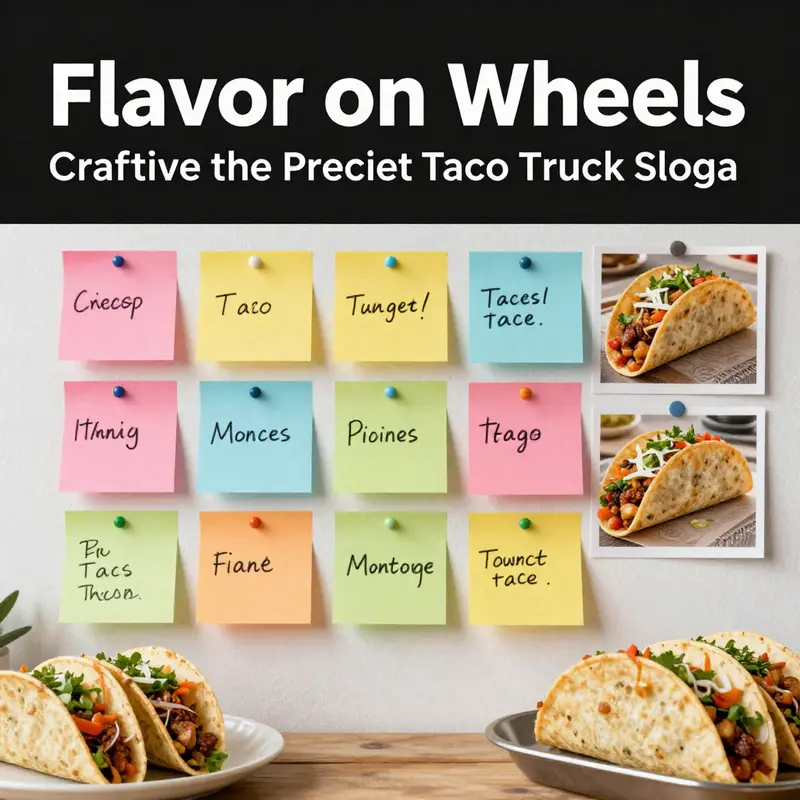
A slogan is more than a line of words. For a taco truck, it acts like a portable ambassador, a quick signature that travels with the vehicle and travels with the senses. It whispers to hungry pedestrians as the truck rolls by, sparks a memory for a late-night crowd, and then lingers in social feeds long after the last taco is eaten. The chapter you’re reading is not a dry exercise in clever wordplay; it’s a blueprint for translating a roaming culinary dream into a concise promise that can be seen, heard, and tasted in a few syllables. The aim is to craft a message that captures the heart of the experience—fresh ingredients, bold flavors, and a sense of journey—while remaining approachable, culturally resonant, and easy to share. In practice, a strong slogan functions as a compass. It guides taste, tone, and presentation across everything from menu board design to social media captions, from napkins to neon lights, from the rhythm of the truck’s exhaust to the tempo of the beat on a street corner where the truck parks for a night of service. It must be memorable, yes, but also meaningful to the people who show up, queue up, and tell a friend that this is the place to get their tacos tonight. In developing such a slogan, it helps to hold three ideas in balance: emotional resonance, unique experience, and cultural connection. When these strands braid together, the slogan feels less like advertising and more like an invitation to a shared moment on the move.
The first strand is resonance—an emotional pull that feels immediate yet resists cliché. A slogan that evokes a moment of joy, a sense of anticipation, or a rush of satisfaction can cut through the noise. Think of the kind of feeling a bite of bright, smoky taco can deliver: a spark of happiness that arrives with the first bite and lingers as the last crumb falls to the plate. The emotional core can be playful or soulful, exuberant or grounded, but it should be anchored in the sensory reality of the taco experience: the crackle of a freshly warmed tortilla, the aroma of grilled meat and herbs, the heat of a salsa that stings just right. In this sense, the slogan becomes a shorthand for a cinematic moment—one bite, one moment, pure magic. And yet the moment must not feel abstract. It should point to something tangible about the truck: the speed of service, the freshness of ingredients, the sense that eating here is a small celebration on a street corner.
The second strand concerns the story—the unique path the truck travels, the adventure it promises, the reason this vehicle exists beyond simply selling food. A taco truck is a mobile theater, a destination that arrives wherever customers gather. The slogan should hint at that journey, inviting people to join in the experience rather than simply purchase a meal. It can tap into a sense of exploration, of discovery, or even of craft. In a world full of mass-produced meals, a slogan that signals a story becomes a signal of quality and care. You can evoke the idea that every order fuels a larger voyage, that each bite marks a milestone in a flavorful itinerary, and that the truck itself is a passport to diverse regional flavors presented with a modern twist. A well-crafted line can imply that the customer is part of the story—an explorer who plants a flag at the corner where the truck stops and returns for more on another night. This storytelling aspect aligns surprisingly well with the on-the-road reality of a taco truck, where every stop creates a micro-community of fans who return because they feel they know the truck’s path and its origin.
The third strand is culture—an openness to local taste, language, and shared memories. Slogans thrive when they nod to cultural touchstones in a respectful, inclusive way. This is not about coining a single bilingual phrase to appear trendy; it’s about weaving local flavor into the voice of the truck. For a neighborhood with a rich culinary identity, the slogan can reference familiar ingredients, beloved local favorites, or shared memories from past street-food nights. Language matters here: a bilingual element, a casual slang, or a local proverb can deepen resonance without sounding pandering. The objective is to feel rooted in place while remaining accessible to travelers and visitors who may be trying the truck for the first time. A successful slogan, then, becomes a cultural handshake—warm, brief, and accurate about what the truck offers and where it is headed.
As you begin to draft, it helps to imagine the slogan as a single, crisp line etched on the side of the truck, a quick cue that you can repeat in a social post, on a napkin, or in a storefront window. The moment of draft becomes a moment of testing. You say the line aloud while the truck hums, imagine a family pulling up for a weeknight dinner, picture a group of coworkers grabbing a late-night bite after an evening shift, and feel the tension between speed and savoriness—the speed of service and the depth of flavor. This mental rehearsal keeps the slogan grounded in real-life usage, not just in clever word choices. The goal is to arrive at a sentence that can be read in a single breath, mulled in the moment, and remembered throughout the week. It should also be compact enough to scale across formats: a logo, a T-shirt, a sticker, a banner at a festival, or a caption on a photo posted from the road.
To illustrate how the lines of thought translate into practice, consider how the elements above might coexist in a contemporary slogan. One bite, one moment, pure magic; a line that signals both the immediacy of the experience and the indulgent joy it brings. Or a phrase that hints at journey and craft: fuel your journey with every bite. Or a shorter, sharper nod to authenticity: where tradition meets taste. The trick is not to force all three threads into one line, but to allow a strong, singular idea to emerge and to let the other aspects reinforce it in the broader branding ecosystem. The broader branding ecosystem includes not just the slogan but how the truck looks, sounds, and feels—the rhythm of the music that streams from a speaker, the scent that wafts when the hood lifts, the color of the signage, and the texture of the menu board. When the slogan aligns with these elements, the brand becomes a coherent experience rather than a collection of independent touches.
In pursuit of such coherence, you may want to look at how a slogan can function as a bridge between identity and marketplace. A slogan can crystallize a market differentiator—whether it is a signature cooking method, a signature ingredient, or a cultural tag that resonates with a local audience. It can foreground the unique experience that makes your truck a destination rather than a mere stop in the foodscape. It can also reflect the language of the city or neighborhood, acknowledging local flavor profiles and culinary conversations, so that residents hear themselves reflected in the brand. The process, therefore, is iterative and collaborative: test ideas against real voices in the community, listen for what lands, observe which lines spark conversation, then refine with the same flexible speed that defines a mobile business.
To bring some practical flavor into the theoretical, think of the slogan as a living element of your branding toolkit. It should be resilient enough to survive evolving menus and seasonal specials, yet nimble enough to adapt to new neighborhoods or events. It must survive the weather and the glare of streetlights, the hustle of a crowded food festival, and the quiet of midnight after a long night of service. It should invite engagement rather than demand it, inviting customers to participate in the shared ritual of a meal chosen from a rotating set of flavors, a ritual that can be repeated with ease at another corner the next week. A well-tuned slogan helps customers feel that they are signing on to a food journey that is both reliable and exciting—a good reason to return when the lineup changes or when a familiar favorite resurges with new life.
If you want a concrete starting point, begin with a few compact candidates that foreground emotion, journey, or culture, and then test them against the street-level realities of your service. Begin by shaping a line that centers emotional resonance, perhaps one that evokes the joy of a warm tortilla, fresh cilantro, and a sunlit taco stand on a busy avenue. Then, create a line that hints at the truck’s roaming nature and suggests that collecting a bite is an action in itself: you are not simply feeding people; you are fueling a night, an outing, a memory. Finally, attempt a line that pays homage to cultural roots and to the neighborhood that supports the truck, perhaps by weaving in a familiar flavor profile or a community-based moment. In each case, the line should be short enough to be spoken aloud in a single breath and bold enough to be instantly recognizable in a glance.
To connect this back to the broader branding imagination, you can see a broader approach in how branding discussions frame mobility, flavor, and identity together. For grounding in a broader branding perspective about the value of a strong brand voice and the role of branding in consumer perception, a broader discussion on the relationship between brand and value provides useful context. This is not about copying a formula; it is about understanding how the distinctiveness of your taco truck—its taste, its story, its people—translates into a slogan that travels with it. The slogan then becomes part of a larger dialogue about what people expect from street food: the assurance that what arrives on their plate also arrives with a certain character and care. The best slogans are the simplest, containing not a paragraph of narrative but a spark of recognition that customers can recall in a crowded market.
There is value in a tested, repeatable playbook that respects the power of simplicity while acknowledging the complexity of taste and culture. A reliable path begins with clarity of audience—families seeking quick, satisfying meals, late-night diners chasing warmth and novelty, and food enthusiasts who crave bold, well-constructed flavors. Each audience group may respond to a slightly different tonal tilt: warmth and reassurance for families; wit and speed for late-night seekers; sophistication and craft for the tasting-minded. Yet the best slogan often succeeds by speaking to all in one breath, inviting each group to feel that the truck understands their needs and adds a flavorful moment to their day. And since a slogan does not live in isolation, it should harmonize with the truck’s color palette, signage, and social voice. People should be able to recognize the slogan in a dozen places and immediately feel the same vibe—an on-the-go culinary experience that is alive with energy, authenticity, and a sense of place.
In closing, the art of slogan creation for a taco truck is, at its core, a discipline of synthesis. It asks you to distill a mouthful of experience into a handful of syllables, to translate movement into meaning, and to invite a diverse audience to lean in and participate in a shared feast on wheels. It invites you to balance nostalgia with novelty, craftsmanship with accessibility, and local flavor with universal appetite. It invites you to test, listen, and adjust, knowing that the best lines are not rigid proclamations but living prompts that grow with the truck’s evolving story. If you can hold tenets of emotional resonance, unique experience, and cultural integration in a single breath, your slogan will not merely describe the taco on the tray; it will become part of the ritual of the street, a signal that signals something worth chasing again and again. For readers seeking a sense of how branding extends beyond a slogan into the broader craft of mobility and taste, consider the broaderbranding discussion linked in this chapter’s references. The exploration beyond the phrase—the way a slogan aligns with the trucks, the flavors, and the community—can be found linked here: taco-trucks-unleashed-top-5-models-for-culinary-success.
As you move from draft to display, keep your ear to the street and your eyes on the plate. A slogan that endures is born of listening to the way people talk about food, the way they describe comfort, and the way a night on the town feels when wrapped in the warm, bright circle of a taco truck’s glow. It is the verse that keeps pace with a rolling kitchen, the whisper that travels faster than the wheels, and the promise that every bite is a small, shared celebration of flavor and freedom. In that sense, the slogan is not a closing line; it is a passport stamp for an ongoing journey of taste, culture, and community on wheels. External resource: https://www.interbrand.com/views-and-insights/what-is-brand/
Culture on Wheels: Crafting Taco Truck Slogans That Echo Heritage, Local Flavor, and City Life
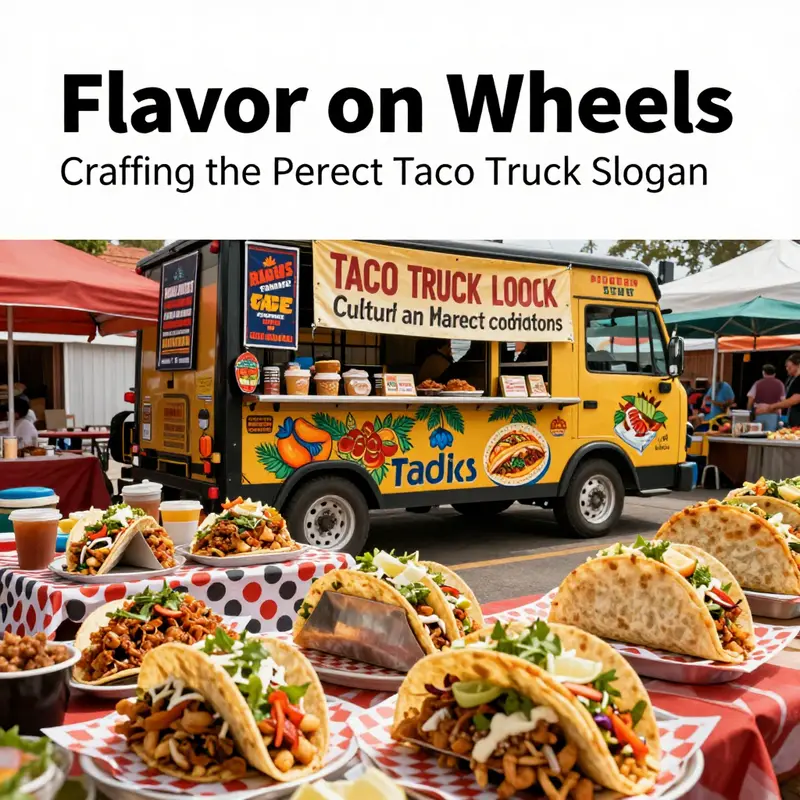
A slogan for a taco truck is more than a line of words. It is a doorway you roll through as you pull up to the curb, inviting a sensory experience that blends history, craft, and place. The promise in a slogan must travel fast in the crowded streets where carts and vans compete for attention, so a few well-chosen syllables can become the loudest shout in a quiet block. This is why cultural authenticity and market savvy deserve equal weight in any slogan development process. It is not enough to claim bold taste or fresh ingredients; the message must speak in the language of the community, carry the echo of long-standing street-food traditions, and still sound fresh enough to ride the next wave of social chatter.
When you craft for a taco truck, the target audience matters as a living, breathing element of the brand’s DNA. Families seeking warmth and reliability respond to heart and consistency in a slogan; late-night diners craving something crave-worthy respond to energy, rhythm, and a nudge toward adventure; food enthusiasts look for cues about authenticity and craft—an assurance that what they taste is rooted in tradition, not mass-market replication.
Market differentiation sits at the same table as cultural resonance. A slogan can nod to heritage—the tortilla, the salsa, the fire—while signaling contemporary craft. A short, punchy line that travels well can describe both the ancestral kitchen and the mobile street kitchen that now brings it to customers wherever they are. Examples like Taco ‘Bout Delicious or Authentic Street Eats illustrate how wordplay and clarity can sit in tasteful balance.
Cultural integration cannot be an afterthought. In cities with rich cultural tapestries, the slogan should feel like a neighbor’s invitation rather than a tourist postcard. It may harmonize with local flavors, ingredients, or dialects in a respectful, inclusive way. When done with care, bilingual or multilingual phrasing can widen reach without turning into stereotype.
Tone matters as much as language. The truck’s voice—bold, warm, playful—should echo in the slogan. A bold voice may favor rapid cadence and cheeky humor; a family-friendly voice may lean toward comfort and hospitality. Even within the same city, the right blend reflects the truck’s history and the neighborhood’s rhythm. The goal is a line that can be scanned quickly, remembered at a stoplight, and shared with a smile.
Testing and iteration turn slogans from spark into substance. Field-testing on the curb, in mobile ads, or in quick social clips helps reveal which phrases travel, which feel forced, and which build a sense of community. Feedback should be treated as data, not judgment, and be used to refine the phrase so it translates across contexts and crowds.
Finally, the living branding story emerges when slogan, cooking, truck design, and customer experience meet. The best lines travel with the truck and become part of the street’s memory—on menus, signage, posts, and conversations. The aim is a slogan that invites curiosity, honors heritage, and feels inevitable when spoken aloud in the bustle of a city.
Readers looking for practical guidance may consult branding resources and case studies, but the core truth remains simple: a slogan succeeds when it makes the food feel personal and universal, a moment of appetite turned into a shared moment of recognition.
Final thoughts
Crafting a memorable slogan for a taco truck is more than a marketing tactic; it’s about uniting flavors, cultural narratives, and local communities. Each chapter of this exploration highlights how a potent slogan can energize and differentiate a taco truck amidst competition. By embracing the essence of its culinary offerings and resonating with the diverse demographics of taco enthusiasts, office workers, and event organizers, your truck can thrive. Ultimately, a well-crafted slogan not only invites customers but also cultivates lasting connections, setting the stage for delicious experiences.

