
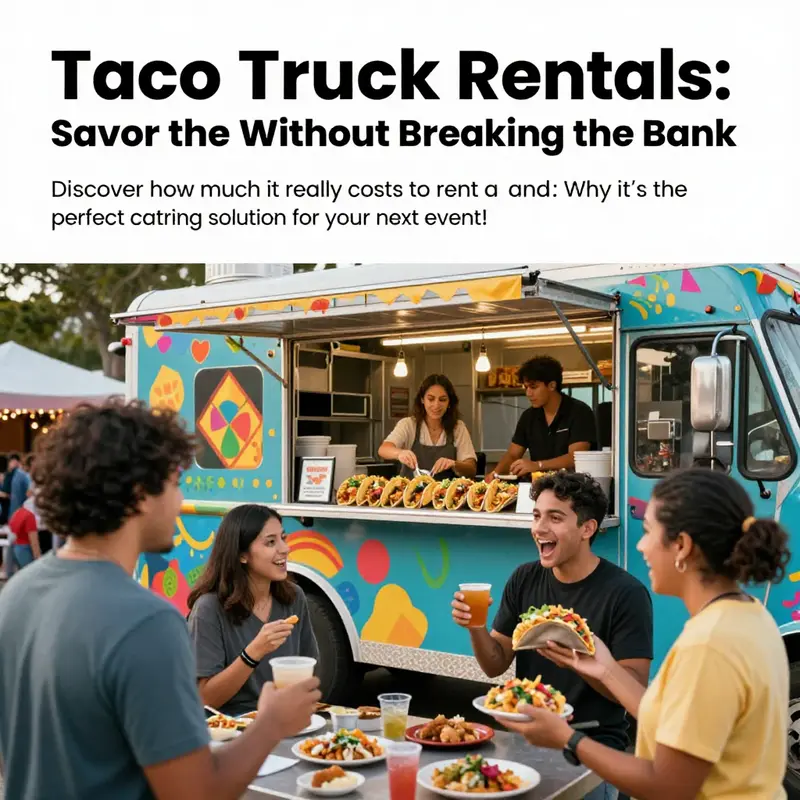
Taco trucks are more than just food on wheels; they’re a vibrant experience that brings people together over tasty delights. Whether you’re planning a corporate event, family gathering, or community festival, renting a taco truck can be an unforgettable addition to your celebrations. But what’s the cost to rent one, and how does it vary across different locations? In our journey through taco truck rentals, we’ll explore the varying prices in different U.S. cities, factors that influence these costs, and how renting a taco truck compares to traditional catering options. Get ready to dive into a flavorful world of tacos and tantalizing savings!
Rolling Price Tags: Navigating Taco Truck Rental Costs Across Locations
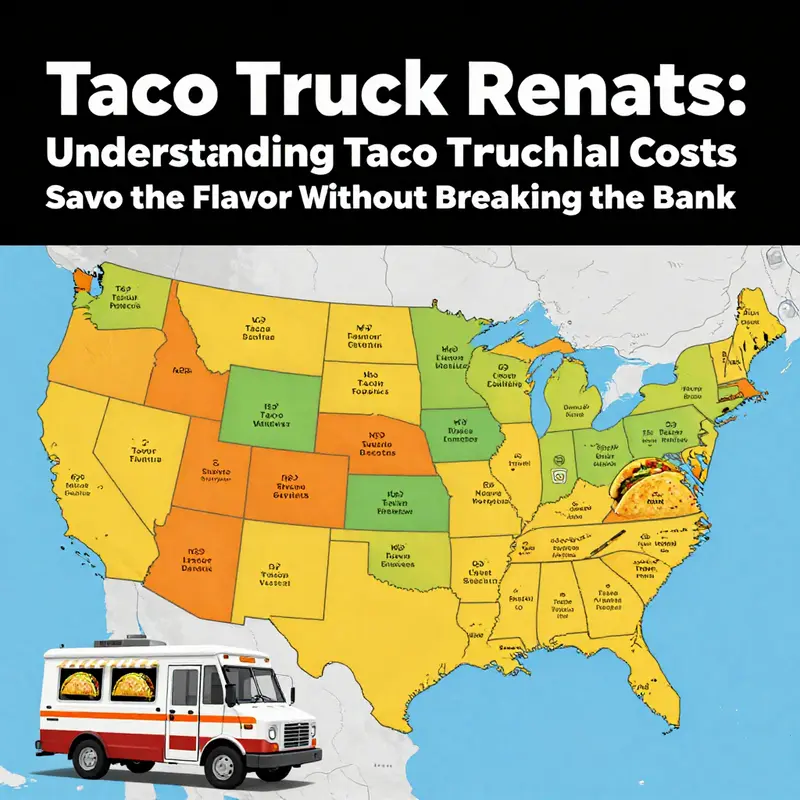
Renting a taco truck is a powerful way to turn a culinary idea into a traveling business, but it comes with a price tag that shifts with location, duration, and the level of customization the operator wants. A chapter in this guide would be incomplete if it treated the cost as a single figure. Instead, it hinges on a web of variables that, when understood, helps an aspiring vendor forecast the true investment, plan margins, and choose a path that fits their goals. At its core, the cost to rent a taco truck is not merely the daily or weekly rental fee. It is the cumulative effect of where the vehicle will operate, how long the rental lasts, what equipment and interiors are included or required, the level of insurance and permits necessary, and the support services that the rental company offers. Price movement in this sector follows demand, urban density, and the operational footprint of mobile food business ecosystems. The result is a spectrum that can swing from relatively modest daily rates to packages that look closer to small-business leases, especially when the truck arrives with a fully equipped kitchen, water systems, power sources, and safety features that meet local health codes. To understand the landscape, one can envision three interlocking layers: the base vehicle rental, the specialized food-truck equipment and fit-out, and the supporting services that keep the operation compliant and operable in the field.
The base rental component often shows the most visible variability. In everyday terms, a mobile vendor seeking the simplest form might encounter daily rates in the broader range of a few dozen to around a hundred dollars, depending on the market and the vehicle category. However, when the rental market includes purpose-built mobile kitchens and trucks that are already outfitted for food service, the daily price can climb quickly. In a set of city-by-city snapshots, the variation becomes clearer. In smaller or mid-sized markets, rental prices for basic commercial vehicles used to support mobile food operations can hover near the lower end of the spectrum, while in larger metropolitan environments, even the basic rental often sits higher due to demand, fleet utilization, and the higher cost of operating in dense urban settings. The range can be wide enough that a vendor might see a daily rate around the mid-range in some markets, with higher rates in others where space, permit processes, and specialized compliance drive up the cost of doing business on wheels.
A practical sampling from recent market observations helps illustrate this variation without getting lost in the detail. In some suburban or exurban markets, a compact or mid-size work truck used as a base for a taco operation can be found at or just above the $60s per day in certain periods, while in other places the same category might sit closer to the $80s or $90s. In more service-oriented or high-demand states and regions, daily pricing for basic commercial vehicles can extend into the upper tens and even cross into the low hundreds per day, reflecting not only the vehicle’s availability but also ancillary services that may accompany the rental. When the equipment layer is added—grills, refrigeration, exhaust systems, plumbing, power distribution, and the like—it’s common to see weekly rental bands widen, with a noticeable lift as the setup moves from a bare-prepared chassis toward a fully functional food-truck interior. Weekly rental figures, where presented, often land in a broader band—from roughly five hundred dollars to around a thousand and a half per week, depending on the region, vehicle condition, and the extent of on-site support or maintenance included in the package. Monthly rates, which tend to be a more attractive proposition for operators testing a market or running extended pop-up campaigns, typically range from a couple of thousand dollars up to five thousand dollars per month. These monthly figures reflect the added value of equipment, the potential for training or onboarding, and the risk premium that rental companies bear when offering mobile kitchen assets that require more specialized handling and ongoing upkeep.
The geographic dimension is more than just a regional curiosity. Locations with established mobile dining ecosystems—cities where street food is a durable, regulated, and popular service—tend to command higher rental rates. In large metro corridors, where competition for street permits combines with higher operating costs like insurance, labor, and real estate, the rental cost for a mobile kitchen can drift upward. Conversely, markets with growing but still developing food-truck scenes or less dense populations may offer more generous rates or longer-term rental options that include favorable terms for event-heavy operators. The evidence of this pattern is echoed in several city profiles that show a spectrum of daily costs for basic vehicles and a broader range for fully equipped taco-truck configurations. For a few examples, there are documented cases where daily rates in a major metro context sit around the high end of the range for basic commercial vehicles, while other cities with strong mobile-food activity report slightly higher baseline prices for the same class of vehicle, in some instances reflecting not just demand but the cost structure of operating in that region.
Equipment matters when the rental moves from a transportation asset to a functioning kitchen on wheels. Taco trucks are not simple cargo carriers; they are small but complete culinary facilities. They typically include specialized cooking surfaces, like grills or griddles, and refrigeration units to keep ingredients fresh, plus water handling, waste management, exhaust and ventilation, and a customized interior that supports safe, efficient workflow. The presence of these features often elevates the rental price beyond the base vehicle rate. The cost delta associated with equipment can be substantial. For operators who need a turnkey solution—the truck, the kitchen hardware, and an optional service package—the weekly and monthly totals can climb accordingly. Some providers differentiate between “bare-bones” base vehicles and fully equipped mobile kitchens, with the latter demanding a premium that covers maintenance contracts, regular safety inspections, and sometimes even onboarding or training for operators who are new to the food-truck world. In markets where competition among suppliers is more intense, the added value of maintenance, sanitation, and compliance support can translate into more predictable monthly outlays, which is often welcomed by operators who want stability in cash flow and licensing compliance.
The rental equation also includes a set of ancillary costs that often surprise first-time operators. Insurance is nearly universal for mobile food operations, and the cost varies with coverage levels, the operator’s experience, the intended use, and the geographic risk profile. Permits and inspections, which ensure compliance with health, fire safety, and road-usage regulations, can be fluctuating line items that appear seasonally or as a function of the event calendar. Fuel, maintenance, tires, and routine service add to the ongoing cost of renting a taco truck, while security deposits and pickup and delivery logistics can influence upfront cash needs. Even when a rental package includes a broad service component, operators should anticipate add-ons such as line checks, cleaning protocols, and possible downtime charges should the truck be unavailable for pre-scheduled events due to maintenance windows. The practical upshot is that the headline daily rate rarely tells the whole story; the true daily equivalent often lies several layers deeper in the rental agreement and the specific configuration the operator selects for the vehicle.
With these realities in mind, how should an aspiring vendor approach the search for a taco truck rental? The simplest, most cost-effective method is to treat pricing as a multi-parameter puzzle rather than a single number on a page. Start by defining the operational plan: which markets will you enter, what event cadence do you anticipate, how many days each event typically requires, and what level of service you want from the rental partner. If the plan is to spend a month in a high-demand city, you will want to look at the monthly rate for a fully outfitted kitchen and then add a risk reserve for insurance and permits. If the plan is a shorter pop-up tour, a weekly or daily rate with scalable add-ons may be more appropriate. In practice, this means obtaining quotes from several rental providers, ensuring that the quotes compare apples to apples—i.e., similar equipment configurations, similar service levels, and similar insurance coverage—and asking explicit questions about inclusions and exclusions. Common inclusions to clarify include whether the rate includes delivery and pickup, what kind of maintenance support is offered, whether there is a built-in safety or sanitation training requirement for operators, and how much mileage or per-day usage is permitted beyond a certain threshold.
The path to realistic budgeting also benefits from a broader awareness of market dynamics. In areas with mature mobile food ecosystems, operators often find that competition among rental providers yields more comprehensive packages—sometimes including training, branding support, or marketing assistance—as value-added services. In other markets, where the infrastructure for food trucks is still evolving, the emphasis may be on affordability and basic reliability, with operators paying closer attention to vehicle condition and essential safety features. In all cases, the most reliable approach is to gather a few firm quotes and then negotiate terms that align with the business plan. For example, if you anticipate regular seasonal demand, you might pursue a lease-to-own option or a long-term rental with a favorable rate, paired with a maintenance plan that minimizes unexpected downtime during peak periods. If your itinerary is shorter and highly event-driven, opt for flexible terms that allow you to swap vehicles or adjust the equipment fit-out depending on target audiences and menu adjustments. The more you tailor the rental to the operational reality you expect on the ground, the more your cost picture will reflect value rather than a superficial daily price tag.
To anchor this discussion in concrete yet non-prescriptive terms, consider a few market-relevant benchmarks. For basic commercial vehicle rentals used to support mobile food operations, daily rates in some markets have been observed in the range of roughly $60 to $100 per day, with higher-end or more specialized configurations edging upward. In larger metropolitan areas that host an active street-food economy, daily rates for similar assets can land toward the upper end of this spectrum or beyond, especially when the equipment includes a turnkey kitchen setup and extra services. Weekly rental bands tend to stretch from about $500 to $1,500, depending on the combination of base vehicle and kitchen equipment, as well as the level of on-site support included. Monthly rental windows commonly run from about $2,000 to $5,000, reflecting both the fixed and variable components of the arrangement and the extent to which return on investment is accelerated through the ability to operate across multiple events with a consistent setup.
These figures, while representative of reported market realities, should be interpreted as directional guidance rather than fixed prices. They illustrate a trend: costs rise with equipment sophistication and with the density of the local mobile-food economy. They also reflect the fact that rental agreements in this space are negotiated rather than standardized, with many providers packaging the equipment, safety, and support into a tariff that can be adjusted based on the operator’s experience, insurance profile, and compliance history. For readers planning a venture, the important takeaway is that every dollar spent on rental should be weighed against the expected revenue and margin per event. A fuller cost view should include not just the necessity of the cooking equipment but also the costs of permits, ongoing maintenance, and a realistic allowance for downtime. This more comprehensive budgeting approach helps prevent the common pitfall of underestimating ongoing obligations, which can erode profitability even when the advertised daily rate appears attractive.
As you navigate these dynamics, it is worth considering the broader ecosystem surrounding taco-truck rentals. Some rental providers offer packages that include access to exclusive networks, onboarding for new operators, or marketing support aimed at helping a fleet succeed in busy markets. Others emphasize flexibility, offering short-term arrangements that allow operators to test demand in different neighborhoods before committing to a more permanent setup. In either case, the negotiating posture should center on value—the degree to which the rental agreement reduces operational friction, increases the likelihood of consistent event turnout, and protects the business against regulatory or safety risks. It is not merely a price negotiation; it is a negotiation over reliability, scalability, and the ability to adapt to changing tastes and demands in dynamic outdoor markets.
For readers who want a deeper dive into the kinds of equipment configurations that typically appear in mobile culinary fleets—and to connect the concept of cost with the practical realities of what a truck can and cannot do in a kitchen-on-wheels—consider exploring a resource that highlights top taco truck models for culinary success. This resource outlines the range of configurations operators use to deliver on menu promises while maintaining efficiency and safety in the field. top taco truck models for culinary success. While the focus there is on models rather than rental pricing per se, understanding the variations in interior layouts, space utilization, and equipment footprints helps anchor cost discussions in real-world operational expectations. The alignment between what you need in the field and what you rent is critical to achieving the right balance of performance and price.
Of course, no chapter about rental costs would be complete without acknowledging the broader market reference points that help readers calibrate expectations. In addition to the city-specific ranges and the weekly/monthly bands discussed above, many operators consider industry-wide benchmarks and consult external resources to understand the norms in their region and for their intended scale of operation. For readers who want to compare rates against widely cited market data, a reputable external resource offers a transparent snapshot of current rates and availability, helping to frame decisions against real-world pricing pressures in the mobile-food space. While such references should inform but not dictate your choice, they can provide a sanity check during pricing conversations with rental vendors.
If this exploration feels like only part of the story, remember that the cost picture improves when you approach rental as a strategic component of your business model. A long-term plan, a clear menu strategy, and a disciplined approach to permits and compliance can turn a volatile price environment into a stable operating platform. In practice, this means designing a rental plan that anticipates seasonal demand, optimizes the use of the truck across locations, and incorporates a contingency fund for maintenance, fuel, and permit renewals. It also means actively seeking quotes from multiple providers, asking precise questions about included equipment and services, and negotiating terms that align with your anticipated calendar of events. The objective is not to chase the lowest daily rate but to secure a reliable, well-maintained platform that consistently delivers on service quality, food safety, and customer experience. With those elements in place, the rental decision becomes a meaningful lever for achieving business goals rather than a constant sourcing headache.
In sum, taco truck rental costs are a function of location, duration, and the level of equipment and support you require. From the modest daily rate in smaller markets to the broader, more comprehensive packages in major cities, the price tag reflects the complex realities of operating a mobile kitchen in the modern regulatory and competitive environment. By focusing on the total cost of ownership—covering base rental, equipment configurations, insurance, permits, maintenance, and the value of support services—operators can make informed choices that align with revenue goals and risk tolerance. The journey to pricing clarity begins with a clear operational plan, a diligent comparison process, and a willingness to look beyond the headline rate to the full set of costs and benefits that a taco truck rental brings to the table.
The Price of Wheels and Woks: Decoding the Real Cost of Renting a Taco Truck

A street-food dream often starts with a spark—a craving to bring warm tortillas, smoky salsa, and fast, friendly service directly to neighborhoods and events. But the dream quickly meets the ground of budgets, timelines, and regulations. Renting a taco truck, or more precisely, a mobile kitchen built on a truck, is not simply about paying a daily fee for a big vehicle with burners. It’s a layered decision that blends logistics, risk, and the fuzzy math of rate cards that shift with location, season, and the specifics of what you actually get in the box. To understand how much renting a taco truck really costs, one must move beyond headline daily rates and explore the underlying levers that shape the final price. This is not a dull catalog of numbers; it’s a practical map that helps a prospective operator forecast where the money goes and how to plan for the differences from one city to the next, from one rental term to another, and from one configuration to another.\n\nPrices exist in a real, living market. A snapshot from early 2026 shows how wide the spread can be. In Dublin, California, a base rental for a pickup-style platform that could serve as the backbone of a taco operation starts at roughly $79 per day. In Twin Falls, Idaho, a smaller, versatile truck model can be found for about $64 per day. In Madison, Wisconsin, the market presents options with more power and amenities—such as electric-assisted or more robust kitchen setups—at around $142 per day. Bridgeport, Connecticut sits in a mid-range corridor, with typical daily rates around $54 to $61. These figures are not universal mocks of reality; they capture a spectrum that reflects local demand, fuel and insurance costs, fleet availability, and the kind of kitchen equipment bundled with the rental. They also remind us that the “daily rate” tag is rarely the whole story.\n\nThe first layer that drives price is location. Location matters because rents gravitate toward where street vending is common, where there are robust event calendars, and where city policies add or subtract friction from operating a mobile kitchen. A market that sees festivals, fairs, and outdoor markets as regular fixtures tends to price rentals higher during peak seasons simply because demand rises. Conversely, markets with less frequent events or tighter vehicle fleets can push prices lower, either because the supply side is more willing to discount to move inventory or because the local cost of doing business—insurance, permits, and storage—shrinks the per-day burden that rental companies must carry. In practice, a renter might discover a 20–40 percent swing between adjacent metro areas or even between neighboring towns if festival schedules tilt heavily toward one side of the border.\n\nSize and condition are the second set of levers. A taco truck isn’t a uniform object; it’s a spectrum of configurations. The most basic rentals provide a platform that can be converted into a functioning kitchen, but the more large and modern the vehicle, the higher the rental fee tends to climb. A model with more cargo space, a larger kitchen footprint, upgraded cooking surfaces, and integrated refrigeration or freezing units will cost more per day than a leaner, older, compact platform. Newer units, especially those with energy-efficient systems, safer ventilation, and better insulation, also carry premium pricing. The practical effect is simple: if you expect to run a full kitchen with multiple burners, refrigeration, and reliable generators for daylong service, you should anticipate costs that reflect the value of that capability, not just the rolling chassis.\n\nThe third factor—the duration of the rental—meaningfully shifts the math. Short-term, day-by-day rentals feel expensive per day because the provider must cover the fixed costs of scheduling, maintenance, and support with a smaller spread. Long-term arrangements—monthly or multi-month leases—often yield lower daily rates as the rental company can spread fixed costs over a longer period and reduce repositioning frequency. For someone planning seasonal activity, a longer rental window can yield better cash flow and more predictable kitchen staffing. Yet longer commitments might also restrict flexibility if project timelines change, so the decision hinges on project certainty, expected revenue, and the willingness to absorb the risk of underutilized equipment.\n\nEquipment inclusion is the fourth crucial determinant. The base rental price usually reflects not just the vehicle, but the on-board gear that turns it into a working kitchen. A typical rental may include the essential cooking appliances, basic ventilation, a generator, and basic water lines. Some packages offer more robust cooking suites, larger capacity refrigeration, plasma or induction cooking options, and enhanced safety features. The more equipment included, the higher the price—yet the value can be substantial if those components align with your menu, service style, and service hours. The subtle nuance here is that equipment parity across rentals is not always obvious. Two trucks that appear similar on the surface can differ dramatically in the quality and capacity of their gas lines, exhaust systems, fire suppression readiness, and waste disposal arrangements. Those details matter when you’re firing up a real kitchen mid-shift and need reliability, not surprises.\n\nPermits and licenses creep into the cost structure in ways many first-time operators underestimate. Local health departments, business licensing offices, and municipal event offices often require a chain of approvals to operate a mobile kitchen. Some jurisdictions demand annual health permits specific to mobile food vendors, along with a separate truck license and proof of food-safety training for the operator. In addition, many events require day-of permits or event-specific passes, especially if you intend to operate in high-foot-traffic zones or near schools and parks. The prices for these approvals can be modest or substantial depending on the city, the scope of operation, and the length of the event calendar. And permits aren’t a one-and-done line item; if you’re negotiating an ongoing schedule through a festival season, those permit costs can recur, shaping the overall budgeting exercise for the rental.\n\nSeasonality and demand form another powerful axis. The calendar itself can tilt the price curve. Sometime during late spring through early fall, demand climbs as food-loving crowds populate outdoor gatherings. In many markets, that surge feeds a natural price increase for rental fleets, as more operators chase a limited supply of trucks, permitting slots, and designated cooking spaces. Off-season periods can bring relief—lower daily rates, more flexible scheduling, and opportunities to secure longer rental terms at favorable terms as fleets look to keep utilization high. The seasonal dance between supply and demand is one of the most predictable yet least controllable elements in taco-truck rental pricing. It’s why the same rental might cost more in July than in February and why a budget that doesn’t account for seasonality often falls short when a real event calendar appears.\n\nBeyond the obvious price tags, there are other costs that accumulate quickly if you’re not careful. Insurance is almost never optional, especially when you’re operating in public spaces or within event insurance requirements. The premium can reflect factors like the driver’s history, the vehicle’s value, the level of equipment on board, and the kinds of events you intend to attend. Some rental arrangements include a basic coverage, while others require a separate policy or rider for commercial use. Maintenance is another recurring line item—although it’s the rental company’s responsibility in most contracts, many operators negotiate for maintenance windows or fuel policies that can shift the daily rate by a few dollars or more. Cleaning fees, return-condition penalties, mileage surcharges, and fuel charges further skew the headline daily price into a more complicated total cost that must be captured in a realistic business plan. If a rental includes a generator, consider fuel consumption and refueling logistics; if it relies on electric power, think about charging times and the impact on your schedule. And don’t forget ancillary needs like water supply, waste containers, and backup sanitation arrangements, which can push the total outlay higher than the base rate would suggest.\n\nThis constellation of factors can feel overwhelming, but it also points toward practical strategies to manage cost without compromising quality or reliability. One approach is to treat rental decisions like a project budget, itemizing every expected expenditure from day one. Start with the base daily rate and then layer on insurance, permits, and the specific equipment your concept requires. Map out your service calendar and project the expected number of service days per month. Estimate the fuel or energy costs, maintenance windows, and any transportation or relocation fees if you’ll need the truck in multiple neighborhoods or cities. Add contingency for seasonal price shifts and unexpected maintenance. The math becomes less of a mystery when you quantify these parts, and it becomes easier to compare apples to apples when evaluating different rental options.\n\nA thoughtful consideration is the value of flexibility. If your plan hinges on rapid deployment to a variety of events, you may prioritize a fleet with a broad geographic reach and standardized service packages. A more flexible operator might opt for shorter rental terms and a lower upfront commitment, accepting occasionally higher per-day costs for the freedom to shift plans quickly. The opposite is true for a venture with a well-defined festival calendar and stable location strategy, where a longer rental period and more predictable equipment bundles can create a smoother cash flow and a clearer path to revenue. The cost calculus isn’t just about the daily price tag; it’s about the reliability of that price in sustaining a sustainable business. When a rental option promises consistent access to a clean kitchen, dependable power, compliant permits, and predictable service levels, that consistency has tangible value—even if it comes with a higher label on the day sheet.\n\nIn practice, most operators approach this by gathering quotes from several local rental companies and comparing the same underlying configuration as closely as possible. They ask specific questions: What exactly is included in the rental package? Are there mandatory add-ons like a separate health permit or a commissary affiliation? What are the insurance requirements and who foots the bill for riders or waivers? How is fuel handled, and are there mileage caps? Is there a processing fee for on-site delivery or setup? How long does repositioning or relocation take, and is there a premium for expedited service during peak periods? Each answer nudges the price in one direction or another and clarifies where the real value lies beyond the sticker price.\n\nThe practical effect of all these considerations is that, while the daily rates in the markets mentioned earlier—roughly $54 to $61 in Bridgeport, $64 in Twin Falls, $79 in Dublin, and $142 in Madison—offer a convenient cross-section, the real cost of renting a taco truck is best understood as a package: a base vehicle, a kitchen footprint, a set of permits, a plan for insurance, a schedule of seasonality, and a clear sense of how long you’ll need the truck to operate. For someone planning a new food venture, the starting point should be a thorough needs assessment: what kind of service will you offer? what events will you target? what is the maximum number of service days you anticipate per month? which equipment is truly essential for your menu and which pieces are nice-to-have but nonessential for a first season? Answering these questions helps tighten the scope of rental options and narrows the field to a handful of configurations that fit your concept rather than forcing you into a more expensive generalist solution.\n\nIf you want a broader sense of how different truck configurations translate into operational capacity, consider exploring the spectrum of models designed for mobile kitchens. A widely referenced guide highlights the top food truck models for entrepreneurs, illustrating how cooks convert varied platforms into practical, service-ready kitchens. This resource can help you imagine how a given truck size, cooking setup, and power configuration align with your menu and service hours. See more about the options in that practical synthesis here: Top food truck models for entrepreneurs.\n\nPricing is, at the end of the day, a negotiation with the market. It is also a mirror of your business plan. If your concept depends on high-volume weekend gigs and festivals, this is a market where a higher daily rate can still produce a strong return if the volume and pricing of your dishes match the demand. If your plan targets smaller, steady weekday opportunities, more modest daily rates with flexible terms may deliver more consistent cash flow. In either case, the strategic move is to think in terms of total cost of operation rather than price per day alone. Add up the fuel, insurance, permit renewals, maintenance, and the cost of any essentials that your crew must bring to every shift. Then weigh that total against anticipated revenue per event and per month. The arithmetic will not always feel glamorous, but it is the weathered compass that keeps a food-venture from drifting into cash-flow trouble.\n\nFinally, while it is important to understand the price differences across cities and configurations, it is equally important to recognize the external pressures that keep rentals dynamic. Fleet managers respond to demand signals, labor costs, and regulatory changes. A shift in labor availability or a tightening in health-code interpretations can alter compliance requirements and, by extension, the rental price. A city that amplifies permit review times or increases the cost of inspections will invariably push the all-in daily rate up, if only slightly. Conversely, an improvement in the permitting process or a more efficient commissary network can bring relief to operators and rental fleets alike, allowing more predictable budgeting for the same underlying capacity. The market rewards operators who build resilient plans that anticipate these ebbs and flows—whether by buying a longer-term rental at a discounted per-day rate, ensuring a dependable supply chain for equipment and parts, or selecting a configuration that minimizes the number of separate add-ons required to meet health and safety standards.\n\nIn sum, the cost of renting a taco truck is a mosaic rather than a single figure. The base price depends on the vehicle type, its age, and its configuration. The final price depends on how long you rent, what equipment comes with the package, and how many permits and insurances are required to operate legally. The true budget must account for seasonality, the exact events you intend to attend, and the operational realities of running a serving window on wheels. A practical budgeting approach is to map out your planned service days, add the base rate to the expected insurance and permit costs, layer in maintenance and fuel assumptions, and then build in a cushion for contingencies. When you do that, the price tag you quote to investors or lenders—whether that’s a monthly figure or a per-event figure—will reflect the real financial rhythm of your mobile kitchen rather than a partial snapshot of a single day’s price. The market will offer a range of options, and the savvy operator will select the configuration that aligns precisely with the menu, service style, and local realities that make a taco venture viable in the long run.\n\nExternal resources, including marketplaces and industry guides, can provide additional perspective on current pricing and available configurations. For those who want to drill deeper into practical comparisons and modelings, a leading resource for mobile-kitchen rentals and related equipment can be a helpful reference point. External resource: https://www.foodtrucknation.com
null
null
Final thoughts
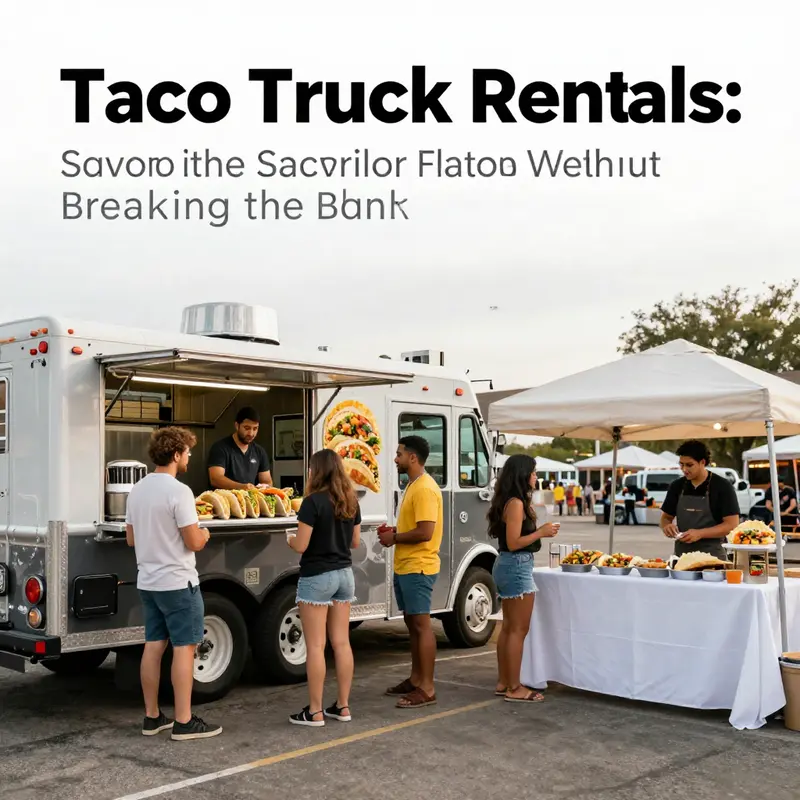
With all the delicious tacos and the vibrant atmosphere a taco truck brings, understanding the costs involved in renting one is essential for planning your next event. From the variation in prices across different cities to the factors that can influence those rates, we’ve explored everything you need to know to make an informed decision. Plus, by comparing taco truck rentals with traditional catering options, it becomes clear that choosing a taco truck can be not only a memorable choice but also a financially savvy one. So when that’s next special occasion arrives, why not consider the flavor-packed option of a taco truck?