
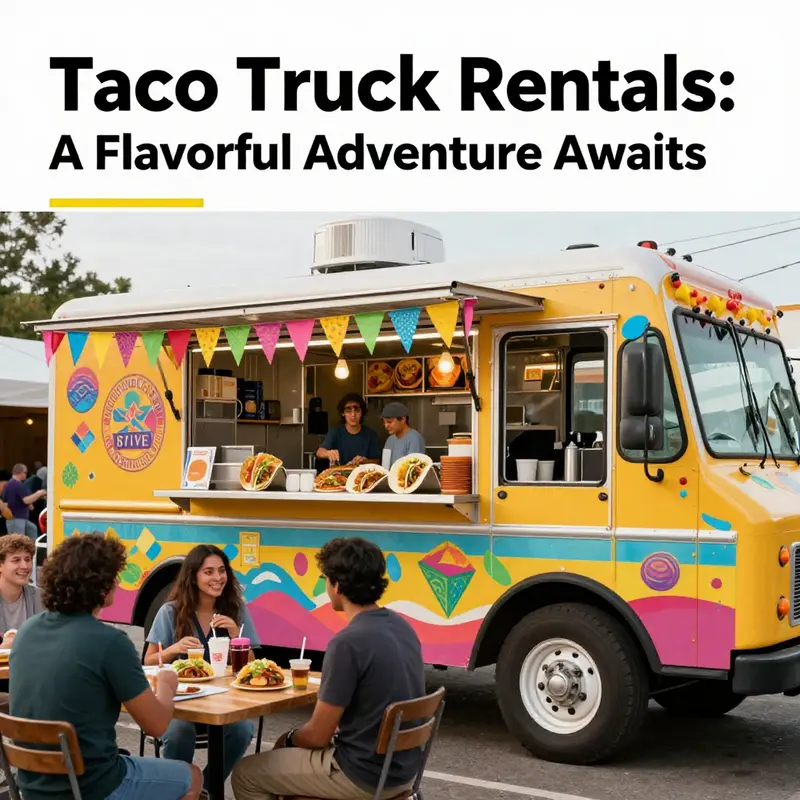
Renting a taco truck can turn your ordinary gathering into a vibrant taco fiesta! Whether you’re a cuisine lover, taco enthusiast, local office worker, or an event planner, the allure of delicious tacos served on the go is hard to resist. This guide dives into the costs associated with renting a taco truck, exploring everything from regional price variations to how amenities can influence your budget. By the end, you’ll be equipped with all the insights needed to bring the taco truck experience to your next event!
null
null
Price on the Move: How Taco Truck Rentals Vary by Region
Renting a taco truck is not like renting a standard passenger vehicle. There is no universal price tag that applies everywhere, because a mobile kitchen is a complex piece of equipment that includes the truck body, the built-in kitchen, ventilation, power systems, water and waste plumbing, fire suppression, and often extras like refrigeration, fryers, and warming stations. As a result, the cost of securing a taco truck for business or events depends on a mosaic of factors that shift from place to place. Readers should keep in mind that what you pay in one market may be dramatically different from another, even if you are renting a truck of similar size and features. The core idea is simple: regional economics, local demand, and the exact equipment you need create price variability that far outstrips any single average.
In broad terms, rental costs for a mobile kitchen tend to be quoted on a weekly or monthly basis, with some providers offering daily rates for short gigs. A practical starting point is to think in terms of a weekly budget that covers not just the rental fee but the essential operating costs that accompany any food-service venture on wheels. Industry conversations and available market data suggest a wide range, with typical weekly rental costs for a fully equipped, compliant truck often landing somewhere between a few hundred dollars and well into the low thousands per week. This range reflects differences in truck size, kitchen configuration, and the degree of turnkey readiness. A smaller, more basic unit with standard equipment may be toward the lower end, while a larger, high-capacity kitchen with advanced ventilation, extra refrigeration, and premium safety features will push higher. The regional tilt matters as well: urban centers with higher living costs and stricter permitting environments tend to push prices upward, while rural or developing markets may offer more favorable rates for the same basic specifications.
The region’s economic context plays a decisive role. In coastal and large metropolitan markets, you’ll encounter higher baseline costs driven by real estate, labor, and stricter health and safety requirements. In contrast, inland regions or smaller cities can present more affordable options, though availability may be more limited during peak seasons or major events. These regional dynamics shape not just the sticker price but the overall value proposition. If your goal is to run a recurring operation in a city with strong foot traffic, the premium you pay for proximity and ready-to-go infrastructure can be worth the cost. If you’re testing a concept and attending occasional fairs or festivals, a more modest regional rate paired with careful budgeting for extras can be a prudent approach.
The scope of the kitchen within the truck drives costs as well. A compact setup with a single griddle and a standard hood may suffice for simple taco offerings, but as menus broaden to include grilled meats, slow-cooked fillings, or fried components, the kitchen expands. More burners, dedicated fryers, dedicated cold storage, and more sophisticated exhaust systems all add to the rental price. Power supply is another critical variable. Some setups rely on a built-in generator or direct connection, while others require you to supply your own power distribution, which can introduce additional rental surcharges or safety-compliance fees. Water and waste management add another layer of cost, especially in regions with strict health codes or limited on-site water hookups. If a rental includes grease disposal facilities, fire suppression components, and permitting assistance, you are seeing more value bundled into the weekly or monthly rate, but those features come at a price.
Insurance, permits, and risk management are not optional line items; they are integral to operating a food operation on wheels. In high-volume markets, insurers frequently require specific coverage for mobile food vendors, and permitting costs vary by city and county. The rental vendor may offer packaged liability coverage or require you to secure your own policy, which affects the bottom line. Health department inspections and food-handling compliance add to the cost of doing business in certain locales, and those costs may be embedded in the rental price or billed separately as a pass-through. The reality is that a higher-cost regional market could still yield better long-term profitability if volume and margins justify the investment, whereas a cheaper market might struggle to achieve the same scale without careful menu design and efficient operations.
Seasonality and event calendars shape demand, and with demand comes price adjustments. In many places, spring through fall is peak season for mobile food events, with festivals, farmers’ markets, weddings, and corporate gatherings clustering on weekends. During these windows, rental rates can rise as suppliers optimize capacity to meet demand. Conversely, off-season rates may dip as providers seek to fill slots. If you are planning a multi-city or multi-week rollout, you can leverage this pattern by building a calendar that concentrates bookings during peak months in select regions while maintaining leaner operations elsewhere. The ability to negotiate terms, secure blocks of dates, and lock in the price for a season can translate into meaningful savings, especially when you are comparing across markets that show wide geographic variation.
Beyond the core rental price, the total cost picture includes auxiliary expenses that bubble up depending on location. Transportation to and from events, setup and teardown labor, and equipment transport are common add-ons. Some vendors include basic setup and teardown, while others bill separately for delivery windows and labor. If you are coordinating multiple events, you will also want to consider the cumulative wear and tear on the vehicle and kitchen components, as frequent travel can drive maintenance costs higher in some regions. It is wise to request a detailed, itemized quote that lists what is included and what is not, so you can compare apples to apples when shopping across markets. In the same breath, it helps to ask about all-inclusive packages that bundle power, water, waste disposal, and basic culinary equipment, versus bare-bones options that leave those variables up to you to arrange.
To build a practical budgeting framework, begin with a clear picture of your planned activity. Estimate how many days per week you expect to operate in a given market and what your typical menu requires in terms of equipment. Create a cost map that includes the rental price, delivery and setup charges, power or generator costs, water hookups or disposal fees, insurance, and any permit or inspection fees. Then layer on operational costs such as fuel, routine maintenance, tires, and incidentals. Don’t forget food-service operational costs like disposables, cleaning supplies, and potential commissary fees if your jurisdiction requires a licensed kitchen facility for storage and prep between events. With that baseline, you can benchmark quotes from different regions by focusing on the value delivered: how comprehensive is the setup, how reliable is the equipment, what kind of support does the rental company provide for emergencies, and how predictable is the scheduling process.
For readers who want to explore the design and configuration side of things, a deeper dive into model ranges and kitchen layouts can illuminate why some trucks carry higher price tags than others. In particular, the balance between compact portability and culinary capability often dictates cost. You might prioritize a tight footprint that travels well in urban streets, or you may opt for a larger footprint designed to serve families at festivals. The choice of equipment—griddles, broilers, fryers, steam tables, refrigeration, and ventilation—drives not only initial rental costs but ongoing maintenance and energy consumption, which in turn influence profitability. For a broader perspective on how layout and equipment choices influence operation, you can explore discussions about model options and their culinary implications at the linked guide on top taco truck models for culinary success. There, designers and operators discuss how different configurations support diverse menus and service styles, a topic that becomes crucial when region-driven demand favors certain formats over others.
Rental Timeframes on the Open Road: How Duration Shapes the Price of a Taco Truck
Renting a taco truck for business or events sits at the intersection of appetite and arithmetic. The idea of a fixed, universal price tag for a taco truck is a mirage, because the market treats these vehicles as a service with a thousand moving parts rather than a single, standard product. The way you choose to rent—by the day, by the week, or for a longer stretch—has a material and often surprising impact on the bottom line. In practice, you’re paying for more than four walls and a grill; you’re paying for how you plan to use the truck, how long you’ll keep it, and how far you’ll travel with it. The conversations around cost begin not with the price tag alone, but with the rental timeframe you select and the operational realities that timeframe implies.
From the outset, the landscape of pricing for a taco truck is broader than a simple rental rate. If you’re evaluating a food-truck rental for business or events, you’ll encounter a spectrum that depends on location, equipment level, and duration. In many markets, specialized food-truck rentals can range from roughly a few hundred dollars per week for entry-level configurations to well over a thousand per week for larger, more fully equipped units. The exact numbers shift with demand, seasonality, and the particulars of the truck itself—the size of the kitchen space, the type of cooking equipment, whether power and water hookups are included, and the availability of additional services like on-site setup and cleaning. These factors combine to shape the true cost of a rental, and the timeframe you lock in plays a central role in that calculation.
To understand why duration matters, start with the practical economics of a rental agreement. A daily or short-term rental tends to carry higher per-day rates because the supplier must cover the costs of turnover, maintenance, and standby readiness with a tighter margin. Think of it as a premium for the flexibility you gain when you sign up for only a day or a few consecutive days. A longer commitment, by contrast, often unlocks a discount tier. The rental company gains predictability in fleet utilization, reduces administrative overhead per day, and can optimize scheduling for maintenance downtime. Those savings are typically passed back to the renter in the form of lower daily rates as the total rental span increases. The latitude you gain with longer terms—less frequent pickups, fewer late-night adjustments, and a steadier setup and breakdown rhythm—also trims incidental costs tied to on-site staffing, logistics, and rush-hour travel.
But the price story doesn’t end with duration. Even when two outfits offer the same daily rate, the total cost can diverge wildly depending on what each package includes. A turnkey configuration with a fully outfitted kitchen, a generator, forced-air ventilation, a reliable water system, and basic insurance will carry a higher base price than a leaner setup. Yet the leaner option might require you to rent or source ancillary components separately, adding hidden costs that accumulate over a multi-day event. For example, if the rental does not include power hookups, you’ll need to lease or transport a generator, and that generator may incur fuel expenses and maintenance considerations throughout the rental period. If water and waste handling aren’t included, you’ll face either on-site servicing fees or the cost of procuring and disposing of water and waste material during the run.
The regional reality also plays a role. In some markets, demand for food-truck rentals spikes during festival seasons, weddings, or large corporate gatherings, pushing up daily or weekly rates during peak windows. Conversely, off-peak periods can yield more favorable terms, with more generous daily discounts or the opportunity to negotiate a longer-term rate that suits a roadshow or seasonal touring plan. Because there is no universal “ taco truck price” in the way you might expect for a standard car rental, the key is to map your use case to a rental package that reflects your event cadence, location, and the operational footprint you’ll need.
When you’re budgeting, it helps to translate rental timeframes into event planning mathematics. Suppose a turnkey taco-truck rental runs around a few hundred dollars per day. If you book for a single event of two days, the math looks straightforward: roughly two times the daily rate, plus any setup or delivery charges. If the same rental unit is available for a week at a discounted weekly rate, you’ll want to compare the cost of the shorter booking against the weekly option. A week-long rental could reduce the per-day cost significantly, but you should also consider travel time and the logistics of staging the truck for multiple events. If you’re planning a longer campaign, a monthly rental could yield the most cost-effective outcome, as it aligns with a production schedule, a consistent crew, and a predictable supply chain. The critical piece is to quantify all variable elements—fuel, insurance, cleaning, waste disposal, and potential overtime—and fold them into a single, apples-to-apples comparison across the timeframes you’re weighing.
Beyond the numbers, the duration of your rental affects risk and reliability. Shorter terms can keep you more nimble, which is useful if you’re testing a new menu, geographic market, or event format. But that nimbleness comes with a price: you may face higher per-day costs, more frequent handoffs, and less consistency in equipment performance. Longer terms deliver operating stability—consistent power, water supply, and kitchen setup across events, which can translate into steadier food quality and service, lower stress for your staff, and fewer last-minute logistical scrambles. With longer contracts, you also gain a stronger framework for budgeting maintenance and ancillary services, because you’re negotiating a single package over a known horizon rather than piecing together scattered add-ons.
The data landscape supports the general sense that rental durations influence price, even if the exact figures depend on contextual factors. In some market snapshots, rental rates for related vehicle classes show a clear trend: longer engagements bring better daily rates, while short-term rentals command a premium. For a taco-truck idea translated into actual rental practice, those patterns tend to hold, with significant variation based on equipment quality, the sophistication of the kitchen layout, and the logistics of your travel. If you’re evaluating options across cities, you’ll notice that flexible pickup and drop-off terms can also affect costs, especially when delivery and collection are involved in the service. In other words, your rental path—not just the number of days—shapes the overall value proposition.
For readers who want to explore real-world pricing models and to cross-check rental terms, a broad pricing landscape is often discussed in general travel and equipment rental platforms. While those sources aren’t specific to taco trucks, they illustrate how rental marketplaces price by duration and service level. If you want a practical backdrop to frame your decision, consider looking at comparative rental data from major platforms. It’s not a substitute for a direct quote from a specialized food-truck rental company, but it helps anchor expectations about how timeframes typically influence cost. When you’re ready to dive into concrete quotes, approach suppliers with a clear event calendar, a defined service area, and a precise kitchen specification. You’ll be in a much stronger position to negotiate a package that aligns duration with budget without sacrificing the quality and reliability your operation requires.
To connect the conversation with a broader sense of model variations and turnkey layouts, you can explore the broader industry conversation around taco-truck configurations and their potential fit for different event schedules through the guide on Taco Trucks Unleashed: Top Models for Culinary Success. This resource, linked here for reference, can help you visualize how different kitchen footprints and equipment packages translate into different rental terms and price points. Taco Trucks Unleashed: Top Models for Culinary Success
Beyond the rental timeframe calculus, you’ll want to think about the practicalities that border every rental decision. Insurance, health and safety compliance, and local permitting are fixed costs that tend to scale with how long you operate and how widely you travel. If your plan includes events across multiple venues or jurisdictions, discuss these elements up front with the rental provider. Some packages bundle basic insurance and essential permits, while others leave those items to the renter, who must then arrange coverage and compliance separately. The cost of doing so can be nontrivial, especially for events in areas with strict health-safety or food-handling requirements. Likewise, staffing costs—whether you bring your own crew or rely on the rental’s personnel for setup, service, and breakdown—will interact with the rental duration. Short-term gigs might require more fast-paced shifts, whereas longer engagements can benefit from trained staff who know the equipment and workflow. The way you structure staffing reflects both your capacity and your risk tolerance, and it can tilt the overall value proposition of one rental term over another.
In sum, rental timeframes shape the price of a taco truck through a combination of direct rate changes, bundled inclusions, and the broader operational commitments they imply. A shorter rental elevates per-day costs and increases administrative friction but grants agility. A longer rental tends to lower effective daily rates and offers stability for kitchen operations, travel logistics, and event execution. The choice is not merely a math problem; it is a strategic decision about how you want to run your culinary operation on wheels. The best path is to start with a clear event schedule, map the expected footprint of equipment and services, and then compare quotes that reflect the same scope of work across different durations. That approach yields a more transparent view of the true cost of renting a taco truck and helps you align price with performance across the timeline of your venture.
External resource reference: https://www.kayak.com
The Hidden Price of Taco Trucks: How Amenities and Equipment Shape Rental Pricing
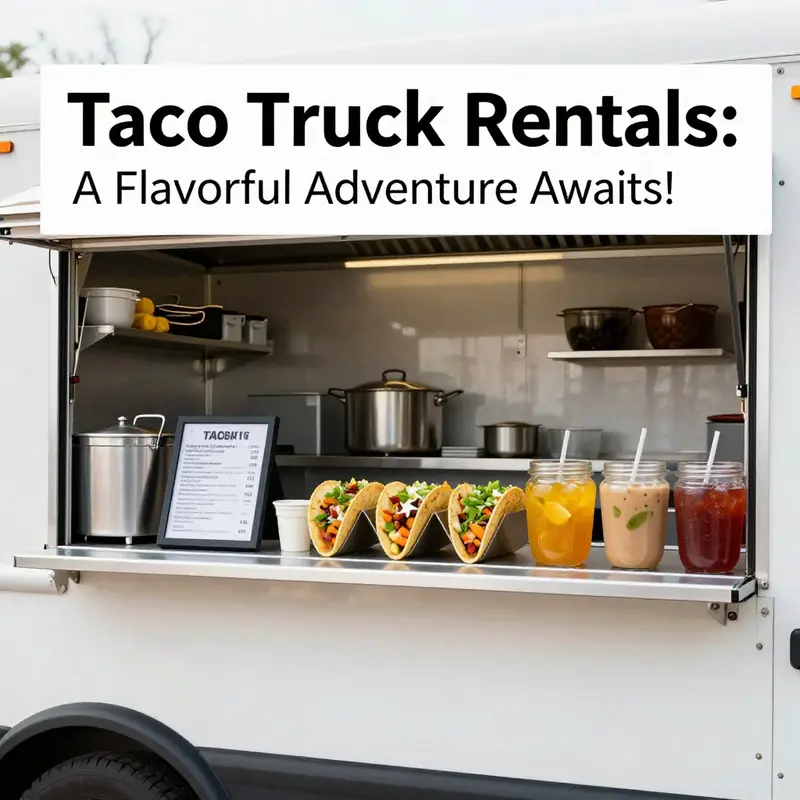
The decision to rent a taco truck goes far beyond a pretty exterior and a few burners. It is a choice about the kitchen inside, the pace of service, and the reliability that keeps a line of customers coming back. When people ask what taco truck rental costs, they often expect a single number. In reality, price is a moving target, pulled by the sophistication of the kitchen system, the level of automation, and every extra comfort that makes a crew efficient and a menu consistent. The true cost, over the course of a busy festival or a weekend market, is a reflection of how well the vehicle and its interiors align with the business plan, the expected crowd, and the geography of events. The core idea is simple: as the kitchen becomes more capable, the rental rate rises. Yet the return on that investment can be tangible in faster service, higher product quality, and happier staff. The path to pricing is not a straight line, but a careful balance between capability, reliability, and total operating expenses.
At the heart of any taco truck rental is the kitchen system. It is the engine of the business, a compact workspace designed for quick, repeatable cooking. The spectrum runs from a basic manual kitchen to a hybrid setup and finally to a fully automated kitchen. A basic manual kitchen emphasizes traditional grills, fryers, and prep stations operated by staff. This arrangement keeps upfront costs relatively modest and can work well for operators who value hands-on control and a lean crew. It’s also the simplest to maintain during a rental period, since there are fewer moving parts and fewer digital dependencies. However, it places more demands on labor during peak times and can slow service if demand spikes. The pricing logic here is straightforward: lower rental rates per week or per day, reflecting the simpler equipment and higher labor input needed to sustain output. In practice, a basic setup tends to attract operators who prioritize budget friendliness and flexibility over automation and speed.
A step up is the hybrid kitchen, which blends semi-automated tools with traditional, manual elements. Think automated fryers, conveyor grills, or pre-portioning systems that reduce handling and standardize outputs. These features tend to raise the rental price, but they also offer a measurable payoff: more consistent product quality, faster service during busy periods, and easier scalability as the business grows or as events demand higher throughput. Hybrid configurations often strike a sweet spot for new businesses that want to improve efficiency without risking the complexity and cost of full automation. The incremental cost is mirrored by the value of smoother operations, a steadier pace during lunch rushes, and the ability to train staff quickly on semi-automated workflows. Operators with ambitions to push through longer events and larger crowds usually find hybrids deliver a meaningful return on investment.
Fully automated kitchens sit at the high end of the spectrum. Robotic fryers, smart ovens, and integrated inventory systems define this peak of technology. The benefits are clear: speed, precision, reduced human error, and the potential for a near-seamless handoff from cooking to serving. Yet automation demands significant upfront investment and specialized operation. In most markets, fully automated taco truck kitchens are a premium option, typically priced at the upper end of the spectrum for longer-term rentals or for businesses that rely on repeatable, high-volume performance. In many cases, the higher cost reflects not only the equipment but also the service package that comes with it—remote monitoring, routine software updates, and skilled technicians who can support the system during events. The practical takeaway is that automation can drive throughput and consistency but requires planners to budget not just for the rental period but for ongoing management and potential training. If a new operator envisions rapid growth, the automation path offers a scalable template, even if the initial price tag is steep.
Beyond the kitchen itself, there are several additional amenities and pieces of equipment that can tilt the price of a rental. Climate control is more than comfort for crew members; it is a health and safety issue in many climates. Adequate air conditioning or heating helps preserve ingredients and ensures a stable working environment during long shifts. High-capacity refrigeration is another essential. Storage for perishables, sauces, and toppings must be reliable and capable of handling peak demand without compromising safety. If a truck’s water system is subpar, even the best menu can suffer; hence, commercial-grade water filtration becomes a valued feature for many operators who attend events in diverse locations where municipal systems vary in quality.
Electrical infrastructure is a critical, sometimes overlooked cost driver. Extended electrical hookups reduce the need for portable generators and the noise and fuel consumption that come with them. Yet the numeric cost to rent a unit with robust electrical capabilities can be significant because it translates into more power available for cooking equipment, refrigeration, and any supporting devices like blenders or food processors. A well-equipped truck may also include a full-service restroom for staff, a feature that improves crew morale and efficiency on long days, particularly at crowded festivals where on-site facilities are scarce. A built-in point-of-sale system with card readers, plus reliable Wi-Fi, is another value-add that can influence rental pricing. In today’s market, customers expect seamless transactions and real-time inventory or sales data; the absence of these capabilities can be a deal-breaker for some events.
Branding and exterior presentation also factor into pricing, even if subtly. A truck that presents a cohesive, professional, and visually appealing storefront naturally commands higher rental rates because it contributes to the overall event experience. The same menu in a more polished package may move faster, attract more attention, and justify premium pricing at the point of sale. This is not just about looks; it is about credibility and consistency. In many markets, event organizers and festival curators favor units that project reliability and quality, reducing their own risk when selecting vendors. The rental decision thus depends on a balance between the visual identity of the truck and the practical capabilities it offers.
The economics of rental pricing also reflect regional realities and event scale. Across regions, weekly or daily rental rates for food trucks can vary widely based on demand, distance, and the expected duration of engagement. A standard food truck rental may fall within a broad band, with higher-end setups priced for longer commitments or multi-day events. Operators entering markets with dense competition and a high tempo of events often lean toward hybrids or automations, hoping to leverage faster service during crowded times. Those who operate in markets with sporadic events may prefer simpler configurations that lower ongoing costs while still delivering a dependable product. In this way, the rental decision becomes a strategic financial instrument: it aligns equipment capability with the tempo of business and the appetite for risk.
For readers seeking a practical frame of reference, a blended approach offers a prudent path. Start with a baseline manual kitchen to establish process routines, then layer in selective automation as the business proves itself and the customer volume grows. This approach allows a franchisee or a solo operator to calibrate the weekly cost against realized throughput, waste reduction, and customer satisfaction. It also keeps the door open for adaptation—if a festival circuit begins to dominate the calendar, adding automated features or increasing electrical capacity can be rolled into a future rental cycle rather than purchased upfront. In other words, rental pricing becomes not just a monthly expense but a dynamic tool for experimentation and growth.
To ground this discussion in practical terms, consider how a rental agreement might be priced. Basic configurations likely carry the lowest daily or weekly rates, with modest surcharges for heat, refrigeration capacity, and essential electrical supply. Hybrid setups carry a noticeable premium, reflecting the efficiency gains and the broader capability set. Fully automated kitchens command the highest tier, with pricing that anticipates ongoing software support, maintenance needs, and the premium experience they enable during peak events. Relative to the simplicity of a few extra burners, these tiers represent an ecosystem of equipment, services, and assurances that can significantly shape profitability. For the operator planning a weekend market push, the equation is straightforward: balance upfront and ongoing costs with the projected sales lift, and choose a configuration that maintains appetite for growth without sacrificing day-to-day viability.
As you weigh your options, a useful benchmark comes from industry conversations about cost ranges for rental and operation. While exact figures vary by region and vendor, many operators report that a basic food truck rental can start in the low hundreds per day, climbing into the mid-range for more capable platforms. Weekly rates tend to compress this spread, with larger units commanding meaningful premiums but offering longer rental windows and better pricing efficiency per day. For teams that require more advanced capabilities, including full automation and extended electrical or water infrastructure, the weekly price can approach the higher end of the spectrum, reflecting the added service layers and the broader return on investment. The important point is to anchor expectations to the level of service, reliability, and speed the operator needs for the target events. If the goal is to maximize throughput and deliver consistent, high-quality bites at scale, higher upfront rental costs can translate into a more robust business model.
One practical way to navigate this landscape is to view rental pricing through the lens of the customer experience. A well-equipped truck with strong refrigeration and climate control reduces ingredient waste and keeps crew comfortable, which in turn sustains speed and accuracy during service. A built-in POS system that accepts multiple payment methods and a stable Wi-Fi connection accelerates sales and reduces bottlenecks at the window. Consider how these elements influence the customer journey: from the moment a line forms to the moment a plate arrives at a grateful hand. When rentals emphasize reliability, consistency, and speed, the operator aligns more closely with the expectations of organizers who prize punctual execution and clean presentations. Price, then, becomes a reflection of value delivered rather than a simple line item on a contract.
For readers curious about practical layouts and proven models that balance capacity with cost, there is a useful resource in our broader coverage of taco truck configurations. See our guide to top taco truck models for culinary success, which offers a grounded look at how different kitchen footprints, service modes, and branding approaches influence both performance and price. Top taco truck models for culinary success.
Finally, to connect the dots between engineering principles and everyday operation, readers may explore more technical discussions on food-truck systems and power management. A reliable external reference that complements this chapter is Engineering.com, which delves into the engineering and reliability considerations that underlie modern, high-volume mobile kitchens. This resource provides broader context about how power, heat, and material handling interplay in compact, mobile environments.
In sum, the price tag on a taco truck rental is a ledger of capability. The kitchen system pays for speed and consistency; the extra comforts translate into crew welfare and customer experience; the branding and exterior polish extend the vendor’s reach at events. The smart operator uses this knowledge not to chase the most expensive option, but to tailor a configuration that meets expectations, scales with demand, and preserves margin. As with any great street-food venture, the magic happens when technique, equipment, and service come together to deliver a memorable bite at the right moment—and the price reflects that meaningful alignment rather than a merely decorative cost. For those building toward a thriving mobile taquería, the route from manual to hybrid to automated is less about chasing upfront grandeur and more about engineering a reliable, repeatable flow of meals that keeps customers coming back for seconds.
Cost Architecture for Taco Truck Rentals: A Practical Guide
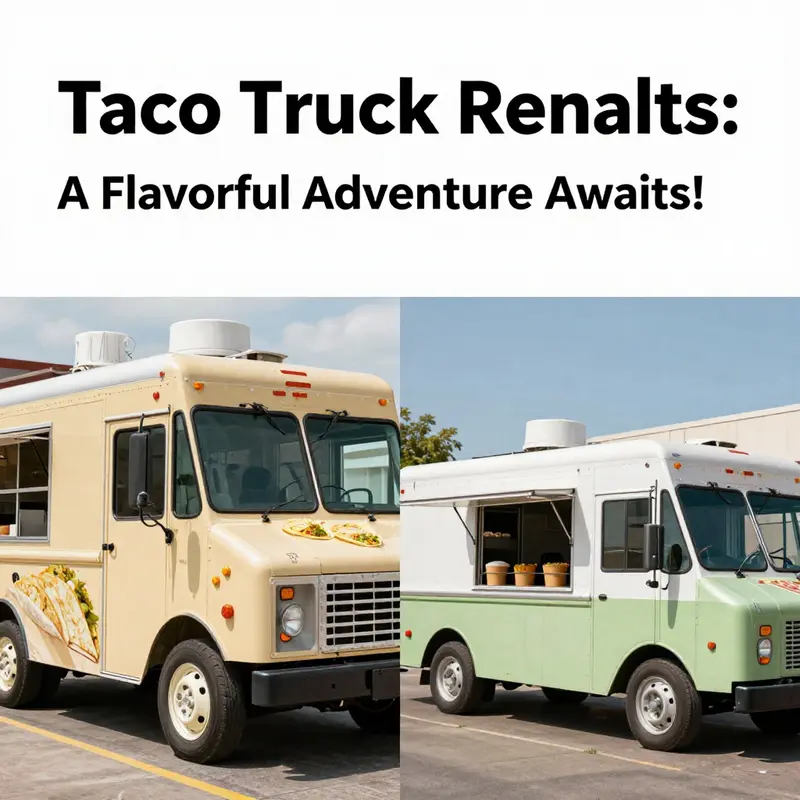
Renting a taco truck is more than a single daily rate. The market uses several formats, from turnkey kitchen-on-wheels to lean shells with basic utilities. Direct apples-to-apples comparisons are rare, so focus on the major cost levers: size and configuration, location, duration, and level of service. A compact 12- to 16-foot unit with basic appliances will price differently from a larger 20- to 24-foot kitchen with multiple cooking zones and refrigeration. Power and water infrastructure, generator inclusion, and on-site support can raise the price but improve uptime and compliance. Urban markets tend to command higher rates than rural areas, due to demand density and available support, while long-term contracts often offer lower daily rates but reduce flexibility. Beyond base rent, expect ancillary costs for insurance, permits, fuel, utilities, maintenance, cleaning, and consumables. Licensing and safety compliance add to the cost, depending on local rules and whether the rental provider offers permitting assistance. When budgeting, weigh the base price against reliability, compliance, and operational fit with your menu and staff. A practical approach is to request itemized quotes, test scenarios against your event calendar, and confirm exactly what is included or excluded in every line item. For broader budgeting context, consider the SBA resources linked externally.
Final thoughts
Bringing a taco truck to your event is more than just about the cost; it’s about creating an unforgettable experience filled with flavors, fun, and camaraderie. Understanding the factors that influence rental prices—whether it be regional variations, timeframes, or amenities—will empower you to make informed decisions. So gear up, taco fans—let’s hit the streets with deliciousness and create memorable moments with every bite!