
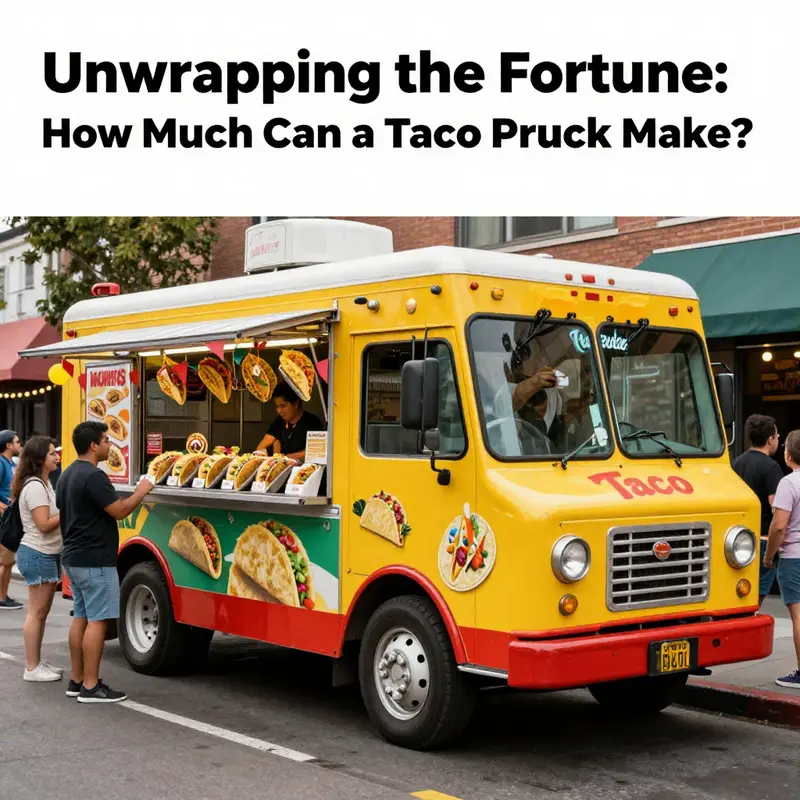
In the vibrant world of food trucks, taco trucks hold a special place in the hearts of cuisine lovers and taco enthusiasts alike. From enticing smells wafting through busy streets to tempting offerings at bustling events, these mobile eateries are not just about delicious tacos—they’re also about profit. Understanding how much a taco truck can make isn’t just fascinating—it’s essential for aspiring entrepreneurs, office workers dreaming of a break from the routine, and event planners searching for mouthwatering catering options. As we journey through this exploration, we’ll dissect daily revenues, monthly profitability, and annual earnings projections, giving a complete picture of the lucrative taco truck business.
Every Day on the Curb: Unpacking How Much a Taco Truck Can Earn Daily
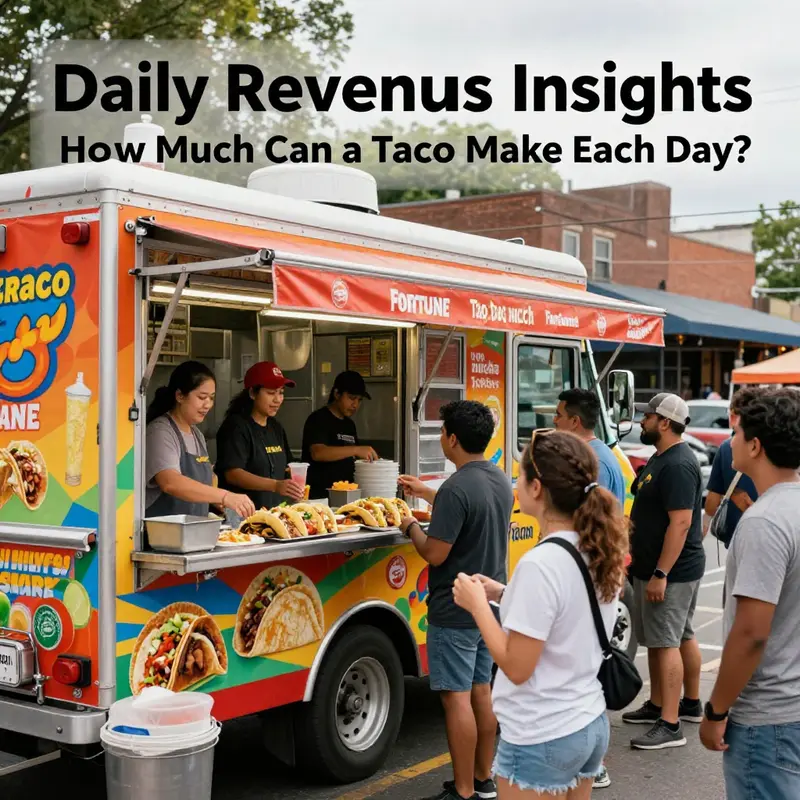
Every day on the curb is a story of demand, timing, and a simple, repeatable equation: how many mouths can a taco truck feed between sunrise and the last hungry bite fading into the evening. The daily revenue a taco truck can pull is not a single fixed figure, but a moving target shaped by where you park, how you price, and how efficiently you convert foot traffic into sales. In the busiest urban cores—where lunch crowds pour from offices and bus stops, and weekend streets pulse with events—a well-placed truck can generate a wide swing of gross income from day to day. On peak hours and during high-footfall weekends, the range often cited by operators sits roughly between $1,000 and $3,000 in gross sales for a single busy day. That spread reflects the real-world variability of city life: a few hours of steady line, a few more hours of slow rhythm, and the occasional spike when a festival or game day pulls a larger crowd past a single trailer window.
To translate that daily figure into something actionable, many operators anchor their planning around price points and customer volume. A common, pragmatic scenario has tacos priced in the $5 to $8 range, with roughly 150 to 200 customers walking up for a meal. In that scenario, gross daily revenue typically lands between $1,500 and $1,600. It’s a useful benchmark for early-stage planning because it blends approachable pricing with a volume that drivers often target in bustling zones. If a truck operates two or three peak shifts per day—or if weather cooperates and nearby offices are in full swing—the tailwinds can push that daily number higher. Conversely, in slower locales or during inclement weather, the same truck might see markedly fewer sales, underscoring the importance of flexible scheduling and diversified revenue streams.
Costs are the other side of the coin. The food itself typically accounts for a substantial share of the expense; many operators estimate food costs at roughly 30–40% of sales. When you couple this with labor, fuel, permits, maintenance, and other overheads, the net profit margin commonly lands in a range of 10–20%. In the daily scenario above, that translates to a net profit of roughly $150–$320 per day—though seasoned operators who maximize throughput, optimize menu mix, and control waste can edge toward the upper end of that range. A more conservative day with slower traffic might shrink net profit to the low hundreds or even under a hundred dollars if a truck bears unusually high fixed costs on that particular day.
These numbers translate into monthly and annual realities that are often surprising to new entrants. If a well-functioning truck maintains strong daily performance most days of the month, monthly gross revenue in a broad, typical band could be $25,000 to $60,000, with annual gross revenue broadly ranging from $300,000 to $700,000 or more. Net figures are naturally smaller due to the same cost structure: after accounting for cost of goods, staff, fuel, and the rest, many operators end up with a net between $30,000 and $140,000 annually. Those estimates depend heavily on how consistently the truck operates and how well costs are controlled over time. They also reflect the reality that revenue and profit are not the same metric; high sales do not automatically equal high profits if costs rise in tandem.
Location remains the most potent driver of daily revenue. The streets near business districts, convention centers, tourist hubs, and areas with regular events often outperform residential zones with modest foot traffic. Proximity to a constant stream of potential customers—whether office clusters during lunch hours, nightlife corridors, or festival venues—creates the kind of cadence that sustains a steady line and predictable turnover. Weather, seasonality, and city-specific permit regimes add layers of unpredictability; a sunny weekday can outperform a dreary weekend, while summer festivals can push daily revenue well beyond the baseline. This sensitivity to place is why some operators build a flexible schedule that pivots toward high-traffic windows—lunch peaks on weekdays, late-night blocks near popular bars, and weekend pop-ups at farmers markets or street fairs.
Beyond the sheer count of customers, the tempo of the day—the rhythm of moving lines, restocking, and serving with speed—matters just as much as price or volume. A well-timed, fast-paced service can turn a modest crowd into a high-margin spike. Speed doesn’t just influence customer satisfaction; it expands capacity. If a truck can turn in a single shift with a high throughput, it may capture additional customers who would otherwise pass by during a slower moment. Conversely, if the menu is overly complex, or if there are bottlenecks in cooking or serving, throughput declines and so does daily revenue. In practice, operators often learn to optimize the balance between menu breadth and speed, prioritizing items that can be prepared quickly without compromising flavor or quality.
The daily revenue picture, while important, should be viewed alongside a realistic contingency plan. Not every day will be a slam dunk. Weather can cancel lines, events can disappoint, and competing vendors can siphon off nearby demand. A mature operator builds resilience into the daily model by maintaining a stable base of sales with reliable crowd-pulling options—such as combo meals, family packs, or beverages that can be sold efficiently. Beverage sales, for instance, offer a relatively high-margin complement to core offerings and can help pad daily revenue during off-peak periods. The ability to swap or rotate menu items—adding a rotating special or a regional favorite—also keeps the stall interesting and can draw curious new customers who might otherwise overlook a familiar lineup. In other words, daily revenue isn’t merely a function of how many tacos you can sell; it’s about how well you can adapt the menu and delivery pace to the surrounding crowd while keeping costs in check.
From a planning perspective, breakthroughs in daily revenue often come from a blend of two strategies: carving out a dependable core of sales and exploiting short-term opportunities that appear in the form of events and seasonal foot traffic. A dependable core might be a simple but popular staple—tacos that consistently satisfy and can be produced with minimal waste. The second lever—events—requires a nimble operations plan: being in the right place at the right time, with the right staffing to handle bursts of demand and a quick ramp-down when the moment passes. Weekend sports games, concerts, parades, or outdoor markets can turn a routine weekday into a day closer to the upper end of the $1,000 to $3,000 gross range. Each successful event also offers a learning moment: which menu items traveled well with a festival crowd, which pricing prompts the most conversions, and how many staff are needed to sustain a fast, friendly service.
The question of whether a taco truck can truly sustain a high daily revenue also circles back to the operational model chosen for the vehicle. Different truck configurations and setups influence how smoothly the day unfolds. A vehicle that prioritizes speed, efficiency, and minimal setup time tends to generate higher throughput and, consequently, higher daily revenue during peak windows. That doesn’t mean price or flavor are unimportant; rather, it means your operational discipline—the way you plan, prep, and execute—becomes a multiplier on the revenue you’re already capturing from customers. For those exploring the strategic side of the venture, there is value in studying different models and configurations that emphasize efficiency, reliability, and scalability. When you’re ready to compare options, you can explore a guide that reviews top food truck models for entrepreneurs and offers a sense of how different layouts, equipment choices, and workflow designs can impact daily revenue and long-term profitability.
This is where the choice of equipment and layout begins to intersect with the daily revenue story. A practical approach is to think of the truck as a micro-manufacturing unit for meals: a compact kitchen that must deliver consistent quality at speed while traveling from one hotspot to another. The right setup can shave minutes off each order, increase the number of tacos sold per hour, and reduce waste—each of which nudges daily revenue upward. The most successful operators often implement a queue-friendly service model: a clear line layout, a simplified menu during peak periods, and a prep routine that ensures ingredients are pre-portioned and organized for rapid assembly. In parallel, they build a cash flow plan that accounts for variability in daily sales. They forecast a conservative baseline for slow days and a best-case scenario for peak days, then set a buffer so the business can weather fluctuations without compromising food quality or service speed.
Community, reputation, and consistency also weave into the daily revenue fabric. Consistency in taste and portion size creates repeat customers who return week after week, even if occasional days dip below the average. A strong local following can transform a truck from a simple lunch option into a preferred neighborhood treat, extending the window of high-revenue potential beyond the smallest seasonal spikes. Reputation is earned as much through interactions with customers as through the menu itself. Friendly service, clean presentation, and reliable hours all contribute to a higher daily throughput by turning casual passersby into loyal regulars. That loyalty, in turn, makes the revenue picture less volatile, because it reduces the reliance on fleeting foot traffic alone and instead builds a base of repeat sales.
For readers eager to map their own path, a key takeaway is that daily revenue should be framed as part of a broader business plan rather than a standalone target. A thoughtful plan links anticipated income to a precise cost structure and a flexible schedule that can adjust to the city’s rhythm. Build a model that assumes a mix of strong days and slower days, then stress-test it against possible disruptions—weather, permits, price changes in ingredients, or a new competitor in the area. This approach is not just about predicting income; it’s about shaping a resilient business that can sustain a healthy margin across the variability of urban street life. If you want to see how different truck models can influence throughput and operational efficiency, there is a wealth of practical guidance in a referenced resource that surveys top models for entrepreneurs in this sector. That guide offers perspectives on layout, equipment, and workflow that can directly impact how efficiently a truck converts daily crowds into revenue. Top food truck models for entrepreneurs.
In the end, the daily revenue story for a taco truck is a blend of art and arithmetic. It requires a solid baseline expectation, a willingness to adapt pricing and menu mix to the crowd, and the discipline to manage costs so that the math behind the day’s dollars works in your favor. It’s not a push-button proposition; it’s a daily negotiation with the city’s tempo, the season’s mood, and the truck’s own operational temperament. When these elements align, a taco truck doesn’t merely survive a day of sales; it composes a reliable rhythm of revenue that, over time, translates into sustainable profitability. For those who want to broaden their understanding of the market and see how shifting configurations affect outcomes, exploring model options can be a productive next step. And for more detailed insights into the mechanics of startup costs and profitability modeling, readers can consult broader industry guidance that discusses the essential pieces of turning a mobile kitchen into a durable business.
External resource for broader context: https://www.alibaba.com/product-detail/Buy-Street-Taco-Stand-Mobile-Food-Trucks_1600997881792.html?spm=a2700.19819592.0.0.1a1e3f2bBzKdZl
The Monthly Beat: From Foot Traffic to Real Profit in a Taco Truck Venture
A taco truck’s monthly profitability is a story told in numbers as much as in flavors. Location, volume, pricing, and costs create a rhythm that can push a small vehicle from break-even to a reliable income. In busy urban corridors, a well-placed truck can turn peak-hour lines into months of solid performance, while in quieter corners, the same model may drift toward leaner months. The numbers are not mystical; they follow patterns that repeat across cities when the fundamentals are managed well. The chapter on monthly profitability is not a mere ledger of figures but a field guide to reading the pulse of a street-corner business that depends on public appetite, timing, and discipline. It invites the reader to imagine the clockwork of a food operation that moves with the lunch rush, the evening crowd, and the weekend festival, all while balancing the practical needs of cash flow, inventory, and compliance. The voice of the market here is plain: revenue comes from foot traffic and pricing that resonates with that traffic; costs come from the same street-level realities that make or break a mobile kitchen apart from a brick-and-mortar venue. The task is to translate those street signals into a monthly forecast—an exercise in realism that helps founders decide whether to scale a single vehicle or to add a second unit to the map, whether to lean into longer service hours or to optimize the menu for quicker turns. The lessons are practical, not theoretical, because the same patterns show up whether the truck is parked in a sunlit business district, near a stadium, or in a busy night market tucked between apartment blocks.
At the core of monthly profitability is the straightforward arithmetic of revenue minus costs, but that arithmetic hides a layer of strategic choices that fuel or erode the bottom line. On the revenue side, a truck’s income hinges on two levers: customer volume and average ticket size. Volume is the number of customers served daily, and the average ticket is the amount each customer pays. A typical urban taco truck eyeing the lunch-to-dinner window might target around 150 to 200 customers per day during peak hours. When the average ticket hovers around $8 to $12, daily gross revenue can stretch from about $1,200 to $2,400, with higher results in events and premium venues. Multiply by 30 for a monthly snapshot, and those numbers become a clear gauge of whether the truck is in a growth trajectory or simply pacing to cover costs. A concrete, widely cited scenario helps anchor these ideas: 200 customers daily at $10 per taco-equivalent, with a 30-day month, yields gross sales of about $60,000. It’s a clean scenario that gives operators a tangible target for planning and performance review. The same scenario reveals the second set of forces—costs—that shave away gross revenue and reveal the net reality of the business.
On the cost side, there is a familiar triad that dominates the monthly narrative: the cost of goods sold (COGS), labor, and the ongoing overhead of operating a mobile unit. COGS, which encompasses ingredients and packaging, tends to run in the region of roughly 30 to 40 percent of sales in many food-truck analyses. More precise estimates often land in a narrower band, around 30 to 35 percent, reflecting the realities of menu design, supplier relationships, and waste management. The margin left after food costs is what the business must use to pay employees, fuel, maintenance, insurance, permits, and depreciation of the vehicle and equipment. Labor, particularly, can take a sizable bite. Some trucks run with a lean crew, relying on a single cook and a couple of helpers during peak times, while others staff more aggressively to sustain longer windows of service or to handle large events. The labor line is not just about wages; it includes payroll taxes, benefits where offered, and the cost of coverage during days with heavy foot traffic. Beyond labor and ingredients, the daily drumbeat of a mobile kitchen includes fuel, routine maintenance, and the tremors of regulatory costs: permits, inspections, and insurance. Each component has its own rhythm and its own risk, and each can swing the monthly profitability in a meaningful direction.
Placed in a broader industry frame, these numbers look sustainable in urban centers where a truck can capitalize on steady streams of office workers, convention-goers, concert-goers, and tourists. A 2024 benchmark from a major restaurant industry association suggests that the average profitable food trucks in large cities tend to hover in the $8,000 to $12,000 monthly profit range, with best-in-class performers pushing beyond $15,000. The figures are not a guarantee for every truck, but they offer a credible yardstick for evaluating a plan, especially when combined with a thoughtful location strategy and disciplined cost control. The location matters almost as much as the recipe. A truck parked near a dense corporate corridor, a transit hub, or at a high-traffic event can serve well over 200 customers a day when the mix of favorable weather, festival calendars, and local traffic aligns. In such spots, even a modest menu with a few well-executed staples can achieve the kind of turnover that makes the difference between a monthly breakeven and a respectable profit. In contrast, trucks that operate in residential areas, at markets with variable footfall, or during cold seasons often see revenue dips that require either price adjustments, promotional timing, or a broader calendar of events to sustain margins. The interplay of traffic patterns and ticket pricing thus becomes a form of seasonal forecasting that a savvy operator learns to read as part of the business plan, not as a fortunate accident.
The math, however, is only half the story. The other half involves the choices an operator makes to influence those numbers in real life. Pricing strategy, for instance, is a careful balance between affordability and perceived value. The industry tends to settle around an average price band of roughly $8 to $12 per ticket, with variations by region, menu complexity, and whether beverages are included. Pricing at the lower end can foster higher volume, especially in lunchtime windows or near office districts, while pricing at the higher end can reflect premium ingredients, a more diverse menu, or a stronger emphasis on speed and consistency. The sweet spot often emerges where the price aligns with the customer mix, the perceived value, and the speed of service. A truck that can consistently serve 200 customers a day at $10 per order demonstrates a robust daily revenue stream of $2,000, which translates to $60,000 in gross sales each month when 30 days are worked. From there, the trajectory depends on how well food costs are disciplined, how efficiently labor is scheduled, and how effectively the truck minimizes idle time in parking slots, during transitions, or while waiting for permits for special events. These operational moves are where profitability can be protected during slow periods and amplified during busy periods.
The logistics of a mobile kitchen amplify the importance of efficiency. The very nature of a truck-based operation demands a careful choreography of prep, cooking, and service. Menu engineering becomes a critical tool, not a luxury. A compact menu that focuses on core offerings with high demand can reduce waste, simplify kitchen workflow, and shorten average service time. Shorter service times often translate into more customers served per hour, which is the kind of throughput gain that can lift monthly profit even if the average ticket remains constant. But the inference is not that more customers automatically equal more profit. To translate volume into profit, a truck must maintain a stable food cost percentage while maximizing worker productivity and minimizing downtime. This is where the seasonal and event-driven calendar becomes a strategic asset. Farmers markets, sports events, street fairs, and office lunch hours can all be scheduled with a calendar mindset, allowing owners to plan staffing and inventory excitements around high-probability revenue days while carving out guardrails for lower-traffic weeks.
The internal dynamics of profitability also involve the intangible yet real aspects of brand and reliability. Consistency in food quality, service speed, and vehicle reliability creates repeat customers and favorable word-of-mouth, which in turn increases customer volume without the same pricing pressure. A well-timed promotion or a new daily special can drive incremental sales, but it must be deployed with an eye toward margin preservation. A robust promotional idea is not about raw discounting; it’s about value creation that persuades a passerby to choose your truck over a nearby alternative. In a crowded street-food ecosystem, the differentiator is not risk-free pricing but dependable consistency and a predictable experience. The operator who can deliver a hot meal in a few minutes, with a clean, well-organized serving window and a friendly, efficient crew, can command loyalty that translates into steady monthly income even when the city’s headline events shift across the calendar.
In this light, profitability is best understood as the product of disciplined operations and smart calendar management. Consider the monthly example again: assuming 200 customers per day at an average of $10, and 30 service days in a month, gross revenue hits about $60,000. If food costs stay around 35 percent of revenue, that’s $21,000 in ingredients and packaging. The remainder, $39,000, must cover labor, fuel, permits, insurance, and maintenance. If those ancillary costs total $24,000 for the month, net profit stands at about $15,000. Within the broad range of 10 to 20 percent net margins, this scenario sits right in the heart of typical profitability for a well-run urban truck. It also highlights the sensitivity of the bottom line to a handful of levers: a few percentage points in food cost, a handful of hours saved through improved kitchen flow, or a single high-traffic event that randomly raises a day’s revenue. Each lever has a proportionate impact on the monthly outcome, underlining the idea that profitability is a composite result rather than a single magical number.
For readers looking to plan with realism, an appetite for data, and a dash of street-smart strategy, the path forward should include a clear profitability model. That means building a simple spreadsheet that takes in daily customer counts, average ticket size, and a break-down of costs by category. The model should account for seasonal fluctuations, event-driven spikes, and the potential for price adjustments. It should also compare scenarios: a leaner menu with higher throughput versus a broader menu with slower service. The process forces a tacit discipline—track the exact pieces of the income and expense puzzle and then test adjustments in a controlled way. A practical takeaway is to map out a monthly calendar that attributes expected revenue to each day by location, event, and weather pattern. If a truck can capture a few consistently high-volume days in a row, those days can anchor the monthly forecast, providing a buffer against dips elsewhere in the calendar.
The conversation about monthly profitability also invites curiosity about the broader ecosystem of operating models in the street-food world. Operators often explore different configurations—mobile-only stalls, hybrid concepts with commissary support, or small fleets of micro-trucks sharing back-end kitchens and procurement pipelines. Each model changes the math in meaningful ways: a fleet can spread fixed costs over more units, yet it demands more complex scheduling and maintenance. A single truck remains simpler and more agile but may face higher per-unit costs for labor and logistics. The choice between models is not solely about maximizing profits in a vacuum; it reflects risk tolerance, local regulations, capital availability, and the operator’s capacity to manage multiple moving parts. For readers intrigued by these strategic permutations, a broader discussion that surveys the landscape of operating models can be illuminating. For instance, a broader examination of food-truck strategy highlights the importance of choosing the right layout and model for a given market, and it points to practical considerations like equipment layout, supplier proximity, and the pace of service that together shape monthly outcomes. If you’re curious about how different physical and organizational models translate into real-world profitability, you can explore our coverage of top food truck models for entrepreneurs, which distills these choices into a digestible framework. Top Food Truck Models for Entrepreneurs.
Beyond the arithmetic, the monthly profitability story in a taco truck also rests on the craft of the culinary operation. The menu’s design, the quality control at the window, and the supplier relationships all contribute to reliability in both the top line and the bottom line. A consistent supplier network reduces the risk of price spikes or stockouts that could otherwise threaten the monthly numbers. A well-tuned menu reduces waste and improves yield, which in turn supports a healthier food-cost percentage without sacrificing taste or speed. These operational virtues are not luxuries; they’re the everyday discipline that underpins the numbers. When a truck can deliver hot, fresh, affordable food quickly and consistently, the appetite of a city returns, month after month, creating a predictable revenue stream that aligns with a business’s financial plan. The urgency of daily execution—getting the right quantity of inventory, preparing it with a tight timetable, and serving customers with speed and warmth—creates the day-to-day stability that, when aggregated, becomes the monthly rhythm.
In closing, the monthly profitability of a taco truck is less about chasing a single revenue milestone than about managing a steady tempo of sales and costs. It is about choosing the right location, projecting realistic customer volumes, and maintaining tight control over ingredient costs and labor efficiency. It is about embracing the calendar—capitalizing on peak months, eyeing events that reliably boost traffic, and preparing for slower periods with disciplined inventory and staffing plans. The math is straightforward, but the execution demands clarity of purpose, careful planning, and a willingness to iterate on the operation. For readers who want to go deeper into the industry benchmarks and the economics behind food trucks, there is a substantial body of research and analysis that can anchor these decisions in credible, data-driven guidance. These external resources provide a broader lens on profitability and can help refine a local strategy into a repeatable, scalable monthly performance. External reference: National Restaurant Association – Food Truck Economics: https://www.restaurant.org/research-and-statistics/food-truck-economics
Year on Wheels: Projecting a Taco Truck’s Yearly Take
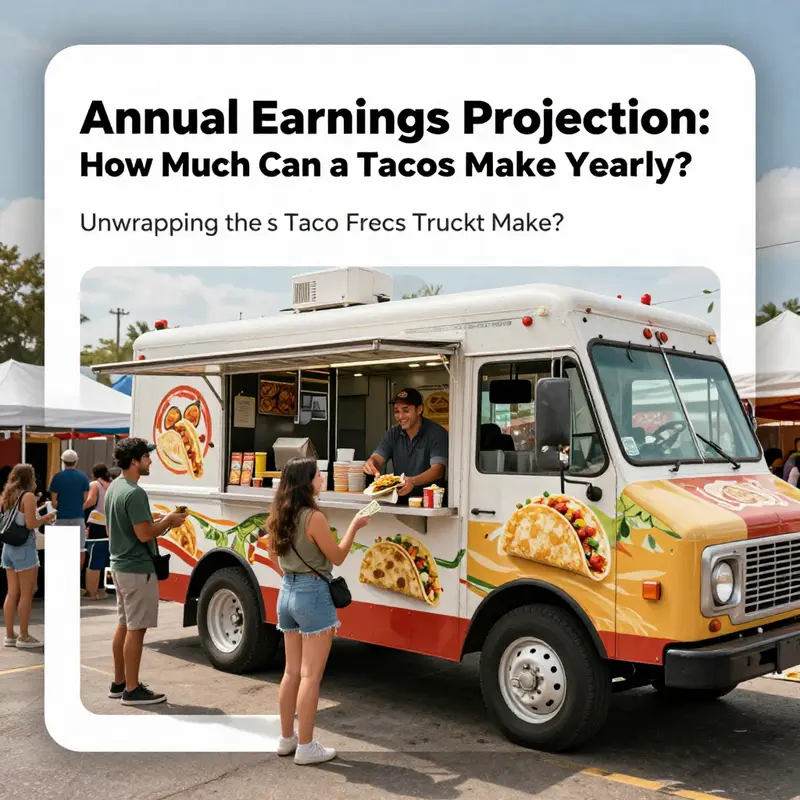
A taco truck exists at the intersection of street craft and economics, where the sizzle of the pan meets the math of margins and the rhythm of customers. When you look at a year in the life of a mobile kitchen, you begin with the obvious question: how much can a taco truck actually make in a year? The short answer is simple yet nuanced. There is no single number that fits every truck, every street corner, or every season. The long answer, which is more useful for a prospective operator, grows from patterns of revenue, the cost of goods, and the practical discipline of running a lean, legible operation. In high-traffic urban environments, a taco truck can pull in substantial gross revenue, and with careful management, translate a meaningful portion of that into profit. Yet the same truck in a less active market may struggle to cover even baseline costs. The year is not just a calendar; it is a cycle of lunch rushes, weekend events, night markets, and seasonal shifts that shape the numbers in real, measurable ways.
To understand the annual earnings trajectory, it helps to anchor expectations in three layers: potential revenue, the cost structure that converts revenue into profit, and the market context that can either widen or pinch margins. On the revenue side, a well-placed taco truck in a city with persistent foot traffic can generate robust gross revenue. Realistic annual revenue in such settings often lands in a broad band, with comparisons across operators revealing a common range rather than a single figure. For a truck that operates at peak hours and capitalizes on weekend crowds, annual gross revenue can push into the range of roughly $150,000 to $300,000 or more. This span reflects the variability of daily demand, menu pricing, and the number of operating days. It is not unusual for a truck to experience days that resemble a weekend surge even on weekdays, especially near business districts, tourist meccas, or after-hours social scenes.
Pricing is a central lever in shaping annual revenue. A menu that prices tacos in the mid to upper single digits, paired with steady customer flow, supports higher daily totals. If a truck sees 150 to 200 customers in a single day during peak periods, and if average taco prices hover around $5 to $8, the daily gross can reach around $1,500 to $1,600. Multiply by the number of open days in a typical month and then by twelve, and the year reveals a cumulative scale that would be impossible to realize without the operational rhythm that sustains consistent sales. Yet revenue is not profit. The cost structure—the blend of ingredients, workers, fuel, permits, maintenance, and overlapping overhead—eats into the top line. In most taco truck operations, food costs alone run roughly 30 to 40 percent of sales. Labor, which encompasses cooks, servers, and sometimes a rotating schedule for helpers, adds to the fixed and variable costs. Fuel for mobility, parking permits, vehicle maintenance, and insurance are recurring line items that can fluctuate with miles traveled and the number of events attended.
Net profit margins for a taco truck generally settle in a recognizable band, even as the revenue band widens. After accounting for all the core costs, the typical net profit margin tends to fall between 10 and 20 percent of gross revenue. Translated into yearly figures, that means a successful, efficiently run truck might net somewhere in the vicinity of $15,000 to $60,000 in a year. The spread matters because it hinges on location, season, management, and the ability to optimize every dollar spent. An operator who closes the gap between revenue and cost—by reducing waste, improving workflow, and leveraging high-demand locations—can push toward the higher end of the range. Conversely, a truck that faces frequent downtime, inconsistent customer flow, or high operating costs may settle toward the lower end. The math is unforgiving if the cost side is neglected, but favorable conditions and disciplined operations can produce a meaningful annual payoff.
Location remains the single most influential variable in the annual earnings projection. A truck that repeatedly parks in high-footfall zones—near corporate campuses during lunch, at stadiums during events, or in tourist corridors during peak seasons—enjoys higher customer velocity. In these contexts, daily revenue opportunities increase, which, when converted efficiently, elevates annual revenue. The opposite is true in residential or low-footfall zones, where days can pass with modest sales. The market context is not merely about the number of customers; it is about the quality of interactions and the tempo of demand. A well-timed pop-up near major events can generate several high-revenue days in a month, which can meaningfully tilt annual totals. However, those peaks do not always align with every month, so savvy operators build contingency plans that smooth the cash flow across the year.
Seasonality adds another layer of complexity. Warmer months, major city festivals, and outdoor concerts typically deliver more frequent and larger crowds. Cold months or periods of rain can dampen sales unless a truck has adaptable strategies—such as a nearby indoor market, partnerships with office buildings, or rotating weekend schedules that align with predictable crowd patterns. Seasonality is not merely a challenge to revenue; it is an opportunity to refine the cost curve. For instance, in preparation for busy periods, some operators pre-purchase non-perishable staples and optimize stock to minimize waste. Others adjust staffing levels to reflect anticipated demand, ensuring labor costs align with projected sales without sacrificing service quality. In this dance of seasonality, the best operators treat every month as a distinct chapter within the same annual narrative.
The profitability story does not end with finance; it intersects with strategy. Menu design, for example, can affect both price points and consumption patterns. A lean, focused menu tends to reduce food costs and simplify inventory management, which can improve margins. Conversely, a broader menu can attract more customers but often carries greater waste risk and more complex supply chains. The right balance is unique to each truck’s locale, supplier relationships, and cooking speed. Some operators optimize pricing by pairing staple items with limited-time offerings that create excitement without bloating the kitchen’s complexity. Each price point and menu decision becomes a thread in the larger fabric of annual earnings.
Operations discipline matters as much as appetite for risk. A well-run truck tracks daily sales, monitors food costs against theoretical targets, and reviews variances to refine forecasting models. Simple practices—like standardized recipes, portion control, and a disciplined inventory system—translate into tangible gains over a year. When a truck brings down costs without sacrificing quality or speed, the effect compounds. The annual figure begins to shift from a rough projection to a robust expectation. In this sense, the year is less a fixed ceiling and more a trajectory set by daily choices and weekly routines. A driver’s skill behind the grill, the crew’s efficiency, and the ability to pivot from one location to another with minimal downtime all shape the outcome.
The broader market context reinforces what the numbers already imply. The street food sector has shown consistent growth as consumer preferences tilt toward convenient, flavorful, and affordable meals. Market analyses project an ongoing expansion in the food trucks sector, signaling that mobile culinary businesses remain viable long term. While macro trends provide a supportive backdrop, the day-to-day realities on the ground determine whether a truck climbs the earnings ladder or stumbles on the way there. A realistic approach blends a sober view of ranges with a strategic plan for maximizing demand and controlling costs. For entrepreneurs, this means building a model that can adapt to the ebb and flow of traffic, weather, and events while preserving high standards of food safety and customer experience.
As you map out an annual earnings projection, consider the practical steps that convert potential into actual profit. Start with a clear revenue target that reflects the local environment and realistic service capacity. Then layer in a cost structure that captures ingredients, labor, and overhead with careful precision. Track performance by month and adjust plans as needed. Use the experiences of peers who operate in similar contexts, but tailor the approach to your own unique geography and schedule. The right formula is a blend of disciplined cost control, adaptive scheduling, smart pricing, and a menu that resonates with the crowd you serve. When these elements come together, the year on wheels reveals its narrative not as a single jackpot figure but as a coherent, defendable path toward a stable income and sustainable growth.
To explore concrete, model-driven guidance on equipment, layout, and the practicalities of launching a taco truck, consider checking a resource on model configurations and culinary setups that resonates with what a successful truck seeks to optimize. The link provided here can offer structured ideas about efficiency and design, anchored in real-world practice: top taco truck models for culinary success. While the exact configuration must fit your local context, the underlying principle remains the same: a well-chosen setup supports faster service, reduced waste, and more predictable daily throughput, all of which contribute to a healthier annual total.
Looking beyond the practicalities of the kitchen, the yearly arithmetic of a taco truck’s earnings also invites reflection on risk management and resilience. A diversified calendar of events—weekday lunch hours, weekend markets, catering for private functions—can cushion the year against sudden declines in one segment. Building relationships with event organizers and local businesses creates a steady stream of opportunities that sustain the business during slower periods. Managing cash flow becomes a critical habit; many operators rely on tight budgeting, prompt vendor payments, and a steady rotation of revenue streams to keep the cash cycle moving smoothly. The annual projection is, in essence, a living document that adapts to new opportunities, evolving costs, and the operator’s evolving capabilities.
In the end, the annual earnings projection is a practical compass for anyone weighing the taco truck path. It translates the romance of street food into tangible financial expectations—an estimate grounded in realistic traffic, disciplined cost control, and strategic location choices. The journey from a first day of sizzling pans to a year’s worth of success rests on choosing the right places, pricing with care, and running a tight ship. When these ingredients converge, a taco truck doesn’t just make money; it makes a story worth telling, one season after another. External research into the broader market further informs this narrative, underscoring the growth potential of mobile food ventures on a global scale. External resource: https://www.mordorintelligence.com/industry-reports/food-trucks-market
Final thoughts
The allure of taco trucks extends beyond their mouthwatering flavors; they represent a significant income opportunity for savvy entrepreneurs. Understanding the daily, monthly, and annual earnings potential can empower aspiring taco truck owners and inspire fans to appreciate the craft behind these beloved mobile eateries even more. As taco trucks continue to thrive in diverse settings, their financial prospects are as delicious as the tacos they serve, offering a roadmap to success for those willing to take a flavorful plunge into the culinary adventure.