
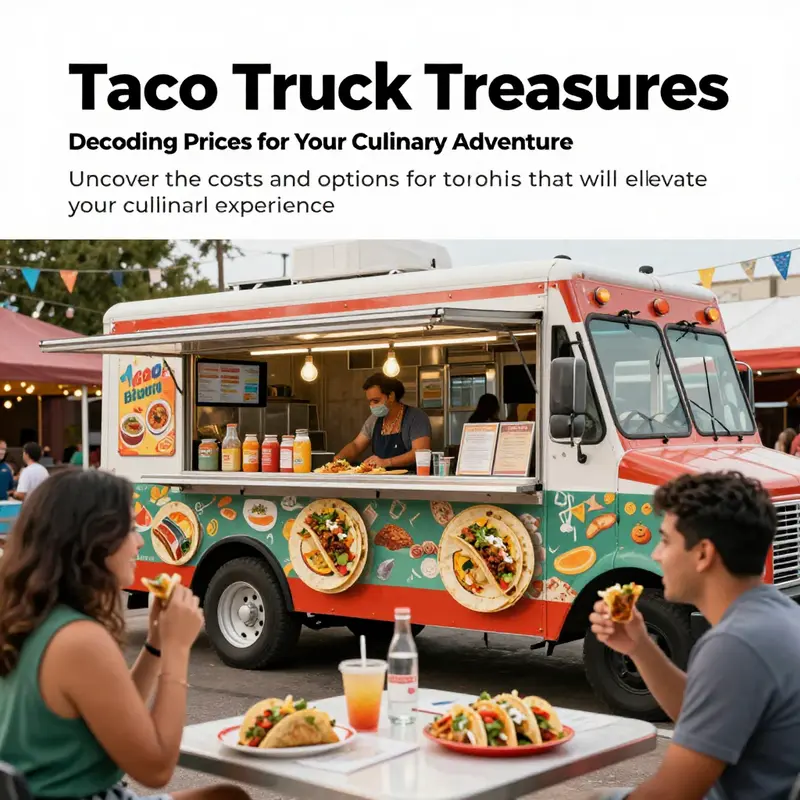
Tacos are not just food; they are an experience, a journey through flavors and cultures that brings people together. If you’ve ever dreamed of bringing this vibrant food culture to your neighborhood as a mobile vendor or catering to an unforgettable event, understanding taco truck pricing is essential. This guide will navigate you through the various taco truck options, from compact vending carts to luxurious mobile kitchens, ensuring that your taco dreams align with your budget. Each chapter will explore a specific type of taco truck, providing insights that will help you make informed decisions about your culinary venture.
Launchpad on Wheels: Unpacking the Price of Basic Taco Carts and Trailers

For anyone contemplating a move into street food, the stretch between a dream and a working taco operation often begins with a single, practical question: how much do basic mobile setups cost? The short answer is that price isn’t a fixed number carved in stone. It’s a function of size, construction, equipment, and the path you choose to take—whether you start with a small cart for farmers’ markets or a compact trailer that can pull double duty at events and pop-up spots. When you’re evaluating options, it helps to picture the journey from a minimal, low-risk shell to a mid-range kitchen on wheels, and finally to a premium, fully equipped workhorse. Each step carries its own trade-offs in upfront cost, operating efficiency, and long-term reliability. What buyers often forget at the outset is that the sticker price is only the beginning; the total investment includes power, plumbing, ventilation, and the everyday costs of running a mobile kitchen.
Entry-level carts sit at the bottom of the price curve, yet they’re far from mere toys. You can find simple stainless steel carts priced roughly from $1,200 to $2,000. These units are compact, light, and intentionally lean. They’re designed for sellers who want to test the market, demonstrate a concept, or operate at a local market with limited menu items. In practice, an entry cart may include basic cooking surfaces, a small prep area, and perhaps a simple meat or topping cooler. The downside is clear: with minimal equipment, you may need to outsource or improvise elsewhere for essential tasks like proper refrigeration, hot holding, or dishwashing. The advantage is the financial barrier is low enough to lower risk if demand lags or if seasonal demand creates a yo-yo business pattern.
As soon as a vendor shifts from a test-run to a more serious daily operation, mid-range options begin to dominate the conversation. Fully equipped trailers in the $3,500 to $7,000 range are by far the most popular choice for street vendors and event caterers who want a solid, reliable kitchen on wheels without entering full custom-build territory. These trailers typically come with a functional kitchen package that includes a sink, a water tap, a pumping system, a stove, and at least basic refrigeration. They are built with more robust materials and better insulation, which makes them capable of withstanding daily wear and tear in a busy urban environment. You’ll also notice features designed to streamline service, like service windows, safe electrical distribution, and durable counter space. The value here lies in structure and certainty: you’re purchasing a package that is commonly vetted by vendors, with standardized dimensions, common spare parts, and more predictable maintenance.
Within this mid-range category, you’ll encounter a continuum of refinements. Some units emphasize compact efficiency for tight city lots, while others prioritize bulkier workflow setups that can accommodate more complex menus. A few European-standard, DOT-style trailer models exemplify how price can reflect not just metal and wiring but the quality of fixtures and the integration of systems. Even within the same price band, there can be noticeable differences in how the kitchen is laid out, how the plumbing is plumbed, and how the electrical system is wired to handle peak service. The practical implication for a buyer is clear: a $4,000 trailer is not automatically equal to a $6,000 trailer in daily usability. It’s essential to compare the completeness of equipment, the reliability of components, and the ease of servicing when you read multiple quotes.
Beyond mid-range, the path toward premium or custom builds opens the door to higher price bands. High-end and custom models can start around $3,500, but they quickly rise with design ambition, branding, and specialized features. A truly premium mobile kitchen might push into well over $6,000, especially if you’re pursuing a retro or luxury aesthetic, climate control for varied climates, and branded, turnkey solutions that include electrical systems, advanced ventilation, and premium finishes. In practice, you’ll see this tier when a vendor wants a distinctive look, maximized storage, and a kitchen that looks as polished as a brick-and-mortar storefront. The trade-off is obvious: you’re paying for surfaces that hold up under constant use, custom layouts tailored to specific menus, and branded experiences that help your pop-up stand out.
Another layer of complexity surfaces when you consider additional costs that aren’t always apparent in the sticker price. Shipping and import fees are commonly not included in listed prices, particularly for equipment sourced from international manufacturers. If you’re buying off-shore, a modest unit can balloon in price once freight, duties, and handling are folded into the total. Warranties frequently come with a one-year term, and some suppliers sweeten the pot with video instructions and guaranteed replacement parts for common breakdowns. For buyers who opt for bulk orders—say seven or more units—the per-unit price can drop, but the total landed cost may rise due to logistics and coordination. These factors remind us that the total cost of ownership is multi-dimensional, spanning procurement, delivery, installation, and ongoing maintenance.
The equipment itself is at the heart of what you pay for, but power and water are equally critical. Many basic setups rely on propane or other gas sources for cooking and independent water supplies, while electric-powered carts require access to power sources and, sometimes, on-site generators or battery systems. The cost delta between gas and electric configurations isn’t only about the appliance itself; it also reflects the accompanying electrical infrastructure, ventilation, and energy efficiency. For indoor or emissions-regulated environments, electric configurations offer cleaner operation but can carry higher upfront costs due to battery or charging solutions, inverters, and more sophisticated wiring. Buyers should also factor in the costs of compliance with local health and safety codes, which may require certified installations or inspections, especially for units used in public-facing food service.
To navigate this landscape with more clarity, buyers should collect multiple quotes and request detailed breakdowns. Look for included items such as a sink and water system, a basic exhaust or hood, a countertop that suits your menu, and reliable door hardware that won’t snag during daily use. It’s equally important to verify what isn’t included: back-up parts, a dedicated electrical panel, or a separate generator. When you compare vendors, a well-priced quote that arrives with a clear maintenance plan can be more valuable than a lower number that lacks a roadmap for service. If you want to see real-world configurations that other food entrepreneurs have found effective, consider exploring contemporary models designed for small- to mid-sized operations. For a practical overview of popular configurations, see Top food truck models for entrepreneurs.
As you map your budget, keep in mind that the base prices don’t tell the entire story. A cart with a glossy finish and a meticulously designed interior may come with a longer lead time, higher shipping costs, and the expectation that you’ll add branding and signage on your own. A more utilitarian shell, while less visually striking, can be paired with cost-effective upgrades over time as your business grows. If you’re weighing a mid-range purchase against a high-end option, it helps to project your expected scale over the first year: how many events will you service, what is your menu breadth, and how quickly will you be able to replace or repair components? Planning for expansion will often tilt the decision toward a robust, mid-range trailer that offers dependable service and straightforward maintenance—without chasing after a premium aesthetic that may not pay back quickly in the first six to twelve months.
Sourcing options and current pricing benchmarks are also worth a moment of attention. International marketplaces advertise a spectrum of configurations and price points, which can be instructive for understanding what features exist at each level and how much you should expect to invest for a given footprint. When you’re ready to begin the procurement process, you’ll benefit from contacting suppliers directly for real-time quotes and customization options, and from weighing the total cost of ownership alongside the initial price. For broader guidance on how to navigate the market and compare configurations, you can consult reference materials and supplier catalogs from multiple sources, including listings on international platforms. External sourcing information and price benchmarks can be found here: https://www.alibaba.com/product-detail/18FT-Outdoor-Street-Mobile-Kitchen-Vending_1600565147883.html.
In the end, the price path from a basic cart to a mid-range trailer reflects a balance between affordability, reliability, and potential growth. The simplest route lets you test demand with minimal risk, while the mid-range option delivers a packaged kitchen that can handle consistent day-to-day service and a broader menu. The premium track offers branding, climate control, and a level of hyper-customization that can create a standout identity on wheels. Either way, the core lesson remains consistent: understand what you need to serve, anticipate what you’ll grow into, and price accordingly against the total package required to move from concept to consistent, operational taco service. The next chapter will delve into the costs and considerations for standard custom taco trucks, where customization and branding take center stage and the economics shift once you cross into tailored design and larger-scale operations.
Pricing Insights for Standard Custom Taco Trucks
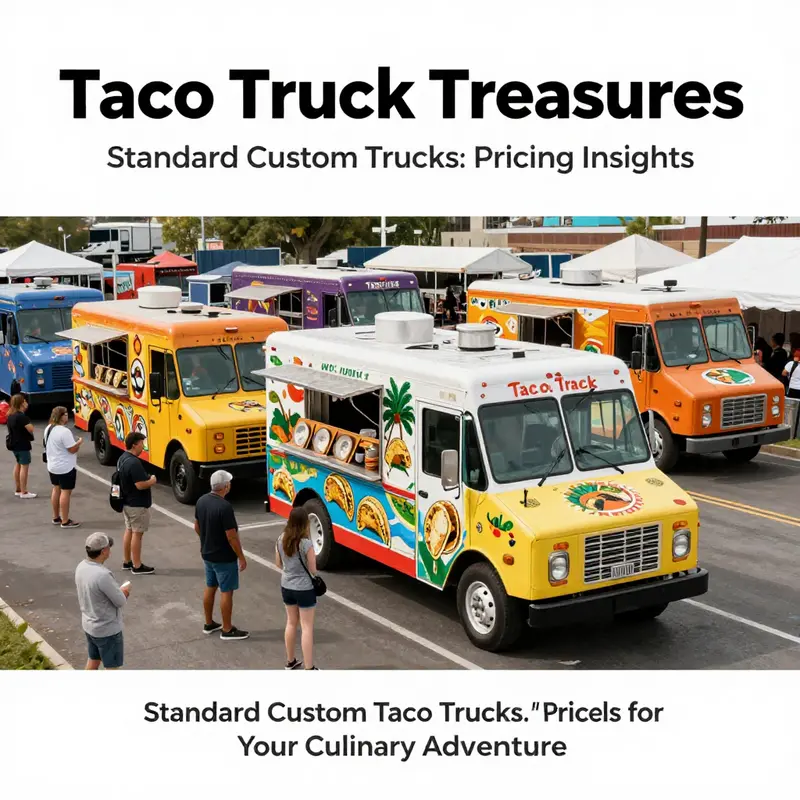
Pricing a standard custom taco truck is a nuanced process rather than a single sticker price. Buyers care about the total value, including equipment, layout, and long-term operating costs. Typical price bands for standard units reflect mid-range stainless construction, service windows, and essential cooking modules. Depending on size, number of appliances, ventilation, and electrical needs, final quotes can swing by thousands of dollars. A basic setup with a single cooking module and minimal refrigeration sits at the lower end, while a more complex design with multiple cook zones, larger cold storage, and an upgraded vent hood sits toward the higher end. Ancillary costs such as installation, electrical work, branding, and transport can add significantly to the initial price. For startups, focusing on a scalable layout and realistic power needs helps prevent surprises and supports smoother ramp up. When evaluating quotes, insist on a detailed line item breakdown that separates equipment, installation, electrical work, and any branding or interior finishes. In practice, the standard price band informs the buyer about the balance between durability, service speed, and customization options, and helps translate a range into a credible budget and plan for market entry.
The Price of Prestige on Wheels: Exploring Luxury Taco Truck Costs and What They Deliver
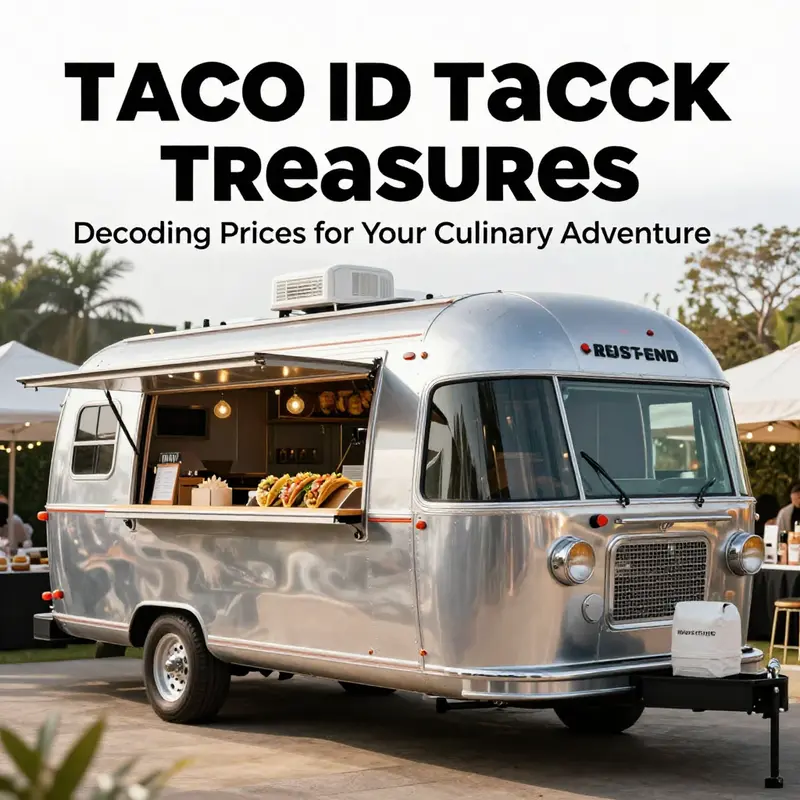
Luxurious mobile kitchens sit at an intersection where design, performance, and brand promise converge. High-end taco trucks are no longer just paved stages for sizzling meats; they are meticulously engineered experiences meant to justify premium prices and attract discerning audiences. Behind the gleaming exteriors and tastefully lit interiors lies a set of decisions that pushes cost well beyond the basics of a roadside grill. When investors ask what a luxury mobile kitchen will cost, the conversation moves from a simple sticker price to a holistic view of construction, equipment, branding, technology, and the strategic business model that underpins a premium taco operation. The numbers tell a clear story: the most elite setups start from substantial six-figure sums and can climb into the mid five figures, even before market-tested branding and event-grade operations are layered on. The range begins with premium, purpose-built shells and robust interiors and extends to the realm of bespoke design—where every panel, hinge, and appliance is chosen not only for durability but for the narrative the truck itself communicates to customers who expect more than comfort and speed from their street-food experience. In practical terms, a luxury taco truck will typically be priced from roughly $150,000 to $300,000 for a highly capable, fully capable, custom-build unit. It is not unusual for luxury configurations to exceed $400,000 when the design includes bespoke exteriors, climate control tuned for extreme conditions, advanced branding features, and high-end, energy-efficient systems. These figures reflect a philosophy: the vehicle is a core asset, but it is the interior environment and the experience it enables that drive price. The purchase is an investment in reliability, efficiency, aesthetics, and the capacity to deliver a consistently exceptional guest experience in demanding settings. The tradeoffs are clear. A lean, bare-bones trailer might get you rolling quickly and keep your upfront cash outlay lower, but it risks compromising capacity, consistency, and the brand story you want to tell. A high-end unit, conversely, embodies a commitment to premium materials, precise engineering, and a level of artistry that is meant to translate into higher ticket averages and repeat business. The construction and design phase alone can represent a significant share of the total cost. Custom exteriors that combine stainless steel with aluminum composites, or wood accents that provide warmth while standing up to the rigors of daily use, require skilled fabrication, weatherproofing, and long-term durability testing. Inside, the equipment suite is the heart of the operation. A luxury mobile kitchen trades off simplicity for capability: commercial-grade grills and convection ovens that deliver uniform results under variable outdoor conditions, high-efficiency refrigeration capable of preserving ingredients from dawn to dusk, and climate control that maintains a comfortable, chef-friendly environment regardless of the weather outside. The emphasis is not on adding gadgets but on ensuring the cooking process is seamless, sanitary, and scalable. It is not unusual to see premium setups that include energy-efficient HVAC systems, LED and ambient lighting designed to enhance the dining experience, and integrated branding elements that turn the truck into a moving advertisement as well as a kitchen. The economic calculus behind these choices hinges on more than the upfront price. Operational costs—ranging from electricity or fuel consumption and routine maintenance to insurance, licensing, and food-safety compliance—accumulate over time. In a luxury configuration, these costs must be weighed against capabilities that can support higher prices and longer service windows. For instance, the ability to operate with climate-controlled comfort can expand service hours in climates where outdoor work is seasonally constrained. It can also enable multi-day events or private functions that demand uninterrupted, high-volume output. A premium truck therefore becomes a platform for event-driven revenue, not merely a vehicle for daily street sales. The business model often centers on curated experiences that justify higher price points. Branding is a critical driver here. Partnerships with chefs or food stylists, the use of artisanal ingredients, and a distinct, story-forward menu can create a perception of exclusivity. The value proposition extends beyond food to the entire experience: the look and feel of the truck, the choreography of the service window, the cadence of the kitchen, and the way guests interact with the brand through social media and digital reservations. In such a setup, technology becomes a strategic advantage. Modern luxury trucks may incorporate contactless payments, real-time inventory tracking, and integrated marketing tools that push menus, events, and promotions to loyal customers. This is not merely convenience; it is data-driven hospitality that enhances efficiency and guest satisfaction, reinforcing the premium positioning. A recent example from the market illustrates the scale of investment and the kinds of features that distinguish a luxury operation. An operator launching a boutique mobile kitchen around 2023 spent in the neighborhood of several hundred thousand dollars—roughly $380,000 in that case—on a package that included solar panels, LED lighting, and an app-based reservation system. The solar investment signals a commitment to sustainability and energy independence, while the app-enabled reservations help manage demand at high-profile events and private gatherings. Such enhancements are emblematic of a broader trend: luxury taco trucks increasingly function as mobile hospitality hubs, where technology, aesthetics, and guest experience work in concert with culinary craft. If a reader asks whether this level of investment pays off, the answer rests on two pillars: the ability to command premium pricing and the capacity to win repeat business. In markets where affluent diners seek memorable, shareable experiences, customers are willing to pay more for a taco that is tied to a story, a setting, and flawless execution. Pricing strategies frequently reflect this. While a standard street taco may justify a modest price, premium offerings with refined ingredients—dry-aged meats, house-made tortillas, and organic produce—are positioned at the higher end, with price points that can support the premium costs of production. A luxury truck can leverage upscale menus to sustain ticket prices that, when integrated with events and memberships, deliver healthy margins even as labor and ingredient costs rise. The market potential is real but selective. The luxury segment tends to flourish in affluent urban cores, at exclusive events, and within private gatherings where clients expect a curated dining experience on wheels. The experience focus becomes a differentiator: guests are drawn to the fusion of quality, hospitality, and design, not just edible portions. For those considering entry into this niche, a prudent path begins with clarity about the value proposition and a rigorous financial model. The upfront outlay must be justified by projected revenue streams: higher average checks, repeat bookings, and the ability to convert branding into ongoing client engagement. It is equally important to consider the long tail of maintenance and depreciation. The better the build and the materials, the longer the vehicle and its systems will perform under continuous, demanding use. That reliability can translate into fewer downtimes, more bookings, and steadier income. For readers who want a concise compass to this landscape, a quick reference is to seek out pages that summarize model options and their tradeoffs. A link to a digest of the top models can provide a snapshot of what the premium category looks like and how different configurations align with cooking styles and service formats. top taco truck models for culinary success. As you push deeper into the market, remember that pricing is just the starting line. The value of a luxury taco truck accrues through the quality of its kitchen, the personality of its brand, the efficiency of its operations, and the ability to deliver a consistently excellent guest experience, day after day. When these elements align, the six-figure investment becomes a gateway to recurring revenue, high-margin events, and a brand narrative that travels with every mile. For researchers and practitioners looking for broader context, it is instructive to view the latest industry coverage of luxury mobile kitchens, which highlights how mobile hospitality is evolving into experiential dining. External coverage underscores the shift toward mobile “food halls” on wheels, where chefs and operators blend culinary craftsmanship with the drama of a well-designed vehicle. While price remains a concrete driver of decision-making, the overarching takeaway is that luxury taco trucks offer a platform for premium, scalable experiences that can command strong margins when paired with disciplined operations and a compelling brand story. External resource: https://www.bloomberg.com/news/articles/2023-11-15/luxury-taco-trucks-spring-up-as-mobile-food-halls-evolve
Wired for Flavor: The Economic Reality of Electric Taco Carts and What It Means for Your Street-Vending Venture

Electric-powered taco carts represent a turning point in how vendors approach mobility, safety, and consistency on the road. They promise cleaner operation, steadier heat, and the flexibility to set up in indoor markets or outdoor festivals where fumes and noise are restricted. But the shift from a gas or manual cart to an electric platform is ultimately a financial decision as much as a technical one. When you weigh the cost, you are balancing upfront investment against long-term reliability, operating budgets, and the brand story you want to tell customers who expect a modern, responsible business. The cost considerations for electric taco carts flow in a way that mirrors the rest of the mobile food equipment market: higher initial outlay for better electrical systems and construction, followed by costs that are often predictable but must be planned for if you want consistent service during peak seasons or large events. The core question remains straightforward: how much do these carts cost, and how does that price track with the value they deliver to a growing taco venture? To answer that, it helps to start with the baseline and then explore the way electricity changes the budgeting math.
Upfront costs for electric taco carts sit higher than their gas or manually powered cousins. A basic electric cart can start around four thousand dollars, a sum that buys a compact unit with multiple cooking stations and sturdy electrical components. When vendors opt for a more elaborate, vintage-inspired electric kitchen on wheels, the price can climb to roughly five thousand two hundred dollars or more. Those figures reflect not only the quality of materials and craftsmanship but also the complexity of electrical layouts, insulation, climate control, and the durability required for frequent use in variable weather. In practice, the difference between a simple two-station setup and a four-station, fully insulated kitchen is the difference between a cart you can deploy at a farmers market on Saturdays and a mobile kitchen that can run on some weeks of street events without needing a second unit on standby.
Yet upfront cost is only part of the story. The operating costs of electric carts hinge on where and how you run them. Electricity, while often cheaper per unit than gas, introduces its own logistical considerations. If you operate in places with reliable power access, you may rely on direct outlets at markets or parks, which simplifies day-to-day operations and reduces fuel expenses or generator wear. If power access is intermittent, you may need to bring a generator or partner with event organizers who provide power, and that choice can elevate both the environmental footprint and the cost of doing business. In high-traffic settings these costs can be balanced by smoother service, quicker turnarounds, and a quieter, safer kitchen that keeps the line moving without worrying about emissions or ventilation. The energy profile of an electric cart is typically predictable, but it is not immune to variability: a cart with more cooking stations, faster-heating appliances, and advanced refrigeration will draw more power than a lean two-station setup. This means your bottom-line cost per service can hinge on your menu design and how many simultaneous cooking tasks you run at peak times.
As you model the cost, consider the landscape of environments where electric carts shine. High-traffic locales such as farmers’ markets, food truck parks, festivals, and urban street corners with formal power access can unlock the best return on investment. The advantages go beyond the numbers. Electric carts run more quietly, reducing the sensory overload for nearby residents and customers. The reduced fire hazard compared with open flames or propane setups can translate into lower insurance hurdles and fewer permitting headaches, especially in enclosed or semi enclosed spaces. This aligns with a brand image built on safety, sustainability, and modern urban presence, all of which can influence willingness to queue up for a timely taco when a rider-friendly, low-emission kitchen is on wheels.
The long-term value of an electric taco cart rests on more than buy-in cost. Maintenance tends to be more structured and predictable than with some gas-powered rigs. High-quality electrical systems, good thermal insulation, and durable construction reduce the likelihood of sudden breakdowns during busy service windows. Battery management becomes a central discipline: ensuring a reliable charge cycle, planning for downtime, and understanding the life cycle of batteries and power components. A well-designed electric cart can also simplify logistics for events that require consistent heating and refrigeration in environments where smoke or fumes are a concern, broadening the reach of the business into venues and time slots that previously felt risky or out of reach. The evidence in practice is not merely about saving on fuel; it is about the reliability of heat control, the predictability of energy supply, and the ability to present a consistent experience that customers come to expect when they see a modern, clean mobile kitchen.
From a budgeting perspective, total cost of ownership for electric carts includes several predictable line items. First, the upfront price discussed earlier covers the core unit, its basic electrical setup, and standard safety features. Then there is the question of energy access: while electricity is often cheaper, it may require ongoing investment in outlets, generators, or battery support. If a vendor chooses to operate at events that provide power on-site, the generator may be unnecessary, reducing ongoing costs but introducing considerations about noise, maintenance, and fuel logistics for the few times power is scarce. When power is not guaranteed, battery systems or portable generators become essential, and their lifecycle costs—replacement, maintenance, and fuel or charging infrastructure—must be included in the quarterly or annual budget. The potential for energy-efficient appliances helps, but it is not a panacea; the more you rely on advanced refrigeration or multiple heat zones, the more you should expect to plan for higher energy draw and potentially more robust charging strategies.
A final, practical lens on pricing invites a comparison with bulk purchases and warranties. In scenarios where a buyer commits to multiple units, suppliers may offer cost reductions that reduce the per-unit cost enough to move the decision from a stretch goal to a feasible expansion. Most listings also come with a warranty, typically one year, which provides a safety net during the critical early months of operation. It is important to parse shipping and import fees as well, since these costs are usually not included in the base price and can be substantial for international or cross-border orders. The idea of a turnkey, fully equipped electric cart is appealing, but the real value emerges when the unit aligns with the operator’s needs, the event calendar, and the anticipated cadence of service across seasons.
For readers seeking a broader view of how these electric configurations are evolving, a deeper dive into battery technology and its impact on performance can be illuminating. See the discussion around lithium battery systems and their role in powering mobile kitchens at how-lithium-battery-systems-are-revolutionizing-food-trucks-for-a-sustainable-future. This resource helps connect the dots between the hardware on the cart and the energy strategies that sustain a busy schedule without sacrificing service quality. The core takeaway remains: electric taco carts carry a price premium up front, but when matched to the right venues and managed with a disciplined energy plan, they offer a stable, scalable path to growing a taco business while maintaining a safety-forward, eco-conscious footprint.
Ultimately, the decision to invest in an electric cart hinges on a careful cost-benefit balance. Consider the menu, the expected frequency of events, the availability of power at target sites, and your appetite for long-term planning around maintenance and battery life. Pair that with your branding goals and the expectations of customers who admire a clean, quiet, reliable kitchen on wheels, and the cost discussion becomes less about sticker price and more about strategic fit. If you chart a course that respects the realities of upfront investment and the realities of ongoing energy management, an electric taco cart can become a versatile backbone for a broader, more resilient street-food operation. External resources, including market listings and supplier considerations, can support your due diligence and help translate the numbers into a practical, executable plan for the coming season. For a concrete sense of price ranges, it helps to compare basic electric units, midrange configurations, and premium, multi-station setups against your anticipated service model and event mix. The result is a budgeting framework that keeps the focus on quality, reliability, and long-term profitability rather than on a single purchase price.
External resource for further pricing context: https://www.alibaba.com/product-detail/Electric-Food-Cart-Taco-Truck-Mobile-Kitchen_1600782398346.html
Bulk Ordering Taco Trucks: Pricing Benefits, Reliability, and Scale for a Growing Taco Business
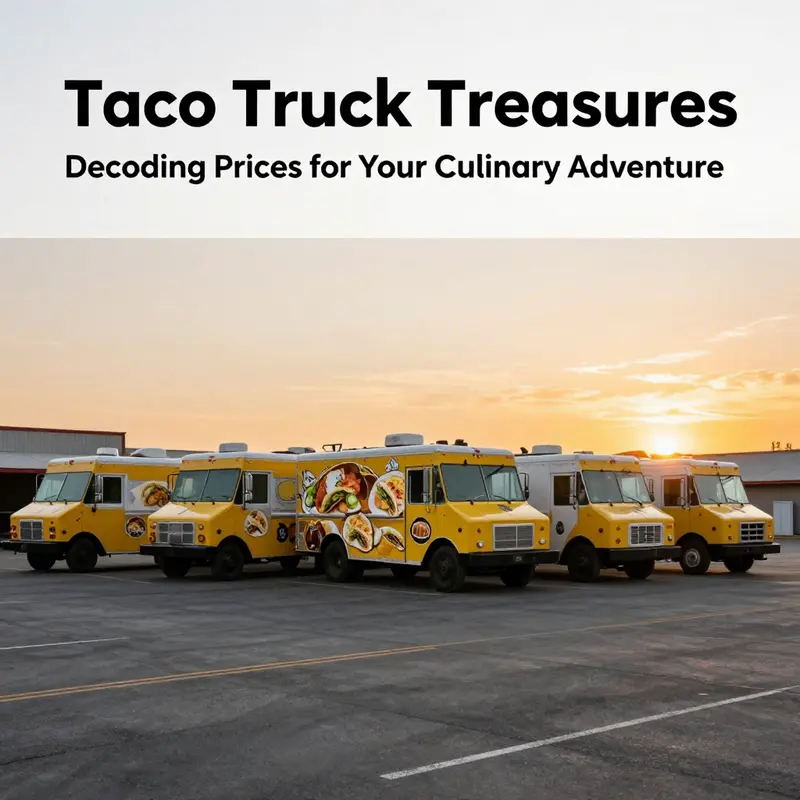
When a business plans to scale its mobile kitchen footprint, bulk ordering tacos trucks shifts from a tactical purchase to a strategic finance decision. Bulk ordering taco trucks is not merely about chasing quantity discounts. It is a strategic move that redefines cash flow, asset utilization, and brand consistency. When a business plans to scale its mobile kitchen footprint, every unit purchased in a batch can unlock savings that ripple through installation, maintenance, and daily operations. The price per unit often falls as volume rises, but true value emerges only when the rest of the lifecycle aligns. For operators expanding to multiple cities or launching a festival circuit, bulk buys can reduce upfront capital per truck, compress the time to scale, and stabilize annual budgeting by locking in a more predictable unit cost. Crucially, discounts should be weighed against the constraints of manufacturing lead times, installation timelines, and the risk of overstocking equipment that might require customization later. In bulk, the math becomes a governance issue as much as a finance issue: you must balance the allure of a lower sticker price with the need for consistent quality, reliable delivery, and a clear path to deployment.
Across global manufacturing ecosystems, China has positioned itself as a dominant supplier of mobile food service units, aided by specialized industrial clusters in regions that build components from the chassis to the cooking line. In particular, clusters in Henan and Shandong provide end-to-end production capabilities, enabling rapid turnarounds when buyers place bulk orders. This scale reduces per-unit labor and material costs, which suppliers pass along to customers who commit to multiple units. The geographic concentration near major ports—most notably Qingdao—further reduces export logistics costs and improves transit predictability. The result is shorter, more predictable delivery cycles under common shipping terms, such as FOB or CIF, which helps planners coordinate installation windows and event calendars. For bulk buyers, these logistics benefits translate into tighter inventory planning and more reliable deployment schedules across a fleet rather than a single truck.
When you start looking at price bands, bulk buyers must track how the components add up. In baseline terms, simple, compact units can begin around a few thousand dollars; standard, fully equipped trucks typically range in the lower to mid five figures per unit; premium, designer-inspired trailers can surpass seven thousand dollars per unit, especially when climate control, electric appliances, and advanced branding are required. Bulk orders do not erase these fundamentals, but they do compress the premium you pay per unit by spreading fixed costs across more units. Suppliers may offer incremental pricing breaks for 7+ units or more, and they may include warranties, video instruction, and spare parts guarantees as part of the bulk package. It is essential to read the fine print on what is included versus what is billed separately—shipping, import duties, and on-site installation are often excluded from listed prices. In practice, bulk pricing, when structured thoughtfully, can yield meaningful savings while preserving the operational integrity of each unit.
Quality assurance becomes the batch’s backbone when the buyer is purchasing more than one vehicle. Performance metrics, not glossy brochures, tell you whether the supplier can deliver repeatable results. In practice, transparent transaction data can serve as a reliable proxy for reliability: on-time delivery rates, response times, and reorder frequency. For example, one supplier in Qingdao reports a 100% on-time delivery rate and a 31% reorder rate, signaling strong fulfillment discipline and ongoing customer demand. Another prominent manufacturer maintains an average response time of three hours or less, which translates into quicker problem resolution and less downtime. These indicators help a buyer forecast risk, schedule maintenance, and align staff with service windows across multiple units. When a bulk order is placed, you are not merely purchasing kitchens on wheels—you are buying into a service ecosystem that surrounds the asset, from spare parts supply to remote troubleshooting and routine upgrades.
To translate these signals into real ROI, buyers should model total cost of ownership rather than just the upfront price. That means factoring in financing costs, insurance, long-term maintenance, and depreciation, along with power needs, fuel versus electric operation, and the branding and menu integration costs across several trucks. If the fleet will operate in varied climates, the upfront investment in climate control and energy efficiency can reduce wear and improve reliability, which in turn lowers downtime and repair expenses. The predictable cycle helps with staffing too: an operator managing multiple units can coordinate crew training, standardize food prep procedures, and streamline inventory management to reduce waste. The goal is not merely to obtain multiple units at a discount but to create a modular system where each truck complements the others, delivering consistent customer experience and predictable revenue streams.
Smart buyers adopt a phased approach to bulk expansion. Start with a pilot order—a small batch of two or three units—to validate supplier claims, test site setups, and refine standard operating procedures. Once performance proves steady, scale up in measured steps. This approach reduces exposure to misalignment between design customization and operational reality. It also allows a buyer to negotiate not only per-unit price but also bundled services such as installation, staff training, and branding support, which can translate into immediate productivity gains once the fleet hits the road. In practice, the pilot phase serves as a stress test for logistics, quality control, and after-sales support. If these areas perform well, the bulk expansion becomes a structured, low-risk rollout rather than a big leap with uncertain outcomes.
Beyond the mechanics of pricing and delivery, the broader market context matters. Industry analyses show that manufacturing ecosystems with scale can dramatically reshape unit economics. Near port locations and consolidated supply chains reduce transit time and freight variability, which helps large buyers lock in favorable terms and schedule deployments with confidence. For operators aiming to serve peak seasons or large events, the ability to commit to a delivery window weeks or months in advance can be a meaningful competitive advantage. The strategic value of bulk procurement thus extends beyond the initial savings; it anchors an operational rhythm that aligns with event calendars, seasonal demand, and the timing of branding campaigns.
Vendors and buyers alike benefit from referencing established benchmarks and performance data when negotiating bulk deals. If you want a practical route to explore options while preserving flexibility, look at reputable industry resources and case studies that discuss models, financing, and logistics in bulk contexts. For readers curious about how the latest bulk options compare across leading models, see the overview that highlights top food truck models for entrepreneurs.
Finally, it is worth noting the global supply dynamics that influence bulk pricing. Recent industry reporting underscores that China remains a central hub for export of mobile food service units, with specialized clusters enabling efficient production and end-to-end integration. This scale translates into lower per-unit costs under bulk orders, but buyers should account for the realities of international shipping, including port proximity, potential tariff changes, and the need for local installation or assembly. The takeaway is that bulk pricing does not occur in a vacuum; it depends on sustained quality, reliable logistics, and the ability to coordinate across multiple units with a unified brand experience. This broader context helps explain why bulk ordering can offer a compelling value proposition for operators ready to commit to growth.
Internal linking aside, the pricing landscape remains fluid, and the best deals come from intentional planning, transparent supplier performance, and a staged, risk-managed approach. Bulk ordering can dramatically improve unit economics, but it requires disciplined procurement, a clear deployment timeline, and partners who can support a growing mobile kitchen network with reliable after-sales service and spare parts supply.
External reference: https://www.reuters.com/business/food-drink/china-boosts-export-of-mobile-food-trucks-amid-growing-global-demand-2025-12-02/
Final thoughts
Embarking on the taco truck adventure is not only about serving delicious food; it’s about crafting memorable experiences that engage and delight customers. From budget-friendly carts to luxurious mobile kitchens, each option offers unique opportunities tailored to your culinary dreams. By understanding the pricing spectrum and benefits associated with different taco trucks, you can make a more informed decision that aligns with your goals. Remember, whether you’re catering an event or starting your own taco business, the right vehicle can put you on the road to success.

