
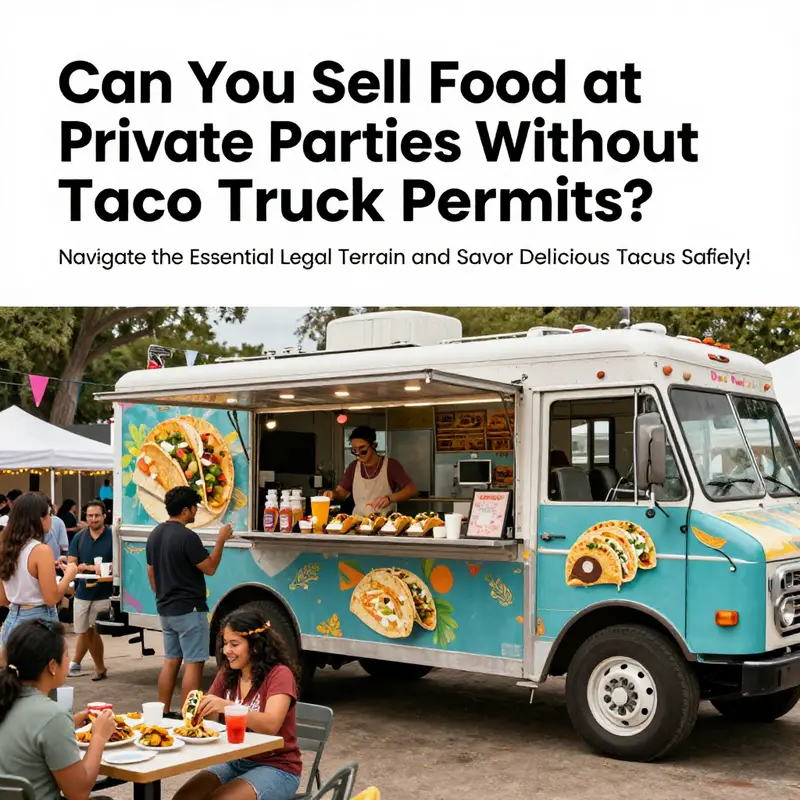
If you’re a taco enthusiast or an event planner dreaming of the perfect taco feast at your next gathering in New York City, it’s essential to understand the legal landscape surrounding food sales at private parties. New York City, famed for its culinary vibrance, also comes with stringent food regulations. Selling food at a private party, no matter how festive or cozy the venue, typically requires a permit. This article dives deep into the ins and outs of selling at private parties without the proper permits, revealing why obtaining a Temporary Food Service Permit is crucial for taco sellers. Get ready to unravel the requirements, consequences, and the process of obtaining these permits, ensuring your delicious taco dreams don’t turn into a legal nightmare. Each chapter of this guide will empower you with knowledge about the related health codes and consequences while showcasing real-life case studies, so you can make informed choices the next time you plan a taco-themed bash!
Private Parties and Permits: Why Taco Trucks Must Be Licensed Even on Private Property
Private parties do not automatically shield you from the rules that govern selling food to the public. Even when an event occurs on private property, many jurisdictions require the same permits and safeguards as any public service. The goal of these requirements is to protect guests, workers, and the surrounding community from unsafe handling, improper storage, and unsanitary conditions that can arise when food moves from a kitchen to a crowd.
If you’re considering a taco-truck approach for a private event, anticipate a licensing path rather than a shortcut. A temporary or mobile food service permit is usually required, and it is typically tied to an inspection of the site, the equipment, and any vehicle. Health departments look for functional handwashing facilities, proper temperature control for perishable foods, secure storage, sanitation of surfaces, and effective waste management. If a vehicle is involved, additional checks cover vehicle safety, plumbing and electrical systems, and proof of regular maintenance.
Compliance is not a one-size-fits-all rule. Some places carve narrow exemptions for occasional, non-profit, or truly private gatherings, but authorities may still view persistent activities as forming a business that belongs in the regulated space. The prudent path is to contact the local health department or licensing agency early, ask for the exact permit type needed, and outline how you will meet the requirements. Training is often required—the ServSafe program or equivalent credentials demonstrate you understand food-safety fundamentals and the importance of preventing cross-contamination and improper temperatures.
In practice, many private events work best when they partner with a licensed caterer or operate under a permitted mobile unit, ensuring that the kitchen and service environment are covered by the appropriate permits. Alternative options include non-perishable pre-packaged foods or demonstrations rather than direct sales, with careful adherence to regulatory boundaries. The central message is simple: the regulatory framework exists to keep food safe, and engaging with it early is more sustainable for your concept than trying to circumvent it.
As you plan, lay out a concrete permit-path: identify the exact permit type, confirm whether a vehicle will be used, prepare a site plan with handwashing facilities, appropriate refrigeration, clearly separated prep and service areas, and book the necessary inspections well in advance. A thoughtful plan reduces surprises and keeps the event aligned with safety standards while preserving the experience you want to deliver.
External resource: https://www.cdph.ca.gov/Programs/CFE/FS/Default.aspx
The Hidden Cost of Private-Party Food Sales: Permits, Penalties, and Public Health
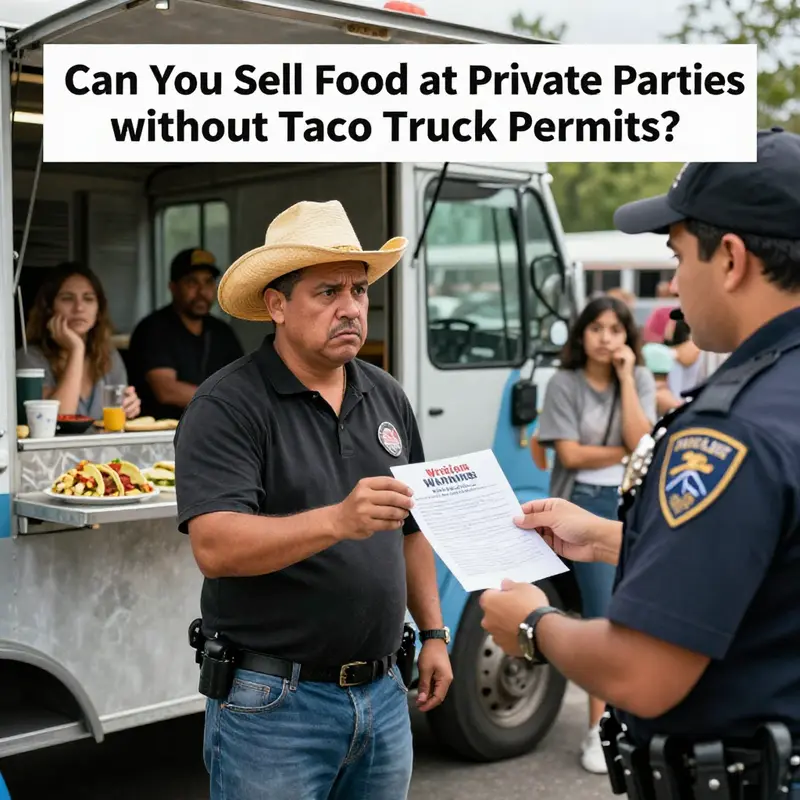
When a private party is held on a private property, a sense of intimate control can tempt organizers to treat food sales as a casual, informal affair. Yet in many cities, including New York, the boundary between private celebration and public commerce is not defined by the venue’s walls but by the act of selling food to people who did not prepare or purchase it as part of a regulated, licensed operation. The core rule is clear: health authorities require a permit for any food service that offers food to the public, regardless of where the service occurs. The city’s guidelines are explicit about this: a permit is needed no matter how the food is offered—whether from a booth, a table, a stand, a kiosk, a vehicle, or a cart—and whether the event is public or private. That axiom places a mobile unit—the so-called taco truck—into a framework of regulatory responsibility even when it parks at a private residence for a one-off gathering. The practical implications extend far beyond a single license; they touch safety, liability, and the future trajectory of any business that intends to survive in a complicated regulatory landscape.
From a risk-management perspective, the consequences of ignoring these requirements are not theoretical. Fines can be substantial, often escalating with repeated violations or higher traffic at the event. A regulatory official can halt the proceedings mid-event, interrupting service and causing immediate revenue losses. In addition, authorities may confiscate equipment and food that are used to operate without proper authorization, compounding financial damage and operational disruption. But penalties do not stop at penalties and seizures. If someone becomes ill from food sold without an appropriate permit, you carry potential liability for the illness or injury, which can trigger civil actions and insurance disputes long after the party ends. The combination of fines, shutdowns, confiscations, and potential liability can be financially ruinous and personally consequential for anyone who thinks a private party equals a loophole.
The deeper hazard lies in the long-term impact on licensing prospects. When an event is deemed unlicensed commercial activity, it sets a troubling precedent for future permit applications. Regulatory bodies scrutinize a history of noncompliance more harshly, especially if a claim involving illness or injury arises later. In other words, one unpermitted sale can color perceptions and complicate future outreach to health departments, complicating even legitimate, well-planned ventures in the years ahead. This is not just about sticking to the letter of the law; it is about shaping your future operating flexibility and your ability to scale responsibly. For anyone who imagines a side hustle turning into a full-time enterprise, the path through licensing and compliance is not a hurdle to clear once; it is a framework to integrate from the outset.
The specifics of what constitutes a lawful operation vary by jurisdiction, but a common thread runs through most places: the sale of food to the public—whether from a stationary storefront or a mobile unit—typically requires a permit, proper equipment, and demonstrable adherence to food-safety standards. Even modest, informal events may seem harmless, but they often fall under the umbrella of temporary or special-event permits that still require approval. The philosophy behind this approach is not punitive; it is precautionary. It recognizes that food safety is a population-wide issue. Even at private gatherings, the risk of cross-contamination, inadequate temperature control, or improper hand hygiene can lead to foodborne illness with real consequences for attendees, hosts, and the operator alike. The governing principle is straightforward: safety and accountability precede commerce when food is involved.
To navigate this landscape responsibly, it helps to understand what obtaining the permit actually entails. In cities like New York, the pathway typically begins with a formal application to the health department for a Temporary Food Service Permit, sometimes described as a food vendor permit. The process usually requires evidence of safe food-handling practices, a plan for maintaining proper temperatures, access to sanitary facilities, and the means to implement a reliable sanitary setup on site. For a mobile operation, that often means a layout that includes an approved handwashing sink, hot and cold water supply, cleanable surfaces, and a system for safe waste disposal. The health department will verify that the vehicle or cart meets cleanliness and structural standards, and may require inspection of refrigeration units, chafing dishes, sneeze guards, and food shields. Even the power source and water supply, which seem mundane, can become pivotal details that determine permit eligibility.
The vehicle dimension adds another layer of complexity. If you intend to operate from a vehicle, such as a mobile unit or trailer that serves food, it must comply with vehicle inspection standards and health-and-safety codes specific to mobile operations. This is not a pure equipment issue; it is about a holistic safety ecosystem: refrigeration and heating capabilities, safe storage for raw and cooked products, cross-contamination controls, waste-water management, and a documented sanitation schedule. All these aspects are why health departments emphasize that a permit is not the sole credential; it is the signal that your operation has been evaluated for safety, reliability, and accountability. The result is a credible foundation for hosting or participating in events—whether a grand market or an intimate private celebration—without compromising public health or exposing hosts to legal risk.
For organizers who want to pursue events with a higher degree of confidence, forming partnerships with licensed vendors can be an effective strategy. Partnering with a properly permitted caterer or food-service operator provides a shield of regulatory compliance that is not trivial to recreate ad hoc. In many cases, hosts can enjoy the ambiance and social experience of a private gathering while shifting the compliance burden to professionals who already operate under a permit. This approach does not erase the need for careful planning; it reframes the problem: how to ensure guest safety, keep to budget, and deliver a smooth dining experience without falling afoul of the law. It also preserves the host’s relationship with local authorities, which is invaluable for any event planner serious about scalability. When a private event is envisioned as a premeditated collaboration with licensed professionals, the likelihood of disruptions is greatly reduced, and the event is more likely to proceed without the revenge of a late-night enforcement call.
If a host still imagines an exception, it is essential to verify it with local authorities rather than rely on assumption. Some jurisdictions offer temporary or special-event permits designed for short-run activities, but the key caveat remains: these permits are not a loophole. They grant legal authorization for the specific time, place, and scope of activity and still require proper compliance with all safety standards. Operating outside that authorization—whether through a spontaneous pop-up or a casual weekend party—can trigger the same penalties and reputational damage discussed earlier. The right path is transparent engagement with the health department, a clear understanding of the event’s scale, and a documented plan that protects guests and the host alike.
For readers seeking a practical frame of reference, the broader principle is to move from an unlicensed “just this once” mindset toward a mindset of responsible entrepreneurship. The regulatory environment exists not to stifle enterprise but to ensure that food served at any gathering does not compromise public health. A responsible operator anticipates the permitting process, budgets for compliance costs, and designs operations that can scale when opportunities to serve more guests arise. This requires a cultural shift as much as technical adjustments: from improvisation to documentation, from a one-off surge to a repeatable, auditable process, and from a private, informal vibe to a defensible, compliant operation that protects everyone in the chain—from the cook at the stove to the guest at the table.
Within this broader context, a practical step for any prospective operator is to anchor the plan in reliable sources of guidance. The city’s health department and the local business licensing office are the primary references for what is permissible, what is required, and what timelines look like. For general, non-local guidance on how food vendors should operate and what the regulatory expectations tend to emphasize, the U.S. Food and Drug Administration provides a broad frame of reference on safe handling, storage, and exposure controls. This federal perspective complements local rules and helps operators understand the risks and responsibilities that transcend a single jurisdiction. For a deeper view into how mobile culinary setups navigate safety and compliance, see taco-trucks-unleashed-top-5-models-for-culinary-success.
Ultimately, the decision to sell food at a private party without a permit is not a clever shortcut but a miscalculation that can upend a business plan. It risks fines, event shutdowns, confiscation of equipment, and personal liability that can haunt the operator long after the party ends. It also jeopardizes the reputation needed to attract future guests, partners, or investors. The safer route is to build the operation around compliance from the outset, pursue the appropriate permits or alternative licensed arrangements, and treat every event as an opportunity to demonstrate reliability, respect for public health, and professional integrity. The cost of doing otherwise is rarely limited to a single fine; it is an erosion of trust, a barrier to growth, and a real threat to the viability of any food-service venture that hopes to endure.
For readers who want a consolidated reference point, consult your local health department or city business licensing office for tailored guidance. A broader primer on food-vendor regulations can be found through federal resources that outline general safety expectations before diving into jurisdiction-specific rules. For broader federal guidance on food handling standards, see https://www.fda.gov/food.
Behind the Permit Door: Can You Legally Sell Tacos at Private Parties Without a Taco Truck Permit?
Dreams of streetwise flavor and private-party prestige often lead aspiring taco artisans to imagine a party-perfect scenario: a gleaming taco truck parked on a quiet driveway, neighbors gathered around, and a crowd savoring bright, handmade tortillas while the birthday cake waits inside. The temptation to skip permits in this setting—on private property, for a private event—can feel like a shortcut to success. But the reality, especially in a city where health and safety are codified in public policy, is more exacting than the fantasy suggests. In places like New York City, the line isn’t drawn by the party’s guest list or the location’s privacy; it’s drawn by public health and safety responsibilities that attach to food service itself. The simple truth is this: selling food to the public at any event, open or private, typically requires a legitimate permit. The idea that a private setting can be a loophole to bypass regulation is a myth that collapses under the weight of proper health oversight and liability concerns. When you weigh the work of planning, vehicle compliance, insurance, and the logistics of service, the permit becomes less a hurdle and more a framework that protects customers, hosts, and operators alike. It’s a framework that, once understood, can illuminate the best paths forward rather than a road to risk and fines.
Regulatory guidance in large markets is unequivocal about scope. The health department’s position is clear: a permit is needed no matter how the food is offered to customers. It doesn’t matter whether the sale comes from a booth, a table, a stand, a kiosk, a vehicle, or a cart. It doesn’t matter if the event is labeled public or private. The entity selling food to the public bears responsibility for compliance. In practical terms, this means that if you intend to operate a taco truck—even at a private party—you must secure a valid Temporary Food Service Permit, sometimes called a food vendor permit, issued by the local health authority. Without it, the sale of food is not just frowned upon; it becomes illegal activity that can invite fines, suspensions, or other penalties. Vehicle-based service adds another layer of requirement, one that typically touches vehicle inspections and compliance with health and safety standards for the mobile unit. The consequence of overlooking these steps isn’t philosophical; it’s tangible risk to the event, the host, and the operator’s reputation.
For operators contemplating a private event, this isn’t merely a matter of form; it’s a matter of design. The path from idea to execution begins with understanding the full set of licenses and permits that may apply. A well-structured process starts with the business itself. You will usually need a business license from the city or county, a foundational credential that legitimizes your operation and sets the stage for all other compliance steps. Fees for this license typically fall into a broad range, often on the order of a few dozen to several hundred dollars, depending on the jurisdiction and the scope of operations. The next layer is the health department permit. This is not a one-off formality; it’s a certification that your food handling practices, sanitation, and kitchen operations meet established standards. Cost ranges for health permits can be substantial, and they are often annual. In many cities, you’ll be looking at a couple of hundred to well over a thousand dollars for the permit and the associated inspections required to maintain compliance throughout the year.
Alongside health compliance, fire safety inspection is a non-negotiable element for a mobile food unit. Fire departments or authorized inspectors review how your vehicle is constructed and equipped to handle potential fire risks, including cooking appliances, fuel storage, extinguishing equipment, and clear egress. Inspections frequently carry a separate fee and timing that align with your vehicle’s configuration and use patterns. Then there is the matter of parking or zone permits, which govern where you may operate the truck for a given event. Even for private parties on private property, a permit or authorization from the location’s management or from local jurisdiction is often required to ensure that street access, drive aisles, and service areas meet safety standards and do not disrupt neighbors or traffic.
A critical, sometimes overlooked step is obtaining written permission from the property owner when the event is on private land. This step isn’t just courtesy; it is a formal authorization that often accompanies a site map detailing the proposed setup, routes for vehicles and pedestrians, waste management plans, power sources, and the footprint allocated for the truck and any associated equipment. The property owner’s permission protects you and the host, and many permitting offices require this documentation as part of the application package.
Beyond licenses and permits, insurance and safety features complete the practical readiness package. A robust liability policy helps cover foodborne illness concerns, property damage, and injuries. Depending on the jurisdiction and the scale of service, you may also need additional coverage such as workers’ compensation if you have employees. Safety features—proper handwashing facilities, food storage properly separated from raw ingredients, temperature-controlled holding areas, cleanable surfaces, and a clearly marked escape path—are expected to be in place and verifiable during inspections. It’s not just about passing a single test; it’s about maintaining a standard that protects the guest at every bite and the host who wants a seamless experience.
As you move through this landscape, a number of strategic considerations emerge. The private-party setting introduces unique logistical challenges. You need to coordinate with the host about the event’s schedule, space, and access to utilities. You’ll want to map the truck’s footprint, the location of service windows, and the flow of customers to minimize crowding and prevent cross-contamination. Waste disposal, water supply, and power generation or connection must be planned with care. In a private residence, you may rely on the host’s facilities or arrange for portable solutions, but either way, you’ll need to demonstrate reliable containment and sanitation to satisfy inspectors and reassure guests. These practicalities become part of the permit narrative: your application isn’t merely a stack of forms; it is a concise blueprint that shows you’ve anticipated the event’s realities and designed safeguards around them.
A broader lesson surfaces when you consider the various service configurations mobile food operators employ. Some events favor a simple, compact setup that serves a steady stream of guests with a minimal footprint. Others require more elaborate arrangements, multiple staff members, or special equipment—each variation carrying its own set of permitting implications. A helpful way to visualize these options without diving into a catalog of products is to explore how different service setups influence compliance and risk. For readers who want a sense of the industry’s breadth without getting lost in product names, a broader exploration of model options can be illuminating. In fact, a concise discussion of top taco truck models for culinary success can offer context on how firms structure operations, which in turn informs how you plan for permits, safety, and site management. You can explore such perspectives in one of the industry-facing resources that collects these ideas in a practical, model-agnostic way. This kind of resource can help you weigh whether a simpler street-cart approach or a larger, truck-based setup is more compatible with your regulatory path and your hosting scenario.
The project of obtaining a taco truck permit for private parties, then, is not a kinetic sprint but a careful, integrated process. It begins with the business and health groundwork and proceeds through safety, site permissions, and ongoing risk management. It invites you to reframe the private event as a jurisdictional event in miniature, where the same principles of health protection, fire safety, and crowd management apply regardless of the party’s private label. And while it is tempting to view private parties as a loophole through which one could bypass the letter of the law, the correct perspective is that private events magnify the need for compliance. The host benefits from certainty; guests benefit from a predictable, safe experience; and the operator benefits from a clear framework that reduces risk and supports a sustainable business model.
For readers who want to see concrete examples of how this planning unfolds, the loop between permits, site permissions, and insurance is often the most telling. In many cases, local authorities expect a multi-document package that includes the business license, health department clearance, fire-safety confirmation, location permissions, and proof of insurance, complemented by a detailed site map and a written authorization from the landowner. The process typically unfolds in stages: you prepare, you submit, you respond to any requests for clarification, and you schedule inspections. Each step reinforces the next, creating a coherent trail that demonstrates your commitment to safety and compliance. This continuity matters because the more complete and transparent your submission, the smoother the review process tends to be. The end result isn’t simply a permit granted; it is a formal acknowledgement that you are prepared to deliver food responsibly, protect your host’s property, and honor the public’s health and safety expectations.
If your goal is to bring the warmth and social energy of a taco service to a private setting, you owe it to yourself and your host to pursue the permit path with care. That means budgeting for the necessary licenses and inspections, coordinating with the host on site logistics, and maintaining a steady focus on safety and sanitation throughout the event. It also means recognizing that each jurisdiction may have its own nuances, even as the core principles stay the same: health, safety, and accountability first. If you’re still weighing options and want a sense of how different service configurations interact with permitting realities, consider reviewing a resource that discusses various truck and cart models and the operational implications of each. This kind of reading can help you align your business model with the regulatory expectations you will encounter when you seek approval for a private-event service.
In sum, selling tacos at a private party is not simply a matter of flavor and timing. It is a regulatory activity that requires attention to licensing, health compliance, fire safety, parking and location permissions, and proof of the right protections in place. The path to legality is a careful orchestration of paperwork, site planning, and safety assurances. When you approach private events with this mindset, you transform a potentially risky shortcut into a thoughtfully engineered operation that serves guests well, honors the host, and sustains your business over time. If there is a take-home, it is this: private parties can be vibrant venues for culinary expression, but they are not exempt from the responsibilities that accompany selling food to the public. The permit isn’t a barrier to creativity; it is a runway that allows creativity to take off with accountability and trust intact.
For those seeking official guidance beyond the narrative, the health department’s page on Temporary Food Service Permits provides the definitive details on eligibility, requirements, and application steps that apply to most urban environments. See the official guidance here: https://www.nyc.gov/site/doh/health/health-topics/temporary-food-service-permit.page. And for a cultural and practical lens on how operators are configuring their mobile setups within a broader ecosystem of culinary entrepreneurship, you can explore a range of perspectives in related industry blogs, including resources that discuss model configurations and service strategies. Internal references, such as this discussion of top taco truck models for culinary success, can offer a comparative backdrop for planning a compliant and compelling private-event experience. Top taco truck models for culinary success.
In the end, the question isn’t whether you can or cannot sell at a private party; it’s whether you have the readiness to meet the obligations that come with selling food to the public. If you can assemble the licenses, pass the inspections, and design a site plan that keeps guests safe and comfortable, you’ll discover a pathway that supports legitimate growth and a reputation you can stand behind long after the party ends.
External resource used for this chapter: https://www.nyc.gov/site/doh/health/health-topics/temporary-food-service-permit.page
Health on the Move: Navigating Permits and Protections for Taco Trucks at Private Parties

When a private party is envisioned as a festive scene with friends gathered in a backyard or a rented hall, the image often includes a gleaming taco truck or a mobile grill parked nearby, serving warm, inviting flavors. The reality, however, rests on a framework of public-safety rules that govern not just what happens in the kitchen, but who is allowed to do the cooking, where it can take place, and under what conditions. The line between a personal celebration and a public food service becomes important because selling prepared food to guests—whether in a private residence, a club, or a closed event space—triggers health and safety inspections that are designed to protect everyone who might consume the food. In major cities and many jurisdictions, this is not a minor detail to be resolved after the party ends. It is a fundamental requirement that shapes the feasibility of a private party’s culinary centerpiece. The practical effect is simple to state but not always easy to implement: if you want a taco truck to operate at a private event, you must demonstrate compliance with the same standards that apply to any food service operation serving the public. The permit, the paperwork, the training, and the on-site safeguards are not cosmetic add-ons. They are the gatekeepers that keep guests safe, foodborne illness risks low, and the event legally above reproach.
To anchor the discussion, consider the baseline expectation in a city like New York, where the regulatory posture toward mobile food vendors is clear and structured. Even when the event occurs on private property, the sale of food to the public through a vehicle, booth, or temporary stand triggers a processing pathway that begins with a temporary or special event permit. The Health Department does not draw a line between public venues and private celebrations when it comes to the sale of prepared foods. The logic is straightforward: food service implies potential exposure to a wide range of guests, including individuals with vulnerable health conditions. Therefore, the city treats the act of selling meals as a regulated activity requiring formal authorizations, health inspections of the mobile kitchen, and documented practices for safe preparation, handling, storage, and transport. The takeaway for hosts is that the permit is not a courtesy, but a prerequisite that legitimizes the operation and reduces the risk of penalties, event disruption, and, most importantly, harm to guests.
Beyond the permit itself, the ecosystem of requirements for a taco truck at any event includes several critical domains. First, the personnel involved in food preparation must be qualified to handle food safely. A food handler certification—or equivalent training—ensures that the people cooking and serving understand the basics of hygiene, cross-contamination prevention, proper handwashing, and correct temperature control. This isn’t merely bureaucratic compliance; it is about minimizing the chance that a guest experiences an illness linked to mishandled ingredients or unsanitary procedures. Second, the operation must be supported by the appropriate licenses and registrations for the vehicle and the business. A private event does not bypass the need for an active mobile-food facility permit, nor does it waive the obligation to operate within a legally authorized framework. Third, sanitation and hygiene standards require a clean, well-maintained kitchen space within the mobile unit, functional refrigeration to keep perishable ingredients at safe temperatures, and appropriate facilities for waste disposal and utensil cleaning. The guest’s sensory experience—fresh aroma, clean countertops, and orderly food stations—reflects the broader commitment to cleanliness and control that permits embody.
A fourth element, and one sometimes overlooked in the fever of party planning, concerns fire safety. The NFPA’s guidance on hood fire suppression systems underscores a reality that is particularly acute in the confined environment of a mobile kitchen. Cooking equipment on wheels is not exempt from fire-safety codes; instead, it is expected to be protected by an approved hood and suppression system. This requirement exists not to complicate chefs’ lives but to mitigate the rapid spread of flames in a compact space and to provide responders with a clearer path to control a kitchen fire. The principle applies even at private events because the risk profile is not diminished by the party’s location. The presence of an effective fire-suppression system, along with routine maintenance of venting, filters, and extinguishing agents, is a core element of responsible mobile food service. Keeping these systems up to date and properly installed signals a vendor’s commitment to safety and reduces the chance of fines, shut-downs, or worse outcomes if an incident occurs.
Equally important is traceability. Vendors serving large gatherings need to establish source verification for ingredients and demonstrate the ability to trace key components back to their origins. This is not solely about brand storytelling; it is about accountability in the event of a food recall or a safety concern. When a private party relies on a taco truck to deliver a dining experience, the host’s due diligence should include confirming that the vendor can document where ingredients came from, how they were stored, and how they were prepared. This level of transparency is increasingly expected by health departments and event organizers who want to minimize variables that could compromise guest safety. In practice, this means keeping records that cover supplier invoices, lot numbers, storage temperatures, and cooking and holding temperatures throughout the service window.
With these requirements in view, the host’s role becomes a critical hinge point. The host is not simply the person who offers a venue and a guest list; they are a facilitator of compliance. The host should verify a vendor’s licenses, permits, and certifications well before the first plate is plated. It is reasonable to request proof of a valid temporary event permit, a current mobile facility license, and evidence of staff training. Reputable vendors will provide these documents willingly. The host’s due diligence also extends to the physical setup on the day of the event: the vehicle must be parked in a location that does not impede emergency access, electrical and water hookups must be appropriate and up to code, and the site must support safe food handling areas. In addition, the host should consider contingency plans for weather, power interruptions, or equipment malfunctions. A well-planned event will specify a backup plan for temperature-controlled storage and an alternate serving location should any hazard arise.
For hosts and organizers seeking practical guidance, the path to compliance starts with a thorough dialogue with the vendor. Ask for a written checklist that outlines duties, temperatures, sanitation practices, and the service window. Confirm the jurisdictional requirements for a private party in the chosen venue, noting that rules can differ from one district to the next. In some places, a personal letter from the health department to the host may be necessary, confirming that the event is authorized, that food safety provisions are in place, and that the guest count aligns with the permit scope. This is not a bureaucratic hurdle; it is the bedrock of a safe, enjoyable experience where guests can savor the flavors without second-guessing the safeguards in place.
The myth that a private party can sidestep permits by hosting the taco truck on private property deserves direct address. While the private nature of the event may seem to shield the operation from public scrutiny, regulation follows the sale of food to the public, irrespective of the setting. If the event is marketed or open to paying guests, or if the food is being offered in exchange for a fee, the activity is typically treated as a public-facing service and subject to the same oversight. Even if the event remains invitation-only, the health department’s perspective focuses on the act of selling food to attendees, and thus the requirement for a permitted operation remains in play. The result is simple: plan for a permit, plan for compliance, and plan for a backup if a permit cannot be secured.
To lend shape to these considerations, imagine a scenario where a host is drawn to the idea of a mobile taco service as the centerpiece of a private celebration. The host contacts the vendor, reviews credentials, and requests a permit package. The vendor provides copies of licenses, a recent health inspection report, and a plan for maintaining temperature controls and sanitation during the event. The host, in turn, reconfirms the venue’s layout and ensures there is room for a proper food-prep area that meets health and safety guidelines. The day of the event arrives, and the setup unfolds with precise attention to cleanliness, separation of raw and cooked foods, a clearly marked handwashing station, and a visible fire-suppression system. Guests are served promptly and safely, and afterward, waste is disposed of properly with minimal environmental impact. This is not a fantasy of flawless execution; it is a disciplined approach grounded in regulatory compliance that supports a seamless dining experience while protecting public health.
For readers who want to explore the broader conversation about mobility, design, and safety in street-food operations, a related discussion can illuminate how operators balance efficiency and safety on the move. See the article titled Taco Trucks Unleashed: Top 5 Models for Culinary Success for a sense of how owners think about equipment layouts, ventilation, and workflow—elements that intersect with health and safety when a truck appears at a private event. Taco Trucks Unleashed: Top 5 Models for Culinary Success
Ultimately, the question of whether you can sell at private parties without permits does not yield to a simple yes or no. It depends on location, venue, and the exact nature of the service offered. What remains indisputable is that health and safety codes shape every decision—from vendor selection to where a truck can park, to how food is prepared and kept safe for guests. The framework is, at its core, a shared commitment to prevent harm while preserving the festive spirit of private gatherings. Vendors who anticipate these requirements and hosts who insist on them together create events that are not only memorable for their flavors but robust in their safety and legitimacy. The more clearly these elements are integrated from the outset, the smoother the day will unfold, with fewer surprises and fewer penalties—and with guests able to focus on the joy of the celebration rather than the compliance details behind it.
External reference: For an authoritative overview of hood fire suppression requirements and related safety standards that apply to mobile food operations, see NFPA 1, including Section 50.7.3.3. https://www.nfpa.org/Code-Development/All-Codes-and-Standards/NFPA-1
Private Parties, Public Permits: Navigating the Legal Minefield of Selling Food at Private Gatherings
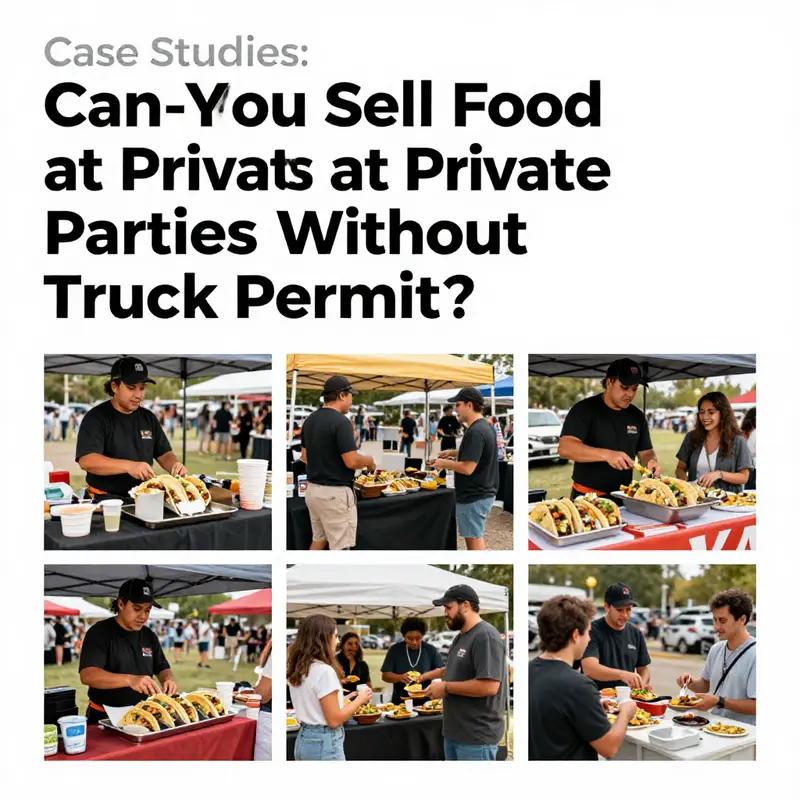
The appeal of a private party is simple and seductive for someone who moves food from kitchen to curb: a cozy, intimate setting, a finite guest list, and the chance to turn a simple recipe into cash without the overhead of a storefront. Yet the allure masks a rigid legal framework that treats selling food as a public health responsibility, not merely a social hobby. The line between friendly hospitality and commercial food service can blur quickly, especially when money changes hands and a menu is promoted beyond a single circle of friends. In cities that regulate street vending and mobile food operations, this line is not just blurry—it is legally binding. The question, then, is not only whether you can sell at a private party, but what it will take to do so without inviting fines, food-safety violations, or more serious consequences. The practical answer in many jurisdictions, including New York City, is that you generally cannot, unless you secure the right permits and meet the necessary health and safety standards. This is not a mere bureaucratic formality. It is a shield designed to protect consumers, guests, and sellers alike from foodborne illness, mislabeling, and unsafe handling practices that can spread quickly in informal settings.
The core rule is straightforward: selling food to the public, even from a home kitchen or a private residence, triggers regulatory oversight. The health department’s mandate is explicit: a permit is needed no matter how the food is offered to the customer, whether from a booth, a table, a stand, a kiosk, a vehicle or a cart, and regardless of whether the event is public or private. For someone considering operating a taco truck or any mobile food service at a private party, this means a valid Temporary Food Service Permit (often called a food vendor permit) issued by the local health department. Without it, the act of selling food can be treated as illegal commerce, with potential penalties that range from fines to food confiscation and orders to stop serving. If a vehicle is involved, the unit must meet applicable vehicle inspection and health-safety standards, and the operator must demonstrate ongoing compliance with food-handling practices, sanitation, refrigeration, and storage requirements. The practical implication is that a casual backyard event can rapidly become a regulated business venture, demanding planning, registrations, and inspections that many hosts and guests do not anticipate. The official guidance is clear, and listening to it can save a host, a vendor, and a neighborhood from a costly misstep.
To understand the scope of the issue, it helps to step outside one city and view how other places frame the same situation. The case studies gathered from different corners of the world illustrate a common thread: once there is a money exchange, a promotional effort, or a recurring pattern, regulators treat the activity as a potential business operation. In the United States, California’s Home Food Operations program offers a telling yardstick: in many circumstances, producing and selling food from a private residence requires registration as a home food operation and periodic inspections. The case from California in 2023 involved a resident who sold a homemade cake at a private party. Although the event itself was private, the cash transactions and invoicing suggested a commercial activity, which activated licensing and safety oversight. The lesson is blunt: profitability, even in informal settings, can trigger state-level food-safety obligations. This is not merely a matter of local flavor; it is about ensuring that foods produced in non-commercial spaces meet consistent safety standards and that consumers understand what they are eating.
Across the Atlantic in the United Kingdom, a similar logic applies, though the regulatory framework differs in focus and enforcement. In 2022, a chef hosting paid, theme-based dinners at a friend’s home faced complaints from neighbors and city authorities. The activity, while organized around intimate gatherings, exhibited commercial characteristics: recurring events, paid admission, and promotional efforts on social media. The local authority concluded that these activities constituted unauthorised catering services. The consequence was a monetary penalty and an order to cease the non-licensed dining. This case underscores a broader principle: the form of the venue does not immunize a cook or organizer from licensing and inspection requirements when the activity resembles a commercial hospitality operation. Even when the setting feels private and familiar, repeated events and revenue-generating promotions can draw regulatory scrutiny and penalties.
Australia presents a complementary perspective, specifically the New South Wales framework, which regulates food handling and licensing for small food businesses. A 2024 scenario involved an individual who curated and sold birthday cakes through a private network of friends and acquaintances. While the seller claimed the venture was a personal gesture, the aggregate revenue and customer records prompted the authorities to reclassify the activity as a small food business. The threshold matters here: once annual turnover or scale crosses specific limits, licenses become mandatory. Digital platforms, with their expansive reach, can amplify perceived commercial intent, intersecting with regulatory thresholds even when the event itself is intimate. The point across all three cases is consistent: private, informal settings are not inherently exempt from food-safety and business licensing rules if the activity bears the hallmarks of a commercial operation.
These narratives carry a practical corollary for anyone contemplating food sales at private gatherings: the moment you monetize the event or promote it beyond a closed circle, you risk stepping into regulated territory. The intent to earn money can suffice to trigger oversight, and repetition compounds the risk. The law’s aim is not to dampen personal generosity but to ensure that food served to the public, even in informal contexts, is produced, stored, and served under conditions that minimize health risks. The consequences of ignoring these rules extend beyond fines. They include the destruction of food, possible civil penalties, license suspensions, and even criminal repercussions in extreme cases where egregious neglect endangers public health.
What does this mean for someone who hosts a private party and wants a casual, at-home vibe with a few friends’ signatures on a menu? It means approaching the idea with a clear distinction between hospitality and commerce. If the intent is simply to share home-cooked food as a favor or gift, the activity may fall outside the scope of commercial food service. If, however, there is an explicit price, a structured menu, a system to collect payment, or a plan to promote the event to a broader audience, regulators are likely to treat it as a commercial venture. The line is not always perfectly drawn, but the presence of money, repeated events, and outreach through social media or other channels can be enough to invite oversight. That is the practical risk—and the compelling reason to consult the local health department before turning a private gathering into a revenue-generating food service.
For those who still want to experiment with private-party vibes while staying within the law, there are constructive paths. One is to partner with a licensed vendor who already operates under a health permit and follows approved food-safety protocols. Another is to consider non-sales-oriented food demonstrations or tastings where guests sample, rather than purchase, portions. Yet another route is to host events that are classified as culinary experiences rather than food sales, with clear disclosures about pricing and services that comply with local business regulations. These approaches protect guests and organizers while preserving the celebratory spirit of a private event. All of these options require upfront planning, transparent communication, and, ideally, guidance from the relevant health and business authorities.
If you are exploring the practicalities of deploying a mobile kitchen at private events, the matter deserves careful consideration beyond instinct or conviviality. For readers drawn to the broader world of mobile culinary operations, it can be instructive to examine how compliant setups manage events, menus, and guest interactions. A useful resource to frame that discussion is found in discussions about top taco truck models for culinary success, which outlines how professional operators structure events, maintain safety and efficiency, and scale their services within regulatory boundaries. This insight helps differentiate between informal gatherings and compliant, well-run food service operations.
Lastly, it is essential to anchor this discussion in authoritative guidance. While the case studies illustrate a range of outcomes, the core takeaway remains consistent: selling food at private parties can trigger licensing, inspection, and health-safety obligations. Before moving forward with any private-event idea, contact the local health department, discuss the specific activity, and obtain the necessary permits. The goal is not to deter culinary experimentation but to ensure that the culinary experience is enjoyable and safe for guests while respecting the legal framework designed to protect everyone involved. For readers who want a concrete, model-driven understanding of how a compliant operation looks in practice, the linked discussion on top taco truck models provides a practical reference point for structure, safety, and scalability.
Internal reference: for a broader sense of compliant mobile culinary operations and event-ready models, you can explore the discussion on top taco truck models for culinary success. Top taco truck models for culinary success.
External resource: for more on how Home Food Operations licenses function in a comparable regulatory landscape, see the California Department of Public Health page on Home Food Operations. https://www.cdph.ca.gov/Programs/CFPP/FormsAndPublications/Pages/Home-Food-Operations.aspx
Final thoughts
As taco lovers and event planners, holding a private fiesta filled with savory tacos can be a dream come true, but navigating the legal requirements around permits is essential to avoid any unpleasant surprises. Understanding the legal framework surrounding food sales in NYC, the potential consequences of selling without permits, and how to obtain a Temporary Food Service Permit if you’re considering it can take your taco events from ordinary to extraordinary—legally! From health code compliance to real-world case studies, this article aimed to equip you with the knowledge to ensure your flavorful gatherings proceed without a hitch. Always prioritize your guests’ safety and the quality of your food while enjoying all the delicious possibilities tacos have to offer!

