
Imagine the tantalizing smell of freshly made tacos wafting through the air, the laughter of friends mingling with the crisp crunch of taco shells. Renting a taco food truck is not just a culinary upgrade for your events; it’s an experience that brings people together. But how much should you budget for this festive addition? This guide delves into the exciting world of taco food truck rentals, highlighting the current market trends, factors affecting rental costs, comparisons between renting and buying, and local pricing specifics. By the end of your journey here, you’ll have a clear understanding of what to expect when planning your next taco-filled celebration.
null
null
Rented Wheels, Real Costs: Navigating What It Truly Takes to Rent a Taco Food Truck
**Renting a taco food truck isn’t just a single price tag slapped onto a calendar date. It’s a mosaic of decisions, constraints, and market realities that together determine what you’ll actually pay for a mobile kitchen you can count on. When entrepreneurs ask how much it costs to rent a taco truck, they often expect a neat daily rate. The truth is more nuanced. The cost hinges on the truck’s baseline build, how much you’ve customized it for tacos, the vehicle’s current condition, the geographic arena where you’ll operate, and how you plan to run your business day to day. Reading rental price sheets in isolation can be misleading; you’re really looking at a bundle of variables that, in combination, map to a price ceiling and a price floor that only your specific plan can define.
To begin with, the brand and model of the truck matter, not merely because some names carry prestige, but because the underlying chassis and equipment configurations set a ceiling for the rental figure. A truck built on a robust commercial chassis promises reliability and safer performance under heavy use. But it also tends to command a higher rental rate, especially in markets with intense competition and frequent event calendars. The exact model—whether it emphasizes a larger refrigeration setup, higher-capacity fryers, or a more compact layout—will influence not just the daily or weekly sticker price, but also the operational flexibility you gain. In practice, rental charges scale with the expected throughput: a vehicle designed to sustain back-to-back events in a metro area will be priced higher than a similarly equipped unit serving smaller town fairs.
Customization enters the conversation early and decisively. A taco-specific kitchen is not a generic kitchen. It’s a carefully arranged workflow that prioritizes speed, consistency, and food safety. Custom features—specialized grills, exhaust systems tailored to taco cooking, prep counters, and finishes that are easy to clean—add value in the eyes of both operators and clients. From a pricing standpoint, each additional customization raises the rental base because it elevates the truck’s depreciation, maintenance needs, and the likelihood of prompt, reliable service during a busy day. A taco-focused truck with advanced kitchen setups and premium finishes will typically carry a higher rental rate than a more basic, multi-use trailer. The degree of customization often intersects with the perceived value for events, where clients expect a high level of presentation as well as dependable performance.
Age and overall condition further shape the rental equation. A newer vehicle or one that has been meticulously maintained is likely to fetch a premium. The reasoning is simple: newer or well-kept units are perceived as more reliable, which reduces the risk of breakdowns during peak service times. They also present better on-site aesthetics, a factor that matters for event planners and customers who judge quality by visuals as well as taste. Conversely, older trucks may offer lower daily rates, but they come with a calculable premium in the form of higher maintenance costs, more frequent parts replacement, and the potential for unexpected downtime. For a rental buyer, the total cost of ownership over the rental period—what you pay versus what you might risk in downtime—will often tilt the decision toward a newer, better-maintained option, even if it means a higher headline price.
Beyond the truck itself, the operating costs that accompany rental days are worth a careful look. Even if the rental includes maintenance, fuel, and basic service, you must account for ongoing expenses you’ll shoulder as the operator. Fuel consumption, power needs for refrigeration, and the wear and tear of a high-output kitchen during long events all contribute to the real cost of a rental. In some pricing structures, the rental fee is a clean line item, while other models present a lower base rate with added charges for fuel, generator use, or on-site support staff. The latter approach can seem economical at first glance, but it’s essential to forecast how often those add-ons will apply to your schedule. In practice, a thorough quote should layer in these costs so you can compare apples to apples across different trucks and providers.
Location adds another layer of complexity. Prices climb in urban centers where demand is intense and competition is fierce. A taco truck parked near a popular district, a festival, or a major corporate event will command higher rates than one serving a rural market with fewer big events. Seasonal swings also come into play. Summer weekends, holiday fairs, and food-centric events can push both availability and pricing upward, while shoulder seasons in smaller communities may bring down the price per day as operators seek to fill gaps. If you plan to travel or operate across multiple locations, the geographic footprint of your rental can substantially alter the total spend. It’s not just the distance from your base; it’s the value of being able to step into high-traffic hours with minimal friction because the truck is already familiar with the area’s layout and permit requirements.
The service model and the scale of your operation strongly influence pricing. If you’re renting a unit intended for high-volume use—think back-to-back events within a few days—the rental company will likely price accordingly, factoring in the high turnover potential and the premium for guaranteed availability. On the other hand, if you’re renting a truck for occasional weekends or short pop-up sessions, you might access a more modest rate, particularly if the provider is seeking to maximize utilization during slow periods. The trajectory of your business plan—whether you’re aiming for a turnkey operation with a steady calendar or a flexible, event-by-event strategy—will be read in the price structure you’re offered. In short, the same truck can carry a different price tag depending on how it’s expected to perform for you and your customers.
The duration of the rental and any bundled services are also central to the math. Daily rates typically drop as rental spans lengthen, but only to a point. If you sign a weekly or monthly contract, you may unlock a cheaper daily rate, but you’ll bind yourself to a longer schedule. Conversely, short-term rentals—weekends or a single festival—often carry a premium per day, justified by the logistics of turnover, restocking, and guaranteed availability. Some contracts also incorporate insurance and compliance support, which can be a savings or a surcharge depending on the package. The exact balance between upfront price and included services is a puzzle you must solve by comparing clear, itemized quotes rather than relying on a crude per-day figure.
Insurance, permits, and compliance costs are not optional add-ons so much as baseline requirements. A taco truck operates under a blend of health, safety, and municipal codes that can vary by city and state. The rental rate may reflect the level of regulatory support baked into the package. In markets with stricter permitting processes or more complex insurance requirements, the rental price tends to accommodate the administrative overhead. When you’re evaluating options, ask for an itemized breakdown that shows whether these regulatory costs are included in the daily rate or charged separately. A transparent quote that lists each component makes it easier to benchmark apples to apples and to understand the true cost of operating legally and safely.
Availability and lead times matter, too. A supply-constrained market—where trucks are in heavy demand or inventories are tight—will push prices upward as providers leverage scarcity. Conversely, a larger pool of available units can drive competition and more favorable terms for renters who aren’t locked into peak seasons. Lead times also affect pricing. If you can plan weeks or months in advance, you may secure better terms than if you’re booking at the last minute, when providers may need to arrange equipment, staffing, and on-site support at a premium. The ability to align your calendar with the truck’s availability can be as valuable as any feature on the vehicle itself, because it directly reduces the risk of price surges and last-minute surcharges.
A practical way to navigate this landscape is to translate these factors into a structured set of questions for prospective rental providers. Start with the baseline: what is the daily rate for a standard, taco-ready truck with basic equipment in your target location? Then layer in customization costs: how much would you pay to upgrade the kitchen setup, finishes, and safety features? Next, confirm what is included in maintenance and fuel. Is there a generator charge? Are consumables like oil, coolant, or cleaning supplies part of the package? What about on-site support staff during events? Request an itemized quote that separates the base rate, the customization upcharges, and the ancillary costs. Compare not just the bottom line but the value delivered by the bundle. In doing so, you’ll be less swayed by attractive introductory quotes and more guided by the real-world needs of your business plan.
This approach aligns with the broader market signals that one can observe from reading industry discussions and case studies. The landscape shows a spectrum of rental arrangements, each balancing reliability, flexibility, and cost. It’s common to see a higher price for a taco-focused, visually appealing truck that promises consistency and speed in service, paired with strong on-site support. Lower price points often come with trade-offs—less customization, older equipment, shorter guarantees on uptime, or fewer included services. The decision isn’t simply about choosing the cheapest option; it’s about choosing the option that minimizes risk while maximizing the ability to deliver high-quality food and a compelling customer experience.
For readers who want a deeper dive into the configurations and capabilities that most influence rental pricing, one can explore a curated exploration of taco truck models and their performance attributes. This resource highlights how different layouts and equipment choices translate into practical outcomes for daily operations and long-term strategy. This kind of perspective is especially helpful when you’re weighing the value of a robust kitchen setup versus a lean, minimal footprint designed for quick setup and teardown. The goal is to connect the dots between what you need for your menu, your event schedule, and the price tag you’re prepared to shoulder. The right match will blend reliability, efficiency, and an appearance that resonates with customers, all while staying within a price that makes sense for your business plan.
In practice, the path to a well-informed rental decision often runs through a few targeted conversations with providers. A careful seller’s briefing that covers the truck’s brand and model, the degree of customization, the vehicle’s condition, and the included service package will illuminate where the price comes from and what you’re paying for beyond the surface rate. This is the moment to consider the broader ecosystem around the truck: access to spare parts, the availability of technicians who understand the equipment inside and out, and the ease of arranging service during a busy event week. These factors—along with location, service model, and rental duration—form a price ecosystem that can be navigated with clarity when you’re armed with a thoughtful, apples-to-apples comparison.
If you’re curious about how different taco truck configurations stack up in real-world settings and you want a sense of the broad spectrum of options available, a glance at one well-regarded overview can be instructive. For readers who want a concise gateway to the topic, the linked piece outlines how several taco truck configurations translate into practical outcomes for culinary success. This context helps you anchor your rental decisions in a framework that prioritizes both operational excellence and financial discipline. For a broader look at a well-regarded compilation of models and their culinary potential, consider exploring that overview as you refine your criteria for price, performance, and perception on the street.
Finally, while the specific daily or weekly rental price is not a fixed universal figure and will depend on your local market, the factors outlined here provide a reliable lens for estimating costs and negotiating terms. By evaluating brand and model quality, customization depth, condition and age, related ongoing costs, location dynamics, service level, and duration, you’ll arrive at a realistic price range that aligns with your business trajectory. The price you pay should reflect the truck’s ability to sustain your workflow—speed, reliability, and food safety—more than any single line item on a contract. And as you map out your financial plan, remember that the right rental choice isn’t just a number; it’s a foundational asset that supports your brand, your menu, and your customers’ experience on every bite.
For a tangible peek into the configurations that can affect performance and price, you can explore further at the following resource: Top taco truck models for culinary success.
External reference for pricing frameworks and rental options: https://www.foodtruckrentals.com/
Money on Wheels: Renting vs Buying Your Taco Food Truck
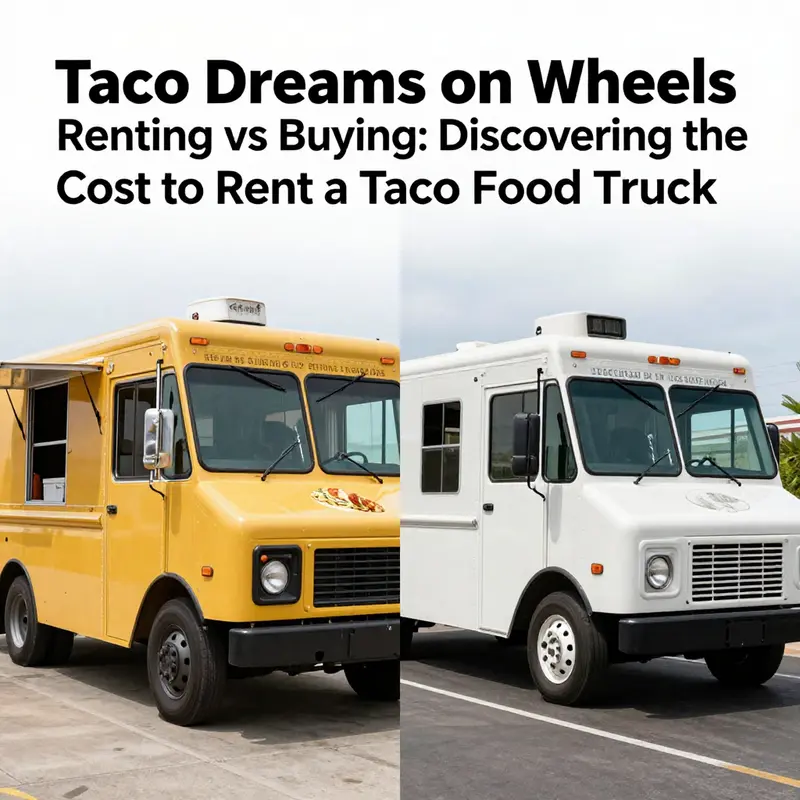
Choosing how to enter the mobile taco business hinges on a simple question: how much can you reliably invest upfront, and how much risk can you tolerate as you test a new concept in a crowded street economy?
Cost is a loud signal, but it should not be read in isolation.
Buying a unit gives ownership, control, and potential resale value, but it requires capital, ongoing maintenance, and careful budgeting for permits and utilities.
Renting lowers upfront risk and often bundles maintenance and insurance, but it means paying for use without accruing equity.
The best path depends on your capital position, risk tolerance, and plans for growth, menus, and locations.
A realistic approach can include a mid path such as a used or refurbished unit to balance cost, control, and speed to market.
Do due diligence on equipment, safety, licensing, and the terms of any rental contracts, and consider market demand, festival calendars, and venue contracts in your calculation.
In short, rent for learning and flexibility; buy for long term control and brand-building, aligning your choice with cash flow and strategy.
null
null
Final thoughts
As we wrap up this savory exploration into renting a taco food truck, it’s clear that this move can transform your events into unforgettable celebrations filled with flavor and fun. Understanding the costs, factors influencing rentals, and local pricing will empower you to make informed decisions. Whether you’re planning a corporate lunch, office party, or a festive wedding, renting a taco truck is a fantastic way to cater to your guests’ appetites for deliciousness. So, fire up those cravings and embark on a flavor-packed adventure!