
In the vibrant world of street food, tacos hold a special place in our hearts and bellies. Yet, beneath the delicious façade, there’s a darker side to indulge in these culinary delights without caution. A recent case involving a man who suffered serious health complications after delighting in pork tacos from an illegal food truck underscores the pressing need to examine the risks of unregulated vendors. This article deliberately navigates through the health risks, legal implications, societal impacts, enforcement challenges on food safety regulations, and the vivid personal experience of the man in question. Join us as we unravel the layers of this alarming yet entertaining tale.
When Street Flavor Turns Lethal: The Case of Pork Tacos from an Illegal Food Truck
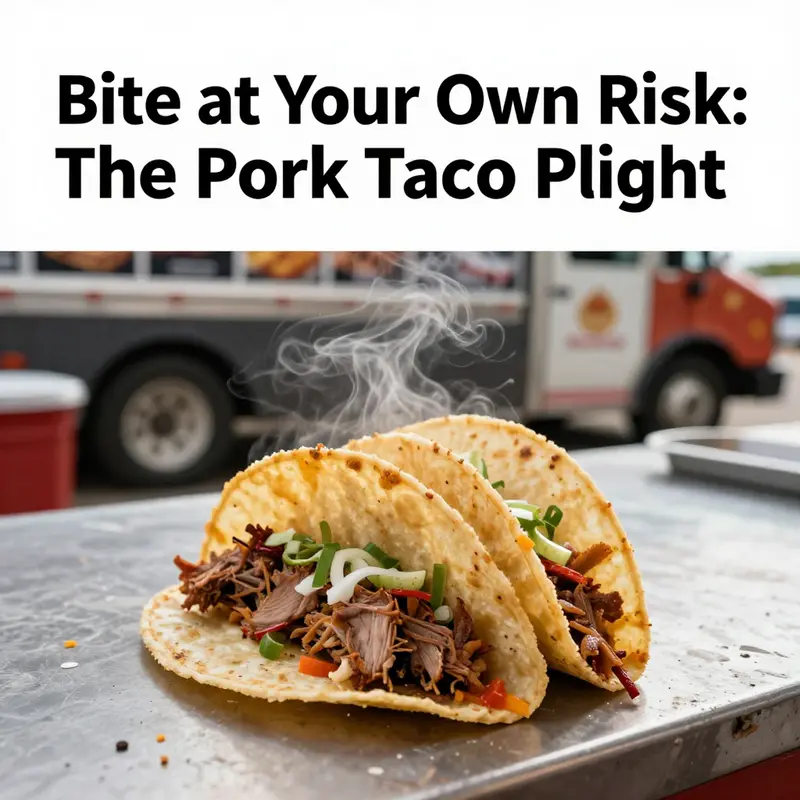
The aroma first drifts over the curb like a lure. Char and spice mingle with diesel and dust as a line of eager appetites forms, drawn to a truck that promises warmth, crunch, and the comfort of familiar flavors. In places where street food is a social ritual, the thrill of a quick bite can feel like a shared celebration. But behind that appeal lies a fragile boundary between artisanal street cuisine and a public health risk when oversight falls away. The recent case of a man who ate pork tacos from an illegal, unlicensed vendor and then spiraled into seizures and brain swelling underscores a difficult truth: flavor is not a guarantee of safety, and convenience should not come at the cost of health.
The episode began, as many urban legends of crime and appetite do, with trust placed in a quick meal and a quick moment of indulgence. The man consumed pork tacos from a truck that operated without proper permits or routine inspections, a gap that left basic safeguards like sanitation standards, temperature control, and safe food handling to chance. Minutes after the last bite, he began to feel unsettled. A wave of confusion, dizziness, and stomach distress gave way to something far more alarming: seizures. Emergency medical teams found swelling in the brain, a dramatic sign that something had gone awry far beyond a routine stomachache. In hospital rooms and the corridors of public health, clinicians worked backward from symptoms to source, and the investigation pointed toward a parasitic culprit associated with tainted pork and compromised food handling: Taenia solium, the pork tapeworm.
Taenia solium is a two-faced parasite. In one form, people become hosts to the adult tapeworm after eating undercooked or contaminated pork. In another form, eggs shed by an infected individual can contaminate food or surfaces, and when humans ingest those eggs, larvae can migrate to tissues such as the brain and nervous system. Neurocysticercosis, the condition that results when larvae lodge in the brain, can trigger seizures, headaches, confusion, and even life-threatening complications. The medical narrative in this case followed that familiar arc: exposure through inadequate meat handling and exposure to contaminated surfaces, followed by tissue invasion and neurological symptoms. While the exact biology of the infection can be complex, the practical takeaway is clear: when the food source skips the safety nets of a regulated supply chain, the risk of dangerous parasitic infections rises dramatically.
From a public health standpoint, the case highlights a fault line that runs through many communities: unregulated street vendors can become flashpoints for foodborne illness when sanitation, refrigeration, and inspection are absent. In regulated markets, meat is subject to temperature controls, pathogen testing, and documented provenance. Traceback mechanisms exist to identify the source of contamination and to alert the public quickly. In unregulated settings, those mechanisms are thin or non-existent. Without licensing, inspectors rarely visit, and the vendor may not maintain the correct cold chain or handle raw meat in a way that minimizes cross-contamination. Small towns with limited regulatory infrastructure, in particular, face pronounced challenges in monitoring such operations, enforcing standard practices, and initiating timely responses when problems surface.
The social dimension of these incidents often gets overlooked in the rush of headlines. Street food embodies cultural expression, immigrant entrepreneurship, and regional identity. In many places, food trucks and stalls are a vibrant part of community life and a source of affordable meals, especially for people who work long hours or cannot access other dining options. Yet vibrancy does not immunize against risk. This tension—between the cultural value of street cuisine and the imperative to protect public health—requires nuanced policy and practical solutions. It also calls for a more sophisticated consumer awareness. People crave the immediacy and character of a street meal, but they deserve to know that there are reliable checks behind the flavor, checks that catch problems before they become hospital admissions.
One of the structural realities this case reveals is traceability. In regulated supply chains, pork is tied to inspected slaughterhouses, cold-storage facilities, and documented distribution. When a vendor operates outside those channels, there is rarely a paper trail that can be followed quickly to identify potential contamination, direct exposure pathways, or clusters of illness. The lack of traceability makes it harder for health authorities to connect dots—whether the contamination came from meat, water, utensils, or improper food handling—and slows down the corrective actions that protect others. This is not merely a theoretical concern; it translates into real delays in warnings, recalls, and targeted inspections that could prevent further harm.
The public health response to such events must balance swift action with practical, evidence-based investigation. Health departments often begin with an alert to clinicians to watch for unusual presentations, such as seizures without obvious neuroinfection, and they issue advisories to the public about potential exposure risks. Simultaneously, investigators assess the vendor’s cooking practices, refrigeration, and hygiene routines. The case in question illustrates how quickly problems can escalate from a simple meal to a life-threatening medical crisis. It also demonstrates the importance of engaging communities in safer food practices without stigmatizing street-food culture as a whole. Education becomes a practical tool: guiding vendors toward proper food handling, encouraging patrons to seek vendors who display licensing and visible sanitation practices, and promoting safe preparation methods without erasing the cultural value of street food.
What can be learned, then, beyond the immediate medical remedy, is the importance of robust yet fair regulation that acknowledges the realities of mobile and informal food commerce. Regulation does not have to be punitive; it can be supportive. Training programs for street vendors, simple checklists for clean cooking environments, and portable equipment that preserves cold temperatures can dramatically improve safety without destroying the creative energy of street gastronomy. The conversation also benefits from a more proactive public health stance: routine outreach to vendors about parasite risks, responsible meat sourcing, and the importance of preventing cross-contamination in crowded, busy service environments. Implementing these measures requires collaboration across health departments, local governments, and the vendors themselves. When done thoughtfully, it can preserve the cultural vitality of street food while elevating safety standards for everyone involved.
The broader narrative is not simply about rare, sensational cases but about sustainable pathways that honor both community flavor and public health. In many places, policymakers are exploring pragmatic models that integrate licensing with training, and that provide micro-grants or access to equipment to bring unregulated vendors into compliance. The aim is not to shutter street food but to channel its energy into safer practice. The balance hinges on information, infrastructure, and incentive. If vendors understand the health reasons behind sanitation standards, and if communities see tangible improvements in the safety of what they crave, the street will remain a source of delight rather than a doorway to disease. The momentum toward such changes often moves slowly, but the underlying logic is straightforward: flavor without safety is a fragile pleasure, and safety without flavor can starve a community of a cherished cultural expression.
For readers seeking a sense of how the industry is responding to these challenges, there are ongoing conversations about practical safety improvements in mobile food operations. Initiatives that prioritize sanitation training, portable refrigeration, and accessible licensing help bridge the gap between tradition and regulation. These efforts do not erase the appeal of street cooking; they enhance it. They make it possible for a vibrant culinary scene to thrive while ensuring that the people who savor it are not risking their health in pursuit of a quick and memorable bite. In this sense, the case becomes not only a cautionary tale but a catalyst for positive change—a reminder that the joy of food remains strongest when it rests on a foundation as solid as the flavors it serves.
null
null
Wheels of Risk: The Hidden Public Health Toll of Unregulated Street Food
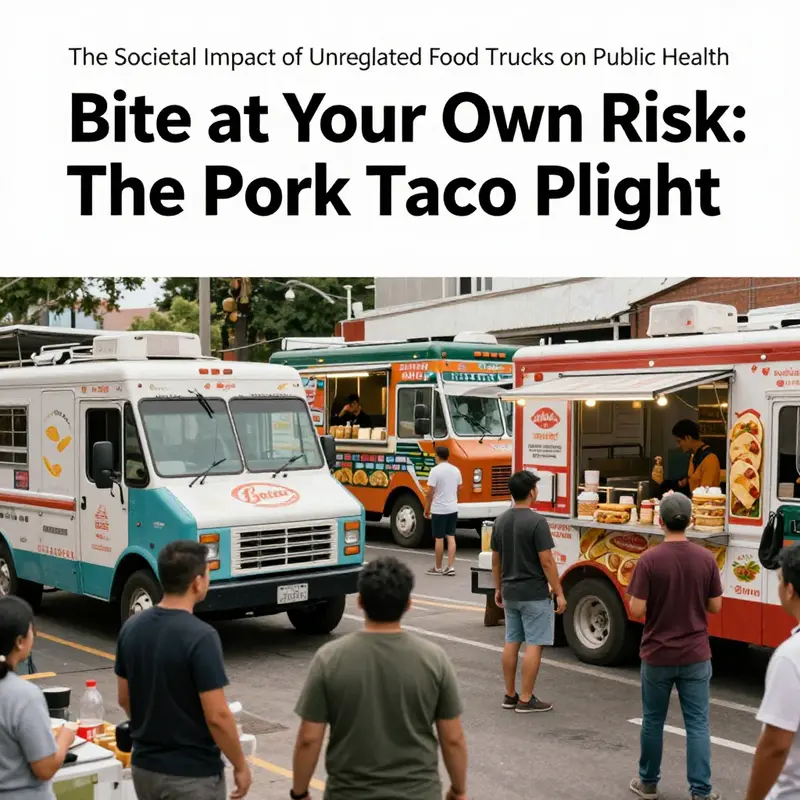
A man in a quiet town tasted pork tacos from a mobile vendor that operated outside the law, without permits or predictable oversight. What began as a simple craving became a sequence of medical alarms: days of escalating pain, unusual headaches, and then seizures that jolted his family awake in the middle of the night. The physicians later spoke of brain swelling and an illness that did not fit neatly into the routine categories they normally see. This real-life episode is not merely a cautionary tale about a single meal; it exposes a fault line in the food system that often goes unseen until someone is taken to the hospital. The danger, in this case, did not hinge on a single ingredient but on the absence of a system capable of preventing harm in the first place. When food vendors operate outside the law, the safeguards that shield communities—proper sanitation, safe sourcing, and transparent traceability—disappear from the menu as easily as a receipt vanishes in a snowfall. The public health stakes extend far beyond one stomach ache; they echo through clinics, laboratories, and the daily sense of trust that communities place in everyday meals.
The broader picture is more intricate. Unregulated food trucks frequently sidestep licenses and inspections, and their supply chains can be opaque to the people who eat them. Sanitation standards that regulate temperature control, handwashing, and vehicle cleanliness are not mere formalities; they are the conditions that keep pathogens and toxins from taking hold. When those conditions are absent, the risk of foodborne illness rises in a way that is hard to quantify but easy to feel. In places where regulation is inconsistent or minimal, the gap between intention and practice becomes a breeding ground for hazards that show up in the most severe forms only after weeks or months of quiet exposure. A case like the pork taco incident can be a bellwether, signaling that the system is out of balance and that vulnerable populations bear a disproportionate burden when oversight falters.
From a public health standpoint, the absence of routine inspections and sanitation audits makes surveillance and intervention slower and more uncertain. If a vendor’s meat source is illicit or untraceable, public health investigators find themselves chasing shadows rather than following concrete chains of custody. When tainted meat enters a kitchen in which there is no registration, no standard operating procedures, and no way to trace back to the supplier, the pathogen or contaminant may become a silent partner in every bite. The possibility of parasitic infections adds another layer of complexity. Taenia solium, a tapeworm species with routes that can reach the brain, can be introduced into communities not because of a single rogue market but because the oversight that would normally prevent such a product from reaching consumers never existed. The neurocysticercosis risk, though rare in some neighborhoods, becomes a chilling reminder that food safety is not only about preventing acute illness but about guarding against substantial long-term neurological harm.
The case also underscores a social dimension that policy alone cannot cure. In many towns, particularly those with constrained budgets or limited licensed vendors, residents lean on the convenience and affordability of mobile food options. When formal channels are scarce, people fall into a precarious trust with whoever sells food on the street, even though the risk profile of such street vendors can be higher than that of established, regulated outlets. This is not just a question of enforcement; it is a question of equity. Communities with fewer licensed vendors in their vicinity may rely more heavily on unregulated options, widening the gap between opportunity and protection. The consequence is that health disparities widen as the appetite for quick meals outpaces the development of safe, regulated alternatives. The social contract between a town and its food economy is frayed when people cannot access safe choices without risking exposure to hazards that are avoidable with proper systems in place.
To address these challenges, observers point to a spectrum of policy tools that balance entrepreneurial vitality with rigorous protection. Some lawmakers have explored licensing reforms that shorten the path to legal operation while maintaining essential safety standards. The idea is not to penalize small businesses for seeking a livelihood but to ensure that every taco, burrito, or street-side snack passes through basic checks that keep contaminants out and traceability intact. In practice, this means straightforward, affordable licensing processes, which help vendors access inspections and sanitation training without becoming a barrier to entry for aspiring food entrepreneurs in small towns. When licensing is accessible, it also becomes a pathway to accountability. Registered vendors can be held to consistent standards, and public health agencies gain a reliable mechanism to monitor outbreaks, implement corrective actions, and communicate clearly with communities about risks and protections. The tension between local autonomy and public health protection persists in every debate about street vending, yet the core principle remains consistent: safety and opportunity must coevolve, not collide.
Efforts to modernize and harmonize street food regulation can build credibility with residents who might otherwise distrust the very premise of mobile dining. The evolution includes adopting practical sanitation checklists, temperature controls for meat and prepared foods, and standardized procedures for supplier verification without imposing crippling costs on small operators. It also involves creating accessible licensing pathways that demystify compliance and encourage responsible practices. Even moderate improvements in oversight can produce meaningful downstream benefits: faster recalls when a problem is detected, clearer messaging during a suspected outbreak, and better training for workers who handle food in high-stakes environments. The payoff is not only reduced risk of severe illness but an enhanced sense of security for people who rely on mobile vendors for daily meals. Public confidence grows when the public health system and the informal food economy move in tandem, rather than at cross purposes.
Within this landscape, the link between regulation and community well-being becomes tangible through everyday choices. When a consumer in a low-income neighborhood weighs convenience against risk, the decision is not simply about a single bite; it is about the cumulative effect of dozens or hundreds of meals eaten in settings with varying levels of safety. The chapter’s through line is that regulation, enforcement, and equity do not exist in a vacuum. They intersect with housing, transportation, and education, forming a matrix that determines how communities protect themselves from preventable harm. The case of the tainted pork taco, while dramatic, serves as a reminder that health equity requires not only high standards but accessible pathways to meet them. A modern public health framework recognizes that safety is a shared responsibility: vendors, regulators, healthcare providers, and residents all have a stake in ensuring that the food moving through town streets does not undermine well-being.
Several towns have begun to thread these ideas into practical reforms. By bringing safety standards into street vending without erasing the entrepreneurial appeal of mobile food, communities can maintain vibrancy in their markets while protecting the most vulnerable residents. The objective is not perfection but preparedness: clear guidelines, transparent sourcing practices, consistent inspections, and a public information culture that makes it easy for people to understand where their food comes from and how it is prepared. In this sense, the urban food ecosystem can become a shared asset rather than a source of fear. The vision is a street-food landscape where the roar of the grill signals opportunity, not risk; where the health of the community is the quiet, constant ingredient that binds diners, vendors, and officials into a common project of safer, fairer food access. And while no single policy can eliminate every hazard, deliberate, inclusive, science-based regulation can reduce the likelihood of tragedies like the one involving the unlicensed pork taco while preserving the cultural and economic value that street food brings to towns of all sizes.
For readers who want to see how safety can advance alongside innovation in food trucks, there is progress worth noting. The ongoing development of best practices in handling, storage, and service demonstrates that vendors can raise the bar without sacrificing the appeal that draws people to these mobile eateries. While regulation remains essential, the goal is practical, enforceable standards that vendors can meet with confidence. In the end, the question is not whether street food can be as safe as brick-and-mortar venues, but whether it can be as safe as it needs to be for the communities it serves. By weaving together policy, public health science, and community voices, towns can create a resilient food culture that protects health while enabling entrepreneurship. The narrative is not one of prohibition, but of thoughtful governance that acknowledges risk, builds trust, and keeps the wheels turning toward safer meals for everyone. For a sense of how these ideas translate into real-world practice, see the ongoing discussion and safety-focused updates in the field at Safety advancements in food trucks.
External resource: For a detailed account of the case that sparked these reflections, readers can consult the report described in external media coverage, which documents how a single unregulated meal can escalate into a life-threatening medical emergency. The pork taco case that led to seizures and brain swelling is discussed in depth by health outlets, illustrating the gravity of regulatory gaps and the imperative for robust public health responses. https://www.msn.com/en-us/news/health/the-pork-taco-case-that-led-to-seizures-and-brain-swelling/ar-AA1hBkZv
Guardians on Wheels: Enforcement Realities and the Education Gap in Street-Food Safety
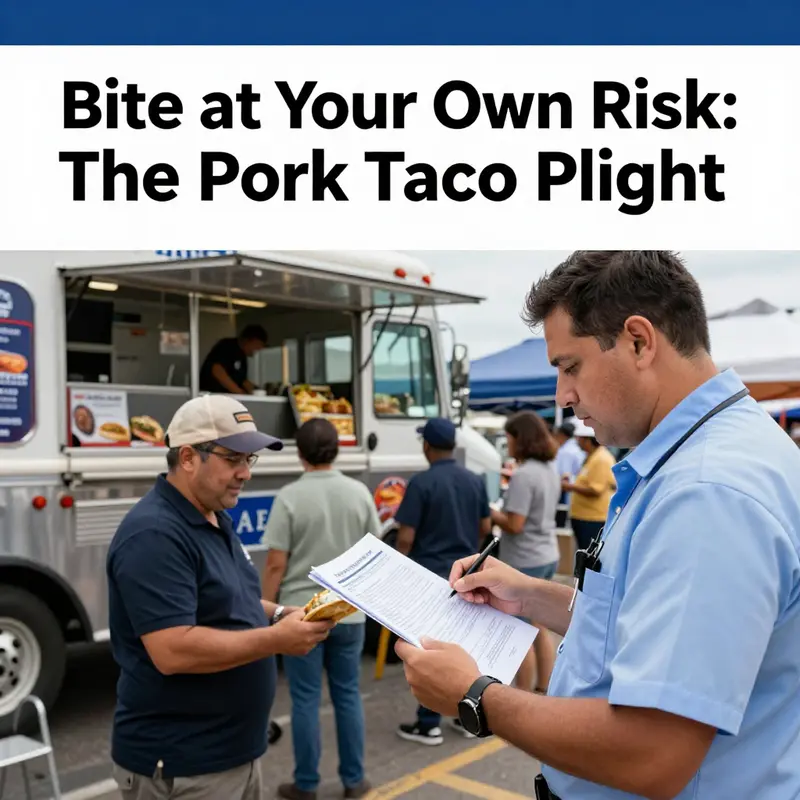
When a vendor operating a street-food cart faces injuries linked to unsafe practices, the headline may point to a rare incident, but the underlying issue is consistent: gaps in oversight create risk. Public health aims to reduce harm by clear standards for cooking temperatures, cross-contamination prevention, sanitation, and temperature control. For mobile and street-front operations, these standards must be practical and achievable given limited space and resources. SMEs who operate on the margins rely on guidance and community networks more than complex compliance departments. Inspectors can be mentors and partners, not just auditors, translating rules into simple steps and scalable routines. The aim is to reduce risk incrementally while respecting livelihoods and cultural value of street food.
Trust is the keystone of effective enforcement. If operators see rules as punitive, they may disengage. When enforcement emphasizes dialogue, education, and shared problem solving, compliance becomes a cooperative objective. Research from Britain and elsewhere suggests that clear, attainable standards paired with outreach improve outcomes. A balanced model invites operators to contribute to the design of processes that fit their contexts, rather than a one-size-fits-all regime. When operators feel seen and supported, sustained compliance grows.
The operator shifts from adversary to ally in a practical framework that acknowledges the realities of mobile service: limited space, variable demand, and the logistics of cooking for diverse populations on wheels. Training modules, mentorship, and peer networks help implement hygiene practices, utensil cleaning, and proper separation of raw and cooked foods. Risk-based inspections can focus on high-hazard points while routine tasks are monitored through feedback rather than punishment. The goal is to cultivate a culture of safety that travels with the vendor across neighborhoods.
Equity and access must be central. Street-food consumers deserve safe foods without excluding vendors from markets. Clear, multilingual guidance and context-appropriate enforcement help build trust and expand safety. Providers of affordable tools and practical resources empower communities and reduce the risk of abrupt shutdowns that threaten livelihoods. The public health narrative should emphasize not only compliance but continual improvement, signaling that safety is integral to brand reliability and consumer trust.
Finally, the enforcement ecosystem benefits from ongoing dialogue with researchers, policymakers, and practitioners. By codifying practical standards, offering updated safety practices, and supporting incremental improvements, regulators can reduce unregulated risk while sustaining legitimate street-food ecosystems. The result is not fear or punishment but protective, scalable safety that respects culture and economy. The broader literature on enforcement in Britain and elsewhere reinforces the value of trusted communication and collaborative design to achieve durable safety outcomes.
For readers seeking concrete takeaways, consider establishing predictable inspection intervals, multilingual resources, easy-to-use checklists, and channels for operators to provide feedback. When systems are transparent and adaptable, street-food safety becomes a shared project that protects communities and preserves the vitality of street-food culture.
Further reflections and case studies can be found in recent examinations of food-safety enforcement in Britain and other contexts, which underscore the role of trust, resource allocation, and effective communication in driving real-world change. The goal remains clear: ensure that street foods are prepared, stored, and transported in ways that protect health while enabling vibrant, accessible culinary traditions.
The Night a Pork Taco from an Illegal Food Truck Turned into a Medical Emergency: A Street-Food Safety Wake-Up Call
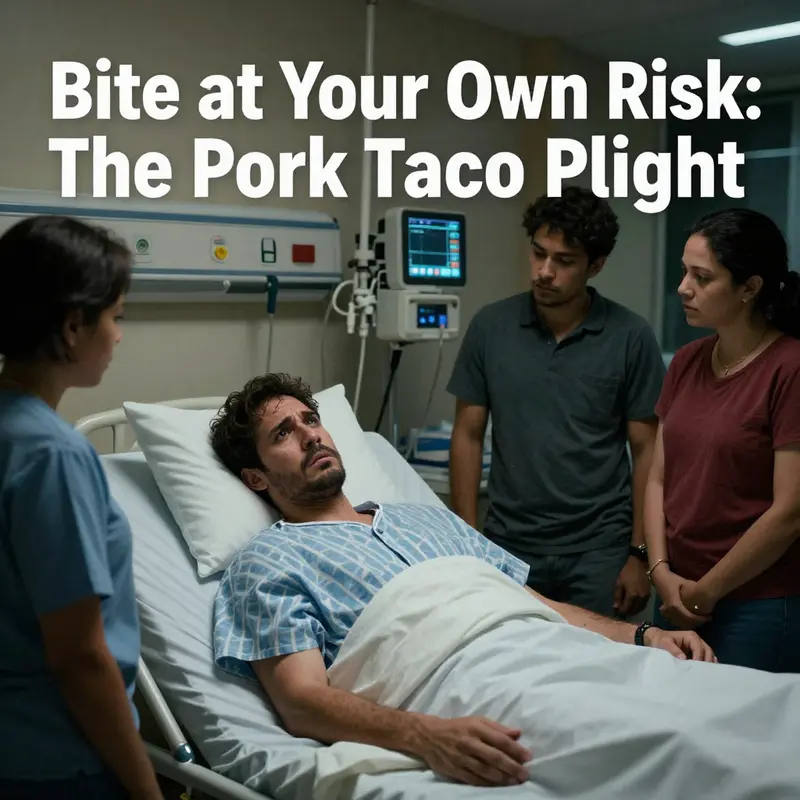
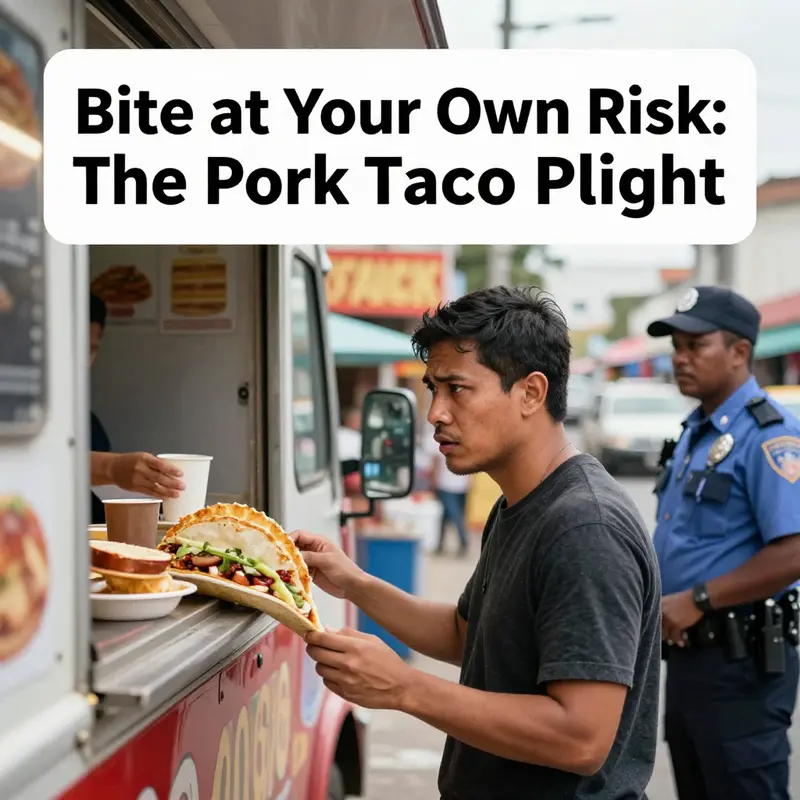
The city’s streets hummed with the usual mix of laughter, neon, and the soft sizzle of a dozen grills. It was the kind of evening that invites a quick bite from a friendly curbside setup, a ritual in which flavors and stories mingle long after dusk. He stepped into that ritual somewhat casually, choosing a pork taco from a truck that promised warmth, spice, and a taste of the street that felt nearly authentic in its spontaneity. At first, the meal carried no alarm bells. The pork was bright with chili and lime, the shells warm and slightly crisp, and a tang of cilantro that felt like a small tradition in a city that thrives on such improvisations. There was no immediate discomfort, no warning sign that anything could go awry. The moment stretched into a few ordinary minutes spent in conversation with the vendor, exchanging a quick laugh about the night’s weather and the city’s appetite for bold, hand-made street fare. Then, as the man began to walk away from the curb, subtle symptoms unfurled with a cruel, quiet efficiency. He felt his senses tilt, his thoughts scatter, and his body respond in ways that felt both foreign and terrifying. What began as odd fatigue, something like a delayed-crash after a long day, soon gave way to more alarming manifestations: tremors that traveled through his limbs, a widening sense of confusion, and a pressure that rose behind his eyes. The transition from ordinary dinner to a life-threatening medical crisis happened with a rapidity that startled even those who study such events for a living. By the time he reached the hospital, the situation had evolved into seizures, a dramatic symptom that masked a deeper, life-threatening pathology. Doctors who saw him not long after his arrival described a firestorm of neurotoxic concerns: swelling in the brain, a cascade of inflammatory processes, and a clinical trajectory that demanded immediate, high-stakes intervention. In the waiting room of the emergency department, family and friends wrestled with the fear that a single street-side meal could carry consequences so severe. The doctors, meanwhile, faced the urgent task of stopping the crisis while unraveling how this meal could have triggered such a dramatic sequence. The investigation that followed focused on what happened in the minutes and hours after the pork taco left the street cart. What the medical team uncovered pointed decisively to a bacterial toxin—Clostridium perfringens—an organism that can multiply in meat when it is not stored or cooked under proper conditions and then left at unsafe temperatures. The toxin it produces is capable of triggering severe gastrointestinal distress, but in certain cases, and under particular physiological circumstances, it can contribute to neurotoxic effects that manifest as seizures and brain swelling. This was not a simple case of a stomachache or a common foodborne illness; it was a stark reminder that the line between a satisfying street bite and a hazardous exposure can be dangerously thin when oversight and safety safeguards are absent. The legal and regulatory context matters as much as the biology. Unregistered or uninspected vendors frequently operate outside the scaffolding of health codes that are designed to protect the public. They may bypass essential practices such as temperature control, which keeps meat out of the warmer zones where bacteria thrive; cross-contamination prevention, which stops raw meat from interacting with ready-to-eat foods; and ingredient sourcing verification, which ensures that what is put into a dish is traceable and fresh. The lack of routine health inspections, refrigeration, and formal sanitation protocols can transform even a seemingly ordinary meal into a hazard. The case underscores a broader truth about street food: culture and flavor are not optional safety features. They coexist with, and often depend upon, the structures that underpin safe cooking and serving. In the wake of this medical emergency, the patient’s recovery unfolded as a long, fragile process. Neurotoxic effects, once thought to be rare in connection with foodborne toxins, demanded careful neurological care, imaging, and a vigilant approach to prevent secondary complications. The body’s resilience, tested under the most intense conditions, showed both fragility and strength. The road to stability required not only urgent clinical interventions but also a sustained rehabilitation effort aimed at addressing cognitive function, coordination, and the emotional toll of a near-death experience. Yet even as the patient regained moments of clarity and regained a measure of independence, the incident left a lasting imprint on those who witnessed it and on the broader community. It provoked questions about trust, appetite, and the choices people make when they seek quick, affordable meals on busy streets. The event also highlighted a hopeful counterpoint: the vital role of licensed, inspected food vendors who operate within transparent safety protocols and who routinely convey reassurance through visible hygiene practices, clean equipment, and predictable ingredient sourcing. In a city landscape that embraces vibrant street food, there is a meaningful distinction between flavor and hazard—a distinction that public health authorities, educators, and vendors alike must guard. The chapter of this story is not simply a cautionary tale; it is a reflection on how communities can balance the allure of street cuisine with the responsibility to protect public health. It invites readers to consider how cities can sustain a thriving, diverse food culture while strengthening oversight where it matters most. For readers who crave street flavors yet seek greater assurance, the path forward lies in recognizing that quality and safety are not mutually exclusive but mutually reinforcing. Licensed food trucks, for instance, deliver the same vibrant tastes that draw people to the curb, but with the added assurance that regulatory frameworks guide every step from procurement to plating. They demonstrate that tradition and rigor can coexist, preserving the culinary heritage of the street while elevating its safety standards. This is not merely about avoiding harm; it is about preserving the trust that makes street food an enduring urban institution. The incident at the illegal truck whispers a broader lesson about culinary risk, but it also illuminates a possible future in which the most celebrated flavors on wheels arrive with a clear record of safety. To those who follow the evolving world of mobile gastronomy, the contrast between regulated and unregulated operations is not a mere footnote; it is the defining axis along which the health and character of the street food scene will continue to develop. In closing, the narrative is less about blame than about insight. It is a call to savor the richness of street food while honoring the science and policy that keep communities safe. The route toward safer indulgence, for diners and vendors alike, lies in transparency, accountability, and the continuous improvement of safety practices in every kitchen on wheels. Those responsible for guiding public health understand that every plate carries not just flavor, but expectation—a promise that the experience will nourish rather than imperil. As readers explore this chapter, they may find themselves drawn to the idea that the best street-food experiences arise where culture, craft, and careful stewardship converge. A good starting point for understanding how the industry is evolving, and how safety is advancing within licensed operations, can be found in discussions of safety innovations in mobile food venues, such as the ongoing efforts described in this resource: Safety advancements in food trucks. For those seeking a more detailed account of the actual medical case that inspired this reflection, the original medical reporting provides richer context on the toxin involved and the clinical trajectory, and readers can consult external summaries of the incident at: https://www.msn.com/en-us/news/health/the-pork-taco-case-that-led-to-seizures-and-brain-swelling/ar-AA1j6YmD.
Final thoughts
The tale of one man’s misadventure with pork tacos from an illegal food truck serves as a stark reminder of the importance of food safety and the significant risks posed when indulging in unregulated cuisine. Every taco enthusiast must appreciate not just the deliciousness of these bites but also the essential role that proper oversight and hygiene play in our food choices. As we venture into the dynamic world of street food, let us do so with informed enthusiasm, elevating our experiences while ensuring our health and safety are never compromised.