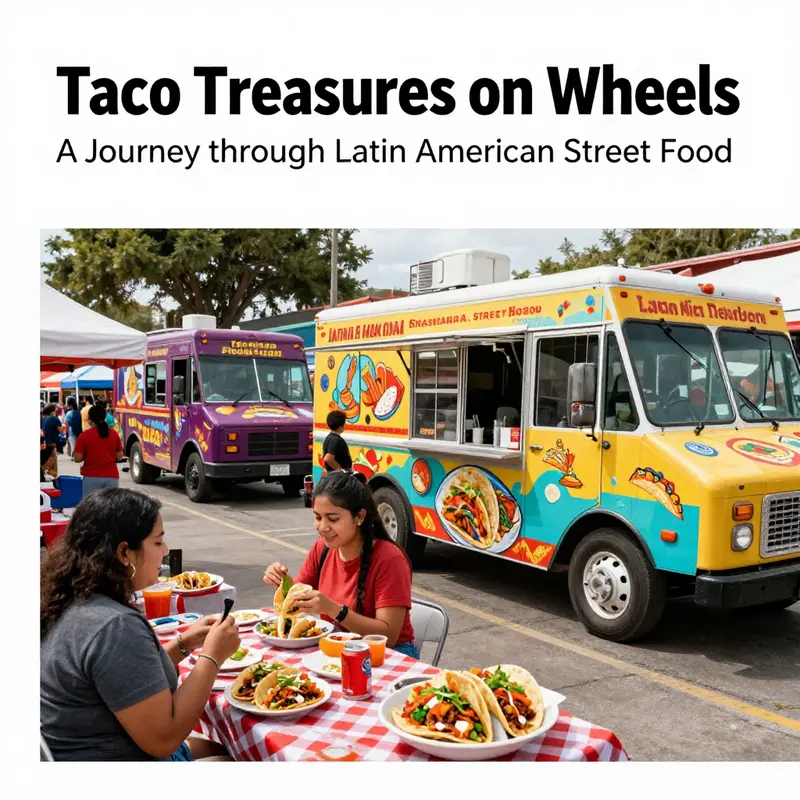
Food trucks serving Latin American street tacos have become popular cultural touchstones in urban landscapes, bringing spice and flavor to local streets. These mobile kitchens deliver not only delightful and affordable meals but also weave cultural narratives that span generations. Each taco represents a tapestry of flavors, stories, and regional pride, captivating food lovers, local residents, and event planners alike. This article delves into the cultural significance of these food trucks, the key ingredients that make the tacos burst with flavor, the economic impact of these businesses, the popular taco varieties that define the street food scene, and how they engage communities and enhance culinary tourism. Whether you’re a taco fanatic or an office worker seeking a flavorful lunch, these trucks are redefining food culture one tortilla at a time.
Wheels of Culture: The Street Taco Truck as a Moving Institute of Latin American Identity
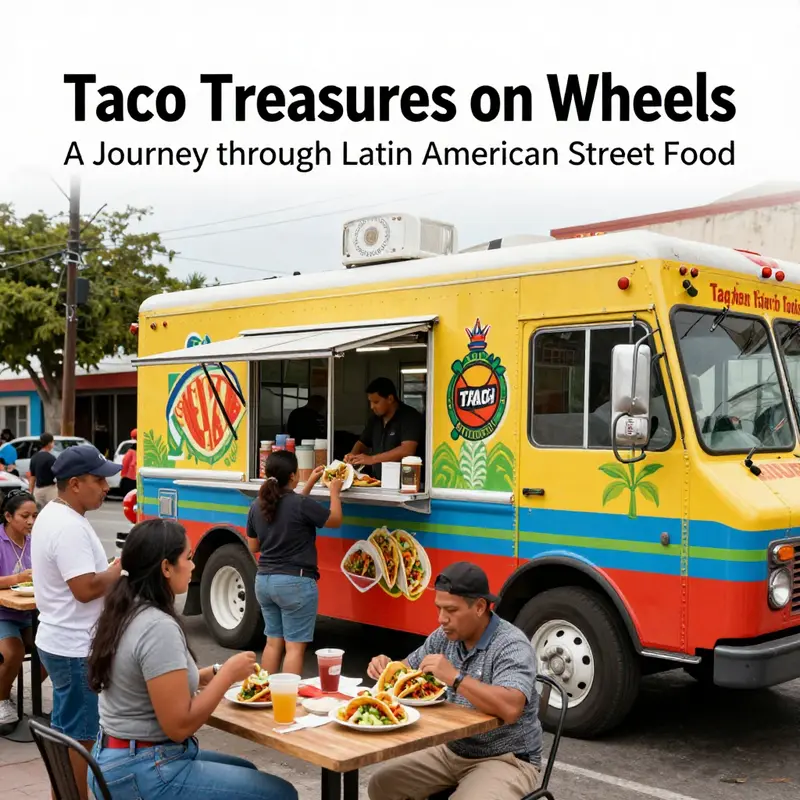
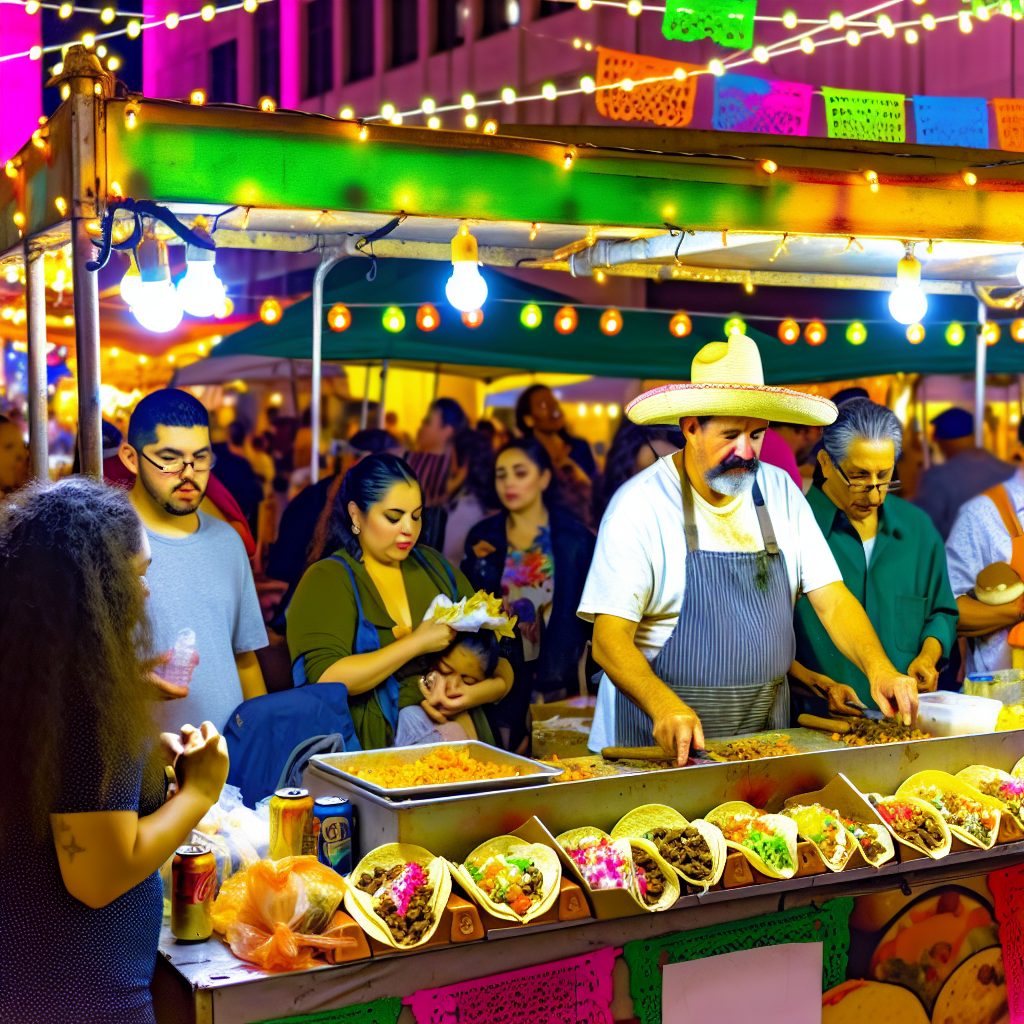
When the sun sinks over city blocks and a familiar sizzle rises from the curb, a food truck becomes more than a place to buy a quick bite. It is a moving archive of Latin American flavors, a portable stage where memory and innovation perform side by side. The street taco truck, in its modest metal shell and humming burners, carries the textures of markets, plazas, and roadside stands across urban life. Its presence reframes a crowded street corner into a shared space where strangers become neighbors, where a grandmother’s recipe and a neighbor’s curiosity meet over tortillas, cilantro, and lime. The choreography of the grill, the careful flip of a masa disk, the arc of pineapple over charcoal—these are not mere procedures but acts of cultural transmission. In cities that pulse with migration, these trucks are engines of continuity and change, fragile vessels of identity that move as quickly as the communities they serve.
At the heart of this cultural phenomenon lies the masa, the ground beneath every bite. Masa represents more than a dough; it is the memory of corn fields tended by grandparents and the hands that learned to press, pat, and shape into forms that crackle, bronze, and soften at the edges. The emphasis on handmade masa anchors the trucks in a lineage of antijitos and everyday sustenance. Tostadas that crack under a layer of beans and avocado, gorditas thick with cheese and meat, or a taco de suadero that braises with a resilience born from years of intimate, low-and-slow cooking—these items are touchpoints, familiar enough to calm a weary day yet unique enough to spark a conversation about region and family history. The flavor profile speaks in dialects: smoky chilies, citrus tang, the brightness of fresh herbs, the sweetness of roasted spices. Each bite acts as a passport stamp, a small but meaningful claim to a place within a broader culinary map.
The social function of these trucks extends far beyond their garnish. They operate as community hubs, especially for immigrant workers and day-laboring populations who rely on the rhythm of the street for a sense of belonging. When a crew gathers around a steaming skillet after a dawn shift, the truck becomes a refuge where stories are told, names are learned, and a shared language of food binds people together. The space is intimate and informal, a marketplace of voices, jokes, and advice, where strangers become familiar through the simple act of eating together. The Taco Truck, as explored in cultural analyses and journalism, is not simply about nourishment; it is about resilience and identity. In such settings, the truck provides a microcosm of home—an adaptable, welcoming space where tradition can be renewed and reinterpreted under the open sky. In this sense, food trucks are not only about what is on the plate; they are about who sits at the table and what they bring to the table through memory, affection, and shared labor.
As the trucks migrate through urban terrains, they do more than deliver flavor; they invite cross-cultural exchange. The sizzle of chilies roasting and the aroma of citrus and corn drift into neighborhoods that may not have prior intimate ties to these traditions. The trucks become ambassadors of regional Latin American cuisines, prominently featuring flavors from diverse corners of the region, sometimes highlighting lesser-known specialties that challenge mainstream palates and expand democratic access to authentic tastes. In this sense, the mobile taco stand acts as a catalyst for culinary education, broadening the public’s palate while validating the culinary practices of communities often underrepresented in urban food scenes. This visibility matters. It validates tradition within a contemporary cityscape and creates a space where curiosity is welcomed as a form of respect. It also pushes mainstream dining to reevaluate what counts as authentic, prompting a conversation about how adaptation and fidelity travel together when food crosses borders.
The broader narrative surrounding these trucks is not only about flavor but about economy and accessibility. The affordability of a well-made taco allows diverse urban populations, including students, workers, and families, to participate in a shared culture without sacrificing variety or quality. Small, independent operators puncture the myth that quality is a luxury reserved for fine dining. They demonstrate that a thoughtful approach to sourcing, technique, and community-minded service can yield delicious, nourishing meals at price points that invite everyday consumption. This democratization of street food sustains a micro-economy where labor and craft are valued, where cooks and vendors cultivate relationships with regulars who return week after week, season after season. The social value of this economy is not capped by lunch breaks; it threads through neighborhood life, festival circuits, and after-hours gatherings, shaping how people experience time, place, and each other on the street.
In this ecosystem, authenticity often intertwines with improvisation. Regional cuisines—whether Mexican, Central American, Andean, or Caribbean-inspired adaptations—find new life in the hands of cooks who balance tradition with urban improvisation. The authenticity that customers seek is not a bare reproduction of a recipe but a responsible, respectful rendering that honors technique while allowing for the constraints and possibilities of a mobile kitchen. For some, that means tortillas made fresh on the truck, the masa rested properly, and meat marinated in a way that respects memory. For others, it is a dish reimagined to reflect local produce or personal family stories, a form of culinary storytelling that travels as one moves from street to street. The result is not a dilution but a dynamic conversation across tables and generations—a demonstration that culture travels, and the taste of home can be re-encoded in new surroundings without losing its center.
The cultural significance of street taco trucks also lies in their role as indicators of urban transformation. Cities evolve when street life becomes a form of public pedagogy, teaching newcomers and long-time residents about each other through food and shared spaces. The trucks encourage people to linger, to learn, to ask questions, and to accept ambiguity as part of a living tradition. They illuminate how traditions survive in diasporic contexts: not as static relics, but as living practice that adjusts to new climates, new markets, and new neighbors. In this way, the trucks participate in a broader cultural shift that challenges the notion of a fixed culinary canon and invites a pluralistic, evolving identity for the city. This phenomenon aligns with the larger conversation about the global rise of food trucks as channels through which diverse cuisines gain visibility, as noted in ethnographic discussions and media coverage that highlight street food as a crossroads of culture, memory, and innovation.
A crucial ingredient in this story is how these trucks create a sense of shared space that transcends language, class, and background. The culinary encounter becomes a social ritual in which people come together to observe, negotiate, and celebrate difference. The sizzle, the steam, the vivid colors of salsa and salsa verde, and the chorus of vendors calling orders create a sensory commons that invites participation. Even for a passerby who has never tasted a bite before, the act of approaching a truck, watching the tortilla press, hearing the crackle of corn on the hot surface, and selecting toppings becomes a tactile way to connect with a culture. In this setting, the truck is a teachable moment—a portable classroom that demonstrates how history, migration, and daily labor converge on a single plate. It offers a reminder that food is not merely sustenance but a language, one that speaks in aroma and texture as fluently as in words.
For readers seeking a deeper sense of how this mobility translates into identity and memory, one can consider the broader landscape of street food in relation to the enduring power of tradition. The narrative is not simply about the taste; it is about the journey of people who carry their culinary heritage into new urban spaces, who adapt while holding fast to core techniques, and who invite others into a shared table to witness and participate in that persistence. The result is a compelling portrait of modern urban life, where the street becomes a living museum of Latin American cultures, and where the vehicle that carries this culture is as much a symbol of resilience as it is a source of nourishment. The taco truck thus stands as a testament to the way food, movement, and community interlock to shape the fabric of cities and the sense of belonging within them.
To explore related perspectives on the mobility and cultural significance of street food in contemporary contexts, see the broader discussions surrounding culinary adventures on mobile platforms and the evolving role of street kitchens as centers of community life. culinary-adventures-in-the-wild-the-jeep-gladiators-role-in-modern-street-food.
External reference: https://www.theguardian.com/food/2019/may/01/the-taco-truck-how-mexican-street-food-is-transforming-the
Masa on the Move: The Core Ingredients that Give Latin American Street Tacos Their Soul
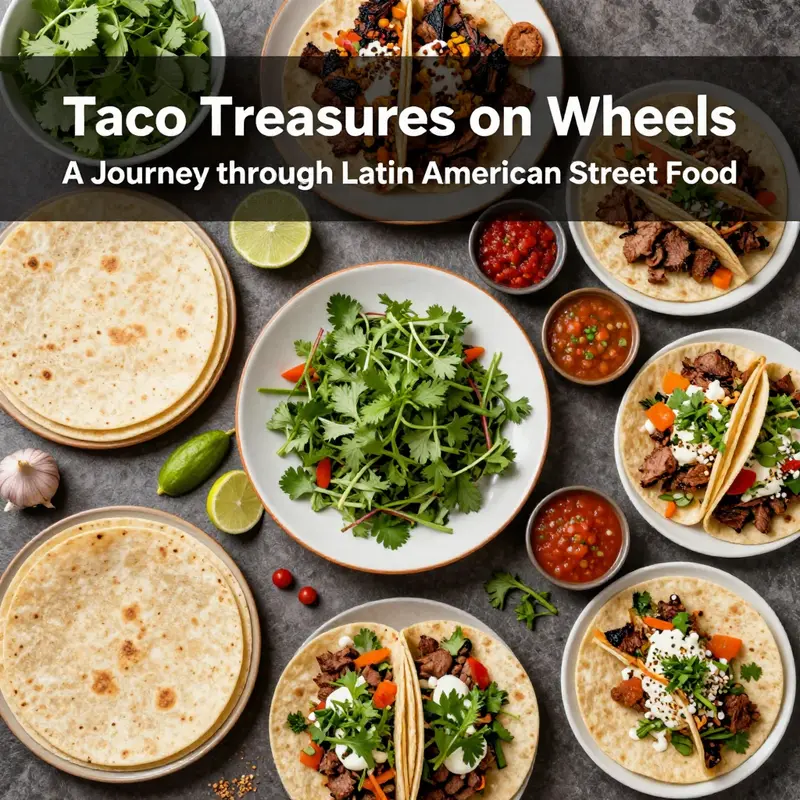
The simplest thing about a street taco—a humble corn tortilla folded around a handful of fillings—hides a vast world of tradition, technique, and quick-fire improvisation. On a food truck, where space is intentionally compact and timing is everything, the ingredients do more than flavor the bite; they tell a portable story of markets, neighborhoods, and the passing of recipes from grandmother to grill master under a rhythm of sizzling griddles and laughter. The core of that story is not a flashy garnish or a single bold spice, but a carefully choreographed ensemble: masa, meat, bright salsas, and a constellation of toppings that arrive and transform in moments, capturing the improvisational spirit Latin American street cuisine is built on. The truck becomes a rolling kitchen where each ingredient is measured not just in grams but in memory and authenticity, delivered with the crisp efficiency that only the road can demand.
At the base of every taco stands the corn tortilla, a disk of masa that is both flexible and sturdy enough to cradle its content. On a truck, tortillas are usually handmade and warmed over a flat griddle or a small comal to coax out their aroma and sheen. The light char that appears at the edges is not a flaw but a sign that the masa has been treated with respect to its origins. Corn, in this culinary map, is more than a vehicle for fillings. It is a conduit for aroma, texture, and aroma again, because the moment a tortilla is warmed, a subtle sweetness awakens that rounds out the sour, spicy, and savory profiles that follow. The tortilla’s texture—thin enough to bite through yet resilient enough to hold a dribble of salsa—becomes the tactile heartbeat of the entire dish.
Fillings are where the imagination and memory of the region meet the practical realities of street service. On many trucks, the star proteins represent regional variations of slow-cooking brilliance: al pastor with spiced pork, marinated in adobo and often finished with a kiss of pineapple; carnitas, pork braised until the fat renders and dissolves into the meat, then spooned onto the tortilla with its own glossy richness; barbacoa, beef simmered with aromatics until it falls apart into shreds of deep savory; and bistek, a grilled steak that earns its depth from a robust blend of cumin, oregano, garlic, and chili peppers. Each protein carries a signature balance of heat, acidity, and savoriness, and all are seasoned not with a single note but with a musical blend that travels well through the air of a busy street.
The seasonings that enable these fillings to sing on the move are humble yet precise: cumin gives a smoky warmth, oregano lends an herbal lift, garlic lends pungent depth, and chili peppers contribute heat and brightness. In a truck kitchen, these spices do more than flavor meat; they awaken the senses and prime the palate for the immediate brightness that follows with salsas and toppings. The spice blends are not complicated, but they are deliberate. They are designed to carry their character across the open street where a line of hungry customers and the hiss of the griddle are the chorus. The goal is to achieve a layered warmth—an early warmth from the spice kiss, a mid-palate tang from its acidity, and a final clean finish that leaves room for the toppings to do the talking.
Salsas are the bright counterpoint, the counterintuitively delicate force that balances meat’s richness with acidity and fresh herbaceous lift. A salsa verde, built on tomatillos, brings a tart, green brightness that is almost citrusy in its sharpness. When jalapeños, serranos, or poblanos are roasted and folded in, the heat level shifts—soft and grassy with poblanos, crisp and vivid with serranos, smoky and medium-bodied with jalapeños. Lime juice and cilantro arrive as essential brightness, while onion adds a bite that aligns with the crunch of cabbage or lettuce. The salsa is where the truck’s influence can shine through without debasing tradition: you can taste the heritage in the repetition of the core elements, while still sensing the truck’s own choice of peppers and roasting technique, which subtly changes with the day’s market finds.
The toppings—crisp shredded cabbage, avocado or a dollop of guacamole, a crumble of queso fresco, and wedges of lime—act as the finishing punctuation that makes a street taco feel complete. Cabbage adds a crackle that counters the tenderness of slow-cooked meats; avocado brings a generous creaminess that smooths the heat and acidity; queso fresco adds a salt-bright note that elevates every bite; lime at the end wakes up the palate as if the bite starts anew with each mouthful. The balance is deliberate and flexible. A good truck knows when to keep the toppings lean and when to pile them on, all while maintaining a cohesive flavor profile that can travel from a casual snack to a satisfying meal in the middle of a crowded block.
Beyond the ingredients themselves, the truck’s atmosphere turns the meal into a cultural experience. The sizzle of the griddle, the quick-flick of a knife, the worker’s banter with customers, and the aroma of roasting chilies create an immersive moment that makes the food memorable. This is where the chapter’s ingredients become characters in a larger story: masa is the everyday foundation; the fillings are regional poets expressing family recipes; salsas are athletes of acidity and heat; toppings are the bright punctuation that completes each line of flavor. Together they sketch a map of Latin American street food that travels well, inviting locals and travelers alike to follow the scent and discover a set of flavors that feel both universal and intimately local.
The mobile kitchen imposes certain constraints, but it also shapes the ingredient choices in meaningful ways. For mass production and service speed, tortillas are kept warm on a hot surface that retains moisture without making them soggy. Fillings are prepped in batches that are easy to reheat on demand, ensuring consistency without sacrificing tenderness. Salsas are prepared in larger volumes, scaled to keep up with demand while preserving their brightness, and they are adjusted for the day’s weather and crowd. The toppings, too, must stay fresh and readily accessible, which means careful packaging and quick assembly techniques. In this way, the ingredients are not merely components; they become a well-tuned system that a well-run truck can execute with confidence, even during peak hours.
The chapter’s emphasis on ingredients also reveals something broader about the culture surrounding Latin American street tacos. The dish reflects a history of migration, market trade, and local adaptation. Tortillas traveled from village mills to market stalls, then learned to travel with the tempo of the city—the way a vendor might tweak the level of onion, the tempo of the flame, or the brightness of the salsa to suit the crowd. The result is not a static recipe but a living itinerary, a set of flavor checkpoints that can be revisited and revised as a truck moves from neighborhood to neighborhood or from city to city. The same combination of masa, meat, salsa, and toppings can be reinterpreted to reflect the palate of a new audience, all while honoring the core tradition that makes street tacos a recognizable emblem of Latin American food culture.
For cooks and food lovers who want to understand what makes these tacos so compelling, the focus on ingredients offers a clear throughline. It is not the most glamorous aspect of culinary storytelling, but it is perhaps the most honest. The tortilla is the consent that these flavors have to exist on the tongue; the fillings are the memories that carry the culture forward; the salsas are the conversations that keep the plate lively; the toppings are the playful signatures that invite second bites. And in the context of a mobile cuisine, these elements are not only about flavor but about reliability, speed, and the storytelling cadence that makes a line feel like a shared experience, not just a quick transaction.
As markets evolve and neighborhoods shift, the core ingredients endure, stubborn and soulful. The truck’s success rests on honoring those fundamentals while embracing the innovations that mobility allows. A good menu may change with the season—new peppers, different herbs, a twist on the classic carnitas—but the essential framework remains: a warm masa base, a flavorful, well-seasoned protein, a bright salsa, and a handful of toppings that lift and brighten. The result is a simple, satisfying, and deeply democratic meal that travels well and tastes of home, wherever it is served.
For readers who want to explore practical recipes or guidance that translates these principles into home cooking, the chapter points toward a broader pantry strategy that aligns with the on-truck philosophy. While the road teaches a sense of immediacy and efficiency, the food can stay anchored in traditions that emphasize fresh ingredients, careful seasoning, and balance. The idea is not to replicate a truck’s kitchen at home but to borrow its wisdom: respect the masa, season with intention, brighten with salsa, and finish with toppings that sing. In doing so, anyone can craft tacos that echo the spirit of Latin American street cuisine—where the best bites feel both spontaneous and enduring, as if they could travel with the wind and the next customer around the corner. And if the curious reader wants a glimpse of how equipment and operational choices shape flavor on the move, a deeper dive into the broader world of mobile culinary design offers practical perspectives on the balance between tradition and mobility. taco-trucks-unleashed-top-5-models-for-culinary-success
External resource: For a deeper dive into how seasoning blends can elevate street-taco flavor, see https://www.seriouseats.com/best-homemade-seasoning-for-street-tacos
Wheels of Flavor: The Economic Engine Behind Latin American Street-Taco Trucks
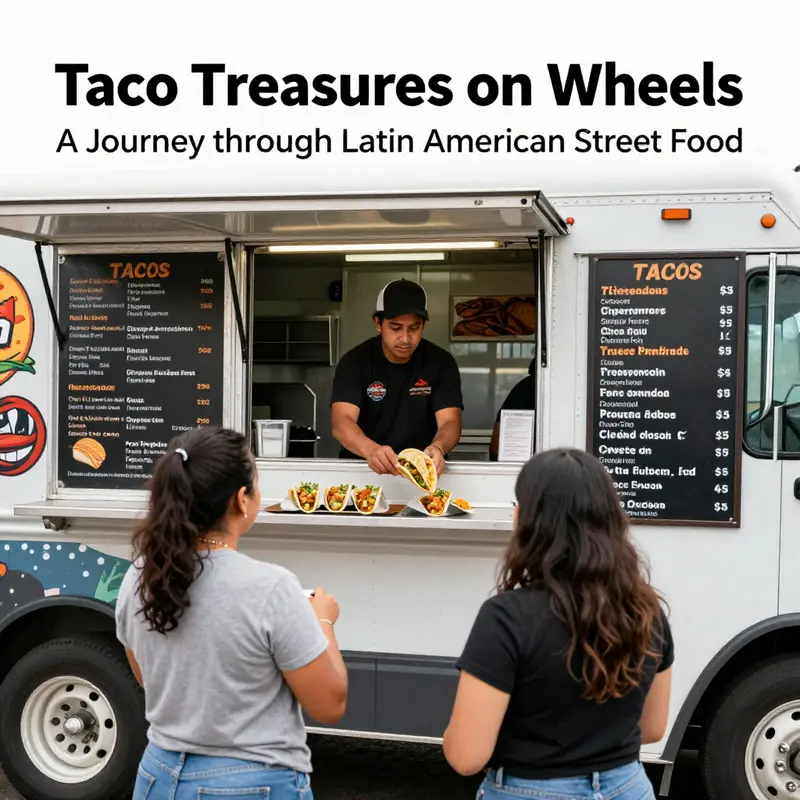
The business model of Latin American street taco trucks aligns with the pace and appetite of dense urban life. They rely on low overhead and high turnover, turning neighborhoods into markets each day. The trucks are essentially mobile kitchens parked at the edge of foot traffic, turning marinated meats, masa, and chilies into quick, vibrant meals. The simple setup: a capable grill, a sauté station, a tortilla press, a cooler, a sink, enough to sustain multiple taco preparations without overburdening staff or space. The essence is not only the recipe but the rhythm: prep ahead, assemble on demand, and move before the crowd thins. This approach makes authentic flavors accessible in dense urban environments, where time is as valuable as taste.
Location strategy is part of the model. These trucks chase the pulse of the city: office clusters at lunch, entertainment districts after work, universities, and cultural events where cuisines become a shared language. They optimize itineraries based on footfall, weather, permit windows, and event calendars. The portability is both a promise and a constraint: it allows serendipitous discovery of a new street corner, but it also requires meticulous planning around health codes, waste management, and restocking. In practice, the operator builds a mental map of hot spots and adjusts day by day, week by week to balance peak demand with the realities of supply and line management. In this sense, the result is a constantly evolving menu and route that keep the operation nimble while cultivating a devoted following.
Revenue generation and cost efficiency form the backbone of the economic argument. Startups often choose refurbished or purpose-built mobile kitchens, with a focus on durability and workflow. The capex is modest compared with a brick-and-mortar site, and financing can be more accessible, especially when paired with a flexible schedule and a recognizable storefront-on-wheels. Daily revenue flows come from the predictable lunch rush and the late-afternoon crowd, augmented by weekend festivals, outdoor markets, and private catering gigs. On the cost side, meat and produce are kept lean through bulk buying when possible, and the menu is constrained to ensure speed without sacrificing authenticity. Labor, too, is optimized: a small crew with well-defined roles, cross-trained to handle grill, prep, and service, keeps labor costs predictable while ensuring a steady pace during peak times.
Market scalability emerges from the same scarcity that makes the model attractive: limited storefronts plus a mobile footprint offer a low-risk path to growth. Operators can test new neighborhoods, refine recipes, and adjust pricing before committing to a permanent site. This flexibility supports niche branding, a critical differentiator in crowded markets. Some trucks lean into a regional specialization, say, a particular style of taco or one signature dish, that creates a recognizable identity and justifies value-based pricing. The discipline of specialization helps command premium for quality and tradition, while the mobile format invites experimentation with regional influences—hints of the Andean hills in a masa-based taco, or citrus-bright marinades echoing coastal markets. The storytelling braided into the food becomes part of the product, intensifying loyalty even as prices stay competitive for a broad urban audience.
Local economic contributions deepen the impact beyond meals. Food trucks hire drivers, cooks, and front-of-house staff, all contributing to income in a gig-friendly economy. They source ingredients from nearby farmers and small producers where possible, strengthening supply chains and sparking conversations across neighborhoods. They can steer culinary energy toward underutilized spaces, replacing vacancy with vibrant activity that benefits neighboring shops and transit hubs. The presence of these trucks often reshapes street life, turning a corner into a daily rendezvous where people come for nourishment and conversation as much as for quick sustenance. In this sense, the truck is less a mere seller of food and more a micro-community hub, a place where stories cross as easily as chilies and lime.
Innovation and customer engagement are as integral as the grill. Menu design tends toward clarity and speed, but operators keep room for creative, limited-time offerings that reflect seasonal produce and regional influences. Customers respond to bold flavors, tangy salsas, and the sizzle that announces a freshly prepared plate. Payment methods have evolved to smooth the line from order to pickup, with mobile wallets and tap-to-pay making the experience frictionless. Loyalty comes not from a long-term lease but from repeated encounters: a well-timed pop-up in a park, a recurring weekly spot near a transit hub, or a festival appearance that becomes a memory for regulars. The cultural storytelling—birthplaces, family recipes, ancestral techniques for masa and smoke—translates into trust, letting a customer feel that they are part of a living tradition rather than just someone paying for food. The practice of combining cherished flavors with efficiency yields both customer delight and durable profit, because people are willing to pay for authenticity delivered with speed.
Operational considerations sweep through the business like a well-timed drumbeat. The physical design of a mobile kitchen matters as much as the recipe. Large, rectangular trucks with integrated cooking lines can optimize space for multiple stations, allowing simultaneous grilling, warming, and assembly. This layout reduces bottlenecks during the lunch rush and supports consistent plating. Storage, refrigeration, and waste management demand careful planning—neither space nor resources should be wasted when every minute counts. Cleanliness and food safety are not afterthoughts but ongoing commitments, reflected in routine sanitization, proper separation of raw and prepared foods, and a steady inventory rhythm that minimizes spoilage. In such a model, success hinges on people and process as much as on the palate. It is the fusion of discipline and artistry—the chef’s hand and the operator’s plan—that keeps lines moving, portions consistent, and flavors proudly intact.
For operators who want to ground their strategy in practical know-how, the broader conversation around kitchen configurations and startup choices offers invaluable guidance. A deep dive into hardware and layout options can illuminate how to translate culinary ambition into a reliable, scalable system. The piece on top models for culinary success outlines how different chassis, workstations, and ventilation configurations translate into real-world performance. It is not a gimmick but a roadmap for aligning the dream with the daily grind, especially when budgets matter and speed is non-negotiable.
Taken together, these elements sketch a business model that can be both resilient and dynamic. A Latin American street-taco truck can survive the vagaries of weather, traffic, and seasonality by keeping a tight menu, a sharper supply chain, and a pulse on customers evolving tastes. The model invites a broader conversation about urban food ecosystems, the way street food shapes neighborhoods, and how micro-entrepreneurs can create meaningful, enduring ventures with modest initial investments. As demographics shift and cities seek vibrant, affordable dining options that celebrate heritage, the street-taco truck becomes more than a business—it becomes a portable, moving thread in the social fabric of a city. This perspective underscores how the micro-cosmos of a truck, run by a small crew, can ripple outward to influence local employment, small-farm partnerships, and the texture of daily life.
By combining lean operations, targeted branding, and community-centered practice, these mobile kitchens continue to reframe what it means to eat with intention and to build a livelihood around flavor, craft, and place.
External resource: The Science Behind Food Trucks in California https://www.californiafoodtrucks.org/science-of-mobile-kitchens
Sizzling on Wheels: The Popular Latin American Street Taco Varieties that Define Food Truck Flavor
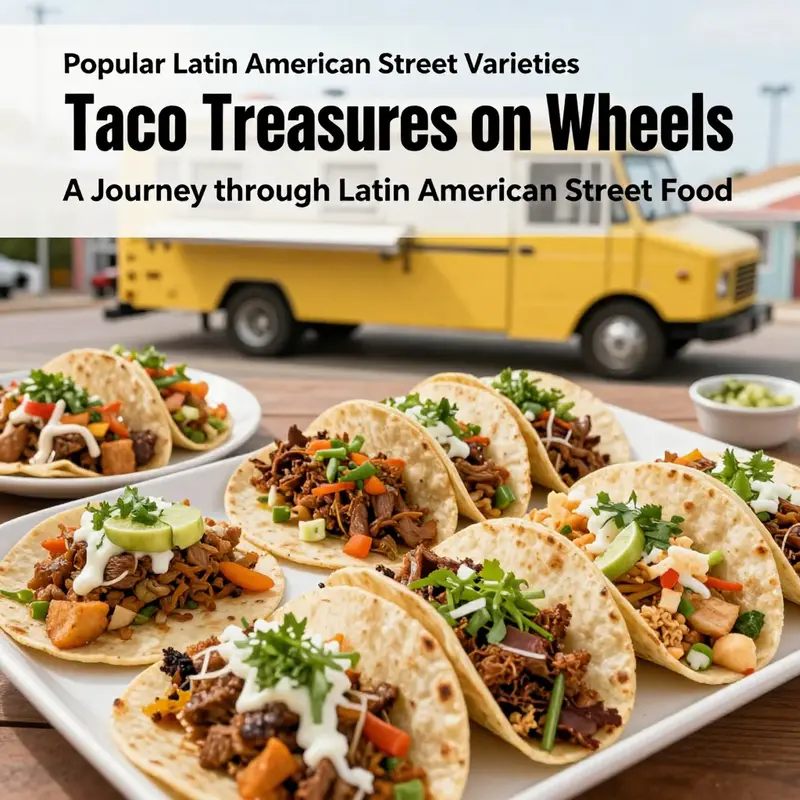
The first breath of a street taco truck is almost always a scent memory before any bite happens. A cloud of smoke from the flat griddle, the bright hiss of oil meeting hot pan, the faint sweetness of pineapple mingling with heat, and the chorus of voices calling orders over the clatter of metal and the hum of urban streets. In cities across Latin America and in the diaspora that stretches from beach towns to high-rise corridors, the portable kitchen has become a moving gallery of tradition, memory, and improvisation. The truck is more than a place to eat; it is a compact stage where regional pride and family lore are translated into tortillas, precise grills, and sauces that tell stories with every drop of lime. Among the most beloved offerings on these wheels are a handful of taco varieties that, while diverse, share a common thread: they are designed for speed, affordability, and maximum flavor per bite, all without sacrificing the cultural heartbeat behind each recipe.
Tacos al pastor sit near the top of this chorus because they epitomize how Latin American street food blends technique, theater, and taste. The pork is marinated in a rhythm of chiles, spices, and something almost musical in its balance of sweetness and heat, then roasted on a vertical spit that slowly rotates over a bed of charcoal. When a few thin slices are shaved off, they glisten with a lacquer of fat and glaze, and a wedge of pineapple rides along, offering a counterpoint that cuts through richness with brightness. A warm corn tortilla embraces the meat, and the final union—just a touch of onion, cilantro, and a dab of salsa—transforms a simple bite into a memory of sunlit markets and family gatherings. The choreography is part of the draw: the worker’s knife, the crackle of the grill, the way pineapple’s tang punctuates the pork’s depth. It is a performance that travels well, and street corners become informal tasting rooms where strangers become fellow tasters and stories are exchanged as freely as recipes.
Carne asada tacos, with their citrus-kissed beef and smoke-kissed edges, arrive as a counterpoint to al pastor’s sweetness. The beef—usually thinly sliced and promptly seared—reads like a short, bold sentence in a longer paragraph of flavors. A squeeze of lime, a pinch of flaky salt, a scattering of chopped cilantro and onion, and perhaps a thin veil of salsa roja or verde. The simplicity belies a careful craft: the citrus must brighten without overpowering, the chili should lift rather than burn, and the grill marks should be crisp enough to add texture without drying the meat. In a street-food setting, the beauty lies in improvisation—the ability to adjust the beef’s coat of heat to suit a dozen palates in a single service, while still honoring the core tradition that makes carne asada a Mexican staple and a staple worldwide.
Tacos de camarones offer a coastal breath in a portable form. Shrimp, quick-cooked with garlic, lime, and a chorus of spices, brings lightness and a touch of luxury to the lineup. The shells crackle against a hot surface, and the shrimp turn a tender pink that suggests summer evenings by the water. Garnishes arrive in bright contrast: avocado’s creamy coolness, radish’s peppery crunch, and a drizzle of lime who helps wake the flavors, all tucked into a warm tortilla. These tacos celebrate the seafood traditions that run along the Pacific and Caribbean coasts of Latin America, where markets pulse with fishermen’s catches and fresh citrus. On a truck, they offer a welcome counterpoint to heavier meats, inviting diners into a quick, satisfying, almost refreshing bite that leaves room for dessert or a second round without heaviness.
The Gringa, a love-it-or-hate-it icon of contemporary street cuisine, toys with texture and temperature in a way that resonates across borders. It layers grilled carne asada with melted cheese on a crisp fried tortilla, producing a sandwich-like taco that offers a contrast between the crunchy exterior and the melty interior. The result is indulgent and bold, a crowd-pleaser that travels well down busy streets. The tortilla’s crackle acts as an audible cue, signaling something generous and comforting. In a food-truck setting, the gringa becomes a study in balance: the cheese must melt just so, the meat should still retain a bit of bite, and the sauce—whether a quick salsa or a splash of crema—should unify rather than overwhelm. The fusion energy here is intentional, a reminder that street food thrives on innovation as much as on heritage, and that the truck’s mobility invites playful, high-contrast combinations that keep regulars returning for more.
Tacos Gobernador add a heartier, more communal note to the lineup. Often built with shredded beef, chorizo, and sometimes eggs, simmered in a red sauce and dressed with rice and beans on the side, they echo the way coastal and highland flavors converge in many Latin American kitchens. This is not merely a single-tilling bite; it is a plate wrapped into a tortilla, a late-mupper of comfort, where savory porky depth and a hint of heat mingle with a bed of starch that creates a filling, satisfying experience. Gobernador tacos—when executed in a truck—speak to a broader culinary philosophy: the street is a communal table, and the truck is a rotating dining room where families and neighbors share a version of home-cooked fare that has traveled and adapted through generations. The result is a robust, almost casserole-like experience wrapped for portability, a testament to how a street corner can feel like a neighborhood kitchen after a long day.
These varieties do more than satisfy hunger; they narrate a geography of tastes. They tell you about markets where masa rules the scene and cooks nurture a lineage of techniques passed from grandmothers and aunts to younger hands who keep the flame alive in urban landscapes far from the old country. The masa itself—fundamental to many antojitos—forms the base for these dishes even when the final presentation appears more straightforward. The corn’s sweetness and the tortilla’s resilience shape every bite, enabling the bold flavors to cling and release with each chew. In a city with a thousand competing aromas, the street taco’s ability to deliver a complete meal with a few essential ingredients—protein, onion, cilantro, lime, and salsa—speaks to the efficiency of traditional cooking adapted for modern mobility.
The appeal of these tacos in trucks rests on three principles: affordability, portability, and personality. The price point makes it possible for a quick lunch or a late-evening snack to become a cultural adventure rather than a mere meal. The portability is more than convenience; it is a design choice that keeps the flavors intact and makes the experience social, as people eat while standing at a curb or leaning against the truck’s counter. And personality—the chef’s signature touch, the exact moment a grill is brushed with lime, or the precise slice of onion added to the al pastor—gives each truck its own story and voice. The result is a rotating gallery of flavors that travels well, speaking to locals who crave the familiar and to travelers who seek something intensely new. In this sense, each bite is both a connection to a place and a doorway to a broader Latin American street-food world, where regional ingredients meet global curiosity and create a shared, dynamic palate.
For a broader sense of how these varieties resonate within the global food-truck movement, the attention paid by food writers and editors highlights a growing recognition of Latin American street tacos as more than a trend. They’re considered essential stops on culinary itineraries, with cities like Austin, New York, and Los Angeles becoming vibrant laboratories where traditional forms mutate into contemporary expressions without losing their core identity. The sizzle, the aroma of roasting peppers, and the laughter around order windows are not incidental; they’re part of the culture’s storytelling mechanism. The trucks have become community hubs where locals connect with visitors, where a recipe learned in a bustling market can meet a modern palate, and where one flavorful bite can spark a longer conversation about regional diversity, migration, and shared food memories.
If you’re curious about how these kitchens balance tradition with modern expectations, you can explore a deeper look into the truck-focused culinary conversation here: Top 5 taco truck models for culinary success. This resource captures how operators design and optimize their mobile kitchens to preserve authenticity while delivering consistent performance under pressure—an important piece of the broader story about popular Latin American street taco varieties offered by food trucks. On a street corner, the composition of flavors, textures, and aromas becomes a dynamic dialogue between cook, customer, and city, one that continues to evolve as new settlers bring fresh ingredients and chefs reinterpret old favorites for new audiences.
To place these varieties in a wider culinary context, it is helpful to peek at a global perspective on tacos. While each truck’s menu reflects local markets and personal lineage, many lists and guides recognize a core set of flavors that recur across continents, a testament to the enduring appeal of corn, heat, citrus, and a bright, finishable salsa. The experience may be as simple as a hot tortilla and a few well-chosen toppings, yet the memory lingers long after the last bite. For readers who want a comparative lens, an external overview provides a broader map of where these flavors fit in the larger spectrum of taco varieties worldwide: TasteAtlas ranking of 28 taco varieties.
Rolling Tastescapes: Community, Identity, and Culinary Tourism on Latin American Street Taco Trucks
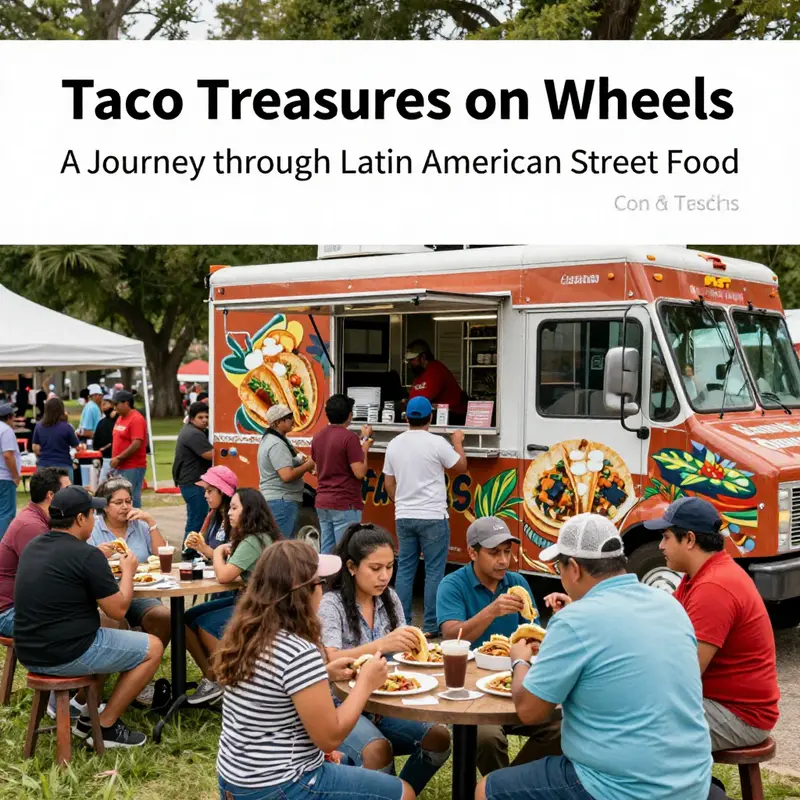
The sight of a street-side taco truck at dusk is more than a meal on wheels; it is a portable town square where sound, aroma, and story mingle. A grill coughs out a steady sizzle, bells of citrus and smoke drift through the air, and a line gathers not just for nourishment but for a shared moment. In cities around the world, Latin American street taco trucks have become more than vendors selling food. They act as temporary embassies of culture, meeting places that anchor neighborhoods, and starting points for culinary curiosity. The best trucks move with the rhythms of the city, stopping where stories want to be heard and where residents want to be seen. In doing so, they knit together the everyday moments of daily life with the larger currents of cultural exchange that drive culinary tourism forward. The result is a kind of living map: a route through which unfamiliar flavors become approachable, familiar, and deeply human.
Community engagement sits at the heart of this model. These mobile kitchens often choose to operate in places where the social fabric needs renewal as much as the palate desires novelty. They set up near schools, community centers, transit hubs, and small businesses, creating quick, affordable access to authentic fare that travels with a sense of place. The menu is anchored in traditional techniques and regional ingredients—corn masa pressed to yield tortillas, masa-dusted gorditas, and salsas that carry the brightness of lime, the warmth of chiles, and the brightness of fresh cilantro. Yet the success of these trucks does not depend solely on product quality. It rests on ongoing relationships: with neighborhood associations, with farmers who supply the freshest produce, with local cooks who share their family secrets, and with customers who return week after week because they feel seen and respected.
This is where the sensory experience becomes a catalyst for dialogue. The sizzle of a grill and the clap of mortar and pestle to grind spices open conversations about heritage, migration, and adaptation. People who have never traveled far from home can taste stories of markets near Mexico City, neighborhoods of Lima, or street corners in San Salvador. The interaction is reciprocal: vendors learn the rhythms of their new urban environments—the time when workers flood into a food truck line, the kinds of tunes that prompt a crowd to gather, the moments when a family returns to celebrate a birthday with a platter of shared bites. In the best moments, a tortilla becomes a bridge, and the truck is less a business than a community hinge, capable of turning a routine lunch into a brief, memorable encounter with another culture.
Scholars who examine culinary tourism describe experiences like these as a form of experiential travel, where the act of eating becomes part of identity formation and cultural discovery. Eating is not just about satisfying hunger; it is a way of sensing belonging, both for the eater and the maker. The act of grabbing a hot taco after work can feel like stepping into a living classroom where ingredients travel as freely as people do. The point is not to trivialize other cuisines as novelty but to recognize how accessible, authentic encounters reshape expectations about what food can be. In multicultural cities, where a wide array of histories intersects, street taco trucks offer an intimate entry point into larger conversations about origin, adaptation, and community resilience. This dynamic aligns with long-standing discussions in culinary studies about how food reveals social values and how mobility changes who gets to participate in a cuisine’s evolution.
The mobility of these trucks—moving through different neighborhoods, sharing curb space with other street vendors and small businesses—has practical implications for inclusivity and economic opportunity. A truck can palliate the friction that sometimes accompanies urban dining by distributing a diverse set of flavors across varied locales. That distribution matters: it means that someone who cannot afford a more formal dining experience can still partake in a diverse, flavorful mainstream of Latin American street food. It also democratizes access to international cuisine by situating it in everyday urban life, rather than reserving it for upscale enclaves or tourist zones. Equally important is how these operations often embrace sustainable practices. Vendors may prioritize locally grown produce, minimize single-use packaging, and craft menus that reflect seasonal abundance. Such choices supplement the culinary appeal with credibility: they signal an ethical commitment to community welfare and environmental stewardship, which in turn reinforces trust among local customers and visitors alike.
The social fabric that sustains these trucks often rests on familial and mentorship ties. Generations of cooks pass techniques along like a cherished heirloom. A grandmother’s guajillo chile blend, a cousin’s technique for curing pork, or a neighbor’s trick for balancing lime and salt can travel with the truck, making each stop feel both intimate and widely relevant. In this sense, the trucks become itineraries of memory and innovation—where old methods meet new markets and where stories expand with every mile. They also serve as platforms for collaboration beyond the kitchen. Some operators join farmers’ markets, cultural festivals, and cross-cultural pop-up events, ensuring that the food becomes part of a broader communal celebration rather than a solitary dining experience. This integration deepens the sense of belonging for local residents and invites visitors to see the neighborhood through a more generous, curious lens. The food truck thus functions as an educational space without a classroom—an informal venue where learning happens through scent, texture, and shared laughter as much as through menus and price points.
A crucial dimension of this phenomenon is how it reframes the narrative around Latin American street food for diverse audiences. Rather than presenting a static, regional stereotype, these trucks reveal a dynamic conversation among continents, families, and flavors. They showcase an evolving repertoire—from the tang of Salvadoran curtido brightening a spicy pork taco to Peruvian ají lending a smoky depth to grilled meats wrapped in soft tortillas. The result is not merely a tasting menu but a study in cultural negotiation: how ingredients travel, how techniques adapt, and how communities determine which flavors to celebrate and which to refine. Patrons become interlocutors, asking questions that reveal even subtle differences in regional identity, technique, and ritual. The act of tasting becomes a form of listening—a way to understand another place through its most cherished edible symbol.
For readers curious about the practical pull of this model, consider the idea of a guide to knowledge embedded in the street. It is easy to imagine a future where a city map includes a highlighted route of family-owned trucks and pop-up stalls, each stop offering a micro-lesson in cuisine and culture. A consumer could follow a curated path to collect stories, portraits, and bites from a spectrum of origins, moving from one neighborhood festival to another, and in doing so, witnessing the city’s growth as a cosmopolitan kitchen. Such a route would not replace traditional restaurants or formal tours; it would complement them by foregrounding mobility, spontaneity, and human connection. In this sense, the trucks are not just selling meals; they are shaping how people discover and perceive the global through a local lens. They invite travelers to look up from their plates and observe the social textures of the places they pass through, to hear the laughter and the accents that color the air, and to feel the pulse of community life in real time.
This chapter invites readers to see the culinary landscape as a living archive. The trucks preserve and adapt recipes while inviting cross-cultural dialogue that broadens the appeal of Latin American street foods. They also remind us that tourism, at its most meaningful, thrives on trust and accessibility. When a vendor greets a regular with a warm joke and a customized salsa, when a newcomer learns to pronounce a regional name with the same pride they feel tasting a perfectly balanced taco, and when a festival-goer discovers there is more to a single bite than heat and salt—these moments become the building blocks of a shared, enduring culture. The movement of Latin American street tacos through urban space thus carries a twofold purpose: to feed and to connect. In doing so, it anchors neighborhoods with flavor and opens doors to global curiosity—an essential synergy for any city seeking to embrace its evolving identity.
For readers seeking a concrete entry point into this world, one might explore how a single truck formats its offerings to maximize accessibility and education through flavor. The best examples balance tradition with experimentation, offering core classics while inviting curious customers to sample unexpected twists. A note of caution accompanies this curiosity: the value lies not in chasing novelty for its own sake, but in honoring the roots of the cuisine and sharing its richness with sensitivity and generosity. In short, these trucks do more than serve food; they curate an ongoing, seasonal conversation about what it means to eat well in a community that is always changing. They invite us to participate not as passive observers but as active participants in a shared, living menu.
As a practical anchor for readers looking to explore further, consider reading aboutTop taco truck models for culinary success, which offers insights into how mobility, equipment, and design choices enable robust, consistent service without sacrificing authenticity. This line of inquiry complements the broader discussion of community engagement and culinary tourism by highlighting how physical form and logistical planning support cultural exchange on the street. And for those who want to understand the broader infrastructure behind mobile food service—how convertibles become kitchens, how power and water are managed, and how safety and licensing are navigated—an industry guide focused on structure and specifications provides a rigorous, technical perspective that remains accessible to non-specialists.
External reference: https://www.foodcartcaravan.com/industry-guide
Final thoughts
The vibrant world of food trucks selling Latin American street tacos captures the essence of community, culture, and culinary delight. Each taco serves as a doorway to rich traditions and stories, a connection that binds us over shared meals. As these trucks continue to make their mark on urban landscapes, they not only satisfy our hunger but also feed our curiosity and appreciation for diverse cultures. For anyone looking to immerse themselves in the essence of Latin American cuisine, chasing down a food truck for those delicious bites is not just a culinary experience—it’s a celebration of life itself.