
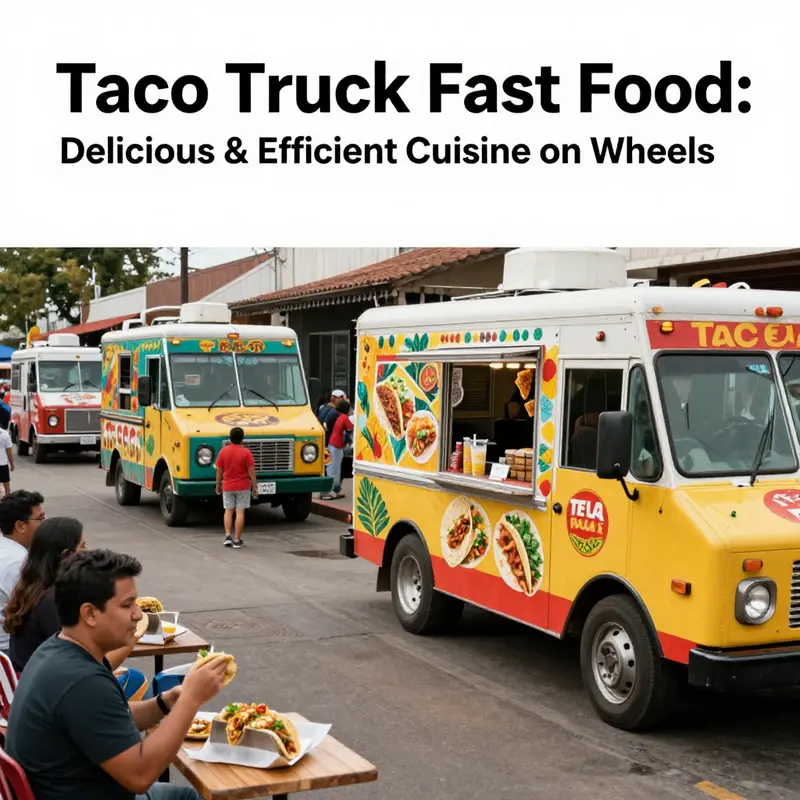
In a world buzzing with endless food options, taco trucks carve a niche that marries speed, flavor, and tradition. Picture this: the scent of spiced meats sizzling on a griddle, the soft crunch of freshly made tortillas, and the vibrant colors of salsas calling out from a mobile kitchen parked on your street. But are these beloved culinary vehicles truly fast food? Each chapter of this journey dives deeper into the taco truck phenomenon, exploring their quick service, portable operations, limited menus, high-volume capacities, and specialized designs. Join us, as we unravel whether taco trucks deserve a rightful place on the fast food pedestal.
On Wheels, On Time: Reframing Fast Service in the World of Taco Trucks
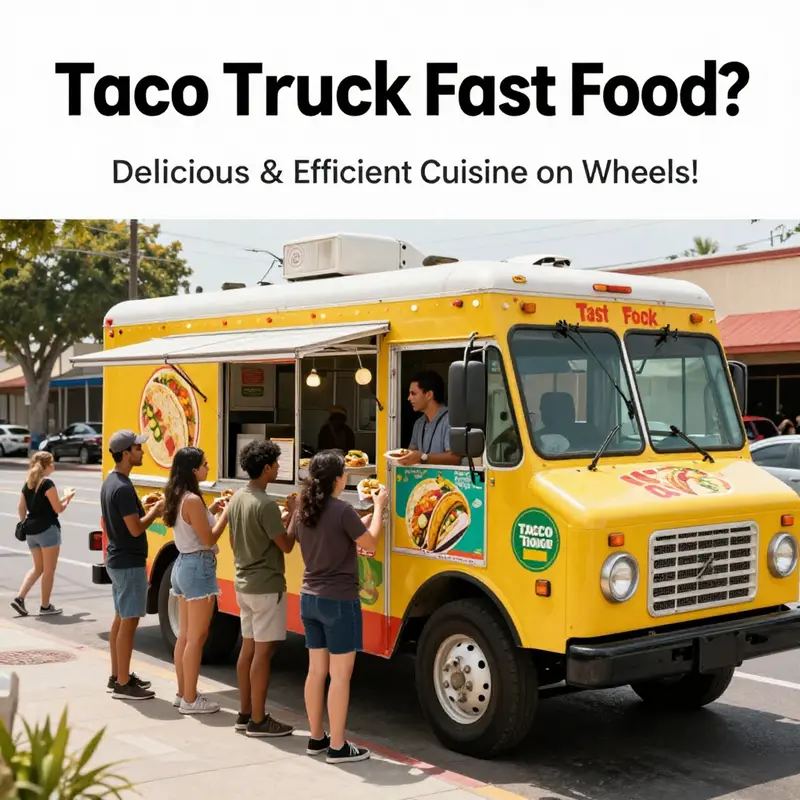
The question of whether a taco truck belongs in the fast-food category invites nuance rather than a binary verdict. Across neighborhoods and streets, these mobile kitchens operate at the intersection of speed and craft, delivering hot meals with the immediacy that drives street-level dining. While they move with the tempo of the clock, taco trucks also carry the textures of fast casual, where ingredients, technique, and a human touch shape the experience of a quick meal on the go.
The design of a taco truck is a study in flow. Equipment is arranged to optimize movement from mise en place to plate, with stations for searing, assembling, and wrapping brought within arm’s reach of the cook. This compact choreography supports volumes that would overwhelm a traditional kitchen, yet it remains a controlled, repeatable process that minimizes delays and preserves safety. The result is speed that is engineered, not just demanded, and a service pace that can scale to festivals, markets, and street corners alike.
A focused menu supports brisk service without sacrificing choice. Operators often concentrate on a core set of meats and fresh toppings, with tortillas made to order to preserve texture and warmth. Yet the best trucks invite a degree of customization—heat levels, salsas, and toppings—that lets customers tailor their meal without lengthening the line. This balance—speed with flexibility—places taco trucks along a spectrum between fast food’s standardized offerings and fast casual’s emphasis on personal experience and quality.
Craft remains central to the street kitchen. Some operators lean into slow-cooked meats and house-made tortillas; others emphasize bold, contemporary toppings chosen for vibrant flavor profiles. The paradox of fast service with depth of flavor arises through efficient workflows: mise en place is streamlined; utensils and heat sources are chosen for reliability; and prep work is pre-portioned yet fresh. The aim isn’t to slow down the line for technique’s sake, but to embed culinary care into the moment of service.
Packaging and presentation matter as much as speed. Thoughtful containers that protect warmth and texture, paired with clean, appetizing presentation, communicate an attention to quality beyond mere convenience. Even street food can carry a premium feel when the takeaway experience preserves bite, aroma, and color, signaling that value isn’t tied to a fixed location but to the craft that travels with the truck.
Mobility is its own credential. Taco trucks venture into office parks, nightlife strips, and weekend fairs, expanding access to meals when fixed-location options are scarce. This mobility brings constraints—power, water, waste, and regulatory compliance—that operators must meet through compact equipment, dependable sanitation practices, and adaptable storage. The result is a mobile micro-restaurant that can deliver consistency and care across changing contexts and crowds.
Ultimately, the fast-food versus fast-casual debate around taco trucks rests on a broader question: what counts as quality at speed? For many customers, speed is a threshold, not a judgment. The best trucks couple rapid turnover with ingredient integrity, transparent preparation, and a hospitality that makes a quick meal feel thoughtful. In that sense, a taco truck can belong to a dynamic family of fast service that values both efficiency and craft, creating a space where convenience and culinary attention coexist.
Roaming Kitchens on Wheels: Reframing Taco Trucks as Fast Food in Motion
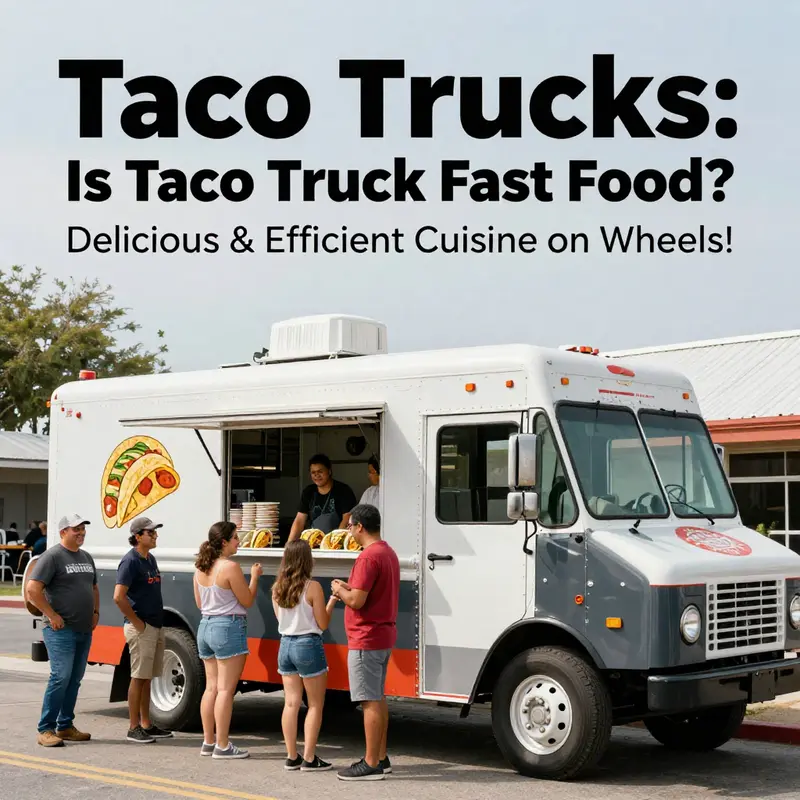
On busy city blocks and at crowded festivals, a taco truck moves like a pulse, turning speed into a social experience. The question ‘Is a taco truck fast food?’ is not a trick; it is a doorway to understanding how mobility reshapes what counts as quick service. Fast food is often defined by speed and reach, and taco trucks deliver on both. Customers order and receive meals in minutes, while the street around them drums with the rhythm of commerce and conversation. Yet the truck does not merely chase time; it chases opportunity. Its mobility lets it follow crowds—from office districts during lunch to concerts after dusk—so the same kitchen can serve different neighborhoods without the overhead of a fixed storefront. In this sense, the taco truck embodies a form of fast food that is as much about timing as it is about taste. It leverages space, traffic patterns, and social observation to stay relevant in a city that never pauses. This dynamic is why many diners recognize taco trucks as a reliable, local option as they move across neighborhoods.
Taco trucks carry the core attributes of fast food—speed, portability, a focused menu, and high throughput—while stitching them to a different set of realities. The service is quick; orders flow through a window, and meals emerge almost on demand. The vehicle itself is a portable kitchen that can be dropped into a vacant lot, a market curb, or a festival site, then rolled away when the crowd thins. A concise menu—tacos with a handful of fillings, perhaps a few sides—keeps prep tight and predictable. The equipment is chosen for reliability and pace: a compact sequence of burners, grills, warmers, and refrigeration arranged to minimize steps and maximize output. The flow from mise en place to plate is deliberately linear, so a line can form and dissolve without confusion. These design decisions matter not only for the customer’s wait time but also for vendors who manage inventories, waste, and cash flow across different days and venues. The economics of mobility, while ancient in street vending, meet modern expectations of cleanliness, consistency, and speed in today’s urban fabric. In short, mobility isn’t just convenience; it’s a business strategy that expands reach and reduces risk.
Behind the clockwork of speed lies craft and cultural memory. Authentic flavors have roots in regional Mexican traditions, and many trucks honor those roots with careful technique. Marinades, regional cuts, slow braises, and hand-pressed tortillas are not luxuries; they are the backbone of flavor that travels with the truck. The pace of service does not erase patience in preparation; it often makes room for meticulous steps that ensure texture and aroma remain vibrant. When a cook slices meat, bastes a taco, or toasts a tortilla, their skill becomes visible even as the line grows. Fresh ingredients—zippy salsas, lime, cilantro, and pickled vegetables—anchor the meal in freshness rather than convenience alone. The result is not a disposable bite but a portable, social meal that carries memory. The street becomes a classroom where taste, memory, and urban life collide, where a simple taco can evoke a hometown, a festival, or a family recipe that found legs in a moving kitchen.
Portability is more than wheels and a window; it is a carefully engineered workflow. A mobile kitchen must pack prep space, cooking surfaces, assembly, and service into a compact footprint while preserving safety and sanitation. The layout determines how quickly orders move from flame to plate and how easily the truck can navigate crowded sidewalks or narrow lanes. Power, ventilation, and water supply are sized for peak demand, with backup plans for weather shifts or location changes. Because the unit might operate in a park, a fairground, or a construction site, it must adapt to different climates and foot traffic patterns without sacrificing cleanliness or speed. A successful operator minimizes wasted steps, aligns equipment for parallel tasks, and trains crew to move with practiced ease. In practice, throughput can reach significant levels—hundreds of tacos per hour in peak times—yet the experience remains personal: a friendly hello at the window, a quick nod to a customer, and a sense that the meal has arrived precisely when and where it was needed.
Urban space and policy shape the context in which these roving kitchens operate. Scholars describe taco trucks as actors within a broader social economy, tied to migrant entrepreneurship, informal labor, and street-level policy. The mobility of these units intersects with license regimes, health codes, and event regulations, demanding practitioners to balance speed with safety and accountability. The streets they occupy become improvisational marketplaces, where vendors calibrate location, timing, and crowd flow. In practice, this means that a truck’s success relies as much on community networks, permits, and relationships with event organizers as on muscle and flame. The social fabric around the truck—neighbors greeting the cook, coworkers sharing a bite during a quick break—turns a quick meal into a social moment amid the city’s constant motion. This perspective situates fast food not as a uniform chain model but as a plural practice that travels across neighborhoods, styles, and seasons, always anchored by the mobility that defines it. For readers exploring how fast food adapts to urban policy, a well-chosen, mobility-friendly setup can be a way to align tradition with modern city life. City planners can learn from this model to design street space that accommodates food vendors while maintaining safety and accountability.
Ultimately, the portable taco operation offers a distinctive take on fast food. It proves that speed and culture can coexist and even reinforce one another. The moving kitchen invites experimentation, inviting cooks to refine heat, timing, and assembly while honoring traditional flavors. It also embodies a practical economic logic: a limited menu reduces waste and speeds up production, while mobility lowers fixed costs and opens doors to flexible market testing. For diners, this means reliable wait times, a transparent cooking moment, and the thrill of discovery as the truck arrives in a new neighborhood. For operators, it means resilience in the face of shifting events, weather, or policy, and a chance to build a loyal audience that migrates with the truck from one block to the next. The chapter of mobility in fast food is not a footnote; it is a living thread that ties together speed, place, and taste. It invites readers to see a taco truck not as a curiosity but as a capable, evolving form of urban dining that travels with the city itself. For those who want to explore this space further, one might look to a curated collection that highlights the models most suited to culinary experimentation and scalable service, as a practical resource for understanding what makes these roving kitchens work. See [Top models for taco trucks] for more on model versatility.
External reference: Engaging Taco Truck Space — https://doi.org/illinois/9780252042454.003.0001
Limited Menu, Limitless Speed: How Taco Trucks Redefine Fast Food Through Focused Craft
Taco trucks occupy a striking niche in the fast-food landscape. They embody speed, accessibility, and affordability, but they also carry a deliberate philosophy: a limited menu designed to maximize quality, consistency, and pace. The essence of their fast-food identity hinges not on sprawling variety but on a tightly curated set of offerings, typically five to eight core items. This focused scope often centers around a single protein—al pastor, carnitas, grilled chicken—or a distinct regional style—Baja, Oaxacan, or another culinary thread. By narrowing the menu, operators reduce the complexity of ingredients, streamline procurement, and cut the risk of waste in a way that few traditional brick-and-mortar outlets can match. The result is not merely quick service; it is reliable, repeatable quality that customers come to depend on, even as they move from one curbside location to another in search of a satisfying lunch, snack, or late-evening bite.
That strategic simplicity underwrites much of what makes taco trucks distinctly fast food, even as they resist easy categorization. The speed of service remains central: orders are taken, assembled, and handed off in minutes, a rhythm dictated by the limited menu and the efficient choreography of the kitchen. The absence of a sprawling pantry of ingredients reduces prep time and minimizes the chance of bottlenecks during peak hours. Because the menu is compact, cooks can master a handful of recipes with consistent timing, which in turn supports uniform taste and presentation across dozens of different locations. The high-volume potential is real, with mobile setups designed to optimize workflow in tight urban spaces and at crowded events. While precise throughput numbers vary, the underlying logic is straightforward: when you can produce a well-executed core lineup quickly and repeatedly, you command steady demand without sacrificing quality.
The mobility of a taco truck is another dimension that elevates its status within fast food. Unlike fixed-location eateries that must maintain large inventories for a broad menu, a mobile unit can chase demand. It can park near office clusters during lunch, set up at construction sites or festival grounds, or migrate through neighborhoods with changing demographics. This itinerant nature enables operators to test new ideas with minimal risk. A focused menu paired with a portable kitchen lets a vendor pivot with the seasons, local tastes, or event themes. New ingredients or regional influences can be introduced as limited-time offerings, while the core items remain stable to preserve reliability. The result is a dynamic dining option that feels intimate and bespoke, even as it delivers the predictability customers expect from fast food.
Culturally, taco trucks have embedded themselves in urban ecosystems in ways that traditional dine-in establishments rarely achieve. In cities like Austin, a place where weekend stands have grown into enduring institutions, the taco truck embodies a personal, almost familial form of commerce. Families and cooks bring decades of craft to the street, transforming a simple bite into a ritual that locals recognize and defend. The narrative of a taco truck is often tied to lineage, technique, and the care that goes into sourcing and preparing ingredients. This human touch—careful handwork, visible flames, the aroma of sizzling meat, the sizzle of fresh tortillas—becomes part of the brand’s appeal. The mobile format enhances that appeal by allowing cooks to bring their story to various neighborhoods, inviting new audiences to sample a slice of tradition without committing to a full-scale restaurant venture.
From an operational perspective, the focused approach is reinforced by how mobile units are designed and laid out. The aim is to create a compact, efficient flow that keeps hands moving and mouths fed. Secure closures, weatherproof workspaces, and carefully arranged equipment help maintain food safety in bustling environments. The design prioritizes ease of cleaning, quick access to ingredients, and minimal reach distance for the cook. When space is at a premium, every inch must support speed and sanitation. This practical engineering behind the scenes aligns with the culinary philosophy: fewer components, less waste, faster turnover, and better control over quality. It also helps workers stay productive under pressure, a critical factor when a truck faces a line of customers at a busy corner or a festival food court.
Automation, too, has begun to touch the taco-truck world, though mostly in ways that support consistency rather than replace the craft. Even as some carts explore automated elements to handle repetitive tasks, the core allure remains human-centered: the ability to adjust, taste, and respond to the crowd. The occasional automated setup can reduce labor intensity for routine steps, offering steadier performance during peak times while leaving the chef with the freedom to focus on technique, seasoning, and flavor balance. In this sense, automation acts as an amplifier of the same operating principles—the focus on core items, the speed of execution, and the adaptive mindset that keeps the business nimble in a crowded urban marketplace.
The practical benefits of a limited-menu strategy extend beyond speed and waste reduction. Inventory management becomes more predictable, which translates into less capital tied up in perishable goods and a lower likelihood of spoilage. When cooks repeatedly work with a fixed set of ingredients, they refine their mise en place to a high degree of precision. This predictability supports consistency across shifts and locations, helping customers know what to expect no matter where they encounter the same truck. The trade-off—less breadth of choice—appears as a deliberate trade for reliability, authenticity, and the ability to scale quickly. A lean, well-executed core menu often yields higher gross margins than a broader, less-focused lineup, especially in the fast-moving world of street food where speed and turnover are currency.
The broader food-service trend toward simplicity and transparency finds a natural ally in the taco truck’s approach. Consumers increasingly seek freshness, authenticity, and a clear story behind their meals. A focused menu makes it easier for operators to communicate provenance—where proteins come from, how tortillas are made, and what regional influences shape a dish. This clarity resonates with customers who want to know what they’re eating and where it comes from, even as they crave the convenience of a quick, hot meal. In the kitchen of a taco truck, reputation rests on a handful of signature flavors and the craft with which they’re delivered, a reminder that fast food can also be a conduit for meaningful culinary expression.
To readers curious about the practical configurations that support this philosophy, the narrative of top taco-truck models offers a useful lens on how form and function converge. For a closer look at how these units are configured and how operators balance speed with safety and reliability, see the discussion of top taco truck models for culinary success. This exploration highlights how compact kitchens, robust food-safety practices, and portable service concessions work together to sustain a focused menu at scale. The link offers a practical framing for understanding how design choices translate into daily performance in the field. Top taco truck models for culinary success
The chapter’s core claim—that limited menu focus is not a compromise but a strategic driver of success in fast-food mobility—rests on outcomes that matter to operators and diners alike. Speed remains the raw material of the experience, while cost control, waste reduction, and consistent quality create a dependable product that can travel from street corner to festival ground with confidence. The casual observer may see a truck, a grill, a few toppings, and a tortilla, but the experienced practitioner recognizes the discipline behind the choice of items, the rhythm of prep, and the choreography of service. In this sense, taco trucks embody a refined philosophy: fast food that does not rush taste, but rather invites customers into a streamlined, artisanal moment on wheels. The result is not merely convenience; it is a portable craft, a human-scaled operation that travels through neighborhoods with stories, aromas, and a shared appetite for something simple, honest, and delicious.
External resource for further context on menu design and operational clarity can be found here: https://www.carinterior.com/food-truck-menu-tips/
Wheeled Throughput: High-Volume Taco Trucks and the Fast-Food Pace on the Move
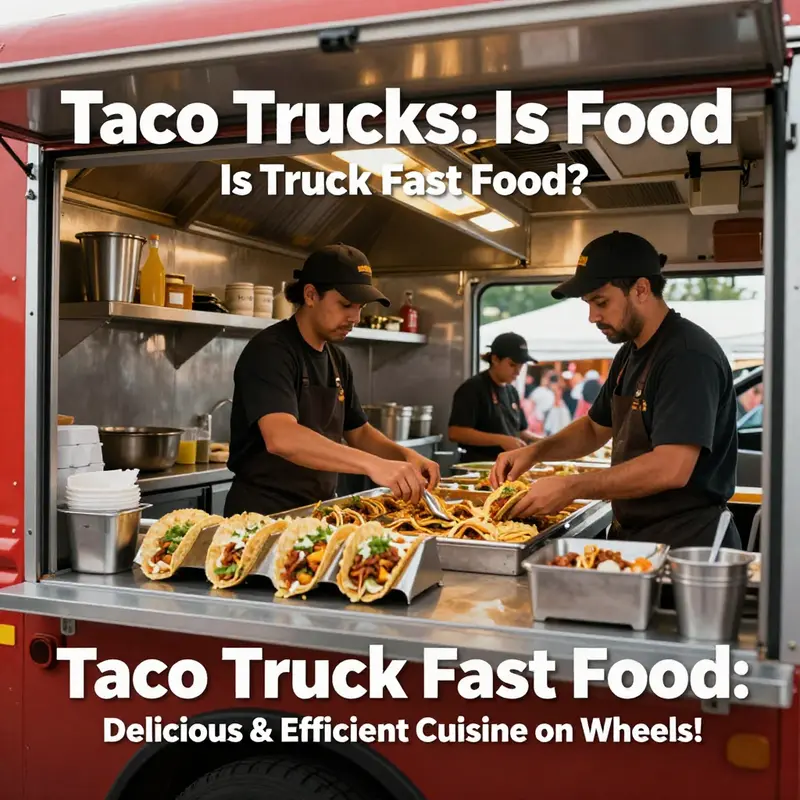
A taco truck operates at the intersection of mobility and speed, where the road becomes a kitchen and timing dictates the tempo of service. The question of whether a taco truck is fast food hinges less on where the food is prepared and more on how quickly a meal travels from pan to plate, and how reliably the operation can sustain that pace across shifting crowds and changing locations. High-volume capacity is the core driver of that speed. In practice, a modern taco truck is engineered to transform a bustling street corner or a festival lane into a compact, high-output dining room on wheels. Throughput—the measure of how many orders a single unit can complete within a given hour—frames the business model and shapes every design choice, from the layout of the kitchen to the choreography of the staff. In the busiest hours, a truck must deliver hot, consistent meals with minimal delay, not just once, but hundreds of times over the course of a shift. The logic is straightforward: speed without sacrifice is what turns a line of hungry customers into repeat business, memorable experiences, and steady revenue, all within the constraints of mobile operations.
To achieve that level of performance, the mechanical and logistical design of a taco truck matters as much as the recipes themselves. A fully equipped, commercially oriented kitchen truck contains industrial-grade appliances, robust ventilation, ample cold storage, and ample water and waste handling. These systems are purpose-built to handle rapid cooking and high-volume washing, while meeting safety and sanitation standards that keep the operation compliant in diverse environments—from a sunlit curbside to an enclosed event space. The scale and rigidity of these kitchens often allow a single truck to handle hundreds of meals per day, even in the face of peak demand. A common benchmark cited in the industry is the capacity to process large volumes without bottlenecks, a capability that relies on both equipment and workflow. Heavy-duty cooking surfaces, efficient heat distribution, and parallel tasking enable cooks to move from prep to plate with minimal waiting. The result is a predictable, repeatable throughput that supports a fast-food-like cadence, despite the variability of a street setting.
A crucial factor in achieving high-volume throughput is the deliberate limitation of the menu. In fast-food terms, both on wheels and in bricks-and-mortar formats, a focused core offering accelerates execution. For taco trucks, that often means prioritizing a handful of signature fillings and a handful of toppings, all of which can be prepped in advance and assembled quickly. When orders arrive, the kitchen workflow resembles an assembly-like rhythm: proteins are prepped and held at safe temperatures, tortillas are warmed efficiently, toppings are portioned, and each plate is assembled with a few precise steps. This is not about dumbing down flavor; it is about stabilizing speed and consistency. The more predictable the assembly, the fewer moments of hesitation, the shorter the line, and the more reliable the service. This is the essence of fast food translated into a mobile format: a compact system built for rapid, repeatable performance rather than sprawling, multi-stop preparation.
Equipment choices reinforce that logic. Modern commercial taco trucks commonly feature heavy-gauge cooking surfaces, fast-recovery refrigeration, and multi-station prep zones that minimize cross-traffic and congestion. Large sinks and robust cleaning stations support the strenuous sanitation regimes required by high-volume service, ensuring turnover remains steady throughout the day. Heavy load capacity is not just about raw power; it is about resilience—the ability to carry sufficient inventory to avoid frequent restocking, especially at events or construction sites where supply lines are finite and interruptions costly. Some trucks are designed to handle substantial equipment loads—thousands of pounds of gear and ingredients—so that the pace of service can be sustained across back-to-back shifts. In such configurations, the layout itself becomes a factor in throughput: a well-planned kitchen minimizes travel distance, reduces bottlenecks at the order window, and keeps the most time-sensitive tasks near the point of service. This attention to layout and capacity mirrors the principles of fast-food kitchens, where efficiency is engineered, not improvised.
The mobility of taco trucks adds a dimension that bricks-and-mortar operations cannot replicate, yet that mobility must harmonize with the demands of high-volume throughput. When a truck moves from one site to another—say, a street festival, a sports event, or a corporate campus—the team must recreate the same level of performance in a new space, often with different utilities and constraints. A well-designed truck uses proven systems that are adaptable to different venues, including options that are electric-powered or low-emission to suit indoor events or venues with tighter environmental controls. Electric drive systems, for example, can reduce mechanical complexity and make indoor operation more practical, contributing to consistency in throughput by removing some of the variability associated with fuel-powered setups. The trade-offs—initial cost, power management, and charging needs—are weighed against the longer-term gains in reliability and cleaner, smoother operations in enclosed interiors.
Sourcing and scale also influence throughput in meaningful ways. The rise of global sourcing, including the acquisition of pre-owned, fully equipped trailers, lowers barriers to entry and accelerates scaling. For aspiring operators, the ability to deploy multiple units quickly—each with its own capable kitchen—transforms a single truck operation into a small fleet that can cover multiple events or busy districts in a day. The success of this model rests on a careful balance between cost, reliability, and maintenance support. When a fleet can be refreshed with ready-to-run equipment and people who can adapt to different sites, throughput becomes less a function of one truck’s capability and more a function of the network’s capacity to deliver consistent service across locations. Safety, sanitation, and regulatory compliance remain constant anchors in this expansion, ensuring the high-volume operation travels smoothly from one venue to the next without sacrificing quality or safety.
In exploring whether taco trucks fit squarely within the fast-food category, the emphasis on high-volume throughput helps illuminate the continuum between street food and fast food. The speed of service, the streamlining of the kitchen workflow, and the standardized, repeatable outputs align closely with fast-food principles. Yet the mobility and cultural lineage of taco trucks bring a distinctive dimension that often renders them more flexible and responsive than fixed-location fast-food outlets. They inhabit a niche where speed, adaptability, and culinary focus converge into a portable flavor experience that can be scaled up through fleets while preserving the core promise of fast service. This convergence is less about categorizing food into rigid labels and more about recognizing how throughput, process discipline, and logistical agility enable a taco truck to deliver on the fundamental tenet of fast food: to provide quick, consistent meals at scale.
For readers seeking a practical sense of how a high-volume taco truck operates and scales, the strategies that drive throughput—efficient layouts, focused menus, robust equipment, and adaptable power systems—offer a blueprint that transcends location. It is this blueprint that powers the on-the-ground reality of serving hot, fresh food to hundreds of people in a single day, regardless of whether the setting is a bustling urban street, a busy festival, or a corporate event. The result is a mobile, almost industrialized approach to street cuisine that embraces the speed of fast food while preserving the character and communal appeal of traditional tacos. In this light, the taco truck embodies a dynamic version of fast food—fast, focused, portable, and capable of high-volume service across diverse spaces.
Readers curious about the practical side of scaling and the range of configurations that support high throughput can explore the broader discussion of scalable truck models and entrepreneurial opportunities in related coverage. For a focused look at how operators navigate model selection and growth, see the overview of top food truck models for entrepreneurs. This resource delves into planning, cost, and operational considerations that enable a high-volume taco truck to multiply into a network capable of meeting demand across multiple venues. (internal link)
External reference: https://www.foodtrucks.com/
Rolling Kitchens, Rapid Service: Decoding Taco Trucks as Fast Food
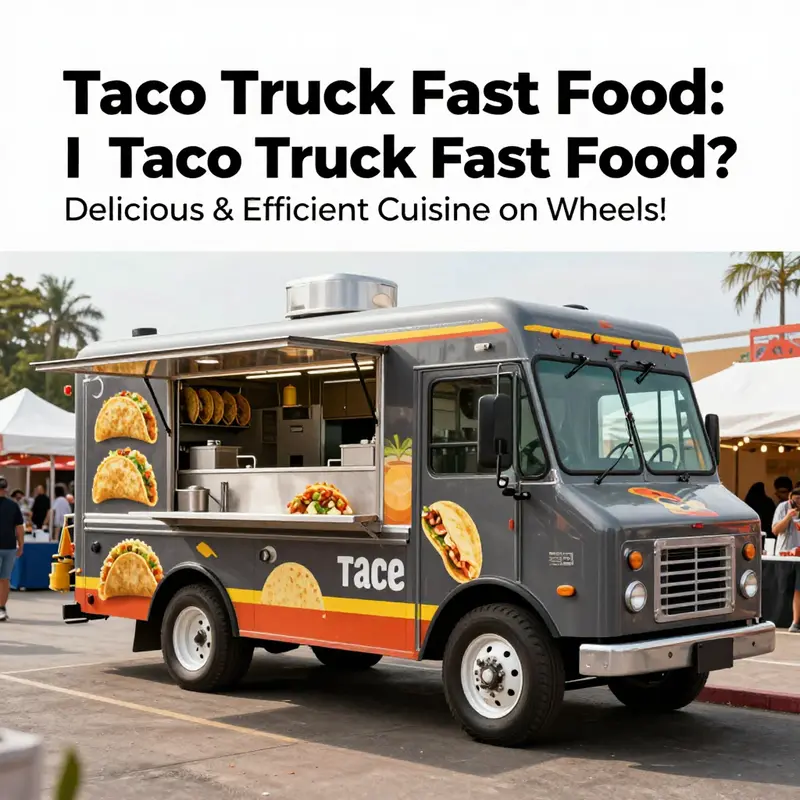
A taco truck is more than a mobile cart with a grill; it is a compact, purpose built kitchen that embodies the core promise of fast food: meals prepared quickly, priced affordably, and served with minimal friction, all while the space itself moves through urban life. In this sense, the question is a straightforward one: yes, it is a fast food operation. But the deeper truth lies in how its design, equipment, and workflow converge to deliver speed without sacrificing consistency or safety. The best taco trucks operate like well rehearsed theaters of service, where a few well chosen components—griddles, fryers, warming stations, and orderly storage—combine with a disciplined workflow to turn a handful of ingredients into a steady stream of clean, flavorful tacos in minutes. This is the essence of fast food science on four wheels: speed, standardization, and scale within a mobile frame.
From the outside, the appeal of a taco truck rests on its mobility, which is how it transcends the fixed-location limitation of a traditional restaurant. Avenida corners, construction sites, festival grounds, and night markets become the restaurant’s stage. That mobility is not a marketing flourish; it is a logistical advantage that shapes every design decision. Because the vehicle must operate in diverse environments, the interior layout is streamlined for rapid production and fast plating. The workspace is a sequence, not a jumble: raw ingredients arrive at a prep zone, cooking occurs in a dedicated heating area, and finished items move through a warming and assembly area before reaching the window for the customer. This linearity reduces handoffs, minimizes delays, and keeps service moving even under pressure. In fast-food terms, the taco truck is a small, highly efficient assembly line tailored to street-scale demand.
The design and equipment of a taco truck are not decorative; they are instructions for speed. Customized cooking equipment such as griddles and fryers are chosen for reliability and rapid heat transfer. A griddle can sear carne and sear in a single pass, while a fryer handles items that benefit from a quick, hot finish. These devices are paired with warming stations that keep tortillas and assembled tacos at the right temperature without compromising quality. A non-slip flooring system, often aluminum, protects both patrons and staff while enduring the day’s high-volume traffic. The flooring is part of a broader safety and sanitation program that underpins fast service: easy cleaning, quick wet mop cycles, and a surface that resists residue buildup during back-to-back shifts. The electrical backbone of the truck—built-in systems with universal sockets and lighting—ensures that all appliances operate reliably, even when the vehicle must function in less-than-ideal lighting or in outdoor weather. Materials are chosen for durability and hygiene; stainless steel surfaces and compact, durable composites hold up to repeated cleaning and transport, while keeping the footprint tight enough to preserve workflow efficiency.
This combination of design choices extends beyond the kitchen itself. The workflow is organized around the speed of the service, but it is also sensitive to the realities of street vending. Inventory is kept to a minimum, with a focused menu that typically centers on a few core items—tacos with a few protein options, perhaps a burrito or two, and a handful of vegetarian choices. The limited menu reduces the decision time for customers and the prep time for cooks, while a standardized set of ingredients makes it possible to train staff quickly and maintain consistency across shifts. The result is a product that remains familiar, comforting, and affordable, even as it travels from one location to another. The strong alignment with price points—an essential feature of fast food—helps the truck attract steady customers who value speed and predictability as much as taste and novelty. In this way, the taco truck not only participates in the fast-food ecosystem; it reinforces its core economics: volume, speed, and efficiency without overengineering the customer experience.
Another facet of the taco truck’s fast-food identity is its scale. High-volume capacity is not just a boast; it is a design imperative for busy locations and crowded events. A well-equipped truck can produce hundreds of units per hour, a capability that underscores its fit within the fast-food world, where speed is a competitive advantage. The logistics of supply—how ingredients are sourced, stored, rotated, and prepped—play into this capacity. A truck must balance fresh preparation with minimal waste, and its layout helps achieve that equilibrium. Cold storage, dry storage, and a compact but sufficient prep area are all harmonized to sustain a quick cadence. This balance between speed and control helps explain why taco trucks remain a staple of city life and event programming. They offer a practical alternative to stationary fast-food operations when a venue demands mobility, rapid turnover, and a lean operational footprint.
Safety and compliance are inseparable from speed in any fast-food setting, and taco trucks are no exception. The mobile kitchen must meet health and safety regulations while continuing to function smoothly in a variety of environments. The built-in electrical systems, food-grade surfaces, and secure mounting of all equipment contribute to a predictable and auditable service process. The careful attention to non-slip flooring, proper ventilation, and cleanability protects workers and customers alike, even as the pace remains brisk. In this sense, the taco truck operates as a microcosm of the wider fast-food industry, upholding standards that ensure safety, reliability, and consistent quality, regardless of where the truck parks for the day. The standardized equipment and procedures translate into a consistent product across different venues, which reinforces the reliability that customers rely on when they choose a fast, affordable meal on the go.
The ecosystem surrounding the taco truck further anchors its fast-food identity. The entire system—from location selection to customer flow, from supply chains to event partnerships—exists to sustain a rapid, repeatable experience. Vendors strategically position themselves in busy districts, near office clusters, or at events where foot traffic peaks. The speed of service translates into high throughput, enabling operators to serve a broad cross-section of customers, including late rushes after work or during festival evenings. The mobile format also allows for a flexible pricing strategy, where value can be delivered through quick service, consistent portions, and predictable costs. The result is a food experience that is unquestionably fast food in cadence and economics, yet distinct in its cultural flavor and streetwise appeal. It is a reminder that fast food is not monolithic; it can be localized, portable, and responsive to the rhythm of city life.
For readers curious about the practical shape of these machines on the move, consider the way a modern taco truck blends the aesthetic of a streamlined kitchen with the mechanics of mobility. The design emphasizes visibility for customers and efficiency for staff: a service window that invites interaction while keeping the cooking area secure; a compact preparation zone that minimizes the distance between storage and stove; and a layout that allows the cook to pivot from one task to another without losing momentum. This is the essence of fast service in a specialized environment. The taco truck, when properly designed and operated, is not just a novelty; it is a high-functioning, mobile extension of the fast-food restaurant model, capable of delivering rapid, reliable meals with the texture and flavor that define the street-food craft.
For those who want a closer look at the practical possibilities, there are resources that explore how these vehicles are constructed and equipped, including discussions of model variety, safety certifications, and the kinds of power systems that keep the kitchen running on the road. In the broader narrative of street cuisine and mobile dining, the taco truck represents a convergence of culinary craft and industrial design, a fusion that makes fast food portable without erasing the standards that define it. When we ask whether the taco truck is fast food, the answer emerges not from a single feature but from the way the entire operation—design, equipment, workflow, supply, and mobility—interlocks to deliver a service that is quick, consistent, and affordable, wherever it happens to be parked.
If you want a concise pointer to the landscape of taco-truck models and configurations, see the overview that surveys top models and the culinary potential they unlock. This resource highlights how design choices support speed and reliability, helping operators scale their businesses while maintaining quality. For readers who enjoy exploring more about the intersection of mobility and street cuisine, the linked article offers a practical tour of the variations in layouts and approaches that have proven successful in real-world settings. See also the practical, city-focused perspectives linked here: https://ordertacoselpelontacotruck.com/blog/taco-trucks-unleashed-top-5-models-for-culinary-success/.
In sum, the taco truck embodies the fast-food ethos in a mobile frame: quick service, standardized execution, and a price point that invites repeat customers. Its design is intentionally simple yet highly effective, with a workspace that promotes speed and a menu that keeps decision-making streamlined for the customer. The result is a portable dining experience that feels familiar yet fresh, a testament to how fast food can adapt to new spaces without surrendering its core promise—speed, affordability, and consistent quality on the move.
External reference for further context on standardized, modular options in mobile food design can be explored here: https://www.alibaba.com/product-detail/New-Design-Fashionable-Taco-Food-Truck-Electric_1600783958224.html
Final thoughts
As we’ve explored, taco trucks are much more than a fleeting food trend. Their ability to serve delicious yet quick meals, combined with their mobility and focus, make them a quintessential example of fast food. They encapsulate the spirit of street cuisine, offering not just food but an experience. So, the next time you spot a taco truck, remember: it’s not just fast food; it’s a flavorful journey waiting to be enjoyed!

