
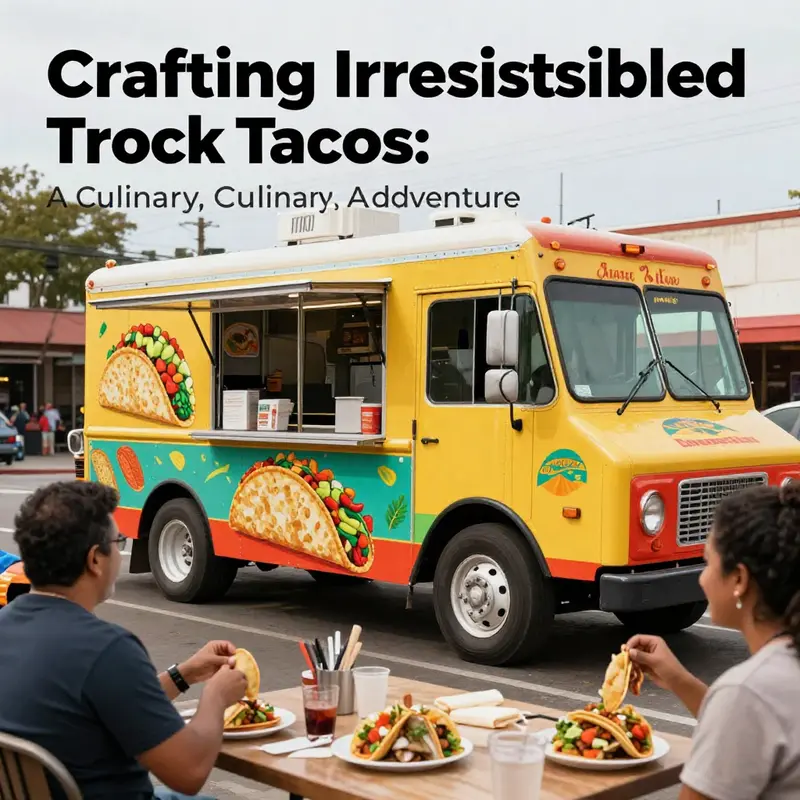
Tacos are not just food; they are a cultural phenomenon that brings people together, igniting culinary passion in every bite. Imagine the sizzle of grilled carne asada, the freshness of pico de gallo, and the warmth of a perfectly heated tortilla, all coming together to create a tantalizing experience right from a food truck. Whether you’re a cuisine lover, a local office worker craving a quick lunch, an event planner seeking catering ideas, or anyone who simply loves tacos, this guide will immerse you in the delicious world of food truck tacos. Each chapter unveils essential ingredients and preparation techniques, shares efficient cooking and assembly methods, and explores the art of serving tacos that not only satisfy cravings but also elevate casual gatherings and events into flavorful celebrations.
From Prep to Pass: Mastering Authentic Food Truck Tacos for the Street

Food trucks carry more than meals; they carry a pace, a rhythm, and a passport to neighborhoods hungry for color on a plate. Tacos are uniquely suited to this mobile theater because they combine speed, flexibility, and a sense of place. The goal isn’t to replicate a sit-down restaurant but to deliver bold, clean, fresh flavors in a straightforward build that can handle the pressures of a long shift. A well-made street taco hinges on three pillars: ingredients that stay vibrant from prep to plate, techniques that translate heat into taste, and a service flow that keeps customers moving without sacrificing quality. When thought of this way, tacos become both a product and a performance, a small canvas that can be adjusted to reflect different neighborhoods, seasons, and the day’s crowd.
Start with the foundation: tortillas and protein as the stage upon which everything else performs. The tortilla choice matters as much as the protein, because pliability and flavor determine the taco’s mouthfeel and how easily it travels. Soft corn tortillas, trimmed to a size slightly larger than a coaster, are preferred because they fold without cracking and bring a subtle sweetness that complements grilled meat. For customers seeking a heartier bite, a soft flour tortilla offers durability with a gentle chew. The protein options should be familiar yet capable of taking on bold seasonings: carne asada, al pastor, carnitas, and plant-based alternatives that mimic texture with fibers and umami. Each choice invites a particular aroma as it hits the grill, and each demands a precise approach to marination, heat, and finishing.
Marinades form the bridge between home kitchen flavor and street-level intensity. A simple blend of citrus juice, garlic, cumin, and chili powder can transform a lean cut into a tasting experience that lingers. For carne asada, thinly sliced flank or skirt steak soaks in lime juice, garlic, cumin, and a touch of orange for brightness. The marinade should rest long enough for the surface to drink in the spices but not so long that the acid breaks down the meat into mush. Overnight soaking is ideal for larger batches, but a good 30 to 60 minutes can work when time is tight and the quality of citrus and spices is high. Al pastor requires a similar spice profile with the addition of pineapple, which introduces sweetness and helps caramelization on the grill. Carnitas call for a different rhythm—pork that is first seared to render fat and then slow-cooked until meltingly tender, with a broth that suffuses the meat with herby notes and a hint of citrus.
Plant-based fillings deserve the same respect as traditional meats. Shredded jackfruit, mushrooms, or tofu can carry bold seasonings and crisp edges if treated with care. Jackfruit should be pressed, drained, and marinated to absorb savory notes, then seared with high heat to mimic the texture of pulled pork. Mushrooms, especially cremini or portobello, respond to marinade with a meaty bite when seared and finished with a glaze that binds flavors to their surface. Tofu can be pressed, marinated, and pan-fried for a similar effect. The marinade concepts—cumin, chili powder, garlic, citrus—work across proteins, giving you flexibility in sourcing without sacrificing the signature street-level aroma that defines these tacos.
Cooking technique is where the flavor truly crystallizes. A hot grill or griddle is essential; the moment the meat lands on the surface, a crust forms that locks in juices while introducing that prized char. For carne asada, high heat caramelizes the edges and sears the spices into the surface, producing a bite that snaps and then softens in the middle. Al pastor benefits from a slightly cooler, more controlled sear to preserve pineapple’s brightness while still creating a smoky edge. Carnitas rely on the first sear to crisp the outer layer before the long, slow simmer that renders the fat and tenderizes the meat. The finish is quick—slice against the grain and keep the portions uniform so every taco gets the same quantity of protein. A disciplined timing window is critical; overcooked meat dries quickly on the open flame, while underdone meat fails to release the aromatics that the spices promised.
Warm tortillas are the unsung hero of the taco experience. A comal or seasoned griddle is the most reliable tool because it distributes heat evenly and preserves the tortilla’s elasticity. The goal is to warm them just enough to make them pliable, about 15 to 20 seconds per side, and then stack them in a clean cloth to retain warmth. If tortillas stiffen during service, a quick rewarm over the hot surface can reintroduce softness without drying them out. This step is deceptively simple but vitally important; a stiff tortilla cannot cradle the filling without cracking and leaking, and a delicate crack can ruin the first bite. In a busy truck, this is where time is saved or wasted—an efficient routine here pays dividends throughout the service, especially when orders pile up and the pace accelerates.
With tortillas ready, the assembly starts in a steady rhythm that anyone operating a truck can master. The order matters: place a measure of protein along the centerline, then add a modest spoonful of salsa or pico de gallo to wake the flavors without dripping down the sides. A shallow bed of crisp lettuce supports the structure, followed by small dice of avocado or a dollop of guacamole to add creaminess and balance. Then comes a bright pop of color and freshness from diced onions and chopped cilantro, plus a few slices of pickled red onion for acidity that cuts through the richness. A sprinkle of queso fresco introduces a salty, tangy crumb, and a lime wedge at the side invites the customer to finish with a final squeeze that brightens all the components. The technique is to keep the toppings distributed evenly so each bite contains the same pattern of textures and flavors, a hallmark of consistent street service.
Salsa selection is also central to the taco’s identity. Pico de gallo brings a clean, crisp brightness with tomatoes, onions, cilantro, and lime, a texture that resists sogginess when used in modest amounts. A smoky chipotle sauce adds depth and heat, a familiar favorite that can be layered in small streaks to enhance the meat’s natural flavors. A tangy green salsa, often based on tomatillos and green chiles, provides a sharp, refreshing note that brightens the finish. The key is to offer choices without complicating prep. A two-salsa strategy—a mild pico and a bolder smoky option—lets customers tailor heat and acidity to their preference. The sauces should be served in small, sturdy containers that prevent leaks, a small but meaningful detail for service speed and sanitation on a moving kitchen. An effective truck setup keeps the salsas near the front of the work area, within reach of the assembler, so cooks do not waste precious seconds hunting for condiments.
Efficiency in production is about rhythm as much as method. A well-designed assembly line reduces motion, speeds service, and preserves quality. Food trucks often use a simple sequence: marinate, grill, warm tortillas, assemble, sauce, finish with toppings, and box. Variations in speed come from pre-prepared components; pre-chopped onions and cilantro can save time, but only if they stay fresh and free of browning. The challenge is balancing fresh preparation with the reality of a 12-hour shift, when ingredients can stew in their own time and lose brightness. The solution is to plan around peak hours, rehearse a predictable path through the kitchen, and maintain a clean work area that prevents cross-contamination. Consistency is built not through one perfect batch but through repeated repetition that trains the staff and reduces errors during rushes. For those weighing the equipment and layout, a concise guide on hardware options can be helpful: Top food truck models for entrepreneurs.
Beyond technique, the character of the taco lives in the ingredients’ quality and the sourcing mindset. Seek tortillas made with stone-ground corn or flour that delivers a slightly more resilient bite. Look for proteins that show color and aroma when grilled, with a crisp exterior that yields to tenderness. Fresh produce should be vibrant, with onions that snap when diced and cilantro that smells green and alive rather than dull. Local sourcing supports flavor and community, while seasonal choices help manage costs and ensure a constant supply of bright ingredients. The toppings are not merely garnish; they are the contrasts that make the whole mouthful feel complete. A wedge of lime, a spoonful of crema if used, and the right amount of salt all play supporting roles. Consistency in seasoning—whether in the marinade or the final touch—builds trust with the customer, turning a one-off purchase into a repeatable ritual.
Safety and service conditions on a mobile kitchen demand equal attention. Temperature control is crucial; meats should be kept at safe holding temperatures, and hot foods should be served above the danger zone to minimize bacterial growth. Cold ingredients must be chilled properly until the moment of use, and garnishes should be added fresh to prevent wilting. A clean, organized truck also reduces waste and enhances speed. Food safety is a living practice, not a one-time check; it requires routine monitoring, a clear labeling system, and a plan for rapid cleanup when a spill occurs. The customer experience on the street is about speed but not at the expense of hygiene. A well-structured service window, clear order tickets, and efficient packaging contribute to a smooth flow, especially on busy days when the queue tests a crew’s communication and teamwork. The result is not simply a taco but a reliable, safe, and satisfying meal that customers want again and again.
Finally, the menu design and branding of a taco truck matter as much as the recipe. A small, focused menu that highlights a few signature fillings will perform better than a sprawling list that confuses both staff and customers. The ability to customize is powerful, but it should be anchored by a few core items that feature the strongest flavor profiles and the most consistent textures. This focus helps manage inventory, reduces waste, and supports faster training for new staff. It also makes it easier to describe the product to customers queuing for a quick bite. The truck becomes a mobile stage where the cook’s rhythm, the smell of spices, and the sight of sizzling meat draw people in from the curb. When combined with clean, bright toppings and well-chosen salsas, the result is a mobile taco experience that feels both rooted in tradition and designed for modern street culture.
To many operators, the secret is not a single trick but a philosophy of simplicity married to boldness. Keep the flame steady, respect the tortillas, and respect the people who choose to eat with you. Build a system around speed without sacrificing flavor, and you will see a loyal line form as the sun dips and the evening breeze picks up. The goal is to craft tacos that taste both familiar and new, a balance that invites curiosity while delivering comfort. The ingredients become a map of memories—sunny lime, roasted garlic, bright cilantro, crisp onions—and the technique is a thread that ties them together across a dozen shifts. In this work, authenticity is not a static standard but a living practice that adapts to what customers want, what the supply chain can sustain, and what you can consistently deliver with a smile.
From a practical perspective, planning your mise en place with care makes the difference between a rushed, uneven plate and a clean, well-structured taco. Clarify your prep timetable so you are not scrambling for last-minute components. Pre-chopped toppings should be rotated with a first-in, first-out system to minimize waste and maintain brightness. Marinades can be scaled for batch cooking without losing potency, and you can keep meat portions uniform with a simple scooping method that matches your serving size. When you train staff, start with the basics: hot grill technique, tortilla warming, clean knife work, and consistent portioning. Repetition under heat builds a confident, fast-moving crew that can deliver quality under pressure. In this sense, the street taco becomes a mobile classroom where technique, speed, and hospitality fuse into a singular experience that travelers remember and tell friends about.
The broader arc of this craft sits at the intersection of tradition and mobility. Street food culture thrives on bold, direct flavors that welcome both locals and travelers alike. The taco, in its simplest form, is a conversation between texture, acidity, and smoke—each bite a little negotiation that leaves room for more. The real flavor is the chorus of elements that support the filling: a tortilla that embraces rather than battles, a salsa that cancels excess heat while brightening the palate, and a protein that carries the spices without becoming overwhelmed. Taken together, these choices form a menu and a method that can be replicated across trucks, markets, and temporary setups, allowing a small business to scale without sacrificing the personal touch that makes food bright, memorable, and comforting.
Readers seeking a deeper dive into the world of taco craft and recipes may explore related culinary resources to connect technique with taste on a broader scale. If you are weighing your setup, consider consulting a concise guide on equipment and model options to inform your investment in a food truck frame and kitchen layout. Top food truck models for entrepreneurs. The right choices here move your operation from a handful of sizzling pans to a cohesive kitchen on wheels that can sustain a busy night and a thoughtful, repeatable customer experience.
With the outline above, you have the core ingredients of a robust, mobile taco program: bold flavors, thoughtful sourcing, a disciplined workflow, and a customer-centric approach that makes the experience feel effortless. The street taco is not merely a menu item; it is a practiced performance that travels with you. It rewards simplicity that respects the palate and speed that respects the clock. By balancing authenticity with practical techniques, you can build a taco operation that satisfies the hunger of a moving city and invites people to return for just one more bite.
External resource: For a more detailed guide including recipes and specific instructions, visit the ultimate taco guide from a trusted culinary source: https://www.epicurious.com/recipes-food/views/ultimate-taco-guide
null

null
Serving Style on the Street: Elevating Flavor, Speed, and Hospitality in Food Truck Tacos

Every great food truck taco begins with a plan for how customers experience it, from first sight to final bite. The serving style is part of the flavor, shaping speed, perception, and repeat business. The aim is to fuse quick, efficient service with warm hospitality, so every customer feels seen, valued, and satisfied. In practice, this means designing the moment of delivery, from a clear menu to a well-timed handoff, and aligning every choice to that moment.\n\nRegional influences color the presentation and eating experience. Consider tacos estilo Tijuana, wrapped in parchment with a bright pico and a neat bundle. The wrap functions as a tactile cue and a barrier that keeps the taco intact on a windy street. It signals care and tradition while fitting a modern, mobile setting.\n\nBut style alone won’t sell tacos on a crowded corner. Speed, clarity, and reliability matter. The front-of-house is a compact stage where cooks, cashiers, and customers move in real time. Prepped mise en place, measured toppings, and a deliberate assembly sequence reduce decision friction. A well-lit menu, clear pricing, and concise customization keep the line moving while preserving flavor.\n\nThe heart of speed is a repeatable sequence: pre-seasoned proteins, warmed tortillas, and pre-portioned toppings. The specific techniques—thinly sliced carne, shredded chicken, balanced marinades—support fast, consistent assembly without sacrificing taste.\n\nTortillas deserve attention beyond warmth. They should be pliable but not soggy, warmed briefly, kept warm under a cloth or tortilla warmer to maintain moisture. A properly warmed tortilla becomes a stable vessel for fillings and flavors.\n\nHospitality is more than a smile. It includes training, responsiveness, and inclusive service. Staff greet customers, acknowledge dietary needs, and guide first-timers. A tipping-friendly culture is part of hospitality, requiring transparent pricing, reliable portions, and a calm demeanor even during rushes.\n\nExterior design and packaging reinforce the service narrative. A clean window, readable signage, daily specials, and parchment-wrapped presentation all signal quality and care. Even the packaging itself affects perception of safety and value.\n\nIn practice, the guiding principle is simple: the best tacos are the ones that deliver the moment—the warmth of the tortilla, the brightness of the salsa, and the clarity of the service—hands that know what to do and when to do it. The result is a memorable, repeatable experience that invites return visits.\n\nFor a concrete path forward, start with parchment-wrapped presentation for authenticity, streamline the assembly line, curate an easy-to-scan topping lineup, train staff for concise explanations and polite service, and design signage that communicates spice levels and specials clearly. Cultivate a tipping-friendly culture that respects servers and reinforces hospitality as a core value.\n\nIf you look to the industry for inspiration, consider compact configurations that balance visibility, accessibility, and workflow while keeping the menu legible and appealing. A strong serving style is not a sidebar but a pillar of the craft, turning a meal into a moment of connection amid the street bustle.
Final thoughts
Creating food truck tacos is more than just cooking; it’s about crafting a communal experience that delights the senses. From selecting the finest ingredients and perfecting preparation techniques to efficient assembly and engaging service, every step contributes to the taco’s appeal. As you embark on your own taco adventure, remember that the joy of tacos lies not only in the flavors but also in the connections they foster. So gather your friends, fire up the grill, and let the taco festivities begin!

