
For all the taco lovers, event planners, and local residents out there, the allure of a taco truck rolls in as an irresistible option for parties, corporate events, or even casual get-togethers. But what does it really cost to rent one? This guide dives deep into everything you need to know about taco truck rentals—from understanding the base costs to exploring the factors that influence pricing, to operational expenses that could come into play and the latest market insights. Whether you’re dreaming of the perfect office lunch or plotting a vibrant fiesta, by the end of this journey, you’ll be equipped with the knowledge you need to indulge in the flavorful world of taco trucks without a hitch!
Counting the Miles and the Money: A Real-World Guide to Renting a Taco Truck
The question of how much it costs to rent a taco truck often starts with a sticker price, but the real math hides in the miles, moments, and meals your truck will produce. Renting a taco truck is not a single number; it is a bundle of decisions about vehicle type, duration, location, and the level of service you want. The core idea is simple: the more fully equipped and the more days you operate, the higher the price. Yet there is a surprising range within that basic premise, and the differences matter if you’re testing an idea, launching a pop-up, or scaling a lunch-hour operation into a weekend festival favorite. To understand what you’ll actually pay, you must look beyond the daily rate and into the ecosystem that supports a mobile kitchen on wheels.
The most immediate variables are obvious: the vehicle type and the rental duration. The market tends to treat smaller, basic setups—think a compact trailer or a minimal cart—as the entry point. In practical terms, a smaller taco trailer may rent for roughly one hundred to two hundred and fifty dollars per day, depending on where you are and how bespoke the setup is. A larger, fully equipped food truck, capable of smooth, fast production in busy urban zones, could command three hundred to six hundred dollars per day or more, particularly when demand spikes around events or festivals. The geography matters just as much as the configuration. In major city cores or tourism corridors, the same unit and week-long demand can push daily rates higher than in smaller markets.
To translate these daily rates into a workable budget, consider how many days you’ll operate in a given month. If you plan a handful of weekend events and a midweek market, the math scales quickly. A three-day weekend event with a mid-size trailer at $180 per day would be around $540, plus related costs. If you’re renting a larger, fully equipped truck at $450 per day for four events in a month, your base rental comes to about $1,800 before additional charges. Of course, many operators spread costs by negotiating longer rental periods or multi-event packages. Some leasing companies prefer longer commitments because it gives them predictability, and they often offset that with slightly lower daily rates or bundled services.
There is a helpful analog to frame the broader costs: insurance and permits. Most rental agreements will require insurance coverage, commonly adding a daily range—roughly fifty to two hundred dollars per day—depending on the level of liability and the policy specifics. Permits and licenses are not optional in most jurisdictions; health department permits, business registrations, and, where applicable, parking or vending permits can add up to a few hundred dollars upfront and then require periodic renewals. The upfront permit cost you’ll see quoted can range from around one hundred to about one thousand dollars, depending on the city and the scope of your operation. Remember: permits aren’t a one-and-done expense. If you intend to quarter the truck at multiple locations or relocate frequently, you’ll likely incur additional fees or renewals along the way.
Then there are the ongoing operating costs that quietly stack up behind the rental price. Fuel is the obvious line item, but it’s not the only one. A properly fueled and maintained mobile kitchen will require regular oil changes, tire checks, and scheduled servicing, all of which fall outside the rental rate unless the agreement explicitly includes maintenance. Utilities—water and power if you’re at a park, fairground, or private venue—may be bundled into some packages, but more often they are billed separately or billed as a separate line item on top of the base rental. If your model relies on generators or on-site power, you’ll want to factor in fuel and potential generator maintenance as part of your cost structure.
Packaging and supplies are another recurring line item, even when you’re only renting. You’ll need ingredients, sauces, garnishes, and staple supplies such as cups, napkins, utensils, and containers. If the rental package includes a kitchen with chef-prescribed equipment, the cost may be bundled, but if you bring in your own menus or branding, you’ll want to allocate funds for branding materials and packaging that align with your concept. The cost of clean-up and post-event waste disposal, though sometimes overlooked, can also add up, particularly when you’re handling large crowds.
One of the practical questions for anyone testing the waters is whether to rent a small trailer or a larger truck. The economics can tilt toward the smaller, cheaper option when you’re early in the testing phase, and you’re serving at a handful of sites with predictable, repeatable demand. The smaller model often requires less fuel, less maintenance, and lower insurance coverage, which can make the monthly cash flow kinder to a lean startup. A larger, fully equipped unit, while more expensive, can deliver higher throughput, a more polished kitchen image for branding, and the capacity to handle busy events with less queuing. This choice is not just about price; it’s about the narrative you’re building around your food and how aggressively you want to scale.
A practical way to gauge the true cost of renting is to build a month-long scenario rather than focusing on a single event. Suppose you rent a small trailer for 12 days across several weekends at $180 per day. The base rental would be $2,160. Add insurance at $75 per day for those 12 days, and you’re at $900 more. If permits total $400 upfront and a handful of fuel and routine maintenance costs rise to another $300, you’re already approaching $3,800 before considering ingredients, packaging, and labor. If you operate with staff or contractors for part of your schedule, wages become another variable—say two shifts per weekend at $18 per hour for a 6-hour day across 12 days equals around $2,592. It’s easy to see how quickly the monthly total climbs, especially if you throw in some heavier event days or travel costs between venues.
This is precisely why many operators treat rental arrangements as a turnkey operating decision rather than a simple line item. Some rental packages can bundle utilities, routine maintenance, and even staff, which simplifies cash flow and reduces the number of separate contracts you must manage. In favor of simplicity, a bundled package might present a higher daily rate but deliver more predictable costs and less risk in the budgeting process. To a new entrant, the trade-off can be worth it: fewer surprise bills, more consistent service levels, and the peace of mind that you can focus on cooking and customer experience instead of logistics.
The psychology of pricing also plays a role. A fully equipped truck in a high-demand urban zone is going to command a premium, but that premium is often tied to the volume you can produce and the speed with which you can serve. If you can maintain a steady flow of customers with a compact menu, you may maximize revenue without incurring the highest rental tier. Conversely, if you’re selling a broader menu under a branded concept and anticipate long lines, a larger, more efficient kitchen can improve throughput and reduce stall time, offsetting the higher daily rate over many events.
In terms of where to look for rental options, the landscape varies by region, but there are common pathways. Local catering rental companies frequently list mobile food setups for rent or lease, and many offer flexible terms that reflect the flexibility of event calendars. Some operators also negotiate seasonal packages, which provide a reduced rate for a fixed block of dates, with the understanding that you’ll stick to the agreed schedule or pay an agreed cancellation policy. Theoretically, you could also consider a longer-term lease that locks in a lower daily rate while giving you priority access to a fleet during peak seasons, but those terms require careful negotiation and a clear exit strategy if your plans shift.
From a branding perspective, the cost of renting is just one dimension of the venture. A truck’s appearance, the ergonomics of its kitchen layout, and the reliability of its equipment influence your efficiency and the customer’s perception. A clean, well-organized space translates to faster service, better portioning, and, ultimately, higher per-customer margins. In contrast, a cramped or poorly configured kitchen can slow your team, increase waste, and erode profitability even when the sticker price seems acceptable. It’s worth asking potential rental partners about kitchen layout, ventilation, fire suppression arrangements, and the availability of standard, food-safety-compliant equipment. These factors can tip the balance between a successful pop-up and a disappointing experience that fails to attract repeat business.
For those who want a sense of the configurations commonly employed in mobile food operations, our guide on top food truck models for entrepreneurs offers a concise overview of typical layouts, power sources, and workflow optimizations. It’s a useful resource for evaluating whether a given rental package aligns with your concept and your production needs. The link to that resource is embedded here for quick reference: top-food-truck-models-for-entrepreneurs. Considering the questions around storage, workflow, and safety, paying attention to your kitchen’s ergonomics can save money over the life of a rental by reducing waste and increasing throughput.
Another practical consideration is the potential for sourcing or leasing platforms to influence price points. Some buyers explore global marketplaces for modular, mobile kitchen equipment, which can yield bulk discounts or flexible customization at lower unit costs. For instance, there are listings that indicate entry-level catering trailers can be purchased for surprisingly modest sums when purchased in bulk, which provides a useful context for what rental packages might cost relative to ownership. While this information is about purchase rather than rental, it helps frame the spectrum of options and helps you decide whether renting, leasing, or buying aligns with your risk tolerance and growth trajectory. When you’re budgeting, it’s useful to compare the total cost of ownership against the total cost of rent over the same horizon, including maintenance and depreciation if you might own later on.
As you refine your plan, keep in mind the practical realities of operating a taco-focused mobile business. In many jurisdictions, you’ll need access to a commissary or a certified prep space for food safety, especially if you’re operating in multiple sites or longer shifts. Parking regulations at venues, tipping policies, and waste disposal rules can all influence your daily logistics and, by extension, the costs embedded in your rental agreement. While some vendors help by coordinating with venues or offering turnkey solutions, others require you to handle those details yourself. The key is to be explicit about what is included in the rental agreement and what falls outside it. The more you clarify up front, the fewer surprises you’ll encounter when you’re chasing a bustling service window on a busy day.
The cost landscape, then, is a tapestry of variables. If you’re early in the journey, you may choose to start with a smaller, lower-risk setup and a modest daily rate to test your concept and iron out branding, pricing, and menu execution. If you’re further along and ready to scale, it may be worth investing in a larger setup that can sustain higher throughput and handle peak demand. In either case, the objective remains simple: maximize the number of successful sales per hour while keeping all other costs under control. The best way to approach that objective is through clear budgeting, thoughtful negotiation with rental providers, and a deep understanding of the operational constraints that shape every event you attend.
For those who want a clearer sense of where rental dollars land, it’s helpful to summarize the core cost drivers in a practical checklist: vehicle type and size, rental duration, location and demand, insurance, permits, fuel and maintenance, staffing if applicable, ingredients and packaging, waste disposal, and any bundled services. Each item affects your bottom line differently, and the interplay among them determines whether you stay solvent, break even, or find a profitable rhythm for your mobile taco venture. In the end, the numbers you negotiate should reflect your business model, your forecasted volume, and your readiness to deliver a consistent, quality guest experience across venues. The path from idea to execution is paved with decisions about where to play, how long to stay, and how you allocate your resources to deliver flavor, speed, and reliability.
External resource for further exploration: https://www.alibaba.com/product-detail/cheap-catering-trailer-taco-food-cart-snack_1600827195504.html
What Drives the Price Tag on a Taco Truck Rental: A Practical Guide to Budgeting for Your Event
Renting a taco truck for an event can feel like stepping into a marketplace of numbers, where the cost is a function of the vehicle, the service, and the scene you want to create. The goal is not to throw out a single guess but to understand the levers that pull the price in different directions. When you tune into the factors that influence rental costs, you gain the power to optimize for flavor, timing, and budget. This chapter unpacks those levers in a way that helps you forecast expenses with clarity, so you can plan a delicious, seamless experience without surprises at checkout.
First, consider the rental price per guest as a primary driver. In many markets, organizers see a base range that translates roughly to a per-person charge. That structure makes sense because it aligns the cost with the scale of service. A truck that is capable of handling more guests or offering a broader menu may justify a higher per-person rate, while a lean setup focused on a limited menu will often fall toward the lower end of the spectrum. The balance between price per guest and guest count becomes a practical screening tool: if you expect a large crowd with demanding service hours, the total rent may look more favorable on a per-guest basis when a longer event spreads the cost across more mouths. In the end, the math can be straightforward, but the assumptions behind it matter. If the vendor assumes a short service window with high throughput, the per-guest price may rise to accommodate peak efficiency and reduce bottlenecks. If, on the other hand, the event is spaced with longer hours and steady flow, the rate may normalize as the vendor can manage staffing and equipment utilization more predictably.
To give you a sense of the range without drifting into a catalog of numbers, think of the rental as an all-inclusive package in many cases. A single price can cover the truck, the staff, and basic utilities for a defined period, but with a caveat: if your guest list expands or your service duration lengthens, expect the bill to flex accordingly. The goal is to understand the structure rather than chase an isolated number. A well-managed quote will break down costs and show how each component scales with your needs. For context on how variations in truck configurations translate into price differences, it helps to explore the spectrum of truck setups and capabilities—the kind of overview that can be found in resources that catalog top models for culinary ventures. See the overview at Top food truck models for entrepreneurs for a sense of how different layouts affect throughput, staffing needs, and energy demands, which in turn flow into price.
Beyond the guest count and the sheer size of the kitchen, the type and customization level of the food truck is a major determinant of cost. A fully customized mobile kitchen with high-end cooking equipment, a branded exterior, and a tailored layout will command a premium. Customization can mean a more efficient workflow inside the truck, better heat management, and a service model that supports a larger team or a more elaborate menu. On the flip side, a basic, standard model—one that covers the essentials without bespoke branding or specialty equipment—tends to be more economical. The math here isn’t merely about the sticker price of the truck itself, but about the cumulative effect of upgrades on maintenance, servicing, and reliability over the rental period. When you opt for branding and bespoke cabinetry, you’re not only paying for appearance; you’re paying for streamlined operations and reduced on-site friction, which can translate into faster service and happier guests, but at a higher upfront and ongoing cost.
The location and the type of event you’re hosting exert another powerful influence on pricing. In major metropolitan areas where demand is high and operating costs are steeper, rental quotes tend to carry a premium. The same truck might be priced differently if it’s moved from a downtown festival to a suburban wedding, simply due to venue logistics, access, and the likelihood of longer service windows. The event type—whether it’s a wedding, a corporate retreat, a school fundraiser, or a large outdoor festival—also shapes the price tag through logistics, staffing expectations, and permit complexity. Larger events may require more space, longer service hours, and additional equipment, which all contribute to higher rental costs. The vendor’s ability to navigate the event’s schedule, coordinate with other vendors, and manage delays can affect the price, because complex coordination introduces risk that is priced into the contract.
Compliance with health codes and permitting requirements is a dimension that cannot be ignored, even though it often remains invisible in the initial quote. A compliant setup requires permits for food handling, waste disposal, water supply, fire safety, and sometimes tent or outdoor structure permissions. In more regulated jurisdictions, the process can be time-consuming and may necessitate inspections or third-party approvals. The consequences of noncompliance—such as fines or last-minute delays—are costly for vendors, so the price naturally reflects the added burden of ensuring everything is wired, vented, and documented properly. A more complex or non-standard setup can trigger additional cost here, because it may demand special equipment or alternate approvals. If you’re coordinating a multi-venue itinerary or a venue with strict safety protocols, expect a bump in your rental quote to cover the extra administrative and logistical steps.
The duration of the rental is a straightforward yet impactful factor. Short-term rentals, by their nature, often come with higher hourly rates to compensate for rapid setup, turnover, and cleanup. Longer engagements might unlock more favorable daily or multi-day rates because the vendor can amortize labor and equipment over a longer period. The calculus isn’t only about the number of hours; it’s also about the geometry of service. A four-hour window with a tight service pace differs from a six-hour spread that allows for slower, more measured service, both in terms of labor hours and fuel consumption. If your event runs for a full day or a weekend, the vendor might negotiate a bundled rate that minimizes repeated mobilization and teardown—but you’ll typically see a higher total price than one short session, reflecting the extended use of staff, power, and equipment.
Included services can dramatically alter the bottom line, sometimes in ways that aren’t immediately obvious. A rental that includes staff, ingredients for a fixed menu, beverages, or even a dedicated beverage unit can be a superior value if you’re looking to reduce the number of vendors and minimize on-site logistics. Packages that bundle staffing, setup, teardown, and waste management can offer peace of mind, especially for larger events. Yet there’s a trade-off: inclusions may carry higher base costs, even if they save you money on separate liabilities and coordination. The most important step is to ask for a line-by-line breakdown of what is included and what would incur extra charges. A transparent quote helps you compare apples to apples when you’re evaluating multiple vendors.
Hidden costs are the quiet variables that can surprise you if you don’t anticipate them. Insurance coverage, travel fees for vendors coming from outside the local area, generator rentals, power hookups, extra water supply, and trash disposal can all creep into the final tally. Some contracts also include stipulations about overtime rates if service runs longer than planned, or about drive-time fees for repositioning between events. It’s easy to overlook small line items, but they accumulate. A prudent approach is to map out every phase of the event—from arrival and set-up to service flow and breakdown—and insist that the contract enumerates all potential add-ons with fixed prices or clearly defined thresholds.
Another dimension worth considering is the payment structure and cancellation policy. Vendors often require a deposit to lock in the date, with the balance due on arrival or after the event. The cancellation terms can have a meaningful impact if plans change. A robust contract will spell out refund schedules, rain contingencies, and how partial rain checks or rescheduling are handled, which matters when you’re budgeting with a finite contingency. The price tag is not a single number; it’s a matrix of anticipations about service quality, reliability, and risk management. When you’re comparing quotes, look not only at the headline price but also at the reliability of the vendor, the clarity of the terms, and the track record for handling common contingencies in your area. The best value emerges when price aligns with predictability, consistency, and a menu that mirrors your guests’ expectations.
As you navigate these drivers, you’ll begin to see how the rental price emerges as a balance between capacity and control. A larger crew, a more capable kitchen, and a more polished presentation can justify a higher rate, particularly if they translate into a smoother guest experience, faster service, and fewer hiccups during peak service moments. Conversely, a streamlined setup with fewer moving parts can deliver dependable performance at a lower cost, which is attractive if your event is intimate or if you want to allocate more of your budget to a broader range of vendors or to guest experience touches beyond the food line. This balancing act between ambition and restraint is where budgeting becomes an act of design rather than arithmetic alone.
If you’re unsure where to start, framing the conversation around a few core questions can help you zero in on the right configuration and price. What’s the expected guest count, and what service pace do you want? Is branding a priority, or would you rather emphasize pure culinary throughput? Will the event require beverages or specialty units, and are those items included or add-ons? How long will you need the truck on-site, and is there a need for additional time to accommodate setup and teardown? What are the regulatory requirements in your venue, and how will they shape the vendor’s workflow? Answering these questions with a vendor can yield a clearer, itemized quote that reveals where value is created and where you may want to adjust scope.
To connect this process to practical planning, imagine you’re coordinating a mid-size outdoor celebration with around 300 guests over a four-hour window. You’re weighing a standard, non-branded unit with basic equipment against a more complete setup that includes a dedicated staff, a beverage station, and a branded exterior. The standard unit might land toward the lower end of the per-guest spectrum, perhaps paired with a simple menu and self-service beverage options, while the enhanced setup could push the overall price higher but deliver a more turnkey experience with predictable flow, fewer delays, and a more polished presentation. The decision hinges on how much value you place on speed, branding, guest experience, and the peace of mind that comes with a single point of contact for logistics. In cases like these, proactive budgeting and a well-structured contract can prevent overage surprises and help you align the event’s culinary storytelling with the financial plan.
In summary, the cost to rent a taco truck is not a single figure but a constellation of interrelated components. The per-guest charge, the level of customization, the event’s location and type, compliance costs, rental duration, and included services all converge to determine the final price. Hidden costs lurk behind every corner, so clarity in the quote and diligence in planning are essential. The most effective budgeting approach treats rental costs as a flexible budget line—one that can be tuned by adjusting the scope, timing, and service model. By approaching the decision with this mindset, you position yourself to deliver a memorable, delicious experience that aligns with your financial plan and your guests’ expectations.
For further context on how different configurations influence price and value, you can explore a broader overview of truck models and capabilities in the resource linked earlier. And when you’re ready to translate these considerations into concrete numbers, a practical calculator–style guide exists to help you estimate rental costs for your next event. External resource: https://www.eventbloom.com/blog/how-to-calculate-food-truck-rental-costs-for-your-next-event
Behind the Wheel: The Real Operating Costs Behind Renting a Taco Truck
Renting a taco truck often comes with the expectation of a straightforward monthly fee. In reality, the line items beneath that rent are what determine whether the venture will be sustainable or a perpetual drain on capital. For operators eyeing temporary campaigns, weekend festivals, or seasonal pop-ups, the cost picture is not just a sum of numbers but a map of decisions. The rental itself is just the opening move in a longer chess game where fuel, maintenance, insurance, permits, labor, and a spectrum of variable expenses converge to shape profitability. When the truck is parked and the sizzle from the grill rises into the air, the true price of doing business becomes apparent through the everyday expense rhythm that follows each event, each route, and each service window opened by the crew.
The first and most visible line item after the base rental is fuel. A mobile kitchen moves around for events, errands, and prep, and every mile eats into the bottom line. The variability of fuel costs depends on several factors: how far you travel to each site, the density of your service area, and how often the truck returns to base for restocking or maintenance. An operator can sketch a rough model by estimating weekly square miles covered and then translating that into gallons or liters at current prices. But there are subtler dynamics worth noting: a tight service radius in a busy urban core can reduce fuel spend even if events are plentiful, while a sprawling regional circuit with long legs between gigs climbs the fuel bill quickly. In practice, fuel planning is more effective when tied to route optimization. A smart schedule that minimizes backtracking and leverages nearby events can shave a meaningful percentage from monthly fuel consumption, especially during peak seasons when demand is high but efficient routing can still be found.
Yet fuel is only one piece of the ongoing maintenance puzzle. Maintenance and repair costs cover both the vehicle and the kitchen apparatus mounted along or inside it. The truck, like any specialized vehicle, demands regular attention: routine oil changes, tire wear and rotation, brake checks, and periodic engine servicing, all of which have to be budgeted on a predictable cadence to avoid surprise downtime. The kitchen equipment—refrigeration units, fryers, griddles, warmers, and electrical systems—must endure the same discipline. Mobile kitchens operate in harsher environments than stationary ones; vibrations, road dust, and exposure to variable electrical loads can hasten wear. Preventive maintenance becomes a cost-saving discipline because it reduces the probability of a breakdown that cancels a booking or leads to expensive urgent repairs. A practical approach is to set aside a fixed maintenance fund each month, calibrated to the truck’s age, mileage, and the complexity of the kitchen setup.
Insurance is another essential pillar of cost that often sneaks up on new renters. Mobile food service carries multiple layers: vehicle coverage that protects against accident or theft, liability insurance that shields against customer claims, and, in some cases, workers’ compensation if staff are employed. The premiums reflect the risk profile of the operation, which includes factors such as the geographic market, the number of staff, and the nature of events served. Regions with stringent health and safety oversight or higher traffic density can push premiums upward. Insurance isn’t a one-time expense; it renews periodically, and changes in staffing or routes can necessitate mid-cycle adjustments. A prudent operator treats insurance as a living cost, regularly reassessing coverage and protection as the business model evolves.
Licensing and permitting form the regulatory backbone for any mobile kitchen. Local health departments, fire marshals, and city authorities require a suite of permits and licenses that enable lawful operation. The exact list and price vary widely from one jurisdiction to another. A permit for a health inspection, a vendor license for each event, and street or curb permits where you park can accumulate quickly, especially if you operate across multiple municipalities. Some areas require periodic renewals or special event registrations, which can create a recurring administrative burden that feels invisible until a permit lapses or a desk fee is assessed at a busy festival. The regulatory terrain matters not only in dollars but in scheduling; some permits align with event calendars, so timing becomes a strategic variable.
Staff wages, when you hire for the truck, account for a substantial portion of ongoing costs. If the operator plans to cook solo, wages may be minimal, but most practical models rely on at least one additional hand for food preparation, service, and cash handling. On busy days, staffing costs scale with customer volume, and overtime rules can push expenses higher during peak event windows. Staff wages also intertwine with scheduling flexibility and reliability. A roster that covers early setups and late pack-downs without overstaffing ensures labor costs stay aligned with demand. In addition to wages, consider payroll taxes, workers’ compensation, and potential benefits, all of which alter the true daily cost of operation. The staffing decision—whether to operate with one or two people on the truck, or to hire additional seasonals for festivals—directly reshapes your breakeven point.
Ingredients and supplies are the heartbeat of any food operation, and renting a truck doesn’t shelter you from the cost of goods. The menu you run and its pricing will determine how much you spend on raw materials, packaging, and disposables. Seasonal price swings for meat, produce, and dairy can compress margins if fixed pricing isn’t flexible enough. Inventory management becomes crucial when revenue is event-driven and demand can swing week to week. Wastage—not just from spoilage but from over-prepping for an uncertain number of covers—erodes profitability. The best practice is to align procurement with a robust forecast, derived from historical event data, current bookings, and your expected service window. A lean inventory that minimizes waste while ensuring quality is not merely cost control; it preserves consistency in taste and portion sizes, reinforcing the brand promise of your mobile kitchen.
Marketing and promotion costs are easy to overlook at the outset but can decide whether a truck remains top of mind in a crowded market. Even with a strong reputation, most operators invest in ongoing marketing to sustain a steady flow of events. This often includes graphic design for branding on the vehicle, social media content creation, flyer or banner production for events, and sometimes paid promotions or local sponsorships. In a business built around word-of-mouth and repeat bookings, a modest marketing budget can deliver outsized returns by raising awareness among event organizers and the local audience. The most successful renters weave marketing into the daily workflow rather than treating it as an occasional add-on: a quick, authentic social post after each event, a simple but consistent menu update, and a reel or video that features the prep and service moments that capture the appetite of onlookers.
Parking and vendor space fees introduce another layer of cost complexity that often escapes first-timers. Depending on the locale, you may pay for parking in front of a market, a slot at a fair, or a daily vendor fee at a popular event venue. In some places, the price of admission to a street-food festival includes a premium for prime spots; in others, you bid for space in a competitive lineup. Even when spaces are granted, some events require security deposits or insurance add-ons that can be surprisingly meaningful in aggregate. The cost of securing a spot should be weighed against expected revenue per event. If a coveted weekend event offers high foot traffic and a consistent customer base, the space fee might be a wise investment; if not, it could dampen margins and require a reconfiguration of the event strategy.
Beyond these core costs, there are smaller, often overlooked items that accumulate over time. Utilities for the truck—whether included in the rental package or billed separately—can add up. Some operators rely on a built-in generator, while others pull power from event stalls or on-site grids. Electrical downtime or hiccups can disrupt cooking and service, so contingency planning through a small backup kit or extended warranties on major appliances becomes prudent. Water supply and disposal are equally practical concerns; some venues provide water hookups and waste management services, while others require you to coordinate and pay separately. Cleaning supplies, gloves, and safety equipment add to the recurring expense sheet, even though they may seem negligible on a per-event basis. These administrative and operational details, often glossed over in headlines about “renting a taco truck,” collectively define whether a project is financially viable.
The economics of rental choices can swing decisively on a single parameter: what the rental covers. Some rental arrangements bundle kitchen equipment, utilities, and even basic staff into a single monthly price. Others separate these components, charging a base rental plus a la carte add-ons or per-event fees. When a package includes utilities and maintenance, the monthly outlay becomes predictable and easier to model. When it does not, you must forecast every line item with a level of discipline usually reserved for project accounting. The difference between a turnkey package and a modular set of services might be a few hundred dollars a month but can translate into hundreds of dollars saved or spent per event depending on how often you operate and where you set up shop. In other words, the cost of renting a taco truck is not a fixed ritual but a dynamic equation that changes with location, season, and strategy.
To connect these ideas to workable planning, consider a practical approach: build a rolling monthly budget anchored in realistic activity. Start with the base rental and then layer estimated fuel, maintenance reserve, insurance premiums, licensing renewals, staffing, ingredients, marketing, parking, and a miscellaneous contingency fund. The contingency line is not frivolous; it covers unexpected repairs, sudden permit changes, seasonal spikes in supply costs, or a surge in demand that requires flexibility in staffing and inventory. When you run the numbers against expected revenue from events, you can determine a target monthly volume that supports profitability. A simple rule of thumb is to align the total monthly cost with the forecasted number of events and the average revenue per event. If you know you can book two dozen events a month and each event yields a healthy take, you may afford a higher rent package or more comprehensive staffing while preserving margin. Conversely, if your events are sparse or low-margin, a leaner approach may be necessary, even if it means limiting the number of venues you can cover.
All of this is not merely arithmetic; it shapes the type of operation you build. A higher level of bundled services—where maintenance, utilities, insurance, and even some staffing are included—reduces operational headaches and makes budgeting more straightforward. It also creates a predictable baseline that can attract event organizers who prefer reliability and clear pricing. On the other hand, an a la carte structure can be more economical when your schedule is light or concentrated in a few locations with favorable terms. The choice between these models should reflect not only the cash flow but also the strategic rhythm you want for your brand: steady, repeatable service versus flexible, specialty-driven itineraries.
If you want to explore how different truck configurations and models influence the cost and the service you can offer, there is value in looking at the broader landscape of truck models and their capabilities. A practical pathway is to review resources that compare features, capacity, and reliability across popular vehicle setups. This kind of comparison helps you align your operational needs with the right rental package and can guide you toward a model that minimizes unnecessary spend while maximizing service quality. For a concise, model-focused overview, see the guide on top-performing truck configurations and how they translate into efficiency and cost control for culinary operations. Top Food Truck Models for Entrepreneurs.
The broader takeaway is that the decision to rent a taco truck should be driven by a clear picture of ongoing costs, not just the sticker price of the rental. A well-structured budget that anticipates fuel, maintenance, insurance, permits, wages, ingredients, marketing, and site fees yields a more accurate forecast of profitability. This is especially true when your plan involves diverse event types, multiple locations, or seasonal campaigns. The more you anticipate and quantify, the less you will be surprised by the true cost of turning a cart into a traveling kitchen. And the more disciplined you are about managing these variables, the likelier you are to transform rented equipment into a profitable, scalable venture rather than a short-lived experiment.
For readers who want to anchor these ideas in formal guidance, the Small Business Administration offers a comprehensive overview of planning and compliance for a mobile food truck operation. This resource provides a structured framework for estimating costs, obtaining permits, considering financing, and building a sustainable business plan. External reference: https://www.sba.gov/business-guide/plan-your-business/starting-a-mobile-food-truck-business
From Sticker Price to Street-Ready Budget: Navigating the Real Cost of Renting a Taco Truck
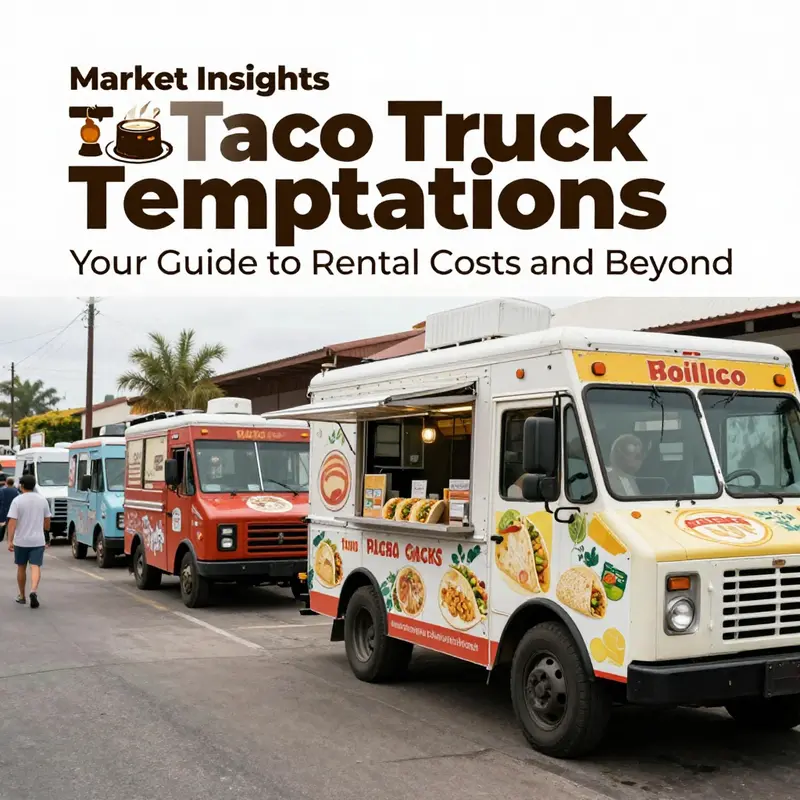
When you start planning a mobile catering venture, the headline number that grabs attention is often the rental price. Yet the true budget for renting a taco truck stretches far beyond a single monthly sum. It unfolds across a landscape of location-specific charges, equipment standards, vehicle condition, and the level of service bundled into the rental or lease. The core idea is simple but powerful: you are not merely paying to park a truck you can drive. you are paying for a complete operating envelope. A ready-to-cook kitchen on wheels, compliant with local health and safety rules, an on-site power and water setup, and the ability to serve customers with consistency and speed. In practical terms, the cost of renting a taco truck is a mosaic of line items that must be understood in concert rather than in isolation. The available though scattered data points suggest that a fully equipped, mobile food business rental can sit somewhere between a modest monthly outlay and a more substantial ongoing commitment, depending on where you operate and how much of the infrastructure is included. A typical range, when the truck arrives with kitchen gear, utilities, and basic maintenance, is roughly two to five thousand dollars per month. But these figures are not uniform. They reflect a spectrum of realities: some markets demand higher rents due to demand, urban density, and the premium for a high-traffic route; others may offer lower base rents where a vendor is just getting started or where competition keeps prices in check. It is also common for the rental agreement to fold utilities and some level of maintenance into the monthly rate. The result can be a deceptively simple figure on paper—the monthly rent—while the true monthly outlay grows as you add fuel, food costs, labor, and regulatory fees. Because the knowledge base does not publish standard public-rate cards for taco-truck rentals, the best practice is to treat that rent as a starting point and build the rest from there. The broader point is not to chase the cheapest option, but to assemble a package that aligns with your operations, appetite for risk, and growth plan. For future operators, the critical step is to request itemized quotes that spell out what is included in the base rent and what will be billed separately. A rental that includes staffing, for instance, might carry a higher monthly price but could simplify payroll complexity and reduce your administrative load. Conversely, a lower base rent that requires you to supply all staff and most equipment shifts the cost balance toward labor planning and scheduling complexity.
A central distinction in this space is that renting a truck is not inherently the same as leasing or purchasing a vehicle. A rental or lease can be a smart way to test the market, begin a seasonal operation, or bridge a gap before a larger capital purchase. But the sticker price you see for the monthly lease does not automatically capture the total cost of doing business. Permits, licenses, and inspections vary by city and can be substantial, and they are almost always separate from the rental agreement. Health department requirements, fire safety codes, and parking regulations all shape what you can legally serve and where. If you intend to operate in multiple jurisdictions or tour a variety of neighborhoods, you will likely face a patchwork of permits and fees. Insurance, too, is not a trivial cost. It protects your business and your customers, but the premium scales with vehicle value, coverage limits, and the scope of operation. You should budget for general liability, property, and possibly workers’ compensation if you hire staff. In many markets, insurance can add a meaningful line item to your monthly and per-event costs, sometimes even influencing the viability of certain contracts.
The condition and configuration of the taco truck itself shape the price tag in a direct way. A truck that has been meticulously maintained, with a full kitchen, adequate refrigeration, functional fryers, a reliable water system, a compliant grease management setup, and efficient power and electrical systems, tends to command a higher monthly rental. That premium buys you fewer breakdowns, smoother operations, and less downtime between events. On the other hand, a truck that has seen heavy use without comprehensive refurbishment can quickly become a money pit, increasing both your recurring maintenance outlay and the risk of cancellations due to mechanical issues. In a market where competition is stiff and customer expectations are rising, the operational reliability of your vehicle rarely takes a back seat to price. For a prospective renter, the implication is clear: ask not only for the monthly rate but for a thorough equipment inventory, a maintenance history, and a recent condition report. If possible, request a walkthrough and a test run to gauge how the truck handles real-world demands—queue lengths, peak service times, and the practical realities of loading, unloading, and cleaning after service.
Costs do not vanish after the first contract is signed. Ongoing expenses must be woven into your monthly budget. Fuel is obvious, but sometimes underestimated, especially if you are regularly traveling to events across a city or region. Fuel economy for a heavy mobile kitchen can be modest, and fuel surcharges or price volatility can nip at your margins if your contract does not cap or predict these costs. Maintenance also continues—routine checks, part replacements, and periodic overhauls can add up, particularly if the rental agreement leaves some maintenance tasks with the operator rather than the owner. Then there are the non-tangible, yet unavoidable, line items: health permits renewal, sales tax collection, waste disposal fees, signage compliance, and the cost of storage and parking when the truck is not in use. Permitting in particular deserves early attention. Many cities require a separate health permit to operate a mobile kitchen, and this permit may apply per event or per location, depending on the jurisdiction. A rental plan that looks affordable at first glance can evolve into a higher monthly commitment once these legal and compliance costs are accounted for.
To translate these dynamics into real budgeting, you can begin with a simple projection rooted in your expected cadence. Suppose you plan to run five to seven events per week in a mid-sized city during peak season. If your base rental is around $3,500 per month and utilities or incidentals add another $300 to $500, your monthly operating frame might land in the range of $3,800 to $4,000 for the bare essentials. Add fuel, a conservative maintenance reserve, and basic insurance, and the monthly total could climb to the mid-four-thousands. Now layer in permits, licenses, health and safety inspections, and any required commissary or facility access charges. In some markets, that set can easily add several hundred dollars per month, pushing the total into the $4,500 to $5,500 range. If your rental includes staffing or other concierge-like services, you might see that ceiling go higher still. The key is to derive a realistic per-event cost and then work backward to a feasible price point for your menu and service model. A rough rule of thumb is to target a per-event revenue that covers the fixed monthly costs, plus a healthy margin for food costs, labor, and overhead. If fixed costs hover around $4,000 and you anticipate four events per week, your break-even per event is roughly $250 just to cover the truck’s share of the lights, gas, and risk. Add labor, ingredients, and other variable expenses, and the price per taco or per plate must scale accordingly. Without event volume and menu margins that sustain growth, even a sturdy rental agreement can become economically painful over a season.
Beyond the raw numbers, there is strategic value in the rental decision. The choice of rental package can influence branding, throughput, and customer experience. A truck that arrives with well-designed layouts, high-capacity refrigeration, efficient service lines, and robust safety features can shorten line times and reduce waste, which translates into higher event profitability. Conversely, a vehicle with a cramped workspace, unreliable equipment, or insufficient ventilation can slow service, degrade food quality, and erode customer trust. Brand impact matters because, in the world of street food, a consistent, fast, and appetizing experience drives repeat business and word-of-mouth referrals. Even when you are paying a premium, the presence of a polished, reliable kitchen on wheels reinforces customer expectations and sets a higher baseline for your events. A single successful event can seed the possibility of repeat bookings, cross-branding, and future expansion. For operators planning a multi-event calendar across different neighborhoods, the rental decision should factor in the flexibility to relocate, adjust stall setups, and adapt to varying inspection regimes, all without triggering punitive contract terms.
When you are evaluating a rental option, there are practical steps to ensure you do not miss hidden costs or unfavorable terms. Start by requesting a detailed, line-item quote that distinguishes base rent, utilities, maintenance, insurance, and any staffing. Ask for a current truck inspection report and maintenance log, and request photos or a video tour of the kitchen layout. If you operate in multiple zones, inquire about the process and cost of transferring the vehicle between locations and whether the vendor imposes mileage caps or relocation fees. Understanding who covers what when the truck is idle is essential. Does the contract require you to keep the truck on a strict schedule, or can you pause operations with a prorated adjustment? Are there penalties for early termination, or incentives for longer commitments? These terms can dramatically affect your cash flow and risk exposure.
One practical approach to budgeting is to frame the decision in terms of cash-flow discipline rather than a single monthly number. Map out a 12-month plan: identify your expected events, assign a per-event revenue target, and then subtract all known costs—rental, utilities, fuel, maintenance reserves, licenses, insurance, and staffing if applicable. If the numbers indicate a sustainable margin with room for growth, the rental path can be compelling. If the forecast shows narrow or negative margins, you may need to renegotiate terms, adjust your menu and pricing, or consider alternatives such as shorter-term trials, partial equipment upgrades, or a purchase strategy that spreads capital costs differently. The decision should be anchored not only in the current season but also in anticipated expansion opportunities, such as adding a second truck or entering new markets.
In terms of market context, the broader rental landscape for mobile food vehicles continues to be shaped by location-specific realities, the condition and sophistication of the truck, and the scope of services included in the agreement. The data reveal a spectrum rather than a standard, and the smartest buyers treat the rental as a dynamic budget item rather than a fixed cost. The right operator uses this elasticity to negotiate favorable terms, push for inclusions like maintenance windows, fuel subsidies, or staffing options, and aligns the contract with a realistic growth trajectory. For readers seeking a benchmark beyond the internal numbers here, external market analyses and rental-price aggregators can offer broader context and comparison points. For a practical cross-check, see an external resource on mobile food truck rental pricing.
If you want to explore options with an eye toward long-term branding and impact, you may also want to learn how broader model choices influence start-up decisions. A helpful way to frame this is by stepping back to consider the range of vehicle configurations that successful mobile vendors employ. The choice of kitchen layout, storage solutions, and service counters can materially affect preparation speed and reliability. In that vein, you might find it useful to review curated discussions on top food truck models for entrepreneurs, which present a spectrum of layouts and design philosophies that balance efficiency with culinary authenticity. This reference can offer a practical sense of what a well-constructed mobile kitchen looks like and how those design choices translate into daily operations. Top food truck models for entrepreneurs
In closing this examination, the art of budgeting for a taco-truck rental rests on a clear reckoning of recurring costs, a frank assessment of what the rental includes, and a disciplined plan for growth. The market data you can access points to a wide range of monthly costs, and the final number will hinge on local regulations, vehicle quality, and the level of service bundled into the contract. By approaching the process with a structured, curious mindset—requesting itemized quotes, probing for hidden fees, testing equipment, and simulating a full year of events—you place yourself in a position to make a sane, strategic choice. The acceptance or rejection of a rental offer should be grounded in a straightforward test: does this package enable you to deliver consistent, high-quality food at a sustainable margin, across a calendar of events, while giving you room to grow? If the answer is yes, you can translate a market snapshot into a thriving street-food venture. For further reading on the broader market context and rental-scape, you can consult industry resources that summarize mobile-fleet rental prices and practices. External resource: https://www.movingfoodtruck.com/rental-prices
Final thoughts
Now that you’ve journeyed through the vibrant world of taco truck rentals, you have a solid grasp on the costs and factors involved. From understanding the rental prices to recognizing the hidden expenses, you’re ready to secure that taco truck for your event. Dive into the deliciousness of your next gathering with confidence and flavor—taco trucks are not just about eating; they’re about experiences, community, and unforgettable moments that linger much longer than the taste of a taco!

