
Imagine the tantalizing aroma of sizzling carne asada and freshly made corn tortillas wafting through the air at your next gathering. Hiring a taco truck can transform any event into a culinary fiesta, delighting friends, colleagues, or clients with mouthwatering tacos! But how do you navigate the various costs and options out there? Don’t worry; we’ve got you covered! In this guide, we’ll break down everything you need to know about hiring a taco truck. From understanding rental costs to making the right financial decisions between leasing or buying, each chapter is crafted to help you make informed choices. Get ready to dive into this flavorful journey!
Chasing the Price on Wheels: A Deep Dive into Hiring a Taco Truck for Your Event
When you start budgeting for a taco truck at your event, you quickly learn that price is not a single number. It is a constellation of factors that orbit around location, duration, equipment, and the level of service you expect. The charm of a taco truck as a centerpiece can be powerful, yet the financial realities are nuanced. To understand what you will actually pay, you must map not only the base rental or lease but also the practical costs that turn a claim of a fixed price into a working budget. In practice, the most reliable way to approach this is to trace the through-lines of cost from three main avenues: short-term rental for events, weekend or seasonal leases, and buying a used truck for ongoing operation. Each path has its own logic, its own risks, and its own potential rewards, and the best choice depends on how often you plan to host events, the scale of those events, and your appetite for hands-on management of a mobile kitchen.
For anyone planning a one-off or occasional gathering, the short-term rental model dominates. The market typically prices a fully equipped mobile kitchen anywhere from five hundred to two thousand dollars per day. Some high-demand markets or peak seasons push weekend rates into the range of one thousand five hundred to three thousand dollars for a two- or three-day window. That band captures not only the use of the vehicle but often the basic kitchen hardware, a generator, and sometimes staff ready to operate during the event. The exact inclusion list varies by vendor and city, but the core value proposition is clear: you rent the vehicle and the kitchen for your window, and you avoid the ongoing commitments of ownership. Yet the sticker price rarely tells the whole story. Fuel, permits, insurance, and post-event cleaning can add meaningful costs if they are not bundled into the base price. When you plan multiple events in a year, the math shifts rapidly toward the leasing or even purchasing options, because the per-event cost drops as you stretch the utilization across more occasions.
If your calendar features several events, a longer-term leasing arrangement can become the prudent middle path. Monthly leases for a taco truck typically sit between eighteen hundred and four thousand dollars, depending on the truck’s condition, the equipment package, and the region. Leases often include maintenance and support packages that can reduce the headaches of day-to-day operation. They also come with obligations: minimum usage, service expectations, and the need to manage staff and supplies. The decision to lease should factor in the total cost of ownership over the lease term, including insurance, repairs, and the ongoing cost of accessories or equipment upgrades. In many cases, a lease works best when you have a stable event schedule and you want predictable monthly costs rather than the volatility of per-event pricing.
For entrepreneurs who want full control and long-term cost efficiency, buying a used taco truck can be an appealing option. The used market commonly offers trucks priced between fifteen thousand and forty thousand dollars, depending on size, build quality, equipment, and the presence of amenities such as stainless steel interiors, refrigeration, and a reliable power generator. A used truck is not just a vehicle; it is a complete kitchen on wheels, and that means maintenance, compliance, and eventual replacements can accumulate as additional hidden costs. The upside is undeniable: when you own, every event becomes a revenue event after you cover the fixed costs. Ownership grants flexibility in pricing, menu design, and staffing arrangements. It also invites a longer period of amortization: after a certain number of events, the average cost per event can drop below the per-event rental rate. Yet the upfront investment is meaningful, and the ongoing maintenance can be unpredictable, especially if you operate in busy, high-mileage environments where equipment ages quickly.
Beyond the headline price tags, there are foundational logistical costs that influence the total financial picture. Permits and licenses are a common prerequisite in most cities. Health department clearances, vendor licenses, and fire safety compliance are not optional add-ons but essential operational realities. These can require upfront fees and periodic renewals, and they vary from one jurisdiction to the next. Insurance is another essential pillar. Commercial liability coverage is typically non-negotiable for mobile food operations and often costs between one thousand and three thousand dollars per year, depending on coverage levels, venue requirements, and the business’s claims history. If you are renting, confirm whether insurance is bundled in the rental rate or if you must secure your own policy with a certificate of insurance naming the truck operator and the venue as additional insured. Staffing, whether included in a rental or not, is a continued expense. Some packages include cooks, servers, and cashiers, while others require you to hire and manage your own team. If staffing is not included, you must budget wages, payroll taxes, and potential guest experience issues, such as turnover or miscommunication during peak service times.
Fuel and ongoing maintenance are subtler costs, but they matter at scale. A truck that runs for a full event day consumes fuel, wears tires, and requires preventive maintenance to avoid on-site breakdowns. If you are leasing, maintenance is often covered by a package, reducing unpredictable on-site costs. If you own, you shoulder the risk and the responsibility, which means setting aside a contingency fund for unexpected repairs and part replacements. Even cleaning and sanitization add to the bottom line, especially when your event requires multiple sanitation cycles or specialized cleaning due to health standards or heavy use of oil and fryers. In some rental arrangements, cleaning is included; in others, it becomes a separate charge. The difference can swing the total price of a multi-day event by hundreds of dollars or more, depending on the target cleanliness level your venue or client demands.
The price dynamics also reflect the broader economy of transporting and operating heavy equipment. The cost of moving a taco truck into position, setting up, and tear-down is not trivial. In the data surrounding related logistics, traditional pickup truck rentals provide a reasonable proxy for transportation costs related to moving heavy equipment. In Bridgeport, for example, pickup truck rentals start at around sixty-one dollars per day. In Puyallup, the weekly average is around four hundred seven dollars, roughly sixty bucks per day. Dublin rates range from mid-fifty to mid-seventy dollars per day, with some deals as high as ninety-one dollars per day through aggregators. While these numbers do not reflect the true price of hiring the taco truck service itself, they illuminate the baseline logistics cost that must be carried if you are coordinating the vehicle’s arrival, setup, and return. They are a reminder that the entire service package rests on more than the stove and the fryer; it rests on the reliability of a mobile operation that can be in the right place at the right time with the right permits and staff.
Beyond the practicalities of price alone lies a broader consideration: the truck as a business asset. The structural and operational design of a food truck, including its kitchen layout, equipment quality, and support systems, shapes not only price but also the feasibility of long-term operations. A resource on the subject, Hiring Food Truck: Key Features, Composition, and How It Supports Industrial Projects, emphasizes that food trucks are more than portable kitchens; they are complex systems with specialized needs for setup, maintenance, and staffing. This insight matters for two reasons. First, it explains why two trucks with similar appearance can have very different total cost of ownership based on how their internal components are configured and maintained. Second, it highlights why buyers and renters should scrutinize the maintenance history, the condition of the refrigeration and electrical systems, and the availability of spare parts and service relationships. A well-maintained truck reduces the risk of on-site disruptions that could compromise health standards, service quality, or guest experience. It also minimizes surprise expenses after launch.
To make sense of all these variables without getting lost in the details, many event planners adopt a practical decision framework. If you anticipate hosting only a handful of events a year, the economics of short-term rental often win. A single high-stakes event can be budgeted with a conservative estimate that accommodates permits, insurance, and transportation as add-ons. If your calendar includes several engagements across different months, a weekend or monthly lease might deliver more stable costs and consistent service. A long-term lease can simplify operations by bundling maintenance and basic staffing, making it easier to forecast cash flow. However, if your vision is to build a branded, consistently available culinary experience with full menu control, the economics of ownership begin to look compelling after a certain threshold of events. In such cases, the purchase price plus ongoing upkeep may offer a clear path to lower average cost per event, provided you have the capacity to manage the business as well as the food.
The literature also suggests a pragmatic route to learning more and getting real quotes. The best next steps involve reaching out to local rental services and food truck associations that can connect you with verified providers. Platforms that specialize in event services, along with regional associations, can provide vetted options and transparent pricing. A concrete way to begin is to search for local food truck rental services via a trusted platform and compare several quotes that include all line items—truck rental, kitchen equipment, staffing, fuel, permits, and insurance. If you click through to a sample resource and imagine a model that includes all essential services, you may also discover a truck that aligns with the right balance of price, reliability, and culinary capability. An excellent, practical way to enrich your understanding is to examine an example of a truck that has proven successful for other entrepreneurs. The link to a resource on top food truck models for entrepreneurs offers a concise view of how equipment configurations correlate with service quality and pricing. This is not an endorsement of any single model or brand, but it provides a frame to assess what is included in the price and what you might upgrade to fit your menu and event style. You can explore that discussion here: top food truck models for entrepreneurs.
As you weigh options, keep in mind the strategic question: how many events will you host, and how do you want to present your brand? A truck is more than a kitchen on wheels; it is a mobile storefront, a brand ambassador, and a logistics hub. If you plan to run back-to-back events in a single season, a higher upfront investment in a well-equipped used truck or a confident lease can pay dividends in consistency and guest experience. If your events vary by season or geography, a flexible rental might be the most rock-solid choice, allowing you to scale up or down without long-term commitments. The most important step, though, is to build a realistic budget that includes not only the rental or purchase price but also permits, insurance, staffing, fuel, maintenance, and cleaning. And as you engage with vendors, insist on a transparent breakdown of all line items. The conversation should cover what is included in the base price and what costs will be charged separately. This clarity helps prevent the common trap of “bait-and-switch” pricing where the headline rate looks attractive until the add-ons arrive.
The best practice in this space is to start with a clear scope. How many guests do you expect? What kind of menu are you envisioning—tacos only, or a fuller lineup—perhaps including sides and drinks? Where will the event be located, and what are the permitting requirements and logistical constraints at that venue? Will you need to arrange a separate tent, power supply, or water access? Are you confident you can manage the staffing and the back-end operations, such as restocking, trash, and waste handling? The more precise your scope, the more accurate your quotes will be. And the more accurate your quotes, the less likely you are to encounter surprise costs during or after the event. This careful, almost culinary approach to budgeting—treating the price as a recipe with clearly defined ingredients—helps you maintain control over your cash flow and your guest experience.
In closing the practical loop, it is worth revisiting the cost ranges with a real-world mindset. The daily rental price is a baseline for a single event; the weekend and monthly leases offer a different value proposition when you consider maintenance and staffing. Purchasing a used truck converts the question from a rental decision to a business investment, with all the accompanying financial planning that entails. The final decision will hinge on your event frequency, your appetite for operating risk and responsibility, and your capacity to manage a mobile kitchen’s equipment, compliance, and team. Regardless of the path you choose, anchoring your decision to a comprehensive cost framework that includes permits, insurance, fuel, and maintenance will help you estimate true per-event cost and avoid sticker shock when you sign the contract.
For readers who want a practical path to discovery, begin by comparing quotes from local providers and visiting a few trucks in person to evaluate layout, workflow, and equipment reliability. A well-chosen vehicle, properly maintained, and paired with solid staff can deliver a remarkable guest experience while keeping costs predictable. The potential to scale a taco truck operation is real, and it is not solely dependent on the price tag. It rests in a disciplined approach to budgeting, a clear understanding of what is included in any quote, and a willingness to invest in the right combination of equipment, staff, and compliance to deliver consistent flavor and service on the street.
External resource: https://www.kayak.com/rental-cars/dublin-irlanda/13072026?sort=price_a&from=2026-02-07&to=2026-02-08
The Real Price Equation: How Rental Rates Shape What You Pay to Hire a Taco Truck
When budgeting for a taco truck, start with the base daily rental but recognize that the total price is a layered equation. The quote you receive is just one line in a broader cost portrait that includes equipment packages, staff requirements, permits, insurance, fuel, and maintenance. In practice, the final amount you pay reflects not only the vehicle but how you plan to use it over time.
Think of rental pricing as a chain of linked costs. The base vehicle rental is the visible anchor, but add-ons such as a fully equipped kitchen, ventilation, generators, and optional staff packages can shift the cost substantially. Regional market dynamics, seasonality, and contract length all influence the price curve. A truck in a high-demand city or during peak season will typically require a higher daily rate or longer minimum commitments than the same truck in a slower market.
Beyond the chassis, regulatory and operational costs—permits, health licenses, insurance, and compliance measures—often form a reliable, recurring component of the budget. These items are not optional in most jurisdictions and can represent a meaningful portion of the monthly or seasonal expense, especially for operators with a busy event calendar. Insurance, in particular, is a recurring risk transfer cost that buyers should model across multiple events rather than treating as a one-time line item.
To manage total cost, adopt a simple budgeting framework: separate base rental, equipment and service add-ons, and regulatory/operational overhead. Solicit quotes for different durations (one-day vs multi-day) and then model how incremental days affect the overall spend when the same equipment and staffing are used. Consider long-term contracts for maintenance or bundled services if they reduce unplanned expenses and improve cash flow. Finally, run scenario planning to understand how reduced headcounts, menu changes, or permit delays could tighten or widen the price envelope.
In short, the total price to hire a taco truck is not a single figure but a dynamic construct shaped by your use case, contract structure, and regulatory environment. A disciplined budgeting approach helps you forecast the true cost, compare rental versus lease or purchase more accurately, and build a resilient plan for your mobile kitchen.
Balancing the Ledger: Leasing vs Buying a Taco Truck for Hiring Costs and Growth
Choosing how to finance a taco truck is more than a price tag. It is a decision that shapes cash flow, hiring plans, and the pace of growth for your mobile kitchen. Leasing and buying are not just accounting moves; they set you up for how predictable your costs are, how quickly you can respond to demand, and how you can scale with a team. This chapter lays out the practical differences, the math you should stress-test, and a framework you can apply to decisions about hiring staff and expanding your fleet.
Leasing offers low upfront costs and predictable monthly payments. It is attractive when you want to test a market, seasonality, or event calendars without tying up capital in a long-term asset. Typical monthly payments for a mobile kitchen lease can vary widely by region and by truck condition, but operators often see ranges from a few hundred to several thousand dollars per month. Leases frequently bundle maintenance and upgrades, reducing downtime risk and making budgeting easier for a growing business. From a cash-flow perspective, leasing treats the truck as an operating expense rather than a capital investment, which can simplify tax timing and financial reporting in many jurisdictions.
Ownership, by contrast, builds equity and offers control over customization, branding, and the ability to resell. A used taco truck purchase can be attractive when you expect a durable demand pattern and want to tailor the kitchen layout, equipment, or power system to your menu and staffing model. The key financial lever here is depreciation and the potential to recover a portion of the investment through resale. Over a multi-year horizon, ownership can yield a lower total cost of operation than ongoing leasing, but only if utilization stays high enough to justify the capital outlay and ongoing maintenance.
A practical decision framework starts with usage patterns. If you operate only a few events per year, rental or a short-term lease is usually the most flexible option. If your calendar is expanding and you plan repeat engagements, a longer lease can stabilize costs while preserving the option to upgrade. If you aim to run year-round with steady demand, purchasing a well-maintained truck and financing the purchase may deliver the lowest long-run cost and the most control over brand and capacity. A three-scenario model—ongoing lease, full ownership, and a hybrid transition from lease to ownership—helps compare cash flow, depreciation effects, and resale risk across a five-year horizon.
Beyond the math, align your vehicle strategy with your hiring plan. A leased truck supports flexible staffing as event demand fluctuates, while an owned asset may be more suitable when you intend to build a brand, hire across multiple markets, and scale a crew. The decision should tie to your revenue forecast, gross margins, and the rhythm you want for onboarding cooks, cashiers, and event managers. In practice, many operators start with leasing to prove demand, then move toward ownership or a blended approach as revenue streams stabilize and capital becomes available.
If you want a concise view of different truck configurations and how they impact throughput and branding, there are industry resources that summarize layout options and their operational implications. For practical planning, reference materials on hardware configurations and cost models can help translate menu changes and staffing plans into kitchen space needs and equipment requirements.
The bottom line: leasing versus buying is a strategic hire-and-scale decision as much as a financing choice. The best path aligns with your hiring plan, cash flow preferences, and long-term growth goals, supported by clear projections of revenue, food costs, labor, and maintenance. For more formal guidance on vehicle financing and depreciation, consider consulting the official SBA or tax-advisor resources relevant to your jurisdiction.
Beyond the Menu: Navigating Permits, Costs, and Logistics When Hiring a Taco Truck
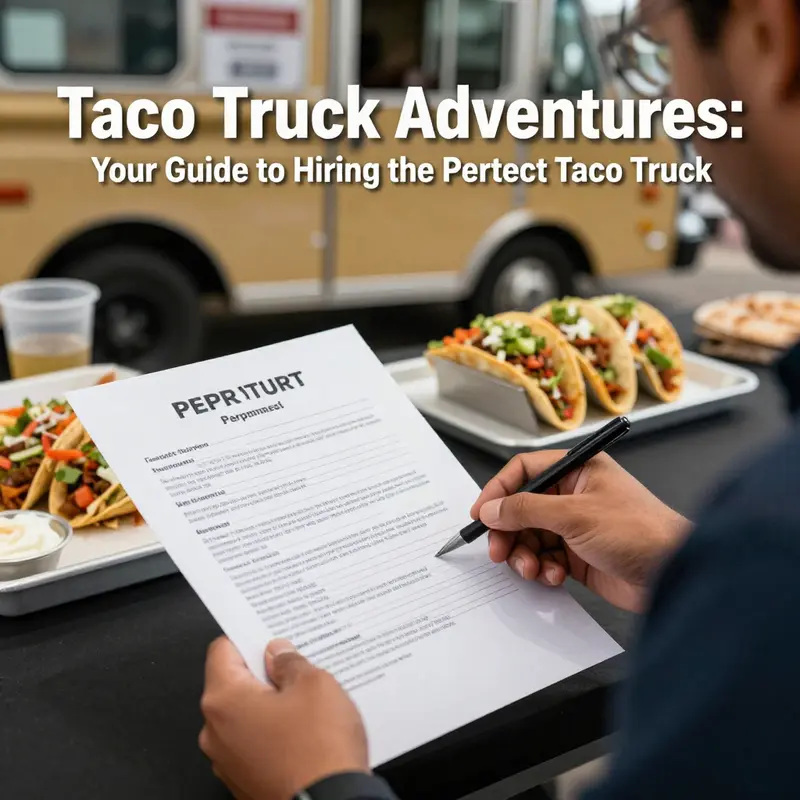
Choosing to hire a taco truck for an event can feel like selecting a centerpiece that moves with the crowd. The aroma, the theater of the grill, and the vibrant presence draw guests in, but the real work happens behind the scenes. The cost you see at the contract stage is only the tip of the iceberg. The full picture includes regulatory compliance, logistical choreography, and the careful balancing of menu desires with practical constraints. In this chapter, we move beyond the sizzle and into the operational world that shapes the actual experience of hiring a taco truck. The aim is to illuminate the layers that determine the final price, the reliability of service, and the smoothness of the day—from permits to parking spots, from fuel mileage to staffing, and from seasonal calendars to last-minute changes. Understanding these pieces helps you negotiate with confidence and plan with foresight, so your event delivers both flavor and peace of mind.
A useful starting point is recognizing the spectrum of hiring options. Short-term rental for a single day can run from roughly $500 to $2,000, with some high-demand markets charging more for weekends. If your event spans a weekend or requires ongoing coverage for a festival or market, the rate often lands in the range of $1,500 to $3,000 per weekend. These figures usually cover the truck and the essential kitchen equipment—grills, fryers, refrigeration—and may include staff, but they rarely cover every conceivable expense. Fuel, permits, insurance, and post-event cleaning are frequent add-ons. The math becomes a bit more intricate when you compare short-term rental to longer-term leasing or outright purchase. Leasing a taco truck for a period of months typically sits between $1,500 and $4,000 per month, with some packages bundling maintenance and operational support. Buying a used truck opens a different budget conversation, with price ranges commonly cited between $15,000 and $40,000 depending on size, build quality, equipment, and the vehicle’s condition. The decision point often hinges less on the flavor of the food and more on the scale of your operation, your tolerance for maintenance, and the ambition of your business plan.
Operational pragmatism frames the financial calculus. Even when a vendor quotes a base price, the bottom line for an event often carries a constellation of variable costs. Permits and licenses are a given in most urban areas. Health department permits, mobile vendor licenses, and other local authorizations are not merely formalities; they confer the legal right to operate and, when absent, can derail an event at the last minute. Insurance is another non-negotiable. Commercial liability insurance is not optional in a professional setting; it typically ranges from about $1,000 to $3,000 per year, depending on coverage levels, venue requirements, and the scope of service. It protects you and the operator should there be accidental contamination, slips and falls, or other mishaps during service. Staff costs may be included in the rental package, but if they’re not, you’ll need to hire cooks, cashiers, and assistive staff elsewhere in your budget. Beyond the labor line, fuel and ongoing maintenance creep into the daily operation, particularly for events that demand continuous service or long distances between kitchens and venues. Even a well-maintained truck can incur wear and tear that manifests as fuel fluctuations, generator upkeep, or refrigeration checks on the day of the event.
Consider the regulatory backbone that supports every taco-truck operation. Compliance starts long before the first sizzle—permitting, licensing, and inspection. In many jurisdictions, operators must carry a valid mobile food vendor license, a health department permit, and possibly a special event permit if the truck will be parked on site for an extended period. Some venues require proof of coverage or certificates of insurance naming the event host as an additional insured. The absence of proper permits can trigger fines, retraction of service, or even cancellation of the event. The Ontario example in industry guidance illustrates how strict waste disposal, temperature control, and general hygiene protocols shape daily operations. Vendors in that jurisdiction adhere to detailed health and safety standards designed to prevent contamination and to ensure responsible waste management across all stages of service. While the precise regulations differ by city, the mindset is universal: compliance is integral to reliability, not a surrounding constraint.
The logistics of getting the truck where it needs to be, on time, with the right infrastructure, are another pillar of the hire. Unlike a stationary catering kitchen, a taco truck depends on the venue’s geography—parking availability, power access, and even weather-related contingencies. Setup time is not a speed bump; it is a core operational element. Vendors should provide a clear arrival window and a plan for equipment checks, fueling, refrigeration calibration, and pre-service alignments. If a venue has limited parking or requires certain routing, the event organizer must secure explicit permission and confirm that the truck can maneuver safely to the designated space. Power access is particularly critical for refrigeration, heat, and ancillary lighting. If the site cannot supply a reliable power source, you may end up paying for a generator rental or adjusting the menu to reduce energy demand. All of these factors influence the day-of experience: a smoothly executed setup translates into hot food, steady service, and satisfied guests; a rushed or uncertain arrival can ripple into longer lines, slower service, and disappointed attendees.
Menu flexibility is a notable strength of taco trucks, but it comes with practical limits. Many operators offer customizable menus that can scale to the guest list, dietary needs, and theme of the event. The beauty of this flexibility lies in the ability to tailor offerings for a corporate lunch, a wedding reception, or a cultural festival. Yet, the more specialized the menu, the more dependency there is on ingredient sourcing, stock, and cooking times. Some dishes demand longer cooking windows, more elaborate mise en place, or the sourcing of specialty ingredients that may not be readily available at the last minute. When you’re negotiating, it helps to discuss options well in advance and request a sample menu or tasting if possible. A thoughtful practice is to align the menu with the event’s flow—lighter, faster options for cocktail hour, heartier items for dinner, and vegetarian or gluten-free variants that do not compromise the core experience. The goal is to harmonize guest expectations with operational realities, ensuring the kitchen runs as smoothly as the service line.
Seasonality and availability are real forces that shape planning. In peak seasons—typically warmer months and major holiday timelines—popular taco-truck vendors can book out months ahead. If you have a preferred concept or a particular chef’s touch, securing the vendor early can be the difference between a seamless experience and a last-minute scramble. The general rule of thumb, echoed across industry guidance, is to plan at least two to three months in advance to lock in your preferred vendor. In practice, that horizon helps you coordinate with other event logistics—catering, bar service, entertainment, and décor—so all moving parts feel cohesive rather than ad hoc. The risk of waiting is twofold: reduced availability, and potentially higher costs as demand tightens the market. A well-timed inquiry often yields more favorable terms and more predictable execution.
In the realm of budgeting, a disciplined approach pays dividends. While the base rate for a short-term hire offers a straightforward starting point, the truth is that total cost emerges only after the full constellation of variables is considered. It is reasonable to construct a tiered budget: a base projected cost for the truck rental, then a buffer for permits, insurance, and transportation, followed by a contingency for staffing, cleanup, and any venue-imposed ancillary fees. Historically, the cost structure has leaned toward a ladder of options—daily rentals at the lower tier for one-off events, weekend packages with premium pricing for peak markets, and longer-term leases that bundle maintenance or service support. For many operators, buying a used truck remains an option for those who want long-term control but accept higher upfront risk and responsibility. When you price out these routes, consider not only the sticker price but the ongoing costs: insurance, fuel, maintenance, and potential depreciation. The collective financial picture should inform a decision that aligns with both your event’s scale and your broader culinary or business goals.
The decision framework also benefits from a pragmatic view of what is essential for your particular occasion. If your event is a one-off festival with high guest throughput, a well-equipped rental might be the most efficient path. If you are planning recurring appearances, a lease with a maintenance package could reduce headaches and stabilize monthly cash flow. If you are building a culinary business with an eye toward expansion, buying a used truck—while demanding more upfront capital—could become an asset with the right upkeep and product-market fit. The objective is to design a procurement approach that yields consistent quality and reliable service without creating undue risk or financial strain. This approach requires candid conversations with vendors about what is included in each quote and what would constitute an add-on that could unexpectedly inflate the final bill.
To connect this planning with the broader decision, consider the value of a seasoned, transparent partner who can articulate both constraints and opportunities. A vendor who can present a clear timeline, a detailed equipment checklist, and a realistic service script reduces the cognitive load on the event organizer. They should be able to describe how they would handle unexpected changes—whether a vendor arrives late, a power outage occurs, or a sudden guest preference arises. The best partnerships are built on clarity, not ambiguity: a documented schedule, a contingency plan, and a mutual understanding of responsibilities before you sign the agreement. In practice, this means asking precise questions, requesting written confirmations, and cross-checking every assumption against the event’s day-of realities. The payoff is measurable in smoother service, shorter wait times, and a more predictable overall experience.
A note on resources and next steps can help anchor your planning. When you are ready to explore options, look for local providers who offer mobile-food-services with reputable track records. It can be helpful to read supplier guides that discuss how these operations meet safety and quality standards in various regions and to compare the practices described with your event’s unique needs. To gain a quick sense of what trucks are commonly chosen by professional operators, you can explore a curated overview of top taco truck models for culinary success. This resource frames the kinds of configurations that typically perform well in different contexts, from high-volume festivals to intimate weddings. The takeaway is not to copy a model blindly, but to understand the design principles that enable efficient, scalable service while preserving the celebratory, flavor-forward experience guests expect.
Finally, as you refine the cost calculus and logistical plan, keep in mind a simple truth: the best taco truck experience is not defined by the lowest price, but by a reliable, compliant, and smoothly executed operation that aligns with your event goals. A sharp cost estimate that ignores permits, insurance, and infrastructure may save money on paper, but it can escalate quickly in practice if a site-wide restriction or an insurance requirement surfaces on event day. Conversely, a thoughtful investment in a well-supported vendor, a clear permit path, and explicit logistical planning pays dividends in guest satisfaction, staff morale, and the overall success of the occasion. The framework you adopt should reflect the event’s scale, the venue’s constraints, and your own appetite for risk and control.
For organizers who want to see real-world examples of how these decisions play out, note the value of understanding the typical cost ladder and the importance of early engagement with a vendor who can navigate the regulatory landscape, confirm parking and power logistics, and offer a flexible menu that still respects the kitchen’s practical limits. This integrated approach—melding financial awareness with regulatory literacy and operational discipline—creates a reliable, flavorful experience that guests will remember long after the last bite. And it helps ensure your event remains within budget while delivering the vibrant, communal energy that makes taco trucks such a beloved element of street-food culture. As you venture into budgeting and negotiations, you’ll avoid surprises and cultivate a partnership that keeps your culinary vision front and center, without letting logistical complexity overwhelm the essence of the celebration.
To further illuminate the landscape of truck options and their culinary potential, you can explore the broader spectrum of models used by professional operators. Top taco truck models for culinary success offers insights into design choices, capacities, and workflow considerations that influence how a truck performs under heat, crowd flow, and menu variety. This context can inform your conversations with vendors, guiding you toward an arrangement that balances flavor, speed, and reliability. As you plan, remember that the most successful hires are built on a foundation of clear expectations, meticulous preparation, and a shared commitment to delivering an outstanding guest experience. The right taco truck turns a memorable feast into a seamless event—one where every bite echoes the confidence with which you approached the hire from the outset.
External reference: https://www.insidefoodtrucks.ca/ontario-food-truck-sales/
Final thoughts
Hiring a taco truck can be one of the best decisions for events, adding excitement and deliciousness to any gathering! By understanding the various costs, weighing your options between renting, leasing, or buying, and considering essential permits and insurance, you’re set for taco greatness! So gather your friends, family, or coworkers, and let the sizzling begin. Take these insights into account and make your next event unforgettable with a taco truck that serves up smiles!

