
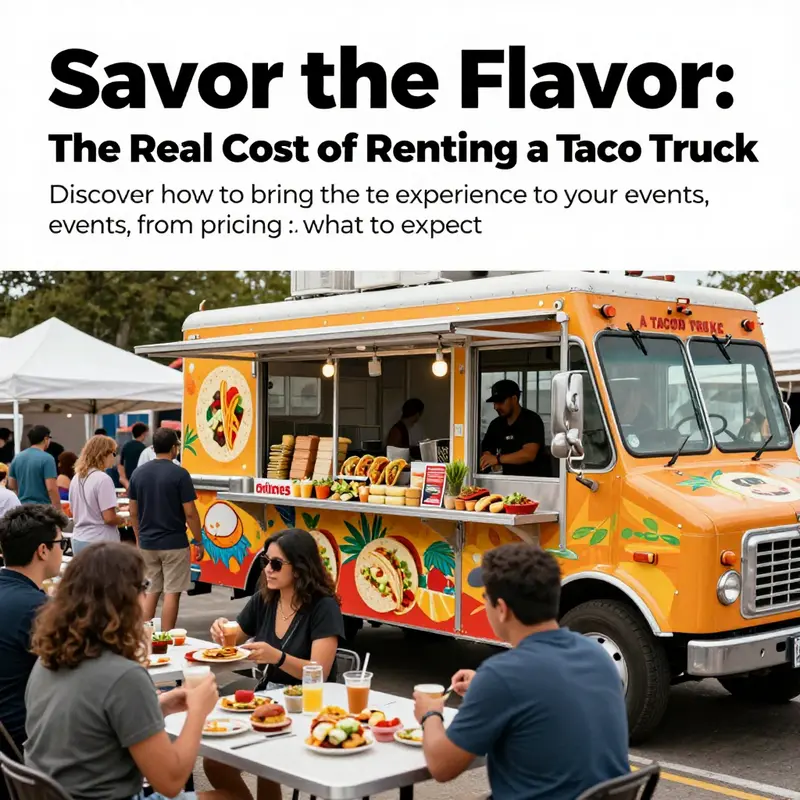
Have you ever dreamt of serving mouth-watering tacos right from a taco truck? Whether you’re an office worker craving a lunchtime treat, an event planner looking to wow guests, or a taco fanatic itching to indulge in authentic street food, renting a taco truck can make your culinary dreams a reality. But before you get too excited, it’s critical to understand the costs involved. This article navigates through three significant factors affecting taco truck rental: the pricing influenced by various factors, average costs in different locations, and extra expenses that could crop up. By the end, you’ll have a comprehensive grasp of what to expect when renting a taco truck for your next taco fiesta!
Pricing Pulse: What Drives the Daily Price of Renting a Taco Truck

Renting a taco truck is more than a daily fee. It is a decision that folds mobility, kitchen capability, and local market realities into a single price tag. For would-be operators, understanding what actually moves the price is essential not only to secure the right vehicle but to build a viable plan for a thriving street-food business. The chapter that follows threads these threads together, showing how a rental price is shaped by the vehicle itself, where you are, and what you intend to cook and serve.
At its most basic level, the price to rent a taco truck comes from a simple equation: the more you demand from the vehicle—reliability, capacity, and speed—the higher the daily cost. A compact pickup chassis, suitable for conversion into a small, portable kitchen, can be rented in many parts of the country for roughly a mid-range daily rate. In smaller, less dense markets, a basic pickup can go for around sixty to seventy dollars per day. In mid-sized or suburban markets, you might see prices in the low hundreds depending on the exact spec and availability. In large urban centers with high foot traffic and tight competition, the same chassis or a similarly capable platform can command noticeably higher rates, especially if the rental comes with additional services like on-site support, branding, or a turnkey setup. The data landscape is patchy and local, but the signal is clear: location and features push price up or down in meaningful ways.
It is important to distinguish the price of the vehicle rental itself from what many entrepreneurs actually need to run a taco operation. The numbers above refer to standard pickup-truck rentals that you could convert into a mobile kitchen. They do not include the cost of outfitting the truck with cooking equipment, wiring, gas or electrical lines, refrigeration, health-compliant sinks, ventilation, fire suppression systems, or the required permits and licenses. Those outfitting costs, along with ongoing insurance and compliance expenses, can be substantial and can dwarf the daily rental rate over time. When you hear someone talk about the “cost to rent a taco truck,” the full picture often spans a broad spectrum—from a simple chassis rental to a fully outfitted, compliant mobile kitchen that can function as a business from day one.
From a practical budgeting standpoint, most operators first decide whether they want a bare rental chassis or a turnkey mobile-kitchen package. A chassis rental is exactly what its name implies: a vehicle you can use as the base for a food operation. It may be cheaper per day, but you then face the challenge of sourcing and installing cooking equipment, ventilation, a power supply, a water system, and safety features. Some rental providers specialize in turnkey solutions that bundle the vehicle with a built-out kitchen, essential compliance support, and sometimes even marketing or branding services. Those packages are valuable for first-timers who want to minimize the friction of starting a food-truck business. They also come with higher price tags, of course, because you are paying for the labor, equipment, and regulatory support all in one place.
The geographic variable is pervasive in pricing. Urban markets—think dense city cores with full event calendars, food-truck networks, and high competition—show higher base rates regardless of the vehicle’s age. Suburban and rural areas, where demand patterns are steadier but less frenetic, often offer more affordable daily rates. The estimated daily cost in Twin Falls, Palmdale, or other smaller markets is typically lower than in major metro areas. This variability is not just about the cost of the vehicle; it reflects the broader economics of street-food demand, permit costs, and local competition. In some places, there is a premium for producers who can reliably move through busy markets, park in high-visibility spots, and maintain consistent hours, all of which can tilt the price up.
Seasonality and event calendars further complicate the math. Summer weekends, regional fairs, farmers markets, and festival circuits create episodic demand that drives up prices. Rental providers respond by adjusting daily, weekly, or monthly rates in step with anticipated demand. If you are planning a start-up or a seasonal venture, this is a crucial factor to factor into your cash flow. The same truck might be priced differently across a year, reflecting the ebb and flow of local events and licensing windows. In the long arc of a business, these shifts matter more than a single daily quote because they determine when and where you can work and how much you can charge for your offerings.
The content bearers of price—truck condition and age, brand reputation, and the equipment included—also shape the rental outcome. A well-maintained, newer model from a reputable manufacturer generally costs more to rent because it promises lower maintenance costs and higher reliability. An older or less-known platform may offer a lower sticker price, but you risk more downtime, more frequent repairs, and more variable performance. In a food operation, reliability is not a convenience; it is a business core. The kitchen equipment, too, drives the cost in a pronounced way. A truck equipped with an extensive cooking line, large refrigeration units, a robust ventilation system, and custom branding will command higher rental fees than a smaller, simpler configuration. The size and layout of the kitchen impact not only the rental price but the operational efficiency once you are on the street.
Brand reputation follows a similar pattern. Trucks associated with well-regarded manufacturers or circuit-tested designs carry a premium because buyers and operators feel they will perform consistently and last longer on the road. This premium is not merely about the brand name; it signals a long-term expectation of lower total cost of ownership, fewer emergency repairs, and smoother compliance processes. In many markets, the value of a trusted, well-built platform is reflected in higher daily rates and longer lead times for availability. Conversely, options with fewer brand associations may be cheaper but can bring more variability in operations and more time spent troubleshooting, especially for first-time operators who need to focus their energy on cooking, serving, and customer experience rather than troubleshooting mechanical issues.
Location matters in another crucial way: the overall market ecosystem surrounding food trucks. Place-based ecosystems influence prices through demand density, permit regimes, and the overall pace of business. In high-demand areas, rental inventory can evaporate quickly, and premium packages with on-site support or turnkey compliance can be particularly expensive. In regions with generous permitting windows and a smaller community of mobile vendors, competition is more forgiving, and prices can be more forgiving as well. The broader market context—the presence of a supportive vendor network, local health and safety expectations, and the ease of obtaining necessary licenses—helps determine if you are paying a premium for speed and assurance or simply a standard daily rate.
Understanding these variables is essential for entrepreneurs building a budget that reflects reality rather than a best-case fantasy. A realistic budget separates the baseline cost of the vehicle from the other essential cost buckets: outfitting, licensing, insurance, and ongoing maintenance. If you are contemplating a two-week trial or a month-long pop-up strategy, you will need to forecast not only the daily rental but the likelihood of downtime caused by equipment failure or compliance delays. The risk calculus grows when you consider the need for backup equipment, spare parts, and a plan for service calls. In many cases, the prudent path is to negotiate not just the daily rate but the terms of service that cover maintenance windows, response times, and any included support during peak seasons.
From a consumer’s perspective, it helps to differentiate between the different rental structures available in the market. Some providers focus on the chassis and leave the kitchen to the renter, which can be attractive for operators with a strong in-house fabrication capability or preferred equipment brands. Other providers offer fully built-out, compliant mobile kitchens that come ready to operate with minimal lead time. The latter often includes the equipment, electrical and plumbing hookups, ventilation, safety systems, and sometimes branding and marketing support. If you are new to the industry, a turnkey rental can lower the barrier to entry by reducing the friction of sourcing equipment, navigating health regulations, and delivering a working kitchen in a predictable timeframe. If you are more experienced and have approved vendors and preferred layouts, a chassis rental might be a smarter way to optimize cost and design control.
Cost awareness is a powerful discipline in this space. When you look at the sticker price for a chassis rental in a given city, you should add the cost of converting that chassis into a compliant kitchen, including exhaust hoods, fire suppression, electrical upgrades, water supply, and waste management. You should also budget for a health-permitting process, inspections, sanitation equipment, and ongoing insurance premiums tailored to food-service operations on wheels. These costs are not optional luxury items; they are the backbone of a legal, safe, and operational business. The total monthly or weekly outlay for a taco truck is rarely a single line item; it is a constellation of costs that requires careful management to avoid cash-flow gaps during the early months of operation.
The practical implication for a prospective operator is simple: treat daily rental as a starting point, not the end of the story. If your plan is to test the concept with a two-week run, your total cost is a sum of the daily rate for that time period plus the outfitting bill and any licensing fees you must bear to operate legally during that test. If the plan is to operate full-time for several months, then the economics shift toward longer-term rental discounts, potential maintenance contingencies, and possibly a different financing structure. You might discover that a longer-term turnkey rental, while initially more expensive, could yield a more predictable cash flow and smoother operations, allowing you to focus on menu development, vendor relationships, and customer experience instead of chasing parts for repairs between shifts.
In short, the price to rent a taco truck is not a single dial you turn. It is the aggregate of the vehicle’s age and condition, the reputation and perceived reliability of the platform, the size and sophistication of the kitchen, and the geographic and seasonal market context. It is the sum of upfront outfitting costs, ongoing permits and insurance, and the inevitable maintenance that comes with any vehicle used intensively in a street-food role. As you plan, it is helpful to hold two separate budgets: one for the vehicle rental itself and a separate, well-researched envelope for outfitting and compliance. This separation allows you to compare apples to apples when you are evaluating quotes and to keep your cash flow aligned with your operational calendar.
To get a sense of the spectrum of configurations favored by many start-ups, you can explore top food truck models for entrepreneurs. This resource provides a sense of the kinds of layouts and equipment scales that other operators have found practical, which can inform your decisions about whether to pursue a chassis-only rental, a turnkey mobile kitchen, or something in between. It is also prudent to keep an eye on the broader market signals. The National Restaurant Association’s research on industry trends provides a broader view of how demand, regulation, and consumer preferences are shifting over time, which can help you time your investments and plan for the regulatory environment you will navigate as you grow. See https://www.restaurant.org/research/industry-trends for a broader market snapshot that complements the city-by-city, micro-market data you will gather from rental platforms and local providers.
Beyond the numbers and the planning, the human element remains central. A rental decision is, in many ways, a commitment to a specific work rhythm: the cadence of food preparation, the pace of service, and the pace of learning about a new market. The vehicle is a tool, but the success of the business rests on the quality of the menu, the consistency of service, and the ability to manage the many regulatory and logistical tasks that come with operating on wheels. In markets where permit regimes are stringent and the competition is fierce, this means building a cohesive plan that aligns your rental choice with your brand, your target customer, and your long-term vision. The fastest path to a sustainable operation is not simply a bargain on the daily rate; it is a thoughtful choice about the platform that will carry your concept through countless service windows, peak hours, and weather challenges.
To close this thread, the price to rent a taco truck is best understood as a function of tradeoffs. On one side lie the vehicle’s condition, capacity, and the sophistication of the accompanying kitchen and compliance support. On the other, the host city’s demand, event calendars, and regulatory environment exert pressure on the daily rate and the total cost of ownership. The prudent operator approaches pricing as a holistic puzzle, assembling a budget that reflects the true cost of running a mobile kitchen, not merely renting a vehicle. In practice, this means starting with a clear assessment of what kind of kitchen you need, evaluating whether you want a turnkey setup or a base chassis, and then layering in permits, insurance, and maintenance with a conservative forecast for seasonal fluctuations. The result is a rental price that matches both your ambitions and your practical capacity to operate, season after season, in locations where the public appetite for tacos and street food remains strong.
External perspectives can also help you navigate price dynamics. For a broader look at current market trends and pricing patterns across regions, reference the National Restaurant Association’s industry-trends research. The landscape is complex but navigable when you anchor decisions in a broader market context rather than a single price tag. And for a sense of the configurations other entrepreneurs are choosing, follow the internal resource linked above, which points to a range of model configurations and setups that have proven effective for street-food operations. With careful planning, you can translate a rental quote into a sustainable, repeatable business model that serves good food, builds a loyal customer base, and scales intentionally as demand grows.
The Price of Putting Tacos on Wheels: Navigating Rental Costs Across Locations
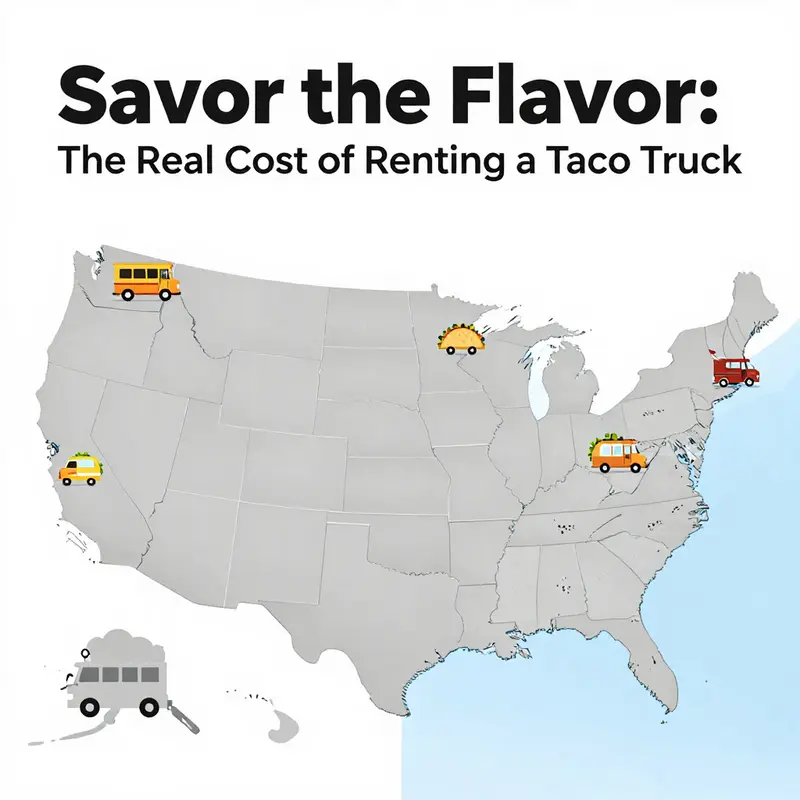
Choosing to put a taco business on wheels is as much about budgeting as it is about flavor. The romance of a sizzling flat-top, the scent of fresh cilantro, the energy of a busy street stall—these elements draw aspiring restaurateurs toward a mobile model. But the practical question that underpins the entire venture is simple and stubborn: how much does it cost to rent a taco truck, and how does that price change from one place to another? The answer is not a single figure, but a landscape of variables that shift with location, purpose, and the scope of the kitchen you intend to deploy. In the absence of a universal price tag, the reader must learn to read the terrain, weigh options, and translate those numbers into a viable business plan.
Pricing for taco-truck rentals sits at the intersection of two worlds: traditional vehicle rental and specialized mobile catering. On one hand, you can rent a pickup or light truck much as you would for personal or general commercial use. On the other hand, if you want a full mobile kitchen on wheels—gas, grease, ventilation, water supply, sanitary systems, and compliance with food-safety standards—the quotes you receive will come from firms that bundle the vehicle with the kitchen conversion and ongoing support. The two paths look similar on a price tag at first glance, but their total cost of ownership and their practical implications for operating a taco business diverge in meaningful ways.
The data that exists about taco-truck rental pricing in the marketplace is sparse and uneven. Analysts and aspiring operators often have to triangulate from related segments—pickup-truck rentals, or turnkey mobile-catering solutions—to form a realistic expectation. In that sense, the cost landscape resembles a moving target: it shifts with the vehicle type, the city you’re in, how long you rent, and whether you’re renting simply the chassis or a fully equipped cooking unit ready to serve from day one. To anchor this discussion in real-world numbers, it helps to start with a few concrete, recent data points from traditional vehicle rentals. In some smaller markets, a standard pickup could set you back around sixty to seventy dollars per day. In more urban or higher-demand settings, daily rates can climb, sometimes into the high hundreds for premium models or for longer rental terms. These figures, however, are not direct quotes for mobile-catering equipment; they illustrate the baseline cost of getting a vehicle that could be converted into a taco truck. They also underscore a crucial point: the base price to rent a truck is only the first line item on a long invoice.
When the discussion narrows from bare-vehicle rental to turnkey mobile-kitchen rental, the math becomes more nuanced. A specialized provider who offers a complete conversion—vehicle, kitchen equipment, ventilation, water system, compliance support, and possibly permits—will present a package price that bundles what would otherwise be separate line items. In practice, this can range widely. The quoted figures from industry aggregators and conversion specialists frequently begin in the low hundreds per day and can exceed five hundred dollars per day for larger, higher-end configurations in major markets. That spread is not about extravagance; it reflects real differences in truck size, kitchen footprint, equipment quality, fuel efficiency, safety features, and the level of service included in the package. A turnkey or semi-turnkey arrangement can also reduce the friction and risk that come with trying to source individual components, negotiate with multiple vendors, and navigate the regulatory maze that surrounds street-food operations.
A useful hurdle to clear early is recognizing that there is no single “average” price for a taco truck rental. The lack of standardized pricing data means that averages can be misleading and, at times, dangerous for planning, because they can mask the reality of your local market and your ambitions for scale. What we do have are indicative data points and a framework for thinking through costs. For instance, in one major metropolitan area, a regional rental chain offered pickup-truck rates around the mid-$80s per day for a standard crew-cab model, with occasional promotional discounts dipping into the $70s. In another city, a larger urban market showed daily prices approaching the high-$80s to low-$90s for similar vehicles, with promotional offers sometimes bringing rates down to the $60s or $70s. These numbers reflect traditional vehicle renting and, importantly, are not a substitute for the specific, kitchen-equipped, mobile-catering quote you’ll need if your goal is to operate a legal, compliant taco service.
Turning to more targeted sources that speak directly to the mobile-catering segment, there are practical considerations that students of the field should keep in view. A specialized provider that focuses on mobile food-truck rentals emphasizes that turnkey solutions—vehicles plus kitchen packages and compliance assistance—typically fall within a broad range, often cited from roughly one hundred dollars to several hundred dollars per day. The exact amount depends on several factors: the size and condition of the truck, the brand or model of the kitchen equipment, the extent of the on-board systems (gas, electrical, water, waste), and the geographic area where the unit will operate. It is essential to recognize that these turnkey packages are not merely about transportation; they are about launching a food-service operation with all the pieces in place—from sanitation to safety certifications to power management.
Given this landscape, the practical approach for an aspiring taco-operator is to start with a realistic budgeting framework. Begin by outlining your core business needs: Do you want a bare chassis to customize gradually, or do you require a complete, ready-to-roll kitchen that can hit the ground running at your first event? If you’re testing the waters, a shorter rental term with a minimal kitchen might be more economical and less risky. If you aim to scale quickly or participate in recurring markets and festivals, a turnkey setup may, in the long run, deliver greater reliability and predictability in pricing. The key is to think in terms of total cost of ownership over your first season, not just the daily rental rate. That total should include outfitting costs, licensing and permits, insurance, fuel, maintenance, and any service or support packages that reduce downtime and compliance risk.
To translate this into a practical decision-making process, consider the data points you’ve seen about vehicle rentals in various locales. In smaller markets, daily rates for standard pickups can be low enough to tempt a cautious experiment, but you must ask whether that vehicle is suitable for a kitchen conversion and whether you’ll be able to secure permits and safe, compliant operation in your chosen territory. In larger cities, higher base rates often reflect not only the cost of the vehicle but the density of demand and the complexity of navigating permissions and inspections. The contrast between a suburban or rural setting and a dense urban core is not merely about price; it is also about the market’s appetite for street-food events, the availability of well-defined routes and permits, and the logistical realities of water, power, waste, and sanitation in public spaces.
A crucial takeaway is that the price you see for a vehicle rental is rarely the price you pay to operate a taco business. A turnkey mobile-kitchen rental—while more expensive upfront—can dramatically reduce the friction of launching and running a business on wheels. The reason is simple: the kitchen system is designed to be compliant with food-safety guidelines, to provide reliable sources of power and water, and to come with practices and documentation that help you stay in good standing with health departments and event organizers. If your plan includes regular participation in markets or private events, the value of a plan that reduces risk and accelerates permitting can be substantial, even if the daily rate is higher than renting a bare truck.
Where does that leave you when you’re trying to forecast costs for your first year of operation? The prudent path is to build a tiered estimate. Start with a base scenario: rent a bare vehicle for a few weekends while you develop your menu, test your sales processes, and learn the rhythms of your local market. In this scenario, your primary costs are the daily rental rate, fuel, and basic insurance. Then build a second scenario: rent a fully equipped, compliant mobile kitchen with the least amount of customization. Here the price per day is higher, but you gain the certainty of regulatory readiness, reduced lead time for events, and a more predictable workflow. Finally, craft a hybrid scenario: secure a mid-range chassis rental coupled with a modular kitchen system that can be swapped in and out as needed. This middle path can provide flexibility without locking you into a single, expensive configuration.
As you weigh these paths, the temptation to anchor your budgeting on a single data point must be resisted. Instead, seek quotes from multiple sources that explicitly break out the components of the price. When you receive proposals, ask for line-item breakdowns: vehicle base rate, equipment package, installation or upgrade costs, safety features and inspection certifications, service contracts, insurance add-ons, and any delivery or takedown charges. Consider the time of year and the rental duration. Some providers offer seasonal discounts or reduced rates for multi-week allocations, which can materially alter the economics of your plan. You should also factor in ancillary costs that don’t appear in the headline price but become significant as you operate. Permits and licenses, for example, are not optional for a compliant street-food business and can be substantial depending on jurisdiction. Insurance costs may vary with the level of coverage and the perceived risk of mobile operations. Maintenance and contingency reserves for equipment failure, cleaning, and back-up systems are prudent. In short, the most reliable estimates come from real quotes that itemize every component and from a careful assessment of how your operations will scale over time.
The absence of a universal price tag for tacos-on-wheels is not a failure of the market; it’s a feature of a model that blends transport with culinary craft and regulatory compliance. The cost of renting a truck to operate a taco business rises and falls with the same forces that shape any entrepreneurial venture: geography, scale, and the span of services included in the agreement. In rural or commuter towns, you may enjoy lower base vehicle rates and shorter permit queues, which collectively reduce your upfront cash outlay and monthly burn. In bustling urban centers, the price of the chassis, the kitchen conversion, and the associated compliance work reflects not only the cost of space and labor but also the premium that the market places on reliability, speed to market, and the ability to host customer-facing operations during popular events.
To illustrate the range you might encounter in practice, consider three concrete, if not perfectly apples-to-apples, data points from different settings. In one mid-sized city, you might encounter a base pickup-truck rental around $90 per day, with a potential discount that brings it down to the mid-$70s or low $80s when you commit to longer terms or a promotional rate. In another city, a different rental chain might price a similar vehicle at around $83 per day, though the overall customer experience and reliability ratings may vary between providers. In a large metropolis with a robust events calendar, the daily rate for a standard pickup can approach or exceed the $89–$90 range, with occasional promotional offers dipping into the $60s or $70s for qualifying terms. These examples reflect the pricing landscape for traditional vehicles, but they also underscore a critical point: if your ambition is to deliver a consistent, compliant, kitchen-on-wheels experience, you should not rely on these figures in isolation. You will rarely land a turnkey, compliant solution at a price that matches bare-vehicle rental, because the equipment, compliance, and service ecosystems add substantial value—and cost.
What, then, should a prospective taco-operator do to forecast accurately? First, identify your operating footprint. How many days per month do you expect to serve customers? Which markets or events will you target? How flexible can your schedule be? Second, decide your preferred level of complexity. Are you comfortable managing your own kitchen build, or do you want a fixed, turnkey solution that arrives ready to operate? Third, request quotes with explicit schedules for maintenance, cleaning, and downtime. A reliable quote will include not just the sticker price but also a plan for decontamination, waste disposal, and power management. Fourth, quantify the regulatory load. Permits, inspections, health-compliance consultations, and vendor licensing can be significant. Finally, run the numbers with sensitivity analyses. What happens if an event requires an extra day, if a permit is delayed, or if power supply becomes constrained? Build scenarios that stress-test your cash flow, so your decision is guided not by a single price but by a robust forecast.
In the end, the decision may hinge less on a single daily rate and more on the alignment between your business model and the pricing architecture you choose. A bare-vehicle rental can be appealing for testing the market and validating your concept with minimal debt, but it also demands a higher tolerance for operational risk and logistics. A turnkey mobile-kitchen rental, while costlier upfront, can deliver reliability, faster ramp-up, and a more predictable path to revenue. The right choice will depend on your appetite for complexity, your local regulatory climate, and your strategic plan for growth. And it is worth noting that many operators who start with flexible, modular arrangements find they can retool their business model—adding new menus, expanding to additional markets, or shifting to recurring catering contracts—without incurring prohibitive capital expenses. The road to a profitable taco operation on wheels is navigated not solely by the price of the ride, but by how well the ride supports the business you’re building.
Practically speaking, this means you should approach your planning with a blend of caution and curiosity. Gather multiple quotes from reputable providers that segment the price into clear components. Compare not only the daily rate but also the duration of commitments, the inclusions, and the support available for compliance and safety. Keep in mind that turnkey options may require longer lead times to set up and certify, but they can dramatically reduce the risk of delays that undermine event scheduling and customer trust. If you want to explore additional real-world guidance and model scenarios, you can consult a range of industry resources that discuss the practicalities of taco-truck operations and the pathways to success on wheels. For a related discussion on model variety and operational readiness, see the piece that reviews top taco-truck models for culinary success. taco-trucks-unleashed-top-5-models-for-culinary-success.
While data gaps may persist, the core insight remains clear: there is value in treating rental pricing as a component of an overall business design rather than a single line item. The most effective operators treat the price of the ride as part of the cost of launching a brand on wheels, and they build their budgets to accommodate both the best-case and worst-case scenarios. In markets where turnkey solutions are common and compliance support is built into the package, they price accordingly and plan for a longer runway to profitability. In smaller markets or where experimentation is the goal, they start with a leaner setup, measure demand, and scale up as revenue streams become more predictable.
If you are exploring this path, you should also consider the broader ecosystem of mobile-food services and the potential for cross-border or cross-market opportunities. A robust, compliant taco-truck operation does not only serve street corners; it can participate in festivals, corporate events, and pop-up markets that reward reliability and brand consistency. The price to rent a truck is thus not just a cost; it is an entry ticket to a flexible, scalable platform for culinary entrepreneurship. With careful planning, realistic budgeting, and the right partner to provide equipment and compliance support, your taco concept can move from a hopeful idea to a thriving street-food presence. For readers seeking additional context on how to approach the buying or renting decision with a more global lens, a broader resource on turnkey mobile-catering rentals provides a useful counterpart to the city-specific realities described here. You can learn more about the range of options and the costs involved in a dedicated platform that focuses on mobile food-truck rentals, which helps connect ideas to practical, on-the-ground pricing and availability. Access the resource here: https://www.mobilefoodtruckrentals.com.
Finally, the decision should align with your long-term goals for brand building, customer experience, and operational resilience. The vehicle you choose is more than metal and kitchen fittings; it is the stage on which you tell your restaurant’s story. The right rental choice will complement your menu, your service style, and your ambitions for growth. It will also help you deliver consistent quality, steady service, and a memorable dining experience for customers who are choosing you because you bring the flavor and the energy of your brand to the curb. If you’re curious about how others in the field have navigated the early stages of this journey, you might explore related perspectives on street-food innovation, safety practices, and the evolving role of vehicle design in culinary storytelling. And if you want a concrete anchor for ongoing learning, consider following the curated resources that spotlight culinary adventures on wheels, such as culinary-adventures-in-the-wild-the-jeep-gladiators-role-in-modern-street-food, which offer broader context on how mobility and flavor intersect in contemporary street cuisine.
In sum, there is no single price for renting a taco truck, but there is a practical path to finding pricing that works for your plan. Start with a clear sense of whether you need a bare vehicle or a turnkey kitchen, then gather multiple, itemized quotes that reveal the true cost of launching and sustaining your operation. Consider the local regulatory environment, the event calendar you’ll participate in, and the pace at which you hope to grow. By anchoring your budgeting in a realistic, multi-scenario framework, you gain the flexibility to move quickly when opportunity arises and to withstand the inevitable pace of street-food entrepreneurship. The market, after all, rewards clarity, preparedness, and a willingness to adapt your plan to the realities of your chosen location.
Rolling Budget: Understanding the True Cost of Renting a Taco Truck
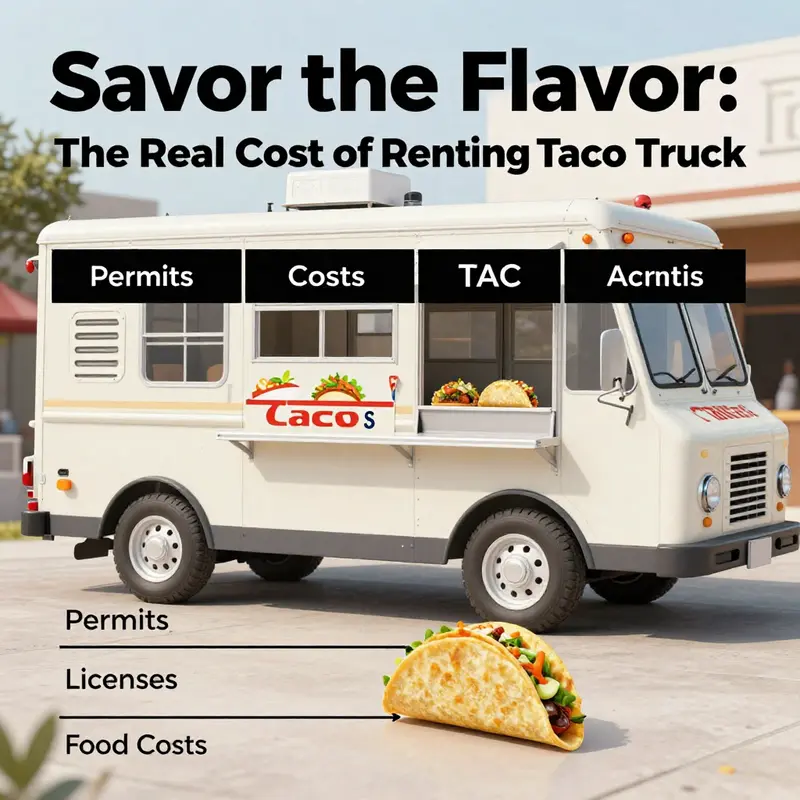
When you imagine launching a taco venture on four wheels, the first question often looks simple: how much is a taco truck to rent? The short answer is nuanced. The sticker price on a bare truck or chassis can be surprisingly affordable in some places and surprisingly steep in others. But the real budgeting challenge isn’t the vehicle alone. It’s the full package: a mobile kitchen that functions legally and safely, the permits that keep you cooking in public, the ongoing maintenance, and the insurance that guards your operation against unexpected shocks. In other words, renting a taco truck is less about a single daily rate and more about a layered cost structure that changes with location, duration, and how turnkey you want your setup to be. This chapter follows that thread, weaving together the concrete price signals you can act on today with the practical realities that turn a good idea into a sustainable business on wheels.
A practical starting point is to separate two distinct rental options, because the basis of your cost story changes depending on what you actually rent. On one hand, there is the standard pickup truck or chassis that you can rent just as a vehicle. On the other, there are turnkey mobile kitchen packages that include the vehicle plus a built-out cooking space, grease traps, venting, fire suppression, plumbing, electricity, and often compliance support. The difference between these two paths can be as stark as the difference between a basic float and a fully equipped food service vehicle. The underlying logic is simple: a bare chassis provides the mobility you need, while a fully configured unit provides the capability to serve food legally and efficiently from day one. The rental market’s data reflect this split clearly. Recent listings indicate that a Toyota Tacoma or similar pickup can be rented in some markets for as low as sixty-something dollars per day, with California markets ranging in the high sixties per day, and in-demand or specialty models pushing past a hundred dollars per day. These figures speak to the base vehicle cost and do not account for the build-out. They are the essential frame, not the kitchen. For an entrepreneur contemplating a taco truck, that distinction matters as you forecast cash flow, plan permits, and decide whether you want a vehicle you can drive to events or a fully functional street kitchen you can park and serve from.
To illustrate, consider some concrete price signals that show how much you might pay for the vehicle itself, independent of any kitchen equipment. In Twin Falls, Idaho, for example, a Toyota Tacoma or similar pickup has been observed at around sixty-four dollars per day. In Palmdale, California, a comparable model hovers near sixty-seven dollars per day. In Madison, Wisconsin, the market shows higher demand or different model mix, with a Tesla Cybertruck or similar model listed at roughly one hundred forty-two dollars per day as of late 2025. These numbers are not universal; they represent current availability and demand in specific markets and timeframes. They also reflect standard pickup rentals and may surge during peak seasons, holidays, or events when the fleet is thinner and the need for reliable transportation is higher. Importantly, these rates do not reflect the added costs that come with turning a vehicle into a taco-serving machine: the kitchen equipment, the plumbing, the electrical system, and the regulatory pieces that turn a truck into a compliant food service operation.
If you’re planning to rent a truck with no kitchen built in, the budgeting mindset is straightforward. You price the daily rate, you multiply by the number of days you anticipate using the truck, and you add the simple line items you know you’ll need to cover fuel, insurance, and maintenance. But most taco operators quickly discover that the most consequential costs appear after the sale is signed: the outfitting, the licenses, the inspections, and the ongoing operating requirements that turn a vehicle into a mobile restaurant. This is where a lot of the discussions in the rental market head toward turnkey solutions. Vendors who offer fully equipped mobile kitchens often bundle the vehicle, the kitchen installation, and the compliance framework that many cities require. The higher price tag here is not merely for the metal and wiring; it includes the ability to operate legally in more places, with a compliant fire system, a proper exhaust system, and a sanitary plumbing setup. In practical terms, if the bare truck rent is your daily baseline, a turnkey package will typically command a premium that represents both the value of the construction and the guarantee that you can operate with fewer delayed permits and fewer surprises on inspection day.
This layered cost picture becomes even clearer when you look at the total cost of ownership over a season or a year. Renting a bare chassis, even at a modest daily rate, can rack up substantial expenses if you rent for long blocks without the kitchen. A conservative estimate is that you’ll encounter additional charges for insurance that cover vehicle liability and cargo, roadside assistance, and any required cross-border or city-specific endorsements if you operate across jurisdictions. You’ll need fuel, regular maintenance, and tires that can stand up to the stop-and-go rhythm of street service. And you’ll almost certainly incur some form of platform or processing fee if you’re using a rental marketplace to source the vehicle. The cumulative effect of these minor line items can dwarf the base daily rate after a quarter or a season, especially if you are working weekends, festivals, and private events that demand consistent uptime.
Then there is the kitchen itself, which is where the financial math gets more intricate. Building a compliant mobile kitchen is not simply a question of buying a stove and a hood. It’s about aligning the equipment layout with health and safety standards, fire codes, and local licensing regimes. The cost range here is wide, and it correlates closely with the scale of your operation, the type of cooking you do, and how much automation or storage you require. A compact setup for a single-griddle operation will be far cheaper than a broader system that includes multiple cooking zones, a deep fryer, refrigeration, a handwashing station, a wastewater management plan, a ventilated hood, and an exhaust system that meets governing standards. Even in markets with universal health codes, the price of upgrading a shell to a functioning food service unit can be a substantial line item that you amortize over months or years. In practice, it’s common for operators to operate with modest equipment early on and then invest more aggressively as revenue grows, or to choose a turnkey package that eliminates the guesswork and accelerates the launch timeline.
Beyond the kitchen, there are the regulatory and operational expenses that every mobile vendor must budget for. Restaurants on wheels are not unregulated wonders; they live within a matrix of permits, inspections, health department reviews, and sometimes parking or vending restrictions that vary by city and even by neighborhood. The upfront permit costs, annual renewals, and the cost of inspecting kitchens can be significant, and they often come with requirements that influence layout, ventilation, waste disposal, and water supply. You may need a commissary space as a condition of your health permit, which adds a recurring expense if you don’t already own a separate facility. Insurance premiums can reflect the risk profile associated with food preparation, the value of the equipment, and the routes you plan to take. Even the most careful operator faces the possibility of occasional equipment failure, a need for spare parts, or a delay caused by a municipal inspection that needs a retest or a minor reconfiguration to comply with the latest codes.
All of this matters because the bottom line for a taco truck rental isn’t the price tag you see on an online listing. It’s the sum of the vehicle rental, the kitchen build-out, the regulatory compliance, and the ongoing costs that enable consistent and legal operation. A bare truck can get you to events and allow you to test your concept at a low upfront cost, but you’ll still need to budget for the kitchen, the licenses, and the safety features that let you serve food with confidence. Conversely, a turnkey mobile kitchen rental can help you hit the ground running but at a premium that reflects the convenience, speed, and compliance built into the package. In either path, the right approach is to build a robust pro forma that captures the day rate (or the monthly rate if you’re negotiating a longer-term lease), the initial outfitting bill, and the recurring costs that will recur with every service.
To get a sense of how this translates into real-world decisions, consider that some operators use the market offers as a flexible baseline for experimentation. They might start with a short-term bare-vehicle rental while they test menus, pricing, and event schedules. If the concept proves viable, they transition to a turnkey solution that reduces lead times for opening and minimizes the friction of permits and inspections. Others prefer starting with a compact, semi-outfitted unit to preserve control over the kitchen layout, equipment choices, and supplier relationships. Either approach can work; the crucial point is to align your choice with your risk tolerance, cash reserves, and long-term vision for the business. In all cases, the rental decision should be anchored in a careful cost forecast that anticipates not just the daily rate but every related expense—permitting, insurance, maintenance, fuel, and the inevitable upgrade path as your operation evolves.
If you’re weighing options, it can help to view a few model scenarios side by side. On one path, you rent a bare pickup for the season, pay a modest weekly rental, and assemble the kitchen later with a mix of second-hand equipment and careful retail investment. On the other path, you secure a turnkey package that promises a field-ready operation on day one, with all the necessary venting, plumbing, and compliance scaffolding included. Both paths carry risk and reward, and both require a credible plan for staffing, scheduling, and menu execution under real-world conditions. The common thread is that the vehicle price tag is only the doorway. The rest of the doorway—the kitchen, the permits, the insurance, and the ongoing upkeep—constitutes the core of the investment you’re making in a street-food business.
To anchor this discussion in practical terms, let’s acknowledge a few specific data points that frequently surface in rental markets. A bare pickup rental in some U.S. markets can be priced around sixty to seventy dollars per day for models like the Toyota Tacoma or its equivalents. In other markets, a high-demand or larger-capacity model can reach into the high hundreds per day, especially if it’s in a premium segment or in a city with tight supply. The key takeaway is that the daily rate for the vehicle itself forms a baseline, but the kitchen and compliance costs can easily push a taco truck project into a much larger overall budget if you want a turn-key, ready-to-operate unit from day one. With this in mind, your procurement plan should reflect not only the price of the truck but the trajectory of your business—how quickly you expect to scale, how many events you intend to service, and whether you need a flexible solution that can respond to seasonal demand or regulatory changes.
A practical recipe for budgeting begins with collecting quotes from both bare-vehicle rental providers and turnkey mobile kitchen rental specialists. When you request quotes, ask detailed questions about what is included and what isn’t. If you’re comparing a bare truck against a turnkey package, request a side-by-side breakdown that includes: daily vehicle rate, any mileage caps or surcharges, outfitting costs or inclusion of equipment, plumbing and ventilation specifics, fire suppression and hood requirements, health department prerequisites, commissary fees, insurance premiums, and any required deposits or cancellation policies. It’s also wise to inquire about the availability of maintenance and roadside support, especially if you plan to travel between multiple counties or states. This is not merely financial due diligence; it’s risk mitigation, because the last thing you want is a delay because a vital piece of equipment failed during a peak weekend.
In the process of budgeting, consider the long view as well. A well-run taco operation can generate steady revenue if you pick locations with high foot traffic, establish a reliable prep and service cadence, and maintain consistent portion control and quality. But consistency costs money. You may find that the most prudent plan is to start with a lean setup and a tight schedule to gather data on customer demand, line management, and workflow. As you collect data, you’ll be able to decide whether to add more equipment, expand to additional trucks, or upgrade to a more robust turnkey solution that reduces per-event risk and accelerates growth. The reality is that many operators hit a tipping point where the benefits of a turnkey, fully integrated system—fewer moving parts, faster compliance, more predictable service—outweigh the upfront premium, especially when you factor in the time saved and the confidence that comes with a ready-to-operate kitchen.
For readers who want a closer look at how model choices can influence your business strategy, consider exploring model roundups that compare different taco truck configurations and their corresponding operational implications. A concise overview of why certain models perform better in a mobile kitchen context can provide a clearer sense of what you’ll need beyond the base vehicle. This can help you frame your budget in terms of practical trade-offs between price, customization, and speed to market. For a quick model comparison, see the resource that highlights several popular designs and how they map to kitchen layouts and street-friendly capabilities: taco-trucks-unleashed-top-5-models-for-culinary-success.
As you finalize decisions, remember that the goal of renting a taco truck is not merely to acquire a vehicle; it is to secure a reliable platform that can sustain a legitimate food business in your chosen markets. That means a careful alignment of vehicle capability, kitchen function, regulatory compliance, and cash flow planning. The most efficient path is often a hybrid approach: a well-selected bare chassis paired with a considered, phased outfitting plan, or a turnkey package if your launch window is tight and your budget allows for greater upfront certainty. Either way, the best practice is to start with a clear cost model, adjust for regional variations, and build a plan that accommodates the inevitable changes that come with testing a new food concept in the real world. In short, the true cost of renting a taco truck is the sum not only of daily rates but of the entire ecosystem around the vehicle—kitchen, permits, insurance, and the ongoing work that turns a truck into a business on wheels.
External resource for benchmarking and broader rental options: https://www.kayak.com
Final thoughts
Renting a taco truck can be an exciting way to elevate your dining experience, whether for a casual office lunch, a festive celebration, or an elegant corporate event. By understanding the factors that influence the cost, regional pricing variations, and additional expenses, you can make informed decisions that suit your budget. Now, imagine the delicious tacos sizzling right at your event, serving up satisfaction with every bite! Don’t let uncertainty hold you back; start your taco truck journey today!

