
Taco trucks have become a vibrant part of culinary culture, captivating taco enthusiasts and event planners alike. From bustling city streets to serene neighborhood gatherings, these mobile kitchens bring the irresistible taste of tacos right to your doorstep. Whether you’re dreaming of launching your own taco venture or planning a memorable event, knowing how much a taco truck costs is essential. In this guide, we’ll delve into the various factors influencing taco truck prices, including cost variants for new and used trucks, the impact of equipment levels, customization choices, and regional market trends. Strap in as we embark on this flavorful journey together!
The Real Cost Spectrum of Taco Trucks: New, Used, and Global Sourcing
Price is never a single number when you ask, how much is a taco truck. It is a spectrum shaped by size, build quality, equipment level, and where the chassis comes from. On the surface, the market splits into new versus used, but the deeper current runs between turnkey convenience and raw value. The decisive questions revolve around how much cooking power you actually need, how much space your crew requires, and how much risk you are willing to absorb for a given price point. In the early stages of a street-food venture, the temptation is to chase the lowest upfront cost. Yet the broader market makes it clear that the cheapest trailer is rarely the cheapest long-term ownership. When you plan for daily service, long routes, and consistent quality, the cost conversation becomes a strategic forecast rather than a single purchase price. The cost landscape is also shaped by geography and regulatory expectations. In the United States, the appetite for fully equipped, ready-to-operate units often pushes price signals higher, while in other regions buyers may find aggressive price points for basic functionality. This divergence reflects differences in construction standards, supply chain reliability, and after-sales support that can determine the true price of ownership over time. With that backdrop, the core variants that most buyers encounter start to emerge as they size up an investment.
In the United States, brand-new taco trucks with minimal kitchen equipment begin at a baseline that reflects compliance and safety requirements. As of early 2026, a brand-new basic model with standard materials and a modest kitchen sits around seventy-five thousand dollars. This represents a minimal turnkey solution—enough power to fry, grill, and hold food at safe temperatures, with standard insulation and a workflow that keeps the line moving. It is not the smallest possible unit, but it is the threshold where a buyer can reasonably go to work the day the truck arrives. From there, prices climb quickly as you add premium appliances, larger refrigeration and freezer capacity, enhanced insulation, third-party certifications, and a more expansive interior layout. A high-end model, outfitted with top-tier commercial grills, multiple refrigerated units, specialty finishes, and generous interior space, can easily surpass one hundred fifty thousand dollars. The delta between a basic and a top-tier build translates into capabilities, reliability, energy efficiency, and the potential for higher throughput during peak hours. The economics behind these price tiers depend as much on the intended volume of daily sales as on the desired guest experience. A larger interior with more equipment means faster service and better food consistency, which can translate into higher revenue potential, but it also demands more upfront capital and ongoing maintenance.
On the other side of the comparison, buyers who look toward manufacturers in Asia often encounter prices that are startlingly lower at the point of purchase. Fully equipped, high-quality taco trucks sourced from such producers can be purchased for roughly forty-five thousand to eighty thousand dollars, depending on specifications and customization. That range represents a substantial saving compared to the U.S.-built baseline, sometimes offering a discount of up to forty percent when measured against domestic builds. The trade-off is not only price. The landed cost package—the total amount you pay to bring the truck from factory floor to your street shop—includes freight charges that can run from eight thousand to fifteen thousand dollars, plus import duties, customs clearance, and the possibility of delays from regulatory checks or port congestion. This means the shelf price is only part of the real investment. Consider how the vehicle will perform once it arrives: the compatibility of electrical systems with local standards, the availability of spare parts, and the effectiveness of after-sales support across continents. In addition, buyer vigilance around certifications—ISO 9001, UL/CE compliance, and reliable communication channels—becomes a critical factor in securing a long-term value from the purchase. A carefully managed sourcing strategy can deliver substantial savings, but it requires due diligence and clear expectations about lead times, service networks, and warranty coverage.
There is also the practical option of buying used. In the U.S. market, a well-maintained used taco truck commonly falls in the range of twenty-five thousand to fifty thousand dollars. These vehicles may already have functional kitchens and have operated in high-volume environments, which signals durability. Yet they carry potential wear and tear that can translate into future repair costs, especially if the unit has faced the rigors of back-to-back events or long daily routes. Prospective buyers should demand a detailed service history, reinforcements where the kitchen has seen heavy use, and a thorough on-site inspection before closing a deal. The economics of used units often hinge on this balance: the upfront savings can be meaningful, but the risk of hidden issues could offset those savings if the truck requires costly downtime for repairs.
All of these price points—whether lower-end imports, U.S.-built turnkey units, or the used market—are anchored by a common practical reality: total cost of ownership. The cheapest per-unit price rarely tells the full story if you cannot secure reliable maintenance, replacements for kitchen components, and a steady supply of consumables. A high-mileage kitchen may require more frequent repairs or component replacements, and that is where the tenure of the supplier’s support becomes critical. The decision to source from overseas foundations hinges on a broader strategic calculus that includes not only the initial price but also the predictability of shipping timelines, the efficiency of customs clearance, and the reliability of after-sales service. For buyers who want to optimize for cost without sacrificing safety and reliability, a blended approach often makes sense. This could mean selecting a basic, well-built chassis from a domestic vendor paired with interior equipment sourced from international suppliers that offer robust warranties and spare-part accessibility.
If you are evaluating a path that emphasizes cost-conscious entry while still seeking a practical path to opening doors, you might also explore the ecosystem of basic, modular trailers and stations. The market in the low-cost segment shows a spectrum: some sellers advertise entry points around the single-digit tens of thousands of dollars for basic, non-integrated setups, and others push modestly higher figures for fully ready-to-operate packages. For many would-be operators, the decision isn’t about chasing the cheapest option; it is about finding a balance between upfront investment and the confidence that the truck will perform reliably in the field. The choice may hinge on your business model, planned routes, and the level of service you intend to deliver. If your plan is to run a high-volume, city-centered operation, you may prefer to invest in a unit that emphasizes efficiency, durability, and long-term serviceability, even if it means paying a premium. If your plan is to test a concept on a tighter budget, a used truck or a cost-optimized import may let you validate the concept with less risk, but you should budget for contingencies like component replacement and upgrade timelines.
For readers who want to ground their decisions in a concrete path, consider the route that aligns with your ambitions and your local regulatory landscape. A good starting point is to assess how far you want to scale in year one versus year three. Do you intend to operate in the same neighborhood, or will you travel between markets, requiring more portable power and better insulation? How important is the guest experience versus the pace of service? Each of these questions nudges you toward a different purchase profile, from a compact, efficient unit that prioritizes quick turnarounds to a larger, feature-rich truck built to attract premium clientele.
To further explore the practical spectrum of options, many buyers find it valuable to review the landscape of model configurations that dominate the industry. A comprehensive look at the top models and configurations for entrepreneurial street-food ventures can provide actionable guidance when comparing total cost of ownership and return on investment. External readers may find it helpful to consult additional resources to complement the in-chapter guidance and triangulate a pricing strategy that fits their business model.
Beyond the dollar figures, the decision to purchase a taco truck is also an exercise in risk management and long-term strategy. A U.S.-built unit may offer tighter integration with local health departments and service networks, potentially reducing downtime. A Chinese-made unit may offer substantial upfront savings but require careful planning around transport, duties, and warranties. A well-structured sourcing plan should include due diligence on supplier certifications, a clear understanding of the total landed cost, and a realistic expectation of after-sales support. The aim is not merely to secure a low price, but to secure a dependable, scalable asset that supports your brand and your culinary vision. In that sense, the real cost of a taco truck is the sum of the purchase price, the reliability of the kitchen you depend on, and the capacity to maintain quality and service level across your planned routes.
For readers seeking broader context on cross-border procurement and the realities of international sourcing, there is a broader landscape of providers and trade considerations that can influence both price and risk. A widely cited external resource in this space discusses the practicalities of sourcing taco-truck components and complete vehicles from overseas suppliers, highlighting cost ranges, landed costs, and regulatory considerations that buyers must navigate. External readers may find it helpful to consult additional resources to complement the in-chapter guidance and triangulate a pricing strategy that fits their business model.
The Price Behind the Taco: How Equipment Levels Steer the Cost of a Mobile Kitchen
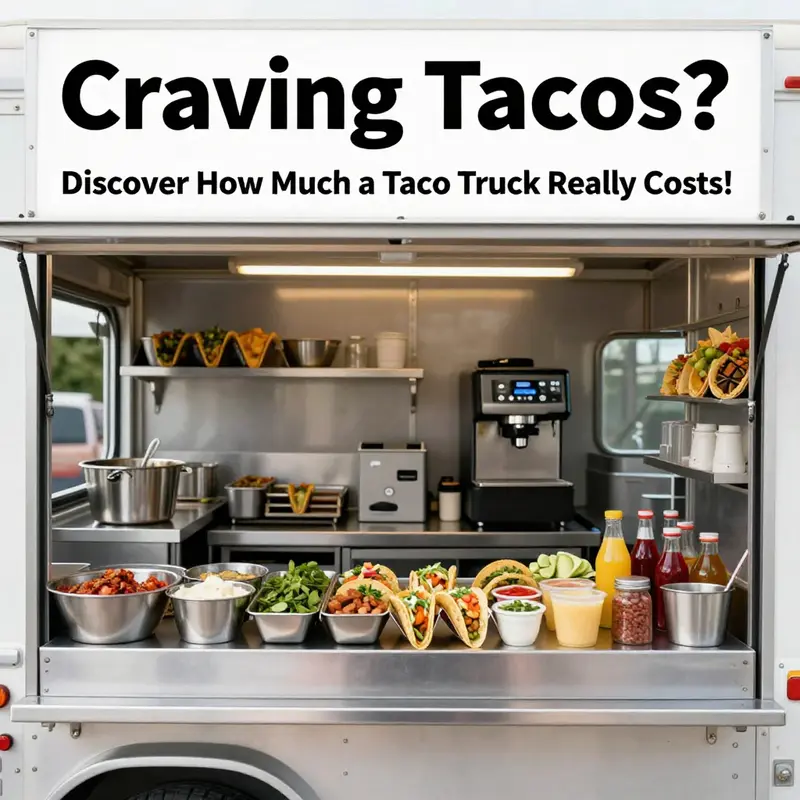
Prices for a taco truck aren’t set in stone by fashion or whim alone. They hinge on a chain of decisions about the equipment that turns a shell on wheels into a fully functioning kitchen. If you’re budgeting for a mobile taco operation, understanding how equipment levels translate into cost is essential. The market reflects a simple truth: the more you invest in performance, safety, and reliability, the higher the upfront price tag, but often the lower your ongoing costs and headaches. On the flip side, choosing the most economical setup may shrink the initial price, yet it can inflate long-term costs through energy waste, frequent repairs, and regulatory risk. In this sense, equipment levels don’t just affect one line on a balance sheet. They shape food safety, service speed, menu flexibility, and the consistency that builds a loyal customer base.
From a high-level view, a taco truck’s equipment spectrum runs from basic, brand-new catering trailers to fully outfitted mobile food units. You can think of the range as a staircase: the ground floor is a simple, new trailer designed for basic operations; stepping up adds capabilities like advanced cooking systems, robust refrigeration, and dedicated ventilation. Each rung up the ladder adds specialized features that push the price higher but also increase efficiency and safety. For someone inspecting the market today, the numbers illustrate the scale. A basic new catering trailer can begin at surprisingly low levels when purchased in bulk, serving as a cost-effective entry point for operators starting small or testing concepts. As the needs grow—faster service, hotter climates, more complex menus—the price rises toward turnkey, fully equipped options that promise immediate operation with minimal setup. This progression is not merely about more metal and more appliances; it’s about how the kitchen functions as a system and how that system aligns with your business model.
High-end equipment costs are often the first thing that catches a new buyer’s eye because it’s tangible. Energy-efficient appliances, for example, come with higher upfront price tags than their conventional counterparts. The purchase price is an investment in reduced operating costs over time. In a taco truck, where every minute on the line translates into revenue, even modest gains in energy efficiency can compound into meaningful savings on fuel and electricity. The kitchen’s heart—its cooking line—benefits from modern, efficient burners, griddles, and fryers that optimize throughput without sacrificing safety. When you pair these with smart power sets and efficient electrical systems, you not only cut costs on the back end but also improve consistency and quality at the point of sale. Yet the value of high-end equipment isn’t only about energy bills. Premium refrigeration units protect perishable ingredients, extend shelf life, and preserve texture and flavor in hot environments. They help prevent spoilage, which, in a taco operation, translates into fewer waste days and more reliable menu execution.
Material quality and construction standards are another axis along which costs move. Corrosion-resistant materials, robust welds, and durable coatings add to the initial price but deliver longer life and lower downtime. A truck built with high-grade stainless steel or equivalent alloys resists the wear of daily traffic, constant cleaning, and the vibrations of road travel. This durability matters when you’re moving from city to city, setting up in different weather and street conditions. Construction standards underpin not just longevity but also compliance with health and safety codes. When equipment is built to recognized standards, it reduces the likelihood of faults that could trigger inspections, shutdowns, or costly retrofits. In environments where food safety is non-negotiable, better materials and tighter construction translate into fewer regulatory headaches and more confidence from customers who judge a truck by its appearance and its cleanliness as much as by its taste.
On the other side of the ledger sits lower-tier equipment. The lure is obvious: lower upfront costs, the possibility of a leaner monthly payment, and a faster path to market. However, the cost story doesn’t end at the initial price. Cheaper equipment can require more frequent maintenance and repairs, which erodes the supposed savings. Intermittent performance can dilute service speed, which is crucial during busy lunch rushes or festival settings. Missing features, such as proper ventilation, adequate fire suppression, or precise temperature control, raise safety and health concerns that could lead to delayed openings, fines, or, in the worst case, shutdowns. In hot climates, the absence of reliable cooling can compromise ingredients and affect taste, texture, and guest experience. From a business perspective, these gaps often manifest as higher operating costs per served taco and a shorter window of maximum profitability. The math isn’t just about dollars spent up front; it’s about dollars earned or lost through efficiency, safety, and consistency over time.
The strategic choice between high-end and lower-tier equipment hinges on a careful balance of investment and maintenance. It’s not enough to simply compare sticker prices. A responsible approach weighs initial outlay against expected maintenance costs, energy consumption, and the risk of non-compliance with health department standards. A well-balanced machine suite can reduce maintenance frequency, extend service life, and support higher throughput, which, in turn, yields a clearer path to profitability. Compliance is a silent but critical factor. Adequate ventilation, fire suppression, and safe handling of cooking byproducts aren’t optional extras; they’re essential features that protect staff and customers and keep operations on the right side of regulations. When a truck is equipped with robust safety systems and proper ventilation, it not only shores up compliance but enhances the customer experience by reducing odors, heat buildup, and the risk of incidents on the curb. The cost of non-compliance—inspections, penalties, or forced downtime—can dwarf the initial savings of a cheaper setup. In other words, the long view matters as much as the short term, and equipment choices are the primary lever that determines that horizon.
From a financial planning standpoint, the conversation around equipment levels should also consider predictable maintenance budgets and the potential for modular upgrades. Upgrades can be staged as a business grows, spreading capital expenditure over time while preserving cash flow. A modular approach enables operators to upgrade critical components first—like refrigeration and ventilation—before expanding to more specialized equipment as demand warrants. It also provides a pathway to adapt to changing menus, seasonal shifts, and different venues. The ability to adapt is itself a form of value that’s hard to quantify at the point of purchase but grows in significance as a business scales. In practice, this means starting with a solid, reliable core that meets regulatory requirements and delivers consistent performance, then layering in enhancements as revenue streams stabilize and expansion plans materialize.
For readers plotting a budget, it helps to anchor expectations in a holistic view of total cost of ownership. The headline price is only the beginning. Operational costs—fuel or electricity, water, waste disposal, and routine servicing—accumulate over time. A kitchen designed around energy efficiency, with durable, well-fitted components, tends to incur lower variable costs than a setup built from bargain components that demand frequent attention. The relationship between upfront costs and ongoing expenses is not linear; it’s curved, with a steeper rise when safety or compliance are compromised and a steadier slope when the equipment is reliable, compliant, and efficient. The equation becomes even more nuanced when climate and location are factored in. A truck operating in a climate with intense heat or cold will face different demands for insulation, cooling capacity, and electrical load. In such scenarios, skimping on equipment can backfire quickly as performance degrades during peak service windows, reducing dish output and guest satisfaction. Conversely, operators who invest in robust, well-matched equipment often experience smoother service hours, more consistent product quality, and fewer emergency repairs, all of which feed into a healthier bottom line over an extended period.
The practical takeaway is that equipment levels are a primary variable in the price of a taco truck, but they’re also a major determinant of profitability and resilience. A buyer should assess not only the sticker price but the total cost of ownership, including energy use, maintenance cycles, space efficiency, and compliance readiness. It’s a nuanced calculus: pay more today to save more tomorrow, or risk higher surprises down the road. The narrative above aligns with the broader market understanding that a basic, new, minimally equipped trailer sits at one end of the spectrum while a fully integrated, safety-conscious, efficiency-optimized unit sits at the other. Between these endpoints lies a continuum where practical decisions—what you cook, where you operate, and how you plan to grow—shape the value you extract from every dollar invested. In this sense, equipment levels don’t simply raise or lower the price; they define the financial rhythm of a taco truck’s life, influencing everything from service speed to menu creativity and brand reliability.
For operators who want a clearer directional map, there is value in reviewing the safety and equipment standards applied in the industry, which often highlight the importance of ventilation, fire suppression, and durable construction as central cost drivers. A thoughtful reading of safety-focused guidance helps align budgeting with real-world compliance expectations, reducing the risk that a lower upfront price leads to expensive regulatory detours later. The trade-off is not merely about saving money now but about protecting customers, staff, and the enterprise as it scales. In short, the equipment level a buyer chooses is a tangible lever that moves the price and, more importantly, the path to sustainable growth. This understanding helps translate market listings into informed expectations: a basic, new trailer starts a cost ladder that climbs toward more capable, turnkey operations as the business plan, climate considerations, and service ambitions expand. And while the exact numbers will vary, the principle remains consistent: investing in the right equipment level sets a foundation for consistent quality, compliant operations, and a more predictable, durable path to profitability.
For deeper exploration of how equipment standards shape performance and practical applications in the food-truck sector, see Safety advancements in food trucks. This resource anchors the discussion by underscoring how safety-compliant design and maintenance decisions influence both cost and long-term success. Safety advancements in food trucks
External resource for standards and performance guidance: https://www.foodtrucks.com/industry-resources/equipment-standards-and-performance
The Price Grid of Customization: How Much a Taco Truck Really Costs When You Build It Your Own Way
Choosing to launch a taco venture on wheels means more than selecting a vehicle. It means assembling a compact kitchen, a brand, and a service experience that fits a very specific business model. The price you pay for that mobile kitchen grows or shrinks with every customization choice you make.
The base platform covers only part of the final bill; the rest is added by decisions about exterior finish, kitchen equipment and layout, interior insulation and climate control, and the branding and technology that make a truck feel like a complete, professional operation rather than a passing idea. The market reflects that truth clearly. Baseline figures show a wide range, from a simple trailer to a turnkey, fully equipped unit that can push beyond a modest six-figure investment when every option is dialed in. Yet the pricing itself does not exist in a vacuum. It is a map drawn by the operator’s choices about form, function, and brand, with each customization factor contributing its own line item to the final total, sometimes in predictable increments, sometimes as a premium step-change that changes the entire cost landscape.
Exterior finish is the first visible decision that shapes price and perception. A standard exterior might be wrapped for quick branding or painted for a durable, premium look. Wraps offer speed and flexibility but can fade or peel over time, while paint raises upfront cost but typically sustains a high-end image longer. The choice influences maintenance expectations and resale value as well as first impressions online and in person. The practical upshot is that choosing between wrap and paint is not just about cost; it is about brand storytelling and long-term maintenance.
Kitchen equipment and layout are the core of any taco truck’s function. A basic setup might include a compact grill, a small griddle, a refrigeration unit, a sink, and a handwashing station. Upgrading to professional-grade appliances increases upfront costs but improves throughput, consistency, and compliance. The layout—linear, L-shaped, or island—shapes workflow, permits more equipment, and can affect permitting timelines and electrical load. Higher-end configurations demand more maintenance, spare parts, and specialized technician support, but they also enable higher volumes and faster service.
Interior customization, insulation, ventilation, and climate control impact energy use, staff comfort, and reliability. Good insulation reduces cooling and heating costs, while ventilation keeps the kitchen and front-of-house comfortable and compliant with health codes. An efficient interior flow minimizes wasted motion and improves service speed, with direct implications for labor costs and guest experience.
Branding and technology integration have become expectations in the modern street-food landscape. Digital menus, QR interactions, and integrated POS/payments can boost accuracy and speed, but add to the upfront and ongoing management cost. A thoughtful package—consistent visuals, reliable hardware, and scalable software—can pay back through higher average checks, faster service, and easier expansion across markets.
In short, the price of a taco truck is not a single sticker price but a constellation of decisions. A modular approach helps explains why two trucks that look similar can have very different total costs. Start with the vehicle platform that meets your minimum viable operations, then layer in exterior finishes, equipment upgrades, interior enhancements, and technology features in a planned sequence that aligns with your business goals. The result is a budget that reflects both current needs and future growth potential.
null
null
Final thoughts
Understanding how much a taco truck costs can pave the way for your culinary dreams or event planning success. Whether you’re after a brand-new, fully equipped truck or a used model to start your food journey, remember that equipment, customization, and regional trends are key factors influencing these prices. Embrace the diverse offerings that taco trucks bring to the table, and let your love for tacos inspire your next adventure!

