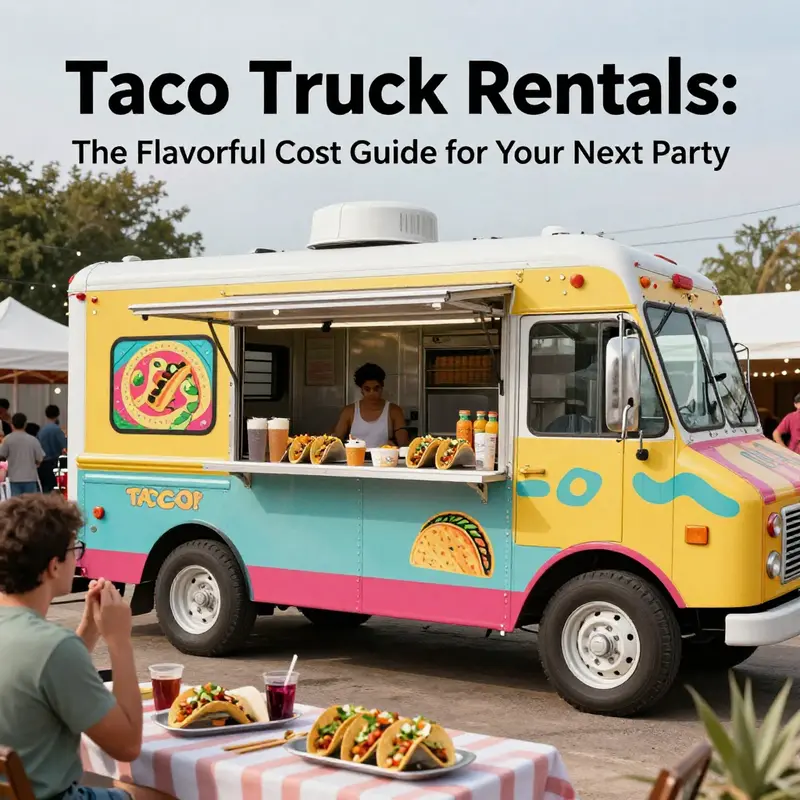
Renting a taco truck for your next party can be a delightful addition that elevates any gathering with delicious flavors and vibrant culinary experiences! With so many options available, understanding the costs and factors that influence pricing is essential. From enticing menu options and geographical pricing variances to service add-ons and considerations regarding your guest count, every detail plays a vital role in creating an unforgettable taco truck experience. In the chapters that follow, we’ll explore the intricacies of taco truck rentals, helping you make an informed decision for your next event.
Fuel, Flavor, and Footing: A Practical Deep Dive into the Real Cost of Renting a Taco Truck for Your Party
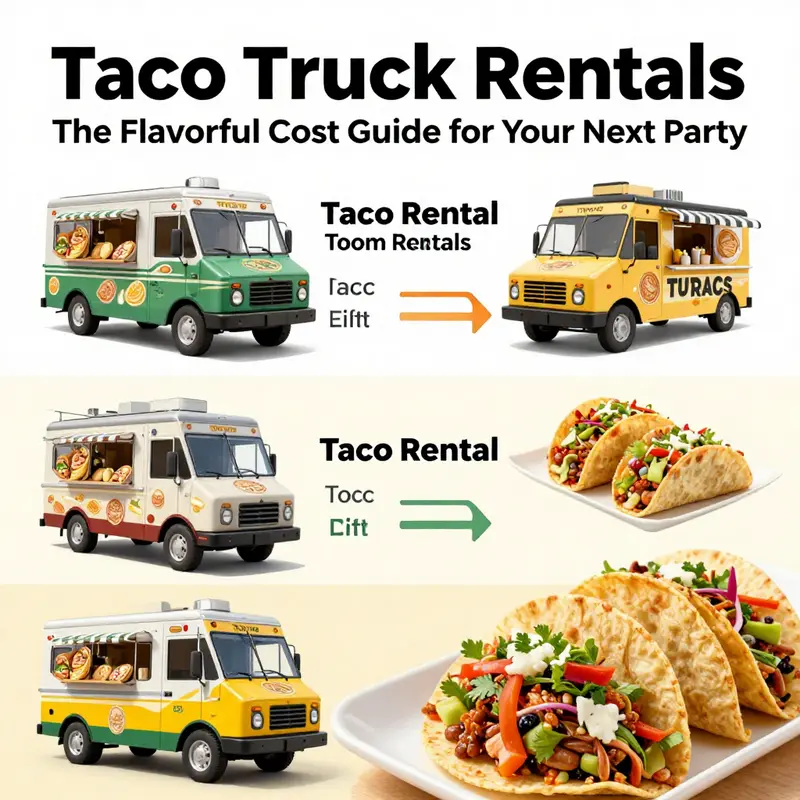
When you picture a party with a taco truck at the center, the image is more than pretty photos and sizzling soundtracks. It’s a turn-key experience that blends cuisine, logistics, and budget into one live event. The sticker price you see upfront is only part of the story. Behind every taco there lies a bundle of decisions: the kind of truck you hire, how long it will be on-site, where you’re hosting, what the menu looks like, and which extras you might want to lock in for a smooth day. Pricing in this space moves with demand, capacity, and the level of service that turns a great street-food moment into a seamless party centerpiece. As you begin to map costs for your gathering, the most useful frame is to treat the rental as a package deal rather than a single line item. The goal is not only to feed guests but to ensure the experience is reliable, safe, and scalable to your guest list and venue. With that mindset, you begin to see how the numbers align with your priorities for ambiance, variety, and timing. The base price is just the doorway; the full cost is the corridor you walk through to create the event you envision.
From the first outreach to the final cleanup, a taco truck rental is a multi-faceted engagement. Vendors typically price on a daily cadence, often with a standard window of six to eight hours for a full-day service. The resulting base range is broad, reflecting differences in truck size, equipment quality, and branding investment. A basic used unit with limited equipment may land near the lower end of the spectrum, while mid-range custom builds—featuring modern grills, refrigeration, and well-planned workflow—pull you toward the middle. Luxury or fully branded units, especially those built to cater to premium menus or special events, push into higher territory. The real-world implication is simple: if you want a handful of reliably cooked options with consistent service, you should anticipate a budget that accommodates a stronger kitchen setup and an experienced team on site. In practice, the base rental can stretch from several hundred dollars to more than a couple thousand per day, depending on the truck’s condition, capacity, and the prestige of the vendor.
When you move from the base rental into the realm of duration, discounts, and add-ons, the cost picture becomes more nuanced. If your party lasts one or two days, the supplier usually applies standard daily rates with limited opportunity for significant discounts. But extend the relationship to three days or more, and price breaks frequently appear. Ten to twenty percent discounts for longer engagements are not unusual, and monthly leases do surface for recurring events or ongoing pop-up activity. These arrangements matter for planners who host quarterly gatherings or seasonal celebrations, where a truck can become a repeat guest in the calendar. Yet even with longer commitments, you still face a constellation of variable costs that can significantly sway the final invoice. Fuel or propane is a daily necessity for most kitchens on wheels, and it typically adds a modest but definite line item. Insurance, often a baseline liability inclusion, can rise with extended coverage or higher risk factors, while optional protections for equipment damage or food safety can tilt the total further. Staffing—whether the client supplies its own culinary team or the truck vendor provides chefs and servers—quickly becomes a deciding factor in both price and guest experience. Permits and licenses for temporary food service, if required by local regulations, can also appear as a non-negligible expense. Finally, delivery, setup, and teardown fees can be bundled into the rental or billed separately, and those logistics costs vary with distance, access challenges, and time windows.
The geographic heartbeat of pricing also matters. Urban markets—the cities where demand, overhead, and compliance costs rise—tend to carry a premium that can push quotes upward by a meaningful margin. A price uplift of roughly 15 to 30 percent compared with rural or smaller-area markets is common, reflecting the complexities of moving equipment through crowded streets and meeting city health and safety requirements. In less dense regions, fierce competition among vendors can unlock more favorable terms and flexible schedules, especially in the shoulder seasons when demand dips. Understanding this dynamic is crucial when you’re comparing quotes and trying to forecast total costs rather than simply chasing the lowest daily rate. The menu itself can become a cost lever. Trucks that offer carne asada, al pastor, or vegan options typically command higher prices, not only for the ingredients themselves but for the trained staff who can execute those items with quality and speed. The more elaborate the menu, the more the kitchen workflow matters, and that translates into labor costs and potential time windows.
All of this sits atop the overarching need for reliability and safety. A vendor who can demonstrate verifiable technical details about corrosion-resistant materials, properly certified kitchen equipment, and adherence to health standards provides a measure of reassurance that is worth paying for. The strongest partnerships are those that offer good after-sales support and dependable communication, reducing the friction that often arises on event days. In this context, risk mitigation becomes part of the cost calculus. It’s not just about what you pay to rent the truck but what you save by avoiding delays, equipment failures, or regulatory missteps. When a vendor presents a clear contract with defined responsibilities for delivery, setup, and cleanup, the value becomes tangible. The emphasis should be on a vendor who can demonstrate readiness—not just a glossy menu or a flashy truck—but a track record of compliant, on-time performance and transparent pricing.
To ground this discussion in practical numbers, consider a typical one-day event that runs six to eight hours with a mid-range truck. A reasonable base rental might range from about $1,200 to $2,000. Add fuel or propane, often a modest daily charge, and you’re looking at roughly $100 to $150 more. Insurance, sometimes bundled but sometimes itemized, can add $100 to $300 depending on coverage depth. Staffing—if you don’t bring your own crew—adds another $200 to $500. Permits and licensing, dictated by local rules, can fall in the $100 to $500 range. Delivery and setup fees, essential for getting the truck to the venue and ready to operate, typically sit around $100 to $300. Summing these components, a practical afternoon can land in a range near $1,800 to $3,750 for a single day, with higher-end configurations pushing beyond that bracket. This is a useful rule of thumb when you’re outlining a party budget and calibrating expectations against the guest count, service style, and venue constraints.
As you approach quotes, a systematic, thoughtful approach pays dividends. Begin with a clear guest count and a rough sense of the menu scope. If your event calls for multiple protein options and vegetarian or vegan foods, you will likely see higher base rates and a need for extra staff for smooth execution. Clarify whether delivery, set-up, and teardown are included, and ask for a detailed schedule that aligns with your event timing. Request written specifications about the truck’s kitchen equipment, safety standards, and any certifications relevant to your region. A vendor who can provide concrete details about the kitchen layout, ventilation, and waste management is worth prioritizing, because the day-of flow often determines how enjoyable the experience feels for guests and hosts alike. When it comes to negotiation, consider long-term engagement for recurring events. If you anticipate regular parties or pop-up appearances, locking in a multi-event arrangement can unlock meaningful savings while ensuring continuity of service quality. If you want practical context about the kinds of trucks that shape these price points, see the overview of top taco truck models that many event planners find helpful. Top taco truck models for culinary success.
For those who want to explore the broader landscape, keep in mind that market dynamics influence the range of costs as well. The base rental is a starting point, not a fixed ceiling. In some cases, a high-end or custom-built truck can command a premium well above the typical range, especially when the unit is designed for a high-volume, premium-service experience. Yet there are always opportunities to optimize. Bundling services, selecting a shorter event window, or choosing a simpler menu can yield substantial savings without sacrificing the core appeal of having a taco-centric celebration. The objective is to align the party’s texture and tempo with financial boundaries that feel comfortable, so that guests enjoy the food and the atmosphere just as much as the event’s visual branding. As you finalize your plan, a careful read of the contractual terms is crucial. Ensure there’s a clear understanding of who handles permits, who is responsible for onsite waste disposal, how power needs are met, and what contingencies exist for inclement weather or last-minute schedule changes. All these elements contribute to a cohesive, stress-free experience and, ultimately, to the party’s success.
If you’re seeking additional context on procurement and supplier reliability, a pragmatic step is to look for vendors with transparent, testable details and strong health-and-safety compliance narratives. The goal is to minimize surprises and keep the event within budget while delivering the flavorful centerpiece guests expect from a taco-focused celebration. For readers who want to dive deeper into the pricing landscape, an external overview of used taco truck suppliers and market trends offers helpful context on how the market is evolving and what buyers should watch for in negotiations. External reference
In sum, the cost of renting a taco truck for a party is a mosaic built from base price, duration, location, menu complexity, service add-ons, and the vendor’s reliability. A well-planned budget recognizes that the day’s success depends not just on the food but on the logistics that carry it—from delivery to teardown. By anchoring your planning to realistic price ranges and documenting what’s included in each quote, you position yourself to create a memorable, flavorful experience without overshadowing it with bureaucratic or budgetary friction. And while price remains a critical factor, the choice of partner—one that can deliver steady service, clear communication, and dependable safety standards—often makes the difference between a good party and a genuinely exceptional one.
Flavor, Flexibility, and Fare: How Menu Choices Shape the Price of a Taco Truck for Your Party
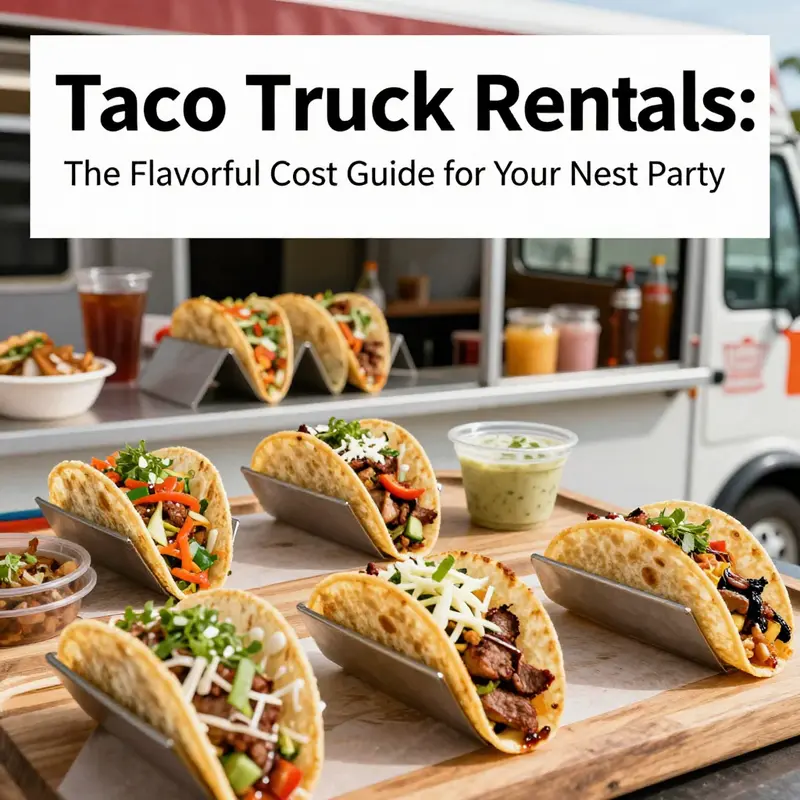
Choosing a taco truck for a party often feels like balancing a plate: you want enough variety to please guests, but you also need to keep costs manageable so the event stays within budget. The menu you design for the truck acts like the spine of the whole operation. It drives the equipment you need, the staff you hire, the quantity of ingredients you stock, and ultimately the price you pay for a full-day service. In practice, menu options do more than just determine what ends up on the serving line; they establish the cost structure that powers every decision—from the gear loaded onto the truck to the time your cooks spend preparing each order. When you map the menu to the party’s size, location, and timing, you begin to see how a few deliberate choices can keep you within your price range without sacrificing flavor or guest satisfaction.
A fundamental truth emerges early in the planning: simplicity is a powerful cost-reducer. A pared-down menu featuring core items—say, a handful of beef or chicken tacos, plus reliable sides like beans and rice—tends to require fewer and less specialized appliances. The equipment needs are straightforward, and the energy demand is steadier, which translates to lower upfront investments and lighter ongoing maintenance. Inventory management becomes a calmer routine, with fewer ingredients to track, fewer perishables to monitor, and less risk of waste due to miscounts or spoilage. Training the staff also becomes simpler; when cooks master a compact set of tasks, service time stays tight, and the kitchen runs like a well-oiled machine under the stress of a party timeline. The cost impact follows logically: less gear, fewer ingredients, and faster turnover mean lower setup expenses and ongoing operating costs. For a first-time party planner, starting with a simple menu provides a clearer path to profitability and a quicker return on investment.
Yet the same logic that makes simplicity appealing can tempt operators to stay too conservative. When a taco truck pivots toward an extensive menu—house-made salsas, fresh guacamole, or exotic proteins such as carnitas or al pastor—the cost equation tilts. The need for advanced equipment becomes real. Certain dishes require specialized appliances: rotisseries, larger grills, additional fry stations, or specialized exhaust and ventilation configurations. Larger refrigeration units and more extensive ingredient storage are often necessary to maintain freshness and consistency. The footprint of the kitchen grows, not just in square footage but in the complexity of the supply chain. For outdoor venues without reliable power or water hookups, some items become tricky to execute. The more nuanced the menu, the more you pay for the truck’s versatility—the price tag of capability rises with the breadth of offerings. In other words, expansion comes at a premium, and that premium translates into higher rental or production costs for the day.
This tension between simplicity and complexity extends beyond gear. The labor side of the equation follows suit. A more ambitious menu demands more thorough staff training. Each new item brings its own cooking technique, timing, and ingredient handling quirks. While seasoned cooks can master multiple techniques, the transition from a basic to a complex menu inevitably raises labor costs. And with more steps, there is more room for error. Food waste tends to creep upward when a menu is crowded with options. A 2026 article from Restaurant Business Online highlights the correlation between menu complexity and waste rates, noting that waste can rise by a notable margin as menus diversify. That waste isn’t just a lost margin; it reshapes your procurement strategy, inventory turnover, and even the sustainability narrative you present to clients. For someone staging a party, this can translate into sending back overs or having to absorb the cost of unsold goods, which chips away at the bottom line and undercuts the perceived value of the experience.
The budget landscape, then, becomes a balance sheet dance between appetite and prudence. A focused, high-margin menu can unlock tighter cost controls and better financial predictability. It allows the operator to optimize workflow, reduce the number of moving parts on the day of the event, and minimize the risk of budget overruns. For aspiring taco truck operators, a staged approach can be especially prudent. The February 2026 report from Mobile Food Vendor Insights underscores the appeal of starting lean—lower upfront costs and a faster path to market entry—before expanding to more ambitious menus as the business gains traction. This phased strategy aligns well with the party-planning process. You begin with a menu that fits the guest profile and venue constraints, then you can scale up if demand and feedback justify the investment.
There is also a strategic pricing implication tied to menu design. A simpler menu tends to Command lower unit costs per item, which can translate into a more approachable price point for party hosts who are calculating overall event costs. The guest experience remains robust because the kitchen can deliver consistent quality at speed, but the economics are friendlier. Conversely, a sophisticated menu, while it may attract a crowd seeking premium, chef-inspired offerings, often carries a higher price ceiling for the event. That price is a function not only of the raw ingredients but of the operational heft required to produce them—extra staff for multi-course preparation, more careful sourcing, and the need for reliable power and water infrastructure at the venue. These are not abstract concerns; they turn directly into the final number a host sees on the invoice. The decision, then, hinges on the host’s priorities: is the aim to maximize variety and perceived luxury, or to ensure dependable service within a conservative budget?
In practice, the most thoughtful approach blends these insights into a design for value. Start with a core lineup that guarantees a satisfying baseline—two or three protein options, dependable sides, and a basic salsa or pico to brighten plates. This core preserves the core benefits of simplicity: speed, reliability, and cost control. Then offer a carefully curated set of add-ons or limited-time specials that can be introduced or removed based on guest response and budget tolerance. The key is to create scalability without fragility. A well-structured menu roadmap can guide procurement, labor planning, and equipment configuration in a way that preserves efficiency even as the host tests a few innovative offerings. From a vendor perspective, framing the menu in this way makes capacity planning more predictable. You know how many headcounts you need, how much cooler real estate to allocate, and how long a typical service window will take. For the host, it translates into a transparent quote and a clearer read on where dollars are going and why.
The practical upshot for anyone orchestrating a party is simple: if you want to manage the bottom line, you must design the menu with an eye toward operational realities as much as taste. Taste will always matter; it is the draw that people remember. But the cost of taste is the cost of the kitchen—the number of burners, the size of the fridge, the skill level demanded of staff, and the logistics of restocking on the fly at a busy outdoor venue. The better you understand how each menu decision reverberates through these layers, the more precisely you can tailor a quote that feels fair to the client and sustainable for the operator.
To help with the decision process, consider leveraging examples of successful menu design while keeping the unique constraints of your event in view. A lean, high-margin confident setup can be complemented by a limited set of premium ingredients and a couple of crowd-pleasing twists—enough to differentiate the offering without destabilizing the operation. In this way, the price of admission to a memorable taco experience remains within reach for hosts planning intimate gatherings or milestone celebrations alike. If you want to explore broader models that balance culinary ambition with operational practicality, a related resource highlights how the best taco truck operations structure offerings to achieve both customer delight and financial viability. taco-trucks-unleashed-top-5-models-for-culinary-success This reference can serve as a compass when you’re weighing whether to invest in additional capability or step back to a more streamlined, repeatable menu.
As you plan, keep in mind that a party is not a restaurant. It is a moment when guests expect warmth, timeliness, and flavor, delivered within the constraints of a single day and a defined budget. Menu design is the lever you pull to deliver that promise. By choosing a menu strategy that aligns with your guests’ expectations and your cost structure, you not only set a fair price but also create a service that feels effortless—an impression that is priceless when the party is over and memories linger.
External resource for further reading on menu strategy and its impact on cost can be found here: Restaurant Business Online – Food Truck Menu Strategy.
Where the Price Goes: Navigating Geographic Pricing for Taco Truck Parties
When you start planning a taco truck party, you quickly realize that the price you’re quoted is rarely a fixed number tied to a simple menu. Instead, it behaves like a map, with the lines of cost drawing differently across cities, towns, and even neighborhoods. The geography of a catering event matters as much as the recipe on the truck’s grill. Location shapes overheads, labor availability, and the very appetite of the market, and all of these factors converge to determine what you pay for a single day of festive food on wheels. You may know the broad range for a full-day rental—roughly five hundred to fifteen hundred dollars for a typical six to eight hour service—but in practice, that range bends, sometimes dramatically, as you move from one location to another. In peak urban corridors, a premium footprint is almost expected. A truck that aims to serve a high-demand, fast-moving market can command higher base rates, particularly when it relies on gourmet ingredients, custom menus, or requires special permits. Conversely, in smaller towns or rural settings, the same truck may extend more generous terms, not out of generosity but out of the competitive dynamics that accompany thinner markets and fewer competing vendors. The geography of pricing is not simply about distance; it is a tapestry woven from operating costs, proximity to suppliers, demand curves, and the cost of doing business where you are hosting the party.
To unpack this tapestry, consider the concrete levers that push prices up or down in different places. First, the urban overhead. In major metropolitan areas like coastal power hubs or dense inland cities, the energy required to park, stage, and operate a mobile kitchen can be noticeably higher. You are paying for parking access, city permits, and compliance costs that keep a fleet moving through crowded streets and limited spaces. The price of labor in these zones often reflects higher living costs and stricter scheduling realities. When a taco truck must staff a longer day, perhaps with an on-site manager or extra cooks, the labor component of the quote swells accordingly. All of this adds to the bottom line and is reflected in the per-hour or per-event charges that clients see on the contract.
Ingredient costs are the second spine of geographic pricing. Proximity to reliable suppliers matters, and the closer a truck is to its core distribution hubs, the less it might have to pay for fresh produce, meat, and tortillas. Seasonal fluctuations can also shift regional pricing. An area with easy access to abundant agricultural regions can enjoy more stable costs; another that relies on more distant supply chains may see price bumps tied to transport and storage. The price of ingredients, while filtered through the vendor’s standards and the menu’s complexity, often interacts with location in non-linear ways. A simple carne asada option set may cost differently from a plant-based or chef-driven customization depending on regional supply realities and the truck’s sourcing strategy.
Demand and competition also ride on the same geographic winds. High-demand markets with robust food cultures attract more operators, which can intensify competition. Price signals in these places tend to reflect both premium service expectations and the scarcity of available trucks during popular event windows. In places where trucks are plentiful and competition is fierce, vendors may pursue more price-sensitive strategies or offer bundled packages to secure bookings. In less saturated regions, vendors can price more aggressively to attract a fledgling event calendar, gradually building a local reputation through word of mouth and repeat bookings. The dynamic here is subtle but powerful: two identical menu configurations in two different geographies can yield markedly different outcomes in terms of revenue and client satisfaction.
A practical consequence of these geography-driven forces is the emergence of dynamic pricing models in some vendors’ playbooks. Dynamic pricing, when applied to taco truck catering, can account for the distance traveled to the venue, the total hours needed, and even the days of the week or time of day. A truck that must trek across a metropolitan area for a late-evening event, or one that travels out of town to a private residence, may introduce travel surcharges or extended-service fees to cover the time and fuel required beyond a conventional six-to-eight-hour window. In this sense, price becomes a reflection not just of the food but of the logistics that enable the food to arrive, set up, and serve in the right mood, at the right time, and with the right pace for a party.
Add-ons also shift with location. Delivery to a complex venue with restricted access, on-site setup necessitating multiple staff members, or post-event cleanup can be included in the package or billed separately. The more intricate the logistical demands in a given locale, the more likely you are to see a separate line item or a higher bundled rate. It is essential to read the contract with an eye toward what’s included: some quotes are half the price until you realize what is missing, while others present a transparent menu of options that clearly spells out labor, transport, and equipment cost. The story behind the price, then, is not only about the food but about the full service experience—the hand-offs, the timing, and the aftercare that make a party feel effortless when guests are circulating with tacos in hand.
The breadth of pricing intuition becomes even more critical when you consider the number of guests and the menu’s complexity. A large guest list amplifies the need for more food and longer service times, which can push pricing upward in geographic markets where staffing and fuel are costly. A kitchen that can efficiently scale to feed hundreds may command a premium in dense cities where the perception of value includes speed and consistency. Conversely, in areas with fewer people to feed, vendors may tailor offerings to reduce waste and stretch the card for a lower per-person cost, aligning the menu to the event’s tempo and the host’s budget. A simple taco setup with straightforward toppings may be more expensive in a high-cost urban corridor than a broader, regionally-inspired spread in a smaller market where the same truck can navigate, park, and operate with less friction.
For planners seeking a realistic sense of the landscape, a practical starting point is to gather quotes from local vendors and compare them across your locale. It helps to frame your request with clear event details: the date, hours, guest count, and any special menu preferences. The more context you provide, the more meaningful the comparisons will be. It’s also wise to request a breakdown of costs to see how much is tied to food preparation versus logistics versus staff. If a vendor cites a seemingly low base price, ask whether that figure assumes delivery, setup, and cleanup are included or priced separately. Conversely, if a quote appears to be high, push for a breakdown that explains the premium—whether it covers specialized ingredients, custom menus, or extensive travel and permitting requirements. This level of scrutiny helps you differentiate true value from a favorable headline price and ensures you are not blindsided by add-ons after you commit.
In practice, most planners find that the average full-day rental lands somewhere in the middle of the broad spectrum—reflecting a blend of city-level overheads, menu ambition, and service expectations. The base range of roughly $500 to $1,500 for a full day provides a useful reference, while recognizing that in major cities or for premium concepts the price can easily exceed $2,000. The key is to anchor expectations to the specifics of your locale and your event’s demands. If your venue is in a high-demand urban area with limited parking and strict permit requirements, you should anticipate higher costs unless you are able to optimize timing or menu simplicity. If you’re in a smaller community with a supportive event ecosystem, you may find more flexibility to negotiate and tailor the package to your budget while still delivering a vibrant and satisfying taco experience.
What complicates this further is the variability of regional pricing across the country. A national overview shows that urban centers—Los Angeles, New York, Miami, and similar metros—tend to command higher catering premiums, largely for overhead and demand reasons, while regional pockets with growing food truck scenes may exhibit more competitive pricing. Ingredient costs fluctuate with local markets, and a vendor’s sourcing strategy can tilt prices toward more expensive cuts or rare toppings for a signature menu. The Spruce Eats’ regional analysis highlights how these patterns shift across the United States, offering a macro view that aligns with what hosts experience at the local level. Keeping this broader lens in mind helps you calibrate your expectations before you dive into quotes and menus.
For those exploring this topic in depth, a useful resource exists that analyzes regional price trends by region and provides a framework for understanding what drives differences in taco truck catering prices. It’s not a recipe book, but it offers a map of how costs drift across geographies, which can be invaluable when you’re trying to budget a party without sacrificing quality. While the exact prices you’ll see in your city may differ, the underlying ideas—overhead, demand, competition, and logistics—remain consistent. See the external resource linked at the end of this chapter for a broader regional perspective, and then use that insight to ground your local quote comparisons.
In the end, the price you pay is less a fixed sticker and more a dialogue between your event’s unique needs and the market’s geography. Understanding that dialogue—how location, scale, and service interact—empowers you to negotiate confidently. It helps you decide where to lean into premium options and where to opt for leaner configurations that still deliver flavor and fun. As you plan, keep the geographic dimension front and center: it’s the geography of flavor and fees, the map of costs that makes your taco truck party not just a feast for the guests but a well-balanced investment for the host. And when you’re ready to compare, remember that one size does not fit all. Your location, your guest count, and your menu choices will determine the story your price tells—and that story, properly read, can turn a good party into a great one.
For a practical starting point and to explore how region and logistics influence pricing in your area, you can explore the linked resource that discusses regional catering prices and what drivers tend to push those numbers up or down. taco-trucks-unleashed-top-5-models-for-culinary-success. This internal link helps contextualize how equipment, setup, and service levels can interact with geography to shape your final bill, while reminding you that the core experience—the taste, the vibe, and the celebration—still travels with the truck to wherever your party unfolds.
External resource: For a broader view of how geography shapes pricing across regions, see The Spruce Eats’ regional analysis of taco truck catering prices by region. It provides a comprehensive look at how regional economic conditions, demand, and logistics influence what vendors charge and how hosts can calibrate expectations accordingly. https://www.thespruceeats.com/taco-truck-catering-prices-by-region-4785306
Beyond the Base Fee: How Service Add-Ons Shape the Final Price of a Taco Truck for Your Party
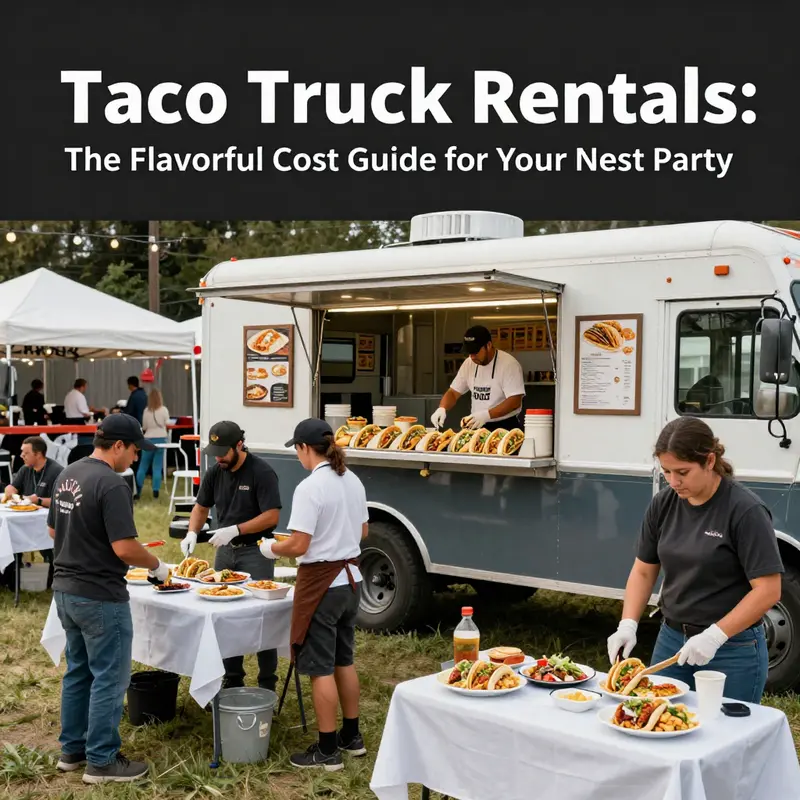
When you start planning a taco truck for a party, the first figure you encounter is often a base rental range. That number typically covers the truck for a day, commonly about six to eight hours, and it can swing from roughly five hundred dollars to around a thousand or more for standard service. In bustling urban markets, or for trucks that promise gourmet ingredients, custom menus, or high-demand timing, that base price can creep toward two thousand dollars or higher. Yet the base fee is only the starting line. What happens next is usually determined by a set of service add-ons that can dramatically shift the final tally. Understanding these add-ons is essential for budgeting with clarity, negotiating from a position of knowledge, and ensuring the experience you envision aligns with the number you write on the party budget sheet. The add-ons act as the levers and pulleys of the price machine, each one adjusting the ease of service, the presentation, or the reliability of the food experience, and each one bearing its own rationale rooted in food safety, logistics, and guest satisfaction.
Consider the impulse to elevate a casual taco experience into a branded, event-specific culinary moment. Custom branding and design are among the most noticeable upgrades. A truck can be wrapped or accented with your company colors, event logo, or wedding motif, turning the vehicle into a moving centerpiece rather than a vending station. This level of customization demands specialized printing and labor, which translates into higher upfront costs. For corporate gatherings, product launches, or milestone celebrations, the investment pays off in a cohesive, photo-ready presentation that reinforces the event’s identity. The calibration of brand visuals on a mobile kitchen is not merely cosmetic; it is part of the attendee experience. Guests remember the vibe as much as the flavors, and in that memory lie the intangible returns of a well-branded service. While branding adds value, it is important to weigh it against guest count and venue duration. A smaller party might prefer a subtler design presence, while a regional or national brand may opt for a more expansive look. Either way, the branding line is a reminder that the truck is a moving stage; the cost reflects the scale of its visual performance as well as the food.
Another category of add-ons centers on the kitchen’s capability to handle volume with speed and consistency. Advanced food preparation equipment—such as multiple grills, additional fryers, or automated assembly stations—can substantially increase throughput. In events with tight timelines or a high guest-to-food ratio, these upgrades translate into shorter lines and fresher experiences. They also demand more electricity, more ventilation, and, consequently, more technical oversight. The price reflects not only the equipment itself but the expertise required to operate it safely and efficiently. For a large crowd at an outdoor festival or a sprawling wedding reception, this investment is often worth the premium, because it directly influences service pace and portion control. But for a smaller gathering, the extra capacity may be underutilized, and the same end result—warm, tasty tacos—can be achieved without the extra gear.
Food safety and freshness come into sharper relief when you add mobile refrigeration and storage units. Integrated refrigerators, walk-in coolers, or extra cold storage help keep perishable ingredients—pico de gallo, guacamole, dairy-based toppings—at safe temperatures from prep to plate. These systems reduce waste and guard against spoilage, especially in warmer climates or when service spans long hours. Yet they add weight, require reliable power, and contribute to ongoing maintenance costs. The result is a more robust operational footprint, which translates into higher price tags but also greater reliability and peace of mind for clients who cannot afford a single compromised batch. The value here is not merely in cold storage; it’s in food safety, consistency, and the ability to serve up high-quality ingredients, even at scale.
Presentation details, sometimes dismissed as small touches, can also shape the price trajectory. Practical accessories like paper taco holders help maintain neatness and portion control, while branded serving utensils contribute to a professional, cohesive look that matches the truck’s branding. These items may seem minor, yet they contribute to the perceived value of the service. Guests notice when a line looks orderly and elegant, and organizers notice when the whole presentation feels thoughtfully engineered rather than improvised. Such enhancements can justify modest premium bumps, especially when the event is designed around a certain aesthetic or theme. In some cases, the cost of presentation is folded into a package price, but in others it appears as a line item, revealing how much the event prioritizes ambiance alongside appetite.
Power and utility solutions warrant careful consideration, particularly for outdoor venues without reliable electricity. Solar panels, generators, or battery-powered appliances extend a truck’s reach into off-grid locations and enable full operation in parks, beaches, or urban spaces with limited access. The trade-off is a higher upfront investment and ongoing fuel or maintenance costs, yet the freedom to choose among a wider set of venues can be a decisive factor for planners who want to avoid last-minute constraints or fees. The ability to operate smoothly at an off-grid site offers a strategic advantage, translating into predictable service even when infrastructure is scarce.
Staffing and service packages are another axis along which price diverges. A turnkey approach that includes dedicated chefs, servers, and perhaps bartender support adds convenience and consistency to the guest experience. Training and tipping policies for staff may be included or billed separately, and some packages promise a dedicated point of contact who coordinates with the event planner. For hosts who want a seamless, hands-off experience, staffing can be a major part of the value proposition. It’s easy to underestimate how much a single attentive server can improve the pace of service and the quality of the interaction with guests, especially in a busy moment when tacos are flying and attention is divided. Packages that bundle staffing into the daily rate often present a clearer, more predictable quote and can be easier to manage within a fixed budget, even if the unit price looks higher at first glance.
Time is money, and for taco trucks, travel distance and operating hours are real levers in the pricing equation. Late-night operations, short-notice event dates, or long-distance travel beyond a typical radius all carry additional charges. The travel and extended-hours fees reflect the logistical juggling behind the scenes: fuel, tolls, crew overnight accommodations, and the risk or reality of traffic delays. For planners, the practical effect is that a party set for dusk or after-hours in a remote location will come with a premium, but it also unlocks the possibility of venue choices that otherwise would be off-limits. The key is to forecast a reasonable operating window and to ask vendors how they structure these increments—per hour, per mile, or as a blended rate—so you can compare apples to apples when you receive quotes.
Customizing menus is perhaps the most content-rich driver of price variation. A standard taco lineup may be affordable and straightforward; introducing gourmet or specialty ingredients—such as carne asada-style options, creative salsas, or vegan adaptations—can elevate ingredient costs and preparation time. Some clients want locally sourced produce or premium proteins, which come with higher procurement costs but can elevate the menu’s appeal and authenticity. Menu customization also carries implications for staffing, equipment needs, and kitchen workflow. If a kitchen is configured to handle a wider array of toppings or to maintain strict temperature controls for delicate ingredients, the price will reflect that added complexity. For guests, a more varied menu can translate to a more memorable experience, but it’s essential to calibrate expectations with the guest list and the event’s budget envelope so that the culinary ambitions align with financial realities.
All these add-ons—branding, equipment, refrigeration, presentation, power, staffing, hours, travel, and menu customization—do not exist in isolation. They compound, intersect, and sometimes overlap in ways that can either streamline or complicate the experience. A well-structured package that bundles the most relevant add-ons into a single quoted offering can be particularly attractive, providing a predictable total price and simplifying decision-making. Conversely, piecemeal add-ons allow bespoke tailoring but require careful budgeting and a bit more negotiation. The key for planners is to anchor decisions in event goals: what is most important for guests’ enjoyment, what aligns with the event’s theme, and what remains feasible within the overall budget. With those guardrails in place, the price conversation becomes less about chasing the lowest number and more about sculpting a experience that feels cohesive and satisfying from first bite to last bite.
For readers who want a concrete frame to explore how truck configurations translate into service speed and efficiency, there is a useful perspective in one of the industry retrospectives on top taco truck setups. It explores how different truck models support throughput, workflow, and presentation without sacrificing quality. This resource helps translate the abstract ideas of add-ons into tangible outcomes you can observe at an event. Top 5 Taco Truck Models for Culinary Success offers a snapshot of how truck design can influence operational dynamics, which is a helpful companion when you are weighing whether to invest more in specialized equipment or more elaborate branding. As you review quotes, keep this in mind: the most expensive option is not always the best, and the most basic setup is not inherently the most cost-effective if it compromises the guest experience. You want the combination of reliability, speed, presentation, and taste that aligns with your event’s rhythm.
When it comes to making sense of these add-ons, the practical path is to request quotes that clearly delineate what is included and what is added as a separate line item. Ask for a baseline package and then a few tiered add-on options so you can see how each choice shifts the total price. Compare what is truly essential for your event—food safety, speed, and a presentation that fits the occasion—versus what would be nice to have but not strictly necessary. And where possible, seek bundled pricing for the most critical components, such as staffing plus extended hours, or branding plus professional serving ware. Finally, remember to factor in the externalities that often accompany a party’s atmosphere: permit considerations, on-site safety protocols, and contingency plans for weather or last-minute changes. These can influence both the cost and the feasibility of your event, and recognizing them early can prevent unwelcome surprises as the date approaches.
For readers seeking broader context beyond the immediate quotes, an industry guide published recently offers technical specifications, practical uses, and a framework for evaluating these options. It serves as a useful external reference to the pricing narratives discussed here and can help you triangulate what you are seeing in actual proposals. https://www.tacocartguide.com/technical-specifications-and-practical-uses
null
null
Final thoughts
Renting a taco truck can be an incredible addition to any event, bringing not just delicious food but also a fun and festive ambiance. By considering the cost factors such as menu options, geographical location, service add-ons, and your guest count, you’ll be better prepared to make the right choices. Whether you’re planning an office gathering, a birthday bash, or a lively wedding reception, a taco truck is sure to be a hit. Embrace the vibrant tastes of Mexico, and let the fiesta begin!