
Taco trucks blend culinary craft with mobility, making them a versatile choice for businesses, events, and communities. Whether you’re dreaming of serving street favorites at festivals or offering convenient lunches at the office, understanding the costs involved helps you compare options, forecast expenses, and estimate potential ROI before you take the leap.
null
null
Counting the Costs on Four Wheels: A Thorough Look at New vs. Used Taco Trucks
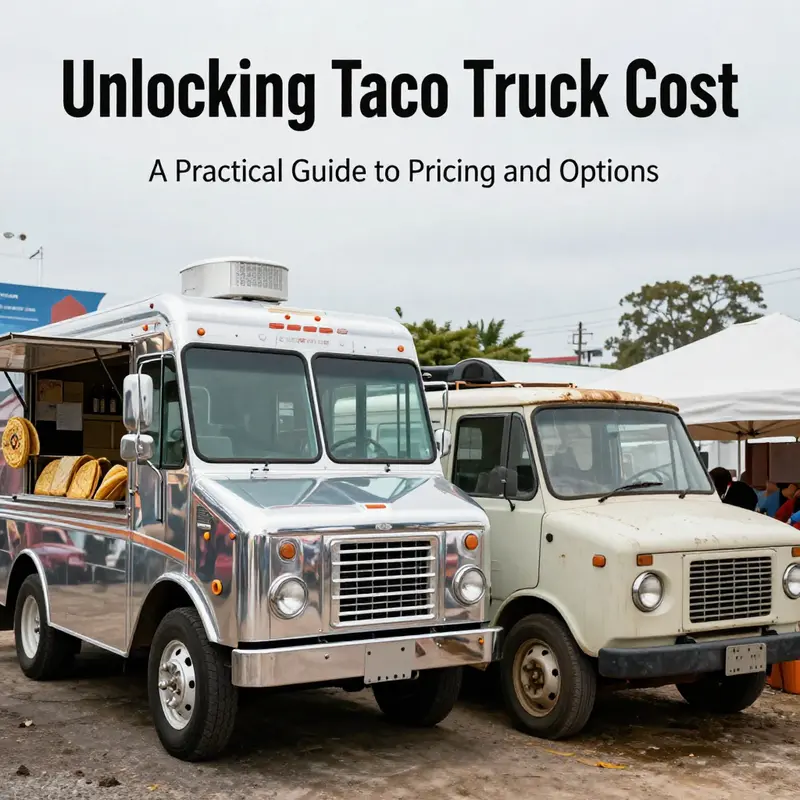
For aspiring taco business owners, the cost of a mobile kitchen looms large before any sizzling bargains or flavor experiments begin. A taco truck is not merely a vehicle; it is a compact culinary workspace that must meet health codes, handle busy service windows, and keep equipment running through peak hours. The price tag reflects not just the chassis or trailer but a spectrum of choices about size, materials, automation, and the level of customization. In markets around the world, buyers confront a simple truth: there are substantial differences between starting with a basic manual setup and investing in a fully automated kitchen on wheels, and those differences show up in the total cost of ownership as clearly as they do in the speed of service.\n\nNew versus used is the first fork in the road. On the one hand, a brand-new unit promises fresh compliance with today’s standards, warranty coverage, and the latest layout options. On the other hand, a used truck offers immediate cost relief and potential room to upgrade interiors gradually, but it comes with more risk. The risk can be managed through rigorous due diligence, yet it remains the dominant factor behind why some buyers end up choosing a newer model despite higher upfront prices. The cost implications of that choice ripple through every subsequent purchase decision—from repairs and insurance to licensing and inspections.\n\nWithin the new-truck category, there is a clear layering of capabilities that translates into price bands. In Europe, for instance, basic manual kitchen models commonly start around five thousand euros and can rise in steps to twelve thousand euros as the entry point, depending on configuration and local market terms. Move up to semi-automation, where semi-automatic fryers or pre-portioning tools save labor during rushes, and the price range widens to roughly twelve thousand to twenty-five thousand euros. At the far end, fully automated kitchen trucks—featuring robotic assistance, smart ovens, and automated grills—can push the price well beyond twenty-five thousand euros. These figures reflect the typical market segments and emphasize how automation and interior finishes drive the budget, sometimes dramatically.\n\nFrom a separate but related market view, listings on global supplier platforms in another currency illustrate how the same decision tree looks in different regions. Basic catering trailers can appear at surprisingly accessible price points, followed by more capable standard trailers that include a service window and essential cooking layouts. As buyers scale up, fully customized and feature-rich models—designed with premium finishes, integrated electrical systems, and robust stainless interiors—occupy the higher end of the spectrum. Importantly, these price ranges are quoted for new, factory-built trailers and do not include shipping, taxes, or the purchase of separate kitchen equipment such as grills, refrigeration units, or ventilation systems. The total spend requires a clear scope and a due diligence plan that accounts for every add-on.\n\nIn many markets, the alternative is to start with a new unit that sits at a lower tier of automation or a more modest footprint. For instance, basic manual kitchen configurations might be available at five thousand euros, with a broader array of upgrades available in stepping stones up to about twelve thousand euros. If a buyer needs better throughput without a full automation overhaul, a hybrid kitchen truck—combining semi-automated systems with hands-on workflows—could land in the mid-range, roughly twelve thousand to twenty-five thousand euros, depending on layout choices and the quality of finishes. For operations focused on high-volume traffic across a short season, that middle ground often makes the most practical sense, offering improved consistency and speed without embracing the higher risk and cost of a fully automated system.\n\nAcross the Atlantic, a similar ladder of options appears in dollars, though the numbers obviously differ due to currency and market conditions. New basic models begin in the low thousands, with more capable trailers climbing into the mid-range, and specialized, high-end builds swelling past the upper end. It is essential to remember that new does not guarantee simplicity or problem-free operation; a well-planned fit-out is as critical as the chassis itself. This is where the design phase matters most: placing the service window where traffic arrives, choosing materials that resist heat and grease, and selecting electrical and plumbing configurations that meet local health codes.\n\nUsed taco trucks present a different calculus. They can offer significant upfront savings, but the savings come with trade-offs that require thorough assessment. The price is only part of the decision; the condition of the mechanical systems, compliance with local regulations, and the potential for hidden maintenance costs all influence total cost of ownership. When importing a used unit, buyers must verify technical capability—whether the truck’s kitchen equipment, ventilation, and electrical systems function safely and reliably—and ensure that the unit meets prevailing health and safety requirements in their jurisdiction. Transactional reliability matters, too: a seasoned supplier with a track record reduces the risk of counterfeit or misrepresented equipment. After-sales support becomes a critical factor, as revised warranties or replacement parts may be scarce for older configurations.\n\nCost drivers extend beyond the frame and the stove line. Interior customization can add a great deal to the budget: the finish quality of surfaces, the presence of built-in storage, the durability of the service window, and the layout’s ability to promote smooth workflow. The more stainless steel and the more automated the workflow, the higher the upfront price, but there can be long-run value in efficiency, reduced labor, and faster service—especially in markets where peak-hour demand is fierce. You may also encounter ancillary costs that aren’t obvious at first glance: shipping or transport to your location, taxes and duties for cross-border purchases, the cost of installing and wiring in essential equipment, and even regulatory inspections that verify compliance with hygiene standards before your first service.\n\nTo navigate these options confidently, it helps to have a clear plan for quoting and comparison. Request quotes that specify every element of the build: the base trailer or truck, interior finishes, electrical system capacity, ventilation, water and waste plumbing, service window features, and any automation components. When you review quotes, translate them into a single total cost of ownership scenario that includes maintenance, insurance, fuel, licensing, and potential renovations needed to pass inspections in your city. If you want a broader sense of how model choices relate to price and performance, consider exploring a guide that examines the top taco truck models and what they bring to a kitchen on wheels. This resource can help you align your budget with your operational goals and your expected service tempo. Taco Trucks Unleashed: Top 5 Models for Culinary Success\n\nAs you map out the budget, keep in mind the non-monetary aspects of your decision. The speed of service, reliability of the equipment, and the ability to scale up as demand grows are essential considerations that can influence the long-term profitability of your venture. For some buyers, the path toward maximum throughput lies in a fully automated kitchen on wheels. For others, a well-planned, sturdier manual setup with a carefully chosen hybrid system offers a balanced approach that supports steady growth without overwhelming risk. Either path requires rigorous due diligence, a realistic forecast of demand, and a clear plan for getting licensed and compliant in your operating area. In the end, the price tag will reflect not only what you buy but how well you design, operate, and maintain a mobile kitchen that serves good food consistently, even as foot traffic ebbs and flows with the weather, events, and local competition. For further considerations on sourcing strategies for used units and the importance of reliability and support, you may want to review external guidance on used-taco-truck sourcing to inform your negotiations and planning. https://www.cateringtruckprices.com/used-taco-truck-sourcing-strategy
Rolling Price Tags: How Much a Taco Truck Really Costs and Why It Varies
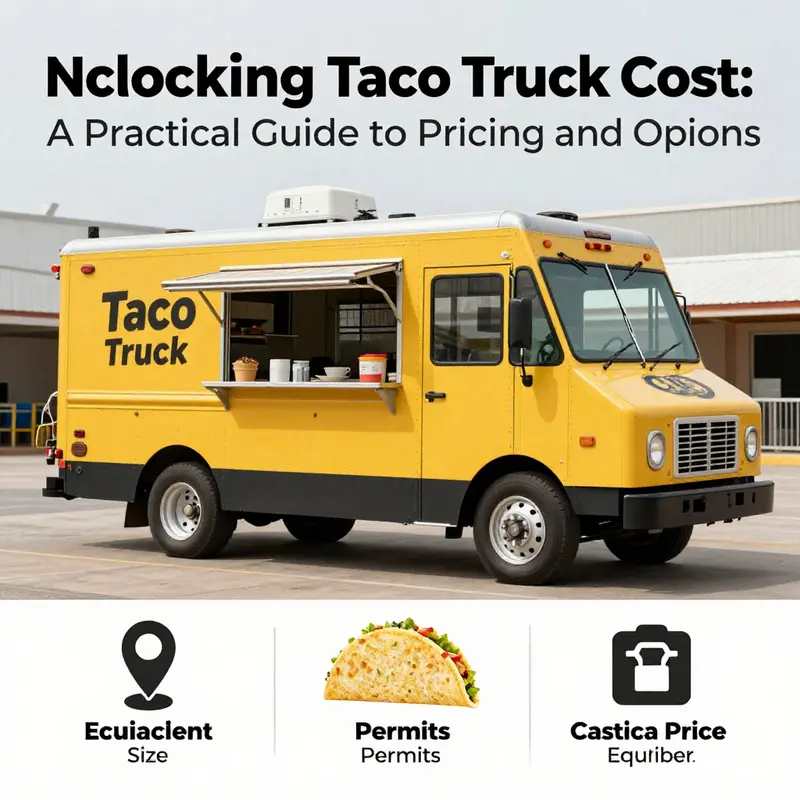
Prices for a taco truck do not arrive in a single fixed number. They arrive as a spectrum shaped by vehicle type, build quality, kitchen equipment, and the realities of timing, location, and scale. When someone asks how much a taco truck costs, the first answer is always: “It depends on what you want to be able to do with it.” The simplest way to see this is to trace the price ladder from a bare-bones setup to a fully realized, restaurant-on-wheels operation. On one end you’ll find converted vans and shell trailers that can get you on the street with minimal features. On the other end you’ll encounter fully customized, premium finishes with a robust electrical system, multiple cooking stations, and brand-specific interiors. Between these two extremes sits a wide middle ground where most new entrants find a practical balance between up-front cost and long-term capability.
The type of vehicle you start with establishes the baseline. A converted van, which provides mobility with a compact footprint, often represents the most affordable entry point. In current market patterns, basic listings for these kinds of entries can hover around the low thousands, and on some platforms you’ll see price points in the $1,700 to $2,000 range for shell configurations or simple trailers. These numbers typically reflect a unit that still requires substantial kitchen equipment to be operational. If you want a turnkey cooking setup, you’ll generally step into the next tier: a standard mobile trailer. These are designed with a service window, basic ventilation, and enough space to mount essential appliances. The typical price corridor for a standard trailer tends to be broader, usually around $3,600 to $6,500, with variations depending on size, insulation, and whether basic features like a ready-to-use sink or a modest exhaust system are included.
Beyond that, the market offers customized and feature-rich solutions. Here the pricing becomes much more elastic, driven by size, layout, and the level of finishes. A common expectation for newer, factory-built options with better interiors and more sophisticated electrical configurations sits roughly in the $4,300 to $8,000 range. Those figures reflect more than cosmetic polish; they often include stronger chassis construction, better insulation, and more reliable service windows. Yet even within this band, the choice of materials matters. Stainless steel interiors, reinforced frames, and high-grade seals add durability but also raise the price. In practice, if your menu requires multiple cooking zones—perhaps a combination of grilling, frying, and warming—upgrades in equipment and controls can push the upfront cost significantly higher, especially when you factor in the integration of ventilation systems, water delivery and filtration, and energy supply arrangements.
Another axis that reshapes affordability is the market reality of new versus used or refurbished units. Used or refurbished options can deliver substantial savings, but they bring trade-offs in wear, warranty coverage, and the risk of hidden maintenance needs. A used vehicle can be attractive for operators with tight budgets, particularly if it already includes some essential equipment, but it also tends to require more immediate upgrades or replacements. For buyers who seek reliability with fewer surprises, a new unit—while pricier—often carries a cleaner warranty, longer service life, and a predictable maintenance path. In practice, many buyers map out a blended strategy: start with a solid base trailer and add equipment upgrades as the business scales, rather than purchasing every appliance at once. This approach helps manage cash flow while preserving flexibility for menu changes.
But the trailer price is only part of the total investment. The kitchen gear itself—grills, fryers, refrigerators, a soup or sauce station, sinks, and waste containment—becomes a major driver of cost. A basic two-station configuration can suffice for a narrow menu, but most taco concepts benefit from at least a bistro-style grill and a front-service area with a prep sink, plus a refrigeration unit to hold proteins, dairy, and toppings safely. Each piece of equipment has operating implications: energy consumption, gas line requirements, fume control, and the need for reliable water and waste management. A heavier or more complex array of equipment can push the total well past the initial trailer price, particularly if simultaneous cooking processes must be maintained without compromising safety or sanitation.
Customization and branding represent another relevant layer. The interior layout can be tailored to optimize workflow, while the exterior can reflect a brand language that makes the truck stand out. Color, decals, interior finishes, and the configuration of storage and work surfaces all affect cost. A straightforward, clean, professional look may be achievable at a moderate premium, but a space designed to support a larger menu or a faster service pace—think multiple cooking stations, specialized stations for toppings, or integrated branding lighting—will carry a higher price tag. In this space, vendors commonly emphasize flexibility: you can request specific sizes, colors, interior equipment choices, and branding options, all of which influence the quote. The message from suppliers is clear: customization increases the likelihood of meeting exact operational needs, but it also raises the initial outlay.
Shipping, taxes, and regulatory compliance further shape the final number. For imported units, freight costs, duties, and warranty logistics can alter the delivered price by a meaningful margin. Even domestically produced trailers may require local inspections, safety certifications, and potentially minor adaptions to meet health and fire-safety standards in different jurisdictions. Those compliance steps, while sometimes overlooked in early budgeting, are essential to getting a taco truck onto public streets without interruption. In many markets, insurance costs, licensing fees, and ongoing inspections become recurring line items that operators must estimate when projecting break-even timelines. It is not unusual for the visible price tag to be only a portion of the year-one cost when permits, power hookups, and water supply are added to the equation.
All these factors coalesce into a simple truth: there is a wide price spectrum for taco trucks, and the right choice depends on the intended menu, the anticipated volume, and the level of resilience you want built into the operation. A minimal setup can emerge around the $2,000 mark, but a fully realized, ready-to-operate kitchen on wheels can exceed $10,000, often by far, when one accounts for high-end finishes, multi-station cooking, robust electrical systems, and brand-driven interiors. This is not just about buying a vehicle; it is about ensuring the mobile kitchen can consistently produce the foods you envision, at the pace your business demands, in a way that survives daily wear and the unpredictability of outdoor service.
As you chart this path, it helps to compare model configurations and their implied capabilities. A compact overview of top model layouts can illuminate how different setups translate into menu breadth and service speed. The idea is not to pick a single option now but to understand how each tier aligns with your plans, from the complexity of your salsa bar to the number of customers you expect per hour. With a clear sense of needs, you can request quotes that reflect both hardware and workflow requirements, rather than simply chasing the lowest price. For a broader sense of the model landscape and to see how operators balance space, equipment, and branding, you can consult resources that summarize popular configurations and their practical implications. See the overview linked here for a concise comparison of common formats and their trade-offs. Top food truck models for entrepreneurs.
When you finally assemble your cost forecast, think in terms of milestones rather than a single line item. The initial purchase is the starting point, but your operating budget should include maintenance, upgrades, and replacements as your business grows. The menu you plan, the intensity of service, and the climates where you operate all influence long-term costs. You may find that a high-quality, well-configured trailer reduces downtime and maintenance frequency, which in turn improves profitability. On the other hand, keeping a lean setup with the flexibility to add equipment later can preserve cash during early, uncertain months.
In the end, the price you pay is less important than the price you can sustain while delivering a compelling guest experience. A taco truck is a platform for taste, speed, and reliability. Its cost is a map of your operational choices, your menu ambitions, and your readiness to invest in a mobile kitchen that can thrive on busy corners and crowded festivals alike. For further context on pricing dynamics and the broader supplier landscape, you can review external pricing examples that illustrate how basic, mid-range, and premium configurations are valued in real markets. External reference: https://www.alibaba.com/product-detail/cheap-catering-trailer-taco-food-cart-snack1600977871471.html?spm=a2700.galleryofferlist.pimage.1.1e4c7d6aYrPjUv&buyerdirect=true
Rolling Costs: A Practical Guide to Taco Truck Prices, Equipment, and What It Really Takes
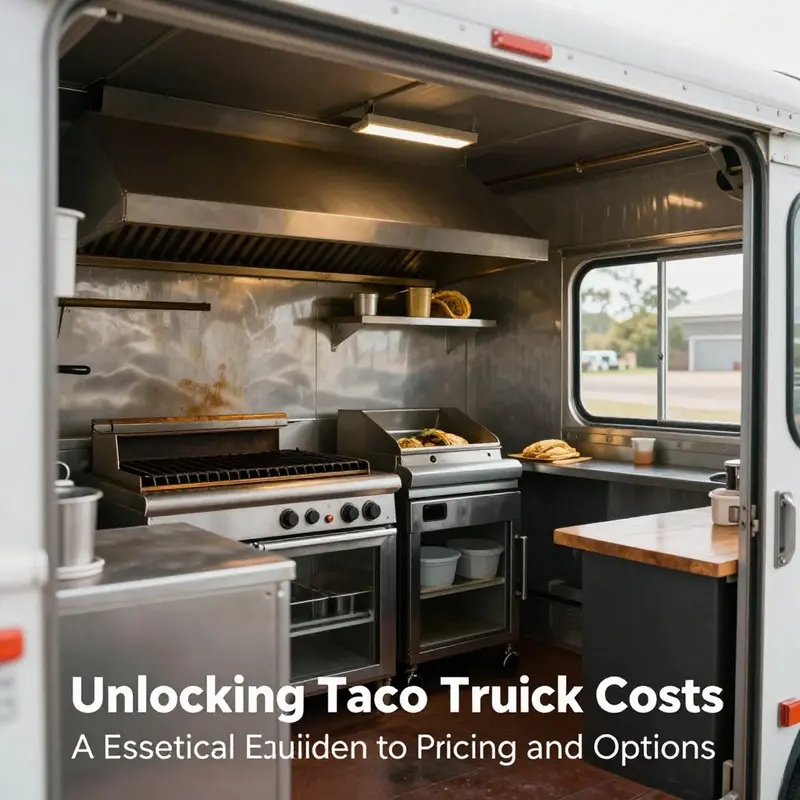
Prices for a taco truck are never a single number. They shift with size, condition, and the level of equipment you expect to include. For anyone weighing the leap into street food on wheels, understanding these levers matters as much as the actual flavors you plan to serve. In recent market observations, the base cost of the trailer or cart you would drive onto a busy corner can vary widely. Some listings point to entry level, budget friendly options in the range of a few thousand dollars for basic catering trailers, while more capable mobile trailers and fully equipped rigs sit higher. The exact numbers depend on whether the unit is new or used, how much built in functionality you want, and which supplier you choose. It is possible to encounter a broad spectrum when assessing the market, and the most precise figure always comes from requesting quotes based on your specific needs. Still, a practical frame of reference helps you plan, finance, and avoid sticker shock when you start calling around.
People often start by separating the price into two broad tiers: the shell and what sits inside. The shell is the trailer or cart itself, a steel skeleton with wheels, a service window, and basic plumbing and electrical hooks. The interior is where most of the price swings occur. A simple, budget minded catering trailer can be very affordable when purchased in bulk or as a stripped down unit. In some marketplace contexts, prices around the low two thousands have appeared for larger orders, with unit prices rising modestly as order quantities shrink. This is the kind of bargain that makes sense for entrepreneurs who want to test a concept with a limited footprint and then scale. But once you start adding essential appliances such as a commercial fridge, a fryer, a grill, and a prep counter, the price goes up quickly. The same logic applies if you demand a fully enclosed workspace with stainless steel finishes, an integrated exhaust system, and a built in coffee station. In other words, the road to the price is paved with the hardware you bolt in and the design you demand.
When you look at more complete options, the standard mobile food trailer category begins to take shape. These are typically designed for basic equipment and a service window, and they generally come with a more robust exterior and safer electrical systems than a bare trailer. The price range here tends to land in the several thousand dollar zone, often between three thousand six hundred and six thousand four hundred eighty dollars, depending on size and options. If you want a trailer that can be deployed quickly, with pre installed configurations that vendors market as turnkey, this is the sort of model you will likely be evaluating. It is also the stage where you start thinking about permits, licenses, and the physical footprint you will need in your city or neighborhood. A key point to remember is that these figures typically exclude mandatory health and safety gear, signage, branding, and all the separate kitchen equipment you will need to actually cook and serve food.
Beyond the standard trailer, many buyers gravitate toward customized and feature rich trucks. The allure here is the ability to tailor the interior to your menu and to your brand. Stainless interiors, built in coffee machines, specialty heating elements, energy efficient systems, and even design touches that reflect your concept can push prices higher. The market often shows a spread in this tier from roughly four thousand three hundred up to eight thousand dollars. This range reflects both the extent of customization and the level of premium finishes you select. It is crucial to note that these quoted totals typically refer to the trailer or cart alone. They do not include shipping, taxes, or the purchase of separate kitchen equipment like grills, refrigerators, or mixers. In short, the dollar figure you finally write on a contract is a function of how much you customize and how much you consolidate with the supplier you choose.
To give a clearer snapshot of actual listings, a few concrete examples from current postings illuminate the spectrum. One listing presents a mobile snack food truck electric taco food cart with kitchen equipment priced at around three thousand seven hundred dollars, and it includes a one year warranty after delivery. Another entry, a California camping trailer style food truck, lists at four thousand three hundred dollars and includes after sales support such as video instructions and parts guarantees. A third option, billed as a mobile food truck coffee taco BBQ trailer, climbs to about four thousand eight hundred dollars, signaling that multi cuisine capabilities and additional features can nudge the price upward. Importantly, these examples illustrate base costs for the trailer or cart itself. They do not capture the ongoing costs required to operate legally and efficiently in real world markets.
Alongside the sticker price, there are several unavoidable expense categories that affect the total cost of ownership. Permits and licenses vary by city and state, and they can be substantial depending on local health regulations and zoning. Custom branding and signage—while often essential for attracting customers—adds to the initial outlay and can cost more if you want a high impact design. Refrigeration units, specialized cooking equipment, ventilation, and fire safety features are the core functional upgrades that turn a shell into a working kitchen on wheels. You should also account for ongoing costs such as fuel or electricity, insurance, and maintenance. Energy efficiency can improve long term operating costs, so the choice of equipment with better energy profiles might raise upfront costs but reduce monthly spend. Finally, the service and support plan from the supplier matters. A unit that includes after sales support, video instructions, and parts guarantees can save you time and money down the line, especially for first time operators.
These factors collectively shape the total investment needed to bring a taco concept to the street. For someone starting out, the approach is often to balance a credible, complete package with a sensible budget for the first season. One practical strategy is to target a mid tier: a reliable trailer with essential equipment, solid after sales support, and room to upgrade as the business grows. As your operation expands, you can reinvest in higher end finishes or additional capabilities rather than starting over with a new shell. A thoughtful plan might also explore the option of upgrading equipment piece by piece as demand dictates, rather than purchasing a fully loaded unit up front. For reference and planning, consider per unit pricing in the lower to middle ranges, and use that as a baseline while you compare quotes from several suppliers. The goal is to obtain a realistic, apples to apples comparison across proposals that reflect not only the trailer price but the whole package you need to operate legally and profitably.
As you navigate the pricing landscape, one practical step is to review model options and pricing in light of your menu, target location, and anticipated traffic. A useful way to ground your thinking is to explore credible sources about the broader landscape of taco truck configurations and the common features that top performing models share. For instance, you can explore the range of options and models at a resource that profiles leading choices for entrepreneurs in the space. This kind of overview helps anchor expectations about what constitutes value at different price points and where the real tradeoffs lie. Also, remember that important experiential details, such as the ease of operation, the reliability of the electrical system, and the quality of after sales support, should factor into your assessment alongside the price tag. When you combine the practical price ranges with thoughtful considerations of throughput, quality, and compliance, you arrive at a more grounded, actionable plan for financing and procurement. If you want a concise sense of several popular models that are commonly considered by new operators, you can read an overview such as the Top food truck models for entrepreneurs, which offers a sense of how different configurations align with varied business goals. Top food truck models for entrepreneurs
To close the loop on sourcing, remember that current price specifics are best obtained by directly requesting quotes from suppliers. The listings and examples cited here illustrate baseline expectations, but quotes will reflect your precise needs, including the state or city you plan to operate in, the permits required, and the specific equipment you want integrated. If you want a quick reference to a recent example of base trailer pricing and features, you can also look at external listings that show a range around three thousand seven hundred to four thousand eight hundred dollars, depending on whether the unit is equipped for multiple cuisines or designed for a more compact footprint. For ongoing research and price updates, consult the external pricing sources linked below, which provide direct product details and current offer terms. External pricing source: https://www.made-in-china.com/products/1625975020745600378.html
From Sticker Price to Streetfront ROI: Mapping Taco Truck Costs to Long-Term Value
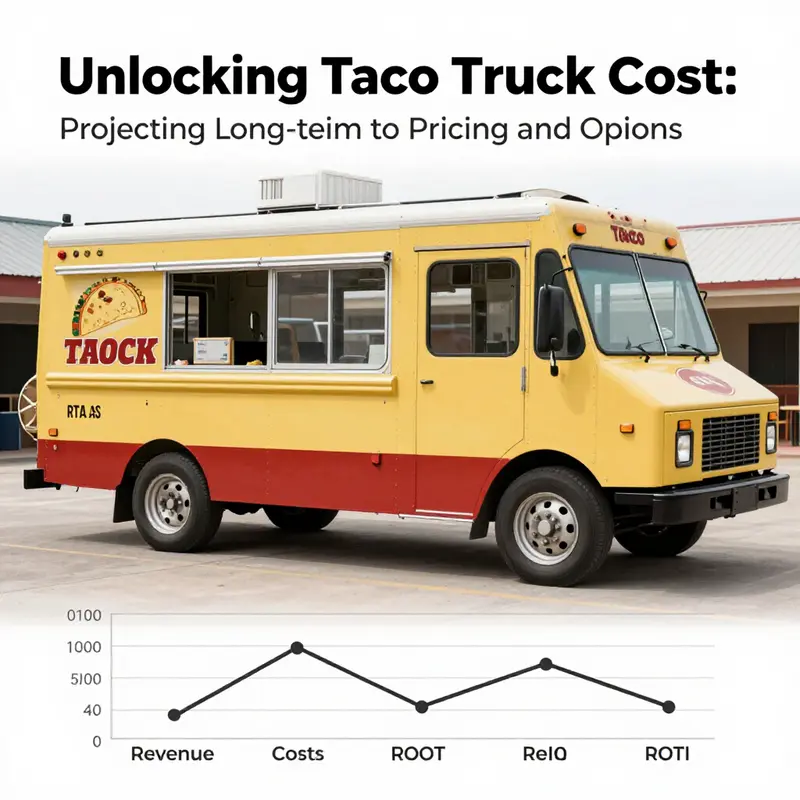
The price tag on a taco truck is only the opening page of a longer story. When entrepreneurs ask how much a taco truck costs, they often fix on a single number and miss the larger arc: what it takes to turn that investment into a sustainable business. The cost landscape stretches from a basic, entry-level trailer to a fully equipped mobile kitchen that blends design with reliable functionality.
Core drivers are straightforward: size, equipment level, materials, and where the unit is manufactured. In a global marketplace, new factory-built trailers arrive with a spectrum of price points. A basic trailer, especially when purchased in volume, can start at a modest sum; as the setup grows more sophisticated—insulated walls, larger service windows, refrigeration, and robust electrical systems—the price climbs into the mid-range. The most customized units with built in coffee machines, premium interiors, and advanced power setups can push into the upper end of the spectrum.
These price bands reflect more than equipment; they reflect the economics of the supply chain. Buyers often face quotes from overseas suppliers with varying lead times, sometimes two weeks to a month or more depending on customization. The practical takeaway is simple: the sticker price is contingent on the level of capability built into the trailer and whether the unit is new or used. For a quick sense of the spectrum, you can imagine a pathway from a lean, budget-friendly platform to a fully equipped, electric-powered model, and you begin to see how costs compound as needs grow.
Beyond upfront cost, the long-term financials matter. Upfront is only the first act; ongoing operating expenses such as fuel, maintenance, insurance, permits, licensing, staffing, and food costs can erode margins if not managed. The appeal of a taco truck often lies in mobility and a lower barrier to entry compared with a brick-and-mortar restaurant, especially when the operator has a clear plan for targeting high-traffic venues, festivals, and events. The ROI story rests on disciplined pricing, efficient production, and location strategy. In practice, a well-optimized kitchen layout, energy-efficient appliances, and a lean front of house can improve cash flow and uptime.
To frame payback, consider a typical high-traffic day. If a truck can generate, say, five hundred to one thousand dollars in gross sales, the math starts to look favorable after accounting for variable costs. In many cases, operators report recouping initial outlays within roughly 12 to 24 months, a window shaped by location dynamics, menu design, and customer volume. Geography matters: a truck near offices or venues will perform differently from one in a slower suburban corridor. Menu design also matters: a streamlined set of items that travel well and repeat reliably tends to stabilize costs and throughput during peak and off-peak hours. The ROI equation is a dance between timing, performance, and asset utilization.
From a practical planning standpoint, the market data often shows a broad cost spectrum: for a standard, well-equipped trailer, expect to invest in the mid-range, with higher costs for premium builds and lower costs for entry models. The final number almost always excludes optional equipment such as grills, fryers, and refrigeration units that operators might purchase separately. In other words, the trailer price is the skeleton; the true operating cost is the body built from equipment choices, maintenance plans, and menu strategy.
For entrepreneurs exploring options, there is value in surveying model variety before committing. A resource that catalogs top models for culinary ventures can provide a useful frame of reference, helping align capital decisions with business goals. See top-food-truck-models-for-entrepreneurs for a sense of how different configurations might map to menu complexity, service pace, and brand presentation. The aim is not to pick a winner but to understand how form and function interact with price and performance so that every dollar invested becomes a step toward a predictable revenue stream.
The final act in cost planning is awareness that external factors influence price and ROI. Exchange rates, shipping costs, and import duties can tilt the bottom line when units are sourced overseas. The market rewards buyers who approach procurement with a structured, numbers-first approach: a clearly defined menu, a site strategy, a maintenance plan, and a realistic forecast of busy periods. Build a baseline model that estimates revenue per day, expected operating days per month, typical cost of goods sold, and ongoing maintenance, then stress-test it across scenarios such as peak season and market downturns.
In closing, the path from sticker price to long-term profitability is navigable when buyers treat the trailer as a dynamic asset, not a static purchase. The cost spectrum mirrors the spectrum of business aspirations. The ROI story hinges on your menu, location strategy, and operational discipline as much as on the trailer itself. The numbers matter, but execution matters more: choose the right level of equipment, design a workflow that minimizes waste, and cultivate repeat customers through consistent quality. If you want deeper context and supplier verification, explore real-time product listings and supplier profiles through credible platforms that support secure transactions and warranties. External data can illuminate pricing realities and help calibrate expectations for your own venture. For broader context, you can consult external resources like https://www.made-in-china.com.
Final thoughts
Understanding taco truck costs helps you plan strategically whether you’re buying or renting. By considering base prices, new vs used options, influencing factors, equipment needs, and long-term financials, you can make informed decisions and set realistic expectations. Wishing you success on your taco truck journey!