
Taco trucks are not just a feast for the senses; they are vibrant hubs of culinary delight that serve communities across cities. From the aroma of sizzling meats to the colorful array of toppings, these mobile kitchens have captured the hearts and taste buds of cuisine lovers and taco fans alike. But have you ever wondered just how much taco trucks make? In this exploration, we will uncover the daily revenues, monthly earnings, profit margins, and the startup investments necessary to keep these flavorful operations rollin’! Each chapter reveals a piece of the financial puzzle that supports the sheer joy of street tacos—perfect for local office workers, event planners, and taco aficionados. So, grab a taco, and let’s embark on this delicious journey together!
A Day’s Taco-Ticket Tally: Reading the Flow of Revenue Through a Mobile Kitchen
The hours between the first bell of the morning and the last clink of a cash register in the evening form a daily weather pattern for a taco truck. Revenue today is not a fixed number but a living fingerprint of where the truck is parked, who it serves, and how efficiently it runs. A truck’s daily income emerges from a blend of location, schedule, menu pricing, and the speed at which it can convert a queue of hungry customers into plates that satisfy both appetite and expectation. The math behind the day’s dollars is not abstract; it unfolds in the lines of customers, the rhythm of orders, and the choices a crew makes about when to push the grill and when to restock a line of ready-to-serve items. In major urban centers, peak hours become a gravitational pull, drawing people who work nearby, study nearby, or just crave a quick, satisfying bite with flavor that feels like a small celebration during a busy day. In those settings, the same truck can glide from lunch to dinner service, leveraging a precise balance of price, portion size, and the speed of service to harvest the day’s sales in a way that feels almost like clockwork, provided the operator has tuned the machine of operations just right.
Industry snapshots show a broad spectrum of daily revenue. On average, a well-located taco truck in a busy urban environment can bring in somewhere between $1,500 and $3,000 in gross sales on a typical day. In peak days, especially when a truck parks near a downtown entertainment district, a stadium complex, or an event venue with a steady stream of foot traffic, daily receipts can top $4,000. There is a cautionary note embedded in those numbers: not every day hits the ceiling, and not every block holds a crowd. Trucks serving rural pockets or operating only during a narrow window—say, lunch hours only—will see substantially lower totals, perhaps in the $500 to $1,000 band. The variability is not a flaw but a feature of the model that thrives on mobility, timing, and responsiveness to demand.
The traffic a truck catches is not merely a function of geography. It is shaped by how the business prices the menu, what it offers beyond the basic taco, and how it packages value for the customer. A truck that can justify premium ingredients—hand-made tortillas, carefully sourced meats, or distinctive toppings—often commands higher ticket prices. Those prices, in turn, can attract a different class of diner—people who value both flavor and experience—while still preserving the compact margins that keep a street operation financially viable. The ability to upsell, offer combos, and present fresh, made-to-order options becomes an essential driver of daily revenue, particularly during the lunch rush when the pace is brisk and the line can move quickly if the process is efficient. Efficient operations are not just about speed; they are about predictability. When a crew can anticipate the volume, they can align food prep with demand, minimize waste, and reduce wait times, which translates to higher sales per hour and a more predictable daily total.
A concrete illustration anchors these abstractions. A popular taco truck in Los Angeles, operating from 11 a.m. to 7 p.m., five days a week in a central business district, has been reported to average about $2,800 in daily sales. The cited average ticket size sits around $9.50, and transactions typically occur through cash and card channels, reflecting a modern, hybrid payment approach that broadens the customer base. The success here is not spontaneous; it rests on a triad of loyal following, astute placement, and a service model designed to minimize wait times. The takeaway is practical: location plus schedule plus price discipline can create a robust daily revenue floor, even in a market with many competing street options.
That floor, however, must be understood in context with costs. Revenue is not profit, and the line between the two can blur quickly when you account for ingredients, fuel, labor, permits, and ongoing equipment maintenance. Typical net profit margins for taco trucks fall in the range of roughly 15% to 25%. In dollars, that means a truck that grosses $2,500 in a day might net somewhere between $375 and $625 after all operating expenses are paid. But the landscape is not uniformly austere. In high-traffic conditions with tight control over costs and a streamlined menu, net margins can push higher—some successful operators report net profits in the 30% to 50% range on days when demand is exceptionally strong and costs stay disciplined. The Street, drawing on industry observations, notes that a truck earning about $2,500 in gross sales could pocket between $750 and $1,250 in profit on a given day when the operating model is efficiently tuned to the tempo of demand. The divergence between these two ranges is not a contradiction; it is a reflection of how variable the street-side business can be, depending on management, pace, and the ability to convert foot traffic into repeat customers.
The daily revenue story also travels through the arc of the month. If a truck sustains a healthy daily average, monthly revenue can be substantial. When a day-to-day pattern hovers in the $1,500 to $3,000 range, multiplying by roughly 20 to 22 operating days would yield monthly gross revenues between about $30,000 and $66,000. In reality, many operators see seasonal swings and monthly variability, and the busier trucks—often perched in tourist zones, near stadiums, or along busy commercial corridors—may edge toward the upper end of that spread or go higher on event-driven days. A truck that hits the higher end of daily revenue repeatedly can accumulate a more robust monthly total, and that success tends to compound as the business builds a loyal customer base and stronger repeat traffic.
To connect these daily observations to the longer arc of business planning, a broader view of the cost structure is essential. Ingredients, fuel, and labor are the obvious recurring costs, but permits, insurance, maintenance, and depreciation on equipment all shave into the daily economics. A careful operator will track cost of goods sold as a percentage of sales, as well as labor hours per transaction, to understand how efficiently the business converts sales into net income. Those efficiency metrics often determine whether the daily revenue translates into meaningful profit or merely covers the bills. The reality is that even in a city with strong demand, a truck has to balance speed and quality. Faster service attracts more customers and reduces labor drag, but cutting corners on ingredients or quality can undermine brand value and suppress long-term revenue growth. The balance is delicate: produce speed without sacrificing the bite and brightness of the flavors that bring people back.
To provide a practical touchstone, consider the role of the ticket size in this ecosystem. The average LA example previously cited includes a per-ticket figure around $9.50. That price point is neither unusually high nor unrealistically low; it sits in a sweet spot for many taco trucks that operate with a focused, high-quality menu. A larger menu with more premium items can command higher average tickets but may require greater prep, longer lines, and more precise inventory management. The better-run trucks often pair premium items with everyday staples in a well-structured menu, so repeat customers find familiar favorites alongside occasional new offerings that justify a slightly higher spend. In this sense, the daily revenue outcome is not purely a function of volume but of the value proposition offered to a captive evening or lunch crowd.
For readers considering how to evaluate or benchmark a new or existing truck, one avenue is to study the broader model of successful street-food businesses. The internal logic guiding these operations often includes a strategic selection of sites that maximize throughput, combined with a menu design that offers both reliability and a dash of novelty. If you want to explore the strategic options in more depth, you can explore one curated set of ideas on the taco-truck business side, described in the article top-food-truck-models-for-entrepreneurs. This resource helps frame the decisions around truck size, kitchen layout, and the pace of service that best aligns with revenue goals while remaining feasible for a small team. top-food-truck-models-for-entrepreneurs
The daily revenue picture remains incomplete without acknowledging the capital side of the business. A new taco truck can cost between roughly $80,000 and $150,000, depending on whether a unit is custom-built or purchased used. Some aspiring operators look at options sourced from international markets, with used trucks and pre-owned components offering cost savings that can shorten the path to profitability. Market choices can also influence lead times and compliance costs, as the supply chain for mobile food units includes a mix of domestic fabrication and overseas manufacturing. Industry notes have highlighted how manufacturers in certain regions have built scale around mobile kitchen units, delivering cost-efficient designs with shorter lead times. These supply-chain dynamics can matter for a business plan because the upfront capital outlay, financing terms, and depreciation schedule all feed into the break-even calculation and the speed with which revenue becomes profit.
Behind the numbers lies a broader business culture anchored in real-world behavior. The revenue story is not merely about selling tacos; it is about building a brand on wheels, establishing trust with local communities, and leveraging visibility to attract repeat customers. Social media presence, timing, and branding all contribute to a higher realized daily revenue. A well-branded truck with a recognizable name can transform a lunch crowd into a loyal following, especially when combined with a consistent, high-quality product and a dependable service window. The more predictable the service, the easier it is to plan staff schedules, order supplies, and optimize the flow from prep to serve. The combination of reliability, flavor, and speed makes a daily revenue picture more predictable, and within that stability lies the potential for sustainable profit growth over months and years.
For those who are curious about how the larger market looks at these numbers, a broader external reference points to the front edge of the street-food economy. A national or regional overview frequently cites similar ranges for daily sales and emphasizes that location and timing are the two most powerful levers for revenue. The Street’s coverage of taco-truck economics underscores the variance in daily outcomes and reinforces that successful operators tend to optimize around a few core variables: site, timing, and a menu that delivers value in a compact footprint. If you want to widen the lens further, an external view offers a comprehensive tally of practical benchmarks, market behavior, and the economics of mobile food service, beyond the anecdotes of a single city or truck.
In sum, the day-to-day revenue story for a taco truck is a dynamic interplay of place, pace, and price. It rewards operators who treat each service period as a chance to convert traffic into customers, and it penalizes those who rely on luck instead of a disciplined operating model. The numbers—whether they sit in the lower-to-mid range or stretch toward the upper end on peak days—tell a shared tale: with the right site, a balanced menu, and an efficient service model, a taco truck can generate meaningful daily revenue, and with careful cost control, those dollars can translate into durable profit. The path from dollars to profitability is fundamentally about sequencing—how to align hours, ingredients, and people so that the daily revenue not only lands on the cash register but also sustains growth across weeks and seasons. For operators weighing the shift from idea to fully operating street kitchen, the daily revenue narrative offers a compass: start with what the site promises, price the menu to reflect value, optimize the flow of service to maximize throughput, and measure the day’s results against the cost of the components that make the meal possible. Those choices, repeated day after day, compose the true arithmetic of a taco-truck business and the story behind the numbers that appear in a daily tally.
External resource: https://www.thestreet.com/small-business/taco-trucks-how-much-do-they-make-a-day-15194863
Tracking the Revenue Rhythm: How Monthly Earnings for Taco Trucks Reflect Location, Strategy, and Season
When people ask how much a taco truck makes, they’re really asking about a rhythm more than a fixed number. Revenue ebbs and flows with where the truck operates, how customers move through the day, what the menu costs, and how efficiently the operation runs. A single number can be misleading, because a truck’s income is as much about timing and context as it is about the tasty tortillas at its core. In this chapter, we move beyond daily anecdotes and look at the month as a frame for profitability. We examine the typical ladders and landmines that shape monthly earnings, acknowledge the wide variability across markets, and highlight the practical levers operators use to move from merely surviving to consistently thriving over time.
In the broadest terms, the revenue story for taco trucks centers on three intersecting realities: location, customer volume, and pricing discipline. In major urban cores and high-traffic tourist zones, a well-staffed truck with a focused menu and strong branding can pull in substantial daily receipts during peak lunch and dinner windows. Industry observations suggest daily gross receipts often fall in the $1,500 to $3,000 range on ordinary days, with occasional bursts pushing past $4,000 on exceptionally busy days or at highly coveted events. Those daily figures accumulate into monthly totals that can span a wide arc. When the calendar is friendly and the truck hits a steady cadence, monthly revenue commonly lands in the $45,000 to $90,000 neighborhood. In hot markets or during peak seasons, the top performers may edge higher even as costs rise, particularly if the truck participates in lucrative festivals, markets, or company catering gigs.
Two realities are essential to interpret these numbers correctly. First, not every day is a blockbuster. A weekday lunch in a modest neighborhood might generate far less than a peak Friday or a weekend festival, while a week with heavy rain or an off-limits permit window can dampen earnings. Second, different studies and sources report ranges that reflect distinct operating modes. Some operators a few blocks away from the densest pockets of foot traffic may still succeed by leaning into reliable routines and consistent pricing, while others chase high-volume lanes that demand more aggressive marketing and longer hours. The net effect is that monthly revenue estimates can swing widely depending on where and how a truck runs its schedule.
Adding another layer to the picture, some industry snapshots offer a more conservative picture for well-run trucks in dense urban settings: monthly gross revenue between roughly $20,000 and $40,000, with net profit commonly landing in the 10% to 20% range. Those figures translate into a monthly net of about $2,000 to $8,000. The contrast with higher-end estimates underscores an important point: profit is not a fixed fraction of revenue but a product of both scale and efficiency. A truck that makes $30,000 in a month but keeps costs tightly controlled will show a healthier margin than one that grosses the same amount yet carries heavier overhead. This is where the planning piece—pricing strategy, route discipline, inventory management, and labor allocation—turns from tactical play into strategic leverage.
To anchor these ideas in everyday practice, consider the basic math of a typical month. A truck earning an average daily gross of $2,500 has the potential to rack up about $75,000 in a 30-day month if it operates consistently. If net margins sit in the 15% to 25% band, that translates to roughly $11,250 to $18,750 in net profit per month. Those aren’t merely abstract numbers; they reflect the real impact of how a truck is priced, how many meals are sold, how much waste is minimized, and how reliably the crew can execute during busy windows. It’s worth noting that margins on the low end can be eroded by seasonality, permit fees, insurance, fuel, and maintenance, while margins on the high end hinge on optimizing every dollar of cost and every minute of service.
The other side of the coin is the starting point, the investment that makes this eventual rhythm possible. A new taco truck often requires an upfront investment in the range of $80,000 to $150,000. This figure covers either a custom-built unit or a comparable new setup, with used models sometimes available for $50,000 to $100,000. The decision between a fresh unit and a used one matters: a cheaper chassis can reduce break-even time, but it might also demand more maintenance or retrofits to meet health and safety standards. Financing considerations, insurance, and regulatory compliance further shape the monthly economics. Even before the first customer bites into a carnitas taco, operators wrestle with decisions that will echo through profit and cash flow for years to come.
In considering these numbers, it’s helpful to acknowledge broader market trends that touch the cost side of the ledger. Industry patterns indicate a shift toward cost-efficient, compliant designs in mobile food units, with manufacturing clusters in certain regions driving lower price points for basic platforms. New entrants evaluating equipment often run a careful calculation about lead times, customization needs, and the ability to scale with additional trucks or expansion into events. A lean but durable setup can lock in positive cash flow faster, especially when the business leverages smart procurement strategies and robust maintenance practices. Still, the practical takeaway for most aspiring operators is straightforward: the difference between a good month and a great month is not merely the number of customers, but the consistency with which those customers are served and the efficiency with which the business is operated.
Operational discipline emerges as a primary determinant of monthly earnings. The most successful taco trucks build predictable routines around supply, labor, and route planning. A kitchen that is clean, efficient, and well organized minimizes food waste and speeds service, turning more sales into profit rather than into back-of-house headaches. Every cent saved on waste translates into a more favorable margin, and every minute shaved off service time can convert into another seat at the line for additional orders. In practice, this means precise inventory tracking, stringent adherence to prep schedules, and smart scheduling that aligns labor with anticipated demand. When a truck owner can predict where lunch crowds will gather, where the best dinner windows exist, and which days bring festival heat or corporate catering, the monthly earning potential grows more predictable and more scalable.
Marketing and branding sit alongside operations as force multipliers. In an overcrowded marketplace, a charming brand and a strong social presence can move the needle on daily sales and, by extension, on monthly revenue. The most effective operators treat the daily location as a living, changing billboard—posting daily locations, promoting limited-time specials, and cultivating a loyal following that checks in through social media. A savvy approach to pricing also matters. Menu pricing must balance the desire to attract customers with the reality of input costs, labor, and permit fees. Sharp pricing, combined with consistent portion control and a well-curated menu, helps maintain healthy margins even as costs shift with seasons or supply disruptions.
Strategic growth opportunities can push monthly earnings beyond the baseline. Some operators scale by adding a second truck, which multiplies both revenue streams and the complexity of operations. Others partner with local events, markets, or corporate venues to lock in recurring revenue streams that are less volatile than street-by-street hours. Expanding the geographic footprint can also be a path to higher monthly totals, provided the trucks maintain the same level of quality and consistency across locations. The core idea here is not simply more days of operation, but more days of high-value sales—where a combination of traffic, customer satisfaction, and repeat business compounds over the month.
This is where the concept of time comes back into focus. A calendar-driven view reveals that some months behave differently from others in ways that matter for the bottom line. Seasonality, school schedules, and local event calendars all shape when and where customers gather. For instance, a city with a bustling farmers market in the spring and a steady lineup of outdoor concerts through the summer can deliver a sustained uplift in revenue for a truck that aligns its routes with those happenings. Conversely, winter months in some regions can dampen foot traffic unless a truck pivots to indoor venues or year-round anchored locations. The ability to adapt—without sacrificing the quality of food or the reliability of service—becomes the most durable form of resilience for monthly earnings.
The numbers and narratives above are not universal prescriptions; they are signposts that guide planning and expectations. The chapter’s arithmetic becomes more meaningful when we tie it back to concrete planning tasks. A prospective owner should perform a careful market survey to gauge typical daily volumes in chosen neighborhoods, estimate how many operating days per month are feasible, and project a realistic share of revenue from peak periods versus regular hours. From there, a one-page financial plan can map out expected gross revenue, variable costs, fixed costs, and target profit. A prudent plan also includes a candid assessment of capital availability, as startup costs and ongoing working capital needs can influence the timing of money coming in and going out each month. The discipline to build and follow a financial plan should not be underestimated; it often determines whether a truck can weather a slow month without compromising service quality or safety.
For readers who want to explore how scalable models evolve in practice, the path from a single-unit operation to a multi-unit approach is rarely linear. The learning curve is steep but navigable with careful attention to operational efficiencies, consistent branding, and a robust customer base. Those who study the most successful examples often find a common thread: a relentless focus on value delivery, a willingness to refine menus to maximize margin, and a commitment to taking calculated bets on events and locations that reliably convert foot traffic into sales. The journey from a start-up to a sustainable income stream is rarely a straight ascent, but it is a journey that profitable operators navigate with clear metrics, disciplined costs, and an adaptive schedule.
To put it plainly, monthly earnings for taco trucks hinge on a blend of timing, location, and operational rigor. They reward those who treat revenue as a function of repeatable, scalable systems rather than a string of lucky breaks. The numbers will always reflect the environment around the truck—permit costs, fuel expenses, vehicle maintenance, and even the weather. Yet the core principle remains intact: when a truck delivers quality, communicates clearly where it will be, and aligns its price with the value it provides, monthly revenue becomes a more predictable and exploitable facet of the business. It is this predictability that invites operators to experiment with growth strategies—adding another truck, partnering with events, or optimizing a route portfolio—while keeping the ship steady on course.
For readers curious about the broader ecosystem that supports these earnings, consider the role of information and benchmarking. Industry reports from associations and data platforms provide context for what is possible and what is typical, helping operators calibrate expectations and set realistic goals. A national perspective helps frame local opportunities and warning signs; it reminds us that the taco truck economy, while nimble, is also sensitive to policy, supply chain, and consumer trends. While no single number can capture the entire experience, the synthesis of revenue ranges, margin bands, and practical growth levers offers a coherent map for anyone considering entering or expanding in this space. The key is to translate these macro signals into micro actions—tight cost controls, efficient training, precise pricing, and relentless attention to customer experience.
One practical step in translating this framework into action is to examine a few anchor questions before committing capital. What are the average daily volumes in the target locale? How many days per month can the truck realistically operate, and how many of those days are likely to be peak-demand? What is the planned price point for core items, and how does that pricing align with input costs and labor expenses? What are the fixed monthly burdens—licenses, insurance, loan payments—and how do they influence the minimum revenue needed to break even? Answers to these questions help illuminate the monthly path to profitability and reveal the levers most worth pulling for sustained earnings.
To reinforce the practical orientation of this chapter, consider the broader message: monthly earnings are not a fixed destiny but a function of strategy and execution. The same truck might realize dramatically different months depending on its choices about menu depth, hours of operation, route planning, and community engagement. A well-executed plan can convert a modest daily take into a robust monthly figure through consistency, branding, and smart expansion decisions. Conversely, neglecting maintenance, losing control of costs, or failing to adapt to events and seasonal shifts can erode even the best-located truck’s potential.
If you’re drawn to the idea of building something scalable, leveraging the right model matters more than chasing a sensational short-term spike. The literature and practitioner testimonies suggest that successful operators emphasize quality, reliability, and value, while using data to drive decisions about where and when to operate. A practical route to growth is to test and refine in your core location, accumulate proven operating margins, and then layer in expansion steps that preserve the fundamentals—clean kitchens, on-time service, accurate pricing, and strong branding. Those are the elements most likely to translate a strong month into a repeatable pattern across seasons and years.
For readers who want a deeper dive into the strategic side of scaling, the following resource offers a perspective on models that support entrepreneurial growth in the mobile food space: Top food truck models for entrepreneurs. That exploration complements the financial framework presented here by highlighting how different configurations—single-unit, multi-unit, and event-focused strategies—affect revenue generation and risk management over time.
In summarizing this chapter’s trajectory, the month’s revenue is a composite story driven by where you park, how you price, and how efficiently you operate. The numbers—whether a conservative $20,000 to $40,000 monthly revenue with 10%–20% net margins or higher figures that reflect peak-lane traffic and event-driven sales—are persuasive only when joined with disciplined operations and thoughtful growth planning. The path from concept to consistent monthly earnings is paved with careful market research, a clear financial plan, disciplined cost control, and a marketing approach that makes customers loyal rather than one-off. The month, after all, is a cycle of repeatable behavior; the more a truck owner treats it as such, the more likely it is that the cadence of sales will translate into a durable, scalable income.
External resource for broader context: https://www.nationalrestaurantassociation.org/
From Sizzle to the Bottom Line: How Much Taco Trucks Make After Expenses
Taco trucks exist at the intersection of craft and commerce, where the sizzle of fresh tortillas and the pull of a busy lunch line translate directly into a financial story. The reality is that there is no single, universal figure that captures how much a taco truck makes. Revenue and profit hinge on a mix of location, pricing, the volume of customers, and the costs that keep the operation rolling. The figures that inspectors, franchise guides, and seasoned operators discuss—the daily, monthly, and annual numbers—are not a fixed ceiling but rather a map of possibilities shaped by decision, discipline, and chance. When you look at the landscape from the outside, it can be tempting to imagine a shortcut to profitability. But the truth for mobile food ventures is that margins flow from how efficiently a truck converts each sale into profit after all costs have been accounted for. In the end, the bottom line is a function of discipline as much as demand, and that discipline starts with understanding margins in clear, concrete terms.
At the core, taco trucks operate with a surprisingly favorable cost structure compared to fixed-location restaurants. In practical terms, well-run taco outfits can secure robust gross margins, meaning the portion of revenue left after the direct costs of food preparation and ingredients are covered. Industry observations place gross profit margins in a broad band around sixty to seventy-five percent. That range matters because it shows the leverage built into the menu—real, tangible savings when ingredients are managed well and waste is minimized. If a truck sells a dollar’s worth of food, sixty to seventy-five cents stay as gross profit, with the remainder paying for the raw materials that ultimately become the final product. This is the core strength of the mobile format: when labor and fixed costs stay lean, a larger share of every sale can contribute to profitability.
But gross margins tell only part of the story. To understand what the business actually earns, you have to look at net profit margins—the slice of revenue left after all expenses beyond the food themselves. Here too, the literature and field experience offer a range rather than a single figure. Net margins for taco trucks typically fall somewhere in the vicinity of ten to twenty percent. Some operators, thanks to exceptional location and superb operational discipline, report margins closer to twenty-five percent, while others, contending with tougher markets or higher overhead, observe margins nearer ten percent. That spread is not a trivial footnote. It signals the difference between a venture that can fund growth and another that merely pedals to stay afloat.
If you want a practical sense of what this means in daily terms, imagine a truck that earns about two thousand five hundred dollars in sales on a typical day. At a ten percent net margin, that equates to about two hundred fifty dollars in profit; at twenty percent, it climbs to roughly five hundred dollars. Multiply that by twenty-two or twenty-five operating days in a month, and the picture starts to clarify: net monthly profits can range from around five thousand dollars to well over twelve thousand dollars in favorable conditions. Of course, many days will fall outside the norm—bad weather, slower lunch periods, or events with lower crowds—but even in those off days, the math often remains more favorable for mobile operators than for many brick-and-mortar counterparts, thanks to the absence of some steep fixed costs.
Location sits at the very heart of the profitability story. A taco truck parked near large office complexes or within walking distance of a busy residential district at peak lunch hours tends to pull stronger daily revenue and, by extension, a more favorable margin profile. In corridors where foot traffic spikes around certain times, the volume can compensate for thinner margins on individual items, as the scale of sales drives overall profitability. Conversely, trucks in subtle markets may struggle to reach break-even, even if their food costs are kept in line. The margin story here is not a simple ledger line; it is a dynamic dance between where you stand, when you serve, and how many customers you can convert into repeat business.
Operational efficiency feeds directly into margins as well. The best operators treat cooking, assembly, and service as a tightly choreographed process. Waste reduction is not a luxury; it is a necessity. Inventory control matters because even small leaks—perishable ingredients that spoil before they’re used, or miscalculated orders—nibble away at gross margins without altering the price tag on the menu. The most successful trucks build tight procurement practices, reduce over-prepping, and streamline the supply chain. They watch the clock as carefully as the cash register, because time is money on a mobile platform. In practice, efficient staffing models can mean serving more customers with the same crew or offering faster service, which reduces labor costs per sale and pushes net margins higher.
The cost side of the equation extends beyond food. A taco truck’s profit engine is also shaped by labor, fuel, maintenance, insurance, permits, and depreciation of the vehicle and equipment. Labor is usually the second-largest expense after ingredients. The most effective operators use flexible staffing arrangements—cross-trained crew members who can handle multiple tasks during peak periods—and adjust staffing levels to match demand. Fuel costs are another variable worth watching, especially for trucks that operate across multiple sites or make frequent repositionings to chase crowds. Routine maintenance and vehicle reliability, often overlooked in early budgeting, become critical when downtime translates directly into lost sales. Insurance, permits, and regulatory compliance add predictable ongoing costs that, though not glamorous, must be included in any credible profitability forecast.
If you are considering entry into the taco-truck space, startup costs are an essential reality check. A new unit can require an investment in the neighborhood of eighty thousand to one hundred fifty thousand dollars, depending on whether you buy a custom-built unit or a used vehicle. Some operators explore used units sourced overseas or domestically at lower upfront prices, citing potential savings—but those savings come with caveats around reliability, warranties, and compliance. The note about overseas sourcing, particularly from regions with mature manufacturing clusters, has appeared in market analyses as a path some entrepreneurs weigh. The idea is to secure a cost-efficient, compliant platform that can be outfitted for food service with a window-world operation that fits city codes and health standards. The practical takeaway here is not that cheaper is always better, but that a thoughtful procurement strategy—one that weighs total cost of ownership, maintenance cycles, and resale value—can meaningfully influence long-run profitability.
In this broader context, a careful planning phase becomes essential. Understanding margin potential means balancing price, portion control, and menu breadth. A lean menu enables tighter inventory management and reduces waste, which can in turn improve gross margins. However, it also tests customer expectations: too narrow a menu risks losing a portion of potential daily customers who want variety. The art of menu design, then, becomes an exercise in optimizing the overlap between what your customers want and what you can consistently execute with minimal waste. A well-curated menu often helps the operation keep food costs within target ranges while maintaining the quality that sustains repeat business. Pricing strategy matters too. If prices rise too quickly or too aggressively, demand may erode; if prices stay static while costs rise, margins compress. Operational discipline, in effect, is the counterweight to external price pressures.
Beyond the microeconomics of a single truck, broader market dynamics shape profitability. Industry insights and business analyses reveal a pattern of mobile food units leaning toward higher gross margins and better-than-average net margins relative to traditional dine-in restaurants. The Bureau of Labor Statistics, for example, aggregates trends across the restaurant and food service industry, noting that while full-service restaurants tend to show modest net margins overall, food trucks often experience higher gross margins thanks to lower fixed costs. This context does not erase risk; it reframes it. The margin gap between what a truck can earn and what a brick-and-mortar restaurant achieves tends to reflect differences in capital intensity, real estate costs, and occupancy expenses, not a universal rule that one is always more profitable than the other.
A practical path through this landscape is to study how seasoned operators approach the tradeoffs between speed, price, and quality. It is not just about the number of tacos sold per hour but about the reliability of those sales and the confidence customers place in the brand. The most successful operators build a reputation for consistent quality, efficient service, and dependable availability. When a truck can deliver a line of customers quickly and reliably at a consistent level of quality, the predictable flow of orders supports efficiency in labor and inventory. Predictability matters; it reduces the guesswork that can otherwise inflate costs and compress margins. In turn, this reliability supports maintenance planning and scheduling, keeping the vehicle out of the shop during peak selling days and ensuring that downtime doesn’t erase a week’s worth of sales.
For aspiring entrepreneurs exploring how to enter the market, a broader reference point is often helpful. A survey of the top food-truck models for entrepreneurs provides tangible guidance on how equipment choices affect throughput, menu flexibility, and maintenance costs. These considerations influence long-run profitability by affecting both the gross margin—the share of revenue left after food costs—and the net margin, which accounts for all other operating expenses. The right model can support a faster service pace, simpler maintenance, and a more efficient layout, all of which contribute to stronger margins across the calendar year. For readers curious about this practical orientation, a concise overview of the best formats and configurations is available at a resource that highlights how different setups perform in real-world markets. See the discussion here: Top food truck models for entrepreneurs.
What do these numbers and patterns mean for the average operator watching the cash register? They imply a confidence that, with disciplined operations, a taco truck can deliver a reliable profit stream even in competitive markets. A typical day producing around two thousand five hundred dollars in revenue, when combined with prudent food-cost control and lean operating expenses, can yield meaningful profits throughout a month. While margins will vary by locale, seasonality, and the ability to manage waste and labor effectively, the underlying arithmetic remains clear: higher throughput at controlled costs expands the window of profitability. In urban corridors with dense daytime foot traffic, margins can be more favorable simply because the volume of sales offsets costs more efficiently. In smaller markets or locations with episodic crowds, margins depend more on the ability to keep costs tight and the menu focused on high-demand items.
The financial planning that underpins these figures is, in essence, a two-step exercise. First, forecast revenue with a realistic expectation of daily demand, factoring in the peak hours that drive most sales. Second, build a cost framework that aligns with that demand—one that keeps ingredient costs within a sustainable share of revenue and caps labor, fuel, and maintenance as a function of serving capacity. When a new operator looks at a startup budget, these two steps become the compass: they point toward a capital expenditure that supports a scalable, repeatable service model and toward an operating plan that preserves margins as the business grows.
Within that framework, the choice of location and the ability to relocate strategically can compound margins over time. Some operators navigate seasonal shifts by moving between markets or events with known crowd patterns, using the flexibility of a mobile unit to pursue the best balance of demand and price. Others consolidate their gains through a loyal customer base by investing in brand and community presence—participating in events, collaborating with local vendors, or establishing regular pop-up locations. Each path brings its own margin implications. The unifying thread remains: profitability is less about chasing a single record-breaking day and more about sustaining a dependable, cost-controlled operation that can weather fluctuations in demand.
As with any small-business venture, the economics of a taco truck are sensitive to financing and opportunity costs. The upfront investment, whether for a new custom unit or a used vehicle, must be weighed against expected cash flow, tax treatment, insurance costs, and depreciation. The payback period—how long it takes to recoup the initial investment—can vary widely, but the logic is straightforward: higher net margins shorten the time required to reach profitability, provided the revenue stream remains stable and controllable. In practice, many operators set conservative targets for daily sales and strive to keep costs fixed as a percentage of revenue, which buffers margins against the inevitable price shocks for ingredients and fuel. In other words, the margin story is not just about selling more tacos; it is about selling smarter—through menu design, workflow optimization, and disciplined cost management.
For readers who want to anchor these ideas in a broader economic context, industry benchmarks and research from national sources provide a backdrop to the microeconomics of taco trucks. The U.S. Bureau of Labor Statistics provides a comprehensive view of trends in the restaurant and food service sector, with data that helps explain why some operators experience more favorable margins than others. It is important to recognize that the mobile format often enjoys advantages that scale with volume and efficiency, which can push net margins higher than the averages observed in brick-and-mortar settings. Yet, the same data remind us that margins are not guaranteed and require proactive management across procurement, labor, maintenance, and compliance.
In sum, the profitability of a taco truck rests on a careful balance of revenue generation and cost control. The gross margin provides a strong foundation, reflecting the efficiency of food preparation and inventory management. The net margin, a more complete measure, reveals whether the venture truly earns profit after the full range of expenses. Location and operational discipline are the pilots steering this balance. A truck located in a high-traffic area during peak hours can realize healthier margins, while one operating in a softer market benefits from lean staffing, tight waste control, and a focused menu. The path to sustainable profitability is iterative: adjust pricing and portion sizes, refine the menu, optimize the supply chain, and constantly test new locations and service formats. Across these adjustments, the question remains clear: how much does a taco truck make after expenses? The answer is not a fixed number but a carefully tuned range informed by market conditions, execution, and the willingness to invest in a durable, scalable, mobile kitchen.
For a broader context on benchmarking and to round out this discussion with data-driven perspectives, refer to the official U.S. Bureau of Labor Statistics resources. And for those who want practical, hands-on guidance shaped by market realities, exploring the top food-truck models for entrepreneurs can illuminate how equipment choices and workflow design influence margins over time. This chapter aims to provide a coherent view of how margins are earned in practice, bridging the numbers on a page with the realities of daily operations on wheels. External data and industry insights reinforce the sense that profitability for taco trucks is achievable, but it requires disciplined execution, prudent capitalization, and a willingness to adapt to the changing rhythms of urban life.
External reference: https://www.bls.gov/
Internal link reference for further reading: Top food truck models for entrepreneurs
External reference: U.S. Bureau of Labor Statistics
Breaking Even with Sizzling Starts: The Real Costs and Revenue Path for a Taco Truck Startup
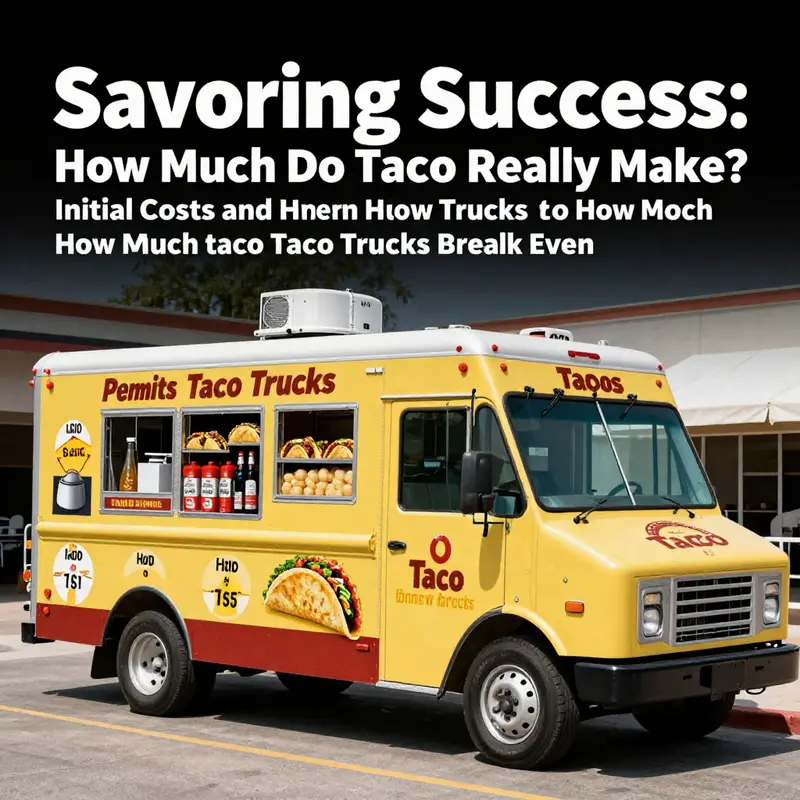
The allure of a taco truck sits at the crossroads of craft, commerce, and street-level entrepreneurship. It isn’t just about the flavor of the food or the charm of a rolling kitchen; it’s about translating appetite and energy into a sustainable, repeatable income. The numbers behind that translation are not a single line item but a constellation of costs and capabilities that shift with location, regulatory climate, and the scale of the operation. A practical doorway into that world starts with the recognition that there is no one-size-fits-all price tag for starting a taco truck. Instead, a corridor of possibilities opens up when you map the likely costs against the revenue you can cultivate, and then bend the plan toward consistent execution. The path to profitability rests on understanding both the heft of the upfront investment and the daily rhythms of sales, inventory, and labor, all while navigating the maze of permits, insurance, and compliance that keep a mobile kitchen legal and open for business. The long view matters as much as the first month’s receipts, because the capacity to break even hinges on disciplined work, smart pricing, and efficient operations that stretch those initial dollars into a durable enterprise.
The initial investment, broadly speaking, sits in a range that can feel like a moving target. Industry signals converge on a starting point somewhere around fifty thousand to one hundred fifty thousand dollars. That spread reflects real-world differences in the unit itself and in how you outfit it. A lighter, used base vehicle can be a stepping stone, while a brand-new, purpose-built unit with integrated equipment and a polished branding package can push toward the upper end of that range. The vehicle is not merely a shell; it is a fully functioning kitchen on wheels, capable of maintaining safe temperatures, washing dishes, and serving customers with speed and reliability. In practice, most operators mix and match elements to balance cost, reliability, and regulatory compliance, choosing a vehicle that can travel to high-volume locations yet remain within the bounds of local health and safety rules.
But the vehicle is only the starting frame. The kitchen equipment itself carries a substantial portion of the investment. A taco truck needs grills, refrigeration, sinks, drainage, storage, and enough power to run stoves, warmers, and refrigeration without tripping breakers or compromising food safety. The equipment lineup ranges from essential to specialized, and the costs rise with higher output capacity and better energy efficiency. Permits and licenses form another substantial chunk. These are not optional extras; they are the gatekeepers that allow you to legally prepare and sell food in public spaces. The exact sum depends on local health departments, the city’s permitting process, and whether you operate within a fixed jurisdiction or roam across municipal boundaries with varying rules.
Insurance rounds out the core operating costs, guarding both the business and the people who depend on it. Adequate coverage is not negotiable, because it underpins the ability to recover from accidents, equipment failures, or liability concerns that can arise in any food service environment. Then there is the initial inventory—raw ingredients, condiments, disposable packaging, cleaning supplies, and the contingency items that avoid a stalled service when the rush hits and you discover you are out of a popular ingredient just as customers line up.
Branding materials and marketing may seem optional at first glance, but a coherent brand story and a clear on-the-road presence help convert foot traffic into repeat business. Finally, working capital—the money kept aside to cover the first few months of operations, especially while you are still building a customer base—ensures the truck can run even during slower stretches and helps stabilize cash flow through seasonal fluctuations.
In total, the cumulative effect of these categories tends to place startup costs in a broad band that can vary significantly from one operator to another. The overarching lesson is that and the size of your upfront investment will be shaped by where you operate, how large you want the kitchen to be, how sophisticated your equipment is, and how much you rely on external financing. The range is meaningful not just as a number but as a planning tool that helps you calibrate expectations and tailor financing, whether through personal savings, a small business loan, or investor support.
Once the truck is on the road, the revenue potential becomes the other half of the equation. In general, a well-managed taco truck can generate daily sales that sit between eight hundred and two thousand dollars, a spread that captures both the lower-demand days and the busier lunch and dinner windows. When you are in a high-demand location—think dense urban cores, popular tourist corridors, or bustling event spaces—the engine can run hotter, with daily sales sometimes hitting the three thousand-dollar mark, and exceptional days pushing beyond that, depending on the crowd and the menu. It’s important to anchor expectations to the realities of your specific setting: a truck in a busy, year-round city market may see steadier traffic and higher average checks, while a truck in a smaller town or a seasonal tourist spot may swing more dramatically with the calendar.
Price and portion control, menu design, and speed of service all influence sales. A lean, well-curated menu reduces waste and speeds turnover, while strategic pricing aligns value with customer willingness to pay. The mix of items matters too. A few core staples that travel well and maintain quality during peak hours can keep throughput strong without driving up ingredient costs. This is where the planning phase pays dividends: by modeling the menu around what sells consistently, what can be prepared efficiently, and what delights customers enough to generate word-of-mouth and repeat visits.
From the operator’s side, monthly fixed costs frame the baseline that must be overcome to reach profitability. These costs typically include loan payments on equipment or the vehicle, insurance premiums, payroll if staff are employed, fuel, and ongoing supplies. The fixed monthly bucket can range roughly from six thousand to twelve thousand dollars, depending on financing terms, insurance levels, the scale of the operation, and how aggressively you invest in branding and maintenance. Understanding this fixed floor is essential because it defines the minimum monthly revenue you must cover to avoid negative cash flow, even before you account for variable costs tied to ingredients and packaging.
The revenue picture is not purely arithmetic, but the break-even math is approachable when you combine daily sales, operating days, and margins. A commonly cited scenario uses an average daily revenue of around twelve hundred dollars. If a truck operates about twenty days per month at that rate, gross income would reach roughly twenty-four thousand dollars per month before any deductions. Subtract the costs of ingredients, packaging, and other variable expenses, and a healthy net margin emerges—one that, in well-run operations, can land in the range of thirty to forty percent. That margin arc matters: it translates into monthly net profits on the order of seven to ten thousand dollars, depending on the actual mix of fixed costs and the efficiency of the operation. Put simply, the road to break-even—where net profits finally outpace the up-front investment and financing costs—often unfolds within six to twelve months for a truck executing consistently in a favorable location with disciplined cost control.
These figures are not guarantees but guideposts. They illuminate how much cushion you need to withstand fluctuations in traffic, seasonal demand, and changes in ingredient costs, which can creep up just when you are counting on the back-end profits to carry you through a lean month. They also underscore the value of being price- and performance-driven rather than chasing volume alone. In practice, the smartest operators optimize both sides: they price with an eye to the market while layering on operational efficiencies that squeeze waste and minimize downtime between locations and events. A truck that can quickly relocate to high-traffic venues, for instance, will naturally tilt the daily revenue scale toward the upper end of the range, while a plan that minimizes idle hours and streamlines prep can keep variable costs in check and preserve margins.
Where does this leave the prospective owner who wonders about break-even timing in a more concrete sense? If your average daily revenue hovers near twelve hundred dollars and you maintain disciplined control over fixed costs and variable costs, reaching break-even within six to twelve months becomes a realistic objective—provided you also secure reliable financing terms and maintain enough working capital to ride out the inevitable slower days or sudden price changes. It helps to approach the venture with a plan that blends realistic cash flow projections with a willingness to adjust routes, hours, and menus as the market dictates. The ability to adapt—within an evidence-based framework of costs and potential revenue—often separates the most resilient taco trucks from those that stall after the initial momentum fades.
As you map this journey, consider the broader supply and sourcing landscape. For entrepreneurs who want to source equipment with cost efficiency and compliance in mind, supplier clusters in major manufacturing hubs can offer interesting options. In particular, some buyers have pursued cost-efficient, compliant, and quicker-to-deliver units from overseas manufacturers where economies of scale and industrial capabilities keep base costs lower. While these options can dramatically change the upfront math, they also require careful due diligence around safety certifications, regulatory compliance, and long-term availability of spare parts. The decision to source equipment domestically or internationally hinges on a balance between price, lead times, and the risk profile you are willing to assume.
For those seeking a sense of direction on the model side—how to conceptualize a truck that aligns with a sustainable business plan while maximizing the odds of hitting those revenue benchmarks—there is value in exploring a spectrum of design approaches and configurations. On one end, a streamlined, no-fruss kitchen that prioritizes speed and reliability may suit a high-traffic downtown corridor or festival circuit. On the other end, a more robust, feature-rich unit with enhanced insulation and energy efficiency can deliver consistent performance across shifting climates and longer routes. The choice affects both upfront costs and operating flexibility, which in turn shapes the cash flow trajectory and break-even timeline.
If you want a concise cue to explore models that pair well with entrepreneurial risk tolerance and location strategy, the landscape of top food truck models for entrepreneurs offers a useful reference. It highlights the trade-offs between capacity, mobility, and cost, and can help a new owner visualize what a realistic, scalable starting point looks like. For example, a compact yet capable model might deliver similar throughput to a larger unit at a fraction of the upfront expense, enabling a faster route to profitability in the early months while you build network effects and a loyal customer base. For more on this approach, you can explore a prominent guide that synthesizes these options and provides practical considerations for choosing a model that fits your goals: Top food truck models for entrepreneurs.
The numbers are not a superstition but a framework for disciplined decision-making. They invite a practical discipline: estimate your startup cost with care, create a cash-flow forecast that accounts for both fixed and variable costs, and test your assumptions about daily sales through realistic scenarios that reflect seasonality and location. The more rigorous you are about mapping revenue by venue, event type, and time of day, the more accurate your break-even analysis will be. In this sense, the taco truck is a tactile business case for how small, recurring cash flows can aggregate into a durable enterprise when the operator commits to consistent execution, prudent financing, and a clear understanding of the trade-offs between upfront investment, operating discipline, and market opportunity.
External resource for further reading: a comprehensive guide to starting small businesses and understanding break-even concepts can be found at the following external source: https://www.sba.gov/business-guide/plan-your-business/start-a-business
In sum, while the starting numbers may look daunting at first glance, the path to profitability is navigable with a disciplined approach to cost control, effective route planning, and a menu and pricing strategy that resonates with customers where you operate. The taco truck, when treated as a mobile unit of consistent value rather than a single act of culinary flair, becomes a legitimate, scalable business model with clear routes to break-even and, with time and growth, meaningful earnings. The road is not a guarantee, but with a thoughtful plan and steady execution, the sizzle can translate into a sustainable enterprise that serves both guests and the people behind the wheel.
Final thoughts
Taco trucks are more than just food on wheels; they are a blend of passion, culture, and community flavor! Understanding how much they make daily, monthly, and after expenses provides a comprehensive view of this thriving industry. Whether you’re considering starting your own taco truck or simply curious about the business, the earnings potential can be quite appetizing. These little culinary havens serve not just tasty tacos, but also dreams packed in tortillas! The hustle and joy that come with operating a taco truck extend beyond profit; it’s about enriching lives with every tortilla and filling. As you savor your next taco, remember that behind each bite is a story of entrepreneurship and cultural celebration.

