
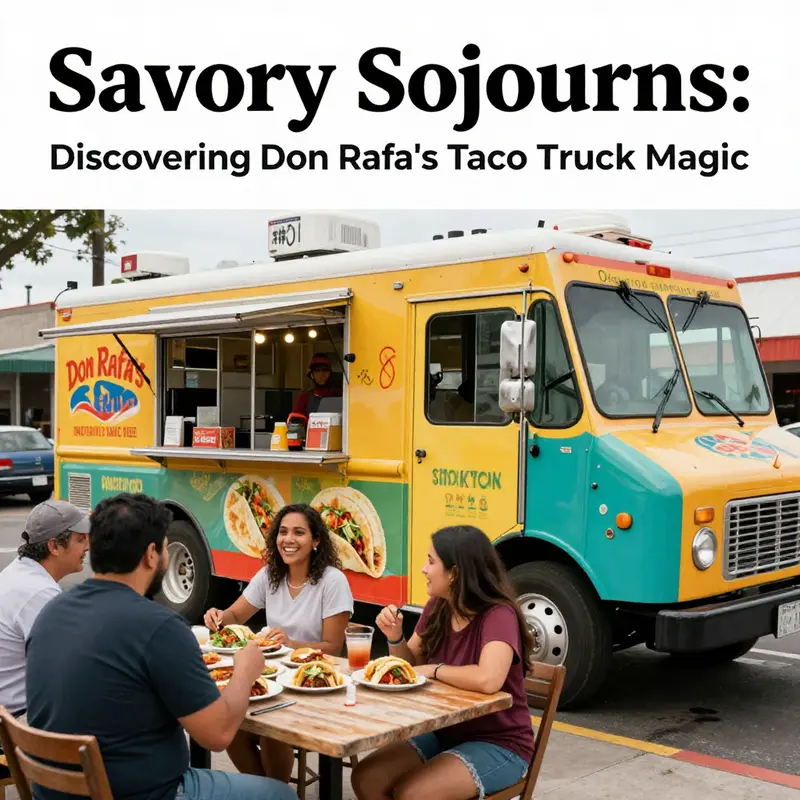
Nestled at 1248 E Miner Ave in Stockton, CA, Don Rafa’s Taco Shop has carved a niche for itself in the bustling world of food trucks. A true haven for taco enthusiasts, this vibrant eatery offers not only a diverse menu of Mexican-inspired dishes but also an experience infused with warmth and community vibes. From its early morning breakfasts to its late-night tacos, Don Rafa’s caters to the cravings of local office workers looking for a satisfying lunch, families seeking a flavorful dinner, and event planners scouting for catering options that wow. Join me as we dive into the delectable world of Don Rafa’s, unraveling the highlights of its menu, the remarkable customer experiences, and the savvy business model that keeps this taco truck thriving.
Rolling with Don Rafa: A Flavorful Tour Through Stockton’s Beloved Taco Truck
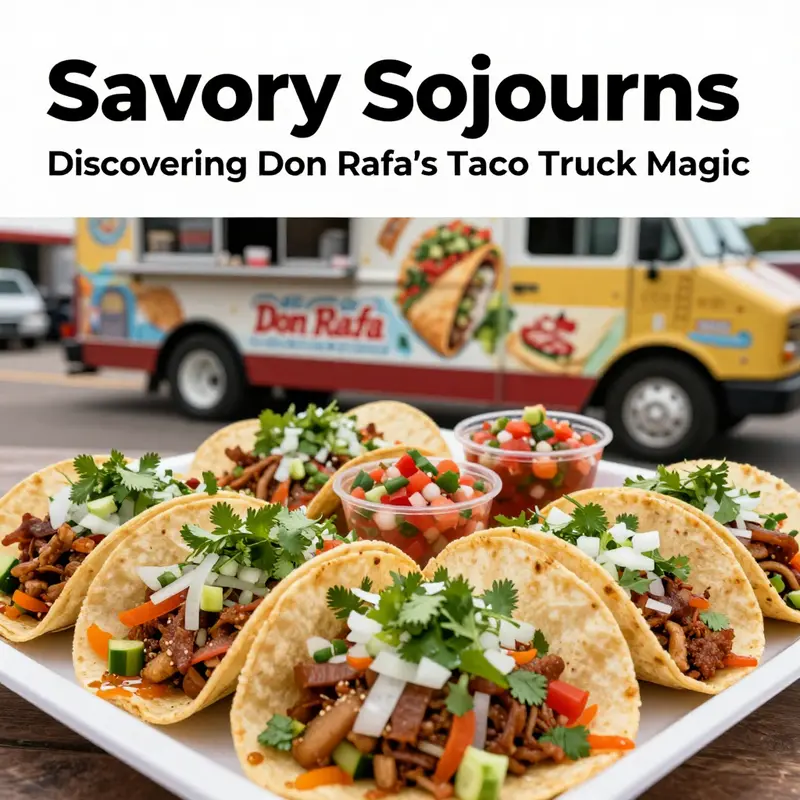
The first thing you notice as you approach Don Rafa’s Taco Truck is not just the scent of onions and smoke but the quiet rhythm of a street kitchen that has learned to move with the city. The truck sits at 1248 E Miner Ave in Stockton, tucked into a corner of daily life where the morning traffic eases into the lunch rush and then cools into a late-evening hum. It is a place where the world outside seems to slow down just enough for a hungry crowd to gather, share a quick joke with the crew, and decide which way the night will tilt—toward the comforting heat of a hot tortilla or the bright zing of salsa on a plate. Don Rafa’s presence there is not purely culinary; it is a daily ritual that threads together neighbors, workers, students, and travelers who ride the arc of the day with a shared appetite and a common curiosity about what the truck will conjure next.
From the curb, the service window frames a small stage where the chef, a steady hand with a spatula and a smile, choreographs the dance of sizzling meat, steaming tortillas, and the quick, confident toss of cilantro and lime. The grill crackles with a reliable, forgiving sound that says this kitchen, on wheels though it may be, takes its craft seriously. The menu, as regulars will tell you, is generous in its portions and generous in its spirit as well. The days begin with a cook’s pace that never quite snaps into a rushing blur; it is more like the soft toll of a bell that marks the point where comfort food becomes a daily, shareable experience. And in a town where food trucks have become a fast-friend pathway to authentic flavors, Don Rafa’s stands as a steady landmark, a neighborhood anchor that tastes like home regardless of how many miles you’ve walked or hours you’ve spent chasing the next bite.
The window itself is more than a mere transaction point. It is a hands-on lesson in how affordability can co-exist with generosity. The tacos, a staple of Don Rafa’s lineup, offer a pure case study in how simple components—corn tortillas, strong seasoning, well-cooked fillings, and a couple of bright toppings—can become something much larger than their sum. The price point is an easy entry into the conversation: tacos priced at just $1.50 each invite a candid reckoning with value and with the idea that a great meal can be both accessible and memorable. In a city where the street-food scene is a canvas—colorful, noisy, and full of personality—Don Rafa’s makes a persuasive argument that quality should not be priced out of reach. This is not a place where portion size is a bargaining chip; it is a place where abundance is the baseline, and the smile that accompanies each order feels baked into the margins of the day, not tacked on at the end for garnish.
If you listen closely, you can hear the chorus of preferences that threads through the conversation at the window. The al pastor and carne asada tacos emerge as not just popular choices but almost communal favorites, each bite a compact study in contrast—tender meat that carries the smoke and spice forward, crisp edges that catch the tongue, and the cilantro-lime brightness that lifts the entire composition. The al pastor, with its pineapple-tinged sweetness and alchemical balance of fats and seasonings, invites a particular kind of savoring: a slow, appreciative chew that ends with a warmth that lingers. The carne asada presents a different kind of certainty—grilled to a precise tenderness, the beef’s char notes meeting citrus and onion in a crisp, clean finish. Collectively, these two tacos do more than satisfy a craving; they anchor a narrative of what this truck does best: execute fundamentals with precision, then layer in personality through the sauce, the salsa, and the careful calibration of flame and time.
Yet the menu does not end there. Beyond the celebrated tacos, Don Rafa’s offers a broader menu that acknowledges the fatigue and hunger of a long day with a practical, satisfying breadth. Burritos and quesadillas populate the edges of the talking points, giving regulars a chance to switch textures and portions without stepping away from that familiar, comforting kitchen glow. The burritos, wrapped tight and hearty, carry the same ethos as the tacos—substantial fillings, a chorus of spices, and a belt-and-suspenders approach to nourishment that makes them a dependable choice for a quick lunch or a lingering dinner. The quesadillas, with their molten cheese and the warm, blistered tortillas, provide a visual and sensory punctuation to the menu—a reminder that a street-side kitchen can be a laboratory of texture as well as taste. And for the uninitiated, the truck’s daily rhythm offers a guided tour through the techniques and flavors that define the Mexican-inspired street-food tradition in this part of the world: the careful sear, the balance of acidity and heat, the use of fresh herbs as punctuation marks, and a respect for the tortilla as both vessel and flavor carrier.
In this sense, dining at Don Rafa’s is not merely about choosing a plate; it is about engaging with a community space where the act of eating is inseparable from the act of being seen. The team’s friendliness is not cosmetic but a lived practice. It is present in the quick greeting as you step up to order, in the way the crew remembers your go-to choices, and in the unspoken acknowledgment that a street kitchen can be a social hub as well as a culinary one. The warmth of the service is a counterpoint to the price point, a blend that helps customers feel that they are not simply buying a meal but participating in a small, shared ritual. The familiarity of the environment—Sunlight, smoke, the hum of nearby traffic, and the open-air breeze that changes with the hour—creates a specific texture for the dining experience, one that can only be captured in the context of a food-truck encounter. The environment itself becomes a flavor, a backdrop that makes the tacos taste more vividly and the burritos feel more satisfying, simply because the surroundings are part of the conversation.
In keeping with the broader arc of the article, the Don Rafa experience speaks to a larger phenomenon: the way affordable, high-quality street food can become a cornerstone of a city’s culinary identity. Stockton’s climate for street-food commerce has always accommodated a certain improvisational wits—the ability to adjust to the weather, the crowd, and the daily fluctuations of demand. Don Rafa’s succeeds by leveraging this improvisational frame while preserving a dedication to consistent execution. The truck’s hours—opening early and staying open until late—reflect a recognition that meals on the go, whether for a commuter, a night-shift worker, or a student winding down after a long day, can be a source of comfort and connection. The schedule also signals a practical philosophy: accessibility over exclusivity, generosity over scarcity. Customers can stop by for breakfast burritos or a late-night carne asada taco, and in between, the truck serves as a steady, reliable fixture in a neighborhood that values both speed and substance.
TripAdvisor and Google Maps listings, cited in the community chatter about Don Rafa’s, do not simply catalog a menu; they document a relationship. Reviews highlight generous portions as a defining feature, but the underlying thread is more nuanced. People speak of the way the truck feels like a friend who knows your order and knows your day. They recall the sense that the kitchen is an open door, a place where someone is always ready to swap a story or a tip for a good bite. This feedback loop matters because it translates into a customer experience that is consistent even as the crowd shifts with the hours. The food is the anchor, but the social fabric—the courtesy and familiarity—keeps people returning. In a world where many experiences are curated and distant, Don Rafa’s offers something approachable and robust: a sense that you are welcome, and that the food you eat from this window has been prepared with care, not haste, and delivered with a smile that travels with the steam and the scent.
To someone exploring the city with an appetite for authentic, affordable flavors, the Don Rafa Truck is a kind of compass. It points toward a philosophy of street-food that values simplicity and generosity in equal measure. It invites a reader or a passerby to imagine a day when the heat of the grill is as much a part of the experience as the taste itself—a reminder that food, especially in a mobile setting, is not just sustenance but a form of storytelling. The stories you gather on a stop here—the quick conversation with the cook about how the meat is seasoned, the way the cilantro is chopped, the decision to include or skip the salsa—are part of the longer narrative of a city’s culinary blooming, the way flavors travel with people and become a shared vocabulary of taste across cultures and generations.
In one sense, Don Rafa’s is a simple operation—a well-run, good-humored street kitchen that serves dependable, delicious food at prices that invite return visits every day of the week. In another, it is a microcosm of how food trucks can become more than a transient phenomenon. They can be spaces where the practical meets the poetic: where the sizzle of the grill maps onto the daily rhythms of a neighborhood; where a $1.50 taco carries the weight of tradition and the spark of invention; where the push of a warm tortilla into a hand is as meaningful as the exchange of ideas that happens at the window. The MacGuffin is not only the recipe but the willingness to stand at the edge of the curb, to greet every customer as if they were a guest in a modest kitchen on wheels, and to treat every plate as an invitation to linger, talk, and savor.
For a reader who has followed the article from the first chapters through the lens of Don Rafa’s within Stockton’s urban tempo, this chapter offers a sensory map: the scent of cilantro, the crackle of the grill, the bright bite of lime, and the generous, reassuring heft of a well-made burrito. It suggests that the strongest stories about street food are not the loudest or the flashiest but the most human—quiet reliability, generous portions, and a smile that travels farther than the steam from a hot taco. And as the day folds into evening and the truck remains a constant on the curb, there is a sense that the city itself is eating with you, one bite at a time. The experience invites us to consider not only what we eat but how we eat it: the speed of service, the cadence of conversation, the careful pacing that makes room for seconds and perhaps even a little more conversation—that intangible, nourishing exchange that makes a meal memorable and a street nook feel like a familiar room.
In that spirit, a small but telling detail can encapsulate the essence of Don Rafa’s Taco Truck. It is the way the crew balances the numbers and the nurture: affordable prices that invite a quick stop, yet portions that encourage savoring. It is the way the al pastor and the carne asada tacos carry the labor of the morning’s prep into the night’s service, turning simple ingredients into a shared ritual that feels almost ceremonial in its simplicity. It is the way the menu expands to include burritos and quesadillas, not as a deviation from the core taco identity but as a broader invitation to experience a spectrum of flavors that stay faithful to the truck’s style. And it is the way the experience remains anchored in the human exchange—the friendly greeting, the quick recommendation, the memory of what a regular might order—so that every visit feels like catching up with an old friend who happens to cook very well.
For readers curious about the wider world of mobile culinary enterprises, the Don Rafa story is not just about one truck in one city. It is a reminder that a well-tuned operation—where price, flavor, speed, and warmth align—can become a model for culinary resilience. A casual observer might note how a single window can become a focal point for conversations about tradition, technique, and community responsibility, from sourcing ingredients to providing a reliable, welcoming place to eat. And for those who want to explore how these ideas connect to broader trends in the street-food ecosystem, the journey often loops back to a handful of core questions: How does affordability affect perception and repeat business? How does a simple taco become a vessel for cultural memory? How do cooks translate foundational techniques into flavors that feel both familiar and innovative? Don Rafa’s answers are practical and persuasive: keep the palate grounded with recognizable favorites like al pastor and carne asada, honor the craft with consistent technique, and let generosity of portions and attitude do the heavy lifting of customer loyalty.
As this chapter closes, the scene lingers in the mind. The sun dipping toward the horizon, the scent of grilled meat curling in the air, and the sight of a steady line that moves with the clock—the line that makes the truck a small, ongoing event, a daily celebration in motion. If you walk away with anything from this reflection, let it be the recognition that Don Rafa’s Taco Truck is more than a place to eat. It is an exemplar of how street-level food can become a bridge between tradition and accessibility, between the intimate ritual of tasting and the grander story of a city’s evolving food culture. It is a reminder that in the heart of Stockton, a cheerful, affordable bite from a well-tuned truck can echo far beyond the curb, shaping memories and shaping what a community believes a meal can be when it leaves the kitchen and steps onto the street.
For readers who want to explore a side lane of the industry—where mobile kitchens are not just about the next bite but about the next model of success—the tale of Don Rafa’s offers a doorway. It invites a careful, considered look at how contemporary street food can balance profitability with hospitality, and how the best moments in a taco truck come not just from the recipe, but from the people who stand behind the window, the way they greet you, the stories they share, and the sense that you have found a place where the day feels a little brighter, one affordable taco at a time. If the road ahead holds more chapters about the culinary street, this one at Don Rafa’s becomes a waypoint: a reminder that flavor grows best when it arrives with warmth, honesty, and a belt of steam that carries with it a memory you can take with you as you walk back into the city’s rhythm. And if you seek further inspiration on how these moving kitchens can scale while maintaining the soul that makes them special, you can explore top food truck models for culinary success.
External resources for further context on safe, responsible street-food operations remind us that even the most vibrant flavors must be backed by solid practice. For broader context on food safety in the world of moving kitchens, see the CDC’s guidance on food safety practices. https://www.cdc.gov/foodsafety/index.html
Sizzle, Speed, and Service: The Don Rafa Taco Truck Experience
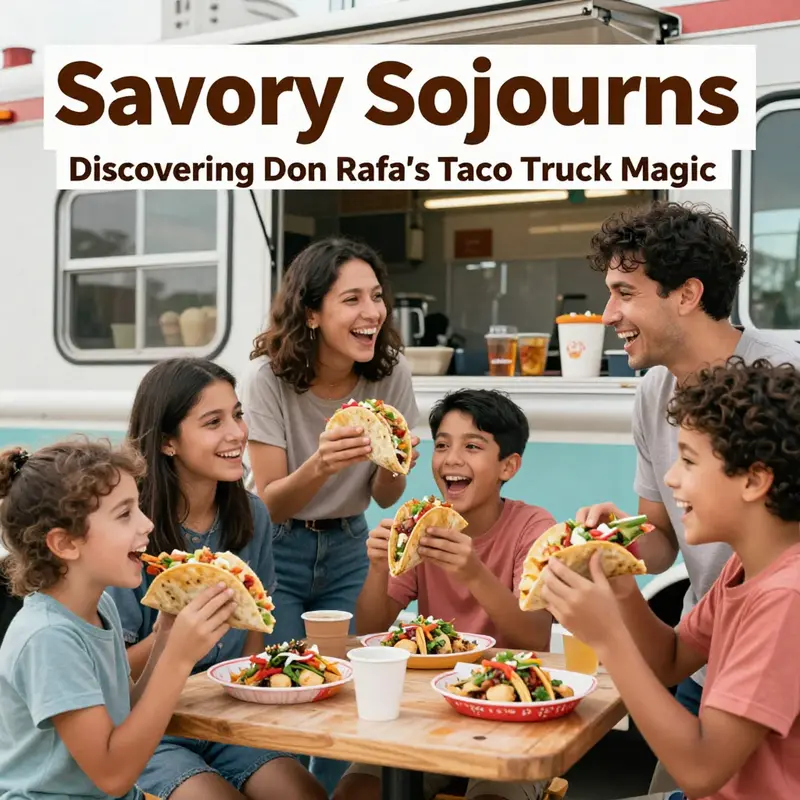
The first thing most people notice when they approach Don Rafa Taco Truck is the scent, a lively bouquet of cumin, pepper, garlic, and char that travels before the truck itself. Stockton’s early light glints off chrome, and the soft hum of the street blends with the hiss of a flat grill and the clatter of metal—an ordinary city morning, but charged with the promise of something bright and comforting. The Don Rafa truck stands between parked cars and a cluster of quick service patrons who have learned, through habit and appetite, to weave their daily routines around the truck’s hours and its rhythm. The ritual begins not with a greeting so much as a ritual of choice: what to order, how to assemble it, and how to share a moment of warmth with a crew that is part kitchen, part street theater, part anchor in a neighborhood that values both speed and heart. In this setting, the customer experience is not a single act but a sequence of micro interactions that, taken together, form a picture of reliability, flavor, and, at times, friction.
What stands out most in the landscape of Don Rafa Taco Truck’s offerings is the sense that food quality has been placed front and center. Diners repeatedly note the generosity of portions, the balance of seasoning, and the way the fillings feel lived in rather than hurried. The tenderness of meat, the crispness of fresh vegetables, the brightness of the salsas—call them standard or even simple components, yet they land with a consistency that makes repeat visits comforting rather than aspirational. In a food-truck world where a rush can render a dish flat, Don Rafa’s ability to preserve that sense of depth—flavor that arrives with memory rather than just with heat—speaks to a kitchen that treats every order as a small, portable meal that should travel well beyond the moment of purchase. This faith in quality travels with the customer, who, after a long shift or a midday dash, seeks not novelty for novelty’s sake but the feeling of a meal that respects their time and their palate.
Speed, too, emerges as a central axis around which the Don Rafa experience turns. The queue forms, but the pace of service is brisk, efficient, almost musical in its predictability. For many diners, speed is not merely convenience; it is a form of courtesy. When hunger gnaws, a quick and seamless transaction becomes a signal that the day’s demands will not derail the plan. The truck’s staff seem to operate with a tacit choreography: a precise sequence of warm greetings, concise questions about fillings, efficient wrapping, and a final nod that confirms the order has found its way from grill to bag to hand. In this cadence, customers can find a certain rhythm in their misgivings and a sense of relief in their time-saving design. It is not just about getting a meal quickly; it is about the vehicle of relief that stands behind that speed—the sense that, in a city that never quite slows, you can still count on a meal that arrives with warmth and consistency.
Yet, in any narrative of a popular street-food operation, the human element remains the fulcrum upon which success balances or tilts. The Don Rafa experience carries a dual memory: the flash of flavor and the quiet, sometimes uneasy, interplay with staff. Within the local ecosystem, several guests have highlighted moments of excellent, friendly service—staff who know the regulars by name, who handle requests with an easy smile, who take a moment to clarify a topping or adjust a portion size with grace. These encounters reinforce loyalty in a way that pure speed cannot. In a truck that interacts with dozens of customers in a single day, hospitality is not a soft add-on but a core component of value. The warmth of the staff, the attentiveness of the team, and the ability to manage a busy line while maintaining a respectful demeanor become the non-flavor elements that shape long-term impressions.
But like any extended service narrative, the Don Rafa story is not without its tensions. The most persistent notes of critique come from guests who describe experiences with staff that feel strained or opaque. The feedback landscape paints a picture of moments when communication barriers complicated the exchange rather than clarified it. In some instances, patrons perceived a language gap as a barrier to resolution, a situation that was interpreted as dismissive rather than as a simple miscommunication. The emotional payload of these encounters is not small. A customer arriving with specific dietary considerations or a difficult-to-interpret request may feel not heard but sidelined, even if the kitchen later accommodates the order. In this light, the role of the manager and the tone set in those moments becomes more than a matter of etiquette; it is a determinant of trust. When a manager appears distant or brusque, the effect ripples outward, altering how others perceive the entire experience, from the line flow to the way questions are answered and the care that follows.
This tension does not erase the strengths of the Don Rafa model, but it does map a path for potential improvement. The friction centers on clear communication and a culture of hospitality that invites questions rather than defends positions. If the interaction with customers can be framed as a conversation rather than a hurdle, the trust built around quality and speed can be reinforced rather than threatened by misunderstandings. In practical terms, this means coaching focused on active listening, making room for clarifications, and ensuring that the team, from front line staff to the leadership, models a posture of curiosity and respect. In a street-food environment, where the occasional language barrier or rushed moment can become a powder keg, investing in communication becomes as essential as seasoning. It is not enough to be fast and to be tasty; the experience must feel inclusive, especially to customers who may be new to the culture of a city’s food trucks or to those navigating the often transient, informal nature of the street-food circuit.
Cast in this light, the Stockton Don Rafa Taco Truck presents a portrait of a business that excels in the heart of its craft while exposing the fragile edge of hospitality. The food’s generosity and the speed of service anchor the customer’s positive memories, but the emotional resonance of the visit—the sense of being seen, understood, and welcomed—depends on how staff and management handle the inevitable moments when miscommunication disrupts the flow. Observers who compare Don Rafa with other mobile kitchens note that the difference often lies not in the basic competencies of cooking and serving, but in the quiet art of making every person who steps forward feel anchored in a simple, straightforward exchange. A customer who travels a few blocks, who faces the bustle of the day, who wants a reliable quick meal, and who also wants to be greeted with a friendly acknowledgment, is a loyal patron waiting to be earned as much by how they are treated as by what is placed on the plate.
In tracing the architecture of the overall experience, the setting itself the truck’s location, its hours, and its footprint in the community plays a decisive but underappreciated role. The truck’s daily operation from morning through late evening makes it a consistent option for breakfast, lunch, or dinner. The function of such availability is not only convenience; it signals reliability. For workers arriving to a shift or families feeding a late-night craving, the truck becomes less a place to merely buy food and more a place to anchor a routine. The interaction, then, is embedded in a cycle: order, wait, receive, consume, and depart. The quality of the encounter hinges on a subtle balance of efficient service, generous portions, and a friendly, clear line of communication. The challenge lies in keeping the warmth intact when the pace intensifies and the queue lengthens. It is here that leadership and staff training converge with cultural sensitivity and practical hospitality to determine whether the Don Rafa experience evolves from a dependable quick bite to a cherished ritual.
The Salt Lake City chapter of the Don Rafa brand that shows up in the research introduces a nuanced counterpoint to the Stockton narrative. In that market, reviews tend to emphasize the strength of the food and the speed of service just as in Stockton, yet they also reveal a more pronounced accumulation of tensions around staff interactions, especially in high-pressure moments. The consensus among reviewers who mention the management feels that the atmosphere can tilt toward rigidity, a reaction that shadows otherwise positive impressions. This juxtaposition, excellent food and swift service pitted against occasional frictions in communication, offers a lens through which any Don Rafa operation can reflect on its own vulnerabilities and opportunities. It suggests that the recipe for durable loyalty in a mobile, mid-size operation is not only about how well a grill performs or how fast a line moves, but about how consistently the team manages conversations with customers under pressure. If the management tone can be calibrated toward empathy, clarity, and shared problem solving, the experience can translate into a stable foundation for repeat visits, even when the day grows chaotic.
For readers seeking a more concrete sense of customer sentiment, the broader conversation around Don Rafa’s taco offerings can be glimpsed through the various customer voices recorded in public reviews. Positive voices highlight a sense of care in portioning and a taste profile that feels crafted rather than improvised. Constructive voices call for more proactive listening and easier avenues for clarifying questions, especially when there is a perceived language gap. The dual narrative of food quality and service quality exists in tension, and the trajectory of the brand depends on how this tension is resolved in practice. The case study here presses the point that great food can justify a quick stop, but great service sustains a relationship. For a frequent patron, every return is an opportunity to reassure oneself that the warm rapport and the clear, respectful communication will be present again, not merely the efficient sizzle of the grill.
The urban food truck ecosystem rewards reliability, not just in the mouth but in the moment of encounter. The Don Rafa model shows how a street-food operation can maintain strong performance on two fronts: the culinary craft and the human connection. The best experiences map a path that respects the customer’s time, offers a genuine sense of hospitality, and protects the emotional space in which food becomes a source of comfort rather than a source of stress. In this sense, the Don Rafa Taco Truck reflects a broader truth about street food: because the environment is inherently dynamic, the most lasting impressions come from the quality of listening as much as the quality of seasoning. The implications go beyond a single truck or a single city. They touch on how a mobile, informal dining concept can scale trust and affection when leadership embraces training, language sensitivity, and a culture that sees every guest as a member of a community rather than a mere consumer.
To link these observations to practical steps, consider the healthier tensions that arise when staff training emphasizes not just safety and speed, but also the art of hospitality. A simple act, like repeating an order back to a customer with a friendly tone or inviting a quick check for dietary preferences, can transform a transactional moment into a relational one. The manager’s role, in particular, becomes less about enforcing a rigid protocol and more about shaping a climate in which staff feel supported to ask questions, seek clarification, and offer alternatives when something does not align with a customer’s expectation. In such an environment, a language barrier no longer becomes a barrier to satisfaction; it becomes an invitation to show how a team can adapt and collaborate with guests. The Don Rafa experience, then, can be read as a continuous negotiation between the bite-sized happiness of a well-made taco and the broader, more enduring need to feel seen and respected in a public space.
The chapter’s arc thus offers a cohesive portrait: Don Rafa Taco Truck deliverables, substantial portions, flavorful profiles, and rapid service are the anchors of customer satisfaction. The challenge lies in the softer, equally essential dimension of hospitality, where staff interactions, leadership tone, and clear communication shape the lasting impression of loyalty. When a customer leaves with a full stomach and a sense that their concerns were acknowledged, the experience transcends the mere exchange of money for food. It builds trust, invites return, and gradually becomes part of the neighborhood’s memory, tucked alongside other daily rituals that give a city its distinctive character. That is the power of a well-tended street-food operation: it converts a routine errand into a moment of shared warmth, a brief pause in a busy day that can become a recurring source of comfort. Don Rafa’s Taco Truck, with its strong culinary core and its evolving human dynamics, embodies this delicate balance. Its trajectory, like that of many beloved street kitchens, depends on the care with which it tends to both the flame and the conversation: the heat of the grill and the heat of human exchange.
As the afternoon sun climbs higher and the street grows noisier, a final reflection emerges. The customer experience at Don Rafa Taco Truck is less about a fixed formula than about an ongoing practice. It is the practice of cooking with generosity and serving with respect, of listening for a moment when a guest signals confusion and responding with clarity rather than a shield of efficiency. It is about turning a quick meal into a shared moment of satisfaction, a moment that visitors, locals, and newcomers alike can recognize as a dependable thread in the fabric of daily life. In this sense, the Don Rafa story offers more than a review of a single truck; it provides a lens on how street food ecosystems can cultivate loyalty through a careful alignment of flavor, tempo, and humanity. And it invites readers to consider how other mobile kitchens, facing their own versions of heat and pace, might learn from the Don Rafa example a model in which technical skill and emotional intelligence collaborate to produce not just meals, but reliable, welcoming experiences that travelers remember long after the last bite has disappeared from the mouth and the memory of the moment lingers in the mind.
Wheels of Flavor: The Mobility-First Craft Behind Don Rafa’s Taco Truck
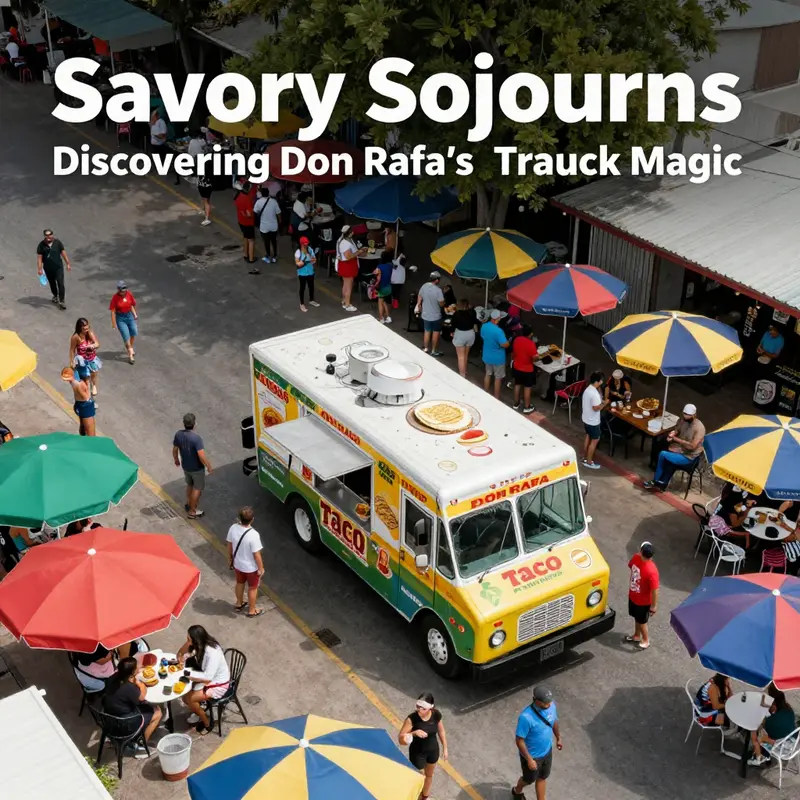
Don Rafa’s Taco Truck embodies a practical philosophy of food service built around mobility, immediacy, and a commitment to authentic, generous flavors that travel with it. It is not merely a kitchen on wheels but a temporary neighborhood, a gathering point where hungry passersby become patrons and a casual exchange of stories becomes the seasoning that keeps people coming back. The truck operates out of Stockton, California, and its rhythm—opening early enough to catch breakfast crowds and sticking around late enough to satisfy dinner cravings—translates into a simple but powerful business discipline: meet customers where they are, when they need it, with consistent quality and a smile that communicates welcome. The street-facing footprint, the handheld menu, and the familiar hum of the engine all work in concert to create a sense of reliability. This reliability, in turn, builds trust, which is the currency that sustains a mobile operation in a crowded market where new options emerge with every season. The daily hours of operation, from morning to late evening, are not just a schedule; they are a deliberate invitation to different rhythms of life—early workers grabbing a quick breakfast burrito on their way to the day, families stopping by after school, friends meeting up after work, and late-night vendors lining up for a final bite before they call it a night. The model recognizes that a food truck can offer a broader window of accessibility than a fixed brick-and-mortar shop, and that window becomes the strategic blade by which Don Rafa’s carves out a niche, even in a city with a bustling dining scene. The simple calculus is that mobility lowers barriers to entry and expands reach, while a strong core on the plate ensures that each stop reinforces the brand rather than merely filling a quota. In this sense, the truck’s journey is as important as its destination, because each stop becomes a micro-story in the broader narrative of what Don Rafa’s aspires to be for its community—a reliable, flavorful, and friendly option that people feel emotionally connected to as much as they enjoy the food itself. The business model, as observed in practice, centers on a mobile-first approach to growth, guided by three interlocking principles: flexibility, authenticity, and community engagement. First, the mobility itself is a strategic asset. Rather than draw a single catchment area around a fixed address, the truck roams to where foot traffic gathers, whether at a busy flea market, a festival, or a busy street corner where office workers unwind at the end of the day. The result is not only more customers but a dynamic airstream of opportunity: each event or location is a potential onboarding moment for new patrons who might otherwise pass by a stationary restaurant. The flexibility extends to scheduling, with the capacity to adjust routes and hours in response to seasonality, school calendars, and local neighborhoods’ rhythms. This flexibility, in turn, reduces fixed operating risk. The capital required to launch a food truck is generally lower than the expense of opening a brick-and-mortar restaurant, which means more room to experiment, to refine the menu, and to calibrate staffing models without compromising financial stability. Don Rafa’s approach illustrates how entrepreneurs can stagger investments, upgrade equipment incrementally, and test new concepts in real time, learning what resonates from the street rather than through focus groups. The second principle centers on authenticity, the bedrock of the truck’s appeal. In a world where diners increasingly crave stories and provenance as much as they crave taste, Don Rafa’s emphasizes fresh ingredients and traditional recipes that reflect a cultural lineage rather than a generic interpretation of Mexican-inspired fare. The menu is shaped by time-honored techniques, careful seasoning, and a respect for regional flavor profiles that are recognizable to locals as well as to visitors seeking a genuine experience. Authenticity is not an abstract ideal here; it translates into everyday practices—meat marination done in-house, salsas prepared with peppers and herbs at peak ripeness, tortillas warmed to order, and a hospitality tone that honors customers with warmth and attentiveness. Those choices matter because they influence repeat business. When a customer returns because a bite tastes like a memory, the truck moves beyond being a convenient option to becoming a trusted source of comfort and a reliable anchor in the community’s food scene. The third principle, community engagement, manifests in how the truck integrates into the life of Stockton and the surrounding areas. The value of a mobile business grows when it is seen as a neighbor rather than a distant vendor. Don Rafa’s builds its presence through consistent, friendly service and by participating in events that matter to local residents. It is not unusual to find the truck at a flea market, at a fair, or near busy transit corridors where spontaneous meals are a natural fit for busy schedules. Each encounter is a chance to reinforce the brand’s story—one of a hardworking team, generous portions, and dishes that evoke home cooking with the velocity of a street-side kitchen. The lived experience of the customer, the handshake at the window, the quick banter about the best salsa verde, all contribute to a word-of-mouth momentum that money cannot easily purchase. In the absence of elaborate marketing machinery, the truck relies on this sincere connection to spread the word. Word-of-mouth, in particular, becomes a key lever in a mobile model because it scales organically across neighborhoods and events. A satisfied guest who shares a meal and a smile can become a recurring advocate, guiding friends and family to the truck at the next stop. That organic spread thrives on reliability—on consistently fast service, generous portions, and a friendly demeanor that makes the act of returning feel natural rather than transactional. The operational heart of the model rests on the intersection of mobility and quality. The truck moves with intention, selecting routes that optimize visibility and convenience for the broadest cross-section of potential customers, including students near campuses, workers after shifts, and families during weekend gatherings. Yet this mobility is not reckless; it is guided by a strong discipline around delivery speed, plate consistency, and ingredient quality. A well-tuned workflow ensures that the sensory promise of the food—aromas that signal something fresh and familiar—reaches patrons within moments of placing an order. This requires streamlined prep, a clear division of labor, and a culture of pride in the cooking process that translates into a confident front-of-house service. Even the most casual interactions carry a message: this is a team that values your time, your appetite, and your loyalty. The business model’s scalability and adaptability complete the triad that makes mobile success plausible and repeatable. A food truck can scale not by multiplying physical locations alone but by layering in related opportunities: participating in larger events, establishing portable catering capabilities for private gatherings, or collaborating with other local vendors to form complementary street-food clusters that attract broader crowds. The scalability lies not in chasing the biggest crowds in a single day but in building a resilient network of recurring spots across the calendar, a strategy that yields predictable revenue streams and the security of diversified demand. Adaptability is equally essential, because every city, neighborhood, and event has its own cadence, preferences, and constraints. The Don Rafa’s model can accommodate adjustments in menu offerings, price points, and service formats to fit the context without sacrificing core quality. In some markets, guests may favor a leaner menu with a tight rotation; in others, a robust assortment with daily specials might drive higher check sizes and longer dwell times. The capacity to tune the menu without eroding the brand promise is a practical expression of adaptability. The quality-first philosophy helps anchor these adaptations. Fresh ingredients and time-honored techniques require disciplined sourcing and careful vendor relationships that travel with the truck. The team builds local supplier ties, leans on seasonal produce when possible, and maintains standard operating procedures that ensure every batch meets the same flavor and texture benchmark, no matter which stop hosts the service. In a business such as this, consistency becomes a form of hospitality. The customer who encounters Don Rafa’s at one location expects the same tortilla warmth, the same crisp-edged salsa, and the same cheerful exchange as at the previous stop. When that consistency is achieved, the brand becomes a trusted companion for daily life and for special occasions alike. The social dimension of the truck’s presence should not be underestimated. The vehicle itself becomes a lens into community life—the way people gather around a hot, aromatic window, the shared experience of choosing from a short, carefully designed menu, and the stories that emerge from conversations at the pickup line. The kitchen window becomes a listening post as much as a serving point; it is where feedback travels instantly from customer to cook, and where the cook’s responses travel right back to the crowd through the chorus of compliments, clarifications, and small but meaningful requests. Those moments of connection contribute to a durable competitive edge; a competitor may imitate the recipe, but the aura of genuine, personal interaction is not as easily replicated. And while the business model emphasizes mobility and community, it does not ignore the practicalities of running a successful street kitchen. Permits, health inspections, and safety standards must be navigated with care; schedules must align with local code requirements, and contingency plans must be in place for weather disruptions, mechanical issues, or steep competition during peak hours. The truck, therefore, operates with a low-friction operational backbone: a lean yet capable crew, a clear division of tasks, reliable equipment in good repair, and a routine of cleaning, checklists, and briefings that keep the operation steady under pressure. The emphasis is on minimizing waste, maximizing throughput, and protecting margins through a disciplined approach to portion control and inventory management. The business model does more than just feed people; it feeds a story about entrepreneurship, shared culture, and the possibility of turning a neighborhood staple into a mobile institution. In the broader arc of the article, Don Rafa’s Taco Truck offers a case study in how modern street food businesses succeed by combining two seemingly simple ingredients: mobility and memory. The truck travels to places where people live, work, and gather; it also travels through time, becoming associated with certain events or moments that mark a person’s daily life. A morning bite before work becomes part of the routine; a late-night stop after a concert becomes a memory. The longer you observe the pattern, the more evident it becomes that the model is less about the number of miles on the odometer and more about the consistency of the experience delivered to diverse communities at the moments they are hungry and seeking connection. For aspiring operators, the Don Rafa’s approach demonstrates how mobility can be leveraged to deliver a high-intensity customer experience without the heavy overhead of a fixed storefront. It suggests a pathway into the food service industry that minimizes upfront risk while offering a tangible, repeatable value proposition: fast, flavorful, and friendly food that respects both tradition and time. It also points to a broader economic logic: when you reduce the cost of entry, you increase the likelihood that a great recipe paired with genuine hospitality can become a sustainable business. The narrative invites readers to consider not just what is on the plate but how the plate arrived there—the route, the hands that prepared it, the conversations that occurred around it, and the trust that built up as the truck rolled from stop to stop. It is a reminder that the most successful mobile concepts do not rely on fanciful gimmicks but on a steady, human-centered rhythm where customers recognize value in both the food and the experience surrounding it. In this sense, Don Rafa’s Taco Truck does not merely serve meals; it serves as a mobile anchor for community life, a reminder that flavor can be a shared ritual and that entrepreneurship thrives when the wheels keep turning toward opportunities to connect, one meal at a time. For readers exploring the scalability of this model or seeking practical examples of what mobility can achieve in the food sector, the broader landscape suggests a complementary path: look to resources that outline practical pathways for launching and growing a food truck business, including models that balance capital efficiency with the potential for meaningful community impact. See for example the guide on top food truck models for entrepreneurs to understand how successful operators structure routes, menus, and teams for sustained growth. top food truck models for entrepreneurs. External reading: for additional perspectives on starting a mobile food venture and navigating common early-stage considerations, access the broader industry guide at Shopify’s food truck ideas resource. https://www.shopify.com/south-africa/blog/food-truck-business-ideas-2026
Final thoughts
As we wrap up this flavorful journey into the heart of Don Rafa’s Taco Truck, it becomes evident that this taco haven is more than just a food truck; it’s a local staple that brings flavors, community, and joy together in every dish. From its impressive menu that caters to diverse tastes to the memorable experiences crafted for each customer, Don Rafa’s uniquely thrives in its own bustling ecosystem. Its successful business model empowers not just the truck but the local community it serves, making every taco a delicious story waiting to be told. So, next time you’re in Stockton and in need of a taco fix, you know where to roll to find an unforgettable culinary delight!

