
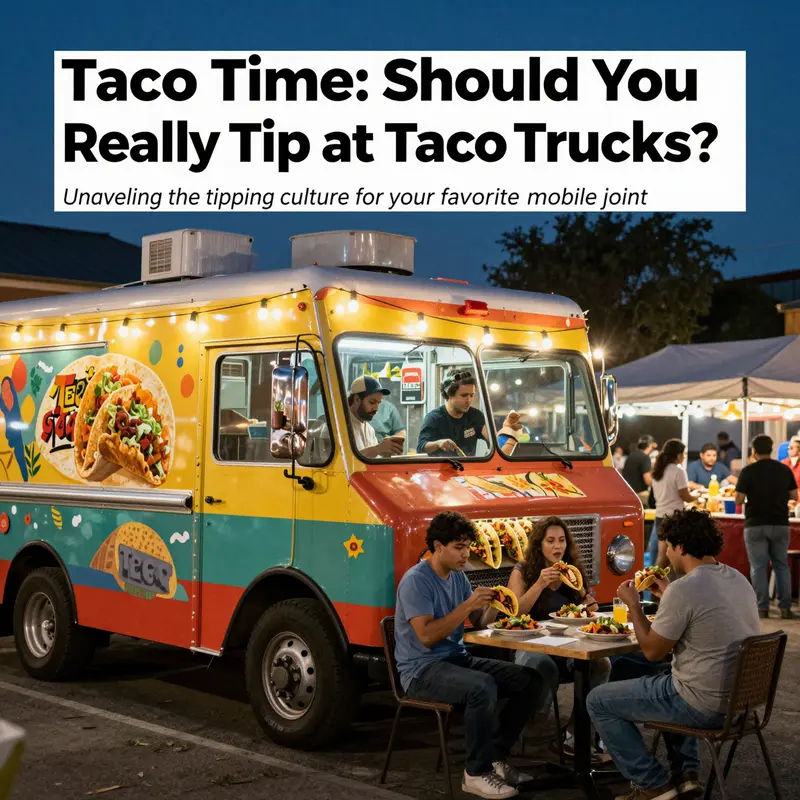
Taco trucks are more than just a quick meal option; they bring communities together with delicious bites and vibrant flavors. As taco enthusiasts, locals, and event planners gather around these culinary wonders, a pressing question often arises: Should you tip at taco trucks? This article dives into the evolving food truck landscape, where casual dining meets gourmet offerings, and clarifies the importance of tipping—both culturally and economically. We’ll explore the significance of your gratuity in supporting small businesses, guide you through tipping etiquette, and help you navigate these tasty truck stops effectively. Buckle up as we take a flavorful journey through the intricate world of taco trucks and the tipping norms that support them!
Gauging Gratitude on Wheels: Why Tipping Taco Trucks Matters in a Modern Street-Meal World
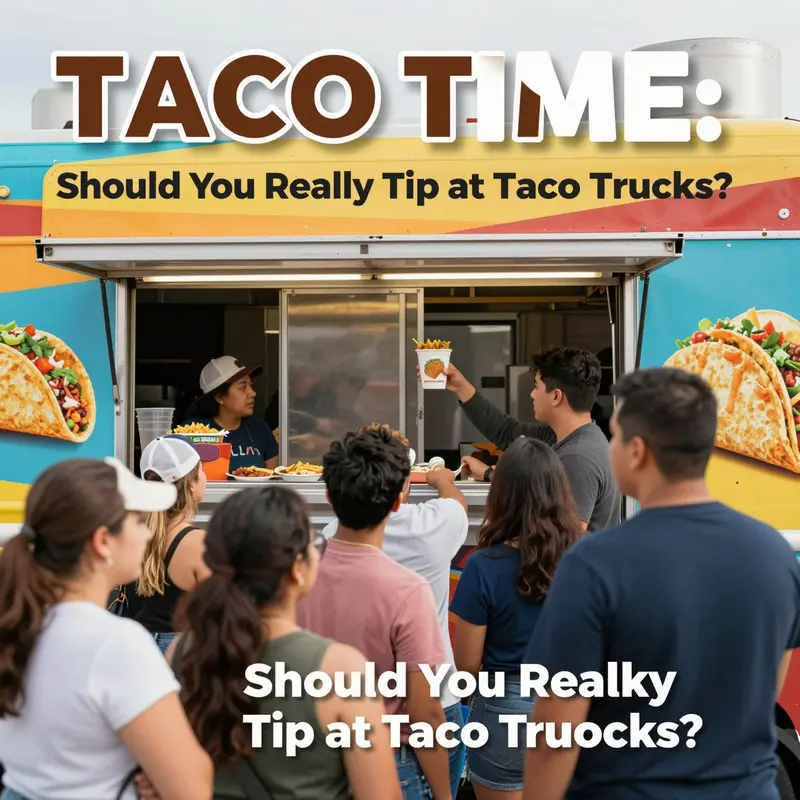
Tipping at taco trucks sits at a crossroads of tradition and modern practice. The simple roadside stand once operated with a lean, cash-only exchange, where a quick bite and a quick exit were the norm. Today, many taco trucks function more like small, mobile restaurants. They source higher-quality ingredients, rotate seasonal menus, and blend hands-on cooking with multi-tasking front-of-house duties. In this landscape, tipping becomes less about a ritual and more about an acknowledgement of the labor, risk, and craft that go into delivering a reliable, memorable meal on a busy street corner. The shift in expectations mirrors broader changes in the food-service world, where service models have grown more complex and the lines between vendor and hospitality professional have blurred. As customers, we navigate this shift by clarifying norms that support the people behind the counter without turning a quick bite into an awkward social moment.
One of the clearest signs tipping has gained legitimacy in the taco-truck ecosystem is the way many operators now accept cards and display tip prompts. A growing share of trucks no longer rely solely on cash; the National Food Truck Association notes that a substantial majority of trucks now accept credit cards, and nearly half place suggested tip amounts at checkout. This configuration says something important: tipping is becoming part of the recognized compensation mechanism for a service that looks progressively like a full-service experience, even if the form is informal and the setting portable. The prompts aren’t universal, but they are increasingly common, and they represent an invitation to participate in a fairer distribution of earnings than a cash-only past could guarantee.
Still, the ethics and etiquette of tipping at taco trucks are not simply ceremonial. They are grounded in the ownership structure of the operation and the way service is delivered. When a truck is run by a sole proprietor who is also the chef, cashier, and primary cook, tipping can feel like tipping a business owner rather than an employee. That moment can be awkward, especially for first-time customers who want to show appreciation but worry about crossing into personal financial support for the owner. Yet even in these setups, a modest tip carries weight. It signals appreciation for consistent quality, helps offset the time and skill invested, and reinforces a culture where the labor of feeding a community is valued. In contrast, when a truck employs a team—cooks, servers, and drivers—the case for tipping becomes more clear-cut. The labor divides into distinct roles, and tips function as direct recognition of the hours and care these individuals contribute, from the flame-kissed tortillas to the steady creak of a hand-held scanner and the patient precision of a line worker guiding orders to ready plates.
A practical rule of thumb emerges from this context: tip according to the service experience and the visible labor behind the counter. If there is a visible tip jar or a digital prompt requesting gratuity, a gesture of 10–15 percent is typically reasonable, with adjustments for urban cost of living and the relative price point of the meal. In high-cost urban cores, where the price of a taco can reflect more than just ingredients, tipping toward the upper end of that range respects the added overhead and the tempo required to maintain quality during peak hours. If the truck offers table service, QR-code ordering, or a situation where wait times lengthen due to demand, the expectation for tipping grows stronger. These cues—slower service in a busy window, the attention given to sanitation and hospitality, or the effort to maintain a clean, welcoming setup—signal that a gratuity is not merely optional but a way to support the visible labor and the intangible costs of running a mobile kitchen.
Digital payments have reshaped how we tip. Card readers and mobile apps that prompt for a tip create a formal moment where generosity can be practiced with minimal friction. In these cases, even small amounts can carry meaning. A tip range of 50 cents to a dollar, depending on the meal’s price and the level of service, is a common courtesy. It’s not about forcing a larger sum than you can afford; it’s about acknowledging the time, skill, and risk involved in producing a consistent product at a difficult-to-stabilize location. The practice aligns with a broader shift toward fair compensation in an industry where workers are frequently juggling multiple roles—from sourcing and prep to cleanup and inventory management. When a customer leaves a small tip in these circumstances, it reinforces a culture of mutual respect between guests and the people who make the food possible.
Yet tipping at taco trucks is not a universal expectation, and confusion persists. A 2023 survey by the National Restaurant Association highlighted a gap: only 42 percent of Americans reported consistently tipping at food trucks, compared with a much higher rate at sit-down restaurants. That discrepancy isn’t just about generosity; it signals uncertainty about norms and the impact of tipping on workers’ livelihoods. The takeaway for travelers and regulars alike is that local norms vary, and when in doubt, small acts of courtesy—especially at busy trucks with longer lines—play a meaningful role in supporting those who work so hard to keep quality high under challenging conditions. The ethics are not about enforcing a rule but about aligning your actions with a broader, community-minded value system that treats the labor behind street food as legitimate, worthwhile work.
One striking element of this evolving etiquette is the way it intersects with the economic realities of independence and entrepreneurship. Most taco-truck operators are small businesses or tight-knit teams. They grow their reputations not only through flavor but through reliability—consistent heat, consistent timing, and a respectful customer experience. Tipping becomes a tangible form of feedback, signaling appreciation for consistency and care. When a truck rolls into a neighborhood with a short menu but a long commitment to quality, a tip helps reallocate a portion of a meal’s price toward the workers who often have no benefits or stable wages. Even in instances where a sole proprietor is also the face of the business, tipping supports the broader principle that service is a shared enterprise, and the customer’s generosity helps sustain the daily grind that keeps a street-food scene vibrant.
Another practical dimension concerns how tipping interacts with the physical setup of street commerce. Taco trucks are seasonal and weather-dependent, susceptible to walk-up demand that can surge in a matter of minutes. That volatility isn’t just a culinary challenge; it places a premium on efficiency, multi-tasking, and a calm, friendly demeanor in the face of lines and heat. When a truck operates with a lean crew, the person who handles orders, cash, and cooking can be stretched thin. A tip, modest as it may be, serves as a form of social reciprocity—an affirmation that the guest recognizes the pressure and precision required to keep service moving smoothly while still delivering quality. If you observe a crew member going above and beyond—helping a first-timer navigate the menu, accommodating substitutions with grace, or maintaining warm tortillas under a hot sun—that moment invites a tip. It’s a humane acknowledgment that effort compounds value in a setting where every minute on the clock matters.
For readers seeking a concise pathway to understanding these norms, a practical reminder helps. If the truck’s transaction process includes a tip prompt, it’s prudent to leave a small tip—typically 50 cents to a dollar—depending on the price and service. If there is no prompt, your discretionary tip can still be a meaningful 10–15 percent on the total bill, or a few dollars in the case of lower-priced items, especially when the line moves quickly but the crew still demonstrates care and attentiveness. In cases where the owner is the sole worker, consider the overall value you received: was the food excellent, was the service professional, and did the experience feel worthy of support beyond the bite you took? Your answer will guide whether to provide a monetary gesture, and how large that gesture should be.
The etiquette is nevertheless flexible and context-sensitive. Regional norms, the time of day, and even the specific truck’s branding influence expectations. A neighborhood with a thriving street-food culture might see tipping as a routine part of the evening ritual, while in other areas customers may still treat tipping as an optional courtesy rather than a standard practice. The important point remains consistent: tipping, when offered thoughtfully, reinforces a respect for the labor that makes street food possible. It is a small action with outsized impact, particularly in an industry built on independence, risk, and a direct line between the guest’s satisfaction and the worker’s livelihood. As a consumer, you hold a degree of power. Your generosity can help a family business weather lean days, invest in safer equipment, or simply reward sustained excellence.
If you’re looking to deepen your understanding of the hands-on realities behind these mobile kitchens, you can explore broader discussions about the business and culinary realities of taco-truck operations here: Top taco truck models for culinary success. This resource delves into how equipment choices shape service quality and the customer experience, offering a practical lens on how a well-equipped truck can better deliver consistent, tasty results that deserve recognition beyond the plate. While models and gear don’t replace human care, they do influence the efficiency, safety, and comfort that customers experience in the moment of purchase.
In the end, tipping at taco trucks embodies a nuanced sense of reciprocity. It’s not simply about a percentage or a dollar figure; it’s about participating in a street-food ecosystem that values craft, labor, and community. Whether you tip or not, the choice should reflect your respect for the work behind the meal and your awareness of how small acts of generosity sustain the people who bring delight to urban corners on busy nights. The balance between owner-led pride and team-based service is delicate, and your contribution—whether a little or a lot—helps reinforce a culture where street food remains a viable, vibrant tradition rather than a passing trend. For readers navigating unfamiliar norms, remember that local practices vary, and following a modest, thoughtful approach often proves the best path forward. Tipping is a form of social stewardship as much as it is a gesture of gratitude, and in the fast-moving world of taco trucks, that stewardship matters more than ever.
External resources can offer broader context on the etiquette landscape. For a deeper, broader look at tipping culture in the street-food sphere, see this contemporary analysis: https://www.thecut.com/article/should-you-tip-at-food-trucks-etiquette-no-one-talks-about. This piece explores the subtleties and debates that arise when diners and workers intersect in informal settings, reminding us that etiquette evolves with industry structure and community expectations. In tandem with this discussion, readers may also consult organizational guidance from the National Food Truck Association, which provides practical tips and examples for tipping etiquette that reflect current industry standards.
Beyond the Change Jar: Decoding Cultural Norms and Tipping Etiquette at Taco Trucks
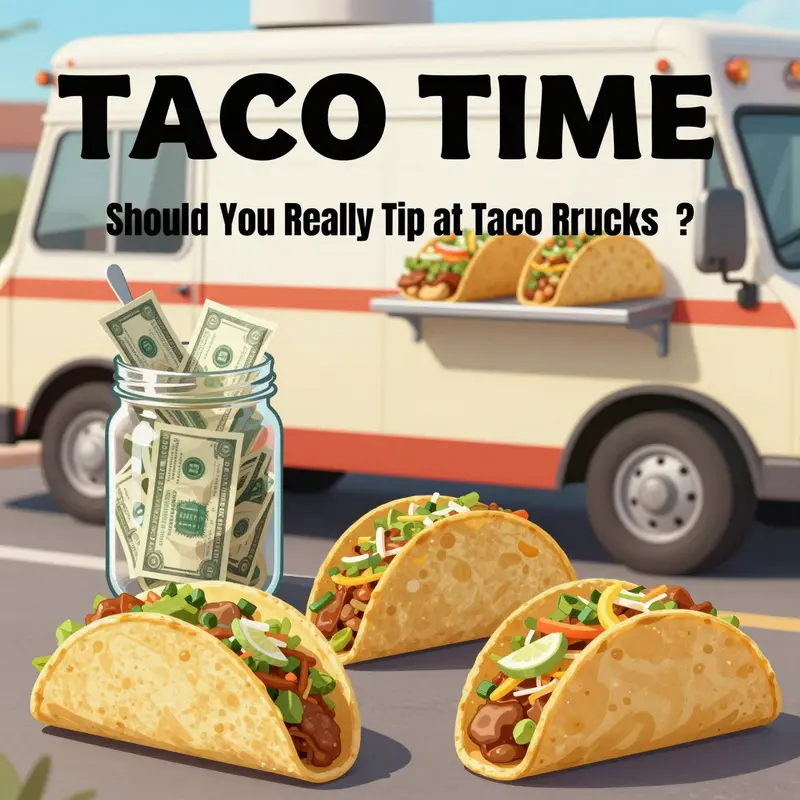
Taco trucks have evolved from simple roadside stands into micro in-house kitchens that often feel like small, independent restaurants. The cash-only days are fading in many places as the industry leans into digital payment systems, better ingredient sourcing, and more complex service models. When you stand in a line that snakes around a portable window, the question of whether to tip can feel as uncertain as choosing a salsa with heat you didn’t expect. Yet the research and street-level practice suggest a clear shift: tipping at taco trucks is increasingly part of the dining experience, driven by the realities of small-business labor and the expectations that come with a more restaurant-like operation. The National Food Truck Association notes that a growing majority of trucks now accept credit cards, and nearly half display suggested tip amounts at the point of sale. This trend isn’t merely about money; it’s about acknowledging the labor that blends cooking, customer service, payment processing, and day-to-day operations into a single, highly skilled workflow. In many trucks, the staff wear multiple hats, and the tip becomes a meaningful part of their income, helping to stabilize wages in a sector that is frequently seasonal and volatile.
In this evolving landscape, the tipping question hinges less on rigid rules and more on context, locality, and the quality of service you receive. If there’s a visible tip jar or a digital prompt asking for gratuity, a standard 10–15 percent tip is a sensible baseline, especially in high-cost urban environments where overheads push the price of a meal higher and where turnover during peak hours is rapid. When the service involves table-like seating, QR code ordering, or longer waits because the truck is busy, tipping grows not only more expected but also more reflective of the effort required to maintain consistency in a compact, high-pressure setting. If the owner is the chef and cashier, the dynamic can feel intimate and personal, yet your gratuity still supports their livelihood and the ability to reinvest in ingredients, equipment, and staff training. A 2023 survey by the National Restaurant Association highlighted a notable gap: only 42 percent of Americans consistently tip at food trucks, compared with about 92 percent at sit-down restaurants. That statistic isn’t a condemnation of customers but a signal that norms are still coalescing, and it’s reasonable to look to local practices and collective expectations when deciding how to tip. Clarifying these norms helps ensure you’re supporting small businesses responsibly rather than inadvertently shortchanging the people who create the experience you’re enjoying.
For readers seeking a practical frame, consider what signals you’re responding to in the moment. If a truck is quiet and the transaction feels brisk, a tip may feel optional. If the staff take time to tailor your order—perhaps adjusting spice levels, swapping toppings, or offering clear recommendations when the line is long—you’re witnessing a service effort that merits acknowledgment. A small tip—say, a dollar or two for a modest order, or a handful of dollars for a larger or more complex order—can be a visible sign of appreciation for the extra attention. In some cases, tipping helps overcome the perception that street food is a low-wage, low-effort endeavor. It is rarely that simple in practice. The people behind these meals often juggle cooking, taking orders, processing payments, cleaning, and inventory management in a tight space. In that sense, tips function as a form of direct support for workers who are balancing multiple responsibilities during a single shift.
The practical rhythm of tipping at a taco truck also depends on the stage of your dining experience. If you’ve placed a straightforward order and the line moves quickly, you may decide to forgo tipping or opt for a small courtesy amount if the service felt particularly efficient. On the other hand, if you’ve requested special accommodations—extra toppings, customized spice levels, or substitutions—or if the truck staff have taken extra time to explain dishes and guide your choices, a more generous tip feels appropriate. In many markets, a tip of 10–15 percent remains the anchor, but in high-demand settings or for particularly attentive service, tipping more generously makes sense and is often appreciated. Even a modest $1–$2 tip in such cases communicates respect for the work involved and can encourage continued high standards.
Culture and geography further shape tipping expectations. In cities where taco-truck culture is deeply embedded, like certain neighborhoods in coastal and metropolitan areas, tipping for friendly, attentive service—especially during peak hours or for large orders—has become part of the social contract of street food. In other regions, where the model leans toward faster, more self-serve interactions or clearly posted prices that include service elements, tipping may be less expected. It is worth noting that tipping norms are not universal; they reflect the social fabric and labor practices of a locality. If you’re new to a city or to a truck you haven’t visited before, observing what others do can be a quick compass. Community forums, local groups, and neighborhood conversations often reveal the unwritten rules for that particular corner of street food. For readers who crave a broader reference point, contemporary coverage across major outlets has started to map etiquette rules across different cities, underscoring that tipping is as much about cultural expectations as it is about personal generosity.
The way you tip also communicates a lot about how you view the service economy. The dollar-and-cents mechanics of tipping—whether you hand cash to a server or tap a card to add a gratuity—also signal how you perceive the staff’s multi-role responsibilities. When a truck truly functions like a tiny restaurant, where cooks often double as cashiers and sometimes as dishwashers or expediters, tipping becomes a direct way to acknowledge this complexity. It’s not solely about rewarding personalities or a moment of warmth; it’s about sustaining a workforce that takes on more than a single task per shift. And because many of these teams operate without the stable benefits typically found in larger hospitality settings, tips can be an important supplement to a modest base wage and irregular hours.
That said, tipping should always be a personal choice guided by local norms and your own experience. If you opt to skip a tip, you can still show appreciation in other ways, such as praising the truck to friends, leaving a positive online review, or returning with a larger order on another day. Your choice should reflect what feels right to you while respecting the worker’s effort and the economic realities of a small, mobile business. As a rule of thumb, observers in the field advise following the lead of nearby customers and the posted cues on the truck itself. If you’re unsure, a quick glance at what others are doing on the day’s rush can provide immediate guidance.
From a consumer education standpoint, the tipping conversation at taco trucks is also tethered to broader labor-market conversations. Small-business owners often shoulder higher risk and variable income compared to employees in larger, more established venues. Tipping helps bridge some of that gap, reinforcing the idea that guests recognize the craftsmanship, the balancing act of service, and the uncertainties of weather, traffic, and demand that can define a given shift. In this sense, tips do more than compensate a person for a moment of service; they support the sustainability of independent culinary ventures that contribute flavor, character, and local economy to neighborhoods. The evolving tipping etiquette at taco trucks thus reflects a larger shift in how communities value and reward street-level entrepreneurship and culinary skill.
If you’re looking for a practical cue sheet, you can consult a concise guide that captures the evolving norms across different locales. It’s useful to note that even within a single city, you may encounter variations. A truck in a tourist corridor might expect more gratuity, while one in a compact residential area with steady foot traffic might not, and a truck with clear price marks and no table service may feel more self-serve—where tipping could be optional. In other words, you don’t need a universal formula; you need a local-aware approach rooted in observation and respect for workers. For readers who want to dive deeper into etiquette rules across cities, this evolving discourse is actively discussed in broader food-service discussions and age-old street-food traditions, reflecting the constant negotiation between efficiency, hospitality, and the dignity of those who turn simple ingredients into memorable meals.
Ultimately, the core question—do you tip a taco truck?—is best answered by reading the room, honoring local norms, and recognizing the labor behind a carefully prepared plate. If the service feels attentive, if the staff go out of their way to tailor a dish, or if you’re paying a premium for a higher-quality, ingredient-driven experience, a tip of 10–15 percent, or a small, thoughtful cash gesture, is a reasonable and courteous gesture. When in doubt, a modest tip sustains a culture of care and reinforces the social compact between street-food artisans and the communities that support them. For readers who want a practical, ongoing glance at how these norms are shaping real-world practice, the taco truck blog offers ongoing discussions and practical tips on this very topic. See the taco truck blog for related discussions and field notes on tipping etiquette and how it’s evolving in different neighborhoods. taco truck blog.
For researchers and curious readers who want to explore this issue beyond personal experience, a broader look at tipping etiquette across cities can be found in established journalism that tracks cultural norms and changes in service expectations. A widely cited resource offers a broader, city-by-city perspective on when and how to tip at food trucks and other casual dining formats. External readers can consult the following external link for a broader analysis and city-by-city etiquette nuances: https://www.nytimes.com/2026/03/02/style/tipping-food-trucks-etiquette.html
The Tip That Keeps the Cart Rolling: Economic Implications of Tipping Taco Trucks
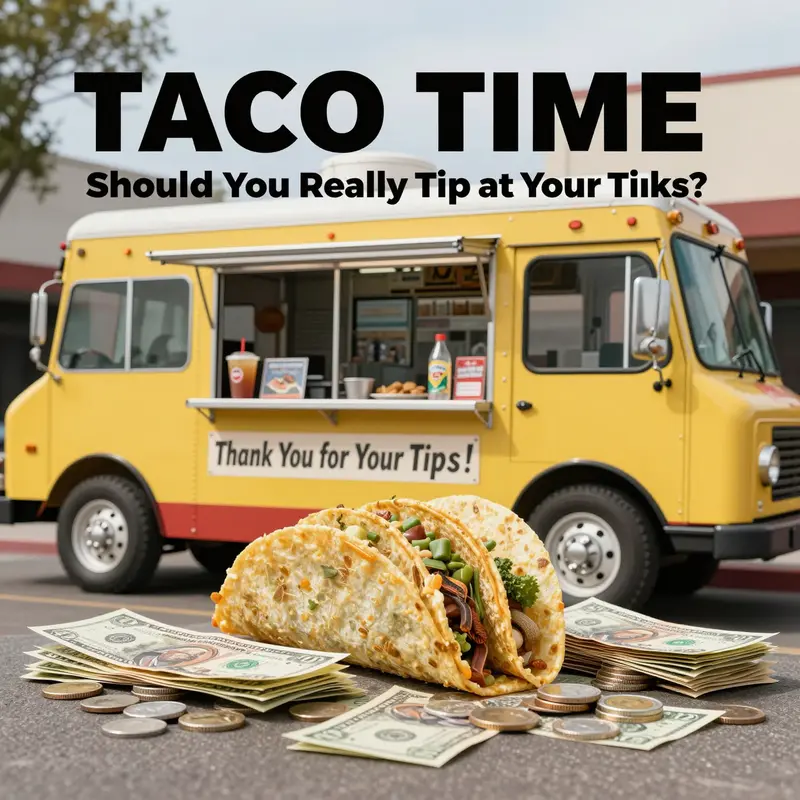
Tipping at a taco truck is more than etiquette. It is a practical question with real consequences for tiny businesses that operate on grinding margins and high labor intensity. In many cities, a successful taco truck is a small orchestra of cooks, cashiers, cleaners, and managers all rolled into a single team. Their wages, benefits, and even their ability to stay in business hinge on a combination of sales and gratuities. The shift from a cash-only, tip-optional roadside stand to a more restaurant-like model has changed both the expectations of customers and the economics of operation. Small crews often rely on tips to bridge gaps between hourly wages and the cost of living. In this sense, tipping becomes a stabilizing force for the people who bring the food to the curb and the communities that come back for the flavors they crave. The numbers tell a mixed story. A 2023 survey from the National Restaurant Association showed that only 42 percent of Americans consistently tip at food trucks, compared with 92 percent at sit-down restaurants. This gap is not simply about generosity; it signals a volatile revenue stream for operators who must navigate variable demand, ingredient costs, and unpredictable foot traffic. When customers do tip, the additional income can smooth out seasonal lulls and weekend surges alike, letting operators plan better for the weeks ahead and avoid abrupt cutbacks in hours or quality. The practical reality is that a tip is more than a moral gesture; it is a portion of revenue that directly supports the people who make the food, run the register, and keep the truck clean and on the road. The implications ripple outward: better tips can fund new menus, sharper sourcing, and more reliable staffing, which in turn elevates the overall experience for diners who value fresh ingredients and consistent service.
What has changed in recent years is not just the presence of money in the tip jar, but the means by which tips flow. A growing share of taco trucks now accepts card payments, and many display suggested tip amounts at checkout or through digital prompts. This modernization mirrors broader trends in the foodservice world, where tips are becoming an accepted component of income rather than an optional garnish. In urban centers with high costs of living, a 10–15 percent gratuity can be expected for prompt service, even when the check is relatively small. In cases where the truck offers table service, QR code ordering, or longer wait times due to high demand, tipping becomes even more expected. The implication is clear: as service models grow more complex and the price of ingredients climbs, tips help maintain the margin that keeps a small operation financially viable. For customers who want a straightforward rule of thumb, tipping 10–15 percent in appropriate contexts aligns generosity with the level of service and the realities of the business model. For those who see the owner also running the grill and the register, a tip still matters. It signals appreciation for the total effort—the multi-tasking that makes a single truck feel like a neighborhood restaurant on wheels. The economics here are not abstract; they are the concrete difference between a truck that can afford ice and fresh produce tomorrow and a truck that struggles to replace worn equipment next month.
The economic calculus of tipping is particularly salient because many taco truck operators are small or sole proprietors without benefits or guaranteed hourly pay. Wages may be unpredictable, and benefits are rare for independent teams. In this setup, tips can constitute a meaningful portion of daily earnings. They can influence decisions about how often to restock the pantry, what kinds of ingredients to source, and whether to invest in equipment maintenance or menu development. When customers skip tipping, the impact is not limited to a single missed percentage; it can cascade through the operation, forcing compromises on quality, schedule reliability, or even inventory management. The energy that goes into cooking, serving, cleaning, and inventorying is a holistic effort. Tips reward that whole arc and, in turn, support fair labor practices in a sector where workers often juggle several roles. The financial safety net that a steady tipping pattern provides can translate into more stable hours, reduced turnover, and better customer experiences over time. It can also enable operators to experiment with seasonal menus or higher-quality ingredients, since tipping revenue helps offset the costs that come with change: new recipes, more pronounced labor demands, and the need to train staff to handle a broader scope of duties.
The relationship between tipping and service quality is nuanced. A modern taco truck may be more than a simple stand; it can be a fast-casual experience with curated ingredients and a streamlined ordering process. Digital prompts and QR ordering can raise expectations, signaling that tipping is part of a modern, service-forward model. In higher-cost urban areas, the expectation for a tip can be more explicit, reflecting the higher living costs and the greater investment in staff and equipment. However, the absence of universal norms can also create confusion. Some customers feel reluctant to tip when the owner is visible behind the counter, cooks at the grill, and handles payments in addition to serving. Still, the underlying logic holds: tips contribute to the livelihoods that allow the operator to maintain quality, consistency, and dependability. The tip becomes not a reward for a single good moment but a recognition of the ongoing labor that sustains a mobile kitchen in a crowded, competitive landscape. For diners who want a practical framework, tipping 10–15 percent tends to be a reasonable benchmark in many urban contexts where wait times are longer and the service model resembles a full-service experience more than a simple takeout bite.
To understand why tipping matters economically, it helps to frame the taco truck as a small ecosystem. Revenue from sales covers the direct costs of food and basic overhead, but tips fill gaps left by wages that may not reflect a full-time standard. When an operator can count on a steady stream of tips, they can plan better for inevitable fluctuations—seasonal demand, weekend crowds, or special events. They can keep skilled staff longer, reducing the learning curve that comes with constant turnover. They can invest in higher-quality ingredients and maintain equipment so that service remains reliable rather than reactive. Even modest improvements in ingredient quality, like fresher produce or more consistent spice blends, require more careful procurement and sometimes more labor in prep. Tips help finance those choices without a corresponding increase in menu prices that would deter regular customers. In this way, tipping supports not just the worker but the entire food ecosystem of a neighborhood, where a taco truck becomes a focal point for daily life, social exchange, and culinary pride.
From a management perspective, this economics narrative translates into prudent financial planning. Operators often balance a tight cost structure: ingredients, fuel, maintenance, licenses, insurance, and marketing. A portion of daily revenue may already be earmarked for recurring costs; tipping, by contrast, remains variable and somewhat unpredictable. Yet this variability can be accommodated with careful budgeting and transparent tipping prompts. If a truck frequently displays digital tipping requests, it sends a message that gratuity is expected for service that exceeds basic expectations. In that sense, tipping becomes a market signal, guiding customers toward fairness and recognition. The broader industry context matters, too. As more trucks adopt card readers and digital payment platforms, they collect tipping data that can inform business decisions—how to price items, how to schedule staff, and how to design the menu around peak times. The data can reveal patterns: which hours yield higher tips, which menu items correlate with longer wait times, and how much tips contribute to the bottom line versus what is absorbed by costs. This empirical clarity helps operators plan for the future with greater certainty, a critical advantage in a sector where cash flow can be highly elastic.
The regional and cultural variations in tipping add another layer of complexity. In some places, tipping remains modest or even sparse, while in others customers routinely add a tip as a matter of habit or tradition. This divergence can influence a truck’s viability in different neighborhoods. An operator might notice that tipping rates rise with longer lines, higher prices, or more elaborate service models, such as those that include seating or table-side preparation in a shared outdoor space. Conversely, in areas with lower perceived living costs or less trust in digital prompts, tipping may lag, requiring the operator to adapt pricing, service levels, or promotional strategies to maintain financial stability. The absence of a universal standard makes local norms crucial for both customers and operators. Operators can benefit from communicating clearly about tipping expectations in a respectful, transparent way, while customers can educate themselves about how gratuities influence livelihoods and the quality they receive. The goal is not to coerce a customer to tip but to align the diner’s generosity with the value delivered by a mobile kitchen that often balances speed, freshness, and a degree of culinary artistry that is hard to quantify in a quick encounter.
For consumers who want a practical takeaway, tipping at taco trucks should be viewed as part of evaluating value. If service is prompt, friendly, and efficient, tipping acknowledges that labor-intensive work is being performed under tight space constraints and variable conditions. If the truck uses a digital prompt or a visible tip jar, a 10–15 percent tip is a reasonable rule of thumb, especially in high-cost urban areas. If there is table service, QR ordering, or longer waits due to high demand, tipping becomes more expected. If the owner is also the cook or the cashier, tipping remains meaningful because it supports a direct line of livelihoods, even if the form of compensation looks different in practice. Yet tipping alone cannot fix structural wage issues; it should accompany broader attention to wages, benefits, and pricing that reflect the true cost of doing business in a mobile, competitive landscape. The responsibility lies with customers, operators, and policymakers alike to recognize tipping as a meaningful element of a fair, sustainable micro-economy around street food.
To connect this discussion to the broader world of food entrepreneurship, consider how a small fleet translates into scalable opportunities. For operators who are growing beyond a single cart, tips can seed growth: enabling a broader ingredient base, improved equipment, seasonal menu experimentation, and staff training that lifts the entire brand. For customers, saying thank you with a tip translates into steadier quality and predictability, which in turn fosters greater trust and repeat visits. And for the neighborhood, this cycle supports local commerce, job creation, and a more resilient street-food culture that can adapt to changing tastes and demographics. If you’re curious about how micro-operations can scale while maintaining a personal touch, explore broader models in the food-truck entrepreneurship space, such as the case studies highlighted in resources focused on top food truck models for entrepreneurs. Top food truck models for entrepreneurs. This cross-reference helps place tipping within a larger framework of strategic growth and community impact while preserving the essential humanity of the people who keep the cart rolling. As you move through your own dining experiences, you’ll begin to see tipping not as a ceremonial formality but as a practical, measurable contributor to the vitality of small-scale food businesses. And in turn, your generosity helps sustain the very communities that first drew you to the scent of grilled peppers, the bright heat of salsa, and the comfort of a quick, delicious meal on a busy street corner.
For readers seeking a definitive external reference that charts etiquette and best practices for tipping in this evolving landscape, the National Food Truck Association provides up-to-date guidance and context on tip etiquette. This resource offers a grounded perspective for both customers and operators navigating the transition toward more formalized tipping norms in mobile, independent dining. https://www.foodtruckassociation.org/tip-etiquette
On the Margins and Moments: Decoding Tipping Behavior at Modern Taco Trucks
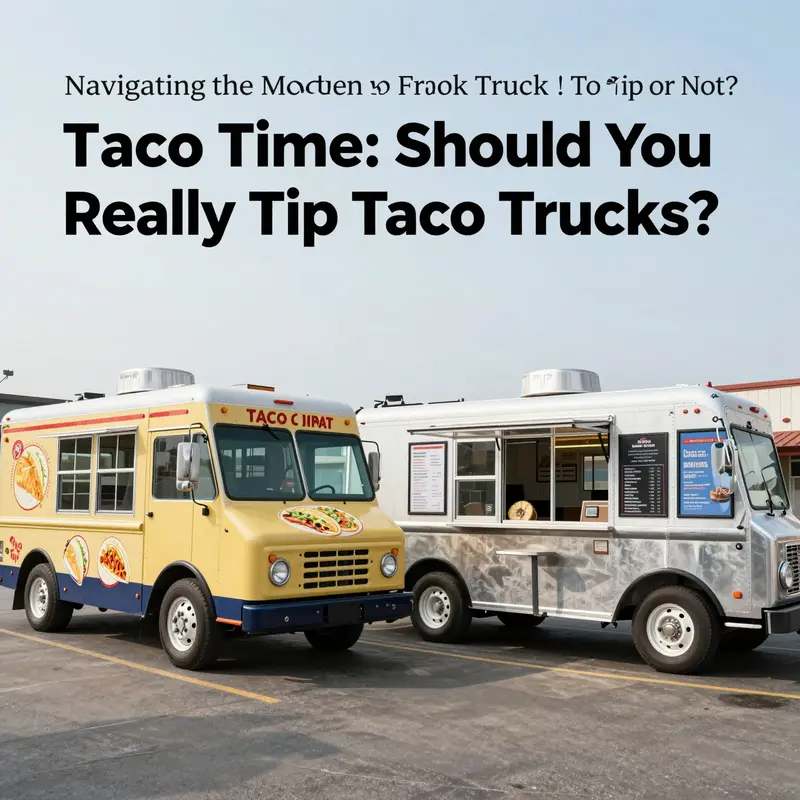
Tipping a taco truck is less a fixed rule than a social negotiation that shifts with place, price, and the human labor behind the sizzling fajita-smell of the grill. In many cities, a quick stop at a sizzling window feels like a moment of ritual more than a mere transaction. The truck cook flips tortillas with the same deftness as a chef in a brick-and-mortar kitchen, but the setting is different: a bright van, a line of cars, the hum of a street that never fully quiets. In this landscape, tipping sits at the intersection of custom, fairness, and practicality. The question do you tip a taco truck? invites a broader reflection on how the food truck economy has evolved. It asks us to balance tradition with transparency, to acknowledge the many hands that turn a simple taco into a crafted experience, and to recognize that the right gesture can sustain a small, often itinerant business in a volatile market.
The tipping culture in the United States has long been a hallmark of service industries. In the truck scene, this culture has not been obliterated by self-serve counters or digital kiosks; rather, it has been renegotiated. Many customers still instinctively add a gratuity—often in the range of 15 to 20 percent—when the staff have hands-on interaction, when they answer questions about ingredients, or when they create a personal connection through conversation as orders are prepared. Yet the practice is by no means universal. Some trucks display clear messages that tips are not expected or that gratuity is included, especially where the transaction is fully digital or self-serve. The absence of a traditional waitstaff model means the service dynamic is different, and for some patrons that difference translates into a different expectation about tipping. In practice, this means tipping is optional in many contexts, a choice that aligns with the cash-flow realities of lean, mobile operations when prices are kept modest to preserve accessibility and speed.
Economics matter as much as etiquette here. Food truck operators are frequently small, independent teams. One or two people might be responsible for cooking, taking orders, handling payments, and cleaning up after a rush. They juggle multiple roles and shift between kitchen work and front-of-house service as the crowd ebbs and flows. In such environments, tips can represent more than a discretionary boost; they can be a meaningful part of take-home income, especially when wages are variable and benefits are scarce. The labor dynamic is central: without the predictable wage frameworks that support workers in larger restaurants, the tip becomes a practical counterweight to irregular hours and the unpredictable tempo of a street-side business. A tip does not only acknowledge skill; it honors the rounds of work that unfold during a single service window—prep, grilling, order processing, and cleanup—often handled by the same people in a single shift.
The growing sophistication of the modern taco truck mirrors broader trends in the mobile-food sector. Many trucks now offer higher-quality ingredients, seasonal menus, and more complex service models. Credit cards have become commonplace, and it is common to see suggested tip amounts displayed at the point of sale. This shift signals a collective movement toward recognition of labor costs and a more standardized approach to gratuity, even as it preserves the core idea of tipping as optional or situational. Industry data from recent years show that an overwhelming majority of trucks accept plastic payments, and many respondents indicate that tips are relevant in the total transaction, particularly when the experience includes personal interaction, longer wait times during peak demand, or a higher price point justified by component quality and technique. The material reality behind those signs and prompts is straightforward: small teams, often without a formal benefits package, rely on tips to stabilize income and reward the craft that goes into each plate.
But tipping culture is not monolithic. A notable nuance is the push toward transparent pricing in some markets. A growing subset of operators has begun to incorporate labor costs into menu prices, arguing that this offers fairness and clarity to customers who deserve to know what their money covers. In these cases, the push is less about discouraging tips and more about removing ambiguity from the bill. When labor is baked into the price, customers may feel more confident that the price they see reflects the true cost of service, while still having the option to leave a gratuity if they wish to acknowledge exceptional service or the chef’s extra effort. This approach resonates with a segment of consumers who prefer straightforward transactions and fewer decisions at the counter. Yet even in such setups, the social script of tipping persists in certain contexts: when a driver-not-cook is handling a complicated order, when a particularly lengthy line forms in high-demand hours, or when the interaction involves a direct, amiable exchange that goes beyond simply handing over a bag.
Cultural differences further color the tipping conversation. In the United States, tipping remains a lived habit, a way of contributing to a service economy that prizes personal transaction history and visible effort. In other parts of the world, tipping may be less expected or not customary at all, reflecting different labor norms, regulatory frameworks, or price structures. For travelers or newcomers, the safest approach is to observe local signage, menu language, and the posted norms of the truck operator. When a truck is clear about tipping expectations on its digital screen or in a printed menu, those cues guide behavior with minimal social friction. When no guidance exists, a practical rule of thumb is to measure the level of engagement: if a staff member talks you through choices, makes substitutions, or explains spice levels and sourcing, a modest tip—often on the lower end of the common range—can be a meaningful gesture.
The research landscape surrounding tipping at taco trucks is not uniform, and this diversity matters for readers who want to tip responsibly. A 2023 survey highlighted a tension: only a portion of Americans consistently tip at food trucks, a share far lower than what is observed in sit-down restaurants. This figures into a broader conversation about expectations, fairness, and community support. It suggests that tipping culture at mobile food venues is still evolving, and local norms play a decisive role in shaping behavior. Consumers who want to participate in the vitality of the street-food ecosystem can do so by aligning their practices with the truck’s stated policies and with the rhythms of their city. In cities with high living costs, for example, tipping at the 10 to 15 percent range can feel appropriate when the service includes clear, direct interaction, while more generous prompts may be preferred when wait times are long or when the truck is navigating a crowded festival scene.
For readers who crave a deeper dive into how service models influence tipping, a practical touchpoint is the way a particular truck communicates expectations. Some operate with a table-service mindset, offering a few seats or a standing area where customers linger while orders are assembled. Others lean into QR code ordering or fully digital workflows, a shift that can complicate tipping norms because the transaction becomes less personal. Yet even in those settings, tips remain meaningful when the staff are still responsible for cooking, payment processing, and sometimes even deliveries to nearby tables or pickup windows. The key is to read the room and the menu; if you see a tip jar, a digital gratuity prompt, or a note about tipping on a receipt, follow the cue. If you do not, your tip may still arrive via the same channel: the cook’s pride in a job well done expressed through a small monetary gesture.
For those who want a bridge between information and the practice of tipping, there is more to explore about how trucks operate beyond the issuing of a bill. If you’re curious about the hardware side of these rolling kitchens—the design choices that affect how quickly a truck can prepare and serve food while keeping costs down—there is a broader set of resources that pull back the curtain on the logistics, safety, and efficiency that underlie every dish. For readers who want a deeper look at the equipment and business models that shape the market, consider this piece on top taco truck models for culinary success. It provides a window into how form, function, and flavor cohere in a mobile kitchen, and it helps explain why some trucks can deliver a high-quality product with lean staffing and a leaner footprint. Top taco truck models for culinary success
As we consider tipping, it is worth acknowledging the global perspective. In a country like China, the tipping tradition is notably different. The same study notes that tipping at food trucks is not expected, and the service ethos emphasizes value, speed, and authenticity. This contrast underscores a broader lesson for travelers and locals alike: tipping is not a universal obligation but a local practice that reflects cultural expectations, economic conditions, and business models. When the guest is clear about what the vendor considers appropriate, the exchange remains smooth and respectful. If you are unsure, you can always default to a modest tip and observe whether the staff respond with a warm acknowledgment or a nod that signals appreciation. The aim is to support labor without pressuring a system that is already balancing tight margins and seasonal fluctuations.
The practical takeaway is nuanced but clear. If you encounter a visible tip jar or a digital prompt, a 10 to 15 percent gratuity is a sensible starting point, especially in urban centers where the cost of living is higher and where the truck may be operating with a small team that wears several hats. If the service involves longer waits, complex customization, or a higher price point tied to quality ingredients or limited-time menus, a more generous tip can be appropriate. If a truck is explicit about including labor costs in pricing, you may still choose to tip if you feel that service exceeded expectations or if someone went beyond what was asked to ensure your order was right. The most important rule remains simple: tip in a way that acknowledges effort and sustains the people who keep these culinary pilgrimages rolling. In other words, tip with intention, not out of habit, and respect the norms of the place you’re in.
External resource: https://www.foodtruckassociation.org/tip-etiquette
Final thoughts
As taco trucks continue to enrich our culinary landscape, understanding the importance of tipping can elevate the experience not just for you but for the hardworking vendors who bring these flavors to life. Your tip is more than just spare change; it’s a vital part of their livelihood, a way to show appreciation for quality service, and a means of supporting small community businesses striving to thrive in a competitive market. The next time you find yourself in front of a taco truck, remember that your decision to tip can make a significant difference. Let’s celebrate the deliciousness of tacos while ensuring that the vibrant culture behind them continues to flourish!

