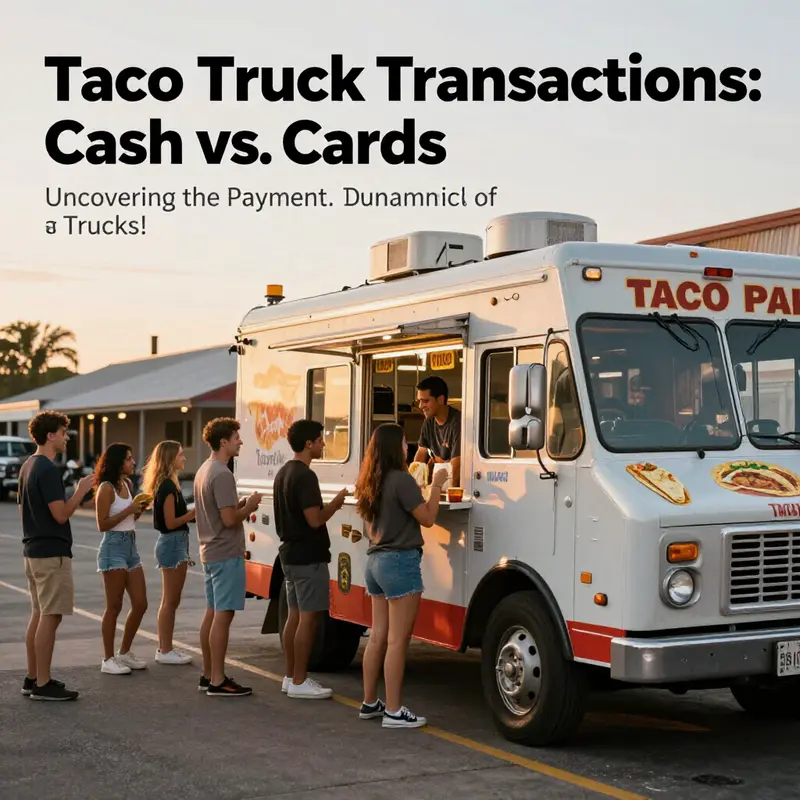
For taco enthusiasts and on-the-go office workers, nothing beats the allure of a taco truck’s mouthwatering offerings. Yet, amidst the delicious chaos of culinary creativity on wheels, a crucial question arises: do taco trucks take card? Understanding payment acceptance is key to ensuring your cravings are satisfied without a hitch. In this flavorful exploration, we will dive into how taco trucks are adapting to new payment technologies, the enduring presence of cash-only operations, the varied customer experiences surrounding payment methods, and how mobile apps can guide you to successful transactions. Each chapter unravels a layer of this intriguing topic, giving you a well-rounded view of taco truck payments and helping you plan your next delicious lunch break or event feast!
Cash, Card, On the Move: The Realities of Payment Acceptance in Taco Trucks
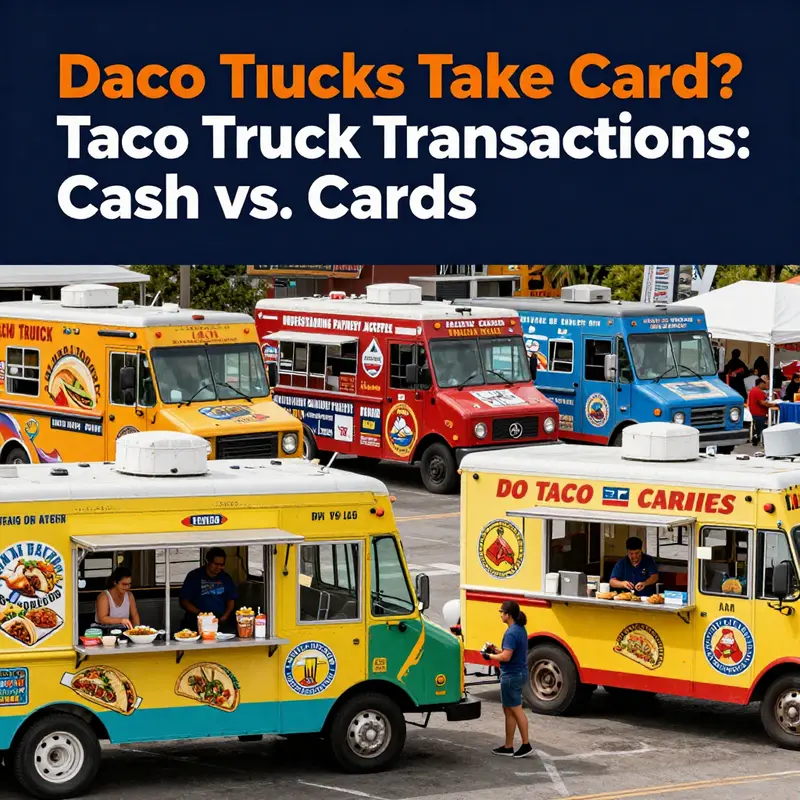
When people chase a late-day craving for street-taco perfection, the last thing they want is a detour caused by payment methods. The simple question—do taco trucks take cards?—ripples into a broader conversation about how these small, mobile kitchens operate, what they can afford, and how they adapt to changing expectations. The answer isn’t a single rule but a spectrum shaped by location, business size, and the day’s logistical realities. In many cities, the trend toward digital payments has become clear, even as a surprising number of trucks still trust cash as their primary mode of exchange. This tension between cash and plastic is not merely about preference; it reflects a careful calculation of cost, speed, and reliability in environments that change by the hour.
For operators, accepting cards is often about removing friction for customers. A portable card reader, a quick swipe or tap, and a receipt that closes the loop on a satisfying meal. Yet the move from cash to card is not universal. Card processing comes with fees that cut into margins, and the upfront and ongoing costs of hardware, software, and support can feel daunting for a truck that faces unpredictable traffic, weather, and location shifts. In this delicate balance, many owners opt to keep cash as a core option while offering cards when and where the circumstance makes sense. The decision is frequently pragmatic: if a truck parks in a dense urban area with steady foot traffic and a regular patronage, card readers become a practical investment. If a truck roams from fair to festival or sets up at a pop-up with inconsistent connectivity, cash remains a reliable, low-friction fallback.
Connectivity itself emerges as a decisive factor. Card payments rely on dependable networks, and a stall or parking lot with spotty service can transform a smooth transaction into a delay that frustrates both vendor and diner. In response, many vendors equip their operations with portable readers that can operate offline for a window of time and then reconcile once a signal returns. This capability reduces the risk of failed transactions during peak moments while keeping the line moving. Even so, the reality remains that not every mobile kitchen can invest in the most advanced hardware or the latest software. Some operations still run on basic, cash-first setups because they prioritize speed of service and simplicity over a broader payment mix.
Location is a powerful determinant. In busy downtown cores and at large events, the customer base tends to expect card access as the norm. In those environments, card readers are almost as common as the salsa. In more remote neighborhoods or at neighborhood street fairs where vendors share a table with similarly priced fare, cash remains king. The owner’s choice often depends on the business model: a truck that moves frequently and operates at temporary locations may struggle with card-terminal logistics, while a city-based operation with predictable routes and a stable footprint can justify the cost and effort of card processing.
The cultural shift toward electronic payments also reflects consumer behavior. As people increasingly carry cards and digital wallets, the social contract of the street-food experience expands beyond the flavor profile of the taco. A modern customer may expect the ability to pay with a card or through a mobile wallet to avoid fumbling with coins or hunting for the right denomination. For some, the absence of card acceptance becomes a barrier that can nudge a potential repeat customer toward another vendor, perhaps even a vendor who might offer a slightly less compelling recipe but a smoother checkout. This is why many operators consider card acceptance not just a convenience but a strategic choice about reach and reputation. Yet even as digital payments become more accessible, the economics of acceptance remain central. Card processing fees, monthly service charges, and the costs of maintenance are real expenses that eat into margins when sales are variable and competition is fierce.
Anecdotes from the field illuminate the variability. A customer once recounted traveling nearly an hour to a favorite taco truck, only to discover the cart did not accept debit or credit cards. That disappointment is memorable not just because the journey felt wasted, but because it underscores how payment options influence location decisions, appetite, and timing. The incident, reported in the context of early 2017, echoes a broader truth: policies can change, and what held true last season may shift with new equipment, new owners, or new partnerships at a given event. Today’s readers can borrow a lesson from that tale: verify payment options before you head out, especially if you’re chasing a specific truck or a limited-time location.
So how should a prospective diner or a prospective operator navigate this landscape? For diners, the reliable approach is to check the truck’s social media or reviews for up-to-date payment details. Many vendors now publish payment options on their profiles, sometimes noting exceptions for certain events or hours. If time allows, a quick call or direct message can prevent a wasted trip. For operators, the logic is similar but oriented toward planning and transparency. A clear sign at the cart, a note on the menu, or a pinned post on social media that lists accepted methods can set expectations and reduce line-length tensions during peak service.
The evolving ecosystem of payments also includes the growing role of delivery platforms and digital gift options, which can broaden a vendor’s payment capabilities beyond traditional card swipe. While the core question remains about on-site acceptance, these platforms introduce a broader conception of how tacos travel from cart to customer. Delivery services often provide their own payment gateways or partner with mobile-merchant solutions to simplify checkout. In some cases, customers can purchase digital gift cards or apply wallet-based payments when ordering for delivery, illustrating a broader shift toward electronic transactions in the street-food world. The practical upshot is that even when a truck is cash-only at the window, a digital footprint on a platform can still capture a portion of the market that values convenience and speed.
For readers who run a taco truck, the decision to accept cards is not a one-time event but an ongoing, evolving process. A thoughtful implementation can begin with a straightforward, portable reader that offers both chip and contactless options, coupled with a plan for offline functionality and reconnection. Training the staff to handle a card-present experience smoothly—greeting the customer, listing the items clearly, confirming the total, and delivering a clean receipt—helps maintain efficiency during rushed moments. Clear signage near the point of sale, such as a simple card logo and a small note about offline mode, reassures customers that cards are welcome even if networks falter briefly. It is also wise to maintain a small reserve of cash for those moments when someone prefers not to or cannot use a card, ensuring no line is left stranded due to payment concerns.
Beyond the hardware and the hardware’s reliability, the philosophy around payment acceptance reflects a broader business resilience. A vendor who can adapt payment methods to the venue, the crowd, and the weather demonstrates a flexibility that translates into trust. Customers sensing that a truck is prepared to meet them where they are—whether they pay with a card, a wallet, or cash—experience a smoother, more confident transaction. In an era where consumer expectations are shaped by both convenience and consistency, a vendor’s willingness to accommodate a range of payment options becomes part of the value proposition, alongside the quality of the salsa, the warmth of the service, and the speed of service.
For readers exploring the practical side of this topic, consider how awareness of payment options can inform your dining plans. If you are curious about how payment readiness intersects with the broader strategic choices of mobile culinary ventures, the following resource offers a focused look at portable payment solutions that many food trucks employ to enable card transactions in dynamic environments. It can help illuminate the variety of pathways a small, mobile operation might pursue without assuming a fixed storefront infrastructure. Top taco truck models for culinary success.
In the end, the question Do taco trucks take card? is best answered with nuance and context. Some trucks happily embrace plastic, others remain cash-first, and many sit somewhere on a spectrum that shifts with the season, the event, and the neighborhood. The real takeaway is not simply whether a card can be used at a given window, but how payment choices are integrated into the day’s logistics, how clearly those choices are communicated to customers, and how the vendor protects both efficiency and financial viability in a fast-moving street-food landscape. As long as a truck keeps pace with technology, connectivity, and customer expectations, it can offer a checkout experience that is as satisfying as the food it serves. For customers, the invitation remains simple: check before you go, be ready for a cash option, and enjoy the ride as flavor meets flexibility on the curb. For operators, the invitation is equally straightforward: measure demand, manage costs, and design a payment approach that travels as well as your cart.
External resource for further exploration on card payment solutions for mobile vendors can be found here: https://www.sq.com/food-truck-payment-solutions
From Cash-Only Corners to Card-Enabled Street Tacos: The Digital Payment Shift in Taco Trucks
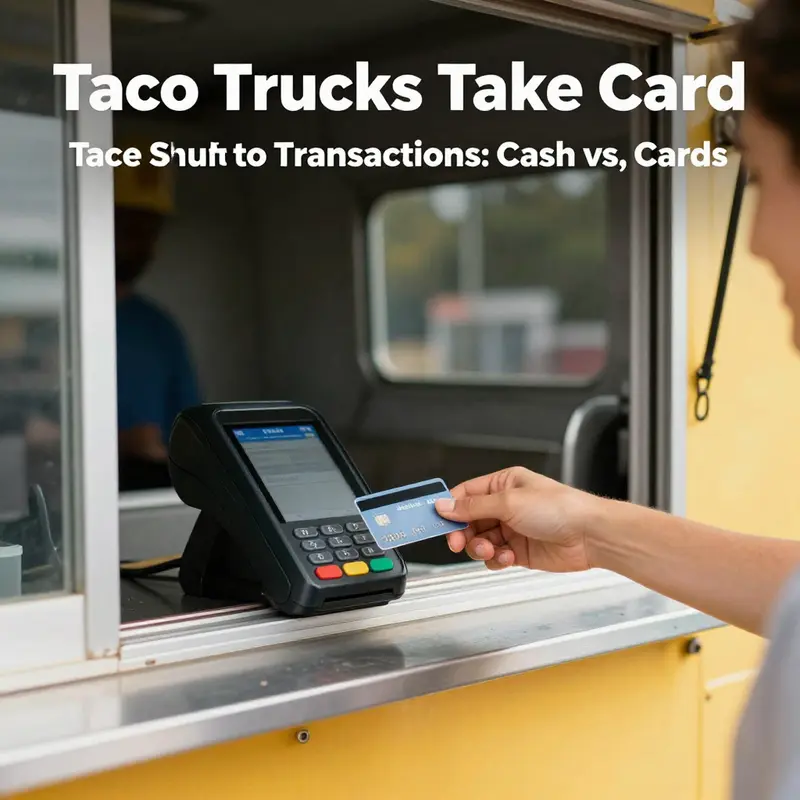
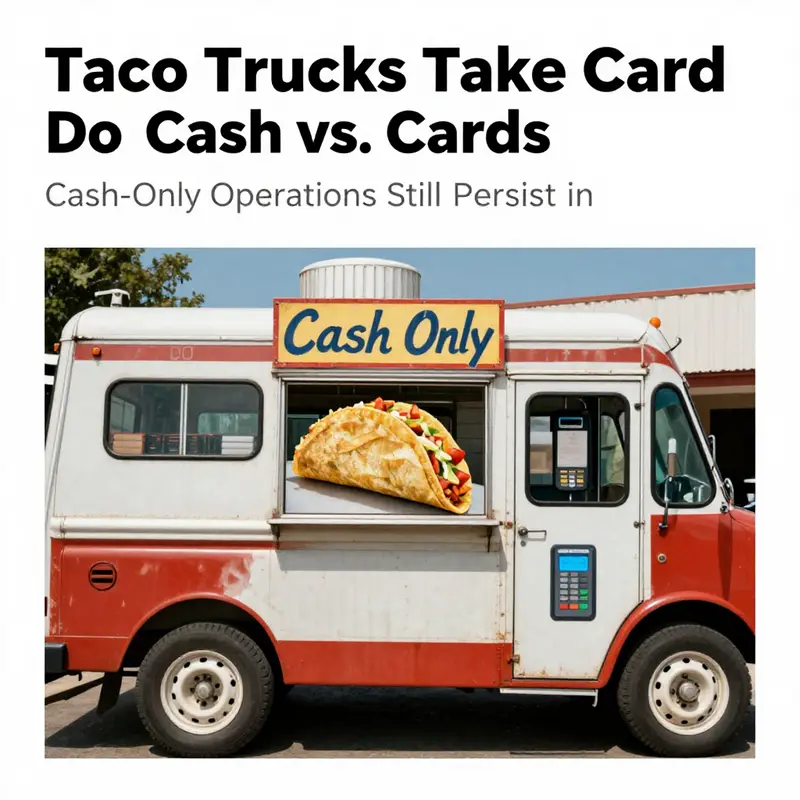
On the curb where steam-scented tortillas steam in the heat, a city’s taco culture unfolds with a stubborn blend of tradition and trend. The question that keeps circling the stall window is simple yet revealing: do taco trucks take cards? The answer is not a flat yes or no. It has become a narrative of transition, where some operators still rely on cash while others embrace a growing range of digital payment options. The evolution reflects broader shifts in how people spend, tip, and trust small, mobile businesses to handle money efficiently. In the late 2010s and into the 2020s, it became clear that payment methods were not just a back-office detail but a driver of customer flow, reliability, and perceived professionalism. The story is less about the card itself than about the ecosystem around it—the hardware, the software, the signs, and the invisible costs of options that tempt customers to walk away hungry rather than wait for change.
The historical friction is well documented in anecdote as well as commerce data. Cash-only operations offered the simplest, cheapest route for a business with tiny margins and unpredictable outdoor conditions. There is a logic to this—fewer moving parts, no card processing fees, and no reliance on cellular networks in sometimes remote or crowded urban blocks. Yet the drawbacks accumulate quickly in a world trained by convenience. A single missed wallet, a forgotten card, or a stalled card reader can turn a brisk lunch line into a hold-up that disappoints regulars and deters new customers. The dining culture built around the taco truck is deeply social, and in that social space, speed and ease matter. When the line moves slowly because someone rummages for cash or the processor fails, the entire experience frays. This is precisely where the shift toward digital payments began to take hold, not as a glamorous upgrade, but as a necessary adaptation to a changing customer base that expects frictionless transactions.
A telling example lingers in memory from a review published in April 2017. A customer drove nearly an hour to try a truck that, as the review noted, did not accept debit or credit cards. The disappointment wasn’t just about money; it was about time, the value of the journey, and the mismatch between expectation and service. Such stories created a quiet pressure among operators: to modernize or risk becoming a niche, weekend-only destination rather than a reliable daily option. The economics of card acceptance began to make sense as well. Even with added processing fees, the ability to sell to a broader audience could lift average ticket size, improve cash flow, and reduce the risk of cash handling in outdoor environments. The math is not always dramatic, but it compounds over weeks, months, and seasons, altering the viability of a cart in a way cash-only setups rarely can.
By the mid-2020s, the landscape began to tilt decisively toward digital methods. In many major taco hubs—cities where food trucks cluster, compete, and thrive—the majority of top vendors now offer card readers and contactless options. This shift isn’t just about processors or devices; it’s about alignment with what customers already carry in their pockets: a mix of cards, digital wallets, and quick-tap payment methods. The cultural mood around spending has shifted as well. Consumers want to pay in a single motion, with no need to juggle bills or count change, and they expect an easy way to tip when the service is fast and friendly. The result is not merely a convenience upgrade but a strategic transformation: trucks that adopt digital payments draw busier lunch lines, receive more repeat business, and build better cash flow records for tax and planning.
Regional indicators support this trend. In cities known for vibrant street-food scenes, including Austin, the most visible and highest-rated taco trucks increasingly advertise card-friendly setups as part of their core value proposition. A 2026 article highlighting the best tacos in Austin notes that many of the leading trucks operate with digital payment capabilities. The practical impact extends beyond convenience; it signals to customers that the business is organized, dependable, and integrated with contemporary consumer habits. For operators, it creates a clearer trail for revenue, an easier path to scale, and a better platform for marketing and loyalty programs. Digital receipts, for instance, become a quiet but powerful tool for understanding what customers actually enjoy and what might be worth tweaking on the next run through the neighborhood.
The broader shift toward digital payments is reinforced by the growing role of online ordering and delivery platforms. These platforms often canvas a vendor’s payment policy as part of the ordering experience, providing a clear, standardized way for customers to know what to expect before they ever reach the truck. This transparency reduces the chance of an awkward moment at the window and helps ensure that a customer who places an order remotely can pick up precisely what they want without scrambling for cash or changing plans. Platforms also push the adoption of digital gift cards and other incentive tools, which extend the convenience of card-based transactions to gifting and promotional strategies. In this sense, digital payments are not just a transaction method; they are a lever for growth, a means to broaden the customer base, and a bridge to ancillary services that modern diners value.
For readers who are mapping the practical realities of running a taco operation, the question shifts from whether cards are accepted to how hard the business is willing to work to keep payments seamless. There are several tangible pathways. One approach is to deploy a compact card reader that integrates with the truck’s existing point-of-sale setup. This option can minimize disruption to service while enabling quick transactions, including tipping, which rewards staff for efficient, friendly service. Another route is to support a range of digital wallets and contactless payments, reducing the friction of entering card numbers and extending reach to customers who favor phone-based wallets. A third path involves partnering with delivery and ordering platforms that present a consistent payment policy across multiple trucks and menus, helping customers become familiar with the brand wherever they encounter it. Each path carries its own costs, technical requirements, and trade-offs, but the common thread is clear: customers expect flexibility, and the market rewards vendors who deliver it.
For readers who want to connect business strategy with the day-to-day realities of the truck, a simple example helps. A truck that carries a minimal card-reader setup can process payments more quickly during peak hours, reducing queue times and enabling staff to focus on food quality and hospitality. A robust system that supports at least one mobile wallet and one or two card schemes may broaden the customer base enough to offset the upfront and ongoing fees. It’s not a one-size-fits-all solution; rather, it’s an evolving ecosystem in which hardware reliability, network connectivity, and staff training converge with customer expectations. In this light, digital payments become not only a capability but a discipline—an ongoing commitment to accessibility, speed, and accuracy at the very edge of street commerce.
As readers consider their next visit to a taco truck or think about launching their own mobile taqueria, they may want to explore how the business side of the operation aligns with payment choices. The chapter’s throughline remains: payment methods matter because they shape who can buy, how quickly they can buy, and how much they ultimately choose to purchase. To those who are curious about how the financial mechanics tie into growth and entrepreneurship, a related resource offers a broader view on the business models that support scalable street food ventures. Explore this concept further through the resource linked here: Top Food Truck Models for Entrepreneurs.
In sum, the taco truck world is steadily migrating toward a spectrum of digital payment options. The cash-only days are not entirely behind us—especially among smaller, independent operators who measure every penny and keep a lean operation—but the momentum is unmistakable. Customers accustomed to quick, card-enabled transactions expect the same convenience from a truck as from a storefront, and many operators are choosing to meet this expectation. The shift is not merely about accepting cards; it is about embracing a customer-centric, efficiency-minded approach that makes street food both reliable and aspirational. The dialogue around payments, once a back-office dialogue, has become a front-line conversation about accessibility, speed, and the ability to celebrate a local taco moment without waiting for change. For the reader, the practical takeaway is straightforward: when you plan a taco-truck experience, check the truck’s current payment options in advance, read the posted signs or the truck’s social feeds, and be prepared for a fast, flexible exchange that reflects today’s digital economy. And when you’re helping someone else grow a mobile food business, consider how a thoughtful payment strategy can elevate not just the transaction, but the entire experience of sharing a favorite snack on a bustling corner.
External resource: https://www.doordash.com
null
null
Swipe, Sign, or Cash? Navigating Card Payments on the Taco Truck Frontier
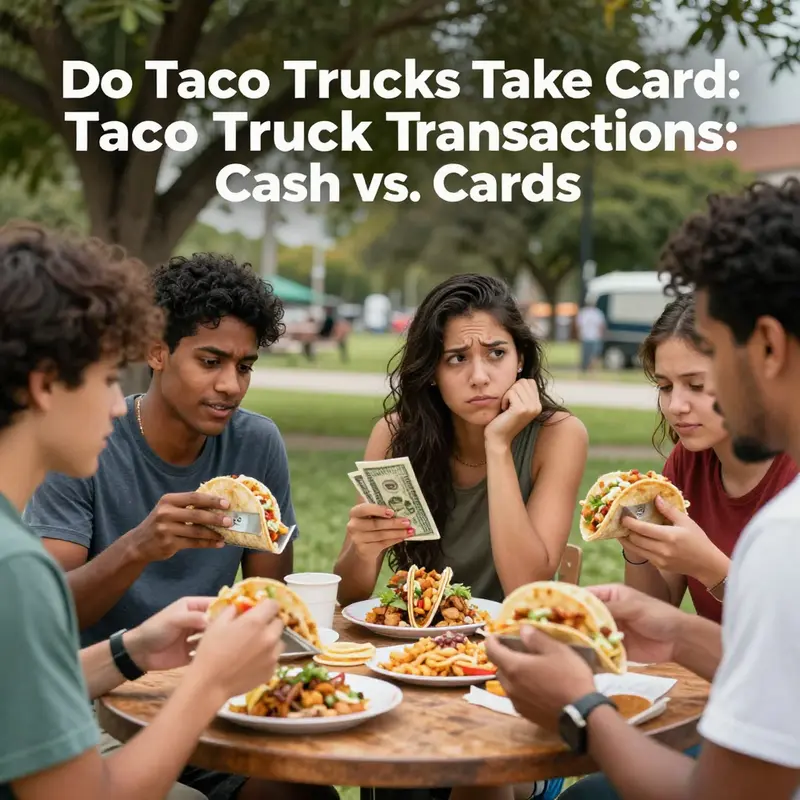
When you hunt for the perfect taco from a roving kitchen, the method of payment can be as much a part of the experience as the salsa on your plate. The question “do taco trucks take card?” sits at the crossroads of technology, small-business pragmatism, and everyday consumer expectations. Over the last decade, the scene has shifted dramatically. what used to be cash-only stalls—and in some cases, cash-only experiences—has evolved as mobile payment devices have become more affordable and reliable. A broad industry snapshot from the National Food Truck Association shows that more than two-thirds of food trucks now accept card payments. That shift isn’t merely about convenience; it reflects a cultural change in how people pay for their meals, how tips are shared, and how operators structure their workflow on a moving platform. The old image of a chalkboard sign reading “cash only” is increasingly the exception rather than the rule, but it remains a real possibility depending on where you are and which truck you find yourself chasing across a city street or along a curbside row of festival tents. It also helps to remember that the past isn’t erased so much as transformed. A 2017 review highlighted the disappointment of customers who drove long distances only to discover that a favorite truck couldn’t process cards. That kind of experience sticks in memory; it’s the kind of anecdote that nudges both patrons and operators toward more flexible payment plans in the years since.
Today’s landscape is more nuanced. The spread of card acceptance varies widely by vendor type, geography, and the economics of each operation. Large, established mobile kitchens that set up at fixed spots or recurring events typically invest in portable card readers and reliable connectivity. These trucks tend to post their accepted methods on social media, on their website, or through event organizers, so patrons can plan ahead rather than be surprised at the point of purchase. Smaller or more traditional operators—especially pop-up setups, weekend markets, or single-person outfits—face a different calculus. The upfront cost of card-processing equipment, ongoing processing fees, and the need for stable internet or cellular signals can be significant barriers. For these vendors, “cash only” may persist as a practical choice, even as some begin to experiment with card readers on a trial basis. The result is a payment ecosystem that is not uniform but rather a spectrum, with cash in one end and full card acceptance spanning the other.
For the consumer, the practical implication is simple but not always obvious: don’t assume. It’s worth doing a quick check before you head out. A quick scan of a truck’s social media page or a check of your favorite delivery app can reveal whether debit and credit cards are listed as accepted payment methods. Real-time updates are especially helpful in a world where the weather, event schedules, or vendor rotations can affect which trucks are on the street on a given day. In addition, many patrons have learned to carry a small amount of cash as a backup, not out of habit alone but as a hedge against the occasional equipment hiccup. Even when card payment is available, there can be quirks. Some trucks have a minimum purchase amount for card transactions to offset processing fees, while others may require customers to choose a tip option during the digital checkout if they’re using a mobile payment flow or an integrated point-of-sale experience.
The tipping dynamic is another layer of complexity that has grown with electronic payments. As digital options become commonplace, tipping prompts and suggested percentages have started to appear during checkout. This isn’t merely a detail of etiquette; it reflects how the payment ecosystem influences consumer behavior and how operators structure compensation for labor on the street. For many patrons, a visible suggestion of 15, 18, or 20 percent—especially when service is prompt and the line moves smoothly—helps normalize tipping in the mobile era. Still, some customers resist feeling nudged into tipping, while others see it as a natural extension of paying for service. The reality is that tipping norms are evolving alongside the technology that makes card payments possible, and they vary with local culture, event context, and the individual philosophy of each truck or crew.
The operational realities behind card acceptance deserve attention too. A key factor is reliability. Street environments introduce variables—network strength, power supply, and the physical space for a portable reader—that can all affect how smoothly a transaction goes. Operators balance speed with security, ensuring that customers can complete a purchase quickly while protecting sensitive payment data. The most successful trucks deploy robust, user-friendly payment flows that minimize friction from the moment a customer orders to the moment the receipt is issued. In this sense, card acceptance is less a single feature and more a set of integrated practices: signage that clearly communicates accepted methods, staff training to handle the flow of customers, and contingency plans for connectivity dropouts so the process doesn’t grind to a halt when signal strength dips.
Looking ahead, the trajectory is toward broader card acceptance and more sophisticated tipping culture, even for the smallest street-legal kitchens. As the industry matures, a growing majority of operators find it economically sensible to offer multiple payment options. The trend aligns with consumer expectations: people carry cards and digital wallets; they want to complete a meal without rummaging for cash or waiting for a handwritten total. Yet the pace of change remains uneven, and the experience at the curb still depends on local conditions and the philosophy of the operator. It’s not unusual to encounter a truck that can take cards for orders above a certain threshold, paired with a cash-only option for smaller purchases, or a truck that otherwise accepts cards but encounters occasional outages during peak demand. The variability is not a sign of failure but a reflection of the evolving economics of mobile food service and the realities of making payment technology work in dynamic, open-air environments.
For customers who want to make the most of their taco-truck excursions, several practical mindsets help. First, a quick check in advance—on social feeds, at the event listings, or through the delivery platform serving the truck—can save you from a long walk only to discover a cash-only stance. Second, a modest amount of flexibility about payment options reduces stress for everyone. If you’re traveling with friends, coordinating one person to carry cash while others use cards can be a simple contingency. Third, when payment is possible via card, consider contributing to the tipping culture through the digital prompt, if offered, rather than leaving a separate tip in person. This approach keeps the interaction consistent with how most digital purchases are completed and supports the crew, who often work long hours in outdoor conditions.
The broader story here is not simply about whether a taco truck takes cards. It’s about how a mobile, street-level culinary economy is adapting to a financial environment that increasingly favors digital transactions. It is about the tension between accessibility and practicality, between the speed required to serve a hungry line and the friction that can accompany a card-based workflow in a nontraditional retail space. It is also about how patrons can engage with this changing landscape in a way that feels informed and respectful—by checking ahead, understanding tipping norms as they relate to digital payments, and recognizing that some operations may still rely on cash for structural reasons. The industry is moving toward a future where card acceptance is more common, more reliable, and more integrated with the everyday rhythms of street food culture. The pace of that shift will be uneven and diverse across cities, neighborhoods, and the calendar of events, but the trend line is clear: card payments are becoming an increasingly standard option for taco lovers, even as the occasional cash-only experience remains a real possibility on the curb.
For readers curious about how operators balance the needs of a card-ready workflow with the realities of mobile business, a broader industry perspective is available in discussions about hardware and model choices for taco trucks. See the discussion linked in the industry overview post Taco Trucks Unleashed: Top 5 Models for Culinary Success. This resource offers context on how operators choose equipment and layouts that support efficient service, including payment processing readiness as a core consideration rather than an afterthought. It’s a reminder that the best street-food experiences come from teams that design for flow, speed, and reliability as much as for flavor and presentation. As customers, we benefit when we approach these conversations with curiosity and patience, recognizing that the card-decision both shapes and reflects the evolving frontier of taco-truck commerce.
In this sense, the card question is less about a binary yes or no and more about a spectrum of readiness and adaptability. Some trucks will surprise you with their fully digital checkout, while others will surprise you with their old-school charm and their cash box kept close at hand. Either way, the evolving payment landscape is shaping how taco trucks operate, how customers experience a meal on the go, and how communities support the people who turn a street corner into a temporary dinner destination. The challenge—and opportunity—lies in keeping expectations aligned with what a particular truck can realistically offer on any given night, while staying open to the many ways consumers now pay for the food they crave.
External reference: https://www.foodtruckassociation.org/reports/payment-trends-2025
Cards on the Curb: How Apps Reveal Taco Truck Payment Realities

The question do taco trucks take card might seem simple, but it opens into a broader picture of how street food vendors adapt to a digital economy. Across many regions, the payment mix for taco trucks has shifted from cash-only days toward a blended approach that includes credit and debit cards, mobile wallets, and other electronic options. Yet the landscape remains uneven. Some operators embrace cards as a way to speed lines, reduce handling cash, and provide convenience to guests who rarely carry cash. Others stay cash-dependent, whether by choice, by habit, or because the practicalities of their setup—such as limited power or spotty connectivity—make card processing less feasible. In short, whether a given taco truck takes card is a function of its size, location, customer base, and the tools it has at hand to manage payments in real time. The trend line, however, leans toward broader acceptance, especially in high-traffic areas where speed and accuracy matter to both vendors and customers.
Recent data from 2025 illuminate this shift: a majority of food trucks now process card payments, reflecting a nationwide move toward more flexible, technology-enabled transactions. The numbers suggest that roughly two out of three trucks can handle plastic, with many operators adopting mobile point-of-sale devices that make card reads quick and receipts instantaneous. The core benefit to the vendor is straightforward: faster turnover, fewer cash handling errors, and easier reconciliation at the end of a busy shift. For customers, the benefits can also be clear, from the comfort of paying with a preferred method to the ease of tracking spend through digital records. Yet even as card acceptance becomes common, it is not universal, and that nuance is exactly what makes planning ahead essential for a taco-truck experience.
A key feature of modern card-enabled setups is how they shape the customer interaction at the window. Card readers, when paired with a streamlined point-of-sale flow, allow for rapid transactions and the ability to add tips without breaking stride. In practice, tip prompts commonly appear after the total is displayed, with recommended gratuities often hovering between fifteen and twenty percent. This design reflects both a practical need for vendors to acknowledge service, and a cultural shift toward tipping as part of the dining experience, even in a mobile, fast-paced context. The tip prompts also help ensure that the staff on the curb can be recognized for efficient service, which can be particularly meaningful in crowded lines where every second counts. The upshot is a more professional, restaurant-like transactional feel at the street corner, which in turn can influence customer expectations for future visits.
Yet the reality remains nuanced. In urban cores, at festivals, or inside bustling food halls, the capacity to accept cards tends to be higher and more consistent. Vendors in these environments often rely on reliable power sources and robust connectivity, making electronic payments a practical default. In contrast, smaller, independent trucks operating in rural areas or during pop-up events may still prefer cash or accept it as the primary method. The reasons vary—from the initial cost of a reader and ongoing processing fees to concerns about connectivity or the logistical ease of handling cash transactions in volatile outdoor settings. That divergence matters because it shapes the customer’s experience and the reliability of the payment process in a single bite of street-food culture.
For customers who want to avoid surprises, a little forethought goes a long way. Checking payment options before you roll up to a truck is worth the few extra minutes. In practice, many diners consult public-facing information before visiting, using a mix of review sites, listings in location apps, and the trucks’ own social feeds to confirm what methods are accepted. Since these sources can vary from one day to the next, especially for mobile operators who change routes or pop up in new spots, a last-minute check is prudent. Vendors frequently post their current payment options in their online profiles or on the location pages where they announce appearances. If a truck you crave lists only cash, you can still have a plan B ready—perhaps a nearby ATM stop or an alternative vendor with card acceptance.
The modern payment story for taco trucks also intersects with the broader shift toward digital commerce in the food sector. Even when a truck does not carry a full suite of card options, many operators participate in delivery or order-ahead ecosystems that extend the payment conversation beyond the window. Digital gift cards and credits offered on popular delivery platforms can sometimes be used toward street orders when linked to a mobile account, illustrating how the ecosystem is becoming more interconnected. This is part of a larger trend toward consumer convenience that includes not only payment acceptance at the curb but also the ability to plan, pay, and pick up with minimal friction. While these platforms still require the vendor to enable a compatible payment flow, they contribute to an atmosphere where electronic transactions feel normal, not exceptional.
To navigate this evolving terrain, many customers turn to a mix of in-person signals and digital cues. Signs posted near the ordering window often indicate accepted methods, and staff will typically confirm options before taking an order. In addition, customers can turn to general business directories and local listings that summarize payment options for nearby trucks. These sources, while not always perfectly up-to-the-minute, tend to converge on a practical picture of what to expect. The real-time dimension of payment options, however, is increasingly embedded in the online presence of each vendor. The truck’s social media updates, the location’s page on a venue listing, or the payment details embedded in a delivery app listing collectively provide the most current snapshot. In a best-case scenario, a single glance across these channels gives you confidence that your preferred method will work, allowing you to order with ease and without guesswork at the window.
For readers who want an application-level takeaway, consider the value of learning from how others approach payment planning. The practical lesson is not merely about whether a card will swipe or a cash bill will jingle, but about how the payment process is integrated into the overall dining experience. A smooth transaction—whether it’s quick card swipes, a friendly prompt for a tip, or a seamless confirmation of digital payment—helps sustain the vendor’s operation and supports a positive memory of the meal. And as more trucks adopt consistent, customer-friendly payment workflows, the expectation for convenience grows. This in turn encourages more customers to embrace card or digital payments, reinforcing a cycle of faster service and higher satisfaction.
For those who want to explore beyond anecdotal experience, a good starting point is to examine how successful street-food operators adapt their payment strategy to different environments. Some vendors pursue portable, scalable systems that handle high volumes at events and still operate smoothly on a quiet street corner. Others tailor their approach to the customer base they serve, choosing more familiar, widely used methods in neighborhoods where cash remains common, and leaning into cards where the density of patrons and the tempo of service favors quick, digital transactions. This adaptive mindset is precisely what enables a taco truck to grow from a local favorite into a reliable, repeatable experience for a broad audience.
If you’re curious about how these approaches translate into practical, tangible outcomes, consider looking at industry discussions and case studies that illustrate how modern mobile food businesses align their payment options with customer expectations. A chapter in the broader literature on payment trends highlights that card adoption has become a standard feature in many mobile food operations, while recognizing that cash remains a viable option in specific contexts. That duality—card-enabled efficiency on busy blocks and cash-based flexibility in less-developed settings—constitutes the real-world spectrum of taco-truck payments today.
For readers who want to connect this topic to actionable insights, think of a truck as a small, mobile storefront where the payment method is part of the product experience. The more seamless the payment, the less attention it draws away from the food and the more attendees can focus on flavors, aromas, and the social ritual of a shared meal. In this sense, payment options are not a peripheral concern but a core part of the service design. The faster and more intuitive the process, the more likely customers are to return the next time they crave street-side tacos, to recommend the truck to friends, and to share the experience in a way that sustains the business over seasons and weather changes.
From a broader perspective, the ongoing shift toward card acceptance among taco trucks also parallels changes in the restaurant sector as a whole. The move to electronic payments—whether through card readers, mobile wallets, or online gift options—reflects a maturation of the street-food economy. It signals that even nimble, one-truck operations can deliver a payment experience on par with brick-and-mortar venues, provided they invest in reliable hardware, stable connectivity, and clear communication with customers about accepted methods. As these elements come together, the curb becomes less a barrier to purchase and more an extension of a modern dining experience that respects both convenience and the value of good, flavorful food on the move.
To close the loop, the practical advice remains straightforward: verify payment methods before you visit, use reputable listings to gauge what the truck accepts, and be ready with a backup plan if the option you prefer isn’t available. In many cases, a quick check on the truck’s latest posts or a glance at the venue page will tell you everything you need to know to keep your taco mission on track. And if you’re developing a strategy for a food-truck venture yourself, study how payment options are integrated into the customer journey and consider how you can design a payment workflow that is as smooth as your salsa. For more insight into how successful trucks structure their operations and offerings, you can explore resources focused on the business models behind mobile food entrepreneurship.
Further reading and related perspectives can be found in discussions about top food-truck models for entrepreneurs, which offer broader lessons on running a mobile culinary business in a way that harmonizes product, price, place, and payment. Top food truck models for entrepreneurs
External reference: For a broader industry snapshot of payment trends in 2025, see the National Food Truck Association’s payment-methods report. https://www.foodtruck.org/industry-trends/payment-methods-2025
Final thoughts
In the vibrant world of taco trucks, payment acceptance plays a pivotal role in your tasty culinary adventures. While many modern food trucks have embraced cashless trends, the enduring cash-only options remind us of the charm and simplicity of traditional street food. By understanding the nuances in payment acceptance, and utilizing apps for real-time updates, you can navigate this flavorful landscape without hassle. The next time you crave tacos from that favorite truck, be prepared and enjoy every delicious bite. Bon appétit!