
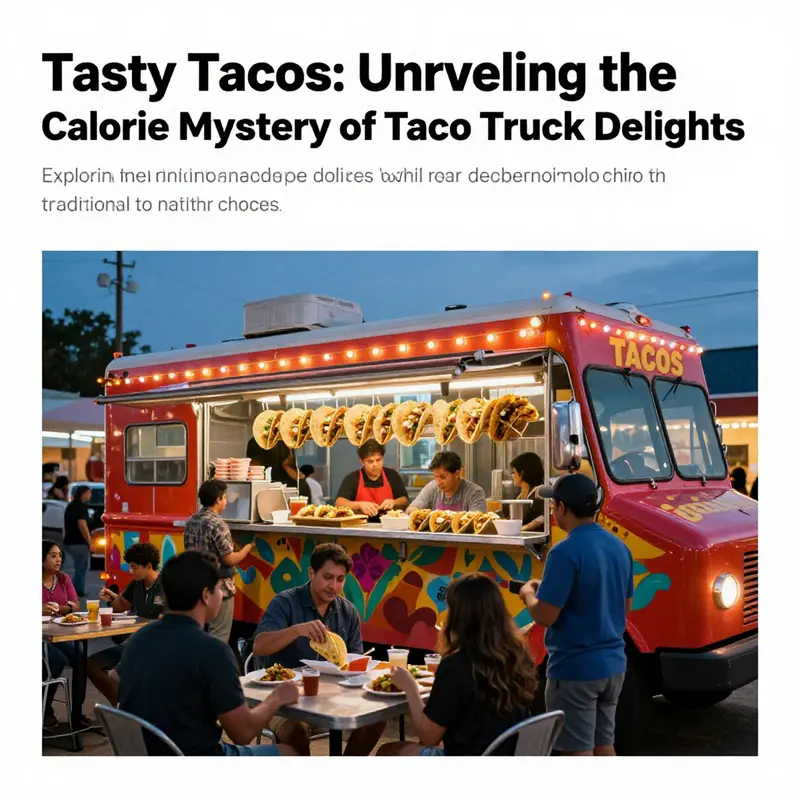
Taco trucks have become a beloved staple, not just for their irresistible flavors but also for their visual feast. The allure of a taco, wrapped in its warm tortilla and overflowing with succulent fillings, is hard to resist. But what about the calories? For taco lovers, local office workers, and event planners, understanding the caloric content of these delicious meals plays a key role in food choices. In this guide, we delve deep into the caloric density of taco truck tacos, dissecting the factors influencing calorie counts and exploring healthier alternatives that don’t skimp on flavor. Let’s embark on this delicious journey together!
Calorie Density on the Move: Decoding the Real Calories in Taco Truck Tacos
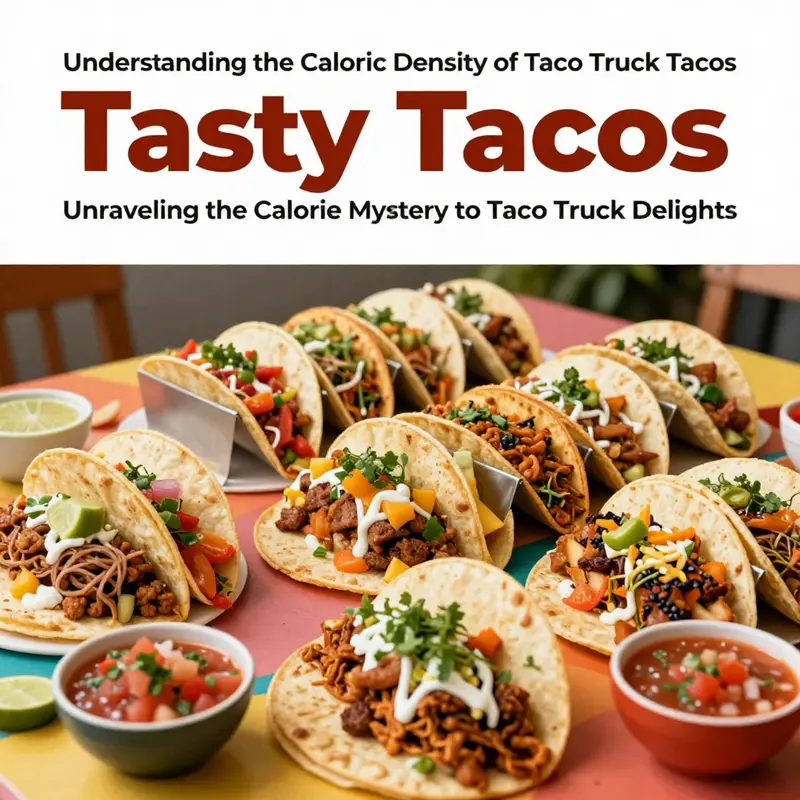
Calorie Density on the Move: Decoding the Real Calories in Taco Truck Tacos
The aroma of street food has a magnetic pull, yet when a steady stream of customers orders quick, delicious tacos, the question of calories often slips into the background. People want flavor, texture, and the comfort of a familiar tortilla filled with something savory. But for those who track energy intake, understanding the true calorie load of a single taco from a truck becomes essential. The calorie story of a taco truck taco is not a single number. It unfolds across sizes, ingredients, and cooking methods, weaving together the humble tortilla, the protein choice, and the toppings that crown the dish. Reading this story requires looking beyond a single line on a menu and into the mechanics of what goes into the tortilla, how the meat is prepared, and what saucy or creamy accents are added along the way.
At the core, the tortilla is the stage upon which the rest of the ensemble performs. A basic medium taco built on a beef or chicken filling often lands in the neighborhood of 180 to 200 calories. This ballpark figure arises from several interacting factors. First, the tortilla itself can be a surprisingly fattening contributor. A standard 60-gram tortilla, common in many taco trucks, can carry roughly 150 to 200 calories depending on its composition and preparation. That’s not a marginal number—tortillas can account for the largest share of the taco’s energy, especially when the rest of the fillings stay lean and the toppings stay minimal. Second, the protein portion—about 100 grams of lean meat like chicken—adds roughly 165 calories, with beef edging higher around 250 calories for the same weight, depending on fat content and cooking method. Finally, the vegetables, while low in calories by themselves, still add up when you include lettuce, tomato, onion, and other fresh fixings. In aggregate, a basic taco from a Mexican-style truck often sits near that 180–200 calorie zone, a benchmark that many patrons use as a mental anchor when they sample street food.
But “basic” is a moving term in the taco world. When the cooking routines shift toward richer components—fried fillings, shredded cheese, sour cream, guacamole, or heavy sauces—the calorie count follows swiftly. A handful of cheese or a spoonful of sour cream can easily add 50 to 100 calories. When a taco starts to include fried protein like battered or crispy fillings, or a lavish sauce that carries fat and sugars, the energy load can double or triple in some cases. The transformation is not a hypothetical. It mirrors the gap between a simple street bite and a more indulgent creation that still travels well on a truck’s steam table. The practical upshot is that customers who love bold flavors need to be mindful of portions. The same taco that carries a clean, grilled protein with crisp vegetables can look very different on a napkin when cheese and sauce are introduced.
In one striking contrast, some regional styles push the envelope in a way that changes the skyline of a single taco’s calories. French-street-style tacos, known for their generous portions and heavy sauces, can reach astonishing heights. A typical French variation has been reported to contain up to 1,348 calories. That figure reflects large portions, frying, and sauces that render such tacos a few meals’ worth of energy in one wrap. It’s a vivid reminder that the concept of a “taco” carries a wide spectrum across global street-food cultures. For most daily diets, recognizing that there is a ceiling—an upper bound—helps with planning. It also clarifies why some tacorazas or vendors in different regions lean into lighter configurations while others delight in richness and decadence.
Yet not every taco is meant to push the ceiling. Healthier options exist that keep calories in check while preserving flavor. Choosing a whole-wheat or vegetable-based tortilla, which can run in the ballpark of 200 to 300 calories for the wrap itself, offers a starting point for a lighter taco. When you pair such a tortilla with grilled chicken breast, crisp fresh vegetables, and minimal sauce, a single taco can stay under 300 calories. It’s a practical target for those who want to savor the street-food experience without compromising a day’s energy budget. In the end, the guiding principle is straightforward: if the goal is a leaner taco, start with the tortilla and the protein, then moderate or skip high-calorie toppings. The rest of the toppings—lettuce, tomato, onion, salsa—usually contribute modestly and can be tuned to taste and hunger without tipping the scale toward excess.
To ground this discussion in a tangible sense of density, it’s helpful to examine the carotid of the tortilla itself—the corn tortilla. In many taco trucks, corn tortillas are the default. The caloric contribution of tortillas varies by brand, size, and preparation. A commonly cited example comes from a widely used corn tortilla known as Sol De Oro Mini Corn Tortillas. Per 100 grams, these tortillas have a macronutrient distribution of roughly 82% carbohydrates, 9% fat, and 8% protein, with total calories around 179. That means that even a relatively small portion can carry a significant energy load. If a single tortilla weighs about 30 to 40 grams, the corresponding calories would fall in the 54 to 72 range for that tortilla alone, though many standard servings used by trucks tend to be larger, contributing more like 100 to 120 calories per tortilla depending on exact weight and any oil during preparation. The takeaway is clear: tortillas matter more than people often expect, and their caloric heft becomes more pronounced when you consider multiple components in a taco.
This realization dovetails with the broader point about toppings and fillings. High-calorie toppings—cheese, sour cream, fried fillings—amplify the taco’s energy tally by a noticeable margin. For instance, a modest addition of 20 grams of cheese or an extra dollop of sauce can push the total by about 50 to 100 calories. When you multiply that across several tacos in a sitting or across a week, the aggregated impact becomes nontrivial. It’s not merely about indulging in one high-calorie creation; it’s about understanding how choices compound over time. For people tracking intake, this awareness translates into practical habits: opt for lean protein, favor fresh vegetables, and use sauces sparingly to preserve flavor without inflating calories unnecessarily.
The comparative landscape of ingredients also informs the reader about nutrition data sources and the variability across foods. Reliable databases like USDA FoodData Central provide a benchmark for energy content across items, enabling a more precise comparison between different ingredients. When you compare sweet potatoes, rice, or tortillas across brands and preparations, the energy content shifts with cooking methods and portion sizes. The same logic applies to taco fillings: ground beef versus grilled chicken, fried fish versus grilled fish, or even plant-based options—all carry different calorie budgets for the same weight. It’s this nuanced mosaic that empowers a consumer to design a taco that pairs flavor with a reasonable energy footprint. The practice is not just about cutting calories; it’s about making intentional choices that align with a balanced diet while still enjoying the street-food experience.
From a practical standpoint, recognizing the variability in taco calories helps restaurant operators too. Menus that clearly indicate portion sizes, cooking methods, and the presence of higher-fat toppings can guide customers toward choices that fit their daily energy goals. For busy trucks, this means offering a lean option alongside richer variants, thereby expanding the audience to include those who track calories or want lighter meals during the workday. It also creates an opportunity for vendors to educate customers—without slowing down service—about how toppings and tortilla types influence calorie counts. A simple, well-placed note on the menu or a quick retrace on the order screen can empower a customer to customize choices with confidence.
To tie these strands together, consider the following practical roadmap. Start with a baseline: a medium taco built on a standard tortilla and a straightforward protein like grilled chicken. Expect the base to hover around 180 to 200 calories, depending on tortilla weight and meat portion. If you want a lighter option still packed with flavor, opt for a whole-wheat or vegetable-based tortilla and load the taco with fresh vegetables, finishing with a light salsa rather than a creamy sauce. If your craving leans toward indulgence, savor a higher-fat topping like cheese or sour cream, but do so in moderation and balance it with lean components elsewhere in the day. And as you plan, remember that the numbers you see on a menu reflect many variables—size, preparation, and toppings—so a quick, honest look at a specific vendor’s item remains the most reliable guide.
For readers who want to explore a broader view of how taco trucks approach menu design and culinary models, a related article delves into the business and culinary strategies behind street-food success. It offers a deeper dive into how operators balance flavor, portion sizes, and operational constraints to deliver consistent quality on wheels. You can explore that discussion here: taco-trucks-unleashed-top-5-models-for-culinary-success. This cross-reference helps connect the nutritional discussion to practical decisions about menu planning, customer expectations, and the art of delivering satisfying meals without compromising energy goals.
The bottom line is that the calories in a taco truck taco are not a fixed number; they are a function of its components and how they’re assembled. A single, lean taco can be a modest energy contribution to a meal plan, while a loaded version can become a significant portion of daily energy. The most reliable approach for anyone tracking intake is to ask for specifics: the tortilla size and type, the exact protein portion, and the presence and amount of high-calorie toppings. In practice, this means keeping a mental model of the baseline: a simple medium taco with lean protein and vegetables sits near 180–200 calories. Any addition—extra cheese, sour cream, or fried fillings—pushes that figure upward by tens to hundreds. By understanding this structure, the experience of enjoying street food becomes a smarter, more intentional one, and the conversation about calories moves from a vague fear to a precise, actionable awareness.
External resources can supplement this understanding. For those who want a broader nutrient reference as a framework, the USDA FoodData Central provides extensive data on the energy content of common foods and ingredients. This is a valuable companion for readers who want to calibrate their assumptions against a robust database: https://fdc.nal.usda.gov/fdc-app.html#/food-details/169574/nutrients.
Calorie Cartography on the Curb: Tracing the Variables That Shape Taco Truck Tacos

The scent of fried tortillas and citrusy lime hangs in the air as a line of hungry locals snakes around a gleaming taco truck parked on a sunlit corner. In scenes like this, calories aren’t abstract numbers in a nutrition report; they’re the map you read before you decide which taco to pick. The simple question—how many calories are in a taco from a taco truck?—unravels into a broader, more textured inquiry about what makes a street-food bite feel light enough to enjoy without guilt, and why some tacos can be surprisingly indulgent while others stay firmly in the realm of reasonable portions. This is not a guide that shames cravings but a guide to understanding the fuel in front of us, from the everyday basic taco to the extravagances that can push a single handheld meal well beyond what’s considered a moderate portion for a meal, let alone a day’s worth of calories for a growing teen or a busy adult trying to balance activity with intake.
At its core, the calorie content of a taco truck taco hinges on a few interlocking variables. The baseline is deceptively simple: a medium taco composed of a tortilla, a protein filling, and a handful of vegetables. Yet each component can swing the total in a different direction. A typical medium taco that uses beef or chicken and a standard tortilla lands in the vicinity of 180 to 200 calories. That range is not a hard ceiling; it’s a practical average drawn from common street-truck preparations where a 60-gram tortilla might carry about 150 to 200 calories by itself, depending on whether it’s corn or flour, and whether it’s been lightly warmed or treated with a touch of oil. The 100 grams of lean meat—chicken or beef—contributes roughly 165 calories for chicken and closer to 250 calories for beef, reflecting the fat content and cut of meat chosen by the cook. Add simple vegetables such as lettuce and tomato, which typically contribute around 25 to 50 calories per 100 grams, and you begin to see how the total slowly accumulates into a respectable, but still moderate, count.
These numbers are not universal sermons carved in stone. They are estimates that reflect the most common practices in many Mexican-style trucks and other quick-service street vendors. The reality on the ground is that portion sizes vary, and with them so do the calorie tallies. A lot of this variation comes from what happens after the tortilla is warmed and the fillings are added. Consider the toppings and fillings that many customers expect to find on a taco: cheese, sour cream, guacamole, refried beans, or a drizzle of a rich sauce. Each of these, even in modest amounts, can nudge the calories upward by a noticeable margin. A small handful of cheese—say 20 grams—can add roughly 50 to 100 calories, depending on the cheese type. A dollop of sour cream can add another 60 to 100 calories, while guacamole, though nutritionally valuable for its fats and fiber, can contribute a similar range if used generously. Refried beans, often cooked with fats or lard, add their own caloric heft, sometimes more than a simple bean salad would.
The tortilla itself is a major weight in the overall count. Flour tortillas typically carry more calories than corn tortillas, a difference that compounds when the shell is larger. If you adchoose a larger, soft-shell format—common in some street-style or “taco de Lyon” inspired variants—you can push the total upward substantially, even before the fillings are added. In some cases, the portions and preparation methods combine so that the same basic taco could be counted at around 180 calories in one truck and well over 300 in another, simply due to tortilla size and the fat content of the fillings. The method of preparation matters as well. Deep-frying a shell or a filling spotlights fat absorption and adds to the caloric load, while grilling, steaming, or roasting tends to keep things leaner. A basic, grilled protein with fresh vegetables on a corn tortilla is likely to stay near the 200-calorie mark, while a heavily sauced, cheese-laden, fried-torta-style version can soar well past 400 calories per taco.
The diversity of offerings in taco trucks worldwide adds another layer of complexity. The so-called high-calorie variants, which are not outliers but part of a broader spectrum, illustrate how quickly calories can accumulate when the equation tilts toward indulgence. It’s not hard to see how a single extra cheese slice or a few extra spoonfuls of sauce can nudge a taco from a modest range to something far more substantial. Likewise, a large, heavily sauced, or fried component can swell the energy content dramatically. A cautionary example belongs to the French-style adaptation sometimes seen in certain street-food scenes, where a large, multicomponent taco can reach levels as high as 1,348 calories per serving in some atypical preparations. These are edge cases, yet they serve as important reminders: the language of calories isn’t uniform across geographies or menus, and a one-size-fits-all number rarely exists for street food.
Within the everyday spectrum, there are indeed healthier routes that a curious diner can take. A tortilla choice matters—opt for a whole-wheat or a vegetable-based tortilla, which often brings the total into a tighter range, roughly 200 to 300 calories for the whole taco. Pair that with a grilled chicken breast, a generous help of fresh vegetables, and a light touch of sauce or none at all, and the total can stay under 300 calories. This is not a verdict that imposes deprivation, but a practical framework for enjoyment. It’s also a reminder that many health-conscious vendors now emphasize balance on the menu, offering plant-based options, allergen-friendly ingredients, and organic or locally sourced components where possible. The shift toward lighter options aligns with a broader trend in urban street dining, where customers increasingly seek nourishment that is flavorful yet mindful of their daily energy targets.
From the consumer perspective, the most reliable route to understanding calories on a taco truck menu is direct acknowledgment: check the specific menu item. The numbers can vary dramatically not only from truck to truck but also from one day to the next, depending on portion sizes and how ingredients are prepared that day. The same combination of ingredients can land at different calories on different days. For this reason, nutrition-minded eaters and those tracking calories should read the menu details and, when possible, ask the cook about portion sizes and preparation methods. In many neighborhoods, vendors have begun to publish their own nutritional cues or offer lighter versions of popular items, recognizing that a single menu item can act like a nutritional signal for a whole meal. If you’re trying to balance a day’s intake, a quick mental calculation can help: start with a baseline of around 180 to 200 calories for a simple chicken or beef taco on a standard tortilla; then account for any extras—cheese, sour cream, guacamole, or bean fillings—and adjust accordingly. If in doubt, lean toward a smaller tortilla or a grilled protein with lots of vegetables, and be mindful of sauces and fried elements.
A practical perspective emerges when we translate these ideas into daily choices. For someone who enjoys one or two tacos as part of a meal, selecting a basic taco with lean protein and vegetables is a reliable way to stay within a conservative daily target. If the goal is to savor a larger, more complex taco without tipping into excess, it helps to view the toppings as optional add-ons rather than core components. The math is simple, yet meaningful: each added topping is an incremental calorie step, and each improvement in preparation—grilling instead of frying, selecting a corn tortilla over a flour one, choosing fresh salsa instead of a heavy cream-based sauce—adds up over a week or a month. The balance is to savor flavor while maintaining a consistent, sustainable approach to energy intake. In many ways, that balance is as much about rhythm and choice as it is about the numeric tally.
To that end, there is value in recognizing the range of experiences a taco truck can offer. For someone who seeks authenticity and a straightforward, familiar flavor profile, a basic taco can be a reliable choice, delivering the familiar satisfaction of tortilla, protein, and crisp produce without excess. For others who crave crave-worthy indulgence on a special occasion or a weekend treat, adding a bit of cheese, a dose of guacamole, or a richly sauced topping can be part of the joy, though with a clear awareness of the resulting calorie bump. And for the mindful eater who wants to preserve energy for a longer day—perhaps a shift at work, a workout afterward, or a busy family evening—there areroads to keep things lean: choose a smaller tortilla, go for grilled protein, pile on vegetables, and request minimal or no sauce. The same truck that offers a high-fuel option can also present a leaner version of the same concept, simply by adjusting the components and portion sizes.
In the midst of these choices, a broader cultural context matters. Street-food cultures have always thrived on the allure of abundance—rich flavors, generous fillings, and an emphasis on immediacy. Calories, then, are not enemies but data points to be read with curiosity. They empower eaters to make decisions that align with individual health goals, cultural preferences, and daily routines. This is not about austerity; it’s about understanding the energy cost of flavor and recognizing how a single taco fits into the larger picture of a balanced day. When a person can anticipate the energy content of a meal, they gain leverage over their overall intake and can approach cravings with a sense of agency rather than sensation.
For those who want a quick, practical cue, think of calories as a budget line. A basic taco represents a small line item in a broader meal plan. Add-ons draw the line upward, sometimes sharply if they involve fried shells, heavy sauces, or cheses. The same line can be trimmed back by choosing a lean protein, a modest portion of toppings, and a tortilla that emphasizes whole grains or corn. The result is a meal that delivers flavor and satisfaction without derailing daily goals. This approach does not demand perfection at every meal; it invites intention, awareness, and a willingness to tailor choices to one’s own needs and preferences.
For readers who crave a deeper dive into how menu design and portion strategies translate into real calories, consider the wider landscape of taco-truck offerings, which sometimes includes what might be called a “calorie outlier.” The most dramatic example is a French street-style taco—a style that has drawn attention for its large portions, frying, and rich sauces. It demonstrates that a single item on a menu can reach calorie levels that rival or exceed many meals at a sit-down restaurant. While such items are often marketed for their indulgent experience rather than their nutritional simplicity, they also provide a valuable counterpoint: a reminder of the diversity within the taco-truck universe and the importance of mindful ordering and portion control.
As we navigate these possibilities, it’s helpful to tether our reflections to practical guidance that can be applied in the moment. If you’re tallying calories for the day or simply aiming to enjoy a satisfying bite without overdoing it, a few concrete steps can help. Start with the tortilla choice—prefer corn or a smaller whole-wheat option. Then pick a protein that aligns with your goals—grilled chicken or beans for lean energy, or carnitas and beef for richer flavor with a higher fat content. Limit high-calorie toppings to one or two, and measure or request modest portions of cheese, sour cream, or guacamole. Finally, ask about the potential for lighter sauces or salsa-based dressings that add brightness without a heavy calorie load. These small adjustments can transform a street-food experience from a temptation into a thoughtful, enjoyable, and nutritionally balanced moment.
The wider dialogue about calories in taco trucks also intersects with public health and urban food culture. In cities where street food has become a culinary mainstay, vendors increasingly respond to consumer demand for transparency and options. Some trucks now publish approximate calorie counts for common items or offer “light” or “mini” versions of signature tacos. Others experiment with grain-free or plant-based shells that maintain texture and flavor while lowering energy density. The culinary impulse behind these shifts is not simply to reduce numbers on a nutritional panel but to broaden the possibilities for people who love the vibrancy of street food yet want more control over how those flavors fit into their daily dietary architecture. In this sense, calories become a bridge between tradition and modern nutrition, a way to honor cultural appetite while acknowledging the realities of contemporary health goals.
As you finish this chapter on the calorie map of taco truck tacos, carry with you a current, practical mindset: nutrition data is most useful when it informs choices that feel satisfying and sustainable. The numbers—180 to 200 calories for a basic taco, higher for indulgent combinations, lower for lean, vegetable-forward builds—are not traps but tools. They help you read a menu with confidence, compare options quickly, and imagine how a single meal can be a meaningful unit in a broader day or week. The next time you step up to a truck window, you can approach the menu with a clear sense of which components will keep you energized and which ones may stretch beyond your intended energy budget. And if you ever feel daunted by the menu’s breadth, remember that the simplest, most reliable choice often remains a straightforward rectangle of corn tortilla, a lean protein, and a generous handful of fresh produce—a combination that can deliver both flavor and moderation without requiring a calculus degree.
For readers who want a quick navigational touchstone, a side note is useful: the broader ecosystem of taco trucks includes models and strategies that influence not only what’s on the plate but how that plate is assembled. The way a truck designs its menu can reflect a deliberate balance between indulgence, tradition, and health-minded options. If you’re curious about how different trucks approach this balance—from portion control to the sourcing of ingredients—you can explore industry perspectives and case studies tied to street-food operations and mobile gastronomy. Top taco truck models for culinary success offers a glimpse into how operators frame their menus, calibrate portion sizes, and pair classic flavors with newer, lighter twists that appeal to a broad array of diners.
External resource for broader context: https://www.austinchronicle.com/food/2026-01-20/discover-the-best-tacos-in-austin-tx-strictly-from-food-trucks/
Healthier Alternatives to Traditional Taco Truck Tacos
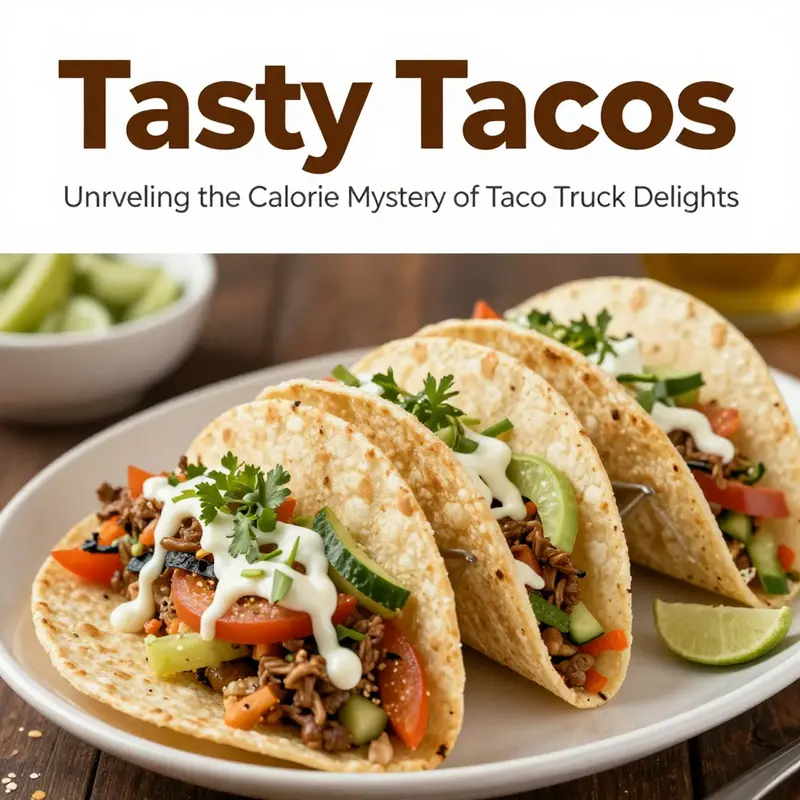
The question of how many calories are in a taco from a taco truck is rarely answered with a single number. Calorie counts vary as widely as the trucks themselves, and the range is shaped by size, fillings, and how the dish is prepared. A basic medium taco, especially when you’re enjoying it from a Mexican-style truck, often lands in the 180–200 calorie neighborhood. That estimate is built on a tortilla that clocks in around 150–200 kcal for a standard 60-gram wrap, plus about 100 grams of lean protein—think chicken or a milder cut of beef—whose calorie footprint sits roughly around 165 kcal for chicken and 250 kcal for beef. Add a modest handful of vegetables like lettuce or tomato, and the total nudges toward the lower end of the range, perhaps another 25–50 kcal. For many riders of the taco spectrum, this is a sane baseline: simple fillings, light sauces, and a wrapper that keeps the overall amount reasonable without sacrificing flavor.
But the same setup can swing dramatically if the toppings and preparation change. A few extra components can push a single taco well beyond 300 calories, and the effect compounds if you’re choosing fried fillings, cheese, sour cream, or guacamole, or if the sauce is rich and heavy. In practical terms, adding as little as 20 grams of cheese or a portion of sauce can add somewhere between 50 and 100 calories more. The effect of these small choices becomes a thread running through every bite: the more indulgent the toppings, the higher the calorie count rises, often in a way that doesn’t always align with day-to-day nutrition goals. For context, there are even outliers in the global street-food scene. French street-style tacos, sometimes dubbed “Tacos de Lyon,” have been observed to reach up to 1,348 kcal in a single serving, a figure driven by generous portions, deep-frying, and rich sauces. Such high-calorie profiles exist as a reminder that the taco is a canvas—versatile, sometimes extravagant, and capable of both restraint and excess depending on what’s added.
The flip side is equally instructive. If your aim is to enjoy a flavorful street-food experience while keeping the energy load in a more controlled range, there are straightforward strategies that can dramatically influence the overall calories without dulling the palate. A practical target for many taco lovers is to craft options that stay under 300 kcal per taco while still delivering satisfying protein, fiber, and a sense of indulgence through texture and freshness. This is not just a matter of counting calories; it’s about designing a meal that fills you up with nutrient-dense ingredients rather than empty carbohydrates or heavy fats. A wiser approach recognizes that the tortilla, protein, and toppings are each levers you can pull to shape the final energy profile. The tortilla is a major lever because its base calories are nontrivial, but so is the choice of protein and the vegetable load, especially when you lean on high-fiber, nutrient-dense items.
To put it in everyday terms, a healthier taco from a truck is less about a specific formula and more about balancing components and proportions. A whole-wheat or vegetable-based tortilla, for instance, can trim the net impact of the tortilla while adding fiber and micronutrients. The same taco that relied on a standard white tortilla might grossly exceed 200 calories just from the wrapper alone, whereas a 200–300 calorie wrap that uses whole grains or vegetables can substantially lower the total. Pair that with grilled chicken or fish, plenty of fresh vegetables, and a careful hand with sauces and cheeses, and you can slip comfortably under the 300-calorie target per taco. The key is consistency and mindful substitutions, rather than sacrificing taste for the sake of numbers.
If you want a quick orientation on how ingredients influence calories in a taco, think of it as a three-part equation: base, filling, and topping. The base is the tortilla; the filling is the protein and any added mass like beans or roasted vegetables; the topping is the layer that often carries the heaviest calorie impact, including cheese, sour cream, fried shells, and sauces. Each component offers a chance to cut calories without compromising satisfaction. For readers who track intake or who simply want healthier options on a busy night, the chapter that follows lays out concrete paths to healthier taco truck choices while preserving the crunch, spice, and comfort that make street tacos so appealing. And while the focus is on healthier options, the emphasis remains on flavor, texture, and the sensory pleasure of a well-constructed bite.
A practical path to healthier tacos starts with considering tortilla alternatives. Traditional flour or corn tortillas provide essential structure, but they can also contribute a substantial carbohydrate load and a chunk of calories. A shift toward whole-grain or low-carb wraps can reduce net carbohydrates and add fiber, which aids satiety and digestion. If a vendor offers lettuce wraps or cabbage leaves as a substitute for a tortilla, these options instantly cut the calorie load while preserving portability and the hand-held nature of the taco experience. For those who crave a more substantial texture, cauliflower-based tortillas have emerged as a popular low-carb option. These replacements not only lower the calorie count but also bring a subtle vegetable note to the dish, which can pair beautifully with bold seasonings and bright salsa.
Protein choices are similarly pivotal. Lean meats like grilled chicken and various fish options tend to carry fewer calories and less saturated fat than heavier options such as chorizo or fried fillings. Plant-based fillings, including black beans and lentils, or even grilled portobello mushrooms, offer robust protein along with fiber, which supports fullness and metabolic balance. Each choice has its nuance: chicken breast is lean and versatile; fish introduces the possibility of omega-3 fats; beans deliver plant protein and a gentle but meaningful caloric payload that pairs well with light toppings. These options also align well with a broader health-forward palate that seeks to reduce saturated fats and add plant-based fiber without sacrificing flavor or satisfaction.
Fresh vegetables take the hallmark role in the healthier taco equation. A generous helping of shredded lettuce, diced tomatoes, avocado slices, and even pickled red onions can transform a taco from something quick and filling to something vibrant and nutrient-dense. Avocado adds creaminess with healthy fats that improve satiety; tomatoes and lettuce contribute vitamins and hydration; onions offer antioxidants and a tang that can amplify the perception of freshness without adding a heavy caloric price tag. The result is a taco that looks as good as it tastes, with a lighter overall footprint. In this vein, many cooks choose to emphasize color and texture, letting crunch from raw veggies and brightness from citrus stand in for heavier, higher-calorie sauces.
Topping modifications deserve particular attention. Higher-calorie toppings like cheese, sour cream, and fried shells can be delicious but are where calories tend to pile up quickly. Skipping those toppings or opting for lighter versions can have outsized effects on the total energy per taco. A squeeze of fresh lime adds brightness and depth without significant calories, allowing the other elements to shine. When a taco truck offers a choice, a simple guideline is to load up on vegetables and lean protein, keep sauces minimal or opt for salsa with no added sugars, and reserve cheese and dairy for occasional indulgences. The culinary challenge then becomes how to maximize flavor with fewer calories, using herbs, spices, and citrus to brighten each bite rather than resorting to fat-laden additions.
A notable trend in the healthier-taco space is the cauliflower taco. This approach, which has gained traction in low-carb and plant-forward cuisine, involves processing cauliflower into a texture that mimics ground meat or serving cauliflower as a base for fillings. The appeal lies in both the nutrition and the culinary adaptability. Cauliflower provides fiber and vitamin C, with a surprisingly low net-carbohydrate profile—about five grams of net carbs per cup in a typical preparation when prepared in a certain way with seasoning. The flavor can be amplified with cumin, smoked paprika, chili powder, and lime, offering bold Mexican-inspired notes without tipping the calorie scale. For those following ketogenic or diabetes-friendly plans, cauliflower tacos represent a practical, flavorful bridge between traditional street food and modern nutrition goals. The shift toward such innovations underlines a broader industry move: meet consumers where they are with choices that honor flavor while reducing the energy load.
From a sourcing perspective, healthier taco options also hinge on how ingredients are selected and prepared. A growing number of taco trucks now emphasize fresh, locally sourced ingredients and transparent preparation methods. Clean-label tendencies—organic meats, house-made salsas, and no-processed-sugar sauces—are especially appealing to patrons who want to know what’s in their food and how it’s prepared. This shift not only supports better nutrition but also fosters trust between vendor and diner. For those who want to explore the topic further, one path worth pursuing is the broader conversation about supply chains and ingredient quality in street-food ecosystems. This discussion is foregrounded in resources that examine how nearshoring and local sourcing influence the composition and price of taco ingredients across regions. In particular, a piece on Nearshoring in Mexico boosting taco ingredients offers insights into how producers adapt to regional markets while maintaining quality and freshness. Nearshoring in Mexico boosting taco ingredients provides context for how trucks might balance cost, flavor, and nutrition through smarter sourcing, even as they navigate the realities of mobile kitchens and varied customer expectations.
The practical upshot of these considerations is straightforward: by prioritizing tortillas that are higher in fiber, choosing lean proteins or plant-based alternatives, loading up on vegetables, and moderating calorie-dense toppings, a taco truck can deliver a meal that satisfies taste buds and nutrition goals alike. The numbers naturally shift in favor of the healthier option when the base and fillings are selected with care. A basic, well-composed taco with grilled chicken, plenty of vegetables, and modest toppings can stay comfortably under 300 calories, providing a balanced option that still carries the excitement of street-food flavor. Conversely, the indulgent taco with fried components, cheese, sour cream, or heavy sauces can push the total well beyond that target. Knowledge of these dynamics helps diners make informed choices and empowers operators to design menus that meet the needs of health-conscious customers without sacrificing the cultural and culinary essence that make taco trucks so beloved.
For readers who are curious to translate these ideas into daily practice, the core message is one of intentional composition rather than blanket restriction. It’s about recognizing where calories accumulate and choosing substitutions that preserve texture, mouthfeel, and overall satisfaction. A taco crafted with a conscious approach to tortillas, proteins, vegetables, and toppings can deliver a complete dining experience that aligns with personal nutrition goals. It’s not a matter of denying flavor; it’s a matter of shaping it through thoughtful choices and a willingness to experiment with different textures and combinations. This philosophy resonates across the street-food landscape, encouraging both cooks and diners to value balance, quality ingredients, and clarity about what each bite contributes to the day’s overall energy intake.
As the conversation around healthier tacos evolves, the role of creativity becomes more important than ever. Vendors who experiment with cauliflower crusts, lettuce or cabbage wrappers, and plant-based fillings not only diversify their offerings but also invite a broader audience to participate in the street-food joy without compromising dietary priorities. The consumer benefit is clear: more options that are easier to incorporate into a daily nutritional plan, greater transparency about ingredients, and a dining experience that remains exciting and satisfying. The chef’s challenge, likewise, is to balance warmth, aroma, color, and texture with a leaner framework that respects the diner’s goals. The result is a vibrant menu that celebrates culture while embracing modern nutrition science, and it’s this fusion that keeps taco trucks relevant in a world where people crave both flavor and mindfulness.
If you want to dig into practical, science-backed guidance on reducing carbohydrates while preserving flavor, consider how cauliflower can be used as a base or a filler, how to season it effectively, and how to pair it with high-protein toppings that don’t overdo fat or calories. The goal is not to deny the pleasure of a good taco but to reimagine it in a way that respects the body’s energy needs and the palate’s appetite for complexity. The approach outlined here is designed to travel beyond theory, offering readers a tangible playbook for healthier taco truck dining. It invites you to experiment, to notice the changes in satisfaction as you optimize wrappers, fillings, and toppings, and to appreciate the subtle, cumulative effect of small substitutions that collectively yield a meal with a much friendlier energy profile.
In the end, the art of building a healthier taco is about balance and restraint, not deprivation. It’s about translating the complexity of real-world choices into a meal that remains deeply rewarding. It’s about recognizing that the tortilla, protein, and toppings each carry a responsibility for calories, but also a chance to do better. And for the devoted taco enthusiast, this is not a compromise but an invitation to explore a broader spectrum of flavors, textures, and textures, all while maintaining a manageable calorie footprint. Those who embrace this approach often discover that healthier options can enhance the overall dining experience, enriching not only the body but also the senses—and that is, after all, the enduring appeal of the taco: a simple dish with limitless possibilities.
External resource: For readers seeking a broader look at the nutrition framework behind low-carbohydrate adaptations, a detailed overview of cauliflower-based alternatives is available at Healthline, which provides guidance on how these options fit into modern diets while preserving flavor and satisfaction. https://www.healthline.com/nutrition/low-carb-cauliflower-tacos
Final thoughts
Embracing the rich flavors of taco truck tacos doesn’t have to come with the burden of excessive calories. By understanding the components that contribute to the caloric density and exploring healthier alternatives, you can indulge in your favorite street food guilt-free! Remember, whether you’re savoring a classic taco or opting for a lighter version, it’s all about balance and making informed choices. Go ahead, enjoy the delicious world of tacos, knowing a bit more about what you’re fueling your body with!

