
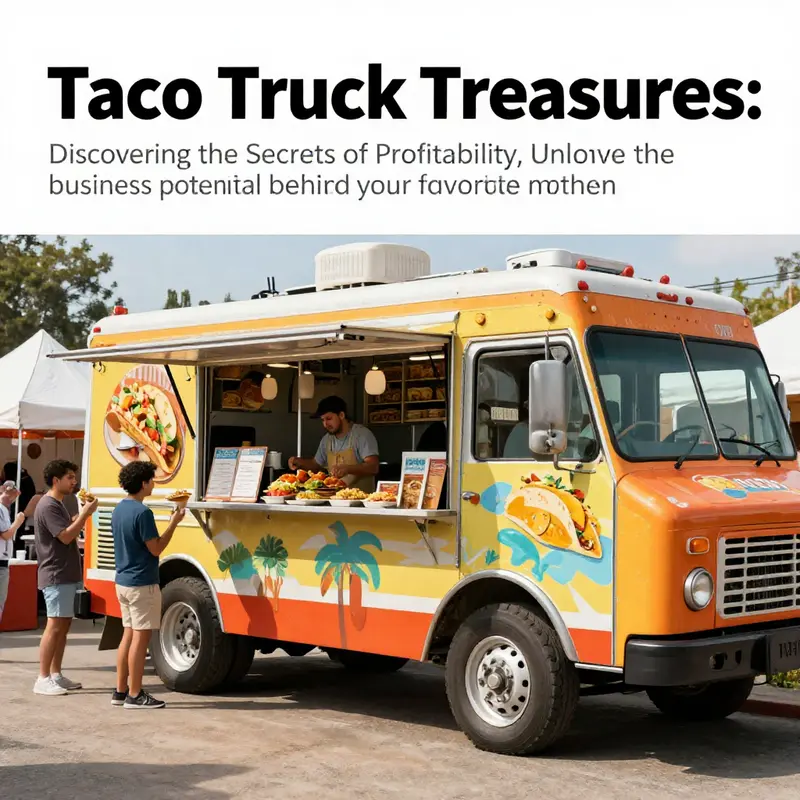
Taco trucks have taken the culinary scene by storm, becoming beloved fixtures in urban areas and beyond. Their colorful facades, tantalizing aromas, and flavorful offerings make them a preferred choice for cuisine lovers, taco fans, local workers, and event planners alike. But what makes these culinary mobile marvels financially viable? This exploration dives into the multifaceted profitability of taco trucks, illuminating how operational efficiency, market demand, signature dishes, and cost structures pave the way to success. Each chapter unfolds a unique aspect of this thriving niche, providing a comprehensive understanding of whether taco trucks can truly claim their place as profitable ventures.
Lean Wheels, Big Profits: How Taco Trucks Turn Operational Efficiency into Sustainable Profitability
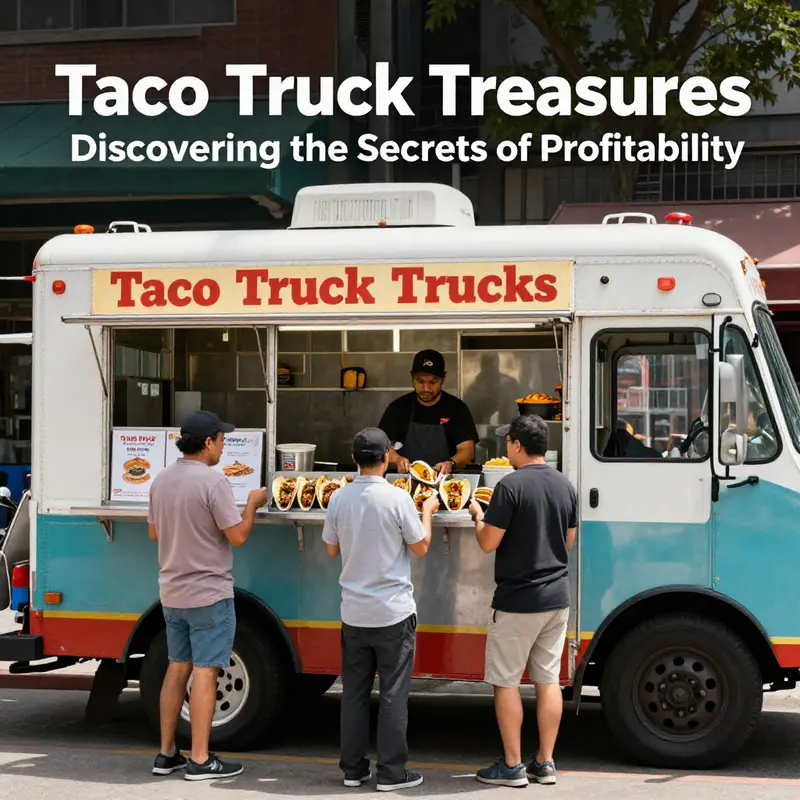
Profitability for taco trucks rests on a blend of mobility, disciplined cost control, and a focused menu that delivers fast, consistent quality. The unit economics are not miracle, but they are predictable when operators design processes around lean space, swift service, and repeatable recipes. In this sense, the taco truck is less a static restaurant and more a moving system engineered for throughput. The driving idea is simple: minimize fixed costs, maximize productive hours, and channel resources toward what moves revenue—great ingredients, dependable equipment, and a brand experience that customers seek out, again and again.
At the core of lean profitability is the intentional reduction of fixed expenses. A brick-and-mortar restaurant typically shoulders rent, utilities, property taxes, and long-term maintenance on a large, fixed footprint. A taco truck sidesteps many of these burdens by occupying a compact, mobile space and shifting the risk of location to where demand actually exists. This flexibility translates into a larger portion of revenue that can be allocated to core inputs—high-quality proteins, fresh produce, reliable cooking equipment, and smart marketing. The owner’s capital is therefore deployed more efficiently, not merely preserved. In practice, this means less capital tied up in leasehold improvements and more in inventory and equipment designed for longevity and reliability. When margins remain tight, the ability to reinvest in ingredients and customer experience becomes the decisive difference between marginal and meaningful profitability.
Operational efficiency then becomes the strategic hinge. A taco truck’s menu, space, and kitchen workflow are all instruments in a single, well-tuned orchestra. Inventory management is not an afterthought but a discipline. Many operators pre-prepare a significant portion of ingredients—marinated meats, chopped vegetables, and pre-made salsas—to accelerate assembly during peak service. This approach reduces queue times, enabling faster turnarounds without sacrificing portion control or quality. It also curbs waste, because standardized portioning and batch preparation align with demand patterns. The aim is to keep the line moving while preserving the integrity of flavors and textures that define the truck’s signature offerings. In turn, customers experience consistent quality, which reinforces repeat visits and a positive word-of-mouth loop.
The mobility of the vehicle itself is an efficiency feature, not a mere convenience. High-traffic zones shift with the calendar: downtown skylines at lunch, university campuses, bustling markets, and event grounds during evenings or weekends. The truck’s ability to relocate in minutes means the operator can chase demand without mortgage-like commitments to a single curb. This dynamism reduces downtime—the costly idle hours that erode gross margins in stationary restaurants. When service is lean and efficient, the crew can serve more customers per hour, increasing the likelihood that peak windows translate into meaningful sales. The effect compounds when the same crew works consistently in a repeatable workflow, because familiarity breeds speed and accuracy.
Technology underpins this efficiency in several concrete ways. Digital payment systems streamline transactions, reduce handling errors, and improve cash flow discipline. Cash drawers become predictable, and reconciliation becomes straightforward at day’s end. Online ordering and pre-orders further compress service timelines, especially for patrons who plan ahead or for busy office districts where lunchtime lines sting patience. The data harvested from these channels—order volume by hour, popular combinations, peak days, and customer feedback—becomes the operational compass. Managers can adjust stock levels, schedule more capable staff for rush periods, and refine menus toward items with the strongest margins and most repeat demand. The modern taco truck is thus as much a data-driven service as a culinary cart.
Social media amplifies this efficiency by turning a rolling kitchen into a moving billboard. Short videos and vibrant posts announce locations, showcase a signature item, and remind followers when the truck will be near a particular neighborhood. The audience grows not simply through mouth-to-mouth but through visually compelling storytelling—flame-kissed tortillas, glistening meats, and the immediacy of a hot, freshly prepared meal. The feedback loop created by social engagement helps operators identify what resonates, which locations generate the most traffic, and how to adapt to evolving tastes. This is especially potent when a signature item anchors the menu and becomes a recognizable brand signal. A focused item—often a standout preparation like al pastor—can generate loyalty and differentiate the truck in crowded urban markets, particularly in contexts where authentic street-food experiences are valued.
The tactical advantage of a signature item sits at the intersection of culinary craft and operational discipline. When an operator centers the menu on one or two standout preparations, the kitchen becomes a highly repeatable system. Meat can be marinated, stacked, and cooked in controlled batches while vegetables are pre-chopped to standardized sizes. The result is not mere speed but reliability. A line of customers learns the rhythm of service and knows what to expect, which in turn reduces anxiety and increases satisfaction. This approach minimizes decision fatigue for both cooks and customers—there is less guesswork about how to assemble a meal, and customers appreciate familiarity alongside flavor. In markets where authentic street food is sought after, such a focused menu is a powerful differentiator, making it easier to deliver high-quality meals quickly and consistently, even on busy days.
A practical implication of this focus is price discipline and margin management. With lower fixed costs and streamlined operations, operators have more latitude to optimize pricing without sacrificing demand. The leaner the overhead, the more room there is to balance price with value. In many markets, customers will pay a premium for authenticity and speed when the product consistently delivers the right flavors in the right timeframe. This creates a virtuous cycle: efficient operations enable better ingredients and more reliable service, which reinforces customer satisfaction and drives repeat business. The cumulative effect is a durable profitability trend that does not rely on a single big ticket or a rare event, but on steady, repeatable performance across many service days.”
Urban Appetite, Profitable Wheels: How Market Demand Shapes Taco Truck Profitability in Cities
In the concrete arteries of modern cities, where lunchtime becomes a brief pause in a crowded day, taco trucks have carved out a distinctive and increasingly resilient niche. They are not merely lunch options; they are social and cultural signposts that anchor street life, offering convenient access to flavorful meals amid hurried schedules. The profitability of these mobile kitchens hinges not on a single factor but on a constellation of market demand, operational discipline, and the ability to adapt to the ever-shifting rhythms of urban life. What makes a taco truck not just viable but substantially profitable in urban centers is the way demand aligns with the truck’s agile structure—low fixed costs, the ability to move to where people convene, and a menu that can be prepared quickly without sacrificing quality. When these elements converge, the truck becomes a high-turnover, low-overhead operation that thrives where foot traffic is dense and diverse in its tastes. This is the core reason urban taco trucks often report robust profitability, even amid a crowded competitive landscape.
Market demand in urban settings is characterized by pace, variety, and price sensitivity. City dwellers juggle work, study, errands, and social life, often choosing meals that can be grabbed on the go without the commitment of a sit-down restaurant. In this context, a well-timed stop at a taco truck can deliver a satisfying, customizable meal in minutes, satisfying a need for both convenience and flavor. The urban appetite is also exceptionally diverse. While a sizable number of customers seek familiar, comforting flavors, others are drawn to craft or elevated street-food experiences that feel authentic and fresh. A taco truck that can offer a dependable standard alongside occasional, carefully curated changes—without drifting into premium price territory—meets this broad spectrum of demand. The result is a broad customer base that can be tapped at multiple points throughout a typical day: the morning rush, the lunch crowd, and the after-hours scene near nightlife corridors or campus districts. That versatility translates into steady footfall, which is a cornerstone of profitability in any street-food business.
Industry growth further reinforces urban profitability. The broader food-truck segment has been expanding rapidly in North America, with cities acting as both launchpads and perpetual testing grounds for new concepts. In the urban environment, taco trucks ride the wave of changing consumer expectations about food quality, speed, and value. The mobile model inherently supports a leaner cost structure compared with brick-and-mortar operations: lower upfront capital, no long-term lease commitments, and the flexibility to relocate to higher-traffic windows. This combination reduces risk and accelerates break-even timelines, allowing operators to scale by adding more trucks or by optimizing routes and schedules rather than by pouring capital into expensive storefronts. The urban context thus creates a powerful multiplier effect: more potential customers, more opportunities to refine operations, and more occasions to connect with communities through food.
Operational efficiency sits at the heart of urban profitability. A taco truck is, in many ways, a self-contained kitchen designed for speed and consistency. The workflow—from sourcing and prep to cooking, assembly, and handoff to the customer—must be streamlined to maximize throughput without compromising quality. In crowded city streets, where every minute matters, the ability to serve a large number of customers quickly is as important as the taste of the food. Efficiency is achieved through deliberate layout, standardized procedures, and a culture of continuous improvement. For example, a well-organized prep zone reduces the time spent retrieving ingredients, while a cooking station calibrated for rapid searing or braising ensures that a new wave of orders can commence without delay. A consistent, high-quality product that is delivered rapidly fosters repeat customers and positive word of mouth, both of which amplify profitability.
The culinary demand for Mexican and Tex-Mex flavors remains a central driver of urban success for taco trucks. These cuisines have become staples in many city dining scenes, offering recognizable comfort with the possibility for creative variation. The beauty of street-food cuisine lies in its ability to offer both reliability and customization. A customer can choose from a familiar base and then tailor toppings, heat levels, and sides. This flexibility is particularly valuable in urban markets where demographics shift and tastes diverge. A truck that supplies fresh ingredients, maintains clean, appealing presentation, and communicates a clear sense of authenticity will attract a loyal following. In practice, that loyalty translates into repeat business, stable price realization, and efficient ramp-up during peak periods—factors that compound profitability over time.
Location strategy remains a critical determinant of financial performance. Urban environments teem with high-foot-traffic zones, but not every spot yields the same results. The strongest operators consistently target areas with concentrated activity and predictable crowd patterns: office districts where workers seek a quick lunch, university campuses with students on tight schedules, farmers markets that attract weekend shoppers, festivals and street fairs that bring diverse audiences, and general street-vending hotspots where curiosity and impulse purchases drive sales. The seasonal cadence of events matters as well. Festivals and markets often generate short bursts of high-volume traffic, which, when captured efficiently, deliver disproportionate returns. A well-planned calendar—one that aligns with local events and institutional rhythms—helps a truck maximize its earning windows while controlling labor costs and supply waste.
Marketing and visibility amplify the impact of demand. In urban settings, a taco truck’s reputation often spreads through social media, vibrant visuals, and quick, satisfying meals that prompt people to share their experiences. Photos of steaming tortillas, colorful toppings, and the immediate satisfaction of a well-made taco can travel quickly, drawing curious customers to a new location or a recurring route. Word-of-mouth remains powerful in neighborhoods where new residents arrive regularly and where students or professionals are open to exploring inexpensive, flavorful options. A strong digital presence—photos, updates on daily locations, and honest feedback loops—helps convert casual passersby into repeat customers, reinforcing profitability through repeated cycles of demand and supply.
Strategic considerations extend beyond simple demand calculus. Location selection, operational discipline, and regulatory compliance intertwine to create a stable foundation for profitability. A truck that can navigate permits, health codes, and safety standards without friction is more likely to maintain continuous operations and avoid costly shutdowns or fines. In many jurisdictions, compliance includes practical requirements such as grease management, waste disposal, and food-safety practices that protect both customers and the business. When operators view compliance not as a hurdle but as a pathway to reliable service, they reduce downtime and maintain consistent service quality, which sustains customer trust and financial performance. In markets where competition remains intense, differentiation through a clear value proposition—quick, flavorful meals, consistent quality, and reliable service—helps a truck stand out. A well-executed signature approach, even if it remains modest in scope, can create a recognizable identity in crowded urban landscapes and attract a devoted customer base that returns regularly.
The competitive environment in major cities is brisk, yet demand often outpaces supply, especially for operators who can adapt quickly. While competition can compress margins, it also pushes efficiency and innovation. A robust pipeline of orders emerges when a truck leverages flexibility—moving to different neighborhoods on different days, participating in recurring events, and maintaining a strong social presence that keeps customers informed about where to find the truck next. In such markets, profitability hinges on balance: price points that reflect value and quality, while still delivering enough volume to cover fixed and variable costs. It is this balance that often separates those who survive in urban settings from those who struggle to gain traction. A truck that can manage cost fluctuations, maintain consistent quality, and respond rapidly to demand signals is well positioned to capitalize on the urban opportunity.
Beyond the mechanics of day-to-day operations, there is a broader strategic lens. Urban profitability benefits from a philosophy that treats the truck as a mobile microbusiness rather than a single-location venture. This perspective invites experimentation with routes, collaborations with nearby vendors, and alignment with local policies that favor street-food vitality. A microbusiness mindset encourages disciplined inventory control, which reduces waste and improves gross margins. It also invites attention to supplier relationships, ensuring steady access to fresh ingredients at predictable costs, which in turn supports stable pricing and reliable service. The most successful operators build reputations for reliability—showing up on time, maintaining consistent portions, and delivering a courteous customer experience—even when weather or crowds fluctuate. This reliability creates a virtuous cycle where positive experiences generate repeat visits, which stabilize demand and, by extension, profitability in dense urban environments.
To connect these threads, consider the way an urban taco truck coordinates its calendar with city life. On a typical week, a truck might anchor itself near a busy office hub for lunch, pivot to a campus area during school breaks, and book a weekend stint at a farmers market or festival. Each destination has its own cadence and guest mix, requiring a flexible menu that respects kitchen constraints while offering something familiar to returning customers. Operational systems support this flexibility: a standardized prep routine that scales up or down with demand, clearly defined responsibilities among crew, and a scheduling framework that anticipates peak windows. When these systems align with the market’s demand signals, the truck experiences steady cycles of high-volume service, shorter wait times, and higher customer satisfaction. The financial outcome of that alignment is a profit trajectory that can be sustained through careful cost management—especially around labor, food costs, and mobility expenses—without sacrificing the very attributes that drew customers in the first place: speed, flavor, and authenticity.
One useful lens for understanding the urban profitability equation is to view the truck as a rotating platform for opportunity. Each new location, event, or partnership represents a micro-market test. If an operator can demonstrate consistent quality and reliable service across several micro-markets, the cumulative effect is a growing footprint within the city’s street-food ecosystem. That growth comes not only from more customers but from more predictable demand streams—weekday lunches, weekend markets, and festival crowds—that reduce the volatility of any single location. In practice, this means that profitability in urban taco trucks is less about a single location and more about the orchestration of multiple, well-timed appearances across the city. When executed with discipline, the city becomes a portfolio of micro-ventures, each contributing to an overall picture of sustainable earnings rather than a risky, one-off spike in revenue.
The knowledge that urban markets are capable of delivering reliable profitability through demand-driven strategies does not imply that the path is without risk. Operators must still navigate zoning and permitting regimes, health-regulatory frameworks, and sometimes unpredictable city workflows, such as street closure schedules, loading-zone restrictions, and permit windows that can shift with seasons. A proactive stance toward compliance reduces downtime and preserves revenue streams, particularly in markets where enforcement has teeth and where fines or forced suspensions can quickly erode profitability. Moreover, even within a thriving urban environment, operators must stay attentive to supply quality and price volatility. Ingredient costs fluctuate with seasonality and market conditions, and the ability to adjust menus, quantities, and sourcing terms without compromising quality is a key skill for maintaining margins.
In this sense, the profitability of urban taco trucks emerges from a disciplined blend of demand responsiveness, operational rigor, and strategic flexibility. The truck becomes more than a vehicle for selling food; it is a portable business unit capable of scaling through Wisely managed mobility, a curated menu, and a consistent customer experience. The city’s dense, diverse audiences reward such a model with rapid turnover and repeat patronage, creating a durable earnings pattern that can outpace many fixed-location competitors. This is the heart of the urban profitability story: demand in the city is abundant, but it rewards operators who can be agile, cost-conscious, and relentlessly focused on quality and reliability. When these conditions hold, a taco truck in an urban landscape does not merely survive; it can thrive in a way that competitors with higher fixed costs rarely replicate.
For readers seeking practical footholds, a concise way to think about this is to map market demand to operating discipline. If demand is the compass, then efficiency, compliance, and a smart location plan are the engine that keeps the vehicle moving forward. The most successful urban taco trucks build a rhythm that aligns with city life: a predictable schedule, a menu with room for adaptation, and a readiness to pivot in response to weather, events, or evolving tastes. Such a rhythm yields consistent volume, which, paired with tight cost control and effective pricing strategies, translates into profitability that endures across seasons and regulatory cycles. The city becomes not a static market but an ongoing, dynamic opportunity to serve, learn, and grow—a loop in which demand fuels operations, operations sustain demand, and profitability provides the means to reinvest in people, ingredients, and knowledge that keep the enterprise resilient.
Internal link: For readers curious about how to translate these ideas into a practical model, see the discussion on “Top food truck models for entrepreneurs.” This resource offers perspectives on scalable, mobile kitchen configurations and route planning that can help turn urban demand into steady, repeatable revenue. Top food truck models for entrepreneurs
External resource for further context: For a broader market context and size trends that frame the profitability discussion, see Market Research Future’s report on the food truck market. https://www.marketresearchfuture.com/reports/food-truck-market
Signature Dishes as Profit Engines: Elevating Taco Truck Viability on the Move
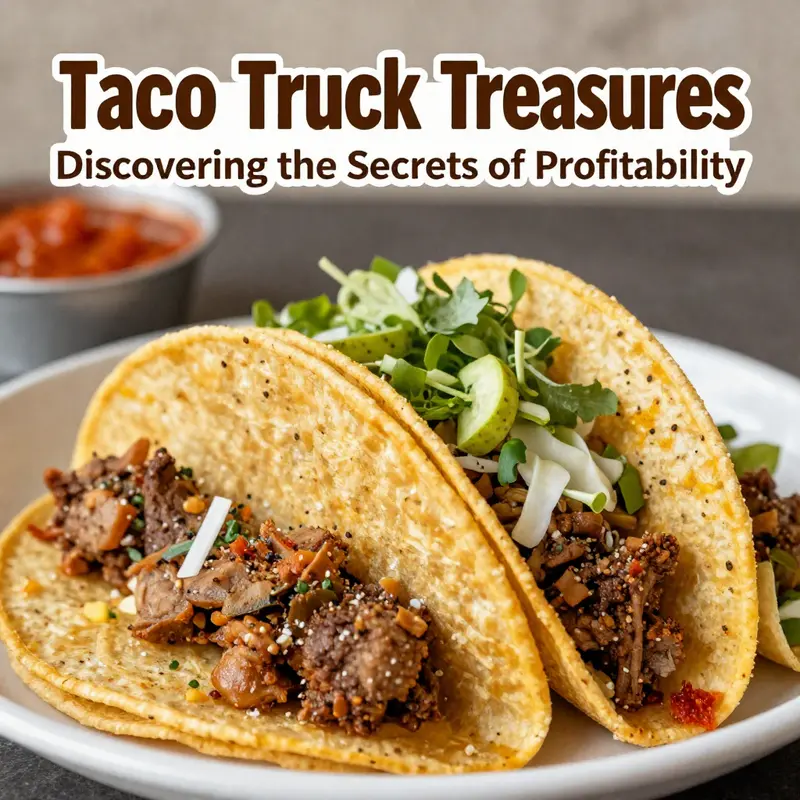
Signature dishes are not merely menu anchors; they are engines of profitability for mobile kitchens that must compete in crowded streets and minds. In the world of taco trucks, where overhead is often leaner than in brick and mortar operations, the challenge is translating foot traffic into sustained earnings. The chapter that follows builds on a clear premise: a well crafted signature item can attract a loyal crowd, justify premium pricing, streamline operations, and catalyze a brand narrative that travels with the truck from one neighborhood to the next. The outlook is not abstract. It rests on observed patterns in the field, where the simplest path to higher margins is narrowing the menu to a few standout items that can be prepared quickly, consistently, and with high flavor impact.
From the outset, the discussion centers on the power of a signature dish to differentiate a truck in a market already crowded with imitation street food experiences. A signature taco whether it leans on a traditional preparation style or a bold modern interpretation acts as a beacon. It signals to customers what the truck stands for and what they can expect when they pull up to the window. In practical terms, this distinctiveness translates into more efficient inventory management, as sourcing becomes focused on a core set of ingredients that pair well across several preparations. When a kitchen operates around a signature item, waste tends to shrink because ingredients are chosen for versatility and high yield compatibility. This is not merely a culinary preference; it is a critical driver of labor cost control. Staff training can be optimized around a handful of techniques, meaning quicker line progress and fewer missteps during peak service windows. The result is a leaner, more predictable operation whose output reliably meets demand without ballooning labor hours.
The culinary backbone of profitability often centers on a dish that feels iconic to a locale or an immigrant culinary narrative. Al pastor, for example, has historically functioned as a signature item in many street foods contexts; its popularity is driven by a flavor profile that resonates with a broad audience and by a production method that can be scaled across a rotating set of vendors. The value of such a signature item is double edged: it creates a recognizable product identity while enabling operators to build a kitchen workflow around a specific sequence of steps that minimize movement and waste. The roasting or spit cooking process, when integrated with a well timed service rhythm, translates into steady throughput. The scent that wafts along a bustling curbside is itself a marketing asset, drawing curious passersby who one day become regulars. The mere presence of a signature item tends to shorten the consumer decision cycle; people know what to order, they know what to expect, and they feel confident that their experience will be reproducible across visits.
This is where the mobility of a taco truck becomes a strategic advantage. Unlike stationary restaurants, trucks can chase the pulse of demand whether that means setting up near office districts during lunch hours, parking near event spaces when festival crowds swell, or shifting locales to align with community celebrations and ethnic markets where a signature taco can ride the wind of cultural memory. When the operational model emphasizes a signature dish, the truck can pivot cleanly between neighborhoods, festivals, and pop up venues without incurring the overhead of a new lease or a large investment in fixed infrastructure. The capital required to launch a truck is modest relative to a brick and mortar site, so the bar for profitability is set by the ability to convert attention into sales over a manageable cost base. The signature item becomes the bridge between appetite and repeatable revenue. It invites customers to experience something distinct while permitting the operator to fine tune the recipe based on real time feedback, a capability that is especially valuable in a mobile setting. The ability to iterate quickly, to respond to what people actually crave on different days and in different places, is a critical facet of long run profitability that only a mobile model can offer.
Branding for a mobile kitchen, after all, is a function of consistency as much as variety. A signature dish can anchor a brand narrative in people memories, turning a simple purchase into a cultural moment. It fuels word of mouth marketing because the dish carries a story that customers want to tell others whether the story is about heritage, technique, or a clever twist on a familiar favorite. When a truck becomes known for a single, well executed signature item, it reduces the cognitive load on new customers. They arrive with a degree of trust: they know what they will get and they know the experience will feel authentic. That trust lowers the perceived risk of trying something new at a street side window and increases the likelihood that visitors will upgrade to a larger order or return at a future date. The cumulative effect is a higher rate of repeat customers, which is the most reliable path to stable profitability in a business where daily sales can swing with the weather, events calendar, and traffic patterns.
There is a practical arithmetic behind these observations. A signature dish, when designed for efficiency, can support higher margins in several ways. First, it concentrates procurement into a smaller set of ingredients with predictable prices and reliable supplier relationships. Bulk buying and standardized portioning reduce both cost per unit and variance in plate cost, which in turn supports steadier pricing decisions. Second, signature dishes often justify a premium price point, especially when the dish is perceived as authentic, specialized, or culturally significant. A carefully calibrated price can reflect the skill, time, and provenance involved, while still remaining competitive in a crowded urban street scape. Third, the streamlined workflow associated with a signature item tends to cut labor costs. Trained cooks move through the line with fewer improvisations, and the time to serve per taco shortens during busy periods. This combination of stable ingredient costs, disciplined pricing, and efficient labor contributes to healthier profit margins, a critical consideration for small operators who carry debt service, insurance, maintenance, and transportation costs. It is the synthesis of culinary identity and operational discipline that makes profitability attainable rather than precarious.
From a branding perspective, the signature dish acts as a lighthouse for the truck’s identity wherever it lands. Festivals, ethnic neighborhoods, and themed events become natural stages for a consistent flavor story. People attend because they seek a reliable, recognizable experience that aligns with a broader cultural moment. In these settings, a signature taco does more than satisfy hunger; it signals belonging to a shared experience. The branding payoff is not only about attracting one off purchases; it is about building a trusted, repeatable experience that can be delivered as the truck travels from one event to another. For operators, this means a simpler, more scalable marketing approach: a distinctive dish reduces the need for constant experimentation with multiple new items. It creates a predictable platform for social proof photos, reviews, and recommendations that travel with the truck through city blocks and beyond. The focus on a signature item thus translates into a virtuous feedback loop: strong branding drives demand, which supports stable production and better supplier relationships, which in turn reinforces the efficiency and consistency of the signature dish.
To understand how this dynamic plays out in practice consider the idea of menu engineering in a mobile context. A practical approach is to limit the core menu to a small, coherent set centered on one or two signature items, complemented by a few sides or toppings that enhance the main dish without bloating the kitchen. This minimizes complexity on the line, reduces waste, and accelerates service during peak periods. It also makes the delivery of the signature concept more credible and easier to communicate to customers who encounter the truck for the first time. The operator can test variations of the signature item, refining sauces, heat levels, and accompanying sides in response to live feedback. In a mobile setting this agility is not a luxury; it is a necessity. The feedback loop is accelerated by the very nature of street commerce, where passersby, festival goers, and office workers provide immediate reactions that can inform adjustments within days, not months. The ability to respond quickly to demand ensures that the signature dish remains relevant and desirable, rather than becoming stale or overfished by repetitive orders.
All of these considerations converge on a simple conclusion: profitability in a taco truck operation is most reliably advanced when the business leans into a signature dish that is authentic, efficiently produced, and consistently marketed. The dish becomes a platform for repeat visits, brand storytelling, and disciplined operations. It enables a revenue model that can flourish in high traffic zones at scale, while preserving the low overhead that characterizes mobile food ventures. The signposts of success—high margin per unit, steady demand across different venue types, and a brand identity that travels with the truck—are the natural outcomes of a well crafted signature offering. Across markets, operators who focus on one or two signature items, build a cohesive production system around them, and use that identity to dominate certain experiential niches tend to outpace more diffuse competitors who spread resources across too many possibilities. This is not a call to rigidity but a reminder that clarity of purpose embodied in a signature dish creates the operational discipline necessary for sustainable profitability. For readers seeking practical steps to study and adopt this approach, there is value in observing established patterns from seasoned operators who have built reputations around a few memorable offerings. The literature on mobile culinary enterprises highlights how a single well executed item can anchor both the customer memory and the business metrics that matter most: margin stability, throughput, and repeat visibility. In the broader arc of the article the next sections will explore how location strategy, event driven sales, and tactical pricing complement the signature dish framework without diluting its impact. The idea is to preserve the integrity of the dish identity while expanding the truck’s ability to reach new audiences and sustain growth across seasons and neighborhoods. As a final note the discussion echoes in the practical world of mobile food entrepreneurship: a signature dish is a narrative you can taste, a production system you can repeat, and a brand you can trust. When executed with care it compounds value across customers, staff, and suppliers alike, transforming occasional foot traffic into a predictable, resilient revenue stream. Operators who invest in refining a signature item treat it not as a mere menu line but as a strategic asset and often find that profitability follows as a natural consequence of focus, efficiency, and authentic storytelling. To explore how other trucks translate this approach into tangible models see one resource that outlines successful culinary configurations in the mobile space Top taco-truck models for culinary success. This reference offers concrete examples of how signature driven strategy aligns with practical kitchen design, flow, and service rhythms, reinforcing the argument that a singular dish can drive a broader business advantage. External reference: For a deeper technical grounding on the standards power and applications of taco carts the following technical guide provides expansive context and practical guidance: https://www.tacocartguide.com/technical-guide
On Wheels, On Margin: How Taco Trucks Turn Mobility into Profit
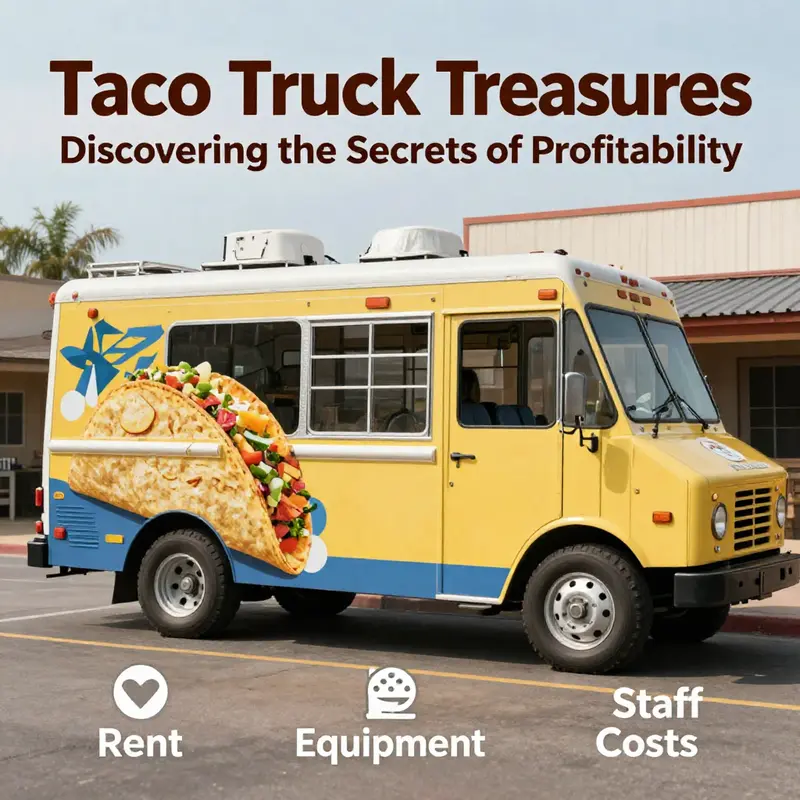
A taco truck is not merely a portable kitchen; it is a deliberate philosophy of business where movement and simplicity become competitive advantages. The appeal rests not only in the sizzle of tortillas or the comfort of familiar flavors, but in a model that trims fixed costs to the bone and treats mobility as a strategic asset. When a cart rolls into a busy district at lunch, you are watching a lean enterprise in action. The path from cart to cash register is a product of disciplined cost structure, adaptive location strategy, and a compact, high margin menu that can be prepared quickly with minimal waste.
Startup costs loom large in many businesses, but the entry point for a taco truck is unusually forgiving. One-time vehicle investment, a compact kitchen footprint, and the regulatory steps that accompany street food operations replace bulky real estate and long leases. Even when licenses and inspections are required, the total outlay tends to be far lower than a traditional restaurant. For many aspiring operators, this lower barrier reduces risk and expands the set of feasible candidates.
Overhead is a different story. A mobile unit dodges monthly rent, building maintenance, and HVAC bills. Utilities are lean: propane, refrigeration, a portable power source. Staffing is lean too, often a single cook plus a helper or two who rotate at events. In practice, those lean staffing requirements translate to lower payroll costs and more predictable labor.
Operational agility is the real genius. The truck can move toward events, offices, or neighborhoods with the most promise. The ability to reposition quickly is risk management as well as marketing. The focused core offering reduces kitchen complexity, speeds up service, and reduces waste. A signature item can create loyalty and differentiate the truck in crowded markets.
Profitability hinges on a balance of price, speed, and volume. The margins come from scale and repeatable throughput rather than a sprawling menu. A lean operation can serve a high volume of customers in a day with a modest per-item margin, creating strong overall profitability when demand is steady. The culinary hook matters, but it is the reliability of the operation that keeps customers returning.
Location strategy and relationships matter. Operators track demand across days and seasons, maintain routines for repositioning, and cultivate relationships with event organizers and office managers. A calendar of reliable placements reduces revenue volatility and smooths cash flow. The equation is simple: lean costs plus intelligent mobility equals durable margins.
Potential tradeoffs and practical configurations. A compact kitchen that prioritizes efficiency, dependable power, and waste-conscious prep can extend operating hours and reduce downtime between events. A signature item anchored to a brand helps command a steady crowd when competition is hot. For readers curious about models, there are many ways to balance capacity and mobility, from busier stations with parking permits to fleets that chase festivals. The right setup matters as much as the right recipe.
Final thoughts
As we peel back the layers of taco truck profitability, it becomes evident that their success is rooted in several key aspects: operational efficiency, strategic market positioning, the allure of signature dishes, and favorable cost structures. With a menu that resonates with the community, a nimble business model, and a deep understanding of their target audience, taco trucks not only provide delicious meals but also create thriving culinary businesses. For cuisine lovers, office workers, event planners, and taco fans, the vibrant world of taco trucks represents a flavorful experience that is as rewarding for the palate as it is for the entrepreneur.

