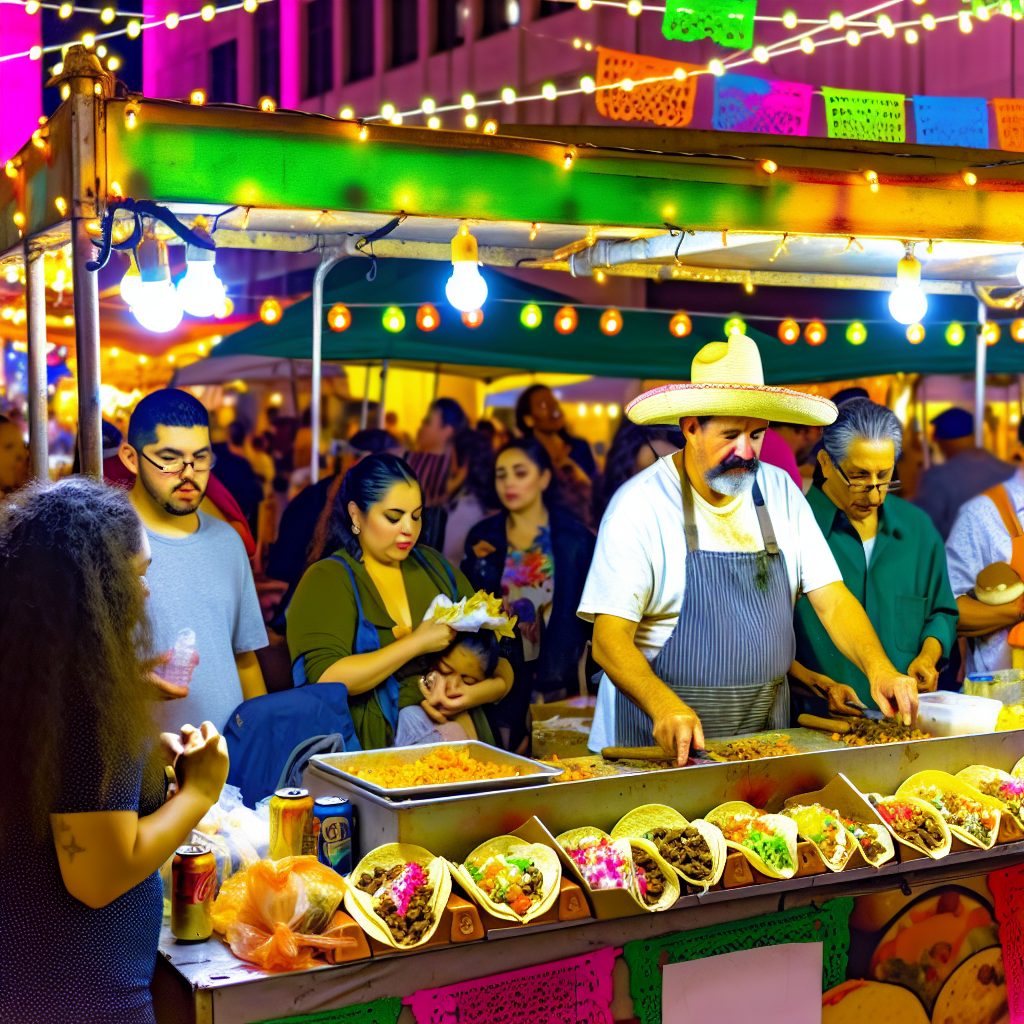
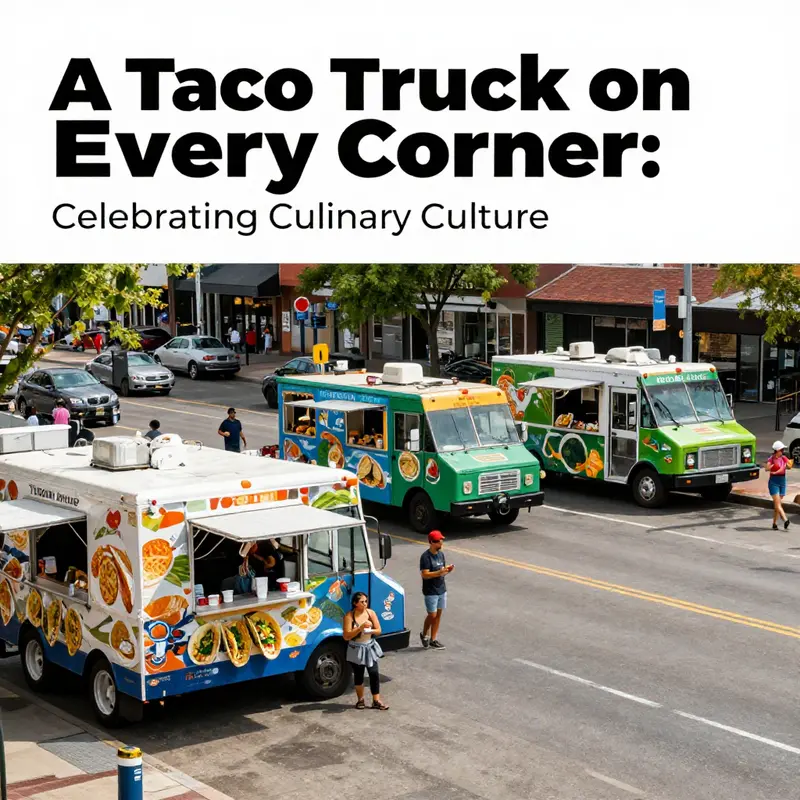
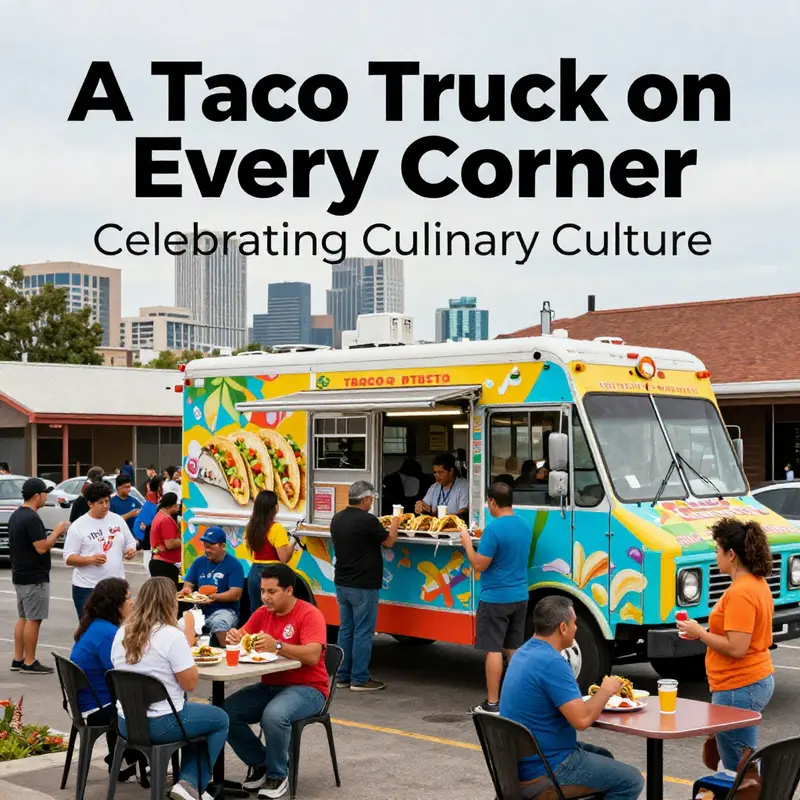
The vibrant culture of taco trucks has become a staple in cities, particularly in Austin, Texas. This article explores the multi-faceted significance of the phrase ‘a taco truck on every corner,’ highlighting its cultural relevance, economic impact, and social connections fostered through these mobile eateries. The chapters will delve into the cultural significance of taco trucks, the unique landscape of food truck culture in Austin, the economic advantages they bring, the social dynamics at play, and the portrayal of this lively culture in popular media, providing a comprehensive perspective on why these culinary gems are integral to urban life.
null
null
Every Corner a Tasting: Unfolding Austin’s Taco Truck Culture on Wheels
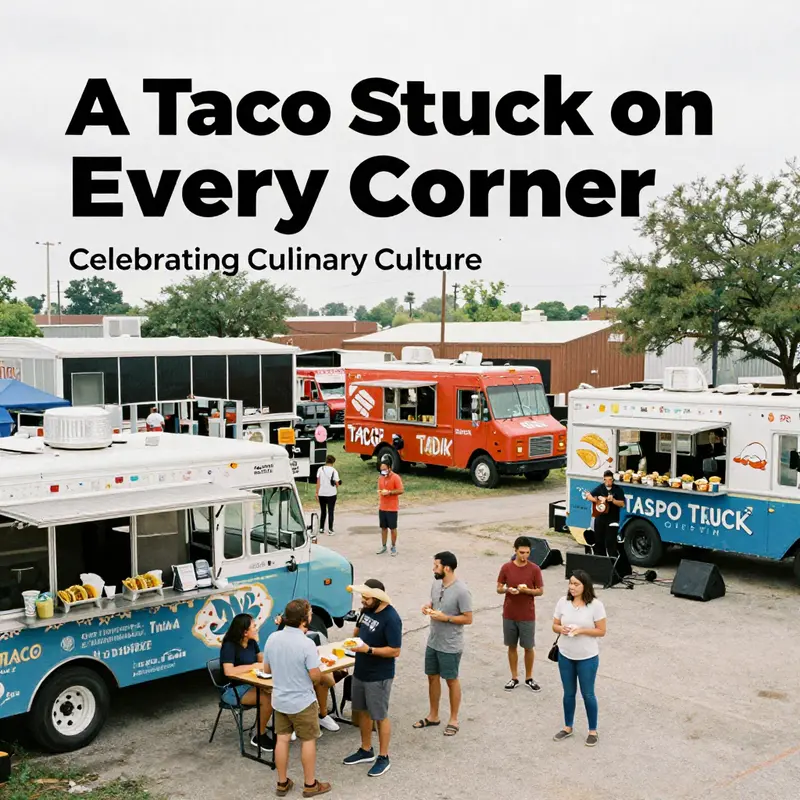
In Austin, the street becomes a living menu, a weathered map of flavors that unfolds with every corner. The taco truck on every corner is less a marketing slogan than a daily ritual where mobility, community, and culinary curiosity braid together. Trucks are portable kitchens that choreograph the city’s rhythms. Morning begins with the hiss of steam and the clatter of tortillas hitting hot griddles. The corners wake to the bright aroma of onions, cilantro, and lime as regulars swing by for a quick breakfast that doubles as a start to the day and a chance to connect with neighbors. The scene narrows the city into a small square of shared ritual where a bite becomes a bridge between strangers who share the same curiosity for something fresh and hand crafted.
Across many corners, the range of offerings is astonishing, yet the pattern is simple: the closest truck often becomes the best option for freshness, speed, and a sense of belonging that fixed eateries sometimes struggle to reproduce. The trucks’ freedom to roam liberates the palate from a single culinary script. Some corners become breakfast taco hubs, others linger as late night cravings, and many shift with the seasons for festivals, concerts, or neighborhood block parties. The result is culinary democracy in action, where people vote with their feet and sample a spectrum of regional and inventive takes on what a taco can be.
Behind the casual vibe lies a disciplined choreography of supply, skill, and timing. Each truck is a compact kitchen and a mobile business that must balance costs, staffing, and local sourcing with the unpredictability of city life. Operators learn crowd dynamics, calibrate cooking pace, and manage portions for long lines. They cultivate relationships with local farmers and markets, trimming distance between field and plate while keeping ingredients vibrant and seasonal. This locality anchors the trucks in Austin’s broader food culture.
Among the beloved offerings is the migas taco, a breakfast staple that marries crisp tortilla strips, pico de gallo, creamy avocado, and a protein of choice. The beauty lies in texture and timing: oil hisses as the tortilla edges toast; pico brightens the palate after a night out; the balance of heat and acidity that lingers rather than overwhelms. This is the essence of Austin’s mobile scene, a constant negotiation between tradition and adaptation where time-honored techniques meet street spontaneity and a city that refuses to stand still.
The social fabric extends beyond the plate. Food trucks anchor informal networks, becoming meeting points where music lovers, neighbors, students, and workers cross paths. Clusters of trucks near downtown venues or tucked into residential pockets transform into micro-squares of exchange where people linger, chat, and share a moment weighted with the promise of something new. Economically, the trucks offer opportunity by lowering barriers to entry, testing ideas quickly, and evolving with shifting consumer desires. In a city that constantly reinvent its skyline, these mobile kitchens provide a flexible stage for culinary experimentation and small business resilience.
The civic conversation around sustainability and locality also anchors the scene. Many operators emphasize ethically sourced ingredients and waste reduction, reflecting urban consciousness. The portable nature of these kitchens does not imply fragility; it often strengthens a commitment to responsible cooking. When a truck pivots to seasonal produce or prioritizes a neighborhood’s preferred flavors, it demonstrates responsiveness that larger eateries may struggle to emulate. The result is a citywide palate that evolves with the people who occupy the streets. In this way, the vision of a taco truck on every corner becomes a metaphor for a city that values accessibility, community, and continual reinvention as core to its identity.
Guides and culinary commentators have begun to crystallize the phenomenon, identifying Austin’s trucks as central to the city’s culinary narrative. They note the essential role trucks play in linking daily life with the region’s broader gastronomic imagination. Street life becomes a classroom where cooks experiment, communities gather, and taste becomes a shared language. For travelers and locals alike, following the taco trail offers more than a sequence of meals – it offers a living portrait of urban culture in motion. The itineraries published by writers reframing a neighborhood or a late night route remind readers that street food is an art form rather than a fallback option.
In this evolving landscape, continuity matters as much as novelty. The vehicles themselves become avatars of the city’s ethos: practical, friendly, bold, and a little mischievous in flavor combinations. A truck that serves a quick morning taco can transform into a late night savior for a group after a show, then pivot again to cater a summer festival, turning a roadside corner into a temporary festival ground. It is this adaptability, paired with a ring of familiar tastes, that sustains the culture through changing times. The city’s appetite for community and mobility translates into a culinary ecosystem where a taco truck, at any given moment, can reimagine its role.
For readers curious about the mechanics behind this phenomenon, there is no shortage of stories about how mobile kitchens stay viable in a competitive landscape. The question is not only what they cook but how they manage risk, supply chains, and customer loyalty with limited space and a fierce pace. A useful window into this world is the broader discourse on how mobile culinary teams structure their operations, from permitting and health regulations to branding and social media presence. As these narratives circulate, they remind us that the magic of a taco truck on every corner is rooted in disciplined craft as much as in appetite. It is about the convergence of street level charm, entrepreneurial grit, and a city’s ongoing love affair with food that feels intimate, personal, and near at hand.
For those who want a tangible entry into this world, consider tracing the paths of several highly regarded street routes and tasting across a spectrum of fillings, textures, and warmth. The experience is less about finding the perfect taco and more about discovering a city’s ability to make food feel like a shared, lived experience. Each corner offers a chance to pause, compare, and connect – not just with the cook and the food, but with the neighborhood’s heartbeat. And as with any living culture, the real flavor emerges when one follows the trail, allowing the city to teach and surprise in equal measure. If curiosity leads you toward the edge of a festival or a quiet residential street, you may find that the next bite is a welcome reminder that a taco truck on every corner is not merely a convenience but a continuing invitation to belong to a city in motion.
Economic Currents at the Street Corner: The Taco Truck on Every Corner
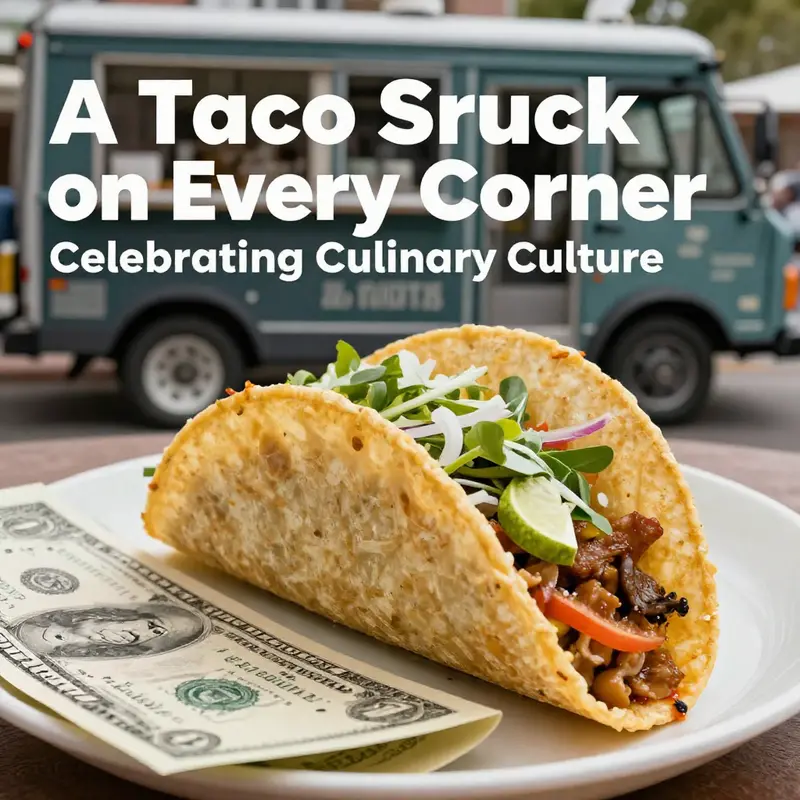
A city is a living market, and the taco truck is one of its more agile instruments. Across streets and sidewalks, these mobile kitchens turn corners into micro-markets that shift with demand and supply.
The image of a taco truck on every corner signals urban entrepreneurship that moves with traffic and complements the formal economy with a flexible, scalable model. Each truck acts as a node in a broader circulation of labor, real estate, and consumer spending, contributing to neighborhood vibrancy after hours and on weekends.
Economically, taco trucks offer low overhead and menu experimentation, allowing operators to enter markets with modest capital and scale as revenue solidifies. In many cities, they support flexible labor, provide training opportunities, and generate spillover effects for nearby businesses through increased foot traffic.
Supply chains anchor the model: ingredients travel from farmers and distributors to carts, with proximity, price, and quality shaping menus and margins. When supply or costs shift, operators adjust menus, sourcing, and locations to maintain profitability while preserving identity.
Policymakers and communities can nurture sustainable growth by simplifying permits, providing safe commissaries, and creating welcoming curbside spaces. In exchange, residents gain affordable access to culturally resonant food and a platform for local entrepreneurship that can endure market fluctuations and demographic changes.
Social Dynamics and Connections at the Taco Truck on Every Corner
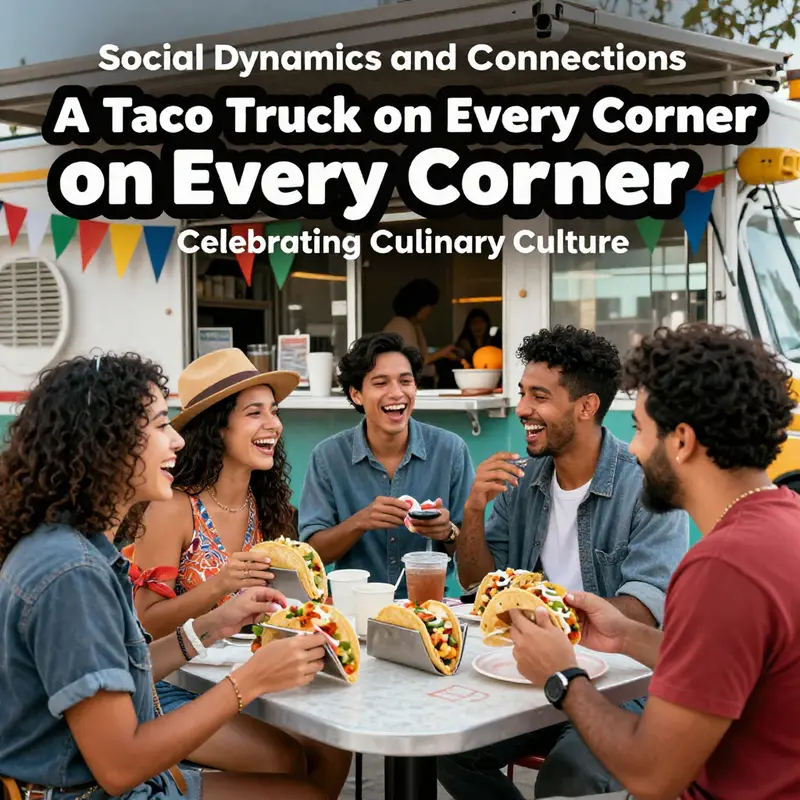
The image of a taco truck on every corner is more than a food landscape; it is a living map of how city life folds into daily rituals, how strangers become neighbors, and how a simple meal becomes a catalyst for shared memory. In Austin, the scene is almost ritualistic: a chalked menu, the hiss and sizzle of a grill, a line forming with a texture that feels less like commerce and more like a communal heartbeat. This is where the act of eating transcends sustenance and becomes a forum for social exchange. The truck acts as a portable public square, a movable stage where people from different corners of the city converge, exchange taste memories, and reimagine what a neighborhood can feel like when its streets are threaded with aroma and conversation rather than traffic signals alone.
What makes this social dynamic so resilient is its spontaneity. There is no rigid schedule that dictates who will show up or what conversations will ripple through the immediate moment. A student on a break exchanges notes about a class project with a software designer who has a sketch in their notebook from a coffee shop across town. A grandmother reviews the day’s specials with a chef who, in turn, hears about a local art exhibit that’s drawing younger crowds to the same corner later in the week. In these micro-interactions—the quick recommendations, the shared laughter over a dish that surprised someone in the best possible way—a sense of belonging is seeded. People come for the food, of course, but they stay for the social texture. The counter becomes a social index of the city’s mood at any given hour: where people are from, what they’re curious about, and what they value when they pause from their routes.
This dynamic is not just about exchange; it is about the ongoing construction of community identity in real time. The truck is a catalyst for trust that develops not in formal settings but across a shared plate. Regulars know the routine: a nod to a familiar face, a brief tale about a recipe passed down through generations, a suggestion to try a new topping that becomes a neighborhood favorite. In turn, visitors become temporary locals, absorbing a sense of place through the sensory intimacy of the street—steam, smoke, the bright acidity of lime, the warmth of corn tortillas. The social fabric is reinforced not through grand gestures but through the accumulation of small, dependable moments. People feel seen when someone remembers their preferred spice level or when a vendor’s friendly banter turns a purchase into a moment of communal warmth. This simple human reciprocity scales, weaving a web of relationships that extend beyond the lunch hour and into the daily rhythm of the neighborhood.
In this environment, cultural exchange is not a footnote but a central thread. The flavors on display carry memories from home, travels, and neighborhoods, all harmonized in a single serving that invites conversation rather than says, “Please consume and move along.” The interactions cross languages, ages, and backgrounds with a natural ease, as if the act of eating is a lingua franca that everyone speaks, even when words vary. A student explains a recipe tweak to a retiree, who then shares a story about a long-ago family gathering that improvised around a similar dish. The conversation often travels on the wings of shared discovery—what toppings delight, what textures surprise, what combinations become beloved. And as these micro-narratives accumulate, they form an evolving communal map of tastes and connections that helps people feel at home in a city that is, by design, constantly changing.
The social life around the taco truck is also a ledger of trust. Vendors become stewards of local stories; their presence signals a space where risk and risk-taking are welcomed. The street corner becomes a space for entrepreneurship that is accessible and legible to newcomers and longtime residents alike. The price of admission to this social ecosystem is modest: a willingness to pause, to listen, and to share a moment. When the line lengthens or the crowd shifts, new stories emerge—about which dish traveled best in a recent rainstorm, which shift offered the friendliest service, what music or humor briefly unites the group while waiting beneath a bright sun. It is in these fleeting, shared experiences that trust deepens. People come to see not only what they will eat but how the people around them will respond to their presence and their choices.
From a broader urban perspective, the taco truck on every corner embodies a form of portable place-making. The city’s social geographies become more legible as mobility transforms into everyday infrastructure for connection. The street is no longer a backdrop to traffic and zoning; it becomes a stage on which people rehearse belonging, test ideas, and build resilience together. When residents bring friends, colleagues, or family members to the corner, they are essentially inviting others into a social network—expanding the circle of familiarity and mutual aid. The ritual of gathering around a single cart, sharing a quick recommendation or a bite, and moving on with a story in hand is a quiet form of urban mentorship. It teaches newcomers how to navigate a city by listening first, then tasting, then offering something of themselves in return.
The research results illuminating Austin’s social dynamics emphasize that these street-food clusters do more than satisfy hunger; they nourish the nervous system of community life. They offer a corrective to urban anonymity by providing consistent, accessible spaces where people can pause and exchange not just pleasantries but practical knowledge. A student might learn about the best routes to a campus event from someone who has lived in the neighborhood for decades; a composer or painter might find a new collaborator in the moment of a shared plate. The micro conversations around the counter become macro benefits: stronger neighborhood ties, more inclusive civic life, and increased recognition that diverse communities can come together with ease when the daily rituals around food are respected and celebrated.
For readers exploring how to translate this social vitality into broader urban narratives, the lesson lies in embracing mobility as a social good, not a mere logistics concern. The truck’s portability invites experimentation with space—pop-up moments that reweave the social fabric wherever the truck travels. It also invites responsibility: sustaining safety, cleanliness, and courtesy while keeping the spontaneity that makes these moments feel unguarded and human. The result is a city that feels alive because it is a city where people share space not just as a convenience but as a shared practice of care. And when this practice becomes routine, the phrase “a taco truck on every corner” becomes less a marketing fantasy and more a lived, improvisational urban ethics.
For readers who want to glimpse how these dynamics translate into practical inspiration, there is a practical angle to consider. The core idea is to observe and nurture the conditions that invite strangers to become neighbors through a shared meal and a place to linger. This involves listening to what the street corner teaches: which moments invite conversation, which aromas coax people toward one another, which lines form patterns that become memory. It also invites deliberate curation—ensuring the space remains welcoming to all, with accessibility, visible signage in multiple languages when appropriate, and a pace that invites lingering instead of quick turnover. In this sense, the taco truck becomes a model not just of culinary mobility but of inclusive urban life, where the social capital built in a single lunch hour can echo through a neighborhood long after the tray is empty.
Within this broader frame, readers may explore how these mobile kitchens are designed to sustain such social vitality. For a practical look at how these micro-kitchens are engineered for community life, see taco-trucks-unleashed-top-5-models-for-culinary-success. This link points to our in-house guide that examines the balance between mobility, reliability, and the ability to foster social spaces in real-world settings. The goal is not to promote a particular design in isolation but to understand how form supports function when the function is people, conversation, and shared nourishment. The social dynamics described here are not a backdrop; they are the core functionality of the taco truck as a civic instrument.
External resource: https://www.austin360.com/news/local/food-trucks-austin-social-dynamics-2026/
From Street Corners to Screen: Visual Representations of Taco Truck Culture in Popular Media
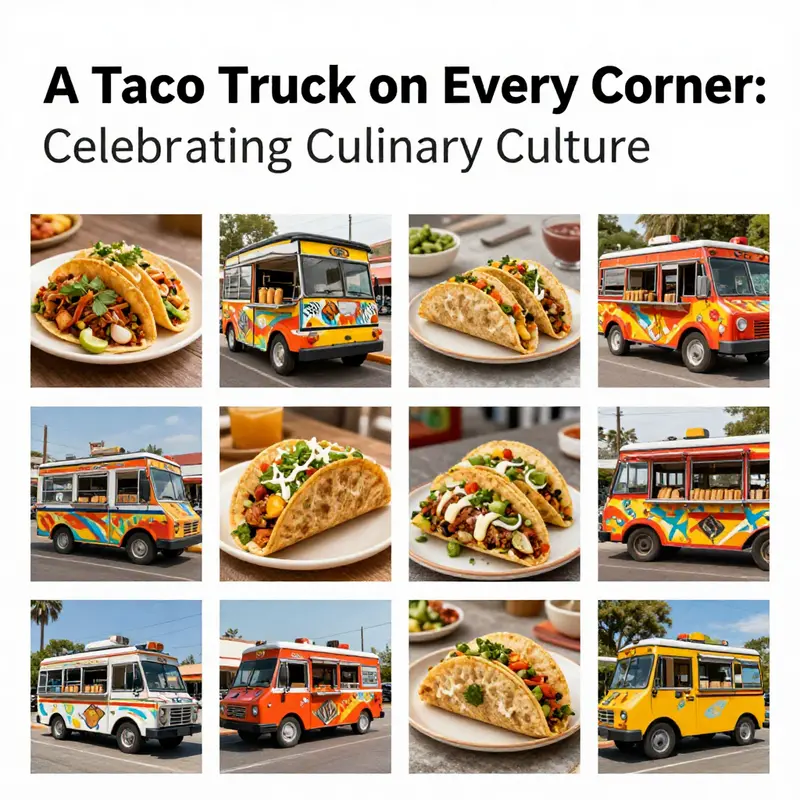
Taco trucks have become more than a convenient bite between errands; they are portable canvases, cultural markers, and social stages that travel through the frame of our urban lives. The idea that there might be a taco truck on every corner is less a mere hunger pang and more a visual promise. In popular media, this promise is rendered as a vivid, mobile aesthetic that invites viewers to enter a world where food, mobility, and community life fuse into a recognizable, almost pilgrimage-worthy scene. The chapter that unfolds here tracks how that aesthetic travels—from street-level encounters to screen-based storytelling—and why it resonates across audiences who are hungry not just for flavor, but for belonging, identity, and a sense of place within a rapidly changing cityscape.
Visual representations of taco trucks in film, television, music videos, and digital content do more than showcase a menu. They curate a particular sensibility: a color-saturated, time-softened urban texture in which the truck itself becomes a moving work of art. The truck’s design—the bright paint, the hand-painted murals, the logos that wink with local pride—transforms roadside commerce into a medley of signs. The aesthetics signal more than authenticity; they signal stories about migration, memory, and entrepreneurial grit. In scenes where the truck pulls into a dusk-lit lot or glides along a neon-bathed street, the vehicle functions as a portable stage where personal and collective memories can be performed and shared. This is why the imagery travels so well across media: it packs complex social meanings into a single, compact frame.
Aesthetic representation in media often foregrounds the truck as a piece of moving culture rather than a mere food source. The visual grammar is deliberate and legible: saturated colors that pop against concrete and asphalt; murals that map neighborhood history onto a rolling kitchen; signs that blend family lore with culinary promise. In music videos and fashion-forward spots, the taco truck becomes a backdrop that anchors a mood—urban resilience, festive communal energy, and a sense of welcome that transcends language and background. In these moments, the truck is less about the order of tacos and more about the ritual of gathering, the slow arc of a night out, and the promise that comfort can ride with you wherever you roam. Media artists exploit this symbolism to tell stories of belonging in a city where new arrivals continually redraw the map of who belongs to which corner.
Digital culture turbocharges this visual language. Instagram, TikTok, and short-form video platforms turn the taco truck into a meme-friendly icon whose appearances are curated and shared in pairs with people’s own captions, playlists, and memories. The community of photographers and videographers who document everyday operations—flaring grills, steam rising from warm tortillas, the precise moment a customer smiles after a bite—builds a visual archive that democratizes representation. Suddenly, the everyday act of serving street food is elevated to a living gallery of color, texture, and encounter. The spontaneity of a curbside encounter becomes a narrative thread: a bite can become a first date, a family ritual, or a neighborhood milestone. In this language, the truck is a moving frame for ordinary life that viewers recognize and crave to be a part of.
The visual storytelling surrounding taco trucks also carries sociopolitical freight. The imagery speaks to immigration narratives, to the daily labor of street entrepreneurship, and to the ingenuity communities deploy to sustain themselves in changing urban economies. The street becomes a classroom of resilience, where family recipes are preserved, adapted, and passed along through a mobile kitchen. The truck’s mobility—its ability to traverse neighborhoods, cross borders within a single city, and reach audiences in places where fixed-location restaurants may struggle—becomes a metaphor for mobility itself. In this sense, the media representation isn’t just about flavor; it’s about survival, adaptation, and the formation of shared spaces where strangers can become neighbors through a shared taste experience.
Cinematographic choices reinforce these meanings. Filmmakers and videographers frequently favor low-angle shots that celebrate the truck as a substantial, almost anchor-like presence in the urban frame. Time-of-day lighting—the warm glow of evening, the crisp glare of street lamps, or the soft haze of twilight—infuses the truck with a sense of ritual and ceremony. The camera’s gaze lingers on the craft of cooking: the sizzle, the careful assembly of toppings, the quick, practiced movements of cooks who know their rhythm. Such close, tactile visuals invite viewers to imagine themselves in the line, waiting for a moment of honest, comforting nourishment. The soundtrack—whether a melodic beat or ambient street noise—works in tandem with visuals to weave a sensory memory of the city’s edge where food becomes a bridge between cultures, generations, and social circles.
This cultural work has practical consequences for place-making and local economies. When media repeatedly frames the taco truck as a focal point of urban life—an appetizing beacon in a block, an event magnet at night markets—the public imagination begins to map experiences around it. People travel to neighborhoods because the screen made them curious about the reality on the ground: what flavors exist, which cooks are shaping recipes, how the truck curates a sense of welcome, and how it matches or contrasts with the surrounding streets’ architecture and soundscape. In turn, residents and visitors bring attention to the microeconomies built around these mobile vendors: the collaborations with nearby artists for mural commissions, the pop-up events that mingle music, performance, and tasting, and the informal networks that sustain a rotating cast of cooks and recipes. The visual culture surrounding taco trucks, then, functions as a catalyst for urban exploration and community exchange, guiding audiences from a screen’s suggestion to a real-world journey.
In considering how these images travel, one can appreciate how the design-centric stories of a taco truck align with broader conversations about mobility and culture in the city. The truck’s aesthetic is a distillation of local identity: a portable storefront that carries a neighborhood’s color, character, and history. When media tools emphasize this, they invite viewers to see the truck not merely as a vendor, but as a co-creator of urban experience. The result is a cyclical relationship where media representations shape real-world interest and, conversely, real-world street scenes feed future stories. It is a dynamic that helps explain why a simple corner might feel loaded with possibility and why a bite can carry with it a sense of shared purpose beyond appetite.
For readers who want a deeper dive into how these visuals translate into tangible design choices and storytelling strategies, consider exploring Top taco truck models for culinary success. The article foregrounds how physical form—dimensions, materials, and branding elements—guides not only efficiency but the narratives media team members aim to communicate through filming, photography, and promotion. The link below anchors the discussion in practical design considerations while keeping the broader cultural frame intact: Top taco truck models for culinary success.
As this chapter has sketched, the visual representation of taco truck culture in popular media is a living tapestry. It stitches together aesthetics, migration stories, neighborhood life, and digital virality into a coherent vision of urban hospitality on wheels. The screen’s attention to color, texture, and movement is not merely a stylistic choice; it is a negotiation of space, belonging, and memory. When we watch these trucks slide into a frame, we witness more than flavor; we witness culture in motion, a continuous dialogue between the city’s streets and the narratives we tell about them. The images endure not because they depict a perfect taste, but because they capture a living practice—a way of feeding people, connecting communities, and imagining a city where warmth and welcome roll down every avenue.
External reference: Visual culture – The International Encyclopedia of Communication. https://www.encyclopedia.com/science-and-technology/communication-and-media/visual-culture
Final thoughts
The phrase ‘a taco truck on every corner’ encapsulates much more than just a culinary convenience; it is a vibrant celebration of culture, community, and connection. The diversity of flavors offered through these mobile kitchens creates a rich tapestry of experience that strengthens neighborhoods and fosters social interaction. As we continue to embrace and support our local taco trucks, we acknowledge their vital role in shaping urban landscapes, both economically and socially. Whether it’s through a midday meal or an evening gathering, taco trucks represent a beloved integration of flavor and community spirit.