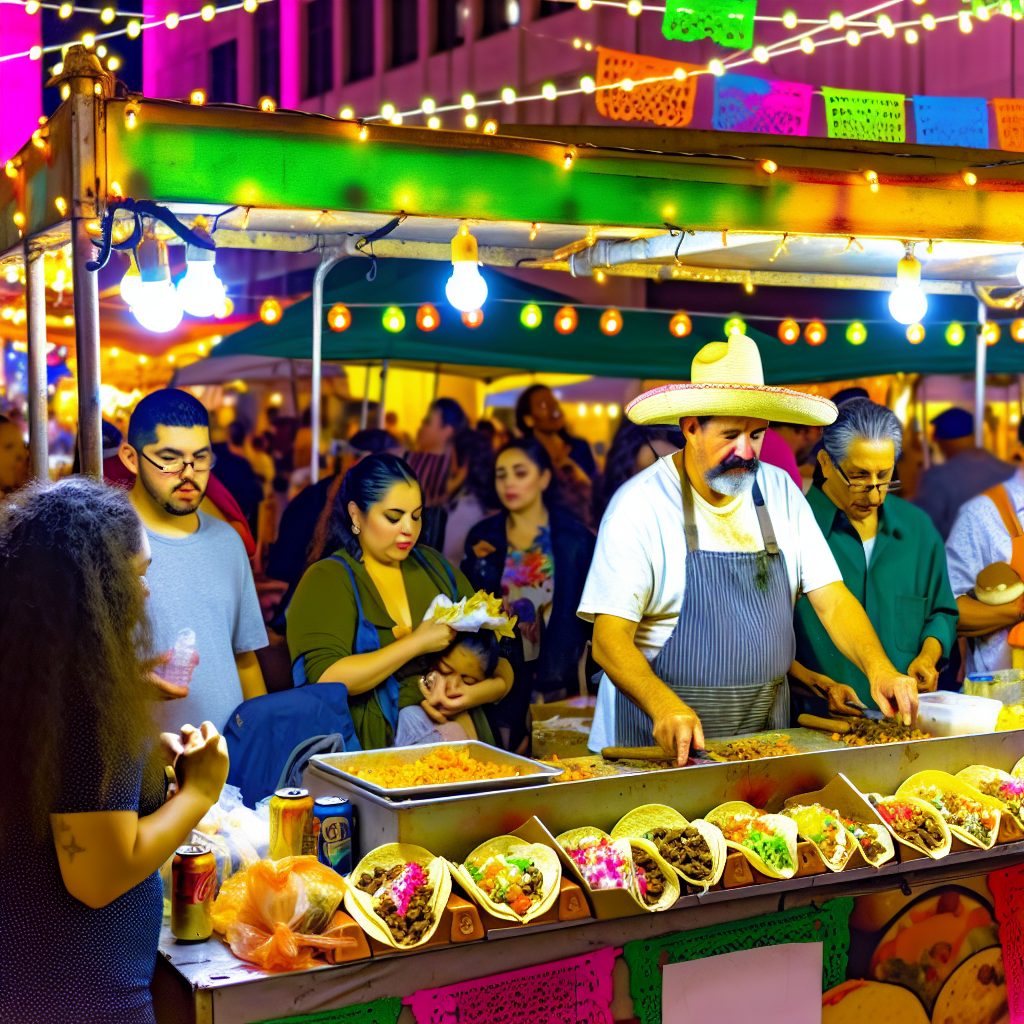
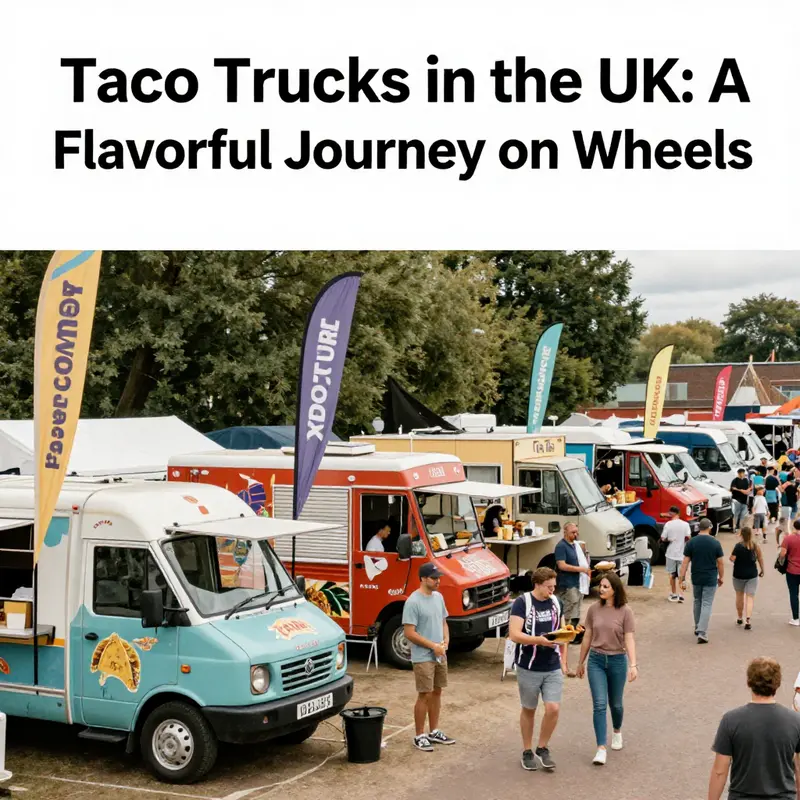
In recent years, the UK has witnessed a culinary revolution on its streets, with taco trucks popping up in cities from London to Manchester. These vibrant mobile kitchens are more than just food vendors; they are cultural storytellers bringing traditional and innovative flavors to local communities. As the taco truck scene continues to grow, this article will explore their rise, cultural significance, economic impact, and future trends, inspiring cuisine lovers, local residents, and event planners alike to partake in this delicious movement.
Rolling Tastes on British Streets: The Emergence of Taco Trucks Across the UK
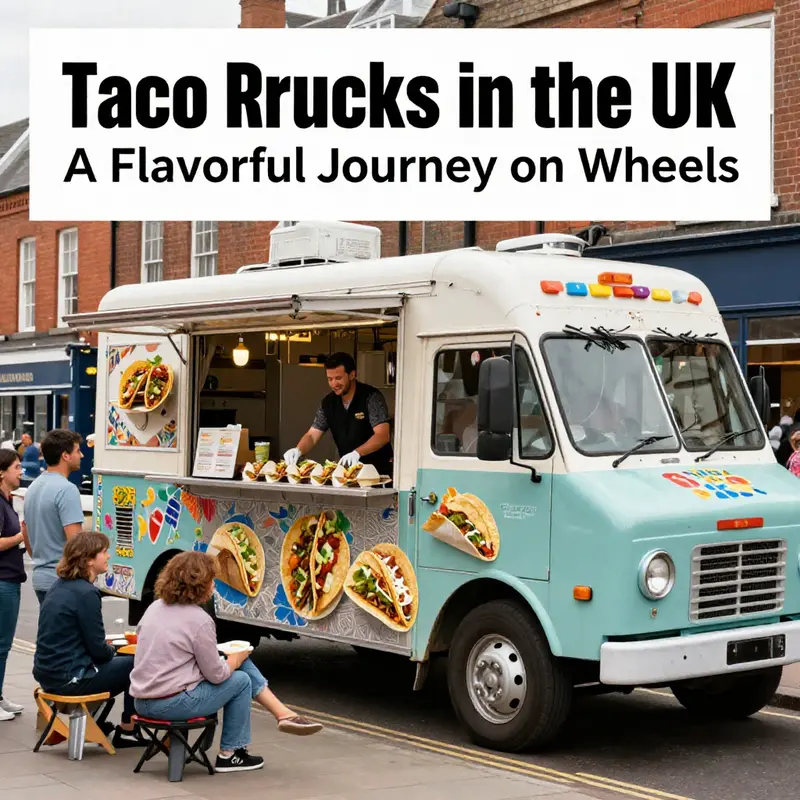
In cities where drizzle and daylight share the same hour, a distinct scent can drift along the pavement and linger in the memory long after a meal is finished. It is the scent of a taco, folded with heat and brightness, carried not by a stationary kitchen but on four wheels that pulse with music, yellow lights, and a steady stream of customers. Across the United Kingdom, taco trucks have moved from curiosity to commonplace, from weekend novelties to everyday options for hungry workers, students, families, and night owls. The question of their presence is not merely whether a cart can park on a curb; it is about what mobility does to food culture, how shared plates travel, and how urban life negotiates with the rhythms of a country marked by storms, markets, and a remarkably diverse population. The UK’s taco trucks do not exist in a vacuum. They arrive at the hinge points of place and identity, where immigrant cooks merge the flavors of their homes with the demands and expectations of British palates. The result is a culinary tapestry that is at once familiar and new, a map of migration, taste, and entrepreneurial energy that migrates with the sun and the schedule of the city’s busiest streets. In this sense, the taco truck is less a novelty and more a mobile thread in the broader fabric of street-food history in Britain, a history that has always thrived on the tension between portability and local adaptation, between tradition and the appetite for something fresh and faster than a sit-down meal but more expressive than a convenience option.
The growth of these trucks has unfolded in a landscape shaped by both opportunity and challenge. On one side lies the practical ease of a truck that can operate on a shoestring compared to a brick-and-mortar restaurant: lower overhead, flexible hours, and the ability to test menus in different neighborhoods without the long-term commitment of a fixed space. On the other side sits the regulatory framework of a country that takes health and safety seriously, that values clean lines of supply, and that has a bustling festival and market circuit that rewards vibrancy and reliability. These trucks are not simply selling food; they are building micro-ecosystems around a few simple premises: fresh ingredients, clear flavors, speed, and a persona that makes the cart more of a neighborhood hub than a one-off vendor. You will find taco trucks at street-food markets in bustling boroughs, outside train stations during the evening surge, and tucked into the corners of nightlife districts where friends gather after work. The mobility of the truck matters as much as its recipe. A chef can chase the rhythms of different neighborhoods, sampling ingredients that speak to local preferences and seasonal availability, and, in doing so, create a menu that evolves from month to month, season to season.
In many stories, the journey of a taco truck begins as a weekend stall, a family venture, or a small venture launched in a city with a supportive, if competitive, street-food culture. Families attest that the stall started as a way to share a cherished street-food tradition with friends and neighbors, then grew as word spread and schedules allowed. The trucks became more than storefronts; they became mobile kitchens where cooks could refine recipes, test new fillings, and observe how different crowds react to particular combinations of meat, spice, and acidity. The UK’s urban centers—London, Manchester, Birmingham, Bristol, and beyond—have provided a fertile ground for such experimentation. The weather, too, has shaped the business model. A warm, gusty breeze can make a taco feel lighter and more refreshing, while a rainy shift may push vendors to offer heartier fillings and to keep customers indoors or under awnings. The very act of movement—driving from one venue to another, from a festival to a street corner—adds to the theater of dining and makes the experience more than simply eating; it becomes part of an evening’s plan. The truck, with its compact kitchen and its dynamic presence, becomes a rolling stage for culinary expression, where the chef is also a performer, and where the crowd is an audience that can be different with each stop.
What looks like a simple exchange—a tortilla, a smear of salsa, a dash of cilantro—often unfolds into a broader story of cultural negotiation. Immigrant entrepreneurs, who often arrive with a family recipe or a vision to share a heritage cuisine, find in the UK a receptive, diverse audience eager for new flavors. The tacos they offer are not clones of those found elsewhere; they adapt to local ingredients and tastes, reflecting the demographics of the neighborhoods they serve. A London stall may lean toward bright, citrusy notes and a lean, fast service that suits a busy urban crowd, while a truck parked near a university campus in a northern city might emphasize spicier profiles, creative fillings, and a menu that rotates with student demand. This adaptability is not a departure from authenticity; rather, it is authenticity in motion—an ongoing dialogue between origin and destination, between a family recipe and the particular soils in which it grows, in this case the soils of British markets and the British palate.
The result is more than a menu; it is a statement about urban identity. The street becomes a live laboratory where food, culture, and economy intersect. The trucks contribute to a wider street-food ecosystem that includes farmers’ markets, pop-ups, and collaborating vendors, reinforcing the idea that food is a social act as much as a sustenance. They also seize opportunities created by urban revitalization strategies that favor lighter, adaptable food sectors alongside more established restaurant scenes. In this sense, taco trucks contribute to the city’s sense of place, offering an accessible entry point for residents to explore flavors from other continents without leaving the neighborhood. They help normalize a multicultural culinary grammar, where a person can encounter a different tradition, understand it through a shared bite, and carry that understanding with them as they navigate daily life in a city that is constantly negotiating its own evolving identity.
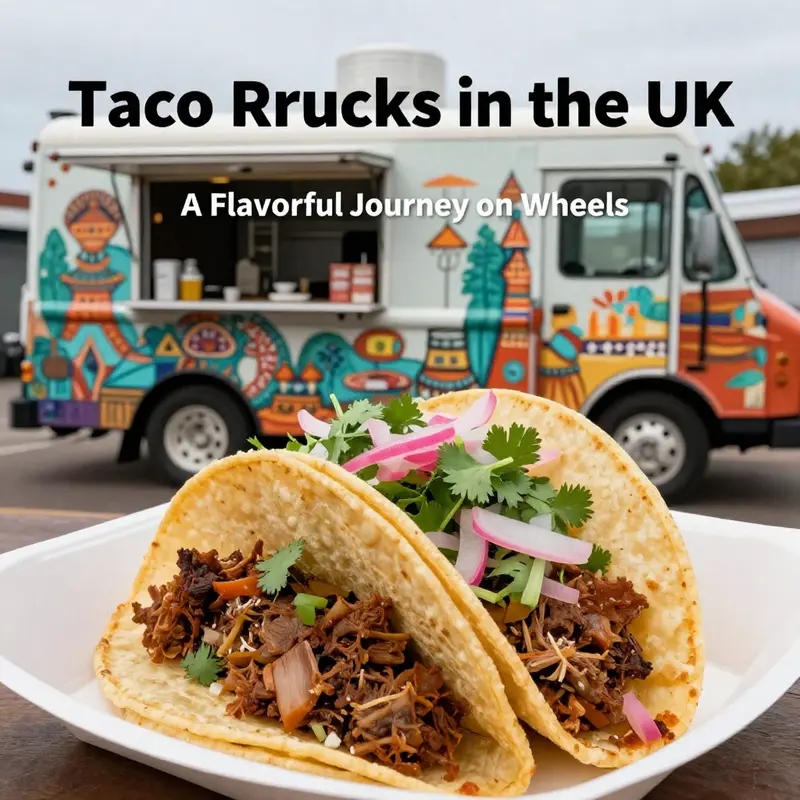
The trucks’ menus are simply structured to accommodate a crowd—practical, fast, and expressive. They balance core staples—tender meats, zesty salsas, fresh herbs—with seasonal influences and improvisation. A taco may feature a smoky protein with a bright squeeze of lime and a handful of pickled onions, or it may present a vegetarian alternative that leans on roasted vegetables and tangy sauces that mimic the same bright city energy. The genius often lies in the simplicity: a handful of high-quality ingredients assembled with care, a recipe that travels well in a kitchen on wheels, and a price point that respects the budgets of busy workers and students. The mobility of the truck becomes a strategic asset here. It allows cooks to experiment with regional variations and to respond quickly to what they sense in different neighborhoods—the demand for milder flavors near family-friendly districts, the appetite for more complex heat in nightlife zones, or a fusion twist in areas where culinary curiosity runs high.
The cultural exchange is not one-way, either. British ingredients and techniques travel back in subtle ways. A chef who learns a regional Mexican technique may adapt a method to suit British produce, whether it’s a preferred cut of meat available in local markets, a type of pepper that travels well, or a form of salsa that complements a traditional British staple, like a rib or a fish topping that nods to coastal flavors. This mutual influence creates a dynamic culinary conversation that extends beyond the mere act of selling food. It becomes a shared experience of place, memory, and the everyday joy of discovering something new without leaving the urban core. In neighborhoods where community markets are thriving, taco trucks often join with other street-food vendors to form a mosaic of sounds, scents, and stories. Patrons move from stall to stall, sampling a spectrum of flavors and pausing to chat with cooks about their homeland, their route into Britain, and the story behind each dish. The street turns into a venue for cultural storytelling as much as for sustenance, a place where identity is performed, learned, and celebrated with each bite.
From a business perspective, the mobile model carries both promise and caution. The upfront investment is modest compared to a brick-and-mortar restaurant, but the price of success rests on consistency, hygiene, and a steady presence. Operators must navigate licenses, road-use rules, health-safety inspections, and the complexities of supply chains that stretch across regions with varied climates and harvests. The challenge of maintaining quality in changing weather, securing reliable sources for ingredients, and keeping a team synchronized across locations is real. Yet the same mobility that poses these challenges also creates resilience. Trucks can pivot to different neighborhoods based on footfall, events, or even weather patterns, and they can pilot new dishes in a single location before a wider rollout. That flexibility is especially valuable in a market where consumer tastes are volatile and where small, nimble operators can compete with larger, more established food businesses. The ability to adapt quickly, to learn from a short-lived pop-up in a busy transport hub or festival, and to apply those lessons across a handful of other sites, means a single truck can seed a small empire of culinary ideas over time.
For communities, these trucks offer accessibility and a sense of inclusion. They bring flavors that are not always easy to source in ordinary grocery stores, and they do so in a form that is interactive and personal. A customer who buys a taco on the go can also engage with the cook, hear a snippet of the family history behind the recipe, and perhaps leave with a recommendation for another stall to visit on the same evening. In this way, the taco truck becomes a social catalyst, a small, living link between neighborhoods with different languages, backgrounds, and memories. The effect on urban life is subtle but meaningful: it adds color to the street, introduces new voices into the city’s culinary chorus, and contributes to a more diverse, more adventurous local economy.
Of course, no story of mobility and flavor would be complete without acknowledging the conversations taking place in policy and in markets about what street food should look like in the years ahead. There is growing attention to standards of safety, to sustainable practices, and to fair opportunities for operators from varied backgrounds. Regulators and vendors alike are learning to balance the need for orderly streets with the public desire for vibrant, diverse food experiences. In some places, that balance has produced supportive frameworks that help small operators thrive—streamlined licensing, guidance on waste management, and the provision of safe spaces at markets and events. In others, the path remains more challenging, requiring patience, persistence, and a collaborative approach that respects the city’s laws while recognizing the value of street-level entrepreneurship. The story of taco trucks in the UK is thus not only about food; it is about how cities learn to host difference, how communities negotiate between speed and quality, and how a portable kitchen becomes a site of cultural welcome.
For readers curious to explore how the broader street-food ecosystem shapes and is shaped by these mobile kitchens, there is a growing body of discussion that situates the UK experience within a wider global conversation. The narrative echoes the broader arc seen in other food cultures where mobility catalyzes exchange, experiment, and economic opportunity. In this sense, the taco truck is a microcosm of urban life: itinerant, adaptable, and deeply embedded in the street-level economies that sustain cities. To see how others in the field have framed this evolution, one may turn to practical guides and industry reflections that address model setups, kitchen layouts, and menu testing—resources that help aspiring operators understand how to translate a beloved home recipe into a tractable, successful mobile business. For readers with a particular appetite for the practical side of the craft, a widely circulated overview of taco truck models offers a concise snapshot of the kinds of configurations that travel well, the considerations around space and workflow, and the balance between cost and quality. This resource, titled in its own right as a guide to “top models for culinary success,” speaks to the mindset that underpins many of these ventures: think lean, think adaptable, and let the street be your platform for storytelling through taste. taco trucks unleashed: top 5 models for culinary success
As the British palate broadens and the street-food economy matures, the taco truck stands as a compelling symbol of a city’s ongoing conversation with itself. It embodies the way neighborhoods respond to change, how immigrant families contribute to the national menu, and how a shared love of bright, vibrant flavors can unite people across language and background. The question of whether there are taco trucks in the UK is no longer a simple yes or no. It is a reflection of how mobility, culture, and commerce intersect on a few wheels, turning a curbside stop into a moment of connection and a small but meaningful form of cultural exchange. And while the specifics—where the truck parks tonight, which fillings are evolving with the season, how the weather colors sales—continue to shift, the underlying pattern remains clear: the UK’s street-food narrative has expanded to include taco trucks not as a novelty but as a durable, developing, and increasingly celebrated thread in the country’s diverse culinary fabric.
External resource: for a broader context on the street-food revolution and its impact on British eating habits, see The Guardian’s exploration of how food trucks are shaping urban dining in Britain. https://www.theguardian.com/food/2025/sep/15/street-food-revolution-uk-food-trucks
null
null
Rolling Economies on the Move: Taco Trucks and Small-Business Growth in the UK
Are there taco trucks in the UK? The answer is yes, and they have moved beyond novelty into a recognizable thread in urban economies. These mobile kitchens trace the same arc as many small ventures: starting with a weekend pop-up, learning from customers, and gradually building a brand that travels with the city. The mobility reduces fixed overhead and enables experimentation with menus, hours, and price points in ways that traditional restaurants struggle to match. A family or small team can test ideas at markets, festivals, and busy street corners, then replicate that success in nearby neighborhoods without committing to a lease.
This chapter argues that the real economics of UK taco trucks lie in flexibility, relationships, and incremental scale. They pack kitchen capacity into a vehicle, link procurement to local suppliers, and depend on permits, safety standards, and route planning. Because capital is concentrated in a truck rather than a storefront, cash flow can be steadier and growth more iterative: add a second truck, refine a menu for regional tastes, or partner with events that align with the brand.
The social dimension matters as much as the financial one. Taco trucks become community fixtures, offering shared meals that spark conversations about origin, migration, and food culture. They create employment opportunities for migrants and locals alike, often with cross-functional teams that handle cooking, service, and social-media outreach. The regulatory landscape shapes where trucks park, for how long, and under what conditions, but it also provides a framework for safety and consumer trust.
In the UK context, the story of taco trucks intersects with broader urban food ecosystems, multisensory markets, and city-led street-food strategies. The economic promise rests on accessible entry points, continuous learning from customers, and the ability to scale in measured steps—adding routes, forming partnerships, and leveraging catering and events without sacrificing quality. While precise national statistics are scarce, the available narratives point to a model of enterprise that is agile, collaborative, and culturally resonant. The chapter closes with a practical takeaway: view a taco truck venture not as a single product but as a portable business ecosystem that can travel with the city’s calendar, learn from each stop, and grow through listening to neighborhoods.
Rolling Tastes on British Streets: Predicting the Next Chapter for Taco Trucks in the UK
Across Britain’s cities, a rolling wave of taco vendors has begun to carve new corners of urban life. Each truck is not just a kitchen on wheels but a portable archive of migration, adaptability, and shared appetite. The future of taco trucks in the UK, far from being a simple expansion of a foreign cuisine, resembles a living map of local tastes, evolving labor markets, and the environmental tempo of contemporary dining. The trajectory is not a straight line but a curved road, where the familiar flavors of Mexico intersect with the unexpected sweetness of British seasonal produce, with chefs translating both into menus that travel as easily as the vehicles themselves. In this sense, the UK taco truck scene is already less about temporarily satisfying hunger and more about offering a flexible culinary narrative that can move with the city as it moves through the seasons, the festivals, and the daily rhythms of work and leisure.
The mobility of taco trucks is central to any forecast about the coming years. In the UK context, the trailer-turned-kitchen model lowers barriers to entry, allowing dedicated cooks—many of them second- or third-generation immigrants from Latin American backgrounds—to test ideas, refine techniques, and respond quickly to neighborhood preferences without the upfront cost of a brick-and-mortar site. This is not merely a cost reduction; it is a mechanism for experimentation. A truck can pivot its menu at the end of a day to reflect what’s selling in a nearby neighborhood, what farmers and merchants have just harvested, or what dietary trends are gaining momentum among young diners who value both flavor and flexibility. London, Manchester, and Bristol have begun to illustrate a pattern: vibrant pockets of street food culture that are not only selling food but also building reputations through word of mouth, social media, and recurring appearances at markets and events. The deeper implication is that the UK taco scene, while still nascent in historical terms, possesses a readiness to scale in ways that traditional dining rarely allows.
At the heart of this predicted growth is a sustained fusion project. The next chapter will see traditional Mexican flavors married more deliberately to British ingredients and culinary sensibilities. Chefs are already exploring how to bring in regional British produce—stewed greens, root vegetables, wild herbs, and locally cured meats—without diluting the authenticity that makes Mexican-inspired street food distinct. This is not about one cuisine borrowing from another; it is about a dialogue that produces new, hybrid expressions that feel both true to origins and native to place. The fusion approach is particularly potent because it respects constraints and opportunities unique to the UK. Seasonal produce, coastal catches, and agricultural specialties can anchor new taco fillings, salsas, and toppings that surprise even regulars who thought they had tasted every possible combination. The outcome is not gimmickry but a more thoughtful layering of textures, brightness, and balance. Where one season might call for citrus and chiles to drive brightness, another might lean into smoky British peat or woodland herbs to provide depth, creating a menu that travels with the calendar as reliably as the truck itself.
This sequence of adaptation mirrors the dynamics seen in cities with long-running dynamic street-food cultures. The UK’s version is distinct, however, because it grows from a landscape of diverse immigrant experiences and a food-service ecosystem that prizes speed and community connection. Family-run operations, oftentimes started as weekend stalls at farmers’ markets or local fairs, accrue legitimacy through consistent quality and reliability. Over time, those same vendors become fixtures: trusted locals who know the best routes, the most loyal customers, and the right moments to roll into a neighborhood. In this sense, the movement of taco trucks is also a movement of people and relationships, as much as it is a movement of plates and flavors. As more families and young entrepreneurs enter the scene, the social networks around these trucks expand, enabling shared resources, cross-promotions, and even collaborative events that magnify reach beyond the original cul-de-sac or market square.
Yet mobility also carries regulatory and logistical complexities that will shape the future. The licensing regime for mobile food vendors, health and safety inspections, vehicle and waste management requirements, and the allocation of spotlight opportunities at city festivals all influence where and when a truck can operate. Some councils increasingly favor flexible street-food zones that allow a rotating mix of vendors. Others emphasize safety and cleanliness standards that require ongoing investment in equipment, foil and packaging, and staff training. The best operators anticipate these shifts by building an infrastructure that can scale with demand while remaining compliant with local regulations. The most successful will not merely comply with rules but will anticipate them—integrating robust food-safety protocols, transparent supply chains, and durable, easy-to-clean equipment that stands up to heavy use and rapid turnover.
A parallel thread concerns technology and digital life. The future taco truck is as much a tech-enabled business as a kitchen on wheels. Delivery platforms, online ordering, and contactless payments will continue to calibrate how customers discover trucks, place orders, and pick up meals. The same engines that drive ride-sharing and e-commerce now inform how a taco truck becomes a portable storefront. With digital menus, dynamic pricing tied to supply and demand, and loyalty programs built on data, operators can optimize staffing, reduce waste, and tailor offerings to neighborhoods before the truck even arrives. The consequence is a dining experience that feels customized and timely, without sacrificing the efficiency that makes street food accessible to a broad audience. This digital integration also expands reach beyond fixed locations, enabling trucks to form virtual routes that connect neighborhoods through a series of pop-up events, seasonal markets, and curated food walks. In effect, the truck becomes a mobile anchor for a network of culinary experiences, not merely a single stop on a weekly calendar.
Sustainability, both in practice and perception, will drive choices as the scene matures. Operators are beginning to adopt eco-friendly packaging, minimize single-use plastics, and source ingredients from local suppliers to reduce transport emissions. There is a growing preference for transparent supply chains, where customers can trace a dish back to its farm or market stall. This matters not only for environmental reasons but for maintaining trust and demonstrating accountability in a culture where food provenance has real value. Vehicles themselves are shifting toward cleaner energy solutions, with efforts to optimize routes to cut fuel use and explore electric or hybrid powertrains where feasible. The cityscape, too, is adapting: waste streams associated with mobile food businesses are increasingly integrated into municipal recycling and composting initiatives, and some neighborhoods are experimenting with shared waste management systems that make the economic case for more operators to join in.
Beyond practicality, the future taco truck scene may become a canvas for cultural storytelling. Each truck’s menu becomes a narrative of migration, memory, and place, tied to a city’s evolving demographics. Immigrant entrepreneurs bring recipes and rituals from their homeland, but they also adopt what the locals contribute—new ingredients, flavors, and even preferences around heat level, spice balance, and vegetarian or vegan options. The result is a menu ecology that changes with the city’s heartbeat, offering familiar comforts while inviting curious diners to discover something unexpected. In communities with younger populations and diverse backgrounds, menus may emphasize plant-based fillings, lighter sauces, and creative toppings inspired by local markets and farm shops. In neighborhoods with strong culinary traditions rooted in meat and bold flavors, more robust, smoky, and hearty options could predominate. The spectrum will widen as more operators experiment with cross-cultural techniques, time-honored cooking methods, and contemporary plating sensibilities, all in a format that remains approachable and shareable on social media.
This evolving food ecology does not unfold in isolation. It intersects with urban planning, community engagement, and cultural exchange. Street-food events and festivals can serve as testing grounds where vendors swap ideas, compare sourcing strategies, and build a sense of collective identity around street-level gastronomy. In a country where urban life is continually reinvented by young professionals, students, and families, the taco truck offers a low-stakes, high-visibility platform for experimentation and dialogue. The trucks become not simply places to eat but spaces where people gather, conversations unfold, and a sense of place is nurtured through shared meals. When a truck travels from a busy rail station corridor to a nearby park or market square, it does more than deliver a meal. It weaves itself into the social fabric of the city, becoming part of the daily ritual that defines urban life.
Looking ahead, the most compelling projects will be those that blend local resilience with international sensibility. Nearshoring, for instance, could help stabilize the availability of authentic ingredients while supporting smaller producers across borders, a concept already explored in the wider culinary blogosphere and industry analyses. For readers seeking a deeper dive into how proximity to core ingredients can bolster taco offerings in mobile formats, a recent exploration of nearshoring in Mexico’s taco supply chains provides useful context for global supply dynamics and regional culinary relationships. The practical takeaway is not just about securing ingredients but about building partnerships with farmers, cooperatives, and skilled artisans who understand the responsibilities of sustainable production and reliable delivery. To explore one perspective on this broader supply-chain conversation, see the online discussion linked here: nearshoring in mexico boosting taco ingredients.
In forecasting the UK taco truck scene, it is crucial to acknowledge that what is imagined for the next five to ten years will depend on a combination of cultural openness, regulatory clarity, and the willingness of consumers to trade convenience for quality, ethics, and storytelling. This is not a trend that will plateau; it is a continuing evolution. The trucks will travel lighter and smarter, with menus that change as quickly as weather and footfall patterns. They will be more than itinerant chefs; they will be mobile curation hubs that connect neighborhood markets, family businesses, and urban diners in a shared belief that good food can be part of a democratic, accessible street culture. If the current momentum persists, the UK taco scene could stand as a notable model for how a diaspora-driven cuisine negotiates space within a metropolitan food ecosystem—how it respects roots while planting new seeds in places far from the origin story.
This unfolding narrative also invites a broader debate about the social value of food trucks as dynamic public spaces. Some observers may worry about noise, congestion, or the potential for gentrification to overtake traditional street-food hubs. Others will see in this movement an opportunity to democratize access to diverse, affordable meals, to support small businesses, and to foster cross-cultural understanding in a fast-changing urban environment. The balance will depend on thoughtful policy design, active community engagement, and a continuous commitment from operators to demonstrate quality, reliability, and respect for the neighborhoods they serve. When a truck becomes a familiar fixture in a community, it helps people feel seen and included; when it adapts to local rhythms and tastes without losing its essence, it becomes a lasting part of the urban landscape. The future of taco trucks in the UK, then, is not about a single new flavor or a handful of hot spots. It is about creating a flexible, responsible, and regionally resonant street-food ecosystem that can travel across cities and regions, turning the act of eating on the go into a shared, evolving culinary conversation.
For readers interested in the broader dynamics that guide mobile food businesses around the world, including how cultural exchange and urban change intersect with economics and technology, a comprehensive analysis offers a global lens on these trends. This resource expands the conversation beyond national boundaries and situates the UK experience within a global street-food movement. https://doi.org/10.33182/tmj.v4i2.393
Final thoughts
As the taco truck culture thrives in the UK, it is reshaping the food landscape, offering more than just delicious meals; it creates a space for cultural exchange and entrepreneurial spirit. Embracing diverse flavors and community connections, taco trucks invite everyone to join in the culinary adventure. Whether you’re a taco fan, a local office worker craving a quick bite, or an event planner seeking unique catering options, the vibrant world of taco trucks has something for everyone.