
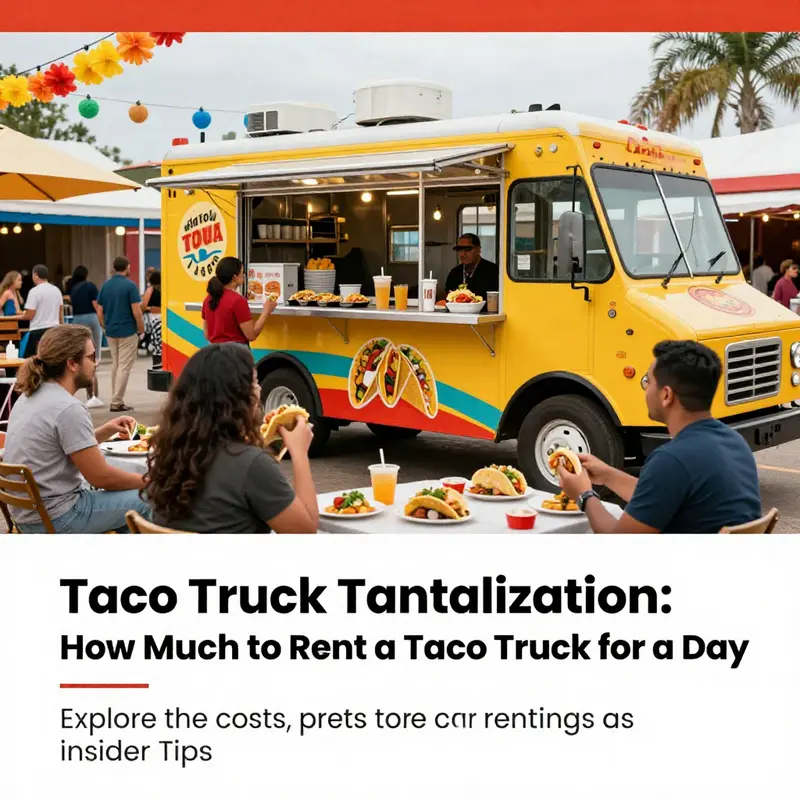
Are you dreaming of tacos sizzling on every corner at your next big event? Renting a taco truck could be the ultimate way to delight your office coworkers, entertain guests at a shindig, or elevate any festive gathering. But wait: how much will that culinary joy set you back? This guide dives deep into the world of taco truck rentals, making it easier to understand the basic costs and all factors that contribute to the final price. We’ll explore the different price ranges for taco truck rentals, examine additional costs you might encounter, and provide helpful tips for finding the perfect taco truck that suits your needs and budget. By the end, you’ll be equipped with everything you need to ensure your taco truck rental experience is as delicious as it is exciting!
Day-Rate Dilemma: How Much It Really Costs to Rent a Taco Truck for a Day
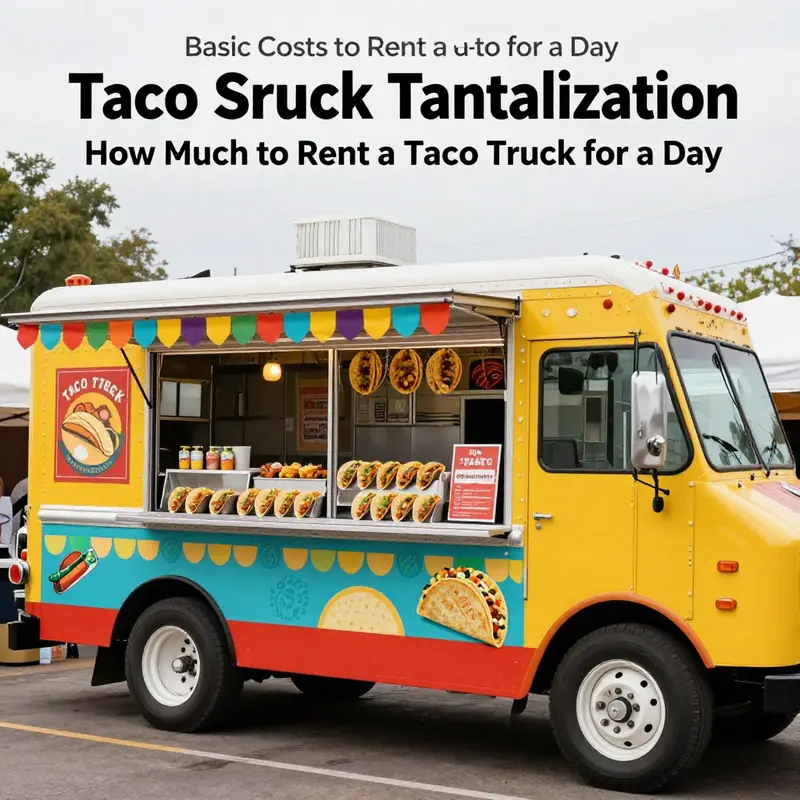
Renting a taco truck for a single day is more than a single line item on a budget. It is a negotiation with variables that behave like steam in a chili pot: location, timing, truck condition, and the kind of kitchen you need for your menu. The price bands you’ll encounter map a spectrum rather than a flat fee. A basic rental, using an older or more economical truck, typically lands somewhere between two and five hundred dollars for the day. Think of this as the baseline cost for access to a working kitchen on wheels, capable of turning out a steady stream of fajitas, tacos, and toppings for a concentrated burst of service. When the truck is newer, well maintained, or built with custom features—perhaps extra refrigeration, upgraded cooking gear, or a larger service window—the daily price often rises into the six hundred to twelve hundred dollar range. These trucks tend to be ready for high-volume events, with more reliable performance and potentially faster setup and breakdown. For buyers seeking something premium, or with specialized equipment such as advanced cooking systems or sprawling cold storage, the rate can surpass fifteen hundred dollars per day. These are the fleets that aim for event-scale operations, where speed, capacity, and reliability justify the premium.
Yet the headline price is only part of the picture. The day rate sits atop a ledger of additional costs that can turn a seemingly modest daily figure into a much larger invoice. Fuel is a practical reality; most rentals require the client to cover the miles driven and the fuel costs for the truck’s operation during the event. Insurance is another line item that often appears as a requirement in the rental agreement, providing coverage for liability and potential damage during the event window. Health and safety requirements can introduce permitting costs, health department fees, or temporary hot-water and sanitation arrangements that keep the operation compliant with local rules. Then there is the matter of staffing. Some rental agreements assume you bring your own crew, while others anticipate a crew of cooks and servers supplied by the rental company or a partner catering service. If you do need staff provided by the rental vendor, that will be reflected in the daily rate or as an extra line item. All these add-ons help explain why two fleets with the same base daily rate can end up with very different total costs for a one-day event.
Location is a driver that reshapes the cost landscape in discernible ways. Urban centers with high demand and crowded event schedules tend to push daily rental costs higher. The same vehicle can command a dramatically different price in a smaller town or a rural area where competition is thinner and the market is less saturated. The time of year also matters. Peak seasons—festival weekends, summer fairs, or holiday markets—often push the daily rate upward as operators juggle demand and opportunity. Conversely, during slower periods, some vendors may offer promotional day rates or flexible terms to fill a date that would otherwise sit empty. It’s not uncommon for a seller to propose a bundled rate that includes a certain number of hours, a generator, propane, and basic cleanup, as this provides a clear package for a single day of operation. This is where the importance of asking precise questions comes into focus: does the quoted price include power, water, and waste disposal, or will those be charged extra? Are there built-in allowances for fuel or generator usage, or will those be billed separately after the event? It is essential to clarify these points before signing any agreement.
The size and condition of the truck itself influence the daily rate in telling ways. A compact unit with a modest menu might be comfortable for a neighborhood pop-up or a smaller private party. A mid-sized truck with better equipment and more prep space opens up the possibility of more elaborate menu options or faster service during a crowd. A larger, state-of-the-art setup with robust refrigeration, multiple cooking surfaces, and premium finishes signals a higher readiness for high-volume events and multi-day runs, and the rental price will reflect that readiness. In all cases, the question of condition matters. A truck that looks close to new and has recent maintenance records inspires confidence and can justify a higher rate, while a truck with visible wear may yield a lower price but could bring the risk of unexpected maintenance during the event. The decision should be guided not only by the event size but also by the risk tolerance of the organizer and the reliability needs of the day.
For planners and operators, the practical path to a reliable quote is to start with clarity about the event: the date, the venue, the expected guest count, and the menu breadth. A focused brief helps rental vendors tailor quotes with fewer back-and-forths and reduces the chance of scope creep. It is wise to specify the geographic area of operation, the hours of service, and any site-specific constraints such as power access, water supply, and waste disposal options. With a well-defined brief, you can compare apples to apples across different truck options and vendors, rather than chasing a moving target.
As you gather quotes, a useful tactic is to treat the daily base rate as a starting line rather than the complete finish line. Ask vendors to itemize the expected add-ons and to spell out any minimum service charges or travel fees. If a quote comes in with an unexpectedly high fuel surcharge, seek a breakdown of the mileage estimate and the expected consumption. If a vendor quotes a premium but includes a full-service setup, crew, and propane, you may find the value aligns with the price, particularly for larger events where the risk of delays or service gaps could affect guest experience. Where possible, negotiate a package that aligns with your event profile. Some operators offer a reduced day rate for multi-day engagements or off-peak dates, while others can provide a fixed daily cost that covers standard staffing, basic cleaning, and the return of equipment in the same condition in which it was delivered. The key is to keep the lines of communication open and to reflect on how the rental will perform in practice versus how it’s described in marketing materials.
Budget scenarios can illuminate the difference between a low-cost and a high-cost day. A budget-conscious plan might start with a basic truck at around $250 per day. Add fuel costs estimated for the event’s miles and hours—perhaps $40 to $60 depending on travel—and insurance at $20 to $40 for a standard event, plus a modest permit or health-compliance fee of $20 to $40. In this scenario, a realistic total could settle in the $360 to $430 range, assuming you already have a crew or can operate with minimal staffing and you manage to avoid premium packages. On the other hand, a premium setup with a newer, larger truck, a full-service team, robust refrigeration, and extended hours could push the base rate to $1,000 to $1,500 per day or more. When you factor in fuel, insurance, permits, additional staff, and optional services, the total daily spend can stretch well into the thousands for peak-event strategies. These numbers are not just numbers; they reflect the level of service you aim to deliver, the speed with which you want to serve, and the capacity you need to keep your kitchen running smoothly as crowds move through the line.
Beyond the raw numbers lies a pragmatic truth about planning. The value of a taco truck rental is not simply in the device you park on site but in the operational rhythm it enables. A well-matched truck can shorten wait times, improve food consistency, and reduce on-site stress for the caterer or event organizer. A poorly chosen vehicle—one that lacks adequate power, space, or reliability—can create bottlenecks, slow service, and lead to guest dissatisfaction that undermines the purpose of the event. As you weigh options, consider how the truck will integrate with your team’s workflow, how quickly it can be set up, and how efficiently it can move through a busy service window. If the truck comes with a generator and water system, and if the staffing plan is solid, you are less exposed to last-minute hitches that could escalate costs in the heat of a live service.
For readers curious about how the market segments different truck models and configurations, a deeper dive into model diversity can help set expectations and guide choices. You can explore a curated overview of truck models and configurations that commonly appear in entrepreneurial food ventures. This resource can help you gauge which setups tend to pair best with certain menu concepts, service formats, and event scales. top food truck models for entrepreneurs.
As you close in on a decision, remember that the initial price tag is only a starting point. The true cost of renting a taco truck for a day hinges on a mosaic of factors—location, vehicle size and condition, equipment included, the level of service, and the regulatory environment you must navigate. A thoughtful approach to quoting and budgeting will not only prevent sticker shock but also help you secure a reliable kitchen-on-wheels that can deliver consistent performance for your guests. In the end, the question isn’t just how much it costs to rent for a day, but how well the rental aligns with your event objectives, your risk tolerance, and your ability to coordinate a seamless, satisfying guest experience. External resources on costs can provide a broader industry view and help calibrate expectations as you move from inquiry to execution.
External resource: https://www.inc.com/guides/2010/06/how-much-does-a-food-truck-cost.html
Riding the Meter: How Much It Really Costs to Rent a Taco Truck for a Day
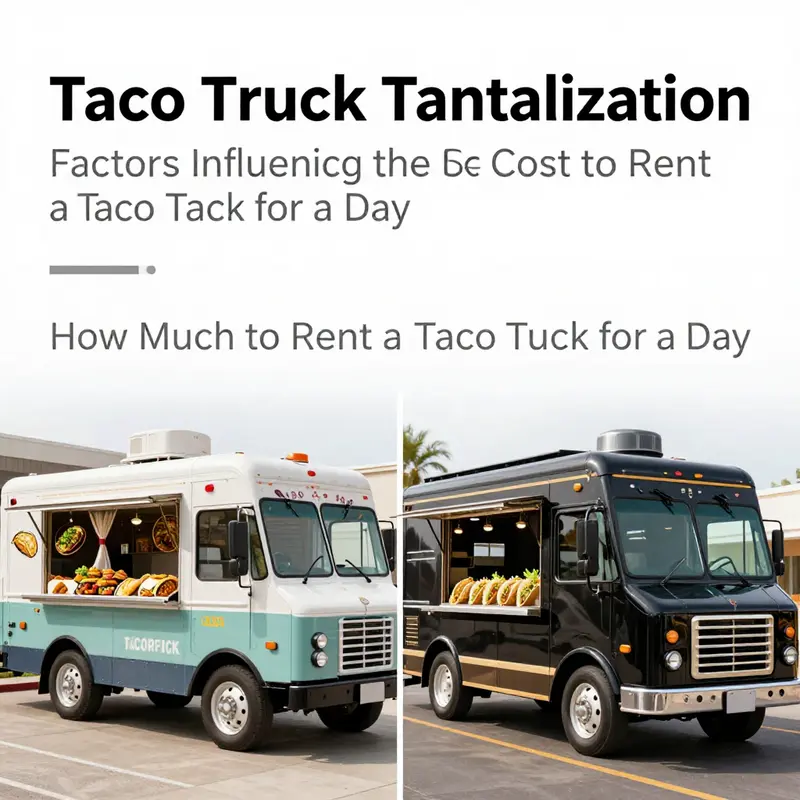
Renting a taco truck for a day is more than a single price tag. It is a dynamic sum that rises and falls with what you need, where you are, and how long you plan to operate. Think of the daily rate as the base line for a broader budgeting conversation. The meter moves as you add fuel, permits, staff, and the kind of equipment you require to turn a simple street corner into a tasting experience. Understanding this helps you avoid sticker shock and approach vendors with clarity, armed with the right questions and a realistic plan for your event. At its core, the daily cost is driven by a handful of tangible factors, all interlocking to shape the final quote. Location matters because demand, cost of labor, and local regulations influence the sticker price. In major metropolitan hubs, a taco truck will typically command a higher daily rate than in smaller towns, simply because the market is more competitive and the operational costs are higher. The truck’s type and condition are equally consequential. A newer vehicle with modern equipment, clean branding, and reliable performance will cost more to rent than an older or entry‑level model. This is not just about the truck’s exterior shine; it reflects the quality of the kitchen systems, ventilation, refrigeration capacity, and the ease with which a crew can work efficiently on site. The duration of the rental is another leversworth pushing the price up or down. Short, one‑day events may carry higher per‑hour rates because the vendor anticipates tighter scheduling and faster turnover, while multi‑day bookings can sometimes unlock discounted daily rates as the operation stabilizes for a longer period. The level of service included in the rental dramatically shifts the bottom line. Some providers offer a turnkey experience with chefs, cooks, wait staff, and post‑event cleanup. That level of service reduces the renter’s workload but adds a substantial premium. Others may deliver only the vehicle and basic kitchen equipment, leaving food preparation, staffing, and inventory in the renter’s hands. The menu complexity and the equipment required also ripple through the price. A truck equipped for grilling and frying, with multiple burners, heavy ventilation, and robust refrigeration, incurs higher operating costs than a lean setup designed for simple salsa and prepared fillings. When a rental package includes specialized power supplies, dedicated fuel lines, or backup generators to maintain a consistent operation at venues without reliable infrastructure, you should expect an uptick in the daily rate. Finally, there are the regulatory and risk‑management line items: permits, food‑handler compliance, insurance coverage, and potential security or cleaning fees. These are frequently overlooked in a quick quote but can add up to a meaningful portion of the total, especially if your event is outside a standard municipal zone or requires extra health and safety measures. With these factors in view, the typical price bands you’ll encounter begin to emerge. A basic rental, often from a truck that is older or has simpler equipment, might run from about two hundred to five hundred dollars per day. These units are perfectly serviceable for straightforward tacos and a modest guest count, but they may lack the branding polish and the more robust kitchen gear that larger crowds expect. A well‑maintained or newer truck, perhaps with some customization, commonly sits in the six‑hundred to twelve‑hundred dollar range per day. In this tier you’ll find better efficiency, faster service, cleaner layouts, and equipment capable of handling more complex menus or higher temperatures with greater reliability. Finally, premium or specialized trucks with advanced cooking systems, substantial refrigeration, or highly customized builds can exceed fifteen hundred dollars per day. The premium tier is where experience, branding impact, and capacity converge to deliver a memorable guest experience but at a cost that reflects those advantages. Yet even beyond the base rental, the day’s price frequently hinges on additional costs that are easy to overlook. Fuel consumption, vehicle mileage, and the potential need for extra fuel for grills or fryers can add up, especially for longer events or venues that require extended hours. Insurance coverage is another essential line item. Some vendors include basic liability protection, while others offer more comprehensive policies or require the renter to supply their own rider. Permits and health department clearances are non‑negotiable in many locales, particularly if the event is outdoors or in a space that demands special access. Staffing, if included, is the most significant variable because it transforms the rental from a vehicle into a temporary kitchen workforce. If you want a full team—cooks, servers, and cleanup—your daily cost increases accordingly, but the convenience can be worth it for a busy festival, corporate function, or large community gathering. When you layer menu complexity on top of these factors, the price capabilities multiply. A simple taco lineup with basic fillings requires less specialized equipment and fewer staff, translating into a leaner daily cost. A more intricate menu—think multiple proteins, toppings, and sides that demand precise temperature control and a larger prep area—drives up both equipment and labor expenses. A note on the per‑guest budgeting approach is useful here. Some operators price events on a per‑head basis, with base estimates often cited between twelve and twenty‑five dollars per guest. This per‑head method can be helpful for comparing quotes across vendors, though it is essential to confirm what is included in that figure. Does it cover staffing and cleanup? Are there separate charges for plates, utensils, and napkins? Is ice and beverages accounted for? Understanding what sits inside or outside that per‑head price guards against costly surprises when the invoice lands. For anyone who wants to anchor a decision with real‑world context, reaching out to local taco truck vendors or rental services for tailored quotes is the best path. Each vendor will weigh these variables against their own cost structure, and the result will be a spectrum rather than a single fixed price. In practice, you may find that a quoted daily rate from one provider includes staff and cleanup, while another quotes you the same truck with no crew at all, expecting you to supply labor. These differences aren’t signaling a bad deal; they reflect different operating models and risk allocations. If you’re weighing options, consider not only the bottom line but also the operational ease each package promises. A higher upfront price may come with a more predictable workflow, a polished presentation, and fewer headaches on the day of the event. Conversely, a lower price can be attractive, but it might shift more responsibility onto your team and complicate logistics, especially if you’re coordinating vendors, permits, and the venue’s power needs. As you map your event’s specifics—guest count, venue constraints, and the anticipated flow of people—start to sketch two plausible scenarios. The first scenario uses a lean, basic truck with minimal staffing for a manageable crowd in a location with reliable power. The second scenario envisions a larger, fully equipped truck with a trained crew, branding, and a more expansive menu for a bustling outdoor festival. You’ll likely find the basic scenario aligns with the lower end of the price bands, while the enhanced setup sits in the higher range. When you move from general pricing to planning, the most productive step is to collect tailored quotes that outline inclusions and exclusions in clear terms. Ask vendors to itemize: the daily rental rate, any equipment surcharges, fuel charges, staff costs, insurance, permits, and a detailed breakdown of what happens if your event runs beyond scheduled hours. If you’re curious about the broader landscape, consider reviewing additional resources that examine how pricing factors vary by truck type, region, and service level. For a sense of the range of configurations available to new operators, see the guide on Top Food Truck Models for Entrepreneurs. This kind of context can illuminate whether a mid‑tier option truly delivers the efficiency and brand presence you want, or if a premium truck will yield greater returns in the long run. The decision is rarely about chasing the lowest price; it’s about balancing cost with capacity, reliability, and the comfort of knowing your event runs smoothly. In short, the cost to rent a taco truck for a day is a composite of location, equipment, duration, service, and regulatory considerations. It rewards a thoughtful budgeting process and transparent conversations with potential vendors. The most effective approach is to enter negotiations with a clear picture of your event’s scale and a well‑defined scope of work. That clarity, combined with parallel quotes, will give you a credible range to work within and a practical path to turning a street side into a lively culinary event. For readers seeking a broader understanding of how these pricing factors interact in the market, an external resource offers a detailed framework for evaluating industry pricing: https://www.foodtrucks.com/rentals/pricing-factors/.
One Day on Wheels: Navigating the Cost, Value, and Practicalities of Renting a Taco Truck
Renting a taco truck for a single day is more than a price tag. It’s a compact operational test in mobility, kitchen capability, and cash flow that unfolds in hours and leaves a mark on your budget for weeks. The day rate is only the visible edge of a larger equation that includes location, truck condition, and the equipment that translates ingredients into sales. Often, the quoted price excludes fuel, insurance, permits, and sometimes on-site staffing. To plan well, you need to see how the base rental interacts with these extras and how truck size, age, and build affect throughput, food quality, and the customer experience. The numbers tell a more nuanced story than a headline daily rate.
Pricing bands cluster into three broad ranges: basic rentals (often an older model) typically $200-$500 per day; mid-tier trucks with better upkeep or customized builds usually $600-$1,200 per day; high-end or specialized units can exceed $1,500 per day. Each tier aligns with readiness, reliability, and the capacity to scale during peak hours.
Beyond the headline rate, fuel usage, insurance, permits, and staffing can swing total costs. Fuel depends on travel and service area; insurance may be a daily or per-event premium; permits vary by city and event type; staffing costs can arise if you don’t rely on your own crew. The quote should be itemized so you can compare apples to apples across vendors and locales.
Mobility expands sales opportunities: high-traffic corners, festivals, and pop-ups can become recurring revenue if service quality stays strong. The mobile format can lower fixed costs relative to a brick-and-mortar restaurant, enabling faster market testing and audience development. But higher mobility and more specialized equipment can push you toward the upper price end, so weigh the expected return with careful ROI thinking—consider average ticket size, forecast volume, and event cadence.
Practically, start by clarifying goals: audience size, service tempo, and menu depth. Run three day-profile scenarios (basic, standard, premium) to yield a spectrum of costs and potential revenue by event type, location, and season. Request quotes with a clear breakdown of what’s included and excluded to avoid sticker shock and ensure an apples-to-apples comparison.
For a broader external benchmark, you can consult general car-rental platforms that aggregate options by city and season to understand price dynamics over time, such as KAYAK car rental search: https://www.kayak.com.
Beyond the Sticker Price: Navigating Hidden Costs When Renting a Taco Truck for a Day
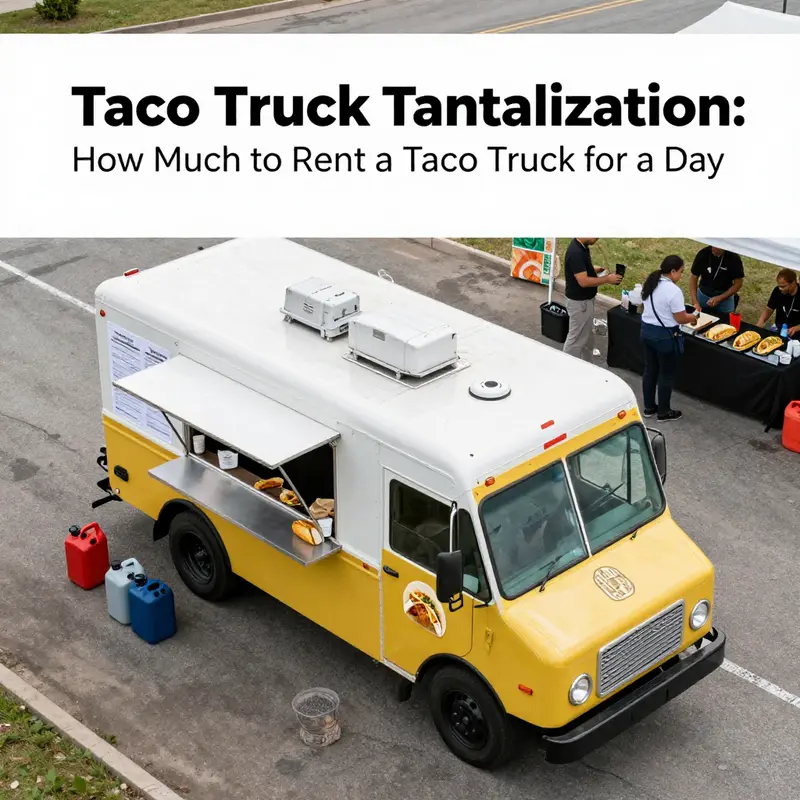
When you start planning a day with a rented taco truck, the price you see advertised is just the opening chapter of a longer story. The base rental is the anchor, but a successful one-day event depends on a web of additional costs that can push the day from profitable to break-even or, in a worst-case scenario, into the red. The math isn’t glamorous, but it is practical. You must read the numbers that come after the slash, because they determine whether the experience will be smooth or stressful, whether profits will materialize or vanish in the heat of a busy service. The standard rental market offers a spectrum. At the low end you might find a basic truck that is older or lightly used, with daily rates around two to five hundred dollars. If the truck is newer, well-maintained, or features a customized build, the day rate typically sits between six hundred and twelve hundred dollars. And for premium setups—large refrigeration units, advanced cooking systems, specialty configurations—the rate can climb above fifteen hundred dollars for a single day. Those figures are only the starting point, though. They assume a vacuum-sealed environment where everything you need is neatly bundled and covered by the quoted price. In practice, there are everyday expenses that creep into the total by the time the first customer lines up for a taco and a smile.
Permits and licenses are a predictable first drag on the budget. Cities treat a mobile kitchen like a small business with wheels, and the paperwork reflects that reality. The cost range varies widely, from fifty dollars to five hundred dollars or more, depending on the jurisdiction and the depth of the compliance required. A single permit can easily become a recurring cost if you plan multiple events in a season, so it’s wise to treat permits as a scheduled line item rather than a one-off expense. The health department, the mobile vendor license, and the business license are the trio you’ll likely encounter, and each can come with its own renewal cadence and fee structure. The important thing is to plan for them upfront, because they are not optional in many places. Without them, a day on the curb becomes a legal risk rather than a celebration of food and community.
Fuel and utilities animate the operation, and here the math feels almost mundane until you realize how quickly small miscalculations compound. Most taco trucks rely on propane for cooking or on on-board electrical systems powered by a generator or external supply. Expect daily fuel and utility costs in the range of twenty to fifty dollars, a modest figure that can balloon if the event runs longer than planned or if you’re using high-output equipment for long periods. It’s worth noting that propane prices vary with the market, and electricity costs can spike in venues with tight power restrictions or during peak demand times. A prudent plan includes a buffer for fuel price volatility and a contingency for technical hiccups that force you to use more energy than anticipated.
Food and ingredient costs are, of course, the core of the business. The daily expense for ingredients depends on the menu breadth, the portion sizes, and the expected turnout. A typical day’s supply can range from one hundred dollars to five hundred dollars or more. The risk here is appetite planning: you want enough inventory to serve peak demand without overstocking perishables that could go to waste. Smart ordering and a clear understanding of your menu’s core staples help, but there’s no substitute for real-time experience. A busy day can push ingredient costs toward the upper end of the spectrum, especially if you decide to offer seasonal specials or higher-end toppings that elevate the dining experience but also raise the bill at the market.
Staffing introduces another layer of complexity. If you’re operating solo, you skip the wage line entirely, but most day trades require at least one cook and one cashier or server. Wages typically run from fifteen to twenty-five dollars per hour. For an eight-hour shift, that implies roughly one employee, which translates to about one hundred twenty to two hundred dollars in labor. If you scale up to a two-person team to accelerate service or handle a larger crowd, labor costs can easily double. Even with a small crew, you must account for breaks, payroll taxes, and potential overtime if the event runs longer or there’s a rain delay that compresses peak hours into a shorter window.
Insurance, while sometimes bundled, is rarely a pure add-on. Some rental outfits include basic liability, but many operators find themselves purchasing additional coverage for commercial property, general liability, or workers’ compensation. Depending on the coverage level, daily insurance might run from one hundred to three hundred dollars. The safety net is necessary, especially when you’re operating in high-traffic environments or at venues with strict liability expectations. It’s not the place to cut corners. The cost is a reflection of risk management, and the peace of mind it affords can be worth the price when you’re feeding a crowd.
Cleaning and maintenance supplies add a fairly predictable line item, yet they’re often underestimated until you’re in the middle of a busy service and realize you’re short on sanitizer, soap, or bags. Budget twenty to fifty dollars per day for cleaning and replacement parts. This is not merely about appearances; it’s about compliance and efficiency. A well-cleaned truck runs more reliably, reduces food safety concerns, and helps maintain a professional image that keeps customers returning.
Parking and site fees complicate the economics further. Cities and venues frequently charge a fee to park and operate a food truck, particularly at festivals or high-foot-traffic locations. Expect a range from fifty to two hundred dollars per day depending on the venue and the exposure you’re seeking. The higher the traffic and the longer you stay in a premium location, the larger the site fee tends to be. This is one of those costs that can make or break a day’s margin if you aren’t careful with location selection.
Marketing and promotion may appear optional, but in reality, a few well-placed dollars can translate into a meaningful uptick in customers. You might invest fifty to one hundred fifty dollars in signage, social media boosts, or promotional materials to attract attention at the right event or neighborhood. Even modest spend here can improve turnout, especially if your truck is new to a market or you’re trying to differentiate a familiar menu with a few eye-catching visuals.
Equipment rentals or repairs are the unpredictable wildcard. If a grill or refrigeration unit fails mid-service, the cost of on-site rental or urgent repairs can escalate quickly and erode margins. The prudent approach is to build a contingency fund that covers unplanned fixes, spare parts, or last-minute alternative arrangements. While you can’t predict every breakdown, you can plan for the most common failures and set aside a cushion that keeps the day from collapsing under a single malfunction.
All of these expenses live alongside the base rental price and must be considered to gauge what a day of operation will truly cost. To bring the numbers into a practical frame, consider a typical mid-range scenario. Suppose you rent a well-maintained truck for six to twelve hours at six hundred to twelve hundred dollars. You pair that with one cook and one cashier for the eight-hour window. Labor might cost around one hundred twenty to two hundred dollars. Ingredients—enough to handle a robust turnout—could reach two hundred fifty dollars, while permits might amount to around one hundred fifty dollars for a city with moderate requirements. Fuel could be around thirty dollars if usage is steady but efficient, and insurance would be in the neighborhood of one hundred fifty dollars for the day. Cleaning and supplies might add forty dollars, and a reasonable site fee could fall near one hundred dollars. A modest marketing push might be eighty dollars, with a contingency reserve of one hundred dollars for the unknowns that always appear during live events.
Altogether, even a careful budget can place the all-in day cost in the range of roughly one thousand six hundred dollars, and it can climb toward two thousand or more in high-demand markets or with a larger crew, more extensive menus, or cornerstone events. That reality reframes the original question from “how much to rent a taco truck for a day?” to a fuller inquiry: what does the day cost after factoring in regulatory obligations, energy needs, supply chain dynamics, labor, risk, and location. It’s a practical exercise in forecasting rather than a one-number purchase decision. The nuance matters because margins in mobile food are sensitive to every added dollar spent outside the base rental. If you’re trying to hit a specific revenue target, you’ll want to quantify each category and stress-test your plan against the busiest expected time slots. That helps you decide whether a basic or a premium truck is the right fit for your event, and it clarifies which investments will yield the strongest returns, whether through quicker service, higher quality ingredients, or a more compelling guest experience.
For readers exploring how equipment configurations influence daily costs and operations, a deeper dive into model options can be enlightening. See one exploration of the top taco truck models for culinary success taco-trucks-unleashed-top-5-models-for-culinary-success.
In the end, the apparent simplicity of renting a taco truck for a day hides a network of responsibilities that shape the final price and the day’s success. Knowing where the dollars go helps planners set realistic expectations, negotiate smarter quotes, and design menus that align with both capacity and cash flow. The small, steady investments—permits, fuel, clean supplies, and staff—often determine whether a single day becomes a story of scalable growth or a cautionary tale about overextending capacity. As with any culinary venture on wheels, clarity comes not from a single line item but from a thoughtful, comprehensive budget that reflects the realities of the road, the pace of service, and the appetite of the community you’re serving.
External resources offer broader context on the economics of mobile kitchens and the evolving landscape of food truck operations. For broader industry context on costs and profitability, see the following: National Restaurant Association’s Food Truck Economics Report (2025).
Rolling the Right Price: A Thoughtful Guide to Renting a Taco Truck for a Day
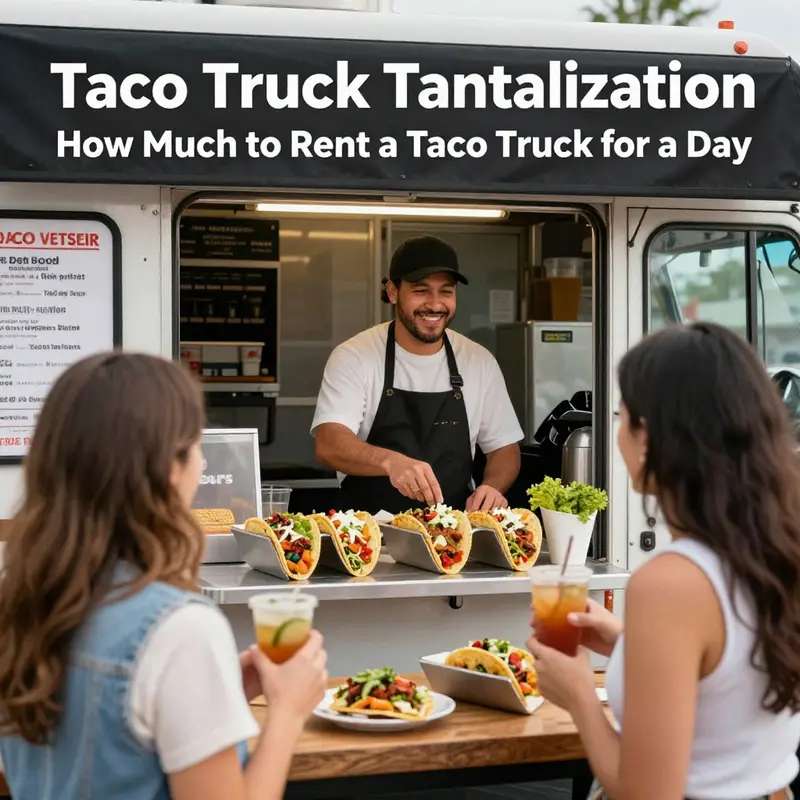
When planning a celebratory day, a neighborhood festival, or a pop-up dining event, the price of a taco truck rental can feel like a moving target. The simplest way to frame it is this: you are paying for a kitchen on wheels, plus the reliability to get where you need to be, when you need to be there. The base rental price can vary widely, with a basic, older unit often landing in the range of about two hundred to five hundred dollars per day. If you want something more reliable, well maintained, or custom built, expect a higher daily rate, typically from six hundred to twelve hundred dollars. And for premium setups that come with advanced cooking systems, larger refrigeration capacity, or a design tailored to a high-volume operation, daily rates can exceed fifteen hundred dollars. These figures merely set the stage, because the real cost is shaped by a handful of practical factors that you can influence with foresight and planning. The location of the event matters, as does the distance the truck must travel to reach it. A truck parked in a dense urban area with higher fuel and parking costs can push the daily price up, while a more rural setting might shave some of those extras off. The size of the truck you choose is not just about kitchen real estate; it determines how many staff you’ll need, how many customers you can serve, and how efficiently you can move through a line. A compact unit can be perfectly adequate for a farmers market or a small corporate lunch, while a larger, fully equipped truck is often essential for a big catering event or a steady lunch service in a busy campus or business district. For a sense of how different configurations handle volume, see top taco truck models for culinary success.
Beyond the listed daily base, the total price you finally pay typically includes or touches several ancillary costs that are easy to underestimate. Fuel is a practical consideration: you may be responsible for fueling the vehicle during the day, especially if you’re booked for multiple events or long shifts. Insurance is another critical line item, not just a checkbox on a contract. It protects you and the rental provider in case of accidents or mishaps during transport, setup, and service. Permits and licenses often arise when you operate in a city, at a fair, or within a private venue that requires health or fire department approvals. Some rental agreements bundle maintenance, on-site support, or operator training, while others leave those tasks to you. The lesson is simple: when you collect quotes, ask specifically which costs are included, and which are extra or contingent on your choices. The more transparent the terms, the easier it is to compare apples to apples as you build your budget.
To determine the right fit, start with your business needs. Picture the day from start to finish: how many hours will the truck be on site, how many servings you expect to produce, and what your peak service window looks like. A smaller, nimble truck can be ideal for a farmers market or a pop-up lunch near a busy office park. In that scenario, you may not need the storage and prep space of a larger rig, and you can save a substantial portion of your budget by choosing a compact configuration. For a catering event or a high-volume lunch service, however, the priority shifts toward capacity and equipment redundancy. You want a unit that can sustain a steady stream of orders without bottlenecks, has ample cold storage for ingredients, and includes the right safety and sanitation features for a longer service window. The balance you strike here directly affects the cost. A reliable, well-maintained truck—even if it costs a bit more upfront—often reduces the risk of breakdowns and service delays that can eat into profits during a busy day. And remember that a truck’s condition and equipment don’t just affect food quality; they influence labor requirements and service speed, which in turn shape overall profitability.
When you explore rental options, you’ll also want to gauge the reliability and support that a vendor provides. A reputable rental partner does more than hand over keys. They offer maintenance oversight, quick access to roadside assistance, and, ideally, a pre-rental inspection to verify that critical systems—gas lines, electrical, refrigeration, water supply, and waste management—are up to standard. A provider who offers some form of operator training can be a quiet force multiplier; even a brief briefing on equipment use, food safety, and emergency procedures can prevent accidents and mishaps. In the end, the choice comes down to value: what you pay for the day plus what you gain in reliability, safety, and service. You might find a lower quoted price that looks attractive at first glance, only to discover later that it excludes essential support. Alternatively, a higher-priced option with robust maintenance and staffing options could actually lower your total risk and deliver a smoother, more predictable service experience.
To make the process concrete, imagine you are planning a single-day event with a mid-sized crowd. You’d likely need a truck with a practical compromise between kitchen space and transport costs. You’d compare two or three quotes, focusing not only on the baseline rate but on what each package offers in terms maintenance, fuel policies, insurance coverage, and any required permits. You’d also think about the staffing needs: will you run the truck with your own team, or will you hire on-site staff through the rental partner? Some packages include trained operators, which can simplify logistics and reduce staffing headaches on the day of the event. Operational flexibility matters too. If you anticipate a long setup or teardown time, or if the event requires movement between multiple sites, you’ll want a rental agreement that accommodates those movements without stern penalties or excessive dock time charges.
The decision also hinges on clarity around the total cost of ownership for the day. Even if the quoted daily rental seems straightforward, the real cost will accumulate from the extras: fuel, insurance, permits, possible downtime for service calls, or repairs that could arise during peak hours. Some vendors fold these services into the daily rate, while others itemize them separately. A well-structured contract will spell out what happens if the truck breaks down, how quickly a replacement can be provided, and what the backup plan looks like if the equipment doesn’t perform as expected. Reading the contract carefully before you sign is not a formality; it is a practical safeguard against disruptions that can derail a day’s schedule and customer experience.
To translate all this into a workable plan, you can approach the process as a short, deliberate procurement exercise rather than a race to grab the lowest price. Start with a defined event window, a clear guest count, and a menu that aligns with the equipment you expect to have. Gather quotes from two or three providers, and probe each one with targeted questions about inclusions, exclusions, and contingencies. Track the totals in a simple budget ledger that accounts for the daily rental, fuel, insurance, permits, and staffing, then build in a contingency for unforeseen costs. If you want a practical way to visualize how different configurations perform, consider exploring variations in capacity and layout through a resource that outlines how different models handle volume and workflow. This kind of resource can help you balance ambition with realism, ensuring your day stays within budget while still delivering the flavor and experience you envision.
As you refine your plan, keep in mind that the relationship you establish with the rental provider can influence the day’s success as much as the equipment itself. A vendor who communicates clearly, honors commitments, and follows up with any post-quote questions will help you feel confident on the big day. If you are unsure about a term, ask for clarification in writing. If a price seems to omit a critical service, request a bundled option that covers it. And if you need a little extra assurance, consider arranging a pre-event run-through or a test setup to iron out any operational wrinkles before the event date. This proactive approach reduces the chance of surprises on event day and protects you from the common disruptions that cloud one-day operations.
For readers seeking an immediate sense of how various models align with different event types, the referenced guide on top taco truck models offers concise comparisons of capacity, layout, and equipment configurations—useful context as you size up your options. After you identify the configuration that best fits your menu and crowd, you’ll be in a stronger position to negotiate a fair daily rate, anchored in a realistic understanding of what the truck can and cannot do for you. External resources on fleet options and support can also provide broader context for the purchase or rental choice, particularly if you are planning multiple events or a longer-term street-food program. External resource: leading commercial vehicle rental service.
Final thoughts
Renting a taco truck for a day is not just a service; it’s an experience filled with flavor, culture, and community bonding. By understanding the basic costs, the factors influencing those costs, and being mindful of additional expenses, you can ensure your event is a memorable culinary journey. Always take the time to weigh different rentals to find the perfect match for your needs. Ready to make your taco-filled dreams come alive? The perfect taco truck is waiting for you to hit the road with mouthwatering delights!

