
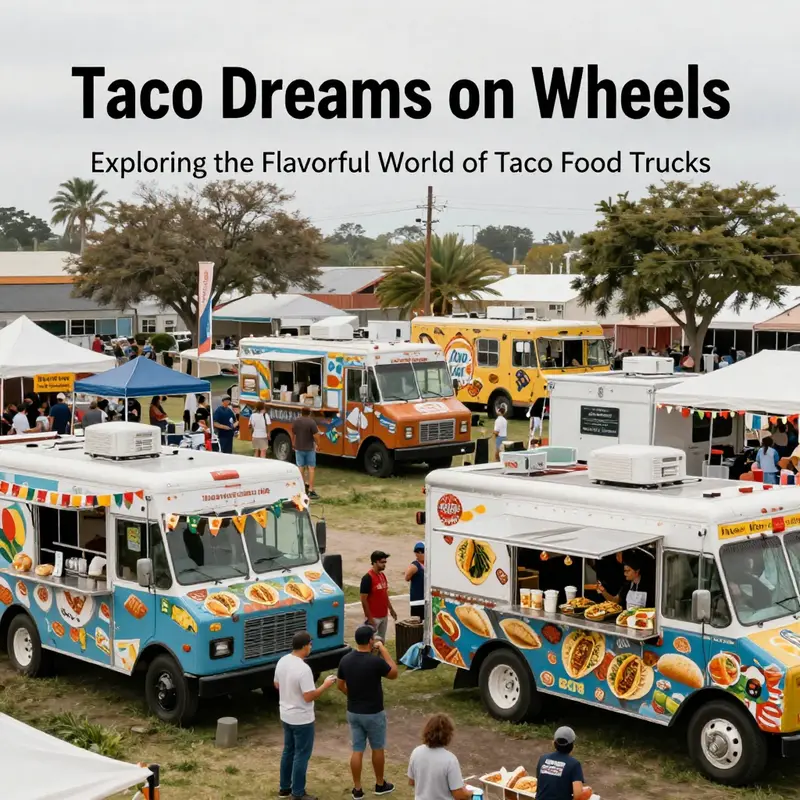
Taco food trucks have revolutionized the way we enjoy this iconic Mexican dish, marrying authenticity with mobility. They serve as culinary ambassadors, bringing diverse and rich flavors to urban streets and neighborhoods, sometimes changing lives along the way. This article will delve into the vibrant role taco food trucks play in our cultural landscape, investigate the economics behind this thriving industry, and explore the operational challenges that vendors face. Join us as we journey through these three fascinating facets of the taco food truck phenomenon, revealing why they hold a special place in the hearts of food lovers, office workers, event planners, and community members alike.
Moving Currents of Culture: The Taco Food Truck as a Vessel of Community, Craft, and Memory
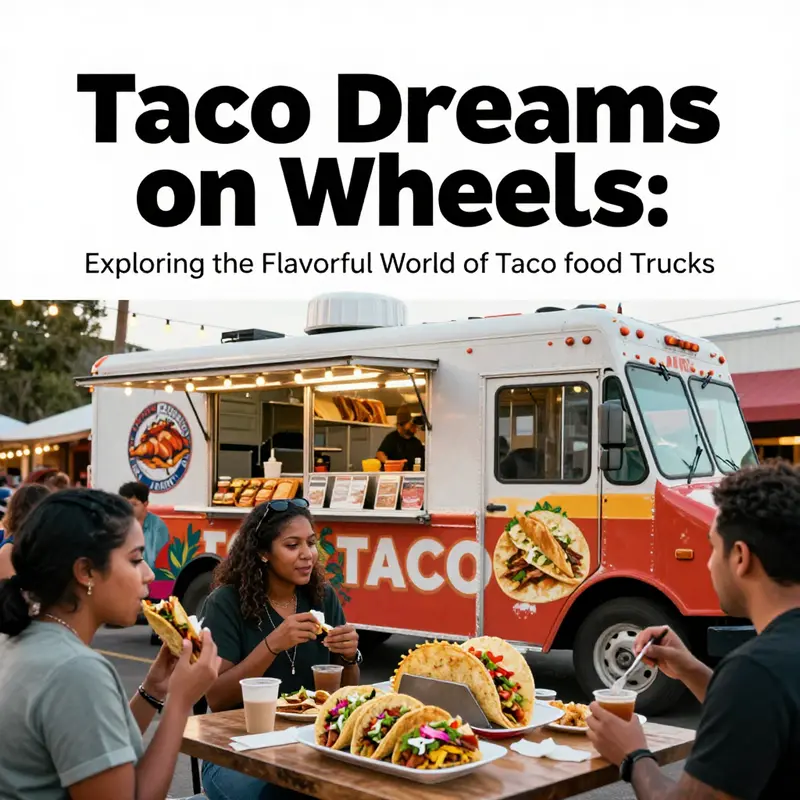
A taco food truck moves through a city like a thread through fabric, pulling together a pattern of hunger, memory, and social life. It is easy to see a truck as a simple source of quick meals, but the weekday sizzle of a pan and the aroma of fresh tortillas carry something more enduring: a portable space where people pause, exchange, and reconnect. In many places, the taquería móvil becomes a circulating commons, a shared table without walls, where strangers become neighbors and neighbors become keepers of tradition. The truck, in its mobility, also carries a history of migration, labor, and improvisation. The person who tends the grill, cleans the work surface, and nods to regulars is more than a cook; they are a local custodian of memory, a living hinge between generations who have learned to read a city by its corners, markets, and late-night streets. The food truck’s cultural significance thus rests not on the menu alone but on the social choreography it enables: the daily pauses that stitch together the rhythms of work, study, family life, and celebration.
The taquero is a figure of trust in a local economy that often rides on informal networks and family know-how. People come back to the same truck not merely for a predictable taste but for the sense that someone remembers their usual order, understands when a friend is in town, and respects a preferred level of heat or acidity. Generations pass their recipes, techniques, and adjustments from one season to the next, and the truck becomes a rolling archive of culinary memory. In many communities, families rely on this continuity to anchor social life. A midday line may form with a rhythm that mirrors the city’s pulse, while the conversations while waiting—about class schedules, the day’s errands, a child’s school project—make the act of eating a shared moment rather than a solitary transaction. The ritual of meeting at a corner, the tactile feel of a warm tortilla, the quick exchange of a joke or a story, and the moment of savoring a bright, balanced mouthful—these micro-interactions cultivate belonging in ways that brick-and-mortar restaurants rarely replicate with the same intimacy.
Cultural significance in this context also lies in the truck’s adaptability. Street vendors have long kept traditional methods alive even as urban skylines shift with new developments and zoning pressures. Slow-cooked meats, house-made salsas, and hand-trimmed toppings travel with the truck and reveal themselves anew in different neighborhoods. The same carnitas- or al pastor-inspired techniques may be reinterpreted with locally grown produce, or a family’s signature salsa may adapt to seasonal harvests. The cooking becomes an ongoing dialogue between heritage and the present, a conversation written in smoke, citrus, and a chorus of herbs. The truck’s bright exterior and hand-painted branding speak to an aesthetic of authenticity that resonates not only with Mexican communities but with a broad audience seeking a sense of place amid urban speed. The vehicle acts as a mobile canvas, where color, language, and song—subtle cues of identity—are as much a part of the experience as the food itself.
In cities where street food has become a cultural landmark, the taco truck anchors neighborhood identity in a way that fixed eateries sometimes cannot. In places with rapid change, mobility is a form of cultural resilience. A truck can relocate to where foot traffic is strongest, respond to informal market data about demand, and offer a menu that speaks to the tastes of a diverse clientele without sacrificing rooted technique. This flexibility is not a mere business advantage; it is a model of cultural preservation through pragmatism. A taquero learns to balance tradition with innovation, maintaining essential techniques—mastica in the masa, the patient braising of pork, the careful balance of lime and heat—while allowing the menu to shift with the day’s supply and the neighborhood’s mood. The result is a cuisine that feels both timeless and timely, rooted in the past but alive in the present, traveling across blocks, neighborhoods, and even international borders.
The social function of the taco truck extends far beyond the confines of the cuisine. It serves as a gathering point for workers who need nourishment during a long shift, for students who crave a quick and affordable lunch, and for families who celebrate late-night occasions with food that invites sharing. The presence of a trusted taquero—someone who shows up on time, maintains hygiene, and offers a smile—becomes a social contract. Regulars know they can count on consistency, while newcomers discover hospitality as a practice that welcomes questions about ingredients, spice levels, and preparation methods. This relational dimension is a crucial component of cultural significance. The act of ordering, receiving, and sharing food becomes a ritual of belonging, a small but meaningful routine that reinforces social ties in a city that is always racing toward the next thing.
The truck’s visual identity—its colors, its hand-painted signage, the distinct rhythm of the sizzle—functions as a form of cultural storytelling. The exterior becomes a short, portable narrative of the community behind it: a lineage of cooks who have learned to balance tradition and improvisation with a modern appetite for authenticity. In many urban settings, taco trucks contribute to the city’s reputational map, becoming beloved landmarks within the landscape of street food. Their popularity helps locales retain a sense of character amid gentrification and changing demographics. Even as neighborhoods transform, the truck’s evergreen presence offers a continuity point, a reminder that everyday meals can carry cultural significance without pretension. The car itself, stripped to essential components—a gas stove, a refrigeration unit, a prep table, a canopy, and a few shelves—becomes a portable cultural artifact. It embodies the idea that craft and culture can flourish on wheels, without the need for a fixed, conventional kitchen.
The global ripple of this phenomenon is also telling. The taco truck has traveled beyond its birthplace through diaspora, exchange, and curiosity. In many cities around the world, street vendors adopt the ethos of mobility and family recipes, translating them into new contexts with respect for local ingredients and tastes. This diffusion is not mere imitation; it is an act of cultural dialogue, in which a technique learned at a corner in one city can resurface in a different urban climate, subtly altered by the availability of produce, the pace of life, and the story the local community wants to tell about itself. The broader street food culture—how food moves, how people gather, and how urban landscapes accommodate improvisation—feeds back into the taco truck’s identity as a cultural institution. In this sense, the truck is not just a kitchen on wheels but a diplomat of flavor, a small, mobile force for connection that traverses borders and social boundaries with each carefully folded tortilla.
Yet the cultural significance of the taco truck cannot be understood apart from the labor and entrepreneurship that sustain it. The life of a taquero often blends art with practical hard work: balancing long hours, managing limited space, navigating local regulations, and negotiating the often precarious economics of small food ventures. The truck becomes a platform for apprenticeships and mentorship, where younger cooks learn not only recipes but also the ethics of hospitality, cleanliness, and patient service. This education occurs in real time, on the street, in plain sight of the community that depends on the truck’s presence. The social fabric that forms around the truck—neighbors who greet the taquero by name, families who bring children to watch the preparation, colleagues who swap shifts to accommodate a special event—creates a network of mutual dependence and pride. In an era of rapid urban change, these micro-communities anchored by a portable kitchen offer a reassuring counterpoint to the fragility of formal employment structures.
The chapter’s threads—memory, mobility, labor, aesthetics, and social belonging—converge in a single, persistent idea: the taco truck as a cultural institution that travels while staying rooted. It embodies a way of living that values accessibility, warmth, and shared appetite as civic goods. And it shows how cuisine can be a language of inclusion, a way to honor origin while inviting new voices to participate in a living tradition. The truck makes culture legible in ordinary moments—the lunch rush at a corner, the late-night crowd after a concert, the family gathering in a neighborhood plaza—moments that, when collected, form a collective memory of a city’s ongoing story. This is why, even as cities evolve with new culinary trends, the taco truck endures as a powerful symbol of warmth, variety, and resilience—the kind of institution that quietly shapes how people understand place, community, and belonging.
To connect this broad cultural significance to the practical reality of street culinary life, consider how a truck’s mobility is inseparable from its social mission. Movement enables inclusion: a truck can come to a schoolyard, a construction site, or a park where food access is a challenge, turning a simple meal into a bridge between people from different backgrounds. Mobility also allows adaptation to seasonality and local harvests, inviting cooks to source produce in ways that honor both tradition and sustainability. The dynamic interplay of tradition and improvisation—where a grandmother’s masa technique sits beside a chef’s willingness to experiment with fresh herbs or locally available vegetables—gives the truck its signature vitality. It is this vitality, more than any fixed menu or decor, that narrates the culture of the taco truck: a culture of listening, sharing, and making do with what the day provides. A reader can imagine the scene: the street, the clatter of utensils, the steam rising in a soft plume, and a line that forms as people sense that something essential is arriving with the truck—a sense that, for a moment, the city slows down enough to be thankful for flavor, community, and a place to belong.
For those curious about the broader industry and its possibilities, the cultural lens also invites reflection on the balance between tradition and modern business practice. The same trucks that carry forward century-old recipes are increasingly embracing innovations that improve safety, sustainability, and efficiency without erasing character. Electric and hybrid power solutions begin to appear in some markets, reducing noise and emissions while maintaining the quiet roar of a well-tuned stove. The appeal of this blend—heritage and forward-looking technology—signifies a maturation of street food culture that respects the past while addressing contemporary concerns about health, safety, and urban livability. When communities witness these trucks adapting, they are invited to participate in a shared project of culinary culture that honors both memory and possibility. The result is not a retreat into nostalgia but a forward-facing homage to skills, stories, and social rituals that define a city’s daily life.
There is also a political dimension to this cultural life, though it is often subtle and emergent. Street food venues are frequently at the center of debates about immigration, labor rights, and urban policy. Yet it is precisely the mobility and community-centered ethos of taco trucks that can transform political tension into shared experience. The very act of gathering around a taco truck can soften sharp distinctions, offering a space where diverse people can connect over food, jokes, and mutual curiosity. In moments of public discourse about identity and belonging, the street becomes a stage where people can recognize one another’s humanity through the simple act of sharing a meal. This is not reducing politics to appetite; it is acknowledging that culinary culture shapes how people imagine their communities and their future together. The taco truck, then, stands as a modest but powerful symbol of pluralism in motion—a reminder that local flavor, when cultivated with care and openness, can contribute to social cohesion and cultural resilience in cities that are constantly reinventing themselves.
In weaving together memory, craft, mobility, and community, the taco truck does more than feed bodies. It feeds a sense of self and place, turning meals into rites of connection that traverse generations and geographies. It offers a way to understand how culture travels—not as a static relic but as a living practice that travels with people, adapts to new environments, and returns to the street with each new day’s possibilities. The truck’s cultural significance, then, lies in its capacity to translate the intimate knowledge of a family kitchen into a shared public ritual, to convert street corners into classrooms of flavor and tradition, and to remind a city’s inhabitants that belonging is something you can taste, even as you move.
For readers who want to explore how the street-food ethos translates into different dimensions of culinary entrepreneurship, there is a robust conversation to be had about the practical paths that sustain these cultural practices. The mobility we celebrate is not merely nostalgic but functional. It opens doors to apprenticeship, community funding, and collaborations with local farmers and suppliers that keep the supply chain shorter and more humane. It invites a broader audience to participate in the storytelling embedded in every tortilla, every drizzle of salsa, and every carefully seasoned bite. And it reinforces the idea that the most enduring cultural artifacts are not monuments but practices—everyday acts of making food, sharing it with others, and passing something meaningful from one generation to the next. In this light, the taco truck stands as a small, portable seat at the table of cultural life, a moving forum where tradition and experimentation meet, where memory is revived with every turn of the wheel, and where the simple act of eating becomes a shared commitment to community.
As a point of reflection within the broader arc of this article—What the Taco Food Truck—you can see how deeply a mobile kitchen can shape urban experiences. It is where heritage and innovation converge in real time, where a craft can survive market pressures, and where a city’s diverse residents find a common ground in the warmth of hot tortillas and a friendly greeting. The cultural significance of the taco truck is not a single moment but a continuous, evolving practice that mirrors the city’s heartbeat: occasional bursts of exuberance, steady, dependable nourishment, and the quiet, enduring belief that food, served with care, can transform a street into a shared home. This is the essence of what the taco food truck represents: a moving vessel for culture, a portable stage for community, and a thriving, living memory that travels as freely as its passengers.
To further explore how these ideals translate into practical inspiration for culinary entrepreneurs and enthusiasts, consider the following reflection: the best trucks carry not just recipes but a philosophy of service—one that prioritizes accessibility, conversation, and the joy of discovery in every bite. They teach that food can be a bridge, not a barrier; a way to invite others into a story that began long before they arrived and will continue long after they leave. In this sense, the taco truck embodies a philosophy of nourishment that transcends flavor, reminding us that cuisine is always a social act—done together, on the move, and with the presence of a welcoming smile as essential as the salt on the rim or the heat of the chili.
For readers drawn to the practical and personal dimensions of street-food culture, there is a wealth of cross-cutting themes—from pastry-like dough handling and sauce balance to the rituals of safety, hygiene, and seasonal sourcing—that illuminate how culture lives in daily practice. The taco truck, as a cultural artifact, invites us to look at ordinary moments with new reverence and to recognize that a city’s most meaningful flavors often arrive on wheels, bearing tales of origin, resilience, and communal joy. In continuing this exploration, one might turn to how the industry blends tradition with modern business strategies, including the rise of electric carts and more sustainable kitchen setups. The following resource serves as a gateway to broader conversations about how mobile culinary ventures balance heritage with progress, while keeping the heart of the craft intact: Taco Trucks Unleashed: Top 5 Models for Culinary Success.
External context: for a global perspective on how street food culture anchors community life in diverse settings and how public perception of these foods evolves, see the BBC overview of street food’s rise and cultural significance across regions. https://www.bbc.com/news/world-latin-america-67938515
Rolling Economies on Wheels: The Economic Fabric of the Taco Food Truck Industry
The taco food truck is more than a meal on wheels; it is a nimble economic model that threads together appetite, entrepreneurship, and urban rhythm. In cities where street food culture breathes deeply, these mobile kitchens become microeconomies that can adapt as quickly as the lines of customers shift. Startup costs are relatively modest compared to brick-and-mortar ventures, and the ability to iterate—to test a concept in a few neighborhoods before expanding—helps entrepreneurs manage risk. The core economics revolve around the vehicle investment, equipment, permits, insurance, and working capital for daily operations. The flexibility to reposition to high-foot-traffic areas, festivals, campuses, and business districts creates revenue opportunities that can outpace fixed restaurants in certain market segments. Yet success depends on disciplined cost control, menu planning, and a clear path to profitability, because margins in street food are thin and competition can be intense.
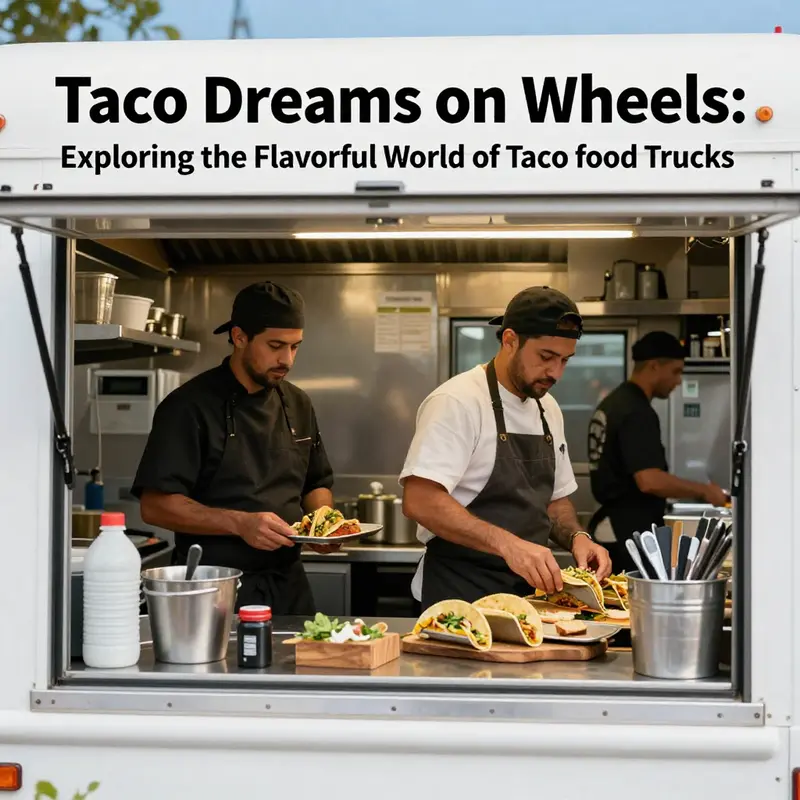
From the outset, economics favor mobility: the entry barrier is lower, and growth can be paced by cash flow. Founders often start with a lean trailer or cart, with startup costs commonly in the low-to-mid range for outfitted units. As revenue grows, operators can scale to additional units or diversify into catering and event services. The financial model emphasizes rapid turnover, reasonable pricing, and smart procurement to protect margins against commodity price swings. Labor is a major cost driver, so streamlined prep, efficient workflows, and safe, compliant operations are critical to sustaining profitability.
Market dynamics shape where and when trucks succeed. Regulatory environments, local tastes, and the availability of fresh, local ingredients influence pricing and menu design. Operators who build relationships with farmers and suppliers can stabilize costs and maintain quality, while the ability to adjust menus seasonally helps manage supply risk. Data-driven decisions about location and timing—driven by foot traffic, event calendars, and consumer patterns—enable trucks to maximize revenue without sacrificing service speed. In sum, the taco truck economy blends tradition with capital discipline, turning a portable kitchen into a scalable microbusiness.
null
null
Final thoughts
Taco food trucks are more than just mobile kitchens. They are vibrant expressions of culture, economic engines, and centers of community connection. From diverse flavors to affordability and creativity, they play a pivotal role in reshaping our food landscape. As we’ve uncovered the cultural significance, economic contributions, and operational challenges of taco food trucks, it’s clear they offer a unique blend of taste and experience. Next time you visit one, consider the rich story behind that delicious taco in your hand—it’s a true reflection of community and innovation.

