
For food lovers and taco enthusiasts, the dream of operating a taco truck brings to mind delicious treats served up on busy streets and sunny parks. But how much does it really take to roll this culinary venture into existence? Whether you’re catering to local office workers, planning a vibrant event, or wanting to captivate neighborhood residents, understanding the financial landscape is crucial. This article will guide you through the complete startup journey, breaking down initial investments, operational considerations, and the regulatory maze to help you assess how much to start a taco truck and how to make your savory dreams come true.
From Ground Zero to Griddle: Decoding the Initial Investment to Launch a Taco Truck
Launching a taco truck is less about a single price tag and more about assembling a workable financial map. The initial investment isn’t just the headline figure you see in a brochure; it is a tapestry of decisions, each with its own cost, risk, and ripple effect on how soon you can start serving hungry customers. In practical terms, most would-be operators find themselves navigating a range that sits comfortably between a conservative startup and a bold, what-if leap. Realistic estimates typically place the starting budget somewhere in the neighborhood of seventy thousand to one hundred and thirty thousand dollars, though the total can exceed two hundred fifty thousand in markets with higher permitting costs, premium vehicle options, or a more expansive menu. This spectrum reflects the reality that every taco concept is unique, and the path from vision to street corner is paved with choices about vehicle quality, kitchen layout, regulatory hurdles, and the level of branding you want to project from day one.
The vehicle itself tends to be the single most significant line item. You may begin with a used van or trailer converted into a mobile kitchen, or you may opt for a brand-new, purpose-built unit designed to maximize workflow and compliance. A used food truck or trailer often costs in the ballpark of twenty thousand to forty thousand dollars. It requires diligence: a thorough inspection, potential repairs, and a plan for upgrades that align with your menu and service style. In contrast, a new or custom-built unit can easily push past sixty thousand dollars and climb higher depending on the specifications, insulation, ventilation, and the level of fleet-grade reliability you demand. The decision between used and new reverberates through every subsequent cost category, from equipment choices to insurance rates, and ultimately to how quickly you can scale or pivot when demand shifts.
Beyond the shell, kitchen equipment anchors the daily rhythm of the business. Even for a streamlined menu, you will need grills or griddles, refrigeration, a sink setup, prep tables, storage, and appropriate ventilation. The investment here typically ranges from ten thousand to thirty thousand dollars, depending on the complexity of your offerings and whether you insist on features like a dedicated tortilla press area, a separate prep zone for sauces, or multiple cold storage zones. Menu complexity matters. If your concept emphasizes fresh tortillas and house-made salsas, you will lean into more equipment and space. If you lean on pre-prepped components, you may keep some costs leaner, though not without compromising speed and consistency at peak times. The electrical and gas setup also plays a critical role, affecting both upfront costs and ongoing operating expenses. Efficient layouts reduce waste and shorten service times, which, in turn, can improve your bottom line even when initial outlays are higher.
No matter the vehicle or layout, permits and licenses are an intrinsic part of the investment. Local health departments, city or county authorities, and sometimes state agencies require a package of documentation to operate legally. A typical range for permits and licenses sits between one thousand and five thousand dollars, but the actual total depends on location, the number of staff, and the specific regulatory environment. Some jurisdictions charge for mobile vending permits, fire inspections, and vehicle inspections, each with its own fee schedule. In bustling urban centers, the regulatory matrix can be more complex and demanding, sometimes requiring periodic renewals or additional inspections. For entrepreneurs planning to operate across multiple neighborhoods or cities, the cumulative effect of permits can become a strategic consideration in determining where you launch first and how quickly you scale.
Insurance covers four corners of risk: liability, vehicle, property, and, if you plan to hire staff, workers’ compensation. Annual insurance costs typically range from one thousand to three thousand dollars, with higher numbers if you carry broader coverage or if your vehicle sits in a high-traffic, high-risk area. The level of coverage you choose will reflect your appetite for risk, your financing structure, and the potential exposure you face from customers, employees, and the road. If you eventually bring on staff, workers’ compensation adds to the payroll-related obligations and can influence your overall monthly burn rate. It’s essential to model insurance as a fixed cost that travels with your growth—because even when you aren’t cooking, your vehicle and its contents still require protection.
Initial inventory and supplies create the flavors and the first impression of your business. Ingredients, packaging, utensils, cleaning supplies, and sanitation products generally need two to five thousand dollars to stock adequately for launch. The aim is to avoid stockouts during the first busy days while not over-investing in perishables that might spoil if demand lags. A careful balance exists between freshness and shelf life, especially when you’re building a seasonal or weekly schedule. If your menu features signature toppings or house-made components, you’ll allocate funds for specialty ingredients, spices, and equipment that helps you reproduce those flavors consistently across multiple shifts.
Branding and marketing, though sometimes overlooked in the earliest budgeting conversations, play a decisive role in how quickly you gain traction. In most cases, setting aside one thousand to five thousand dollars for signage, a website, social media presence, and branding materials gives you a credible footprint from day one. The branding need not be elaborate, but it should be coherent: a catchy name, a recognizable color scheme, clean signage for the truck, and a simple digital presence that directs customers to your schedule and location. The goal is to convert curiosity into foot traffic and repeat customers. A minimalist, well-executed brand message can outperform a flashier but inconsistent approach when you’re just starting to build a loyal following.
Working capital to cover the first few months is the financial grease that keeps the wheels turning while revenue stabilizes. Industry guidance often suggests five thousand to ten thousand dollars as a cushion to absorb the ebb and flow of parking fees, utilities, wages, and unexpected expenses. This reserve becomes especially important in the early weeks when you are carving out a market, negotiating with event organizers, and learning how your prep pace translates into serving speed during lunch or dinner rushes. Without a modest reserve, a few days of slow sales or a misjudged inventory purchase can quickly tighten liquidity and threaten morale among the team.
In practice, many seasoned taco truck operators find value in starting with a smaller budget and letting demand guide upgrades. A used van, solidly prepared for health and safety standards, can become the first leg of a longer journey. As revenue grows and cash flow improves, you can reinvest in a more robust vehicle, additional refrigeration, or a broader set of menu items. The flexibility to upgrade incrementally reduces the risk of overextension and keeps you closer to a sustainable path toward profitability. It is worth noting the broader guidance offered by national resources that emphasize careful planning, understanding local regulations, and building a credible business foundation before chasing rapid expansion. The SBA’s practical starting-point guidance for a food truck business is a reputable reference as you map out your own plan, while local health departments can provide the specifics of what must be in place for your first service.
Consider the strategic value of test runs before committing to a full build-out. Pop-up appearances at farmers’ markets, festivals, or community gatherings allow you to validate demand and refine your menu without the full capital risk. These tests can produce valuable data: which tacos sell best, the pace of service, peak times, and the costs you encounter under real-world conditions. Testing also informs your choice of vehicle and kitchen layout. If you discover that a particular tortilla, salsa, or protein combination attracts more customers, you can adjust your equipment or workflow to support that demand. The process is iterative but practical: start with a lean version, measure the market response, and invest in the elements that prove their value.
Beyond the immediate costs, it is essential to anticipate ongoing operating costs that continually shape the bottom line. Fuel and maintenance for the vehicle are recurring, as are the costs of fresh ingredients and reliable sourcing. If you bring on employees, wages become a significant weekly consideration, along with payroll taxes and benefits. Utilities at your parking spots—electricity, water, and waste disposal—often show up as predictable line items, but in busy neighborhoods, they can vary with season and location. A disciplined budgeting approach is the best defense against surprise spikes in these expenses. You should build a forecast that encompasses a few revenue scenarios, so you can quick-start a reallocation of resources should a location prove more expensive or less trafficked than expected.
As you weigh these costs, the question of location becomes central. Parking fees, time restrictions, and local ordinances can dramatically influence the economic logic of a given site. In some cities, the right location can earn back a hefty premium through higher ticket averages, longer service windows, and more consistent demand. In others, the cost of parking, permit, or street-use fees can erode margins if you are not carefully balancing price, speed, and volume. This is where a thoughtful plan for route or event-based operations matters. A single high-volume festival or weekly market can provide more sustainable returns than a dozen low-traffic spots. The objective is to optimize for a mix of reliable revenue streams while maintaining the mobility that defines a taco truck’s advantage over a stationary restaurant.
Financing this venture is as much about strategy as it is about numbers. Some operators rely on personal savings, while others pursue small business loans, lines of credit, or equipment financing to spread the cost over time. A structured approach—allocating a realistic down payment, arranging favorable loan terms, and aligning debt with cash flow—helps prevent the business from being over-leveraged during the early months. When you design your financing plan, consider how much equity you are willing to share, what the repayment schedule looks like, and how interest costs will affect your profitability. A prudent plan balances ambition with prudence, enabling you to scale without compromising resilience during slower periods.
To illustrate a practical takeaway, imagine a startup that chooses a used vehicle, modest but capable kitchen equipment, and a lean branding package. With permits and insurance in the low-to-mid thousands, initial inventory close to the two- to four-thousand range, and working capital around eight thousand, the first-year budget might land near the lower end of the spectrum. As demand proves itself, the operator can reinvest in environmental controls, an additional cooler, or even a second cart to cover more events. The key is to view the budget as a living document, one that you adjust as you learn the market and test your concept. It is this flexible planning mindset that often separates early-stage chaos from a steady, scalable path to profitability.
For readers who want to anchor their planning in a concrete model, consider exploring proven layouts and models that other entrepreneurs have found effective. A concise, forward-looking resource that examines top models for mobile culinary ventures can offer insights into how a truck’s design correlates with speed, efficiency, and customer experience. See the insights in this focused guidance: Top food truck models for entrepreneurs. This reference helps connect the financial picture to a practical, physical layout that supports steady service during peak hours while maintaining a cost-conscious approach to growth.
Ultimately, the initial investment to start a taco truck is a balance sheet anchored in reality, not wishful thinking. It demands a clear assessment of your menu, your target locations, and your tolerance for risk. It asks you to forecast cash flow with care, recognizing that profitability emerges from consistent service, predictable costs, and the ability to adapt quickly to feedback from customers and regulators alike. The numbers from the broader research landscape align with what many operators experience: a substantial but manageable sum that becomes more approachable when staged, tested, and tied to a disciplined business plan. The real work is not just lining up numbers; it is aligning your culinary vision with the practicalities of street-level hospitality, ensuring that every dollar invested translates into a better guest experience, faster service, and a clearer path to sustainable operation.
External considerations often matter as much as the price tag. Staying informed about local health codes, vehicle safety standards, and industry best practices can save time and money in the long run. Realistic budgeting, phased investments, and a willingness to adapt are the hallmarks of a resilient startup. If you are curious to see a broad, structured breakdown of costs and steps, the SBA’s guidance on starting a food truck provides a solid framework to ground your plan. As you move from concept to concrete, remember that this journey is as much about learning new processes as it is about serving delicious tacos at the curb.
For readers who want to take a deeper dive into model considerations and layout decisions, a concise exploration of top taco truck configurations can be a useful next step. You can explore a focused discussion on model options here: Top food truck models for entrepreneurs. These layouts reflect the intersection of function, branding, and cost efficiency that ultimately shapes how quickly you can deliver value to customers and reach profitability.
External resource for further reading: How to Start a Food Truck: From Permits to Profits – The Spruce. This guide offers a practical, user-friendly breakdown of startup costs and essential steps for launching a food truck business, including detailed cost estimates and guidance on securing permits. https://www.thespruce.com/start-a-food-truck-4149865
The Operational Metronome: Orchestrating Equipment, Compliance, and Customer Experience in a Taco Truck Startup
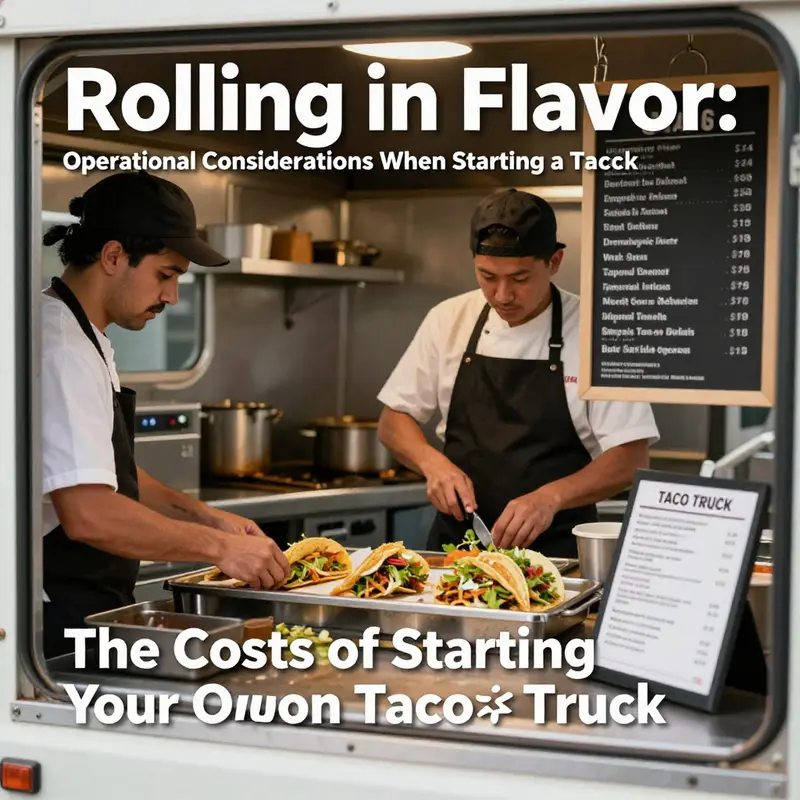
Launching a taco truck is less about a single standout recipe and more about the steady rhythm of operations. It is a choreography of power and plate, permits and parking, heat and hospitality. The start-up phase—often the most delicate—sets the tempo for every service bite that follows. When you step into this world, you are balancing ambition with discipline, flavor with fundamentals, and speed with safety. The story isn’t only about how much money you need to begin, though cost remains a critical drumbeat. It is about how you translate that money into a reliable process that keeps customers coming back, day after day, festival after festival, lot after lot. To understand the real work of launching a taco truck, you must map not only the dollars and cents but the inevitable routines that turn a mobile kitchen into a trusted neighborhood staple.
One of the most consequential choices you will make early is equipment—how you power your kitchen, what you cook with, and how you organize space within a moving footprint. The debate between electric and gas-powered carts is not academic. It underpins the cadence of your days, the places you can park, and the kinds of events you can host. Electric carts offer precise heat control and cleaner operation. They shine in environments with reliable power, such as farmers’ markets, food truck parks, or festivals that provide electricity on site. The quiet operation and reduced fumes can enhance a brand that leans into cleanliness and modernity. Yet electric setups demand access to outlets or dependable generators, which can constrain mobility in certain neighborhoods or remote locations. You may confront limitations at some parks, parking zones, or interior venues that lack power infrastructure. The upfront cost for a fully electric cart can be higher, a consideration that matters when you’re budgeting for a first truck that still may need upgrading as demand grows.
Gas-powered carts, by contrast, illuminate a different approach to mobility. They are often more forgiving when electricity is scarce; they let you roam to locations that lack electric hookups. But they come with trade-offs: louder equipment, higher emissions, and additional safety concerns that can ripple through your staffing and compliance needs. If your dream is to chase weekend farmers’ markets that are spread across a metropolitan patchwork, if you intend to test new neighborhoods with disparate infrastructure, or if you want a hustle that travels with the wind and weather, you may find gas power becomes your most practical ally. The decision, therefore, rests on the geography of your early years—the places you expect to serve, the hours you plan to keep, and the kind of customer experience you want to cultivate. The goal is not to pick a “perfect” option but to choose a path that aligns with your target events, your location strategy, and your ability to manage risk over time.
Beyond power sources, the layout and the build of your kitchen determine your efficiency and your ability to deliver a consistent product. Equipment lists can loom large in cost, but the right configuration pays dividends in speed and hygiene. A compact line—staging grills, a reliable refrigerator, a sink with proper drainage, and sturdy prep tables—can make the difference between a smooth service and a bottleneck at the window. The menu drives this configuration. A lean menu with fresh tortillas and simple fillings may require fewer specialized appliances, while a more ambitious lineup could demand a broader suite of cooking devices. Your choices around storage—how much dry and cold space you keep, how you organize utensils and disposables—reflect your planning philosophy and your discipline around waste. A well-organized truck operates with a simple, repeatable flow: cooks assemble, customers order, orders are plated, and waste is minimized. A clean, efficient truck is not a luxury; it is a competitive edge that signals reliability to event organizers, market managers, and everyday customers.
This operational clarity also intersects with the regulatory landscape. Permits, health codes, and zoning rules govern where you can park and how you can prepare food on wheels. The rules vary dramatically by city and state, which means your path to compliance starts before you buy a single appliance. This is not merely a bureaucratic hurdle; it is the backbone of your capability to operate consistently and to scale. In practice, you should approach compliance as a core operating cost, not an afterthought. You will need to budget for permits, inspections, and the ongoing diligence that keeps your license in good standing. A misstep here can disrupt your revenue flow and erase months of careful planning. The benefits of getting it right, however, are quiet and powerful. When your truck meets health standards and parking rules, you gain access to more venues, more hours, and more predictable cash flow.
One practical implication of compliance is the relationship between equipment choice and electrical or fuel infrastructure at your frequent sites. If you anticipate regular appearances at markets with robust power access, electric or hybrid configurations may offer smoother operations and longer-term cost savings. If your calendar includes remote locations or areas with sporadic power, you’ll want a plan that accounts for generator use, fuel budgeting, and safety protocols that mitigate the risks of running combustion engines in public spaces. Each site becomes a test of your operational playbook: how you set up, how you maintain the equipment, how you steward your staff and customers through service. The best operators build a portable system that respects local rules but remains adaptable enough to optimize for a given venue’s limitations.
Financial discipline is inseparable from operational decisions. The cost of power, whether electricity or fuel, adds to every shift. You must forecast steady expenses for maintenance, parts, and seasonal wear on equipment. Staffing costs—one of the largest ongoing outlays—depend on your service model. A busy truck needs capable cooks who can manage prep, line, and final plating with speed and hygiene. The turnover of staff matters as much as their skill. High-quality service hinges on consistent routines, not just charisma at the window. Inventory management becomes a discipline: how you purchase ingredients, how you track perishables, and how you control waste. The menu clearly affects this, too. A broader menu with perishable items requires tighter inventory controls and more complex scheduling. Simpler menus can reduce waste and stabilize cash flow, making it easier to forecast the first six to twelve months.
Branding and customer experience thread through every operational decision. A clean truck with well-lit signage and a clear, appealing workflow signals reliability from the first glance. Hygiene is not a cosmetic concern; it underpins trust. The way you present food, the speed of service, and the clarity of your menu influence repeat business just as much as taste. Your branding should translate into operations: your prep areas, your service window, the layout of your utensils, and the way you handle peak times. A strong brand that customers recognize is more likely to attract loyalty, which is a crucial cushion while you’re still stabilizing location and revenue.
Marketing, too, belongs in this operational conversation. Social media becomes a real-time compass for where you go next. Local partnerships—cafés, breweries, concerts, seasonal farmers’ markets—shape both traffic and revenue. By aligning marketing with site selection and operations, you create a virtuous loop: the more efficient you are, the more reliably you can meet demand, and the more you can demonstrate success to event organizers and partners. In practice, this means you plan ahead for how you’ll promote a new stop, how you’ll announce a pop-up event, and how you’ll coordinate menus with partners while preserving your core identity.
Flexibility and adaptability emerge as a continuous practice rather than a one-time decision. The seasonal nature of ingredients, local tastes, and the ebb and flow of foot traffic demand that you stay nimble. Successful taco truck operators often pivot in response to demand: relocating to high-traffic corners for lunch, moving to weekend festivals, or launching a pop-up at a popular community event. They are attentive to feedback, not attached to a rigid plan. The kitchen becomes a learning engine: what people want, what times work best, and which tweaks in the menu or process yield better throughput. You might begin with a tested formula in a few markets and gradually expand as you confirm demand. The pro tip from many seasoned operators—test demand with a lower-cost model first—becomes a guiding principle that can keep you from over-extending before revenue stabilizes. A used van or trailer can serve as a low-stakes pilot, letting you refine your operations, menu, and branding before committing to a larger capital outlay.
The operational mathematics behind starting a taco truck are rarely glamorous, but they are essential. The start-up cost range is wide for a reason: vehicle choice, equipment needs, location strategy, licensing, insurance, and working capital all pull the total in different directions. The most prudent approach is to create a practical blueprint that aligns with your local environment and your appetite for risk. Map out your expected use of power, your most frequent venues, and the regulatory steps that will determine your go/no-go dates. Build a timeline that accommodates licensing queues, inspections, and the acquisition of essential gear. And above all, design a customer journey that feels inevitable and effortless—from the moment a passerby notices your truck to the moment they leave satisfied with a flavorful memory and a clean, efficient experience.
In the end, the operation is the brand’s heartbeat. The equipment you choose, the way you comply with rules, the way you manage cash and inventory, and the way you treat your customers are all intertwined strands of the same fabric. If you nurture these strands together, your taco truck will not merely exist as a mobile kitchen but grow into a dependable, recognizable presence in the communities you serve. The path from concept to reliable operation is seldom linear. It is a winding road of decisions, tests, and refinements. But with careful attention to equipment strategy, regulatory compliance, financial discipline, and a relentless focus on the customer experience, you set a steady tempo that can carry you through the first year and beyond. The journey is as much about learning what works in your corner of the world as it is about the recipes you perfect. And in that learning lies the real potential to turn a modest budget into a thriving, flavorful enterprise that many diners will come to rely on.
For a foundational overview of the regulatory landscape and budgeting basics, you can consult the Small Business Administration’s guide on Starting a Food Truck, which provides practical steps for laying groundwork before you invest in a vehicle or a grill. This resource helps anchor decisions in the realities of the market and the requirements of your locality. Starting a Food Truck offers a structured lens to consider permits, compliance, and long-term planning as you evaluate the costs described in the broader research. As you read, keep in mind that every market has its own quirks: some cities encourage entrepreneurship with streamlined permits, while others impose stricter controls that influence how you deploy your resources and where you park each day.
While the journey to a fully operational taco truck is personal and location-dependent, there is value in grounding your approach in tested principles. Start by clarifying your power strategy, align your layout with your menu, and respect the local rules that govern mobile vending. Build a lean but scalable core program, then expand as you establish a reliable track record. Treat marketing as a live discipline that you practice alongside your cooking, and keep your eyes open for opportunities to partner with events that fit your identity. Finally, remember that the path to profitability is a function of consistent execution and mindful growth. The more you bake into your routine the simple rituals of clean stations, prompt service, and accurate ordering, the more you will protect your margins and your brand in the long run.
External resource: https://www.foodtruckbusiness.com/starting-a-food-truck-what-you-need-to-know/
null
null
Final thoughts
Embarking on the journey of starting your own taco truck is not just about the mouthwatering tacos you’ll serve, but also understanding the financial commitment and regulatory landscape involved. By grasping the initial investment needed, managing operational logistics, and navigating the necessary regulations, you can enrich your community with vibrant flavors while establishing a successful business. So gear up, gather your tools, and get ready to whip up unforgettable taco experiences!

