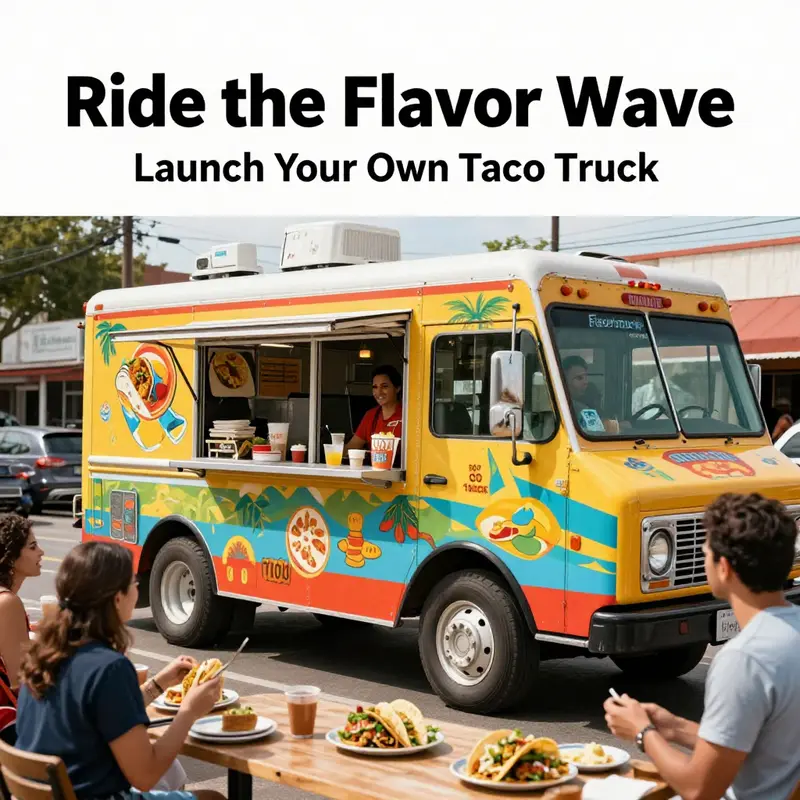
Are you passionate about tacos? Do the sizzling sounds of grilled meat and the aroma of fresh ingredients set your heart racing? If you’re dreaming of dishing up delicious tacos on the streets, starting your own taco truck could be your ticket to culinary adventure! In this guide, we’ll explore essential steps, from crafting a compelling business plan to creating mouth-watering menu options that will draw in taco lovers wherever you park. Buckle up, taco fans, as we dive into the world of taco trucks, blending fun, flavor, and entrepreneurial spirit into a satisfying journey that promises to tantalize taste buds and enrich your community. Let’s think location, permits, suppliers, and branding to make your taco truck the go-to food stop for local office workers, residents, and event planners alike!
From Vision to Victory on the Street: Crafting a Winning Business Plan for Your Taco Truck

Turning a passion for street-food into a sustainable taco truck business starts long before the first sizzle of a grill. A solid plan acts as both compass and contract: it clarifies your vision, defines who you serve, maps the path to profitability, and anchors you when the road gets crowded. In a sector where mobility and flavor collide, your business plan is the living document that translates ideas into a viable operation built for long-term resilience. The growth of mobile food ventures in recent years has been dramatic, with the broader market exceeding $1.5 billion in 2024. Urban density, evolving dining habits, and a hunger for authentic experiences create fertile ground for taco concepts that are authentic, efficient, and scalable. Your plan should mirror that opportunity while acknowledging the unique constraints of a street-level business: weather, permit regimes, variable foot traffic, and the need for rapid, repeatable service. The goal is to align every decision—menu, equipment, location, pricing, staffing, and marketing—around a coherent strategy that you can defend to lenders, partners, and regulators. A well-constructed plan also serves as a practical toolkit you can revisit, revise, and refine as you move from concept to reality.
The backbone of a taco truck business plan is a clear executive vision coupled with a realistic market understanding. Start with an executive summary that distills your concept into a single, compelling paragraph. What makes your taco truck unique? Is it a regional homage—say, a lean, streetwise interpretation of al pastor and carne asada? Or a cuisine fusion that nods to your neighborhood’s identity while preserving the soul of traditional tacos? Whatever your answer, articulate a mission that resonates with customers and a value proposition that outsiders immediately grasp. This clarity guides every subsequent section and helps you resist the temptation to chase every trend. It also clarifies what you will not do, which is equally important when you need to protect margins and preserve brand integrity.
Beyond the vision, the company description should set the stage for how your truck will operate as a small business with big ambitions. Include the name or branding concept, the planned operating footprint, and your intended style of service. Will you focus on lunch crowds in a core business district, swap to evening pop-ups at nightlife hubs, or cater weekend events and farmers markets? Your choice of location strategy informs your menu, equipment needs, staffing model, and permit plan. As you sketch this out, keep in mind that a strong concept is not just about what you serve but how you serve it. A visually distinctive, well-kept truck, friendly service, and consistent food quality create trust that travels with your brand, turning first-time tasters into repeat customers.
A thorough market section is where the plan earns its keep. Map your target customers with specificity: their age, income level, tastes, and why they would choose a taco truck over a dine-in option. Local competition will shape your pricing, menu variety, and speed of service. Do a qualitative scan—what flavors are popular in your area, which cuisines compete for the same lunch crowd, and where gaps exist in the current mobile offerings? In a crowded field, your niche becomes a moat. That might mean a focus on a regional Mexican style, a plant-forward taco option, or a hyper-local sourcing approach that emphasizes near-fresh ingredients. A practical analysis also accounts for seasonality and location-specific demand. If you intend to work near offices, you may see predictable weekday patterns, while events and festivals can create short-term surges. A robust plan builds buffer into staffing and inventory to ride those waves without sacrificing consistency.
The menu strategy is the heart of your brand promise and your financial engine. A focused, well-pruned menu simplifies operations, reduces waste, and speeds service. Start with a core lineup that highlights your signature proteins and toppings, then consider daily specials to test new ideas without overcomplicating the prep flow. Keep pricing simple and transparent—value-driven bundles can drive higher average tickets, especially when paired with combos that emphasize throughput. The branding you attach to the menu—name, signboard design, and the language used to describe dishes—should reinforce your concept at a glance. The visuals and the words converge to create a memory cue that makes customers want to return. Within the narrative of the plan, the menu should also reflect sourcing strategies. If you advertise sustainable ingredients, outline your supplier relationships, reorder points, and waste-reduction practices. A well-ordered supply chain reduces the risk of shortages and price volatility while supporting a consistency that customers trust.
Operational considerations form the bridge between concept and reality. In your plan, describe how you will execute the service model on the street. This includes the vehicle setup, equipment list, and safety standards. From a compliance perspective, detail where you will park, what permits you’ll obtain, and how you’ll handle food safety. The plan should also cover your staff structure, training plans, and shift scheduling. Even for a solo operator, you must plan for coverage during peak hours and growth phases. Training should emphasize not only culinary skill but food safety, cleanliness, and customer service. A HACCP-aligned approach to critical control points protects both the business and your customers, creating a reputation for reliability that is essential in a mobile environment. The vehicle choice and equipment configuration deserve careful attention. The aim is to balance durability with flexibility, enabling quick repositioning if market conditions change. A standout plan addresses maintenance schedules, backup plans for equipment failures, and a contingency fund that can cover unexpected repairs. When you describe the logistics, keep the narrative grounded in practical constraints. The best plans acknowledge what can go wrong and specify concrete responses rather than vague assurances.
A robust financial section gives life to the plan. Start with startup costs—truck customization, permits, initial inventory, branding, and marketing. Then project ongoing monthly expenses, including fuel, insurance, staff wages, utilities, packaging, and food costs. A cautious yet ambitious revenue model helps you determine the break-even point and the path to profitability. Build scenarios that reflect best case, expected, and worst case outcomes, because a mobile business can swing with foot traffic, weather, and event calendars. Use a simple forecasting framework: price per item, average items per sale, and daily sales volume, multiplied by service days per month. This approach yields a transparent monthly revenue projection that you can update as you gather real data. Don’t overlook cash flow timing—there can be a lag between producing food and receiving payment, especially if you diversify sales channels like markets and festivals. A credible financing plan demonstrates to lenders and investors that you understand capital needs and repayment timelines. It should specify the amount you seek, how you will use it, and the milestones that will justify ongoing investment. For entrepreneurs assessing options, reviewing benchmarks such as the top food-truck models for entrepreneurs can be insightful. Those benchmarks, shared in industry-relevant articles, offer practical guidance on chassis choices, storage layouts, and workflow efficiency that translate into tangible savings and higher throughput. The linked resource provides a useful reference point while you tailor your own model to local conditions.
In the narrative arc of the plan, a marketing and growth section ought to connect the dots between product, price, place, and promotion. Outline a realistic customer acquisition strategy that leverages both word-of-mouth and digital channels. Social media can be leveraged to announce locations, menu updates, and special events, but it should be treated as a tool that complements a reliable on-ground presence. Creative partnerships with local events, workplaces, and community organizations can expand reach and create recurring revenue streams. Your branding should extend from the truck’s exterior to packaging, uniforms, and online profiles, creating a cohesive sensory experience that reinforces your story. The plan should include a performance-monitoring framework—simple metrics you will track regularly, such as daily sales, average ticket size, most popular items, and inventory turnover. This enables you to lean into successful items, prune underperformers, and reallocate resources quickly when market signals shift.
The business plan must also articulate risks and mitigations. Common risks for taco trucks include permit changes, supply disruptions, and weather-related slowdowns. Proactively outlining mitigation strategies—such as diversified supplier lists, backup locations, and flexible scheduling—protects cash flow and operations. A roadmap section adds credibility by identifying milestones—timeline for securing permits, acquiring or upgrading equipment, launching the first pop-up, and expanding to multiple routes or additional trucks. A realistic timeline keeps you anchored and helps potential financiers understand when growth is expected to materialize.
As you assemble these sections, remember that the plan is not a static document but a living blueprint. The most successful taco trucks treat the plan as a toolbox you reach into at decision points—whether you are choosing a location for a spring pop-up, renegotiating a supplier contract, or evaluating a new piece of equipment. The study of the market, the patient calibration of menu and pricing, and the discipline of financial forecasting all converge to enable a repeatable, scalable model. It is this cohesion that turns a spicy concept into a sustainable business, one that can weather the inevitable fluctuations of outdoor commerce while maintaining a consistent flame of flavor that customers crave.
For aspiring operators who want to ground their thinking in proven resources, an external, official guide offers step-by-step instructions tailored to starting a food truck. It covers legal requirements, financing options, and ongoing regulatory updates—helpful context as you finalize permits and launch plans. You can consult that resource to complement the insights here, ensuring that your plan aligns with current regulatory expectations while you set your financing strategy in motion. If you’d like to see practical examples and benchmarks, consider reviewing the linked industry write-up on leading taco-truck configurations and market-ready models, which can illuminate how the plan translates into on-the-street realities. The goal is not to imitate but to adapt best practices to your unique market and personal strengths. As you refine your plan, keep returning to the core questions: What makes your taco truck indispensable? How will you deliver a consistently excellent product with speed and warmth? How will you manage costs to protect margins without compromising taste or service? Answering these will keep your plan focused, credible, and actionable, guiding you toward a confident launch and a viable, resilient business over time.
External resource: For official guidance, see the SBA’s start-a-food-truck resource at https://www.sba.gov/business-guide/launch-your-business/start-a-food-truck
Strategic Street Corners: Mastering Location to Maximize Your Taco Truck’s Flavor and Foot Traffic
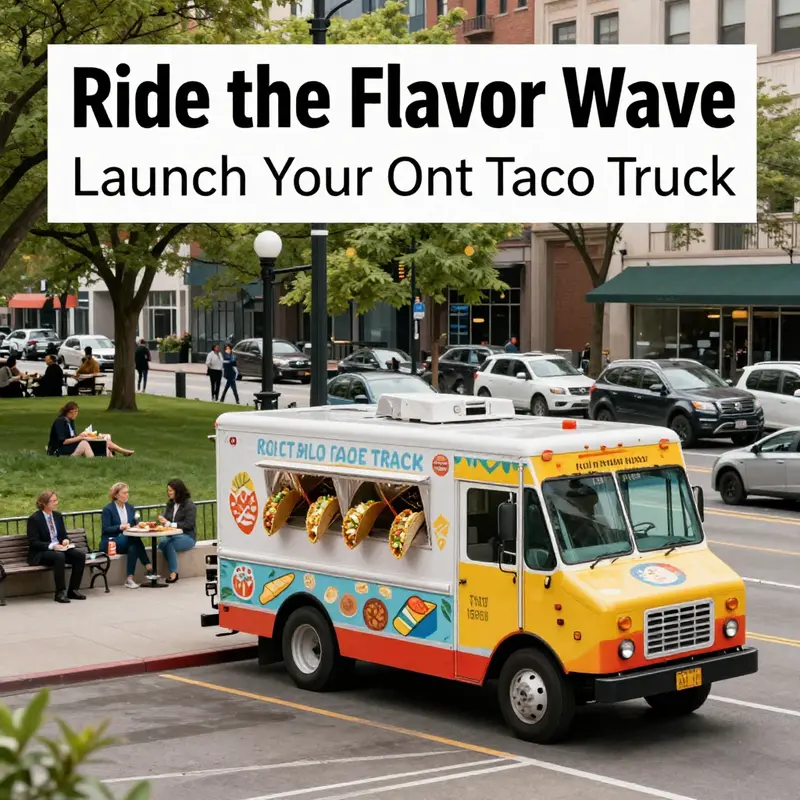
Choosing where your taco truck parks or sets up shop is more than a logistical decision; it is the primary lever that determines who you reach, how quickly you turn a profit, and how your brand becomes part of a neighborhood’s everyday rhythm. A strong location strategy begins with a clear, lived understanding of your concept and your target customers. If your menu leans into bold, regionally inspired flavors, you’ll want to plant your truck where there is appetite for culinary authenticity and a steady stream of curious diners who value a short wait and a fair price. If your aim is fast, bright, grab-and-go fare with a contemporary twist, you’ll perform best in places where people want something quick during a busy workday or between classes, with easy access to transit or high foot traffic. The best locations are not just places with bodies; they are places where your tacos become the natural choice among several competing options because you’ve built a predictable, reliable routine into your customers’ days.
High-traffic zones are the obvious starting point. Downtown districts, business hubs, and office complexes deliver predictable lunch crowds, while parks, transit stations, and near-event venues pull in people during evenings and weekends. Stadiums and convention centers, seasonal events, and campus campuses create recurring opportunities. The key is to match the tempo of the area with your operating hours and your menu’s pace. If you plan to run a lunch-service cadence, you’ll want daytime footfall that peaks around noon, with a buffer for pre- and post-work crowds. For evening or weekend shifts, align with entertainment districts or outdoor markets where people stroll with friends and have a reason to linger. Location is also about visibility. A well-placed truck is a walking billboard; a clean, well-lit, and welcoming exterior invites curiosity and trust. A splash of color, a readable menu, and a friendly team instantly telegraph quality and reliability, reinforcing why someone would choose you over a nearby alternative.
Beyond sheer foot traffic, your location should speak to your brand’s identity and to the kind of customers you intend to cultivate. If your taco style draws on a particular regional tradition, position near neighborhoods that already have a taste for that heritage, or near cultural hubs where Mexican cuisine is part of the local identity. This alignment matters because it shapes word-of-mouth and repeat visits, two critical engines for a mobile operation. It’s not just about proximity to a taco-obsessed demographic; it’s about becoming a familiar, dependable option within a community’s daily routines. You want regulars who know your truck’s schedule, where you park, and when new items rotate onto the menu. A predictable pattern creates trust, which translates into repeat orders and referrals.
Regulatory realities are inseparable from the math of location. Local rules determine where you may operate, how long you may stay, and what permits are required for different zones. Some jurisdictions restrict where mobile vendors can park during certain hours or within a given distance from brick-and-mortar competitors. Others cap the number of trucks in a district or regulate street-side sales on specific days. Before you scout sites or test a route, map out the permit landscape in your target cities. Build a checklist that includes business licensing, health-permit compliance, mobile-vendor permits, and any sales tax obligations. It’s far more efficient to understand these constraints at the outset than to discover mid-tour that a favorite block requires a permit you don’t possess. A prudent approach often means partnering with local business associations or small-business development centers to interpret rules and to learn about any pilot programs that encourage mobile food operators.
As you assess candidate locations, do not overlook the competitive environment. A crowded corridor may provide high visibility, but it can also saturate demand. You’ll want to analyze the density and cadence of nearby competitors, not to copy what others do but to find gaps you can responsibly fill. If a neighborhood already brims with similar offerings, you may need to differentiate through a sharper value proposition—whether that means a speedier service, a signature, hard-to-find ingredient, or a sustainable sourcing story. Conversely, a neighborhood with a strong cultural connection to Mexican cuisine may be more forgiving of a larger number of competitors because the audience values authenticity and consistent quality. Look for underserved blocks where workers, students, or residents have limited access to quick, affordable, and tasty meals. Your goal is to create a habit: a place people think of when they crave a reliable, delicious bite that fits their budget and schedule.
Location research can be surprisingly practical and data-driven. Use mapping tools to gauge traffic patterns, parking constraints, and pedestrian flow. Examine nearby attractions, such as office complexes, universities, athletic facilities, concert venues, and shopping districts, and consider how seasonal events shift crowds. Demographics matter too: age, income, and commuting patterns shape what people expect from a taco truck and what they’re willing to pay. A compact, fast menu works well where time is scarce; a slightly broader menu can perform better near venues that attract longer dwell times. The interplay between speed, taste, and price is what makes a location truly viable over the long term. You may find that a few days of testing different spots over a couple of weeks yield far more insight than a single long-season pilot. Treat the process as iterative: park in a vicinity, observe, adjust your hours, test a menu variant, and track results.
The practical path to finding success lies in the careful balance of accessibility, demand, and cost. Accessibility means more than being easy to reach; it includes the ease of mobile operations—where you can legally set up, where you can park for extended durations, and how quickly you can move if a block becomes less profitable. Demand is about the predictable mix of customers and the appetite for your specific offerings. Cost includes permits, potential parking fees, insurance, and even the expenses tied to shifting locations to sustain a daily rhythm. A realistic financial picture should accompany every site evaluation. If a location offers extraordinary visibility but demands frequent permit renewals or high parking fees, you’ll need to weigh whether the resulting gross margin justifies the overhead. The most enduring locations tend to provide a balanced equation: solid foot traffic, favorable operating conditions, and reasonable compliance costs.
In practice, smart location strategy often embraces flexibility. A truck that schedules itself around lunch-hour corridors near office centers can expand into evening hours at an adjacent entertainment district when opportunities arise. Test multiple blocks that satisfy basic criteria—safety, accessibility, and a coherent flow of potential customers—while maintaining consistent branding. For a mobile business, a well-tended truck is a magnetic anchor; a portable setup that looks prepared and reliable invites people to stop, check the menu, and decide quickly. When you factor in events, campus shifts, and seasonal markets, the ability to reposition becomes not a risk but a strategic hedge against volatility. Any plan should reserve bandwidth for partnerships with event organizers or institutions that host recurring gatherings. These collaborations can transform a regular route into a scheduled appearance on a calendar that people anticipate and plan around.
As you refine your approach, consider one practical example of strategic placement in a bustling, mixed-use environment where transit access, office activity, and cultural flavor converge. A truck positioned near a major transit hub in a dense commercial zone can capture commuters and visitors navigating a new city, offering a quick, satisfying option during peak hours. Another successful pattern involves laying roots near high-traffic zones that host cultural events or university life, where students and staff seek affordable, flavorful meals between classes or after late-night activities. These patterns show that the most durable advantages come from aligning access with demand while preserving the freedom to adapt to changing conditions. The craft of choosing a location is not a one-time decision but an ongoing discipline, woven into your daily operations and your long-term brand story.
For readers who want to see how this philosophy translates into a broader toolkit, you can explore a practical exploration of truck models that maximize efficiency and visibility in busy settings. taco-trucks-unleashed-top-5-models-for-culinary-success. This resource helps connect the dots between how you move and how you serve, reinforcing the idea that the right equipment and the right corner can become identical in their impact on customer experience. In the end, a taco truck’s success hinges on the choreography of people, place, and plate. You orchestrate it through disciplined site selection, informed by data and local knowledge, and you sustain it through consistent execution, branding, and a menu that people crave—whether they’re grabbing a quick lunch or a post-event bite. The perfect spot isn’t just on a map; it’s the intersection where demand, permission, and personality meet, time after time, day after day.
External resource for further guidance on regulatory steps and financing options can be found here: https://www.restaurant.org/industry-resources/food-truck-location-strategy
Cleared for the Road: Navigating Permits, Licenses, and Safeguards for a Taco Truck
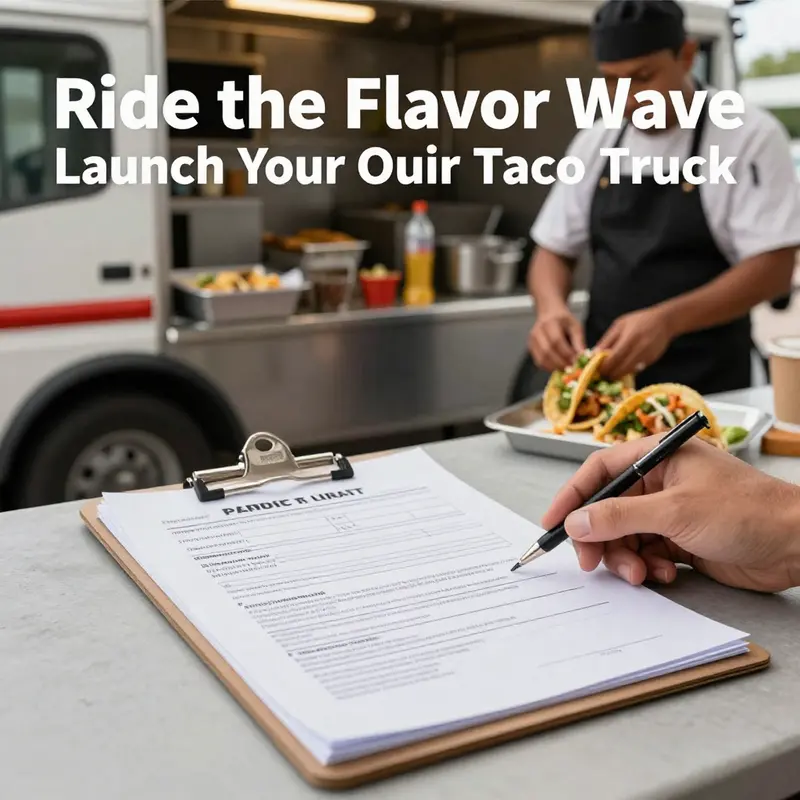
Launching a taco truck is as much about mastering bureaucracy as it is about crafting a craveable menu. The road to opening day twists through permits, licenses, and a lattice of safety standards that protect customers, staff, and your investment. When you understand the permit ecosystem—how it fits together, why each piece matters, and how to move efficiently through the review process—you gain not just compliance, but peace of mind. The permits themselves are not hurdles to creativity; they are frameworks that channel that creativity into a safe, lawful, and sustainable business on wheels.
Begin with a clear, practical map of what your jurisdiction requires. Central to most operations is the Mobile Food Vendor Permit, the green light that authorizes your truck to serve from a mobile unit. This permit is typically issued by the city or county health department and represents the baseline legality of your daily operations. Without it, even the best taco concept cannot legally roll into a high-traffic corner or a weekend market. Alongside the mobile permit, you will usually need a Health Department Permit to verify that your truck meets sanitation and safety standards. Health inspectors may conduct on-site evaluations to verify that your food handling, storage, and preparation practices align with established guidelines. The health permit is not a one-and-done hurdle; it is the ongoing relationship that ensures your kitchen keeps pace with evolving safety expectations and seasonal menu shifts.
Another essential credential is the Food Handler Permit, or a closely related certification, for you and for every employee who touches food. These certifications demonstrate a working knowledge of safe food handling, cross-contamination prevention, and proper hygiene practices. They are often required before you can open for business, and they must be maintained through periodic renewals. Even if your operation runs with a small team, this credential protects your customers and reinforces your staff’s confidence in the job.
Beyond health and food handling, utilities-related regulations may come into play. Depending on your truck’s setup, a Utilities Permit may be necessary if your unit includes electrical systems, a municipal water supply, drain connections, or propane piping. Electrical and plumbing work in a mobile kitchen carries increased risk, and inspectors will want to review diagrams, installation methods, and testing results to confirm there are no leaks, cross-connections, or fire hazards. If your operation relies on open flames or propane-powered equipment, you should anticipate a Fire Permit as well. Fire authorities review clearances, ventilation, extinguishing equipment, gas piping integrity, and safe fuel handling practices. This permit is not a formality; it is a cornerstone of the safety culture that protects your staff and your customers alike.
Finally, while not a license in the government’s eyes, securing appropriate Business Insurance is a prudent, if sometimes overlooked, safeguard. Insurance is the safety net that helps cover liability claims arising from slips and falls, equipment failure, or other incidents related to your mobile business. It does not replace licenses or permits, but it complements them by aligning your operational risk management with your financial planning.
To navigate these requirements without getting lost in forms, start by identifying the exact authority that governs your operation in your city and county. In many places, the licensing and inspection process begins with a visit to the local health department or the city clerk’s office. Bring a focused set of documents: a business plan or concept note, proof of vehicle registration or ownership, a description of your kitchen layout, and a clear outline of equipment you intend to install. If you already understand your menu, gather a preliminary equipment list and a rough flow of food—from receiving to storage, to cooking, to service, and finally to disposal. A well-scoped plan reduces back-and-forth questions and speeds reviews.
As you prepare, recognize that permit review is not a single moment but a dialogue. Health departments often require compliance with temperature controls, handwashing stations, and sanitation facilities. Plan for on-site inspections where the inspector will test cold and hot holding, verify accurate labeling, and confirm that utensils, sinks, and waste streams meet code requirements. Utilities and fire reviews will look at voltage calculations, gas pressure, ventilation, and fire suppression readiness. Each review step may trigger additional documentation requests, such as electrical diagrams, piping schematics, or proof of training. Anticipating these requests and providing clear, organized submissions can dramatically shorten timelines.
Budget the process as you would a kitchen inventory. Permit fees vary by jurisdiction and scale with the scope of work. Some locales impose ongoing annual or renewal fees, while others charge per inspection or per permit issuance. It is common to encounter a tiered structure: initial plan review, a separate permit issue, and then periodic renewals tied to inspections or compliance confirmations. Because rules evolve, set aside a portion of your initial capital for permit-related contingencies. This is not a sunk cost; it is an investment in reliability and continuity for your operation.
A practical approach to managing the process is to treat the permit pathway as a project with clear milestones. Create a simple checklist: identify the responsible agency, gather required documents, submit plans, schedule inspections, address any deficiencies, and secure the final approvals. Some jurisdictions offer a plan review staff contact who can outline submission requirements and expected review times. When you know the timelines, you can coordinate your equipment procurement, truck customization, and staff training to align with the permitting schedule, avoiding idle capital and late openings.
To keep the process efficient, build relationships with the agencies that oversee food safety and mobile vending in your area. A respectful, proactive line of communication can help you forecast issues before they escalate. If you encounter unfamiliar terms or unclear requirements, don’t rush to guess. Ask for written guidance or a point of contact who can provide specifics. This reduces the risk of misinterpretation and rework that can push back your opening date.
It is also worth recognizing the regional nuance in permit regimes. Some urban centers embrace mobile vendors with streamlined pathways and consolidated inspections, while others maintain more rigorous, decentralized processes that require you to engage with multiple agencies or departments. Understanding your local landscape from day one can save weeks, not months, of friction later. The payoffs are tangible: a well-run permitting process translates into predictable operational rhythms, fewer unexpected shutdowns, and a stronger sense of legitimacy with customers who see your compliance as a sign of care and professionalism.
As you progress toward launch, remember that permits and licenses are living documents. They must be monitored, renewed, and updated as you scale. Changes to your menu, equipment, or service model can trigger new requirements. If you plan to operate at events, markets, or temporary sites, you may face additional plan submissions or special event permits. A robust compliance mindset keeps you adaptable without sacrificing momentum.
To connect the dots between permit readiness and everyday operations, consider that a well-documented operation supports your branding and customer trust. A clean truck, visible sanitation practices, and transparent safety measures all resonate with customers who appreciate responsible stewardship. You can weave this narrative into your branding by communicating that your taco truck consistently adheres to health and safety standards, uses properly trained staff, and maintains rigorous equipment maintenance routines.
During quieter moments, you can still advance in small ways. Photograph your kitchen layout, label your workflow, and create an internal operations binder that houses your permits, inspection reports, and safety checklists. This binder becomes a practical on-truck resource that staff can consult, ensuring consistent compliance during busy service periods. It also shows regulators that you take compliance seriously, which can smooth future renewals and expansions. If you’re looking for a concise primer on how successful ventures in the wider mobile food space structure their growth, you might explore resources like one dedicated overview of top models for entrepreneurs in the sector, which can provide a broader sense of how permit readiness intersects with business design.
For a quick primer on related insights, see the article on Top food truck models for entrepreneurs. Top food truck models for entrepreneurs. This piece isn’t a substitute for your local requirements; rather, it offers context on how thoughtful design, branding, and operations harmonize with a disciplined permitting pathway. It helps you imagine how your permit journey fits into a broader strategy of any successful mobile venture.
As you finalize your plan, remember that the goal is not to overwhelm yourself with every rule at once but to build a foundation that supports steady, compliant growth. Stay curious about local requirements, maintain an ongoing dialogue with inspectors, and approach each interaction with the same thoroughness you apply to recipe testing. With the right permits in hand and a culture of safety ingrained in your team, your taco truck is not just permitted to operate; it’s prepared to delight customers, weather regulatory tides, and scale responsibly.
External resource: For region-specific guidance on permits, consult government resources such as Washington State’s licensing and inspection guidance on food truck and trailer permits at https://www.lni.wa.gov/food-truck-trailer-permits.
null

null
Sizzle, Signage, and Story: Designing a Memorable Taco Truck Menu and Brand

A taco truck arrives on the street with a promise: flavor and personality delivered on a moving stage. The promise lives in two places at once: the menu in your window and the branding painted on the outside. When you design a taco truck, these elements become your first conversation with customers. A clear menu and a cohesive brand act as a compass for sourcing, training, pricing, and the flow of service. They shape how your concept is perceived long before a bite is taken, and they guide the experiences you create.\n\nStart by selecting anchor items that embody your concept. Lean into a regional route, bold fusion, or sustainability, but keep a handful of core offerings you can execute exceptionally well. Anchors provide focus and simplify operations in a small kitchen. A signature taco or two can become the storytelling backbone of your truck. Make sure these items are visually distinctive so they photograph well and travel well in street conditions. When customers recognize a dish, loyalty begins before they order. The menu should invite curiosity but stay uncluttered. A concise list communicates confidence. Even with daily specials, anchor the menu with reliable standards so regulars know what to expect.\n\nVisual appeal matters from the moment a passerby notices your truck. Colors, typography, and layout should reflect the mood of your cuisine and the brand personality. Bold, high-contrast palettes help you stand out; a playful typeface signals approachability. Readability comes first: choose legible fonts, avoid dense blocks of text, and ensure strong contrast. The exterior design and the menu should feel coherent. If the truck uses warm reds and oranges, let the menu echo those hues without shouting. Group items logically, keep prices clear but not dominant, and present deals in a way that invites quick decisions. A concise, striking menu signals professionalism and reinforces perceived quality.\n\nBranding is more than a logo or slogan. It is the language you use across every touchpoint: truck exterior, packaging, napkins, uniforms, and online presence. Consistency builds familiarity and trust. Use a defined color palette, a limited set of typography choices, and a tone of voice that matches in person and online. Packaging acts as a silent ambassador for your brand. Durable, attractive, and eco friendly materials reinforce sustainability promises and reinforce identity. The way you greet customers and describe dishes also contributes to the brand story. A simple, friendly, confident tone can turn first timers into regulars.\n\nThe customer journey should feel like reading a story: instant recognition of your branding and a clear sense of flavor origin and craft. The storefront feel of a taco truck is local and intimate, which can become your edge. Your branding should convey authenticity and be reinforced by how you name dishes and describe ingredients. Ensure simplicity in navigation, whether through clear combos or well signposted daily specials. Simplicity does not mean bland; it means deliberate and easy decision making.\n\nInspiration helps shape your menu and branding. Study brands with cohesive outdoor and digital identities and see how color, typography, and iconography convey concept quickly. Mood boards and case studies can be helpful without copying. If you invest in a mood board or design showcase, you can visualize how your menu and branding feel in the field before production. Real world references help you brief signage, menus, and staff training. A strong concept makes your truck instantly recognizable and trustworthy.\n\nBest practices: brands that are well branded perform better. A cohesive menu and branding package signals professionalism and reduces hesitation. Start simple: a small, coherent palette and a handful of signature items. Test colors and phrasing, then iterate. The durable brands evolve with feedback but keep a recognizable core. Gather customer impressions in real time and watch what resonates on social to align on street and online presence. The goal is not to chase trends but to own a clear stance about flavor, origin, and service style.\n\nTo bring these ideas to life, treat menu and branding as a single creative discipline. Draft a concept brief, then translate it into a menu layout that is easy to scan and highlight a few hero items. Develop a branding brief covering color, typography, imagery, and tone. Ensure every touchpoint conveys the same message. The result is an integrated system you can apply from pop up events to weekly routes. When decisions align with a shared narrative, the truck becomes a moving billboard for your culinary identity and a reliable guide to the guest experience. If you want practical exemplars of cohesive branding, look to established showcases that demonstrate how to harmonize truck art, signage, and packaging into a single visual language. Invest in a few real world references to brief signage, menu boards, and staff training. With a strong, aligned concept, your truck is instantly recognizable and easier to trust.\n\nUltimately, your menu and branding are the first impression and ongoing promise to every customer. They influence kitchen design, ingredient sourcing, pricing, and marketing. They shape your culture, from staff training to how you respond to feedback. When executed with clarity and consistency, a memorable menu and strong brand cut through the noise, attract the right audience, and turn curious passersby into regulars who know what to expect and look forward to what you will serve next. If you want practical guidance beyond branding, the broader SBA guide on starting a food truck offers step by step instructions on legal and operational considerations that accompany a deliberate, design-forward approach to menu and branding.
Final thoughts
Starting a taco truck is not just a business venture; it’s an opportunity to share the joy of flavorful tacos with your community. By following these steps to develop a robust business plan, strategically choose your location, navigate necessary permits, source reliable equipment, and design an enticing menu, you’ll be making waves in the food truck scene before you know it. Remember, the taco truck journey is all about flavor, fun, and connecting with fellow taco lovers. Get ready to roll out your tacos and build a loyal following—it’s time to share your passion with the world!